We may earn revenue from the products available on this page and participate in affiliate programs. Learn More ›
Spotting a gutter issue isn’t always easy, especially if you aren’t sure whether the problem is actually with the gutter system or if the roof is the true source of your concerns. Since gutter systems are designed to catch, collect, and redirect the flow of rain and meltwater down and away from your home in order to protect the interior, sides, and foundation of the home, it’s important to be able to identify issues before there are leaks and long-term damage.
We spoke to gutter installation pros and roofing experts to find out how to tell if you have gutter problems or roof problems, and they shared how to fix these issues.
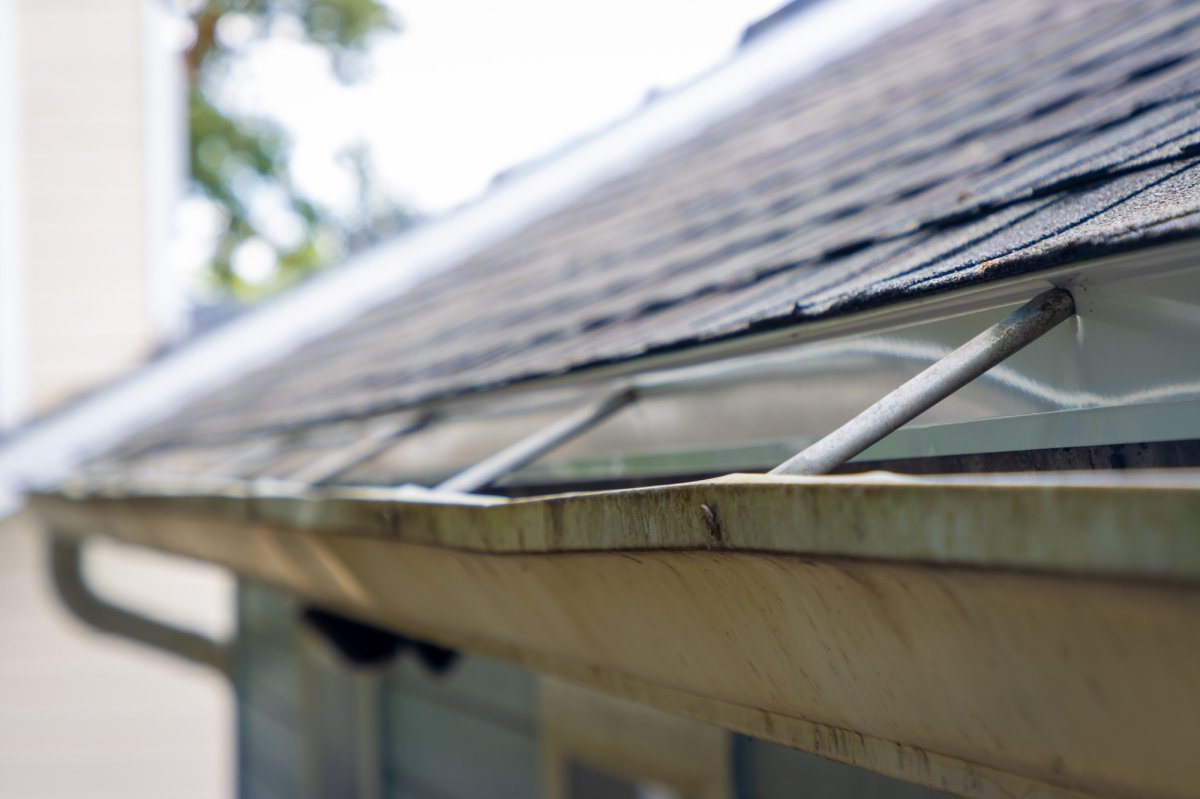
The gutters are sagging or pulling away from the house.
When gutters aren’t properly secured to the home, it’s a problem. Aleks Krylov, founder and President of Stern Gutters, says to “look for gutters that are sagging, pulling away from the fascia, or holding standing water.” Signs of sagging gutters include gaps between the back edge of the gutter and fascia, protruding nails, and spikes that have slipped or backed out the front face of the gutter.
The fix: Repair sagging by replacing old loose spikes with long gutters screws or by installing new mounting brackets to pull the drooping section back up to the fascia board. Since the weight from ice dams can cause gutters to sag or pull away from a home, it’s important to prevent further ice dams from forming.
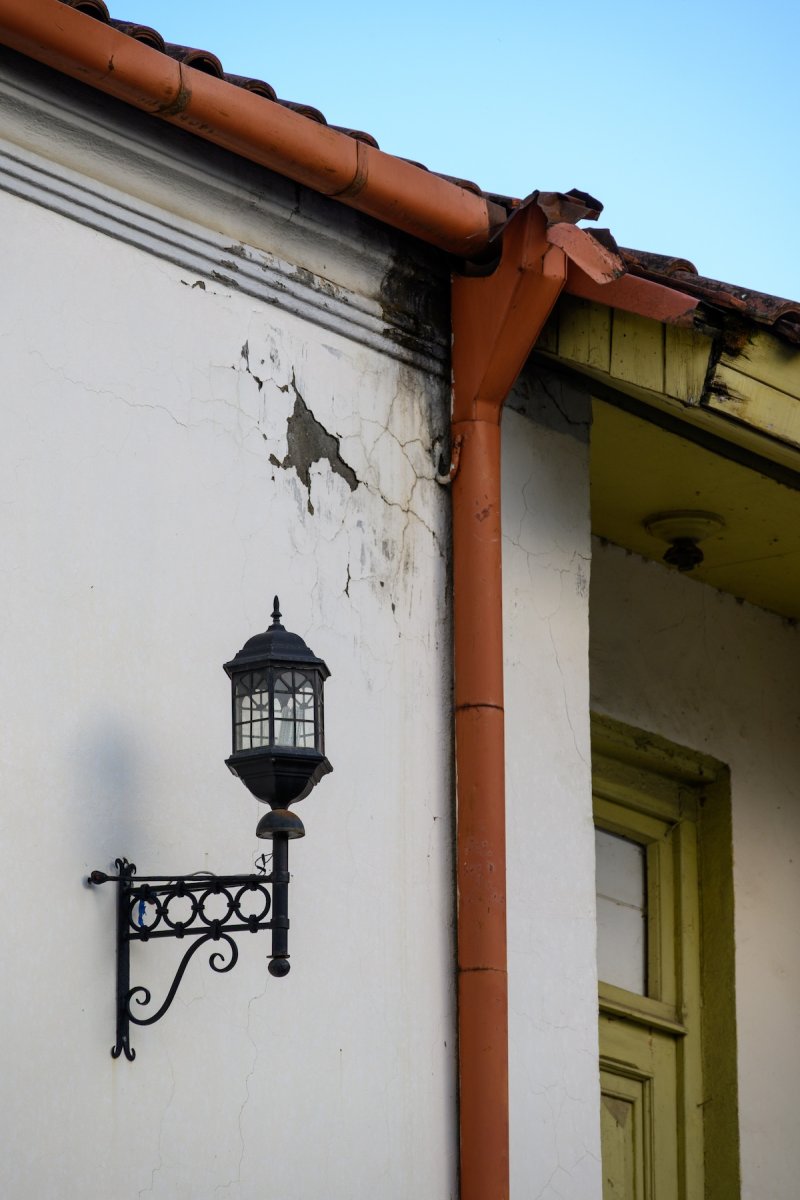
There are stains or streaks on the siding and gutter.
Stains or streaks on the exterior of your gutters and siding are typically a direct symptom of gutter system failure. “Look at the joints and end caps for signs of old leaks. You may see staining below them,” notes Krylov. When the drainage system overflows, backs up, or develops gutter leaks, the dirty water runs over the edges and down the sides of the home, creating these stains and streaks.
The fix: To fix this issue, start by identifying the root cause, whether it is system clogs, failing seams, or faulty end caps. Clogs can be handled by cleaning the gutter system, but leaking seams and end caps will need to be either replaced or treated with a high-quality waterproofer gutter sealant.
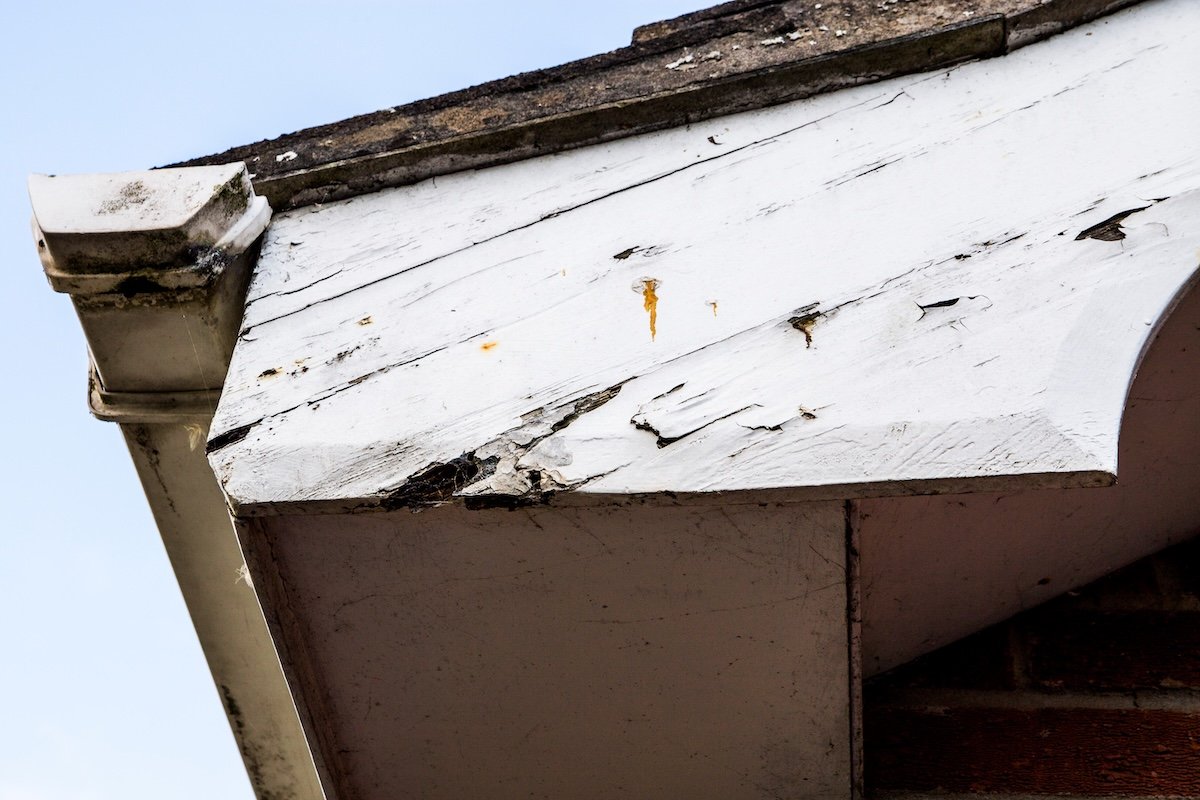
The paint is chipped or the wood is rotten right below the roof edge.
If the paint below the roof edge is chipped or if the wood there is soft or rotted, that’s another indication that you have gutter problems. It happens when water has been flowing over the edge of the gutter system and pouring down the side of your home, which can be caused by clogs or improperly pitched gutters.
The fix: “Start by cleaning the gutter and downspout. You need a clean system before you can tell whether there is another problem,” mentions Krylov. If water still flows over the edge of the cleaned gutters, then you may need to correct the pitch of the gutters, setting a proper slope of about 1/4 inch for every 10 feet of run. After you sort out the gutter problem, update the paint or replace the rotted wood.
There are interior water stains on the ceiling and walls.
When ceiling or wall stains tend to darken during or right after heavy rainstorms, then there may be an issue with your roof or gutter system alignment. Constantine Anest, Owner and Operator of Ethos Roofing and Restoration, says that “if the gutter looks fine but water still doesn’t flow into it, the problem is often with how the roof and gutter line up. Sometimes water runs behind it or misses it when the gutter is too low or too far from the roof edge, or the type of gutter doesn’t work with the roof. ”Inspect the fascia for dark water streaks or peeling paint and observe the flow of water during rain to see if the water flows over the front edge or pours behind the gutter.
The fix: If your gutter system is not properly aligned or secured to the roof, then you will need to remove the old gutters and repair any damage. Then install new brackets and gutters so you can align the height with the roof edge. Finally, you may need to add flashing expansions to direct runoff smoothly into the gutter channel.
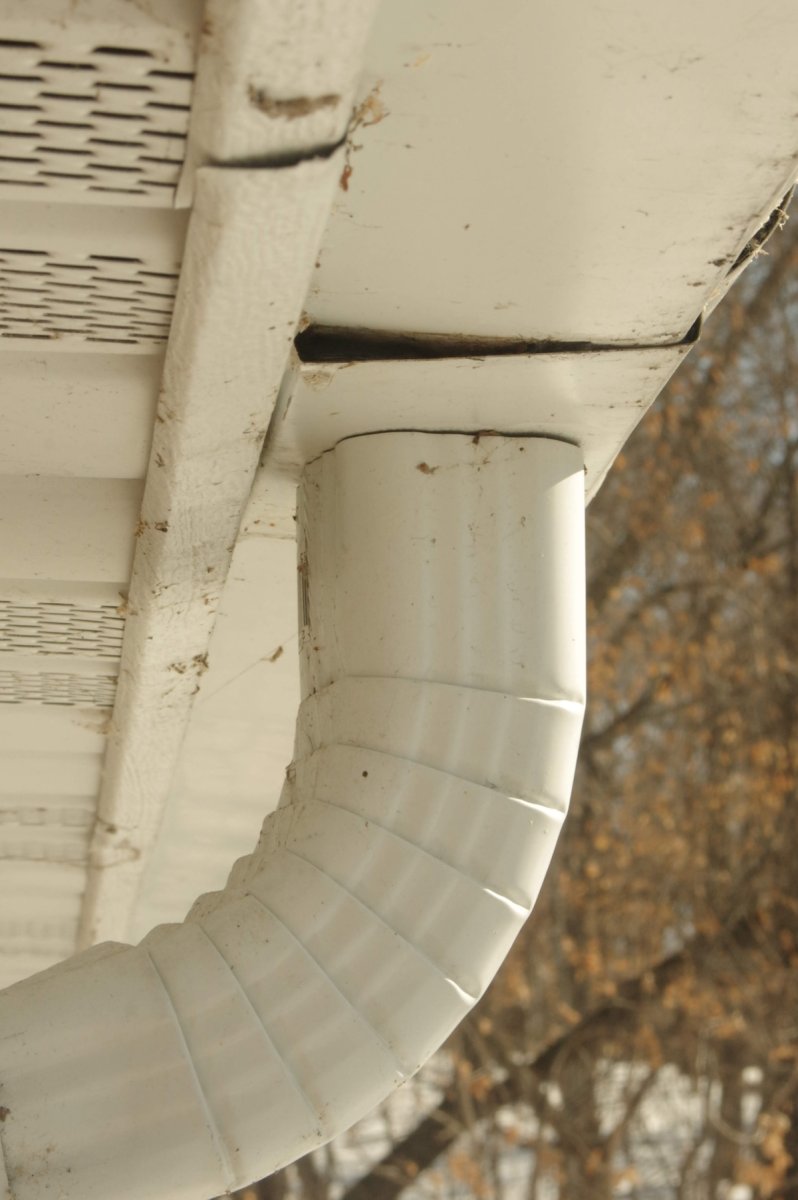
The roof edges are sagging or the fascia is rotten.
Peeling or bubbling paint, sagging or loose gutters, and warping or stains could all indicate that the roof is the source of your gutter problems. “If you see water running behind the gutter, down the fascia, or under the eaves, the issue is probably at the edge of the roof,” Anest notes.
Sagging roof edges affect the way water flows into the gutters, while soft or rotten fascia boards can cause the gutter system to pull away from the home, opening a gap where water pours down the side of the house, worsening the issue. Press a flathead screwdriver gently into the fascia wood, and if it sinks or feels spongy, the board is rotten and needs replacement.
The fix: To resolve this problem, you will need to remove the gutters, cut away the rotted board, and inspect the rafter tails for rot. You may also need to treat or reinforce them. After this is done, install new fascia and then reinstall the gutters, checking that they are properly aligned and pitched to ensure water flows directly into the trough.
The shingles near the eaves are bent, broken, or otherwise damaged.
When the gutters look fine, but you are still having issues with drainage, then it may be due to how the water is flowing off the roof. “I would check for damaged shingles near the eaves, a worn or poorly installed drip edge, and a lot of shingle granules in the gutter,” suggests Anest. You may need further confirmation than what you can get from the ground, so either carefully climb up on a ladder to inspect the shingles more closely or hire a pro to inspect it.
The fix: After you have identified that the shingles are damaged and unable to properly direct water into the gutter system, the next step is to remove the gutters and replace the damaged shingles. Then you may need to make repairs to the fascia if the fascia boards are soft or rotted due to water flowing over the edge of the roof and missing the gutter system entirely.