We may earn revenue from the products available on this page and participate in affiliate programs. Learn More ›
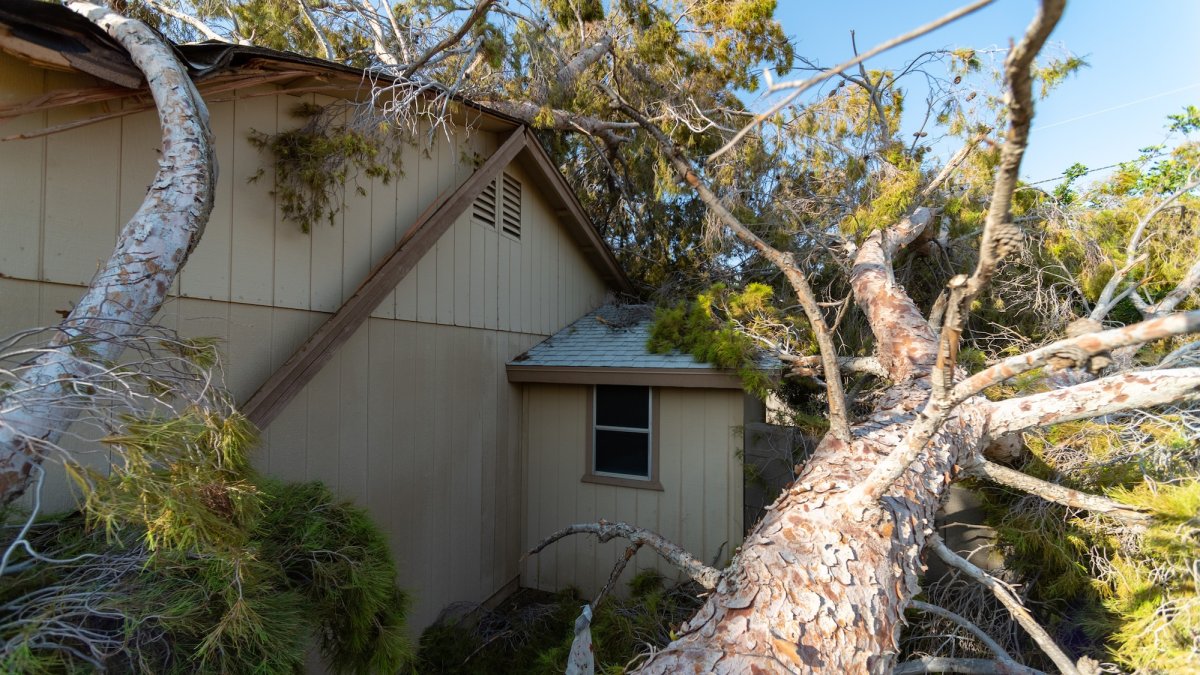
A tree falling on a home can cause extensive structural damage, and it happens more often than you might think. In 2022, one investment property insurer reported that more than 8 percent of its claims were for tree-related damage.
Trees are especially vulnerable during hurricane season. Fortunately, the 2025 season was kind to the U.S.—not a single hurricane made landfall—and 2026 activity is predicted to be below average. But it doesn’t take an actual hurricane (winds of 74 mph or more) to bring down a tree. Even winds upwards of 50 mph threaten trees, especially if the ground is saturated or the tree is unhealthy.
It’s best to keep trees on your property pruned and healthy, but acts of nature do happen. Here’s what to do when a tree has fallen on your house.
Safety First
The first step is always to make sure everyone in the household is safe, including pets. Then it’s time to take stock of the situation.
Check for downed power lines and gas leaks.
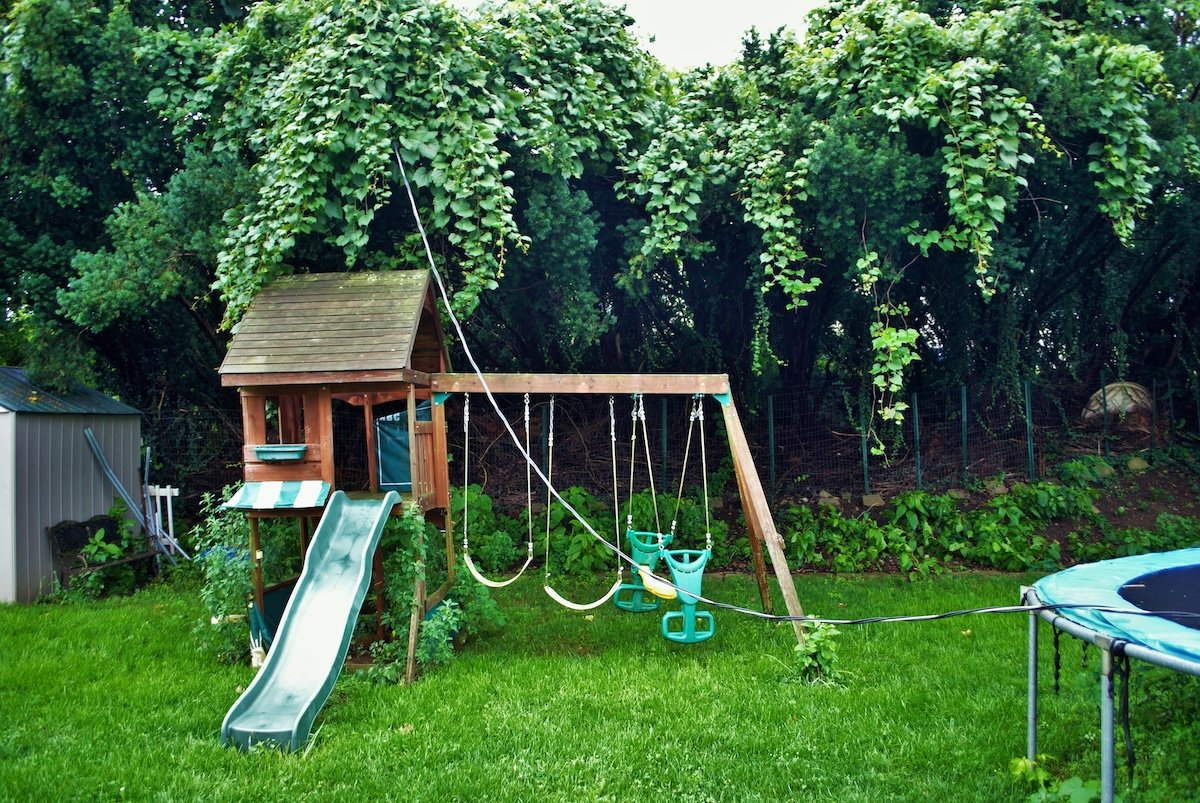
Downed power lines carry an increased risk of fire or deadly electric shock. Especially if the lights are flickering or there’s no electrical power in the house, check outside for a downed line or a line trapped in the fallen tree. Even if a downed line is functioning, it still constitutes a risk. Shut off the power at the breaker box if a line is down.
- Call your local electric company and the authorities. If you smell smoke, get your family out of the house and contact nearby neighbors who might be affected. The utility company will dispatch technicians, local law enforcement may need to block traffic on your street, and the fire department may send a unit to stand by until safety is restored.
- If you smell gas, hear a hissing sound, or see that the tree has fallen on the gas meter or a gas line, evacuate immediately. Do not turn on any electrical switches, and move away from the house about 350 feet (roughly the length of a football field) before calling 911.
- It may be wise to shut off the gas until you’re sure the lines weren’t damaged, even if you don’t smell gas. You’ll find a shutoff valve near the meter. Use a wrench to turn the valve a quarter of a turn to the right. To have service restored, contact the gas company; do not turn the valve back on yourself.
Plan to stay somewhere else until your home has been inspected.
It’s not always easy to determine the extent of the damage just by looking at it. The fallen tree may have hit a major structural support, affected the integrity of your roof, or may even have further to fall. Unless the damage is obviously and clearly limited—if, for instance, the tree fell on a detached garage or its topmost branches are just resting against the house—assume that you’ll need to find somewhere else to stay until a contractor or structural engineer has assessed the damage.
Protect against further damage.
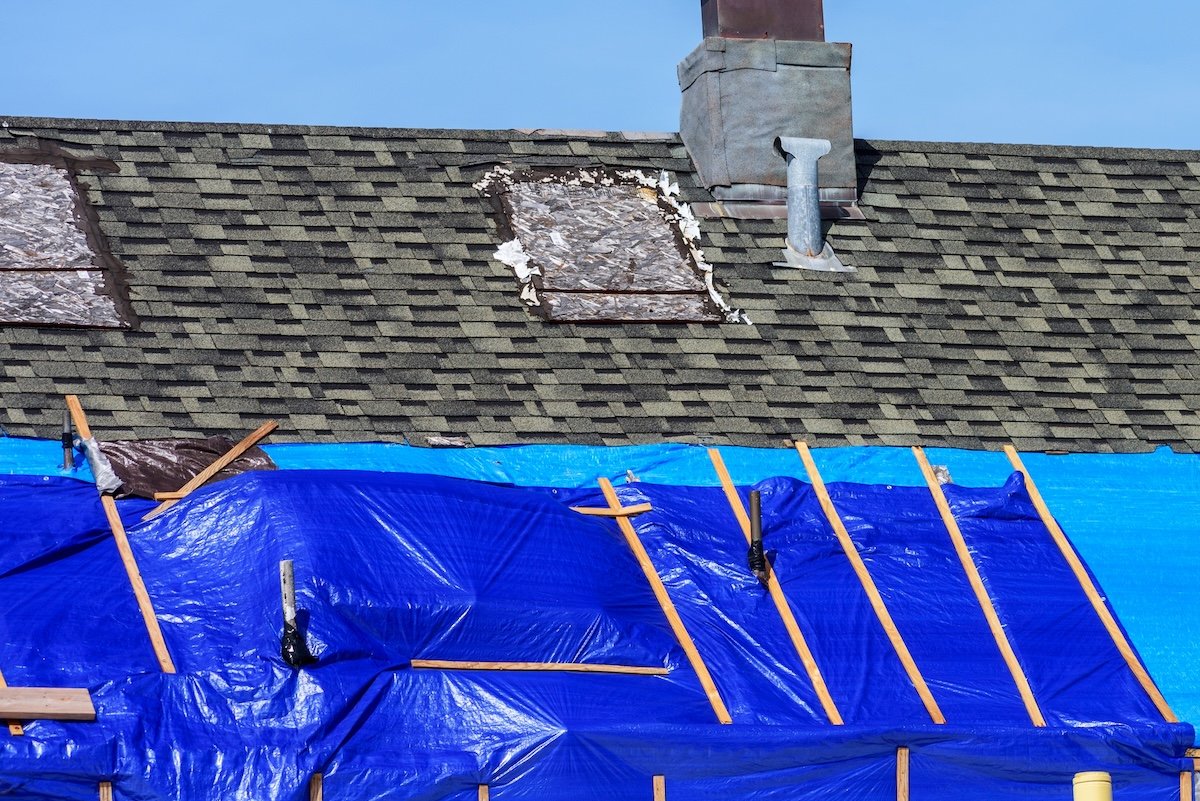
To protect your home’s interior and prevent further damage to the exterior, call a reputable contractor to tarp or board up any broken windows and holes in the siding or roof. You can board up broken windows yourself—just be careful to avoid sharp glass—but tarping and other roof is dangerous and should be left to the pros. Parts of the roof may not be stable enough to walk on safely.
Navigating the Insurance Claims Process
A tree falling on a house can cause extensive, and expensive, damage, and navigating insurance coverage and payouts can be tricky. Note that insurance generally won’t pay for removal of a fallen tree that hasn’t damaged any structures covered by the policy, although it might if a tree blocks a driveway or otherwise obstructs vehicles.
Document the damage.
Take photos and videos of the damage, indoors and out, as soon as it’s safe to do so. Have a roofing professional take pictures of the roof. Document broken windows, damaged siding, structural damage, and damage to the contents of your home. Don’t leave anything out; the pictures you take now will be vital evidence for your insurance claim.
Call your agent as soon as possible.
Notify your agent to get the claims process moving. Share your photos with the insurance company to help them assess the extent of the damage. You may be asked to consult two or three local contractors to get estimates for the repair work, or the insurance company may send a claims adjuster out to determine the extent of the damage and the corresponding repair costs.
Read the fine print on your homeowners insurance policy.
You will probably be required to pay a deductible, after which the insurance company will kick in for the balance of the repair costs up to a certain amount, based on your policy’s terms. Common deductibles range from around $500 to $2,000, and sometimes even more, depending on premiums and coverage limits. If you’re like most homeowners, you probably haven’t read all the fine print in your policy, so go through it now to know what to expect.
If an “act of nature”—such as a thunderstorm, ice storm, or high winds—caused the tree to fall on the house, in most cases, your policy will cover the repair expenses minus your deductible. In an “act of nature” situation, your policy will pay even if the fallen tree belongs to a neighbor or a municipality. Your claim might be denied, however, if you caused the tree to fall through reckless action, such as attempting to cut it down without professional assistance, or as a result of negligence or poor maintenance.
Don’t begin repairs until you and your insurer agree on an amount.
Depending on your policy, your insurer might impose limits on specific repairs, such as tree removal costs. If costs are beyond the permitted amount, you may be liable for the balance.
If the total amount offered by your insurer does not cover the cost of the estimated repairs, you have the right to appeal their decision and have them reevaluate your claim. If this happens, submit bids from contractors showing that the projected costs are higher than your insurer is allowing.
Keep track of expenses.
Expenses incurred for emergency damage control are almost always covered, so save your receipts. If your home is not habitable, your insurance company may also reimburse you for some of the expenses related to temporary housing. But don’t assume all your expenses will be covered. Call your agent to make sure.
Withhold final payment until you’re satisfied with the contractor’s work.
Legitimate contractors often request payment for materials before they start work, but they should not ask for prepayment for their labor to make the repairs. If the repairs are extensive and will take more than a few weeks to complete, the contractor may reasonably ask for partial payments to be made on an agreed-upon schedule, but the final payment should be made only when the repairs are complete to your satisfaction.
FAQ
Q. Can I sue my neighbor if his dead tree falls on my house?
Laws vary by state, so you should contact a lawyer in your region if you’re considering suing. However, if you can prove that your neighbor knew about the dead tree and failed to remove it in a timely fashion, they might be liable for the damages.
Q. If my tree falls on a neighbor’s house, who is responsible?
Responsibility depends on the circumstance. If the tree was healthy when it fell, then your neighbor’s insurance company is likely responsible for covering the damages. However, if your tree fell on their house because you neglected to take care of it or you failed to remove the tree after noticing it was dead, you could be liable for the costs.
Q. Can a house withstand a tree falling on it?
Yes, but it depends on many factors, including the size of the tree, the part of the house it hits, and the angle and force of the impact. Even if the house looks fine, it’s best to evacuate and have the structure evaluated by a professional.
Q. Who is responsible if a tree falls?
In most cases, if an “act of nature” causes a tree to fall, the property owner who experiences the damage, along with that person’s insurance company, is responsible for the cost of repairs.
Q. Are fallen trees covered by homeowners insurance?
Yes, in most cases, fallen trees that hit the house, garage, or any other covered structures are covered by homeowners insurance, unless the tree fell as a result of negligence. Insurance may also pay for damage caused by a tree blocking a driveway or wheelchair ramp. Insurance generally won’t pay for removal of a tree that falls without hitting any structures covered by the policy.
Q. Which trees are most likely to fall?
Trees in poor health or with previous damage are more likely to fall during inclement weather.
Q. When should I be concerned about a tree falling?
Trees with visible disease or damaged limbs might be susceptible to falling. Call a professional to remove unhealthy or damaged trees before disaster strikes.