We may earn revenue from the products available on this page and participate in affiliate programs. Learn More ›
Cleaning lint out of the dryer seems like something just about everyone knows they need to do, but what about the washing machine? A surprising number of people are not even aware that lint, hair, and other debris can become trapped in the washing machine, building up to the point where it impacts the performance of your washer.
After a decade spent as a plumber and flood remediation expert on projects I managed, I have seen more than one washer that failed because this simple maintenance step was skipped. It’s essential to clean your washer regularly, which should include removing, clearing, and soaking your washing machine lint filter in a vinegar solution to get rid of any tough, stuck-on debris before it can cause problems.
Where Is the Washing Machine Lint Filter?
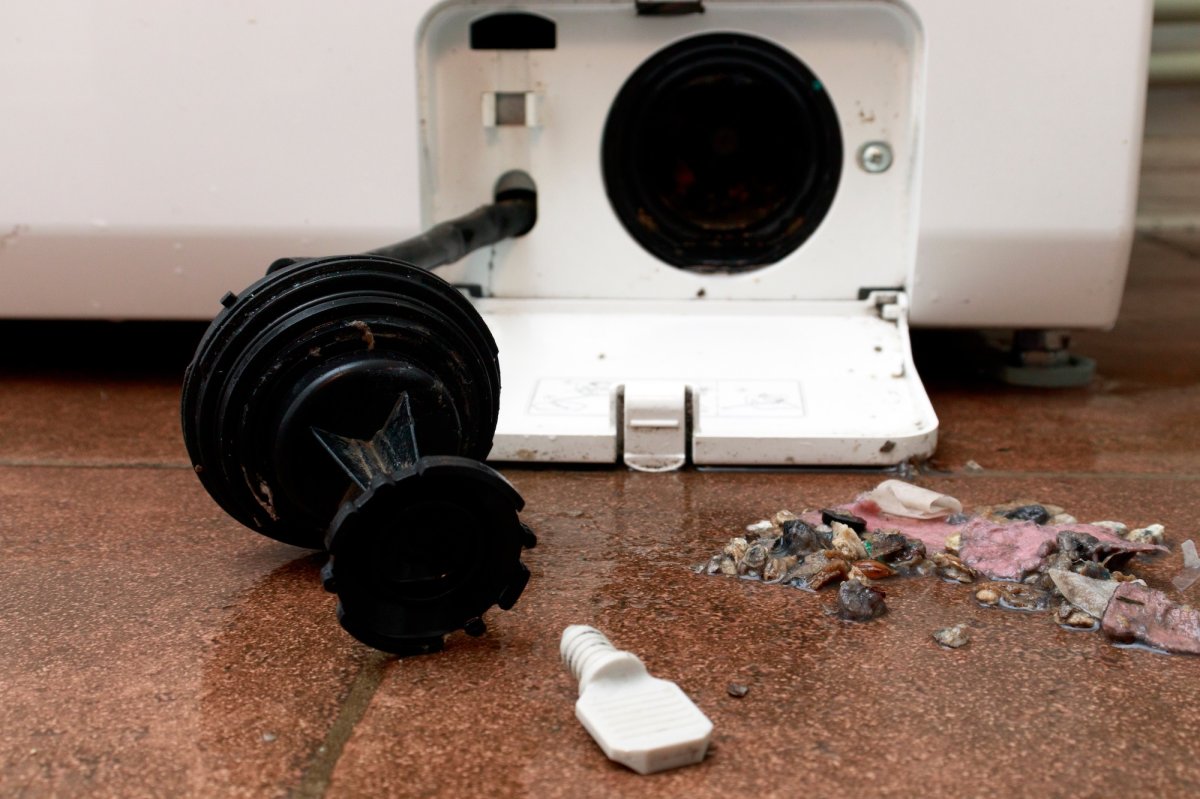
The washing machine does not have a specific lint trap, like the dryer does. Instead your washer has a drain pump filter that is designed to catch lint, hair, and other debris, preventing it from flowing into the drain, but this debris can build up, causing bad odors to emanate from your washer. However, the exact location of this filter depends on whether you have a front-load or a top-load machine, and can vary between brands, so I always suggest checking the user manual to locate the drain pump filter on your specific washing machine model.
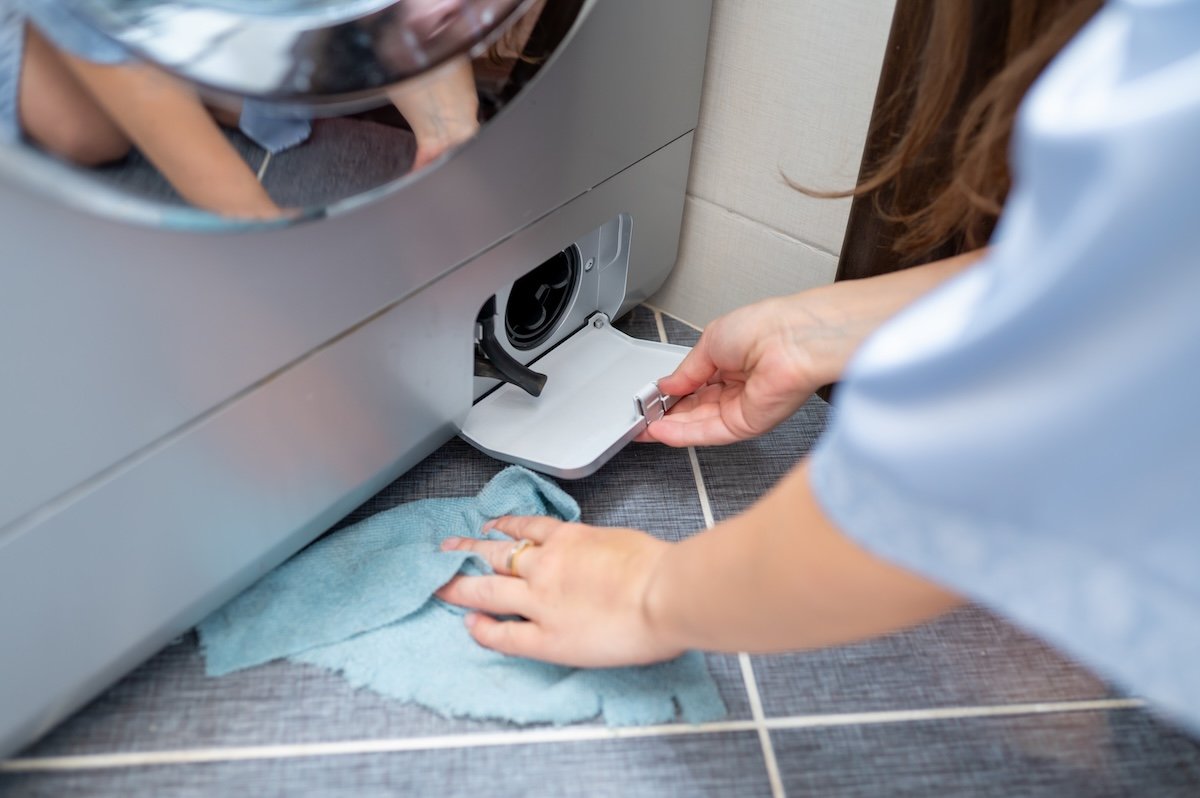
- Front-load washing machine: Check for a small square or rectangular hatch door on the lower front left or right side of the machine. This small door typically just pops open, allowing you to pull out and drain the small emergency drain tube, then twist the filter cap counterclockwise to unscrew the filter and pull it out.
- Top-load washing machine: The location of the drain pump filter on a top-load washer can either be inside the agitator or along the tub rim. First, check the center agitator to determine if the cap will come off the top. If it does, then you should find a mesh or plastic filter cylinder inside. If not, then check underneath the top lip or rim of the main wash tub for a long, snap-in plastic filtration strip.
Filter for Discharge Hose
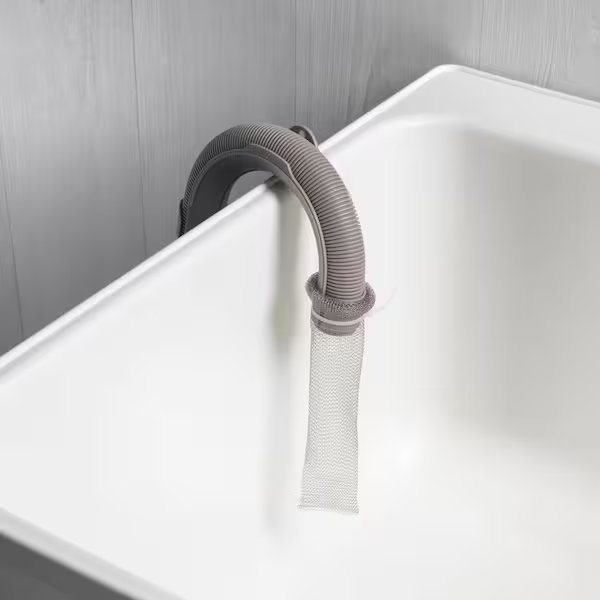
Washing Machine Lint Trap with Tie
This additional filter can be attached to the end of your washer’s drain hose to catch debris your washer’s built-in filter might miss.
Buy NowWhat Happens If You Don’t Clean the Washing Machine Lint Filter?
Neglecting the filter on your washing machine won’t cause a fire, like an electrical short or overheated motor could, but it can prevent the washer from turning on or may even lead to a leak if the water pump is severely damaged. However, I have found that it’s more likely the lint and debris will build up in your drain pump filter, hoses, and tub seal, creating drainage blockages, bad odors, and leaving your clothes covered in hair, lint, and fuzz.
- Dirty laundry: Excess lint sticks to your wet clothes during a wash cycle because it cannot flush out properly.
- Drain blockages: Wet lint mixes with soap scum and hair to form thick clogs in the drain hose or pump.
- Slow draining: Water takes too long to leave the tub, causing mid-cycle errors or stopping the machine.
- Bad odors: Trapped wet lint and organic residue grow mold and bacteria, causing a foul odor in the drum.
- Water pump damage: Heavy debris and matted lint put stress on the water pump, leading to mechanical failure.
How Often Should You Clean Lint Out of a Washing Machine?
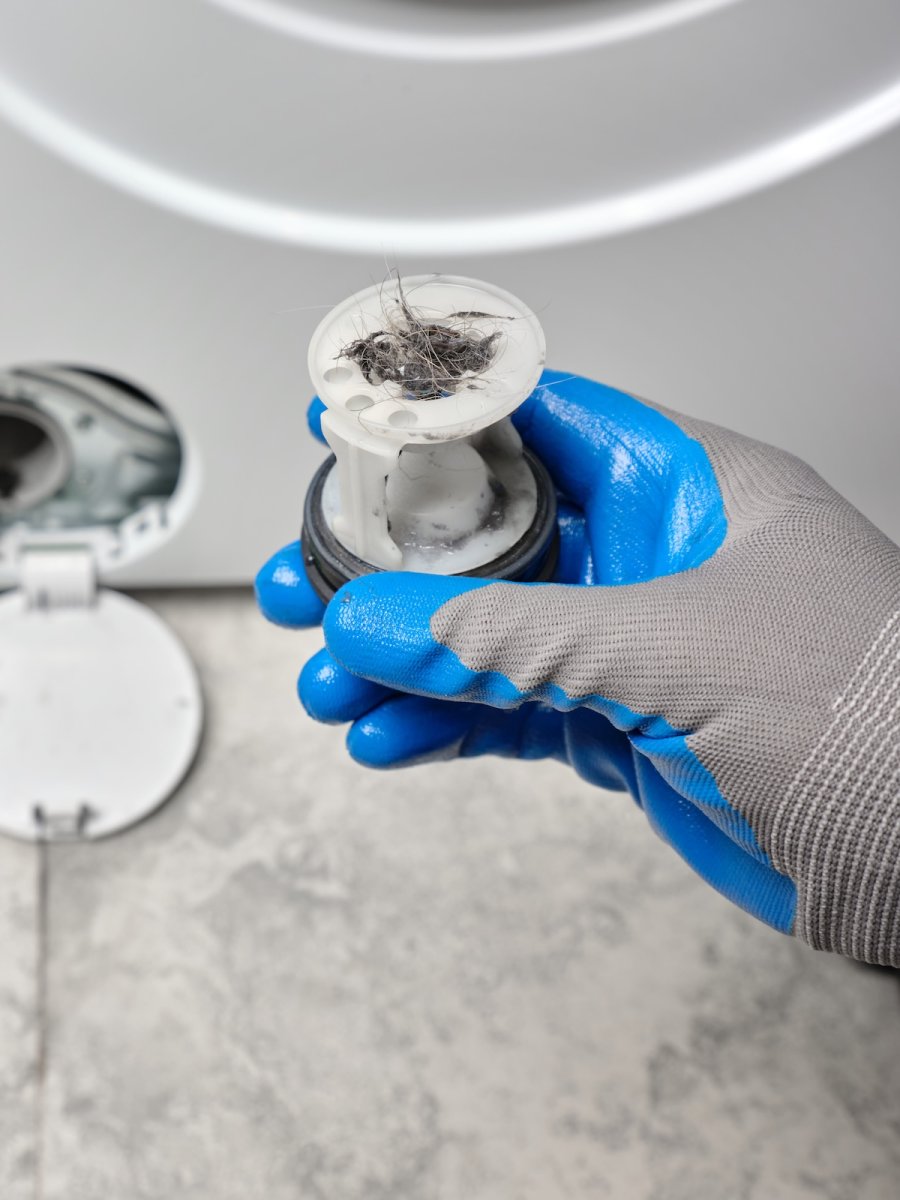
A washer that does not fill with water may seem like a big problem, until you have a washing machine that fills up but doesn’t drain, and you need to figure out what to do with a full tub of water. To avoid this issue, make sure to clean the lint and debris out of the filter about once every one to three months. This should help prevent clogs, odor buildup, and drainage issues.
If you have pets, do heavy laundry often, or there is someone in your home who frequently forgets to empty their pockets before tossing their clothes in the washer, then you should increase the frequency of your filter cleaning to about once a month, or as needed.
How to Clean Lint Out of a Front-Load Washing Machine
Cleaning your washing machine filter will keep your washer working properly and avoid drainage problems. Follow these simple steps to learn how to clean out your washing machine lint filter:
- Turn off and unplug the washing machine.
- Locate the square or rectangular filter panel at the bottom front left or right corner of the machine.
- Place a shallow tray and towel on the floor to catch leftover water.
- Pop the small door open and pull out the small emergency drainage tube (if applicable).
- Drain the drainage tube to empty any trapped water.
- Unscrew the filter and slowly pull it out.
- Remove any hair, lint, or other debris from the filter, then rinse it under warm water.
- Soak the filter in a solution that is one part warm water and one part vinegar or use a washing machine cleaner to clean the filter.
- Put the filter back in place and close the panel door, then plug the washer back in.
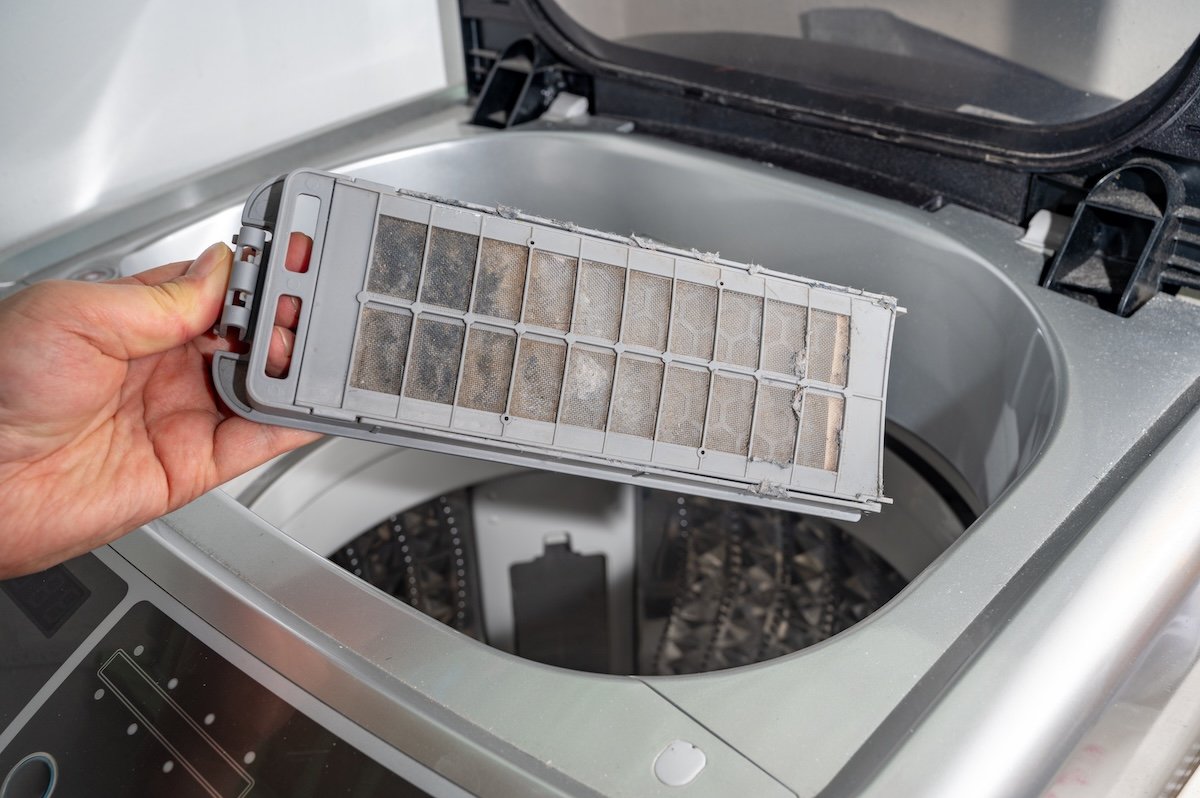
How to Clean Lint Out of a Top-Load Washing Machine
Keeping your washing machine filter clear will reduce the risk of foul odor building up inside the washer and will help keep your clothes clean, instead of having them come out full of lint and fuzz. Follow these straightforward steps to learn how to clean out the washing machine lint filter on a top-load washer:
- Turn off and unplug the washing machine.
- Locate the filter, either under the cap on the center agitator post or underneath the top lip or rim of the main wash tub.
- Take out the filter cylinder or the snap-in filtration strip.
- Remove any hair, lint, or other debris from the filter, then rinse it under warm water.
- Soak the filter in a solution that is one part warm water and one part vinegar or use a washing machine cleaner to clean the filter. Fifteen minutes is a good soak time.
- Put the filter back in place, then plug the washer back in.