We may earn revenue from the products available on this page and participate in affiliate programs. Learn More ›
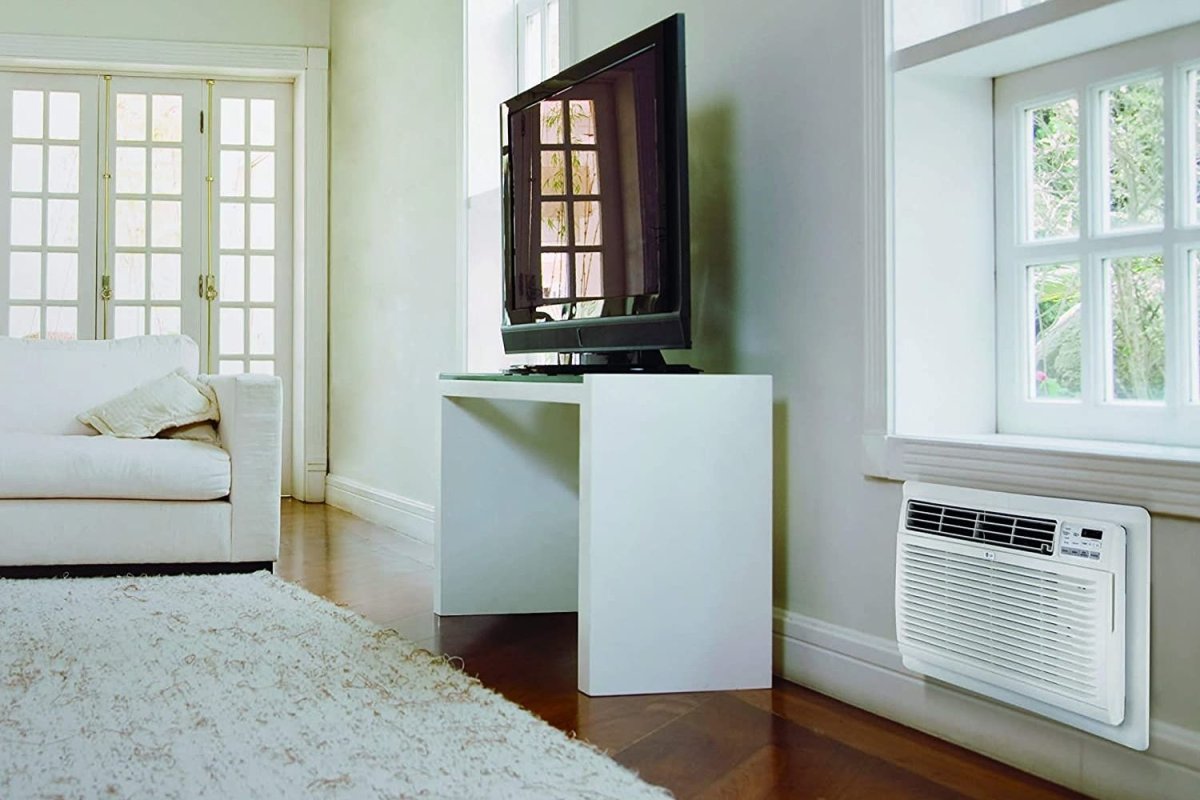
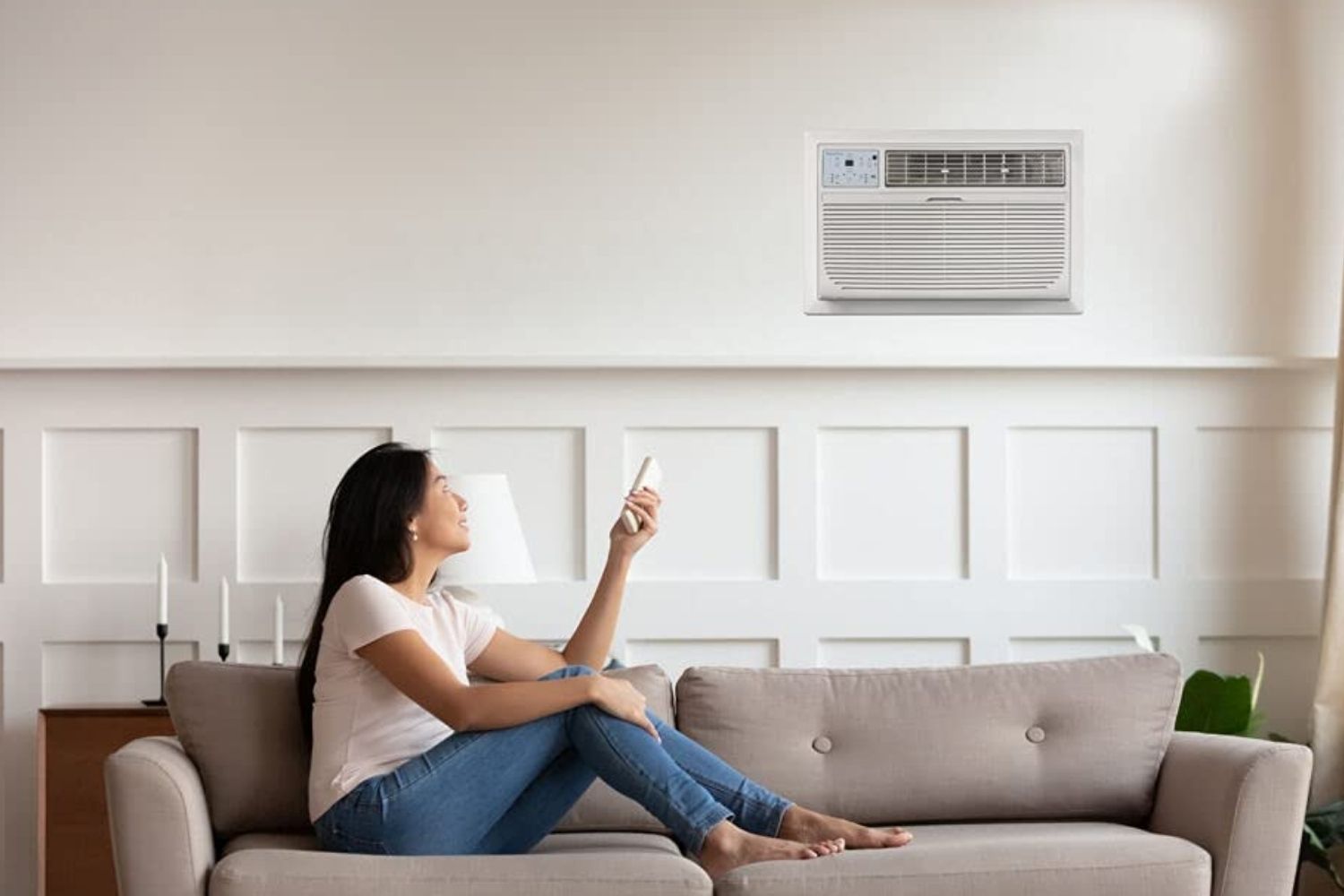
Through-the-wall air conditioners offer a viable alternative to traditional units that sacrifice a window—and the view that comes with it. While these models function similarly to window-mounted options, they slide into a dedicated wall opening instead, helping preserve both incoming light and the room’s aesthetics. Because these systems can produce up to 15,000 British thermal units (BTUs), they’re capable of cooling spaces up to 700 square feet.
After combing through dozens of the most popular models available today, we selected the LG LT1216CER as our top pick due to its impressive cooling power, energy efficiency, and adjustable louvers. To help you find the right one for your needs, we detail more about this pick and the rest of our recommendations below before diving into crucial factors to consider when shopping for one of the best through-the-wall air conditioners on the market.
Key Takeaways
- Preserve your view and aesthetics. Through-the-wall air conditioners offer a window-free cooling solution, maintaining light and room design.
- Top pick for 2026. The LG LT1216CER stands out for its cooling power, energy efficiency, and adjustable features.
- Versatile options for all room sizes. Models range from 8,000 to 15,000 BTUs, catering to spaces from 350 to 700 square feet.
- Key features to consider. Look for energy efficiency, noise levels, and additional functions like dehumidifiers and programmable timers.
Bottom line: Through-the-wall air conditioners provide efficient cooling without sacrificing window space, with top models offering a range of features and capacities to suit different needs.
- BEST OVERALL: LG LT1216CER Through-the-Wall Air Conditioner
↓ Jump to Review - BEST BANG FOR THE BUCK: Whirlpool WHAT081-1BW Through-the-Wall Air Conditioner
↓ Jump to Review - BEST FOR SMALL ROOMS: Keystone KSTAT08-1E Through-the-Wall Air Conditioner
↓ Jump to Review - BEST FOR LARGE ROOMS: Frigidaire FHTC142WA2 Through-the-Wall Air Conditioner
↓ Jump to Review - BEST QUIET: Keystone KSTAT10-1E Through-the-Wall Air Conditioner
↓ Jump to Review
Through-the-Wall Air Conditioners Comparison
| Product | BTUs | Coverage area | Combined energy efficiency ratio (CEER) |
|---|---|---|---|
| LG LT1216CER Through-the-Wall Air Conditioner | 11,800 | 530 square feet | 10.5 |
| Whirlpool WHAT081-1BW Through-the-Wall Air Conditioner | 8,000 | 350 square feet | 10.1 |
| Keystone KSTAT08-1E Through-the-Wall Air Conditioner | 8,000 | 350 square feet | 9.6 |
| Frigidaire FHTC142WA2 Through-the-Wall Air Conditioner | 14,000 | 700 square feet | 9.5 |
| Keystone KSTAT10-1E Through-the-Wall Air Conditioner | 10,000 | 450 square feet | 9.6 |
Our Top Picks
The list below narrows the field to some of the best air conditioners on the market by coverage area. These products range from 8,000 BTU models for small rooms to 15,000 BTU behemoths for large spaces. They feature multiple operating modes and Energy Star certification.
Best Overall
Photo: Amazon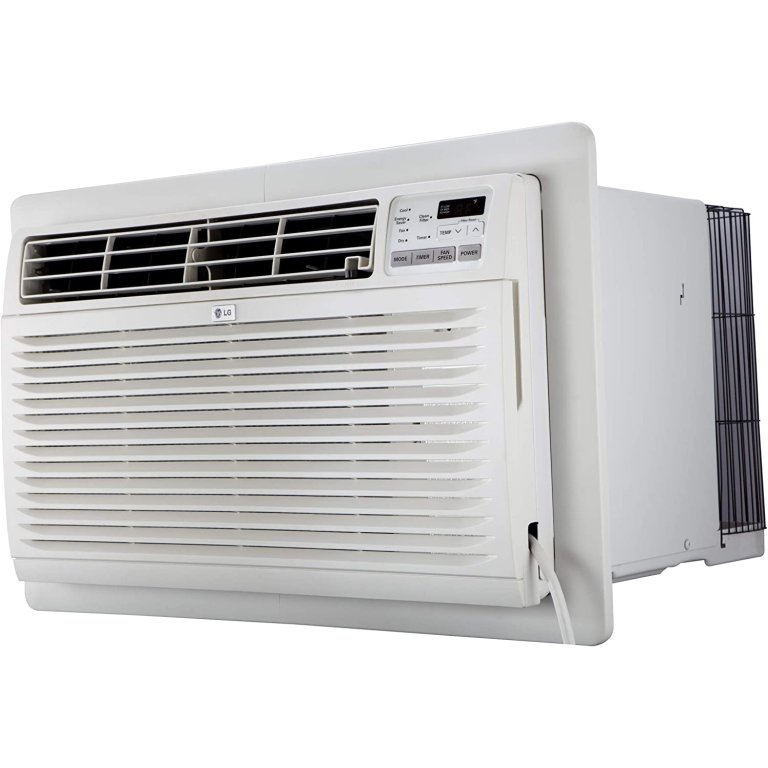
What We Like
- 2 speeds, 3 modes, and user-friendly remote
- Dry mode removes up to 3.9 pints of moisture per hour
- Automatically turns off compressor when set temperature reached
What We Don’t Like
- Some reports that the unit is loud
Product Specs
- BTUs: 11,800
- Coverage area: 530 square feet
- Combined energy efficiency ratio (CEER): 10.5
A powerful output coupled with a relatively high CEER makes this model one of the best all-around through-the-wall air conditioners available. It produces 11,800 BTUs of energy, which is enough to cool up to 530 square feet. A robust set of operating functions allows you to select between optimal cooling power or energy efficiency with three cooling speeds and three operating modes: a turbo mode for quickly cooling a warm room, an energy-saver mode that cycles the compressor on and off, and a dry mode that removes humidity from the air. Adjustable louvers that blow in four directions let you direct the airflow.
This air conditioner measures 14.41 inches high by 24 inches wide by 20.1 inches deep and includes a trim kit that creates a clean, finished look between the wall and the air conditioner. It plugs into a standard 115-volt outlet.
Get the LG through-the-wall air conditioner at Amazon or The Home Depot.
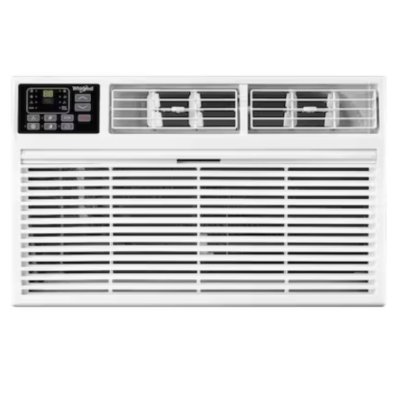
Best Bang for the Buck
Photo: Lowe’s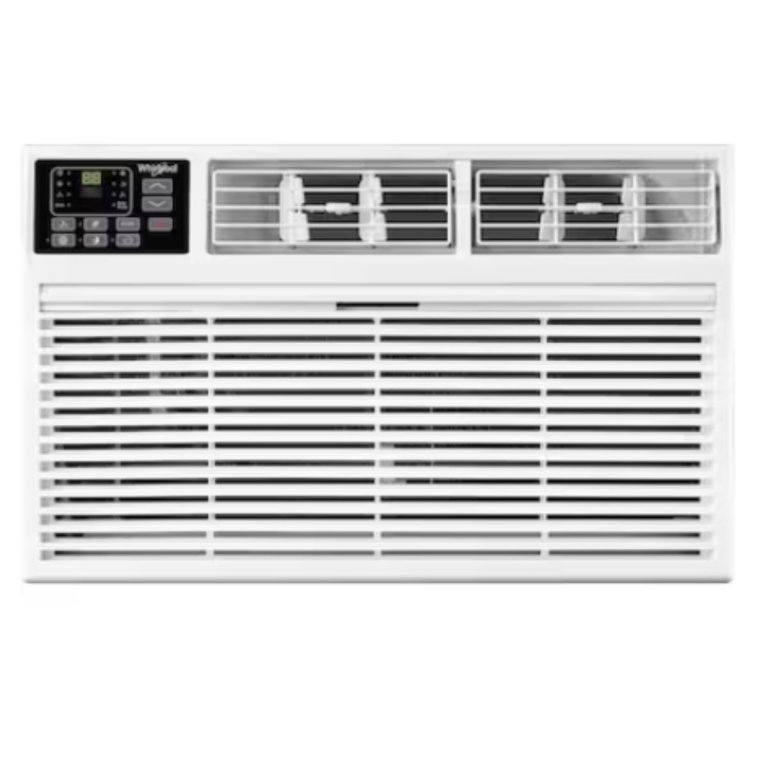
What We Like
- Competitively priced and energy efficient
- Eco mode conserves even more power
- 8-way directional air louvers
What We Don’t Like
- Low dehumidification rate
Product Specs
- BTUs: 8,000
- Coverage area: 350 square feet
- CEER: 10.1
As our Best Bang for the Buck winner, the Whirlpool 8,000 BTU through-the-wall air conditioner doesn’t just come at a competitive price, it’s also one of the most efficient options with a CEER of 10.1. To cut down on electricity usage even more, it features an Eco mode that turns the compressor off once the space reaches your target temperature, as well as a Sleep function that gradually allows the room temperature to increase overnight. The unit also includes Cool, Dry, Fan, and Auto modes, a 24-hour programmable timer, and a helpful auto-restart safety mechanism.
With eight-way directional air louvers, you can direct cool air exactly where you want it, and the three cooling speeds are simple to adjust using either the on-board digital electronic console or the included remote control. For moisture management, the dedicated dehumidifier function pulls up to 0.8 pints of water from the air every hour, which isn’t as much as many others but still makes a difference. Keeping the system operating efficiently is also easy thanks to the automatic alert that tracks the cleanliness of the removable mesh filter so you know when it’s time for a quick rinse.
Get the Whirlpool through-the-wall air conditioner at Amazon, Walmart, or Grainger.
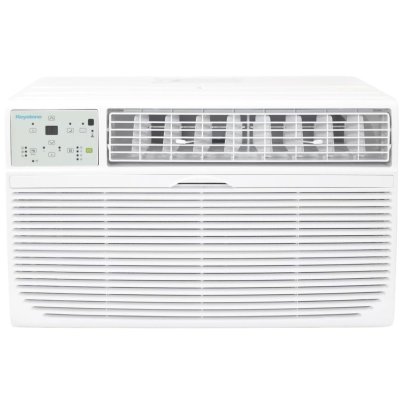
Best for Small Rooms
Keystone KSTAT08-1E Through-the-Wall Air Conditioner
Buy at Amazon Buy at Lowe's Buy at Tractor Supply Co.What We Like
- Temperature-sensing smart remote control
- Includes universal interior trim kit
- Reliable dehumidification removes excess moisture
What We Don’t Like
- Wall sleeve must be purchased separately
Product Specs
- BTUs: 8,000
- Coverage area: 350 square feet
- CEER: 9.6
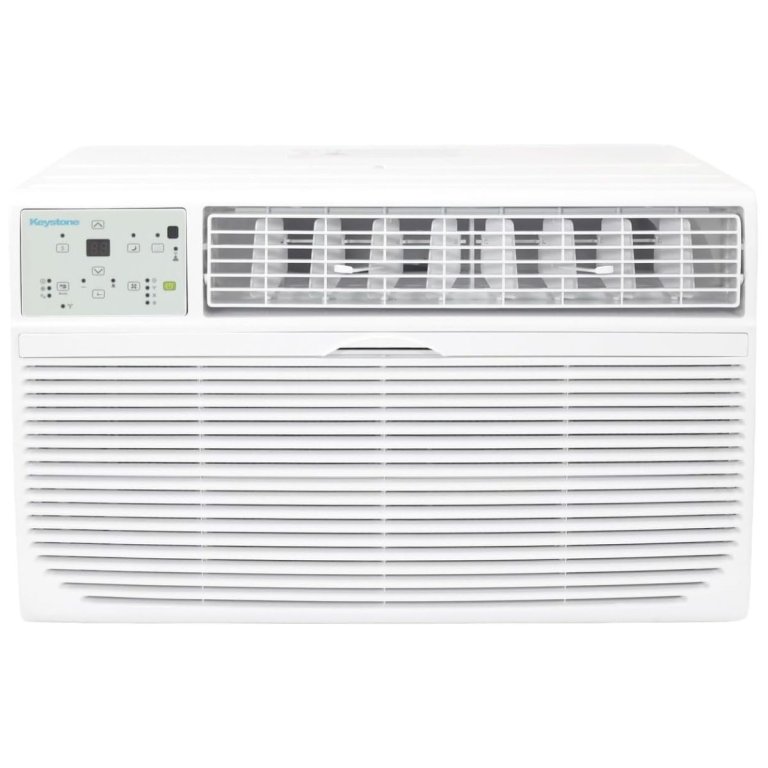
Designed to help you keep your floor and window space, the Keystone 8,000 BTU through-the-wall air conditioner provides compact climate control solution for rooms up to 350 square feet. At 14.53 inches high by 24.21 inches wide by 20.28 inches deep, it fits standard wall openings using the included universal trim kit. In terms of features, it has both Energy Saver and Sleep modes, as well as a programmable 24-hour timer to match your daily schedule. It also includes an auto-restart function, ensuring your exact settings kick back on right away if the power dips.
One thing we really love about this pick is the smart remote control, which measures the temperature exactly where you are sitting and updates the main unit every 3 minutes for localized comfort. On damp days, the built-in dehumidifier system can pull up to 2.1 pints of moisture from the air per hour, while the adjustable 4-way louvers let you angle the airflow exactly where you need it. Maintenance is simple thanks to a clean filter alert that monitors the washable mesh screen and tells you when it’s time to slide the filter out and rinse it off.
Get the Keystone through-the-wall air conditioner for small rooms at Amazon, Lowe’s, Tractor Supply Co., The Home Depot, or Best Buy.
Best for Large Rooms
Frigidaire FHTC142WA2 Through-the-Wall Air Conditioner
Buy at Amazon Buy at The Home Depot Buy at WalmartWhat We Like
- Enough BTUs to cover large rooms
- Programmable timer plus sleep and eco mode
- Built-in ionizer and easy-clean washable filter
What We Don’t Like
- No Energy Star certification
Product Specs
- BTUs: 14,000
- Coverage area: 700 square feet
- CEER: 9.5
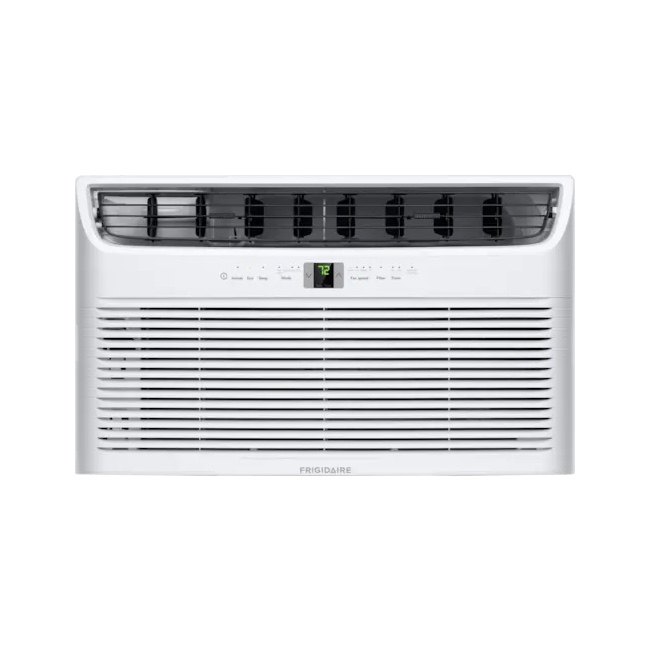
At 14.5 inches high by 24 inches wide by 21.5 inches deep, Frigidaire’s through-the-wall air conditioner is similar in size to other models but offers an impressive 14,000 BTU output to cool larger spaces up to 700 square feet. It includes standard features like a programmable 24-hour timer, multiple fan speeds, a sleep mode, and an energy-saving Eco mode, plus other useful add-ons like an auto-restart function that automatically restores previous settings after power goes out and comes back on.
You can also enjoy better air and more flexibility with this model. The built-in air ionizer reduces airborne particles to improve air quality, while a dedicated dehumidifier mode and three different fan speeds help keep the air flowing. For easy maintenance, the unit features a filter light reminder to let you know when the washable dust filter captures too much dust. When it gets full, you just remove it, wash it off, dry it, and pop it back in to keep everything working efficiently.
Get the Frigidaire through-the-wall air conditioner at Amazon, The Home Depot, or Walmart.
Best Quiet
Keystone KSTAT10-1E Through-the-Wall Air Conditioner
Buy at Amazon Buy at Lowe's Buy at The Home DepotBobVila.com
What We Like
- Includes energy-saver mode
- Easy-clean mesh filter with Check Filter alert
- LED display and electronic controls
What We Don’t Like
- Not as efficient as other models on this list
Product Specs
- BTUs: 10,000
- Coverage area: 450 square feet
- CEER: 9.6
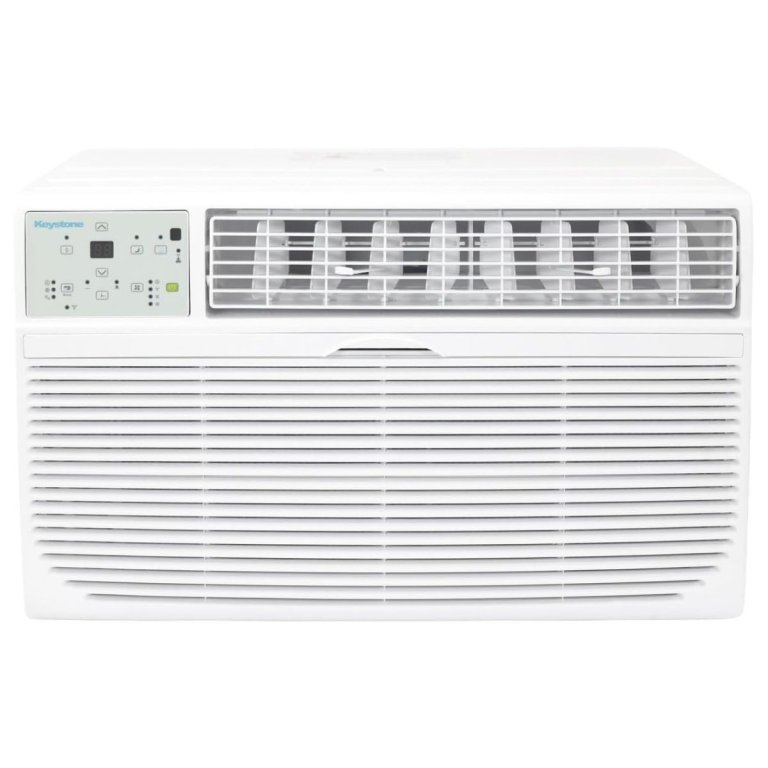
If you’re searching for an air conditioner wall unit that can cool a small apartment or single room without disrupting your sleep, be sure to check out this 10,000 BTU Keystone air conditioner. It accommodates rooms up to 450 square feet, not only cooling but can also remove up to 2.3 pints of moisture from the air per hour. The unit features adjustable four-way airflow, three cooling modes, and three fan speeds.
Perhaps the best part of this wall-mounted AC unit is its controls. The built-in thermostat reads the room temperature and adjusts cooling power as needed, and you can program the 24-hour timer to align with your schedule and save energy. It also comes with a remote for easy adjusting from across the room.
Get the Keystone quiet through-the-wall air conditioner at Amazon, Lowe’s, The Home Depot, or Best Buy.
Jump to Our Top Picks
How We Chose the Best Through-the-Wall Air Conditioners
Lots of factors went into selecting the best through-the-wall air conditioners for this guide. We spent time looking at current technologies and products from all of the leading brands.
Cooling capability is obviously a key element, but performance is only one consideration. It was important to us to offer a wide variety of choices, so we included high-output models as well as smaller devices for those with more modest spaces to cool. Efficiency is another key factor and has a big impact on running costs. Noise levels were a key consideration. Plus, ease of installation played a part in our decisions, as did reliability and durability.
In addition to our own research, we collated information from other expert sources and from buyers who gave feedback on what these wall unit air conditioners are like to live with day-to-day.
What to Consider When Choosing a Through-the-Wall Air Conditioner
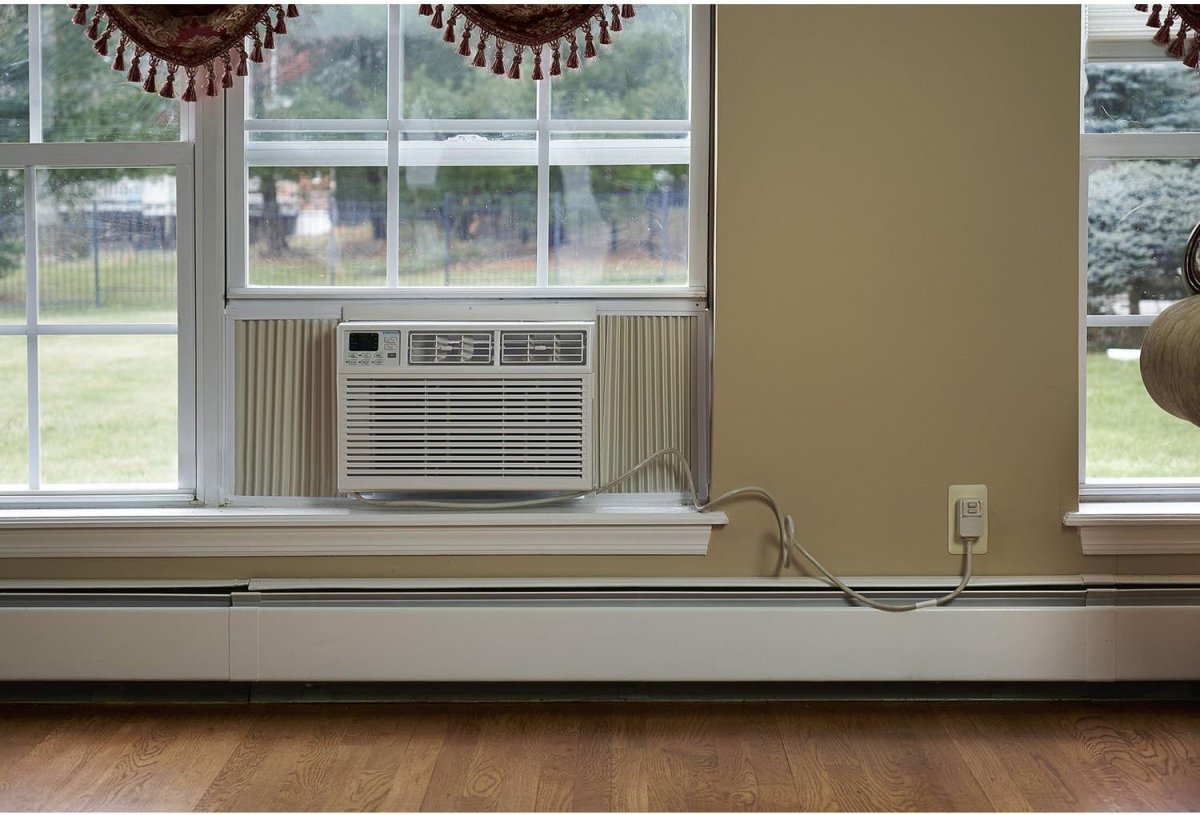
While selecting the right through-the-wall air conditioner to suit the size of the room is crucial, other factors are also important, including energy efficiency, operating modes, and whether the wall unit has a heating function. Below, learn more about these and other attributes of air conditioner wall units.
Location
Through-the-wall air conditioners are ideal for rooms that remain warmer than other parts of the home or that aren’t served by a central air conditioner’s ductwork. This could include a garage, a bedroom, or a bonus room.
While it’s possible to mount a wall air conditioner anywhere on an exterior wall, most units are mounted close to the floor so they are less conspicuous and don’t detract from a room’s aesthetics. When choosing a location, make sure there is enough space around the installation location on the exterior side to allow the air conditioner to draw air into the compressor.
Wall Thickness
Through-the-wall air conditioners are installed into a sleeve that fits into a hole in the wall. In order for the air conditioner to fit properly, the depth of the sleeve should be equal to or greater than the thickness of the wall. Most walls are about 5 to 7 inches thick, depending on the type of siding used on the home. Most air conditioner sleeves fit walls that are 8 inches thick or less.
Square Footage
Matching the size of the air-conditioning unit to the size of the room is crucial to selecting the right model. If the air conditioner is too small, it won’t be able to cool the space to the desired temperature. Purchasing an air conditioner that’s too large is overkill. The air conditioner will be more expensive than a smaller unit and cost more to run.
The best way to determine the right size air-conditioning unit is by matching the square footage in the room to the air conditioner’s energy output, which is measured in BTUs. Most wall air conditioners range in output between 8,000 and 18,000 BTUs. An 8,000 BTU air conditioner can cool up to 350 square feet, while an 18,000 BTU model cools up to 1,000 square feet.
While many through-the-wall air conditioners use a standard 115-volt outlet, some high-output models require a 230-volt connection, which can require special wiring.
Energy Efficiency
The more cooling power AC units mounted on the wall produce, the more electricity they use. For example, an 18,000 BTU air conditioner uses more than twice the amount of electricity of an 8,000 BTU air conditioner.
To compare energy efficiency between two wall air conditioners, simply refer to the manufacturers’ energy guides or calculate each unit’s energy efficiency ratio by dividing its watts by its BTUs to determine its Combined Energy Efficiency Rating (CEER). The higher the CEER, the more efficient the air conditioner is. Since most through-the-wall air conditioners have a CEER rating between 9 and 11 and must have a rating of at least 12 to earn an Energy Star certification, it’s rare to find a wall AC that’s Energy Star certified.
Heating Function
Many through-the-wall air conditioners also offer a heat mode through a small built-in heating element. Air conditioners with heater functions that plug into a standard 115-volt outlet, as opposed to a 220-volt outlet, can produce around 5,100 BTUs of heat, which is enough for 144 square feet, while air conditioners that use a 230-volt connection can produce around 10,600 BTUs of heat, which is enough to heat a 500-square-foot space.
Keep in mind that the heating function is meant to supplement a furnace in the wintertime or provide a touch of warmth on a cool day. Through-the-wall air conditioners are not meant to serve as a main source of heat.
Additional Features
Many through-the-wall air conditioners have additional features that purify the air in a room, adjust the airflow, or allow you to customize its operation. A dehumidifier mode uses the air conditioner to reduce the humidity inside a room by running the fan on low mode and intermittently turning on the condenser. A fan-only mode circulates air throughout the room without using the condenser to cool the air, while a sleep mode runs the air conditioner at a quieter noise level while also slowly increasing the temperature through the night to accommodate for the natural decline in body temperature that happens during sleep.
Most wall air conditioners also have programmable 24-hour timers that automatically shut the air conditioner off after a set amount of time. Other features include louvers that allow you to adjust the direction of the air and air filters that clean the air by removing airborne contaminants such as pollen, dust, and mold spores.
Noise Level
Like window air conditioners, through-the-wall air conditioners include a compressor that creates the cool air and an air handler that blows air into the room using a large fan. This dual design tends to be noisier than central air conditioners, which feature a compressor that is outside the home and an air handler that is typically tucked away in an attic, or a ductless air conditioner, which has a compressor that is on the exterior home.
Since the air compressor is in close proximity to the living space, through-the-wall air conditioners are noisier, producing about 50 decibels, which is similar to light traffic or moderate rainfall. Some through-the-wall air conditioners feature quiet operation settings, which can drop the decibel level into the 30s. Keep in mind that when an air conditioner operates in quiet mode, it runs the compressor at a lower level, producing less cold air.
Aesthetic
Measuring around 20 inches high by 24 inches wide by 15 inches deep, a through-the-wall air conditioner is a sizable appliance. While these air conditioners are typically installed in an unobtrusive location, such as below a window, they are still a very visible feature in a room. So as not to detract from a room’s aesthetics, most models are white with understated features that include simple adjustable louvers that can direct airflow and a slatted vent that covers the filter and air intake. Some through-the-wall air conditioners include a trim kit that allows you to create a more finished look between the appliance and the wall.
FAQs
If you’re wondering how wall air conditioners differ from window air conditioners or which model to choose for your home, then read on for answers to some of the most commonly asked questions about these appliances.
No, they are not. Window and wall air conditioners are two distinctly different types of air conditioners. Both types of air conditioners draw air in from the outside and cool it before blowing it into the room, but there are important differences. A window air conditioner fits inside a window of the home, between the sash and sill. It isn’t suitable for all types of windows, and the window needs to be open (though sliding side panels fill any gaps). A through-the-wall air conditioner fits into a hole in an exterior wall so there’s no need to leave a window open.
There are a number of considerations when choosing an air conditioner for your wall, and these are discussed in detail in the article above. Room size has a major impact, so this is the starting point. Measure the square footage of the room so you know the size of the air conditioner that will cool that space. Also check your wall thickness and the installation requirements of models that meet your performance requirements. Finally, compare things like power consumption, controls, and any user-friendly features.
In terms of electricity supply, most through-the-wall air conditioners plug into a standard 115-volt outlet. However, larger models or those that provide heating may require more power, hence a 230-volt connection. This will usually involve running new wires from the breaker box; unless you have the required skills, it’s a good idea to call in a suitably qualified professional.
In terms of power consumption while running, it will depend on the model chosen. One way to judge is to look at the wattage. Higher numbers mean more power used. Air conditioners with Energy Star certification need to meet criteria set out by the U.S. government, so these are usually more efficient than nonrated models. Many manufacturers also provide an EER. Higher numbers are better.
A unit can last as long as 10 years if maintained properly. That means changing the air filter and examining the hoses. Naturally, if you live in a warm climate and run the air conditioner most of the year, it may not last as many years as, say, a unit being used in a climate with cold winter weather.
Wall-mounted air conditioners are not powerful enough to cool an entire home, so buyers will want to pay attention to the manufacturer’s recommendations in terms of appropriate room size. Installation can be limited by several factors, including the amount of wall space available, the wall material, and how close external walls will be to the unit once installed. They can also be difficult to access when changing filters or performing regular maintenance, so you may need a ladder or stool.
No, because wall air conditioning units are designed to hold up to harsh weather conditions, covers aren’t necessary. However, if your area gets a lot of snow or experiences frequent freezing temperatures in the winter, a cover can add extra protection.
Match the size of the air-conditioning unit to the size of the room you wish to cool. Manufacturers provide this information for each of their units; it’s crucial to measure your space before selecting a model.