We may earn revenue from the products available on this page and participate in affiliate programs. Learn More ›
Whether you’re hanging shelves, installing cabinets, or laying tile, getting things perfectly straight is key to a professional-looking result. That’s where levels come in. Knowing the different types of levels, and when to use each one, can help DIYers avoid crooked installations, uneven surfaces, and frustrating do-overs.
From compact torpedo levels to long box levels and high-tech laser levels, each tool serves a specific purpose. “If you’re measuring something you can reach, like walls, cabinets, or countertops, a simple spirit level will usually do the trick,” says Danny Niemela, vice president and CFO of ArDan Construction in Scottsdale, Arizona. We’ll break down the most common types of levels and explain when each works best.
What is a level?
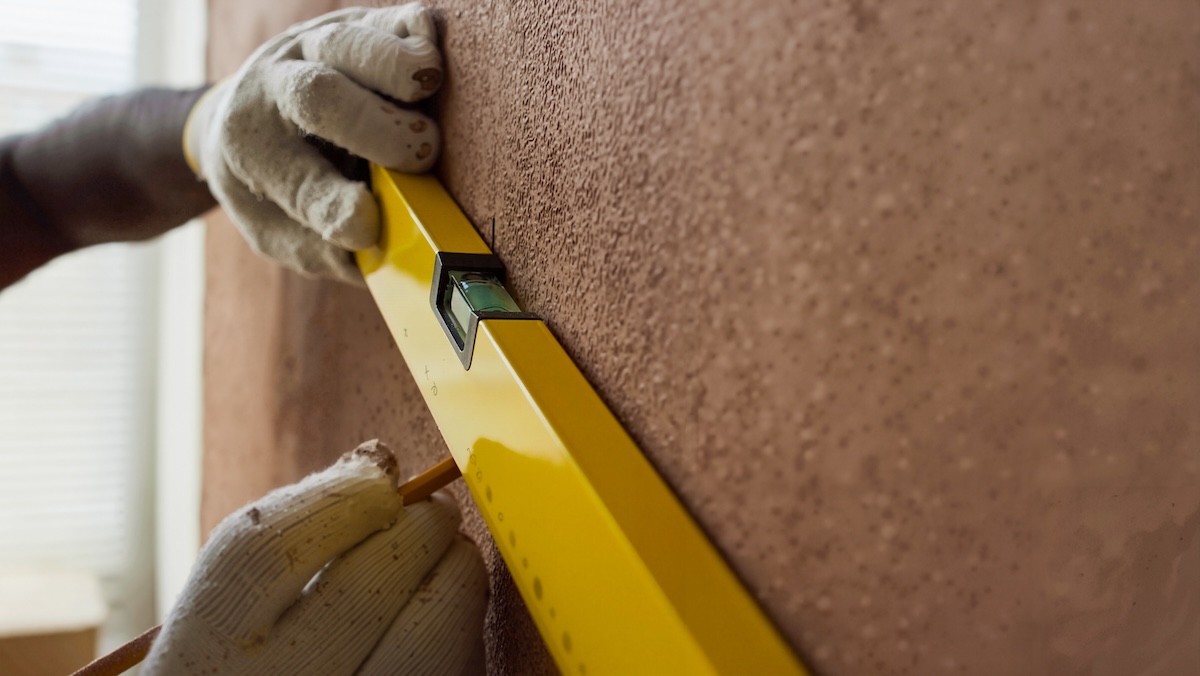
A level is a tool that helps you check whether a surface is perfectly horizontal (level) or vertical (plumb). DIYers and professionals alike rely on levels for tasks like hanging shelves, installing cabinets, setting posts, and aligning tiles. While there are several different types of levels, most traditional models share the same basic components that work together to show whether a surface is straight.
Below are the main parts of a typical common spirit (carpenter’s) level.
- Vial (bubble tube): A sealed, slightly curved tube filled with liquid (usually alcohol or another clear fluid) with a small air bubble inside. The bubble moves to the highest point, indicating whether the surface is level.
- Bubble: The air pocket inside the vial. When the bubble sits precisely between the marked lines on the vial, the surface is level or plumb.
- Vial markings (level lines): These are the two parallel lines printed on the vial that indicate the correct bubble position for a level reading.
- Frame (body): The rigid structure that holds the vials. Frames are typically made from aluminum, plastic, or composite materials and come in different shapes, such as I-beam vs. box level designs.
- End caps: Protective pieces on each end of the level that help absorb impacts and prevent damage if the tool is dropped.
- Handholds (grip openings): Cutouts in the frame that make longer levels easier to carry and position.
Together, these components allow the level to accurately show when a surface is perfectly horizontal or vertical, so it is easier to achieve precise results. We’ve listed common types of levels for everything from small DIY projects to the best levels for construction jobs.
Types of Levels
Although all levels perform the same basic function, they come in several different styles designed for slightly different tasks. The following types of levels are the most common tools used by DIYers and professionals, each suited for different projects and working conditions.
1. Carpenter’s (Spirit) Level
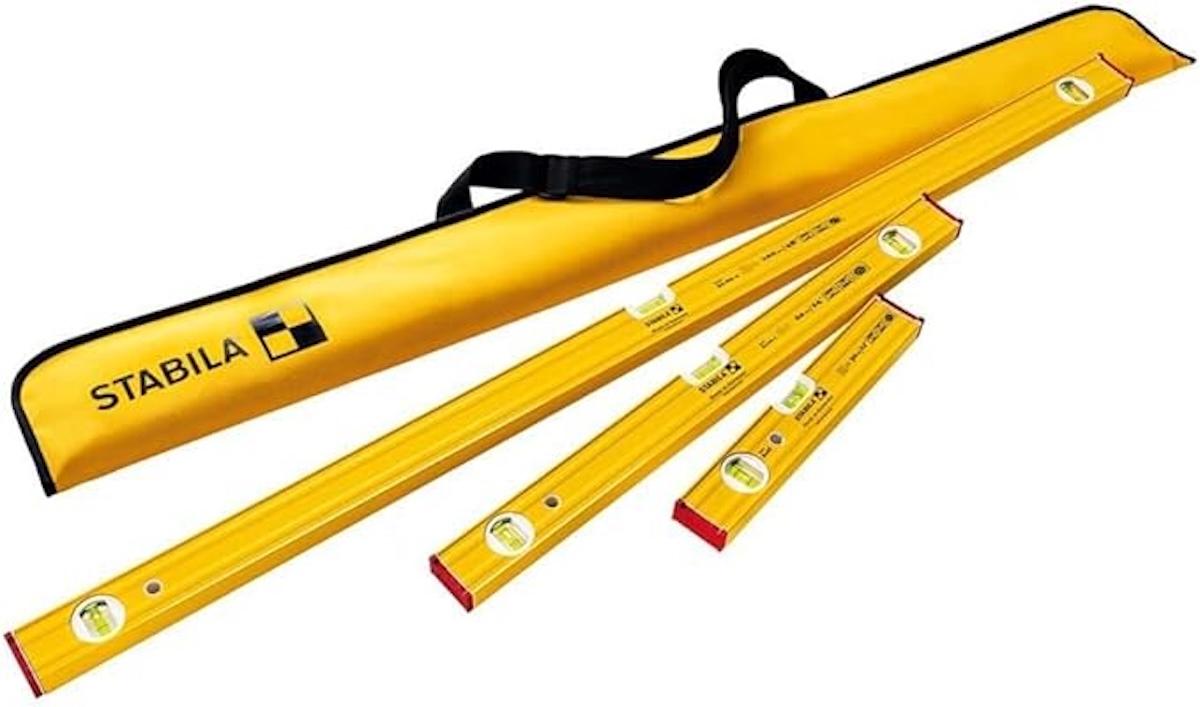
A carpenter’s level, also called a spirit level, is the traditional leveling tool used for many basic construction and DIY tasks. These levels typically range from 2 to 8 feet long, though 24-inch and 48-inch versions are the most common for everyday projects. Most carpenter’s levels contain three vials: one in the center for checking horizontal level and two mounted at the ends for vertical (plumb) readings; this means you can check true vertical in some situations without needing a plumb bob.
Modern carpenter’s levels are usually made from aluminum or composite materials, though older versions were crafted from hardwoods like rosewood or mahogany. Their longer length helps reveal dips or uneven surfaces that shorter levels might miss, making them useful for aligning cabinets, checking framing, or leveling countertops. “Longer levels also reduce the number of placements needed to check a surface, which helps minimize small measurement errors”, says Niemela.
Best For: Checking level or plumb on larger surfaces such as cabinets, door frames, countertops, and framing.
Our Recommendation: Stabila Pro Set 80 AS Spirit Levels With Case at Amazon for $124.95
This three-piece set includes the most useful level sizes—12, 24, and 48 inches—so it is a versatile and durable option for everything from small DIY tasks to larger carpentry projects.
2. Box Level
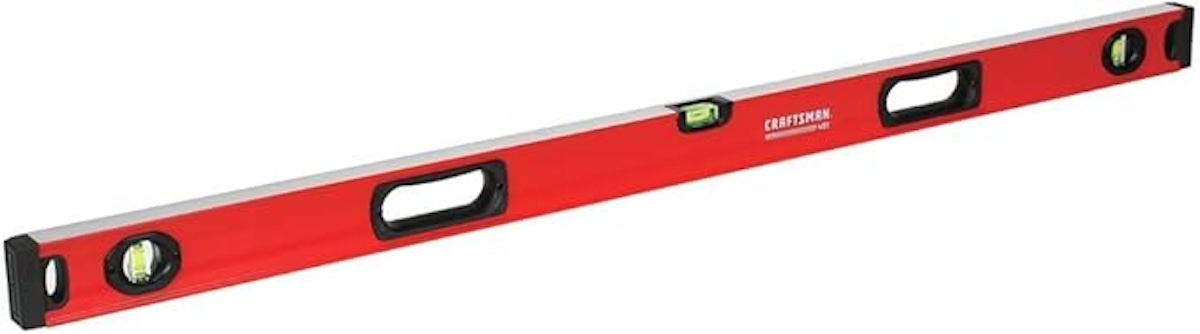
A box level is a modern version of the traditional spirit level, designed with a rectangular “box beam” frame that’s stronger and more durable than older I-beam styles. Most box levels are made from rigid aluminum and have two or three vials for checking level, plumb, and sometimes 45-degree angles. The enclosed frame helps the tool resist bending or twisting, which helps maintain accuracy even after repeated use on job sites.
Box levels are widely used by contractors and serious DIYers because they combine durability with reliable accuracy over longer spans. They’re commonly available in lengths ranging from about 24 inches to 72 inches, though 48-inch models are among the most versatile for everyday construction and remodeling work. According to Niemela, “a 48-inch level is often the most practical size because it’s long enough to check cabinets, door frames, and countertops without needing multiple placements.”
Best For: General carpentry and remodeling tasks such as installing cabinets, checking framing, and leveling countertops.
Our Recommendation: Craftsman CMHT82347 48-Inch Box Beam Level at Lowe’s for $39.98
This durable 48-inch aluminum box level offers clear vials, a sturdy frame, and a budget-friendly price, making it a practical example of a versatile level for everyday DIY and construction tasks.
3. Torpedo Level
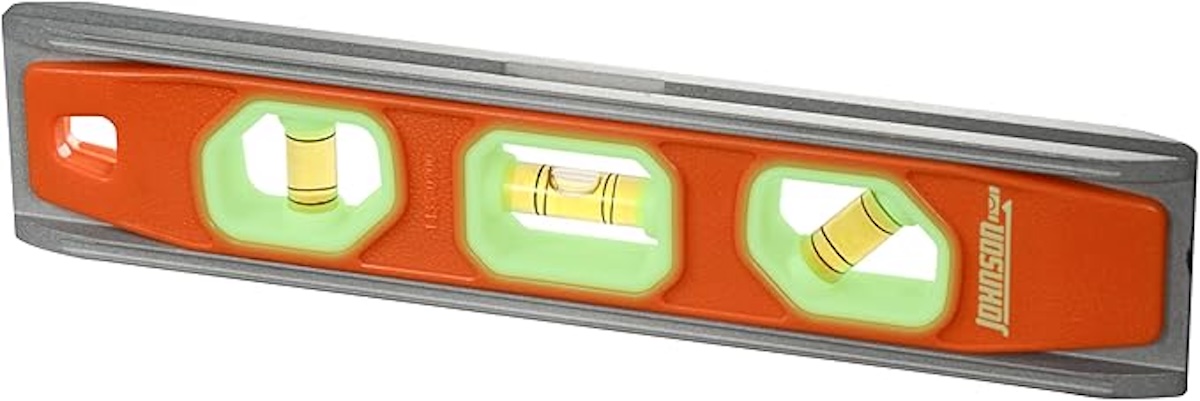
A torpedo level is a compact spirit level designed for quick checks in tight spaces where longer levels won’t fit. Most torpedo levels measure about 9 inches long and feature a slim, tapered shape that makes them easy to slip into a pocket or tool belt. Despite their small size, many models include two or three vials, usually for horizontal (level), vertical (plumb), and sometimes 45-degree angle measurements.
Because they’re lightweight and portable, torpedo levels are especially handy for smaller installation tasks. Electricians, plumbers, and HVAC technicians often rely on them when working in confined areas such as inside cabinets or around pipes. They’re also one of the most convenient tools to keep nearby for many DIY projects. In fact, Niemela says “a 9-inch magnetic torpedo level is the one type of level most homeowners should own,” thanks to its versatility for helping to complete everyday tasks around the house.
Best For: Quick leveling checks in tight spaces, like when installing fixtures, leveling appliances, or hanging shelves.
Our Recommendation: Johnson Level & Tool Magnetic Glow View Torpedo Level at Amazon for $18.48
This compact torpedo level combines strong magnets, easy-to-read vials, and glow-in-the-dark surrounds, combining for a practical and versatile option for tight spaces and low-light work areas.
4. Mason’s Level
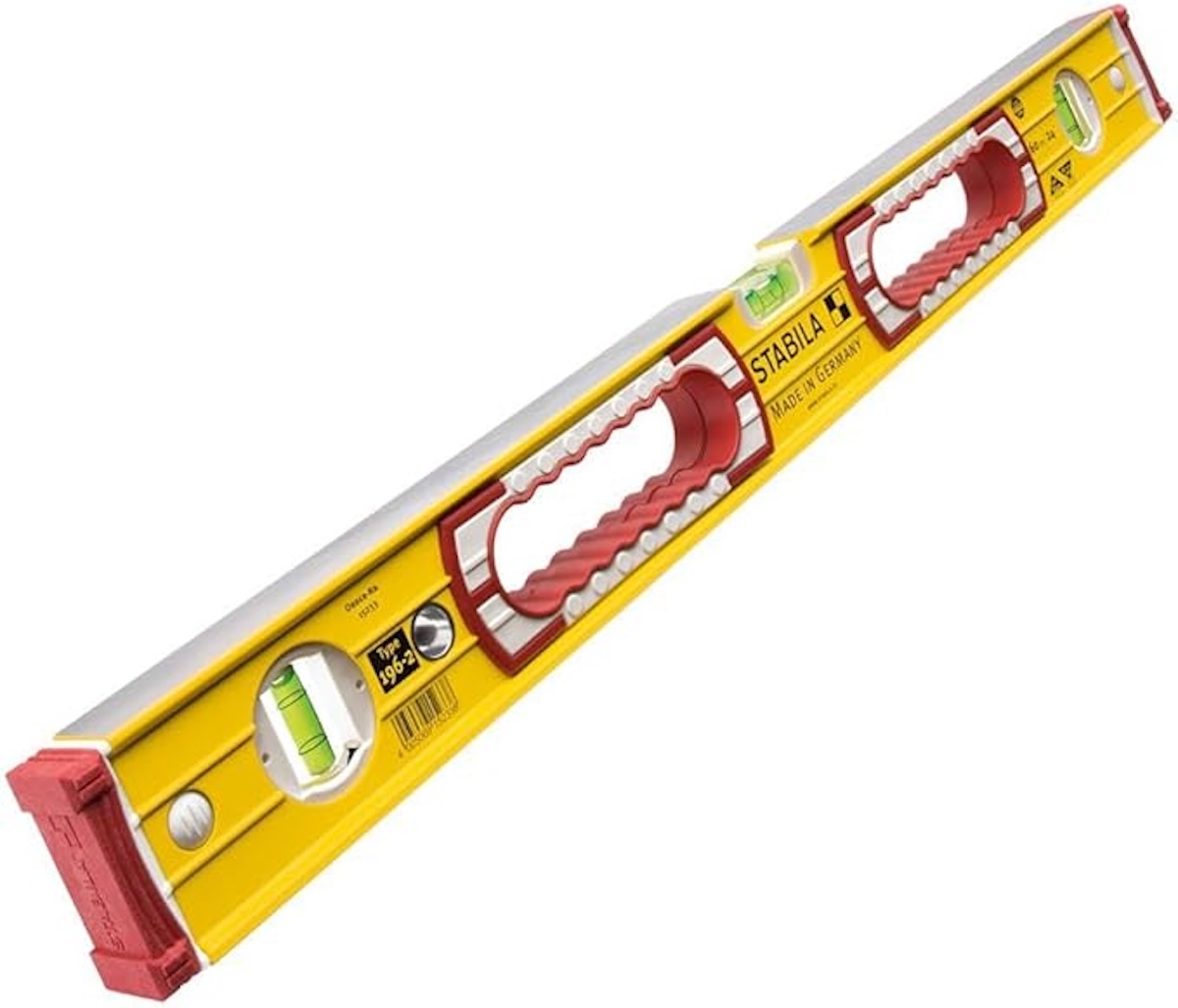
A mason’s level is a long, sturdy level designed for masonry and other construction tasks where greater length helps improve accuracy. These levels are typically 4 feet or longer, allowing them to span large surfaces and reveal dips or uneven areas that shorter tools might miss. Because longer levels reduce the number of placements needed when checking a surface, they also can help minimize small cumulative errors during layout and installation.
Mason’s levels are commonly used when working with brick, stone, concrete, and block, where maintaining straight, even courses is essential. Their added length also is useful for aligning walls, checking masonry rows, and ensuring surfaces remain level over a wide span. However, longer levels can be awkward in tight spaces, which is why many pros keep a shorter torpedo or 2-foot level on hand for smaller or confined tasks.
Best For: Checking level across long surfaces such as masonry courses, walls, and other large construction elements.
Our Recommendation: Stabila Builder’s Level at Amazon for $103.90
With a long, rigid frame and highly visible vials, this is a dependable example of a mason’s level designed to maintain accuracy across large surfaces like masonry walls and concrete work.
5. Laser Level
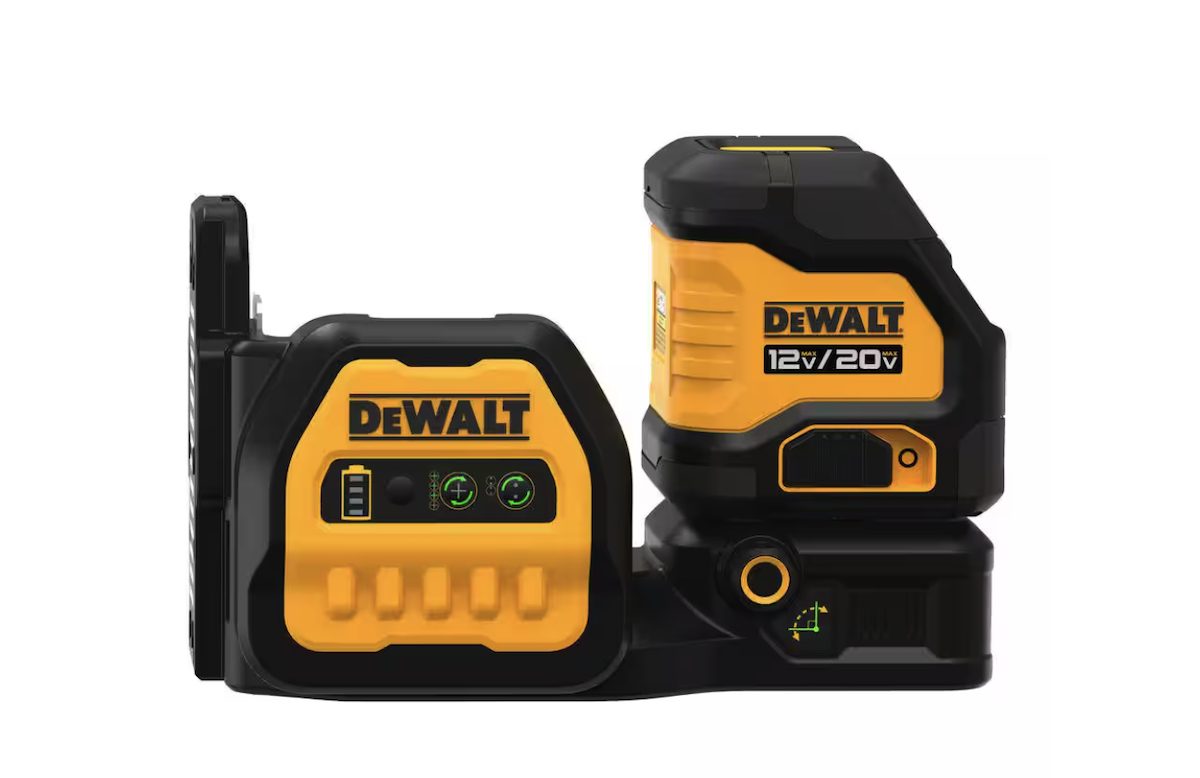
A laser level projects a straight beam of light across a surface to create a highly visible reference line for leveling or alignment. Unlike traditional bubble levels that must physically touch the surface to measure, laser levels can project lines across entire rooms or large work areas, which is especially useful for layout tasks that span long distances. Many of the best laser levels project horizontal, vertical, or cross-line beams, and some even self-level automatically when placed on a tripod or flat surface.
Laser levels are common tools for projects like installing cabinets, laying tile, aligning wall trim, or establishing consistent heights for fixtures across a room. Because they project a continuous line, they help reduce the need to repeatedly reposition a manual level. For larger projects, this can improve both speed and accuracy. “If something takes you out 4 feet or more, a laser will save you time and eliminate mistakes over long distances,” Niemela says. Pros might rely on one of the best rotary laser levels, which can reach up to 2,000 feet.
Best For: Large layout tasks such as tile installation, cabinet alignment, and establishing level lines across rooms.
Our Recommendation: DeWalt DCLE34020G Cross Line Laser Level at The Home Depot for $539
With a strong magnetic mount and rugged construction, this laser level is a reliable example of a tool designed for accurate long-distance layout and alignment.
6. Post Level
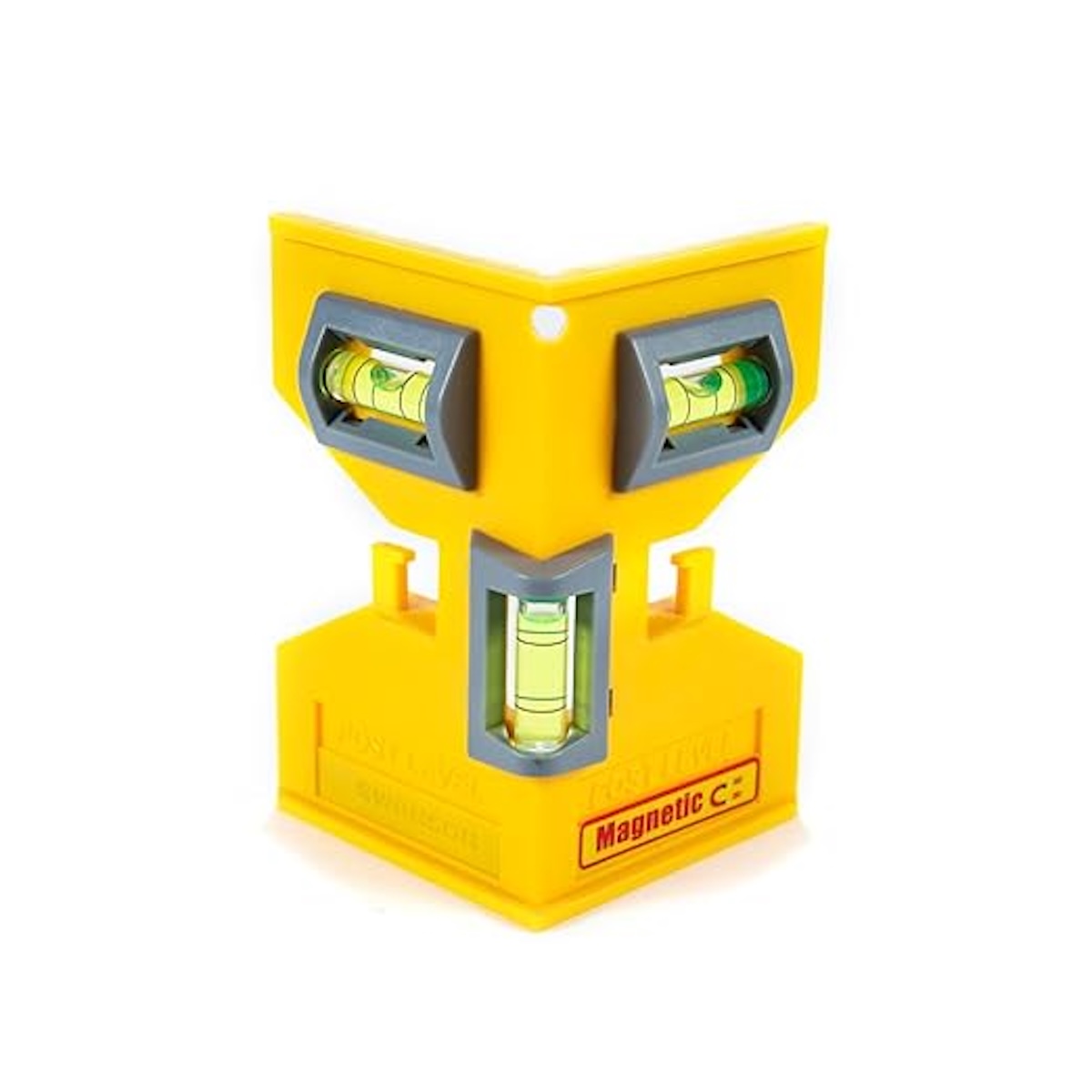
A post level is designed specifically to help position vertical posts perfectly plumb during installation. Unlike standard levels that check one surface at a time, a post level typically features two perpendicular vials and a right-angle body that fits snugly around the corner of a post. This allows you to check two sides of the post simultaneously, making it easier to ensure the post is straight in both directions.
Post levels are especially useful for outdoor construction projects where posts must be set accurately before concrete or fasteners lock them in place. Common uses include installing fence posts, deck supports, mailbox posts, and pergola columns. Because they’re lightweight and often include elastic bands or magnets to hold them in place, post levels allow installers to keep their hands free while making adjustments.
Best For: Making sure posts are perfectly plumb during installation of fences, decks, pergolas, and similar structures.
Our Recommendation: Swanson Tool Co. Magnetic Post Level at Amazon for $8.99
Its wraparound design with dual vials, built-in magnets, and an elastic strap makes it a simple and effective tool for keeping fence and deck posts perfectly plumb during installation.
7. Line Level
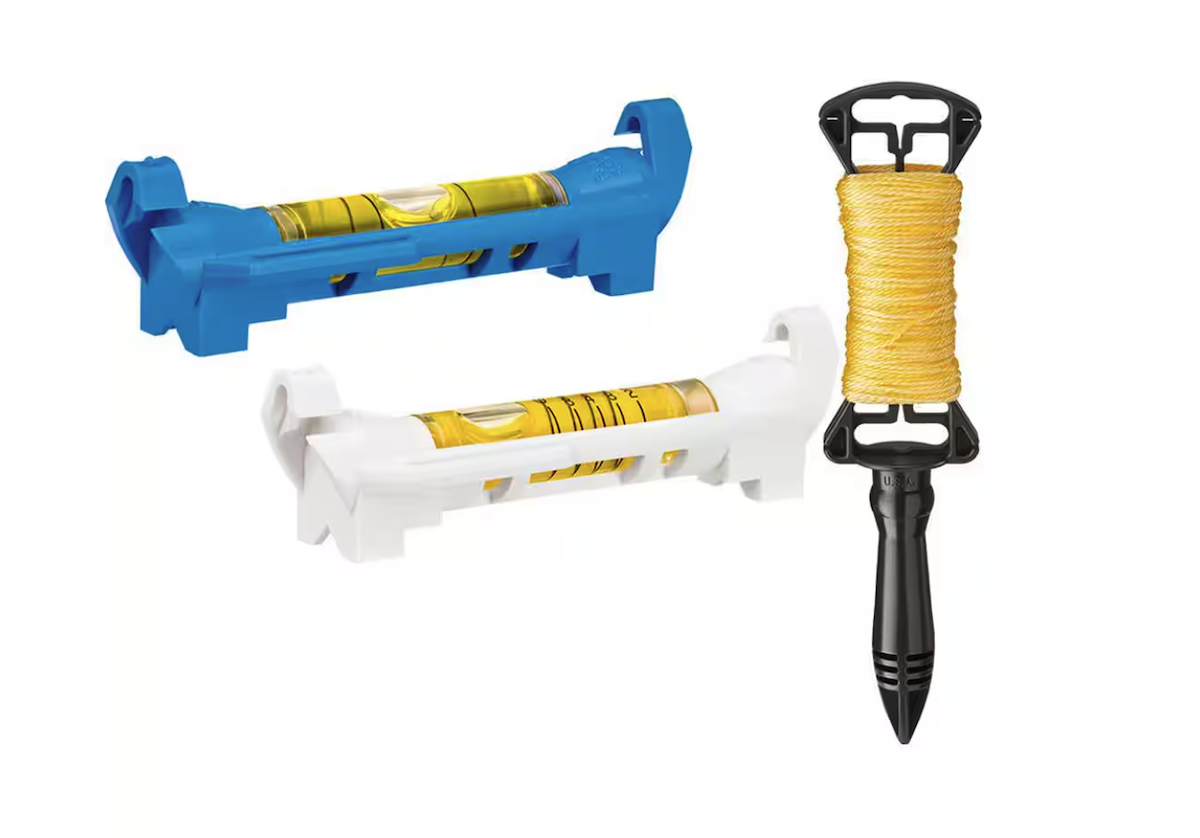
A line level is a small leveling tool designed to attach to a taut string stretched between two points. Slightly larger than the vial, the level typically has small hooks on each end so it can hang from the line near the midpoint. When the bubble sits between the vial’s markings, the string itself is level, allowing you to check alignment across a distance.
Line levels are commonly used for layout work outdoors, such as aligning fence posts, checking the pitch of gutters, or positioning concrete piers. Carpenters also might use them when framing floors or ceilings where a reference line is already in place. However, accuracy depends on keeping the string tight, since even a slight sag can affect the reading. Because of this limitation, line levels are generally best suited for rough layout work rather than precision measurements.
Best For: Establishing level reference lines over longer distances for layout tasks like fences, posts, and masonry work.
Our Recommendation: Empire Line 3-Piece Levels Set at The Home Depot for $10.39
This simple kit includes two line levels and a 100-foot mason’s line, providing everything needed to create accurate level reference lines for landscaping, masonry, and outdoor layout projects.
8. Water Level
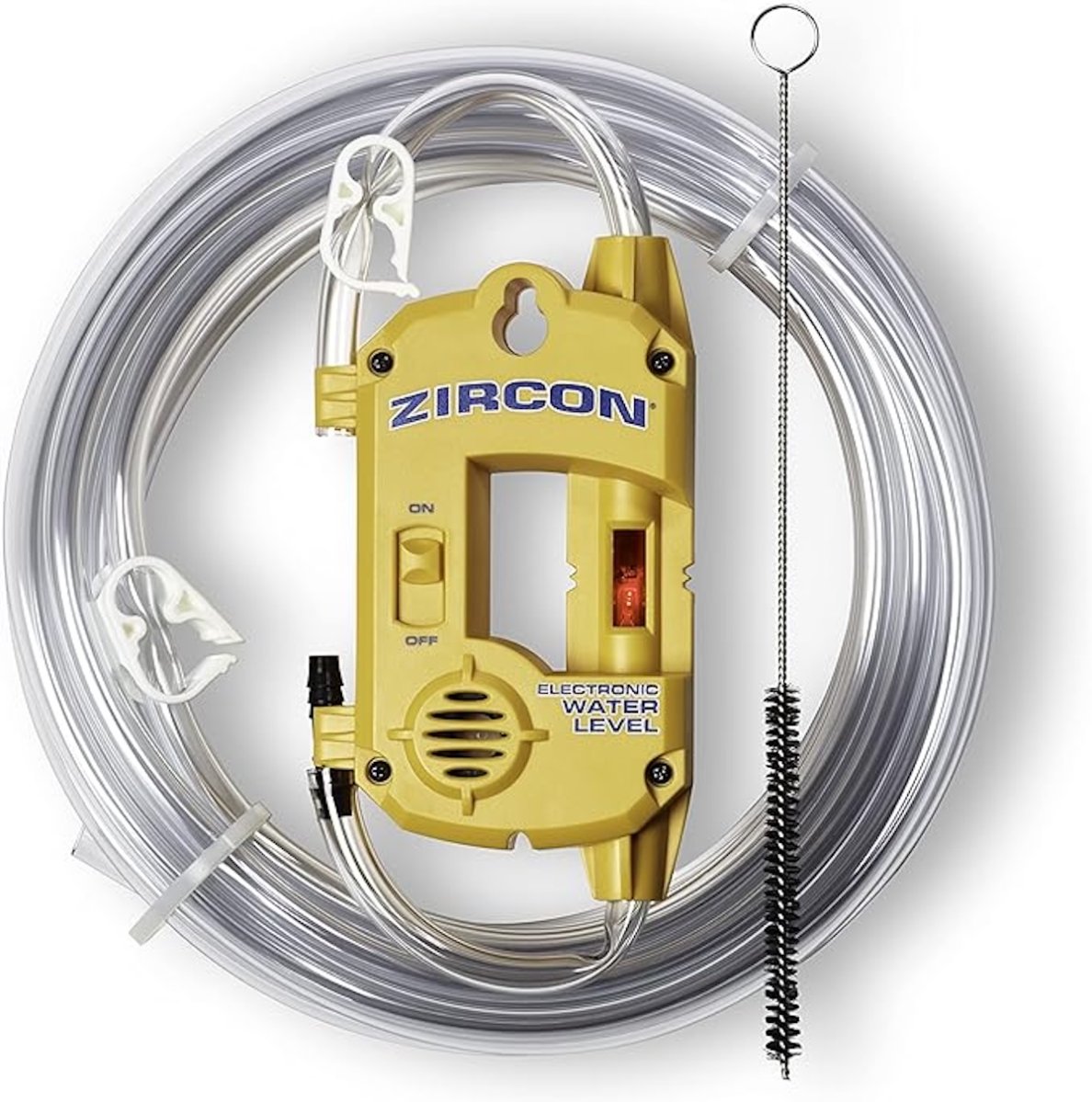
A water level works differently from traditional bubble levels. Instead of using a vial and air bubble, it uses Pascal’s law, which states that water naturally seeks the same level in connected containers. A typical water level consists of two clear cylinders connected by a long flexible tube filled with water. When the cylinders are held at different points, the water inside each one will settle at the same height if those points are level.
This simple principle helps to compare heights over long distances, even when obstacles block the line of sight. Water levels are often used for tasks like establishing a consistent height for deck footings, aligning dropped ceilings, or transferring measurements across large areas. Because the tubing can be many feet (or even hundreds of feet) long, a water level is especially useful when working on projects where traditional levels or lasers can’t easily reach.
Best For: Leveling points over long distances or around obstacles where standard levels or laser lines can’t reach.
Our Recommendation: Zircon Electronic Water Level at Amazon for $53.46
This electronic water level uses a 25-foot hose and audible signal to help a single user quickly establish accurate level points—even around corners or out of sight of the control unit.
Choosing the Right Level for Your Project
Not all levels are designed for the same tasks, so choosing the right one depends on the type of project you’re tackling and how much precision you need. Small DIY jobs may require only a compact torpedo level, while larger installations like cabinetry or tile work often benefit from longer levels or even a laser level that can project a line across an entire room.
When deciding which level to use, keep these factors in mind:
- Project size: Longer levels can show dips and uneven surfaces more easily, which is better for framing, cabinets, and countertops. Smaller levels are easier to use in small spaces.
- Distance: For projects that span several feet or an entire room, a laser level can save time by projecting a continuous reference line.
- Precision required: For example, tasks like tile installation or cabinet alignment need better accuracy compared to simple picture hanging.
- Workspace limitations: Compact tools such as torpedo levels work best in cramped areas where longer levels won’t fit.
- Durability and budget: Higher-end levels often cost more because they’re built to withstand jobsite use and maintain calibration after being knocked around.
For many homeowners, owning a 9-inch torpedo level and a 24- or 48-inch spirit level will do for handling most common household projects.
How to Read a Level
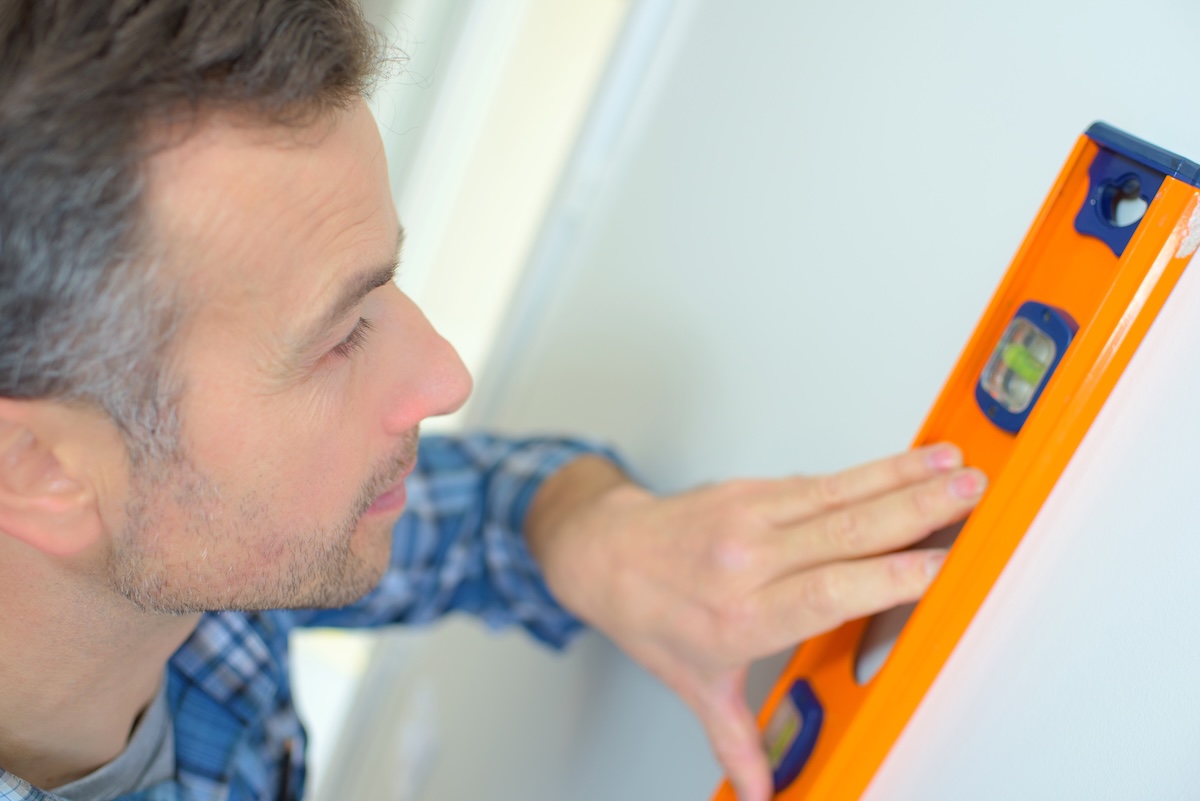
Reading a traditional bubble level is simple once you understand how the vial works and how to use a level. Inside the level is a slightly curved tube filled with liquid and a small air bubble. Because the bubble rises to the highest point in the vial, its position indicates whether the surface is level or plumb.
Follow these steps on how to use a level and read it correctly:
- Place the level on the surface you want to check, ensuring the frame sits flat and stable.
- Look at the bubble inside the vial. If the bubble sits between the two marked lines, the surface is level.
- Check vertical alignment by rotating the level so the vertical vial is upright to determine whether a surface is plumb.
- Adjust the object as needed until the bubble sits centered between the guide lines.
Before taking a reading, make sure the tool and surface are clean. “A level is only as good as the surface it’s sitting on,” Niemela says. Debris, paint buildup, or adhesive on the level’s edge can affect accuracy.
How to Check Level Accuracy
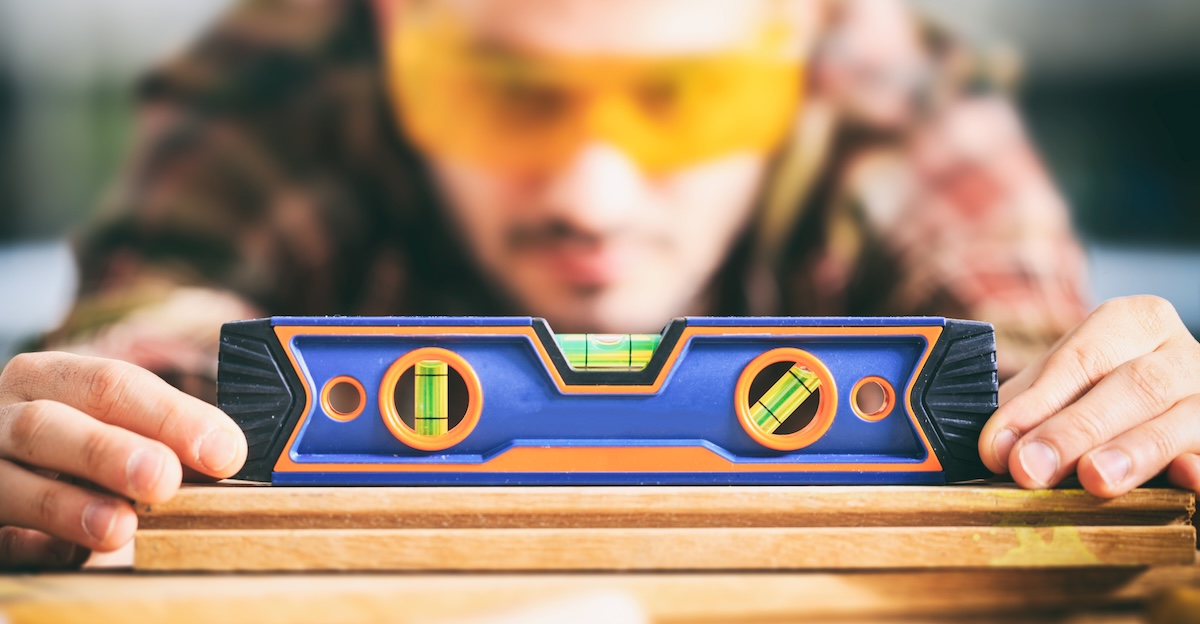
Even a good level can lose accuracy over time, especially if it’s dropped or used often. Fortunately, it’s easy to check whether a level is still properly calibrated.
To test a level’s accuracy:
- Place the level on a flat surface and note the bubble’s position.
- Mark the surface or remember the exact location.
- Rotate the level 180 degrees so the opposite end is now in the same position.
- Check the bubble again. If it sits in the same position between the lines, the level is accurate. If it shifts noticeably, the tool might be out of calibration.
Additional troubleshooting tips:
- Clean the level’s edges and the surface before testing.
- Avoid storing levels where they might bend or warp.
- If the vials are adjustable, follow the manufacturer’s instructions to recalibrate them.
Regularly checking your level ensures reliable readings and helps prevent small measurement errors from turning into larger problems during a project.
Prices published here are accurate as of March 16, 2026.