

We may earn revenue from the products available on this page and participate in affiliate programs. Learn More ›
Whether you’re an electrician, mechanic, or DIYer, a quality pair of wire cutters can make an indispensable addition to your toolbox. The name “wire cutter” can be deceiving, though, since most of them incorporate one or more additional features that give them multipurpose functionality. Wire strippers, bolt cutters, and snub or needle-nose plier jaws are just some of the available options to choose from, depending on your specific needs.
After reviewing dozens of wire cutters and testing several, our favorite is the IRWIN Vise-Grip Wire Stripping Tool / Wire Cutter. Available at a budget-friendly price point, this tool performed well, allowing us to cut, strip, and crimp 10 to 22-gauge wires with ease.
To get the low-down on selecting the right wire-cutting tool for the job, read on to discover the types available, how they differ in quality, and how to choose the best wire cutters for your next project.
- BEST OVERALL: IRWIN VISE-GRIP Wire Stripping Tool / Wire Cutter
↓ Jump to Review - BEST BANG FOR THE BUCK: DOWELL 10-22 AWG Wire Stripper Cutter Wire Stripping
↓ Jump to Review - BEST FOR PROFESSIONALS: 4-in-1 Lineman Plier Pro Lineman Tools 9” Combination
↓ Jump to Review - BEST FLUSH: Klein Tools D213-9NE Pliers, 9-Inch Side Cutters
↓ Jump to Review - BEST DIAGONAL: IGAN Diagonal Cutting Pliers, 7-inch Ultra Tough
↓ Jump to Review - BEST NEEDLE-NOSE: LAOA Needle-nose Pliers with Stripper
↓ Jump to Review - BEST SPRING-LOADED: Klein Tools 11055 Wire Cutter and Stripper
↓ Jump to Review - BEST WITH CRIMPER: Greenlee Stainless Steel Wire Cutter/Stripper/Crimper
↓ Jump to Review
| Product Name | Length | AWG Range | Multifunctional |
| IRWIN VISE-GRIP Wire Stripping Tool / Wire Cutter | 8 inches | 10 to 22 gauge | Yes |
| DOWELL 10-22 AWG Wire Stripper Cutter Wire Stripping | 7 inches | 10 to 22 gauge | Yes |
| 4-in-1 Lineman Plier Pro Lineman Tools 9” Combination | 9 inches | Not specified | Yes |
| Klein Tools D213-9NE Pliers, 9-Inch Side Cutters | 9.35 inches | Up to 8 gauge | No |
| IGAN Diagonal Cutting Pliers, 7-inch Ultra Tough | 7 inches | Up to 9 gauge copper wire, 11 gauge iron wire, and 14 gauge steel wire | No |
| LAOA Needle-nose Pliers with Stripper | 8.47 inches | Varies; up to 12 gauge iron wire, up to 4 gauge cable | Yes |
| Klein Tools 11055 Wire Cutter and Stripper | 7.4 inches | 10 to 18 gauge solid wire and 12 to 20 gauge stranded wire | Yes |
| Greenlee Stainless Steel Wire Cutter/Stripper/Crimper | 7.5 inches | Not specified | Yes |
Our Top Picks
While a basic pair of wire cutters is sufficient for tackling small jobs, not every pair will work for every project. Consider the following top-rated options in several different categories.
Best Overall
IRWIN VISE-GRIP Wire Stripping Tool / Wire Cutter
See ItWhat We Like
- Multifunctional tool cuts, strips, and crimps wire
- Features a built-in small bolt cutter
- Has hardened cutting teeth
What We Don’t Like
- Wire cutter isn’t spring-loaded
- Handle isn’t comfortable enough for prolonged use
Specs
- Length: 8 inches
- AWG range: 10 to 22 gauge
- Multifunctional: Yes
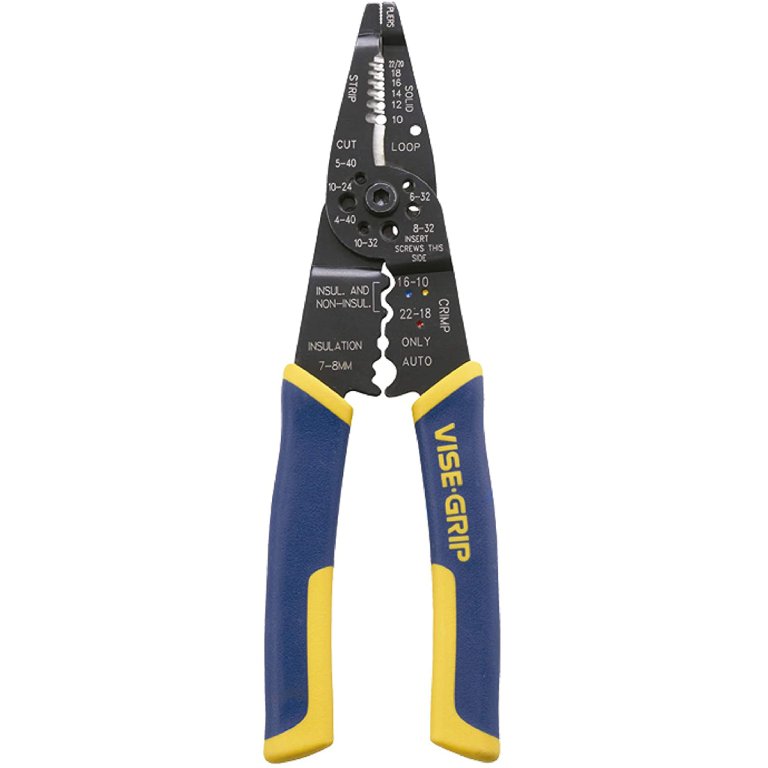
Whether you need to cut and strip wires, crimp terminal connectors, or even cut small bolts, Irwin’s wire cutter and strippers can do it all. This tool features an 8-inch handle covered with a comfort-grip material and offers maximum cutting leverage with minimal fatigue. We like that the wire cutters on the end of the jaws are induction-hardened for increased durability, and the needle-nose end makes grabbing onto small-gauge wires a breeze.
For increased versatility, the Irwin wire cutters also feature wire stripping slots that accommodate 10 to 20 AWG wires and a crimper for splicing wires with terminal connectors. It even offers a small bolt cutter, capable of cutting small bolts with enough precision to leave enough lead thread for nuts to screw onto.
What our tester says: Tom Scalisi, a Bob Vila writer and product tester, notes in the Best Wire Strippers that he was “impressed by the number of functions on the Irwin wire stripper, especially because it comes at a very attractive price point. In addition to cutting and stripping wires from 10 to 22 gauge in size, this handy tool offers crimping ability.”
Get the Irwin wire cutter at Amazon or Menards.
Best Bang for the Buck
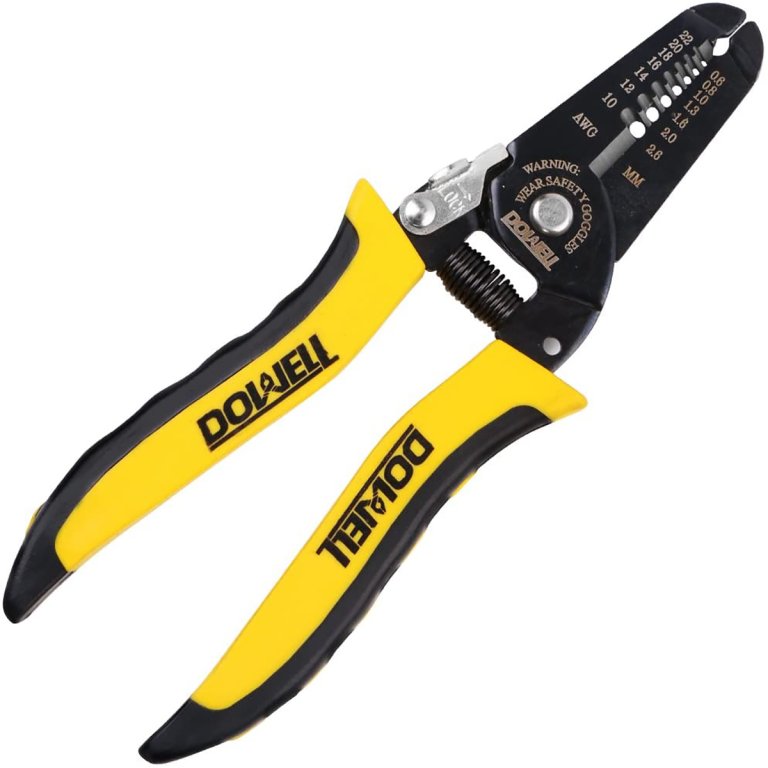
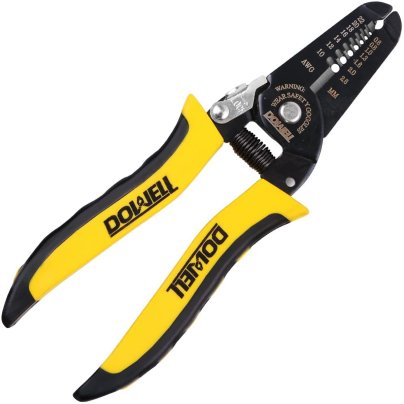
DOWELL 10-22 AWG Wire Stripper Cutter Wire Stripping
See ItWhat We Like
- Affordable price point
- Features spring-loaded action
- Can cut and strip wires
- Has a safety lock
What We Don’t Like
- Pivot point is less sturdy than other models
Specs
- Length: 7 inches
- AWG range: 10 to 22 gauge
- Multifunctional: Yes
Don’t be fooled into thinking the DOWELL wire cutters are a low-quality option just because they’re so affordable. They’re made with durable, corrosion-resistant high-carbon steel that keeps the blade’s edge sharper longer than comparably priced cutters made with lower-quality materials. These durable components can cut, crimp, and strip a wide range of wire sizes.
These small wire cutters feature a 7-inch comfort-grip handle for easy operation and a spring-loaded mechanism for easy one-handed use. The main disadvantages are that the pivot point isn’t as sturdy as that of some higher-end models and that it doesn’t offer needle-nose jaws for grabbing and manipulating wires. But taking all the other impressive features into account, DOWELL’s cutters offer an incredible value for the price.
Get the DOWELL wire cutters at Amazon.
Best for Professionals
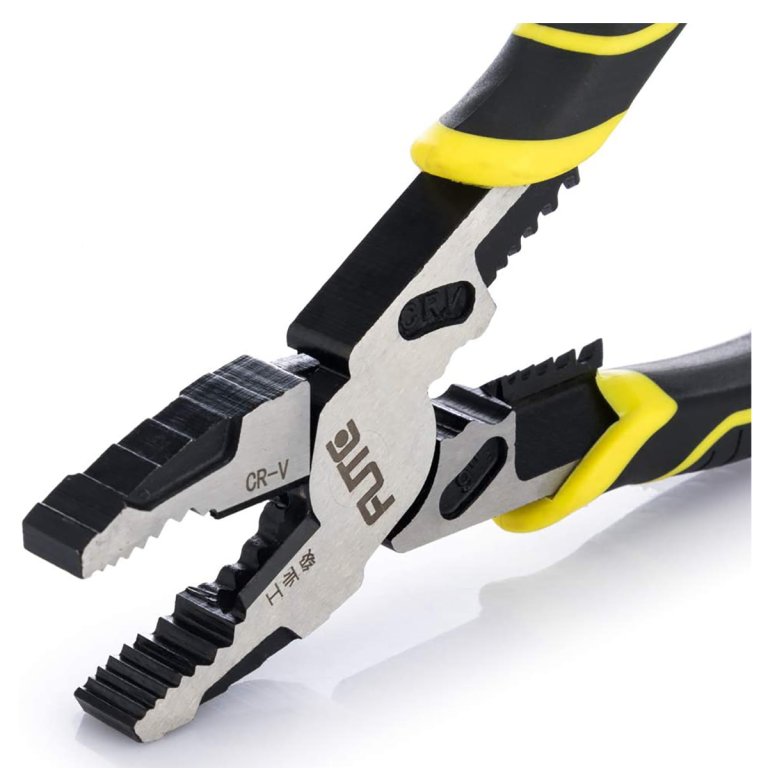
4-in-1 Lineman Plier Pro Lineman Tools 9” Combination
See ItWhat We Like
- Can cut, twist, strip, and crimp wire
- 9-inch handle provides leverage
- Features comfortable PVC non-slip grips
What We Don’t Like
- Only has five stripping slots
Specs
- Length: 9 inches
- AWG range: Not specified
- Multifunctional: Yes
For professional-grade cutting power and durability, consider these chrome-vanadium steel heavy-duty wire cutters, which maintain a sharp cutting edge and offer superior corrosion resistance. In addition to the cutter and plier jaws typical of lineman pliers, these cutters include a crimper and an electric wire stripper for optimal versatility and functionality.
The 9-inch handle offers increased leverage for maximum cutting and twisting power, and it’s wrapped with a comfort-grip material that reduces fatigue. The main disadvantage is that it offers only five unmarked wire-stripping slots, which limits the tool’s overall multipurpose functionality. That being said, these cutters offer pro-grade features without breaking the bank.
Get the Lineman Plier Pro wire cutters at Amazon.
Best Flush
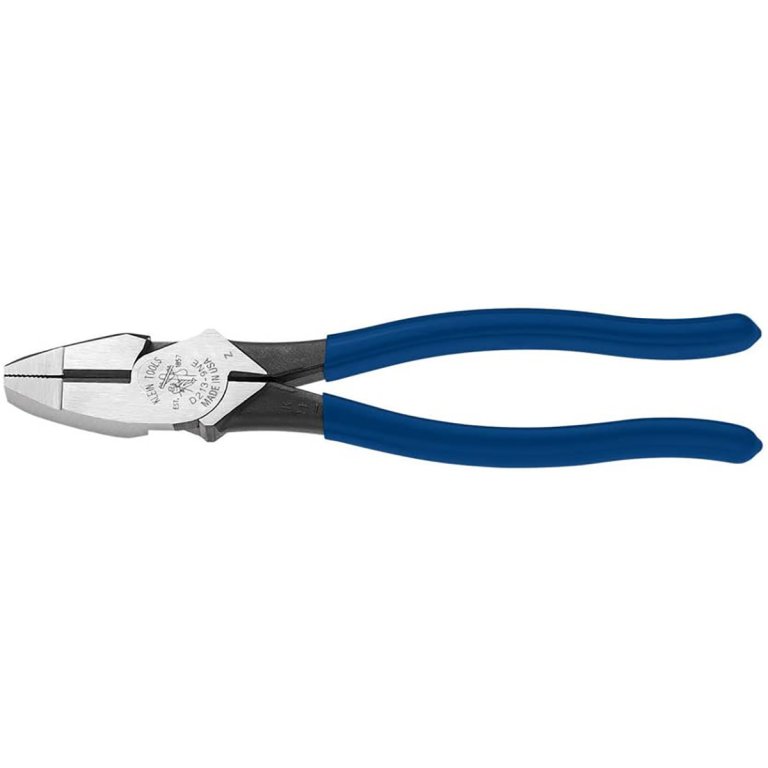
Klein Tools D213-9NE Pliers, 9-Inch Side Cutters
See ItWhat We Like
- Handle helps absorb “snap” when cutting wire
- Thoughtful design offers plenty of cutting leverage
- Features a durable, precision-hardened plier head
What We Don’t Like
- Wire cutter only; not multifunctional
Specs
- Length: 9.35 inches
- AWG range: Up to 8 gauge
- Multifunctional: No
Klein Tools’ line of pliers and cutters has been used by professionals and DIYers for decades, and this pair of flush cutters doesn’t disappoint. The long 9-inch handle and a durable pivot point close to the jaws combine to offer a huge amount of cutting leverage. To complement this leverage, the cutting blades are induction hardened to produce an incredibly hard blade that stays sharper for longer. Finally, the ergonomically designed handle fits snugly and comfortably in your hand.
The main downside to this cutter is that it’s fairly expensive, and the higher price may be hard to justify for the average homeowner or occasional DIYer.
Get the Klein Tools wire cutters at Amazon, The Home Depot, or Lowes.
Best Diagonal
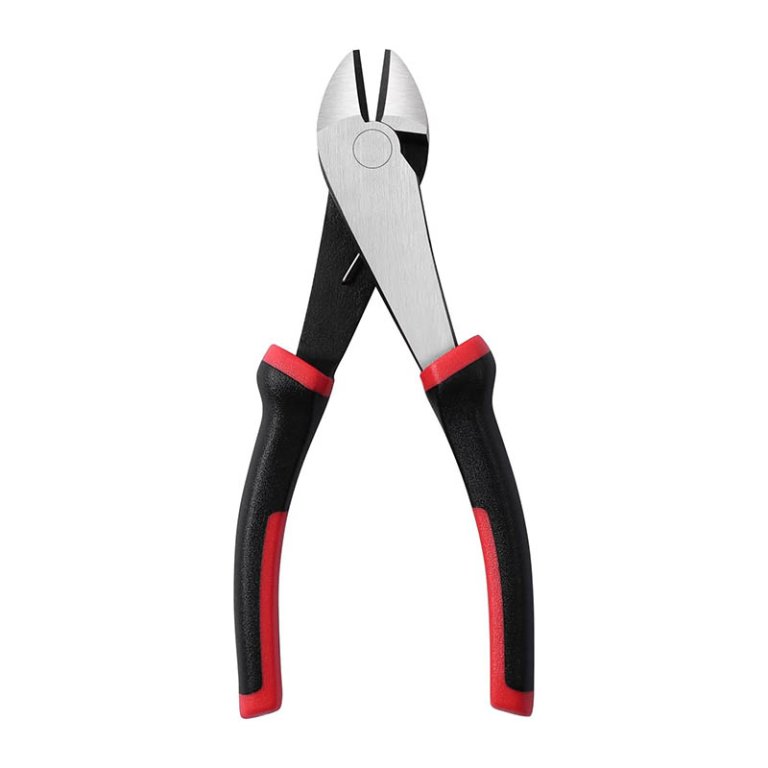
IGAN Diagonal Cutting Pliers, 7-inch Ultra Tough
See ItWhat We Like
- Spring-loaded mechanism allows one-handed operation
- Hardened blades cut through a variety of material
- Makes easy cuts thanks to its high-leverage design
What We Don’t Like
- No multifunctional capabilities
Specs
- Length: 7 inches
- AWG range: Up to 9 gauge copper wire, 11 gauge iron wire, and 14 gauge steel wire
- Multifunctional: No
If you need a wire cutter strictly designed for consistently making powerful cuts, then IGAN’s diagonal wire cutters may be just what you’re looking for. Its blades are made of induction-hardened, high-carbon steel for maximum durability and longevity, and a sturdy pivot point is located near the cutting jaws for easy, powerful cuts. The comfort-grip handles are coupled with a spring-loaded mechanism for comfortable one-handed operation, minimizing fatigue from prolonged use.
Get the IGAN wire cutters at Amazon.
Best Needle-Nose

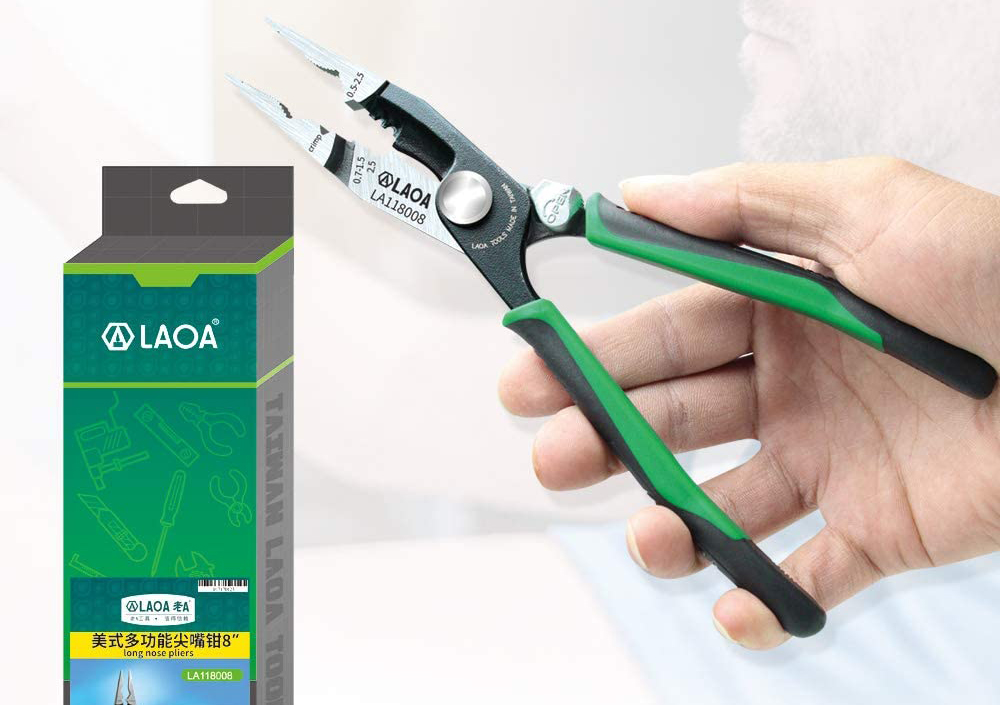
LAOA Needle-nose Pliers with Stripper
See ItWhat We Like
- Cuts, strips, crimps, clamps, and more
- Features an anti-slip handle
- Needle-nose design is ideal for small wires
What We Don’t Like
- Some users report missing or faulty safety lock
- Crimping requires a lot of force
Specs
- Length: 8.47 inches
- AWG range: Varies; up to 12 gauge iron wire, up to 4 gauge cable
- Multifunctional: Yes
If you want a flush wire cutter that can access tight spaces and grab small wires, LAOA’s needle-nose pliers and wire cutters have you covered. The durable, induction-hardened, high-carbon steel blades and plier jaws don’t just cut and grip wires; they also feature a crimper and a couple of wire-stripping slots.
The spring-loaded, comfort-grip handle features an anti-slip grip. The primary con is that these wire cutters require a lot of force to achieve an effective crimp. Some users have also complained about the locking mechanism.
Get theLAOA wire cutters at Amazon or Walmart.
Best Spring-Loaded
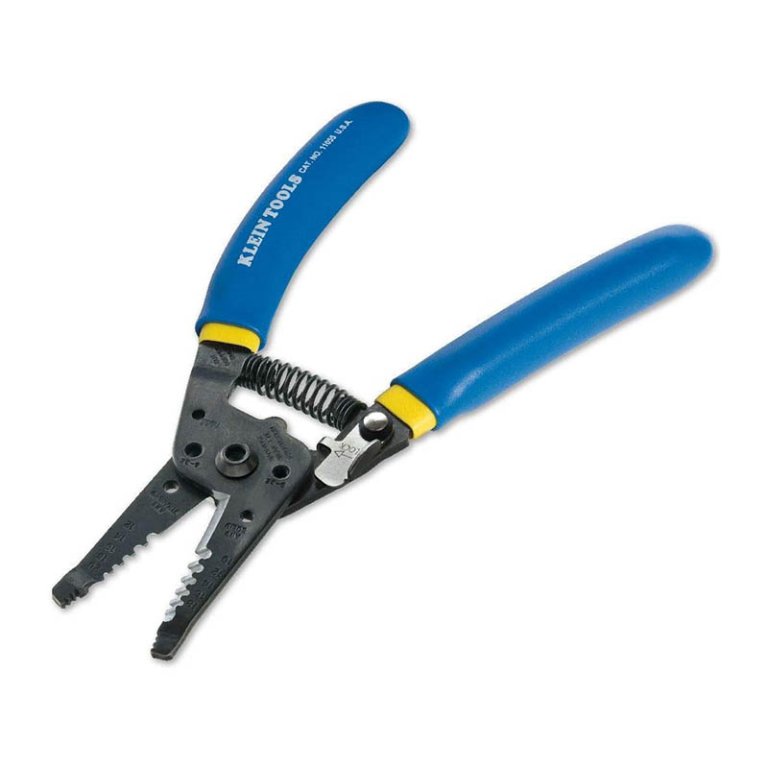
Klein Tools 11055 Wire Cutter and Stripper
See ItWhat We Like
- Cuts solid and stranded copper wire
- Acts as a wire stripper
- Features doubled-dipped curved handles
What We Don’t Like
- No crimping action
Specs
- Length: 7.4 inches
- AWG range: 10 to 18 gauge solid wire and 12 to 20 gauge stranded wire
- Multifunctional: Yes
Those looking for a basic set of wire cutters and strippers made of high-quality materials will appreciate Klein Tools’ set. The needle-nose tip makes it easy to grab and bend wires, and the cutter consistently delivers clean cuts. The double-dipped, curved handle was comfortable for extended use when testing, and we appreciated the labeled AWG sizes on the wire stripper tool.
The only fault we found was the lack of a crimper, which is often necessary when working on computers or performing automotive work. The thumb release is also slightly stiff, but overall, these are a reliable, high-quality pair of wire cutters.
What our tester says: Glenda Taylor, a Bob Vila writer and product tester, notes in the Best Wire Strippers that “The sharpened stripper notches accommodate wires from 10 to 20 gauge in size. We were able to cut through wire cleanly, using the marked holes in the base of the shear blades.”
Get the Klein Tools wire cutters at Amazon, The Home Depot, or Ace Hardware (2-piece set).
Best with Crimper
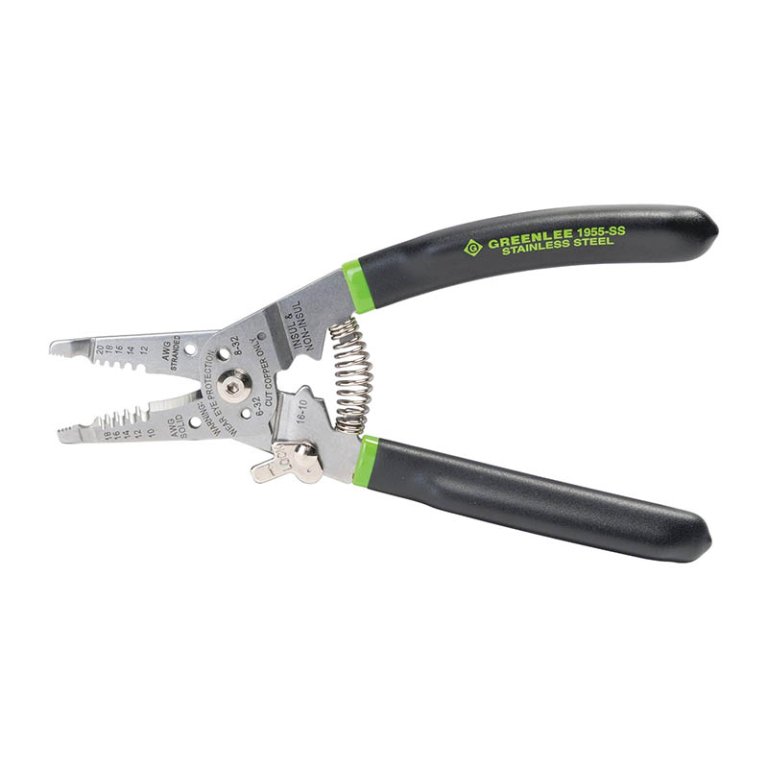
Greenlee Stainless Steel Wire Cutter/Stripper/Crimper
See ItWhat We Like
- Can cut, strip, and crimp wires
- Comfortable vinyl cushioned handle
- Features spring-loaded action
- Has a safety lock
What We Don’t Like
- Thumb lock tends to stick
Specs
- Length: 7.5 inches
- AWG range: Not specified
- Multifunctional: Yes
Those performing automotive or computer work may need a crimper, stripper, and wire cutter. This Greenlee tool combines all three functions and even has a needle-nose tip, making it easy to grab and bend small wires.
While this model doesn’t specify the size of the wire it cuts, it can strip 10- to 18-gauge solid wire and 12- to 20-gauge stranded conductors. The coil spring makes it easy to operate, and the tool features a safety lock to keep it closed when not in use. Other features of these stainless steel wire cutters include the ability to shear 6-32 and 8-32 bolts, as well as vinyl-cushioned handles for a comfortable grip.
Get the Greenlee wire cutters at Amazon or Acme Tools.
How We Chose the Best Wire Cutters
To find the best wire cutters, we spent hours researching the top brands and looking for models with the highest customer satisfaction ratings. We wanted to ensure that our recommendations were the best of the best. We varied our selection by showcasing each type of wire cutter: flush, diagonal, and needle-nose. Other factors we considered included AWG size, blade material, and ergonomics.
Based on our findings, we narrowed down the top wire cutters to eight picks that suit the most common needs. We then organized our list by category.
What to Consider When Choosing the Best Wire Cutters
Wire cutters are a type of electrician’s tool that can have different qualities, influencing performance and durability. Consider the following features before determining which model is best suited for your job.
Types of Wire Cutters
Three main types of wire cutters are available: flush, diagonal, and needle-nose. While each one specializes in a specific set of tasks, most can be used for a variety of jobs.
Flush
Flush cut wire cutters (also called “combination” or “lineman’s pliers”) look like an ordinary pair of pliers but feature a pair of cutting blades flush to the outside edge and directly behind one of the plier’s gripping jaws. The flush-cutting blades can make clean, straight cuts without leaving a sharp point that could cut your hands, unlike diagonal cutters. However, they may require more manual force to cut the wire than diagonal cutters. In addition to the cutting blades, the plier jaws can be used for cutting, gripping, and bending wires and small cables.
Some flush cutters are also equipped with bolt cutters that can cut screws and nails flush to the fastened surface, and a few wire-stripping slots for stripping back insulation.
Diagonal
Unlike flush-cut pliers, diagonal cutters are used exclusively for cutting. These hand tools feature a pair of curved cutting blades that extend to the tip. Because the cutting blades are diagonally offset by about 15 degrees, they can cut wires at an angle.
Instead of cutting with a shearing action like scissors or flush-cut pliers, diagonal pliers use a wedging action to separate wire connections with their V-shaped blades. This special cutting mechanism typically makes cuts easier, which is a contributing factor to its being the most commonly used cutting instrument for electrical wire and other light-gauge metal wire. Just like flush-cut pliers, they can also be used to flush-cut a variety of screws and nails.
Needle-nose
Needle-nose wire cutters are a variety of flush cut pliers that have a set of cutting blades flush to the outside and behind one of the plier’s jaws. However, with needle-nose models, the jaws taper down to a much smaller tip at the nose. This slender tip makes it easier to grab and manipulate small wires and maneuver in confined spaces where conventional flush-cut pliers can’t reach.
In addition to straight-nosed cutters, there are needle-nose cutters with 45-degree and 90-degree bends at the nose to make it easier to grab material in awkward spaces. Needle-nose pliers can possess many of the same additional features as conventional flush wire cutters, like wire strippers and bolt cutters.
Handle
The two most important factors to consider when choosing a handle are its length and grip materials. A longer handle provides more leverage for easier cuts, but it also makes it harder to maneuver in tight spaces. A smaller handle fits into smaller spaces, but requires more manual force to make cuts. The handle size also affects how comfortable the cutters are to use. It’s generally recommended to use at least a 4-inch-long handle that’s capable of comfortably fitting in the palm of your hand. Still, some experts suggest a handle length of at least 5½ inches for optimal comfort.
The handle can also feature grips composed of various polymers (most commonly plastic and rubber) and can be soft or hard. The more affordable wire cutters typically come with hard-grip handles, but they’re the least comfortable to use over the long term. Soft, or “comfort” grip handles are more comfortable but usually come with a higher price tag. Each type can provide some degree of insulation against electric shock, depending on the material’s nonconductivity.
Design
A wire cutter’s design can heavily impact its performance and ease of use. Some wire cutters are designed to provide an all-in-one solution for cutting, stripping wire, crimping, and grabbing wires. These multipurpose tools typically have 10 or more individual slots for stripping wire, a needle-nose plier head for grabbing, and a crimping tool at the base of the plier jaws. Unfortunately, because they aren’t specifically designed for cutting, they don’t typically offer the same cutting ability as a cutter made exclusively for that purpose.
Another design factor to consider is the pivot point. The pivot point is the round piece of metal that sits directly behind the jaws and allows them to open and close. A pivot point that’s closer to the jaws provides greater cutting force and leverage, so it’s best to use a wire cutter with a pivot point that’s as close to the jaws as possible for maximum cutting ability. It’s also important that the pivot point be as durable as possible. A lower-quality pivot point can become loose, resulting in “play” in the handle’s mechanism, making it difficult to close the blades directly on top of one another and causing lower-quality cuts. Also, a poorly designed pivot point can develop “stickiness,” making it harder to open and close the handles and jaws.
Comfort
It doesn’t matter how well a set of electric wire cutters works if you’re discouraged from using them because they’re uncomfortable to handle. The handle length and grip material play a crucial role in how comfortable a wire cutter is to use. Another key comfort feature is a spring-loaded opening and closing mechanism, which reopens the cutter’s jaws when pressure is relieved. This allows easy one-handed operation and reduces the effort required to reopen the jaws after a cut.
A wire cutter with multifunctional capabilities also contributes to ease of use, as you won’t have to switch between tools in between tasks, such as cutting, stripping, and then crimping wires together.
Blades
Wire cutter blades are usually made from a type of “tool steel” with or without the addition of various metal alloys. Tool steel is simply iron with added carbon to achieve a hardness and durability that work particularly well for hand tools. Additional alloys, like higher quantities of carbon, chromium, nickel, and vanadium, can also be used to influence a tool’s hardness and durability. Generally speaking, wire cutters made of conventional tool steel are affordable and offer a moderate level of hardness and durability, while steels with added alloys are harder and more durable but more expensive.
The other main difference between blades is whether they are case-hardened or induction-hardened. Most blades are case hardened, meaning that the tool is surrounded by carbon and heated until the higher—and harder—carbon material plates the blade’s surface, while leaving the core alloy unaffected. Induction hardening uses a multistage process that heats the metal via electromagnetic induction to harden the blade throughout. Case-hardened blades are generally the cheapest, but they’re less durable and harder to sharpen. Inducted hardened blades are more expensive, but retain a sharp edge for longer and are easier to sharpen.
FAQs About Your New Wire Cutters
Before you start using your new pair of wire cutters, you may have some lingering questions about some of their features and how they’re used. To that end, consider the answers to the following frequently asked questions.
You can use wire cutters like a pair of scissors: separate the handles to open the blades, insert the wire between them, and close the handles to bring the blades together and sever the wire. You can also insert a wire terminal connector into the crimping slot (if equipped) to crimp, or insert wire into the appropriate wire-stripping slot to strip wire.
A wire cutter with a spring-loaded handle opens automatically when you’re no longer applying manual force to keep the handle closed. If the wire cutter isn’t spring-loaded, you can either use your nondominant hand to open the handles or use a flicking motion with the hand with which you’re using the pliers.
Before cutting a cable wire, you should ensure that it’s not supplied with electricity (“live”). You can use a line tester to verify that the wire isn’t electrified. To be extra careful, you can shut off the electricity to the section of your home where you’re working at the main fuse box.
Whether a wire cutter can cut through metal depends on what it is rated to cut and whether it includes an additional bolt cutter designed for metal. Some wire cutters are only capable of cutting through small copper wires, while others can cut through screws, nails, and other metal objects.
ESD stands for “electrostatic discharge.” An ESD-safe wire cutter is rated by a third-party certification agency that determines its level of electrical insulation. Even if a wire cutter isn’t considered “ESD-safe”, it may still have insulated handles that protect against electrical shock.