We may earn revenue from the products available on this page and participate in affiliate programs. Learn More ›
While more and more households are going chemical-free, but one wants to do so at the cost of cleanliness. This is particularly true in the kitchen and bath areas, where banishing bacteria is a must. Commercial non-toxic cleaners tend to be pricey, so why not make your own? The low-cost, super-simple recipe here for homemade all-purpose cleaner is a blend of just three ingredients that you may already have at home, and the mixture is safe to use around food, kids, and pets.
The key ingredient is good old-fashioned white vinegar, which is acidic enough to cut through stains and build-up but also kills bacteria, viruses, and mold. What’s more, this formula addresses the complaint most folks have about vinegar-based cleaners: the strong, lingering smell. See the recipe below to blend up a custom-scented cleanser with a subtly pleasant aroma that will get your whole house sparkling.
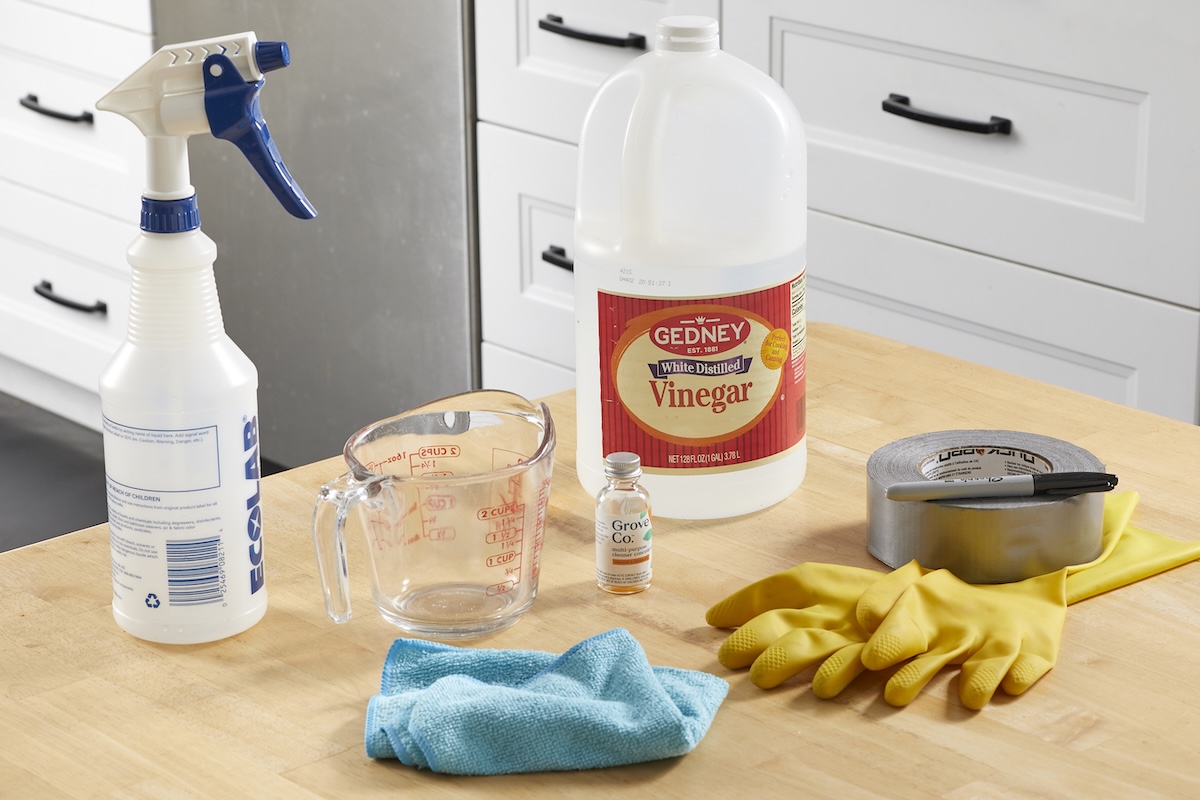
Tools & Materials
Bobvila.com may earn a commission from purchases made through these links.
- 2 cups vinegar
- 2 cups water
- 10 to 12 drops essential oils (like lime, lavender, or eucalyptus)
- Masking or duck tape
Step 1: Combine vinegar and water in a spray bottle.
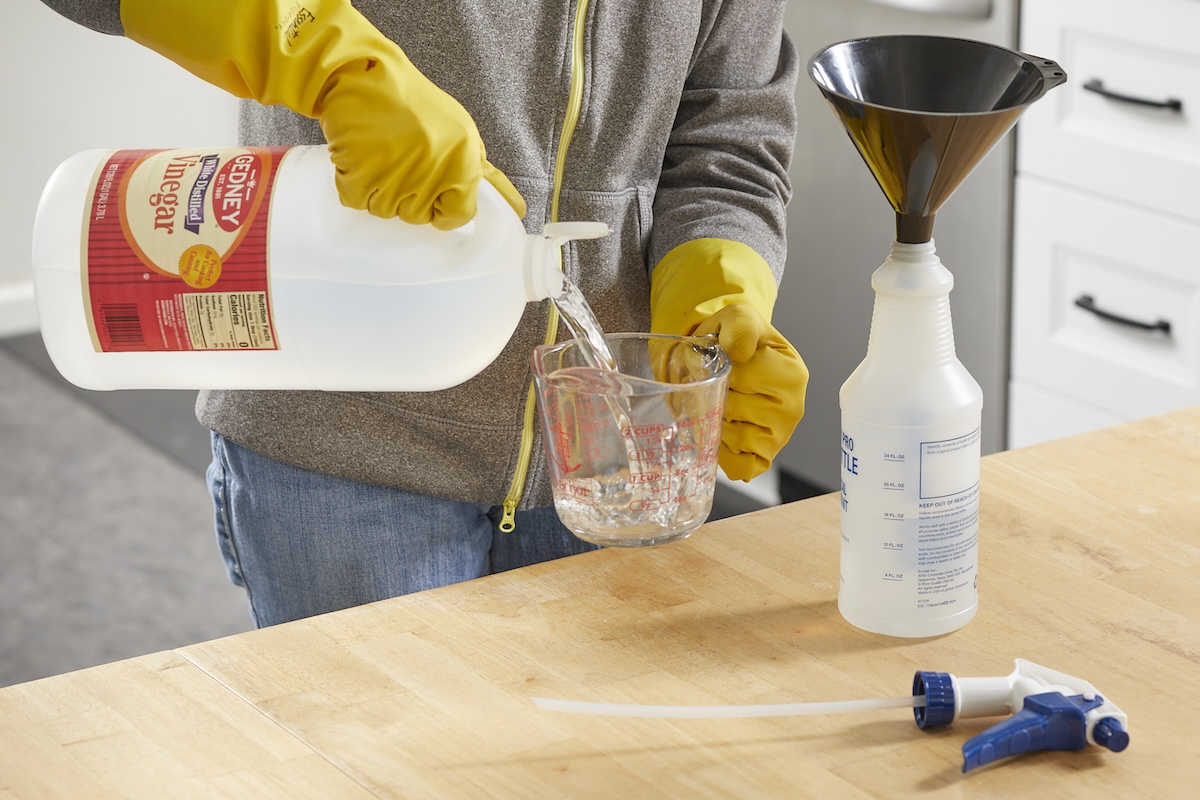
Use the measuring cup to pour vinegar and water into the spray bottle. Close the top and shake to combine. The solution is now ready to tackle loads of household cleaning jobs, but if you find the smell of vinegar off-putting, move on to Step 2.
Step 2: Add essential oil (optional).
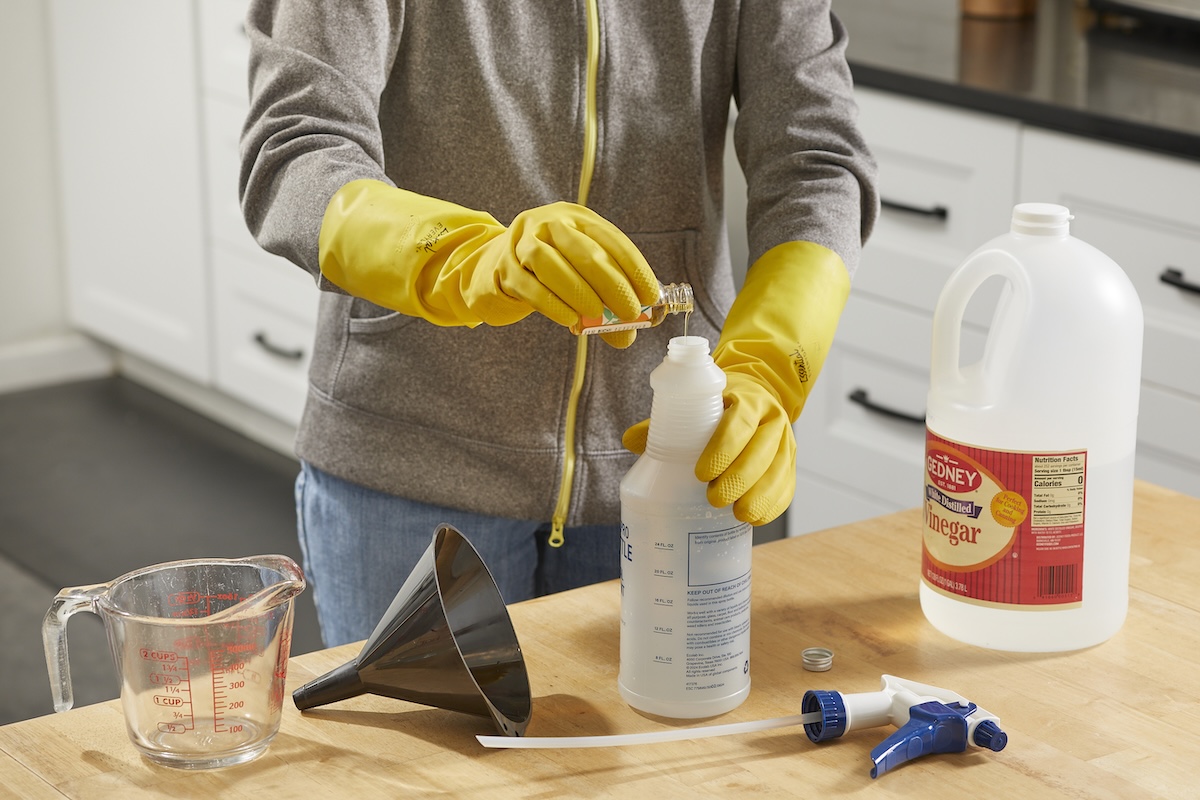
Select up to three essential oils to add to the cleaner. While you’ll make your choice based on scents you favor, keep in mind that some essential oils, including lime, eucalyptus, tea tree, lavender, and peppermint, have antibacterial and antifungal properties that bring extra oomph to your cleaning solution. Add 10 to 12 total drops to your solution, close your spray bottle, and shake again to blend.
Step 3: Label the spray bottle.
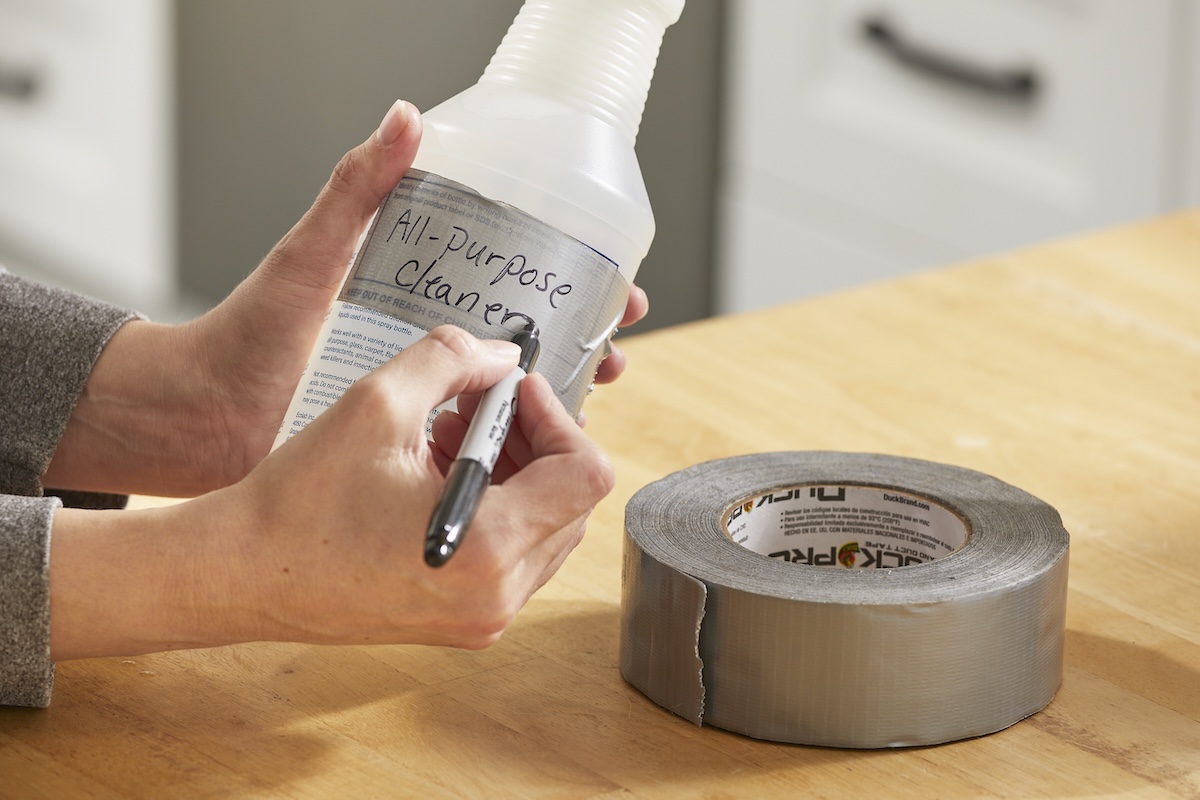
Label the spray bottle with a piece of tape so you remember what’s in the bottle.
Step 4: Use the spray to clean household surfaces.
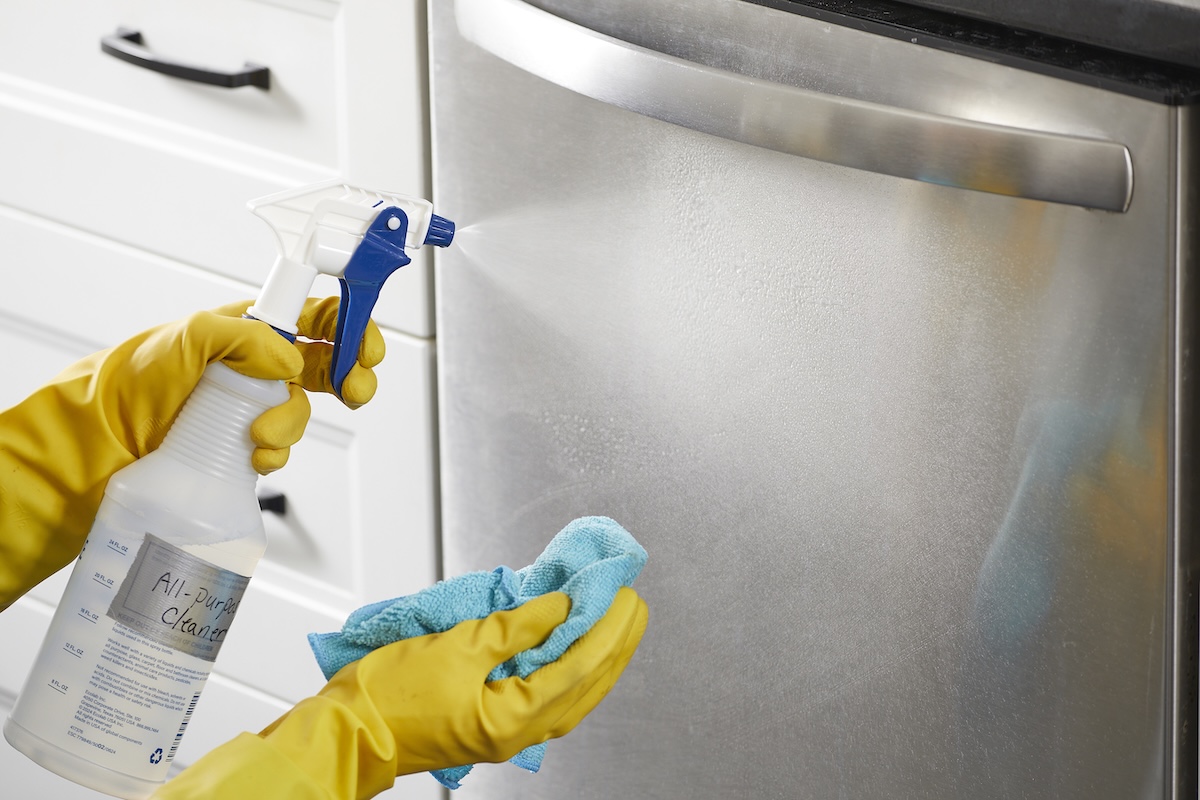
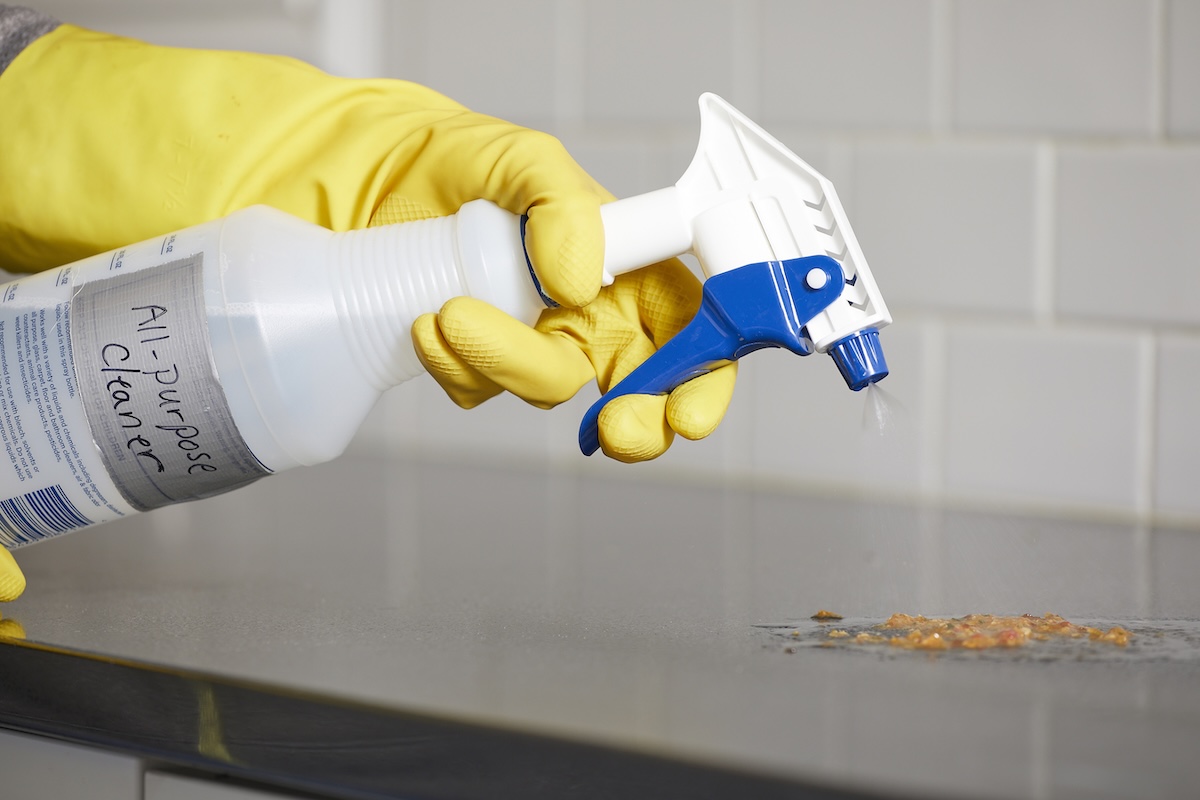
Put your cleaner to work! Spritz a small amount onto household surfaces, and then wipe with a microfiber cloth, which works hard yet gently to lift grime without leaving lint behind. Repeat as necessary.
Step 5: Store the cleaner in a cool place.
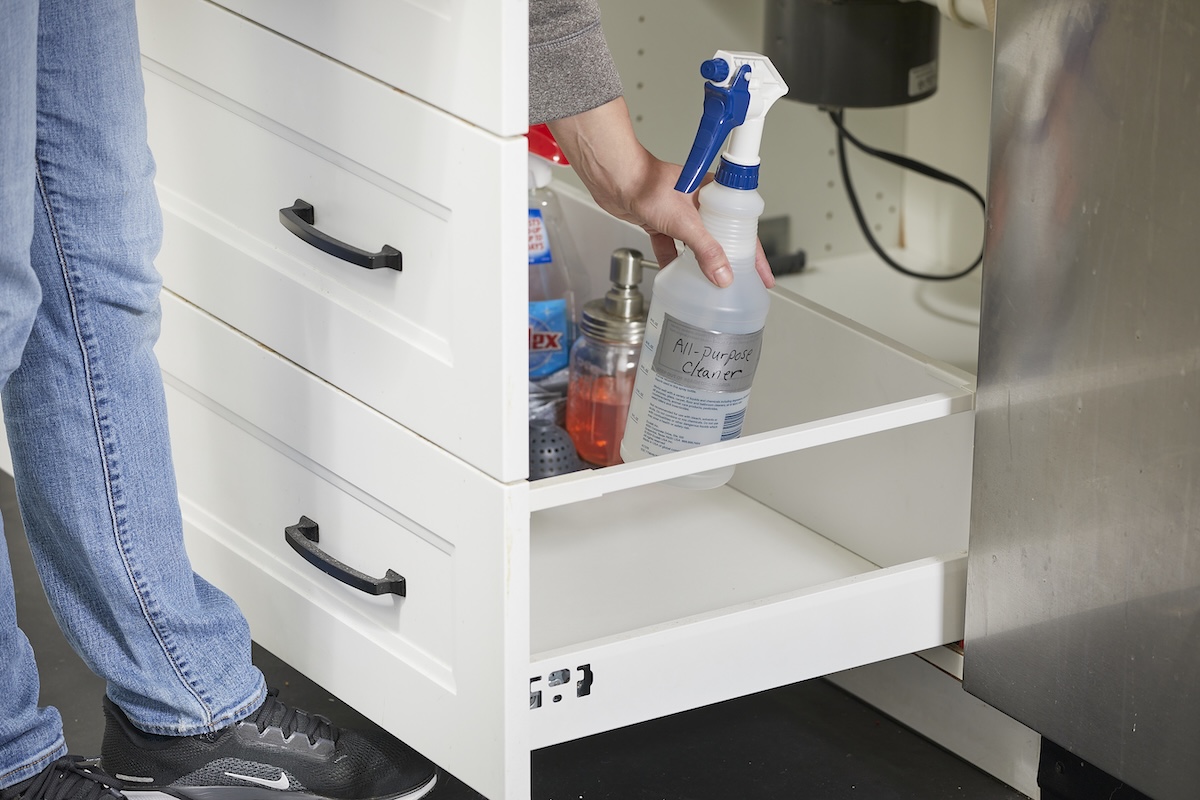
Store the cleaner in a cool, dry place. A 32-ounce bottle should last you quite a while.
Uses for Homemade All-Purpose Cleaner
Since vinegar is edible, it’s a food-safe and kid-friendly option. Try using it on:
• Fridge and freezer: Wipe down the interior of your refrigerator and freezer, but avoid the rubber gaskets around the edges, which vinegar can corrode.
• Laminate countertops: Swipe up most common spills, even those that have hardened.
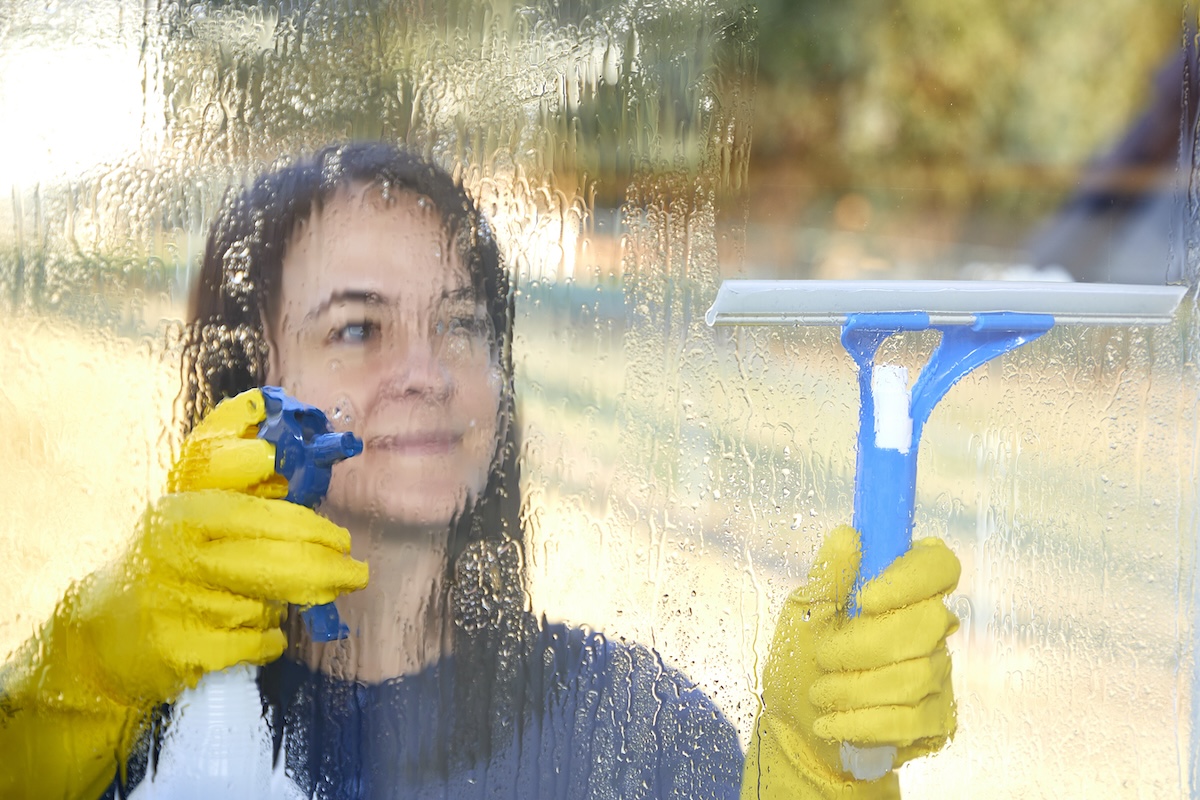
• Windows and mirrors: It’ll cut through grime, grease, and fingerprints.
• Toilet, tub, and bathroom sink: It cleans and disinfects porcelain nicely.
• Small appliances: It can descale a coffee pot or freshen up a toaster.
• Glassware: Cut through hard water stains and leave them sparkling.
Do Not Use Homemade All-Purpose Cleaner on These Surfaces
Because vinegar is acidic, it can be too strong for porous surfaces. Avoid using it on:
• Wood floors and wood furniture: It can strip the finish on these surfaces. (Use this homemade wood floor cleaner instead.)
• Stone countertops and tiles: Surfaces made of marble and granite can be finicky.
• Grout: Vinegar can break down the sealant on grout, leaving it vulnerable.
• Electronics: Acid can eat away at the protective coatings on touchscreens. In general it’s best to use just water on screens of any kind.
• Cast iron and aluminum pots: Vinegar can corrode these metals.
• Plants: Vinegar is a natural weed killer, but it doesn’t discriminate between the plants you like and the ones you don’t. Dust leaves with a damp cloth instead.