We may earn revenue from the products available on this page and participate in affiliate programs. Learn More ›
Walking into a room that feels cramped and claustrophobic is unsettling, even when the square footage suggests otherwise. The culprit often isn’t the room’s actual dimensions, but rather the decorating choices made. Some paint colors visually shrink walls, and furniture arrangements can block natural flow; these and other design missteps can make even a generous space feel like a shoebox. Fortunately, they’re fixable, and you can easily transform a room from tight and cluttered to open and airy. We spoke to a couple of interior designers to discuss the most common decorating mistakes that can make a room appear smaller than it actually is.
1. Using the Wrong Size Rug
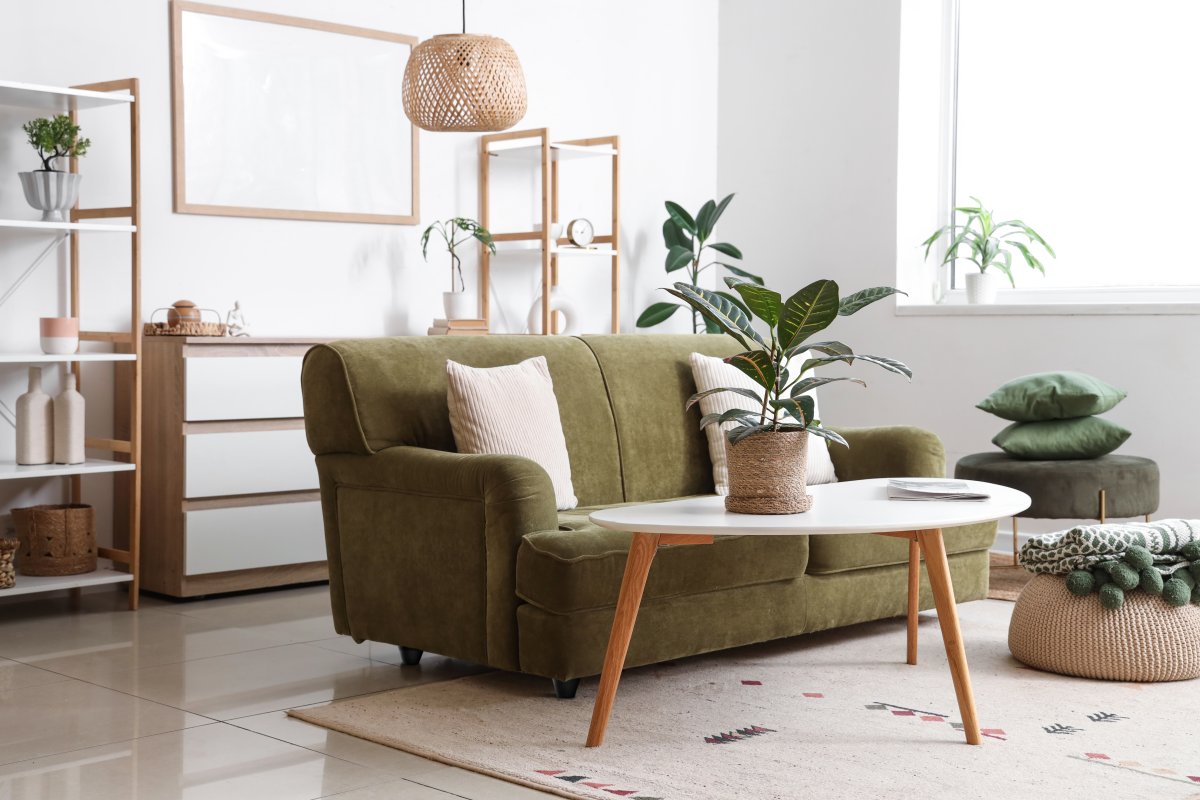
The “postage stamp” rug is interior designer Tanya Etessam’s number one pet peeve when it comes to making a room feel smaller. She is the president of Greatstone Design in Miami, Florida. “There is nothing that kills a room’s potential faster than a tiny rug floating in a sea of floor,” says Etessam. “It makes the room look disjointed and small, like your furniture is stranded on a life raft.” It can also give a sense that the space is overcrowded and disconnected.
To avoid this situation, she recommends making sure the front legs of your furniture are “anchored” on the rug so the room looks like one larger, more cohesive space. A larger rug is the optimal solution; it helps draw the eye to the actual perimeter of the space and makes the floor feel expansive rather than chopped up. If possible, select a rug that is wider than your couch and seating area, and that covers all but a perimeter of 12 inches around the edges of the room.
2. Misplacing Furniture
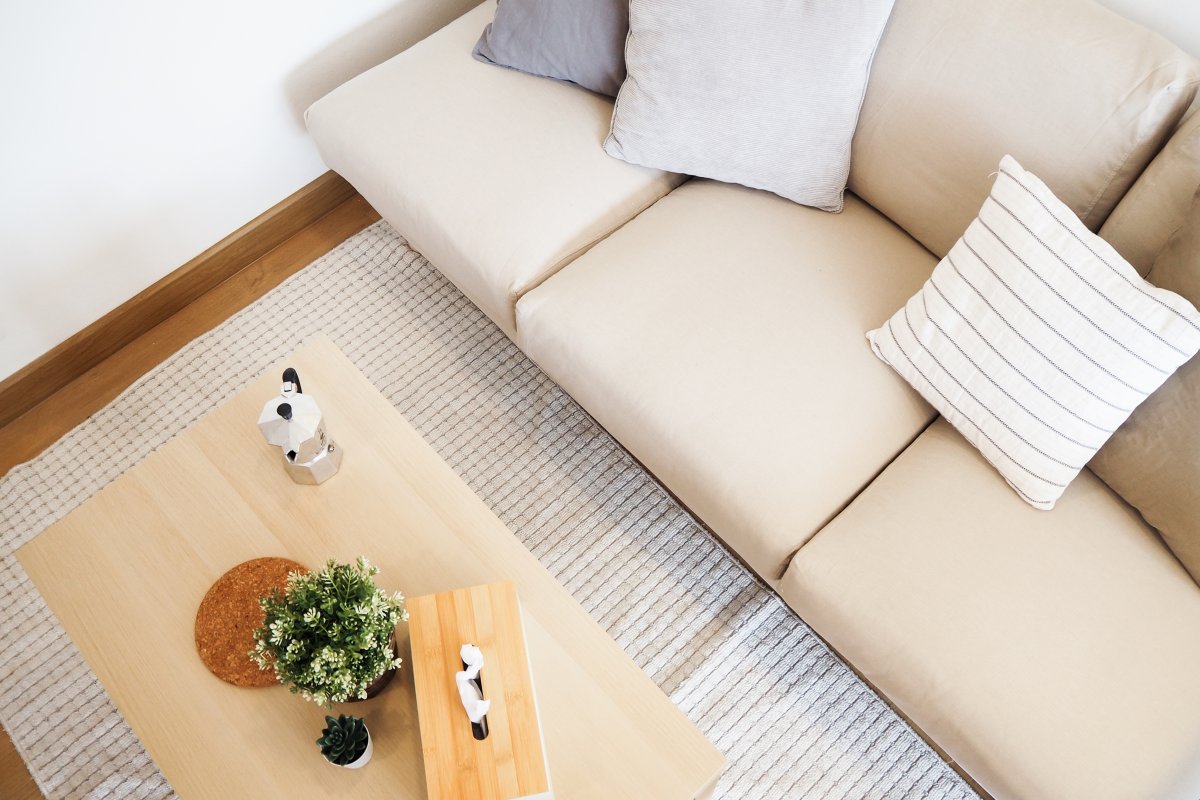
Furniture layout in a small-size room can also play a role in how large the space appears. Etessam warns against falling into the trap of the wall-hugger layout. “There’s a weird instinct to push every piece of furniture against the walls and baseboards to open up the center,” she explains. But this never works. Instead, it ends up highlighting exactly how small the room is by tracing the walls, she says.
Avoid this issue by giving your sofa some breathing room. “Pulling it just a few inches off the wall creates shadows and depth,” Etassam explains. This idea of “floating” your furniture makes the room feel intentional and much more spacious because you aren’t staring at a vacant dead zone in the middle.
3. Choosing Heavy Paint Colors
The color you paint your walls can also make all the difference in how large or small a room feels. Avoid dark, deep, heavy paint colors on walls as they can visually close in the room. On the other hand, safe all-white walls also don’t work. “People think painting a small room stark white makes it feel bigger, but most of the time it just makes it look like a clinical box,” says Etessam.
Go for the happy medium instead. Opt for a light, neutral palette or even mid-tone colors. If you want to make a bold statement with color, do it through accessories like pillows, vases, and fresh flowers. Add large mirrors to reflect the light tones.
4. Hanging Window Treatments Too Low
Installing window treatments at the wrong height can quickly shrink a room. Etessam calls them “low-rider curtains” and warns that this visually drags the ceiling down and makes your windows look insignificant. “Hanging curtains right at the top of the window frame is the design equivalent of wearing pants that are too short,” she warns.
Instead, hang window treatments high and wide, recommends Etessam. “Aim for just below the ceiling, which draws the eye upward and makes it look like you have massive, floor-to-ceiling windows.” This will open up and expand the space, elongating your walls and making the ceiling seem higher than it actually is. Also, make sure the drapery panels are floor length. They should skim the floor.
5. Allowing Clutter to Take Over
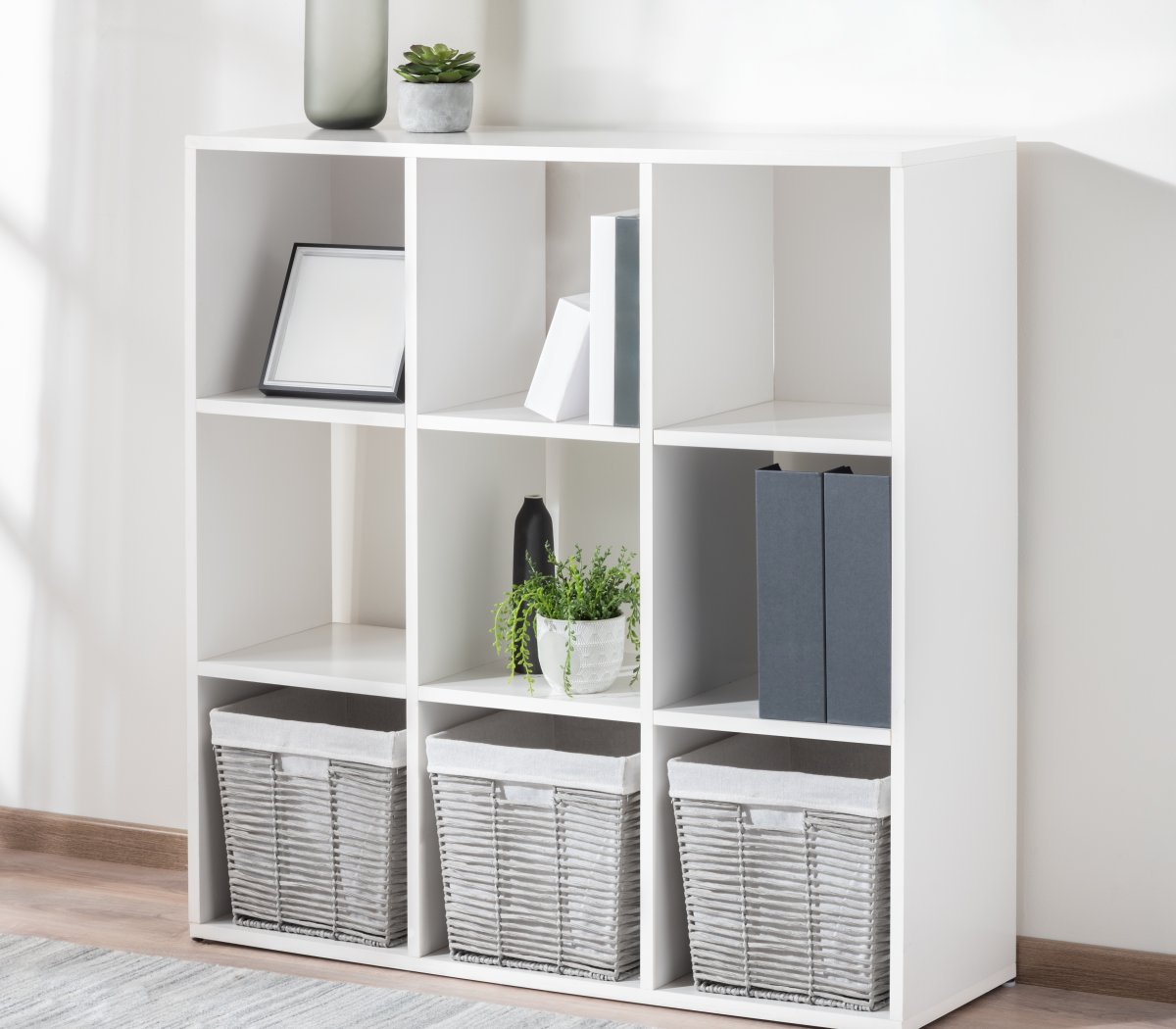
Clutter makes a room look messy, unorganized, and small, says Wendy Glaister, CEO, founder, and principal designer at Wendy Glaister Interiors in Modesto, California. Having too many items in a room creates noise and distraction, so that it feels busy instead of spacious.
Scale back on bulky décor and unnecessary objects. “Do not over-accessorize, and find places for all the clutter you accumulate,” says Glaister. She recommends closets, nice baskets, interesting containers, and hidden nooks as smart options to hide or store items. “I also love hidden storage spaces, whether it is a coffee table, bench, ottoman, or bed that has hidden compartments, that rid the room of extra clutter so it will look bigger, feel cleaner, and everyone will enjoy the space more.”
6. Decorating with Bulky, Heavy Furniture
You’ll also want to be thoughtful about selecting furniture that properly fits the room and helps expand the feel of the space instead of shrinking it. “When you have oversized furniture, it fills up the room and makes it feel small and overstuffed,” says Glaister.
Measure the space and choose furniture that is scaled to the room size. Avoid large sectionals, bulky chairs, and armoires; stick to compact pieces that have a slimmer profile and smaller footprint. “Look for smaller arms, lower backs, and clean lines, as they open up a room and create more balance.” Furniture with raised legs and low tables made of glass or acrylic can also help make a space feel roomier.