
We may earn revenue from the products available on this page and participate in affiliate programs. Learn More ›
Natural sunlight can have a huge impact on our health and well-being, so it makes sense that we would want to bring as much natural light into our home as possible. If some rooms in your home feel dark and gloomy, you can make some simple changes to illuminate the space.
“Brightening a home isn’t always about adding more windows,” says Kaitlyn Hall, interior design manager at Revive Design and Renovation in Tampa, Florida. “Even small design choices like mirrors, reflective finishes, or light-colored flooring can dramatically change how light moves through a room and make it feel open and welcoming.”
We spoke to several interior designers to determine the best ways for maximizing the natural light inside a home without adding windows or skylights.
1. Incorporate Reflective Accents
Incorporating reflective accents like mirrors, metallic furniture, and glistening textiles lets sunlight bounce through a home, filling every corner with brightness, says Annie Santulli, owner of Annie Santulli Designs in Palm Beach Gardens, Florida. “To sprinkle in a touch of whimsy and glamour, try adding fixtures and accessories adorned with glass crystals, as these sparkling details catch the sunlight and send it twirling playfully around the room,” she adds. In small rooms, she suggests hanging metallic wallpaper to turn the space into “a sparkling jewel box full of unexpected light.” Other materials to consider adding include acrylic, glossy ceramic, and chrome finishes.
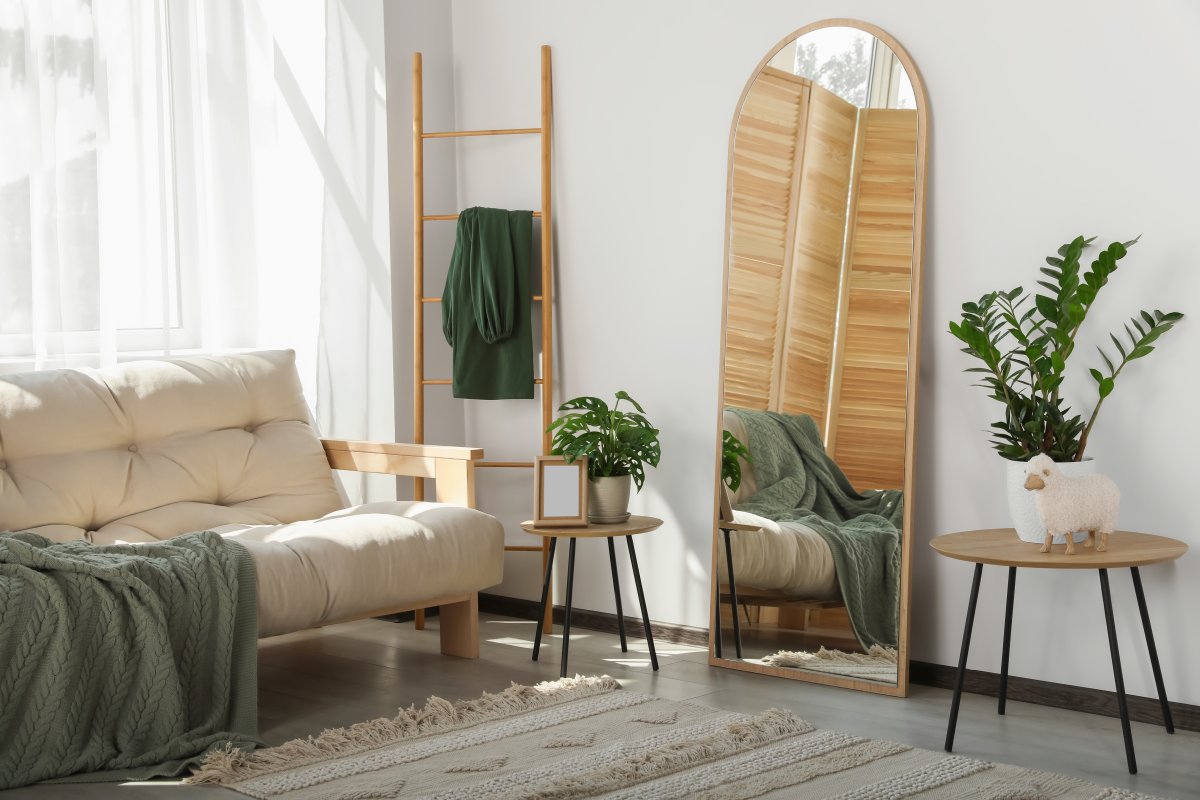
Hall agrees that decorating with mirrors is one of the simplest ways to enhance natural light. “Strategically place large mirrors opposite or adjacent to existing windows, since mirrors can bounce sunlight deeper into a room,” Hall explains. “In spaces without windows, they can even create the illusion of one, making the room feel brighter and more open.”
2. Install Certain Types of Window Treatments
Thick, dark, heavy curtains covering your windows will prevent light from shining through. Instead, choose window treatments that prioritize letting light into your interior space. “Sheer fabrics, light-filtering blinds, or Roman shades in soft, light colors work best, and hanging curtains wide and high ensures drapes can open completely,” says Hall.
A less common choice of metallic textiles reflects sunlight, sending it shimmering back into the room, adds Santulli. “I love using sheer metallic fabrics whenever I can, letting natural light pour in and dance across every surface.”
Erica Bail, executive creative director for Graber, a brand of custom window treatments, regularly advises homeowners on how to maximize natural light, even in rooms with limited or no windows. She suggests selecting shades or draperies in a similar tone to the wall color to minimize contrast and help reflect light throughout the room. Additionally, control where light enters the space. “Top-down/bottom-up shades allow natural light to enter from the top of the window while preserving privacy below,” explains Bail. “This technique spreads light more evenly throughout a space and draws the eye upward, helping rooms feel taller and brighter.”
3. Choose Light Colors for Walls, Ceilings, and Floors
The hue of the surfaces in the room also plays a role in how bright it feels. “Dark walls absorb light, while lighter neutrals help bounce it back into the room,” notes Jeannine Bogart, owner and design principal of Epic Interiors in Chicago, Illinois. Stick to a soft, warm color palette of whites, beiges, grays, and pale blues and greens for interior walls.
Also, look for paint colors with a light reflectance value of 70 or higher, which can be found written on the back of a paint chip card or online on the company’s website. A finish with some sheen, such as semi-gloss or satin, can also increase how much light is reflected.
Keep the ceilings white and the floors a muted shade as well. “Lighter paint colors on walls and ceilings maximize luminosity, especially when paired with light-colored flooring such as pale hardwood, tiles, or area rugs,” says Hall.

4. Trim Trees and Bushes Outside of Windows
Don’t overlook what’s happening right outside as well. As trees and shrubs grow, branches, leaves, and flowers can start to block sunlight from shining through the windows. It’s important to keep up with landscaping maintenance, as it can even affect what’s happening indoors. “Trimming [vegetation] back and keeping the glass clean can change how bright the room feels during the day,” explains Bogart.
5. Pay Attention to Furniture Placement
Furniture placement matters, too. First of all, you’ll want to avoid bulky, oversized pieces of furniture that can prevent light from freely entering the area. “Tall cabinets or shelving placed right beside a window can block a surprising amount of light,” says Bogart. She prefers keeping seating lower near the window so daylight can travel further into the room. It’s also advised to avoid a cluttered look; less is more to achieve a bright, airy aesthetic.