We may earn revenue from the products available on this page and participate in affiliate programs. Learn More ›
Each year, The Philadelphia Flower Show attracts more than 250,000 attendees, bringing together gardening enthusiasts, horticultural professionals, design experts, and tourists from across the country to showcase the latest gardening trends. The show has highlighted how container gardening and patio culture continue to surge, as gardeners look for flexibility and creativity in smaller spaces.
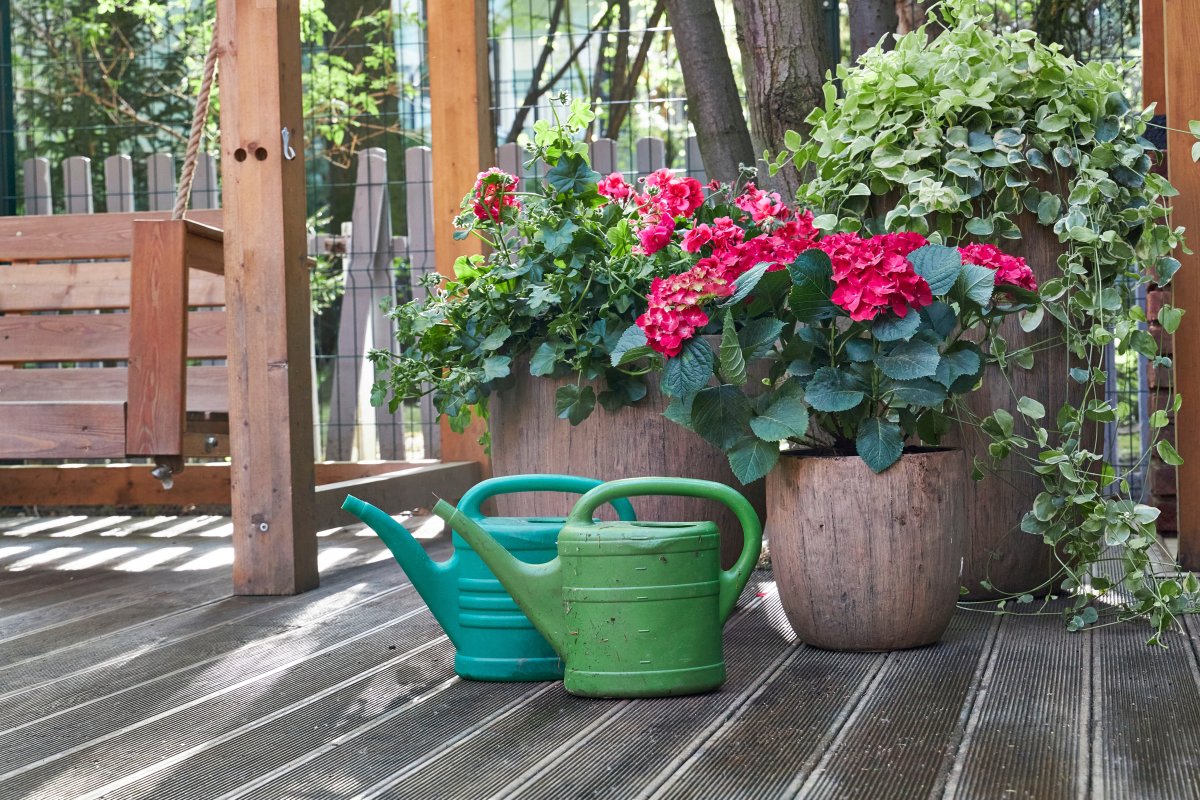
According to Monrovia, “Patio Culture includes designing an outdoor living space with a curated mix of plants chosen to bring comfort, calm, and personality without the fuss of constant upkeep or the price tag of a major landscape overhaul.” Patio culture involves artfully and strategically choosing the best container garden combinations for your home. Here we look at why container gardening is currently trending, which plants work well together, and design and care tips from experts to ensure your container garden flourishes while also turning heads.
Why Container Gardening Is So Popular This Year
Gardening in containers keeps things flexible, says Katie Rotella, spokesperson for Ball Horticultural Company in West Chicago, Illinois. “Each spring you can place them in a new location or bundle them into groupings for a fresh new look,” she explains. “They’re perfect for small-space gardening, so even those of us without large yard space can customize our outdoors with living color.” Rotella loves how seasonal in nature container gardens can be: you can plant something in them for spring, then swap out plants and textures for the heat of summer, and finally replant for fall décor.
Plus, a container garden is manageable for beginning gardeners. “It’s a right-sized investment for someone just starting out without too much maintenance,” notes Rotella. “And as established gardeners downsize or transition into less mobility, a container garden can be much easier on our joints and muscles without kneeling in the dirt.”
Finally, the rise of take-and-go hanging baskets and patio pots at retailers lets gardeners feel inspired at the store, taking the guesswork out of what works well together. “All they have to do is keep the pot hydrated and they have a beautiful, colorful display,” says Rotella.
Recommended Container Garden Combinations
With the right mix of evergreen anchor plants, unexpected hues and accents, and lush textures, you can decorate your patio just as you would a room inside your home. However, it’s critical that you choose the right mixture of plants. “Pairing plants that have different sun or watering requirements is a recipe for disaster in your container,” warns Rotella.
She recommends paying careful attention to the plant tags to understand mature height and exposure details when choosing flowering plants for containers. “Plant vigor will also dictate if each component can cohabitate with the others; a slow grower will quickly be outperformed by a large-stature, vigorous plant.”
Here are some of Rotella’s favorite container garden combinations:
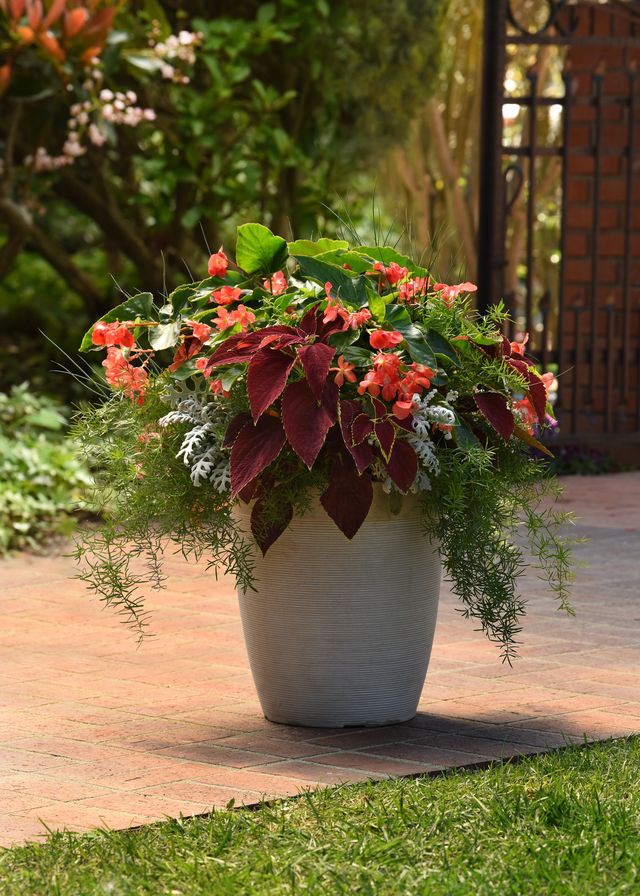
Combination 1: For Sun Gardens
- Begonia Dragon Wing: This plant has angel-wing foliage. “The red variety is absolutely stunning, but it also comes in pink and white,” notes Rotella.
- Coleus: New Coral Candy or Sweet Paprika varieties add structure and are late to flower, staying leafy all summer long.
- Asparagus Fern: This greenery is great for adding more texture and trails down the sides of a container.
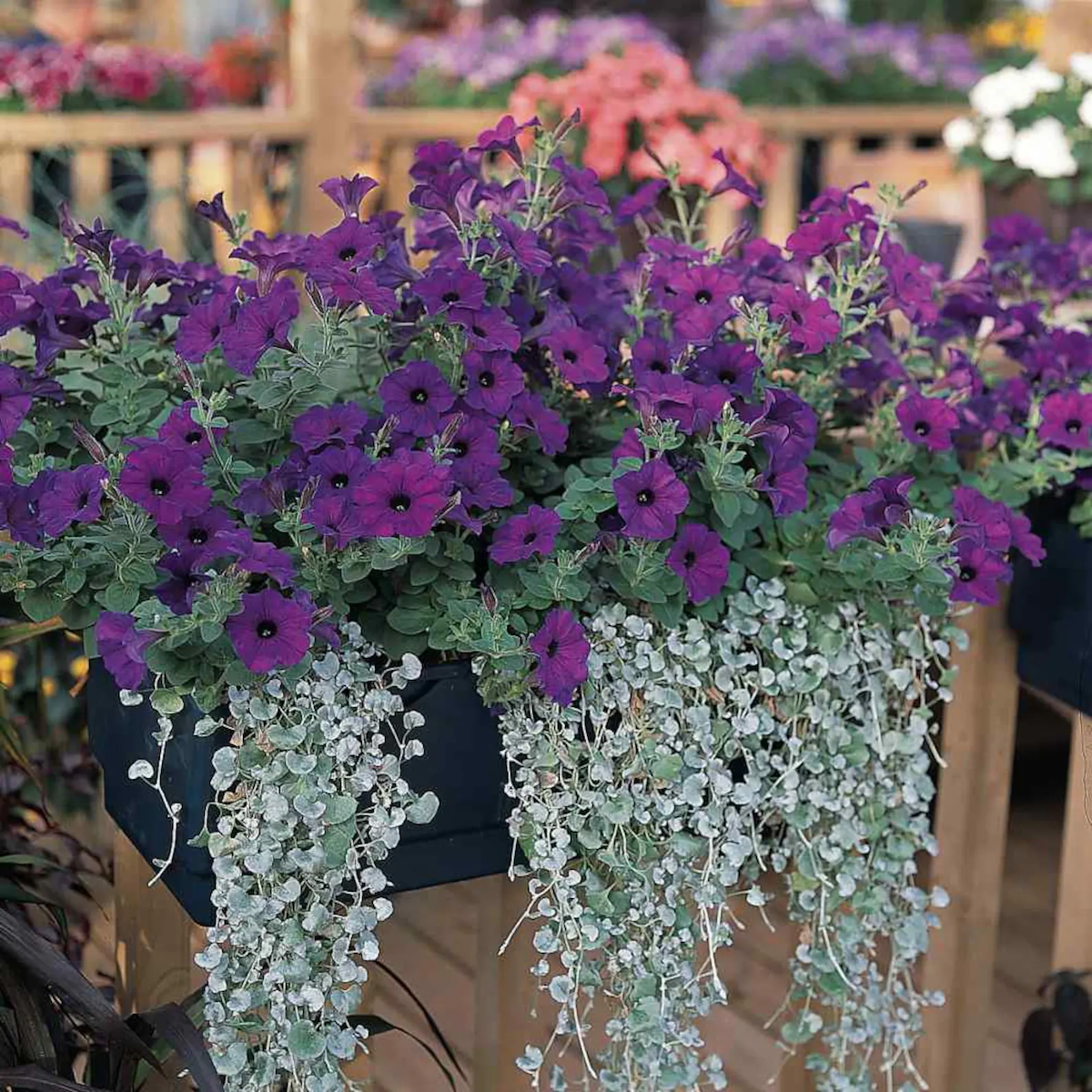
Combination 2: For Mixed Sun/Shade Gardens
- Petunia Easy Wave: Available in many colors, it makes a lush filler.
“You can customize it to fit your favorite hues or pair colors for special occasions,” suggests Rotella. - Dichondra Silver Falls: This elegant trailing plant has a silver color that works as a lovely contrast and catches the moonlight.
- Angelonia: This is an upright thriller element that is best placed in the center of the container. It thrives through the summer and takes the heat, humidity, or drought.
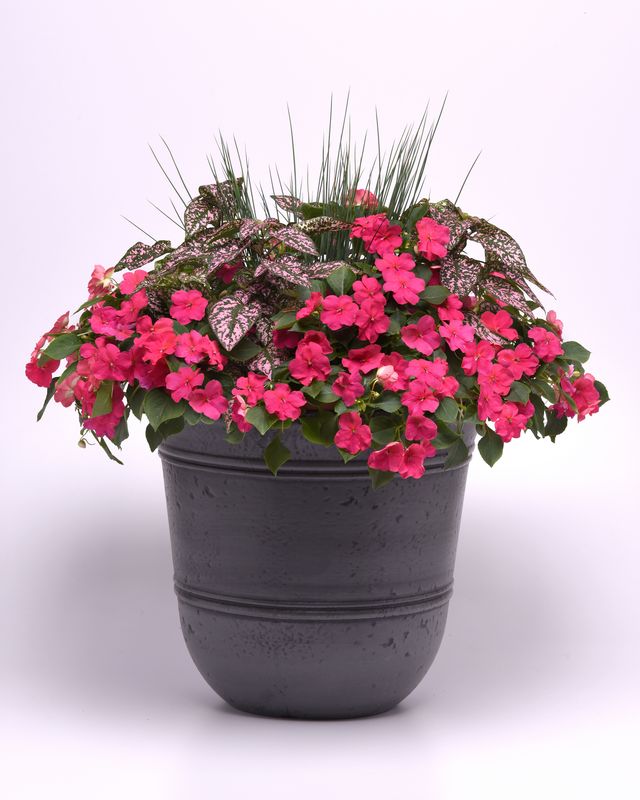
Combination 3: For Shade Gardens
- Impatiens Beacon: These plants are disease resistant, so you won’t need to replace them if downy mildew is a problem in your area. Rotella loves Rose or Lipstick for a hot plant color choice in the shade.
- Hypoestes: Splash Select Rose is a soft green-pink plant that will create an amazing ombré effect when paired with vibrant impatiens, says Rotella.
- Juncus Blue Arrows: This grass spikes up through the flowers and foliage to add height and interest.
Design and Care Tips
To ensure that your container garden looks as gorgeous as possible and thrives throughout the seasons, keep the following tips in mind.
- Purchase the right containers: “Containers with proper drainage holes will serve you well,” says Rotella. “Excess moisture from rain or daily waterings needs a place to leach out of the pot; otherwise it will saturate your roots and lead to mildew and disease.”
- Stay consistent: Monrovia recommends planting in containers constructed of similar materials to avoid visual clutter. Also, repeat plant varieties across containers for a more cohesive look.
- Consider key design elements: Monrovia recommends considering structure (evergreen anchors to create clean lines), scent, softness (layering in plants that blur hard edges and add movement), and statement (showstoppers with bold color, interesting leaf shape, or other unique element) when putting your container garden together.
- Add quality soil: When planting in your container, make sure you’re using good quality potting soil–not topsoil. Potting soil has a fluffier consistency to help the container retain moisture and allows the roots to grow and take in nutrition and hydration, says Rotella. “Topsoil, on the other hand, is filled with clay and no nutritious charge, which could saturate in a heavy rain and stunt your plant growth.”
- Check moisture: Stick your finger into the soil about 2 inches deep to assess the moisture level of all your containers. If you feel some dampness, you don’t need to water the container. Overwatering is sometimes a bigger problem than under-watering, warns Rotella. “When the heat really kicks in, check your containers daily, as the hot sun can pull moisture from the soil, and your plants may need a heavy soak and rehydration to get them through those days,” explains Rotella. Keep in mind that smaller containers and baskets will dry out faster than larger ones.