We may earn revenue from the products available on this page and participate in affiliate programs. Learn More ›
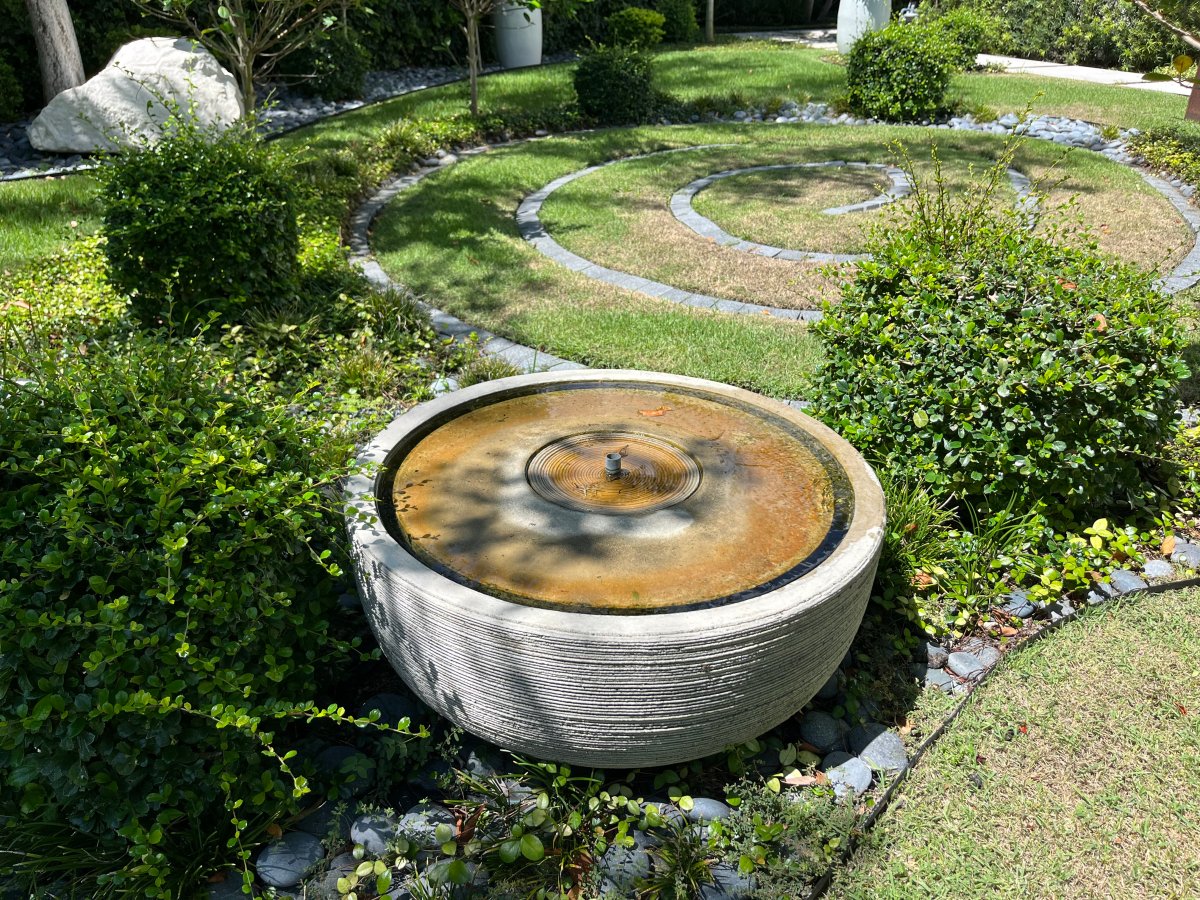
I love having a fountain in my meditation garden and consider it one of the top treasures of my home. The calming sound of moving water has transformed my yard into a personal sanctuary where I can escape the stress of daily life and enter a more mindful state. I’ve noticed that I spend more time in my backyard now, being mesmerized by the fountain, and friends and family always comment on how beautiful and relaxing the space feels. The fountain has truly become the centerpiece of my outdoor area, and I can’t imagine my backyard without it anymore.
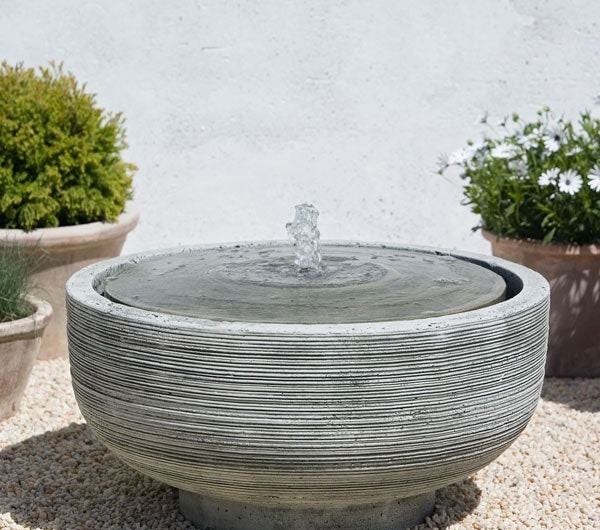
When designing the garden 3 years ago, we chose the Girona Fountain by Campania International. With its modern yet weathered look and durable cast-stone construction, this gray bowl-shaped fountain has held up very well outside. It is a great size (30 inches wide by 15 inches high) and hefty, weighing 318 pounds when empty and 445 pounds when filled with water.
But like anything in life, a fountain requires work. It’s almost like having a mini pool. Here’s what it takes to maintain a garden fountain to keep enjoying all the perks it provides.
Provide power for the fountain.
When selecting a fountain, the first step was to figure out how it would run. The fountain we chose requires electricity and plugs into any standard 3-prong 110-volt (AC only) GFCI-protected electrical outlet. Our challenge then became how to get the electricity to the fountain. In most cases, an outdoor fountain is far enough away from the outlet that you must bury or hide a wire for safety and aesthetic reasons. When doing this, it’s important to check with local codes to make sure you aren’t violating any.
We had our landscaper install the fountain and run the wire in the stone tracks between pavers. While the wire occasionally pops out of place, we haven’t experienced any major issues.
Another option would be to choose a solar-powered fountain to avoid the concerns about running a wire through the yard. Plus, solar-powered fountains are more energy efficient, reducing energy consumption and utility bills. We might look into solar the next time we add a fountain to a backyard update.
Make sure the water keeps flowing.
Like any other pool of water, evaporation is an issue to consider. If the water gets too low, the lack of water can damage the fountain. To avoid dragging a garden hose out every time you need to refill your fountain, it’s a good idea to install an auto filler. This device helps maintain a fountain’s water level at a constant height so you don’t have to worry about it. You simply set the device to the desired height and insert the clear tube through the special fountain stopper that is connected to a garden hose or spigot.
When you turn the water on, the valve in the unit actuates when the water level drops below the set height. We installed an auto filler but haven’t had to use it yet since our sprinkler system does a great job of replenishing our fountain on a daily basis.
Another trick is to automate the fountain so it runs exactly when you want it to. Since most fountains don’t have a built-in timer, we use our home automation system, which controls the outlet that powers the fountain. This ensures that our fountain runs from 11 a.m. to 5 p.m. daily.
Keep the fountain clean.
It takes time and attention to ensure that an outdoor fountain continues to look attractive in the yard. It’s common for algae and debris like dirt, leaves, pollen, grass clippings, and insects to accumulate in the water, ruining the fountain’s appearance. Also, hard water can leave behind mineral deposits that can cause stains and discoloration. It’s critical to run a garden fountain every day to avoid issues. If not, standing water collects and produces mold and algae.
We’ve learned the importance of regularly cleaning our fountain. According to the manufacturer, it’s best to clean gently every 1 to 3 months with mild, commercially available soap, such as Dawn dish soap, or a 50/50 mixture of white vinegar and water. Use a soft-bristled brush or cloth, and keep in mind that it might require several cycles of wiping and drying to achieve a completely clean surface. Do not pressure-wash your fountain, and never use bleach or other harsh chemicals since they can damage the surface of the fountain.
Maintain the fountain pump.
Debris can also clog the pump, so it’s critical to take several steps to check the pump and make sure it’s functioning properly. We follow these steps, per the manufacturer’s instructions:
- Keep the fountain filled with water to ensure the pump remains fully submerged, since letting the pump run dry can damage the motor and cause it to burn out.
- Regularly check the water level, as evaporation and splashing can reduce it. If low, refill it as needed.
- Periodically change the water to prevent stagnation and odor.
- Clean the pump every 2 to 3 months with mild, commercially available soap or a 50/50 mixture of white vinegar and water and a small, soft-bristled brush to remove debris, dirt, and algae buildup.
Protect fountains during harsh weather.
With an investment of around $1,200 in our fountain, we don’t want to mess around when storms and extreme weather approach. Garden fountains are vulnerable to everything from hurricanes with strong winds and heavy rain to freezing temperatures and heat waves. We live in Florida and have been fortunate that the last few hurricane seasons haven’t impacted our area.
Here are the steps we will take to protect our fountain if a powerful storm is in the forecast:
- Drain the fountain, since excess water can overflow or mix with debris, causing clogs and damage.
- Remove the pump and store it indoors to protect it from moisture damage and debris buildup.
- Store inside or secure loose parts, such as the bowls, since high winds can dislodge these elements, turning them into dangerous projectiles.
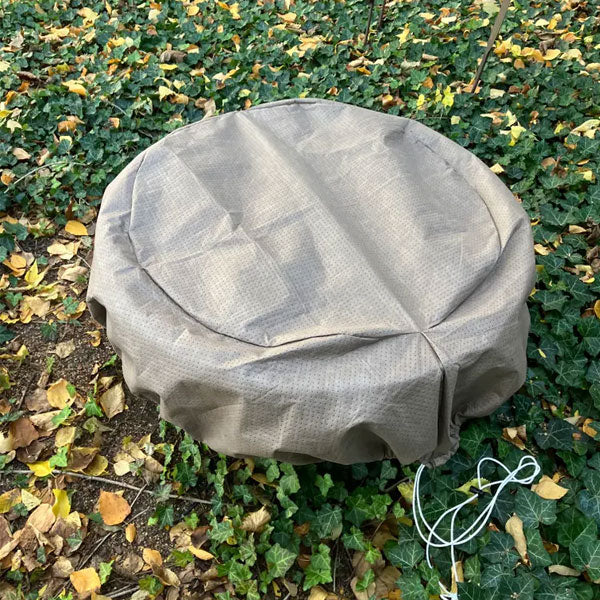
- Shield the fountain from rain, hail, and debris using a high-quality waterproof fountain cover.
- Secure the fountain using ground anchors, brackets, or heavy sandbags at the base to stabilize it against strong winds.
Even though our backyard fountain requires quite a bit of maintenance to keep it in tip-top condition, I wouldn’t trade it in since I find it extremely relaxing.