We may earn revenue from the products available on this page and participate in affiliate programs. Learn More ›
Quartz countertops have long been a favorite choice of homeowners and interior designers alike due to their strength, nonporous nature, modern look, and uniformity. However, recent discoveries and legal challenges regarding the material’s potential health hazards to fabricators have caused quite a stir and are now reshaping the industry.
The main issue is with crystalline silica that’s a natural mineral found in quartz. When particles are inhaled, they can penetrate deep into a person’s lungs, causing damage that can lead to serious respiratory diseases like silicosis, lung cancer, and chronic obstructive pulmonary disease (COPD). And many workers have become ill from breathing in dust containing crystalline silica while fabricating quartz countertops. Australia has already banned many engineered-stone products, while California is pursuing policy rules that would prohibit fabricating engineered stone containing more than 1 percent crystalline silica.
As a result, more and more people are looking for safer countertop options to use in place of quartz. “We have found some homeowners shying away from quartz surfaces,” says Kaycee Conallen, owner of Kaycee Conallen Design Studio in Swarthmore, Pennsylvania. There are many alternatives to quartz countertops, and designers have helped us identify three top options for your new home or next remodel.
Note: There is no evidence indicating a health concern with already installed quartz countertops, so if you already have one, you don’t need to rip it out.
Recycled and Composite Surfaces
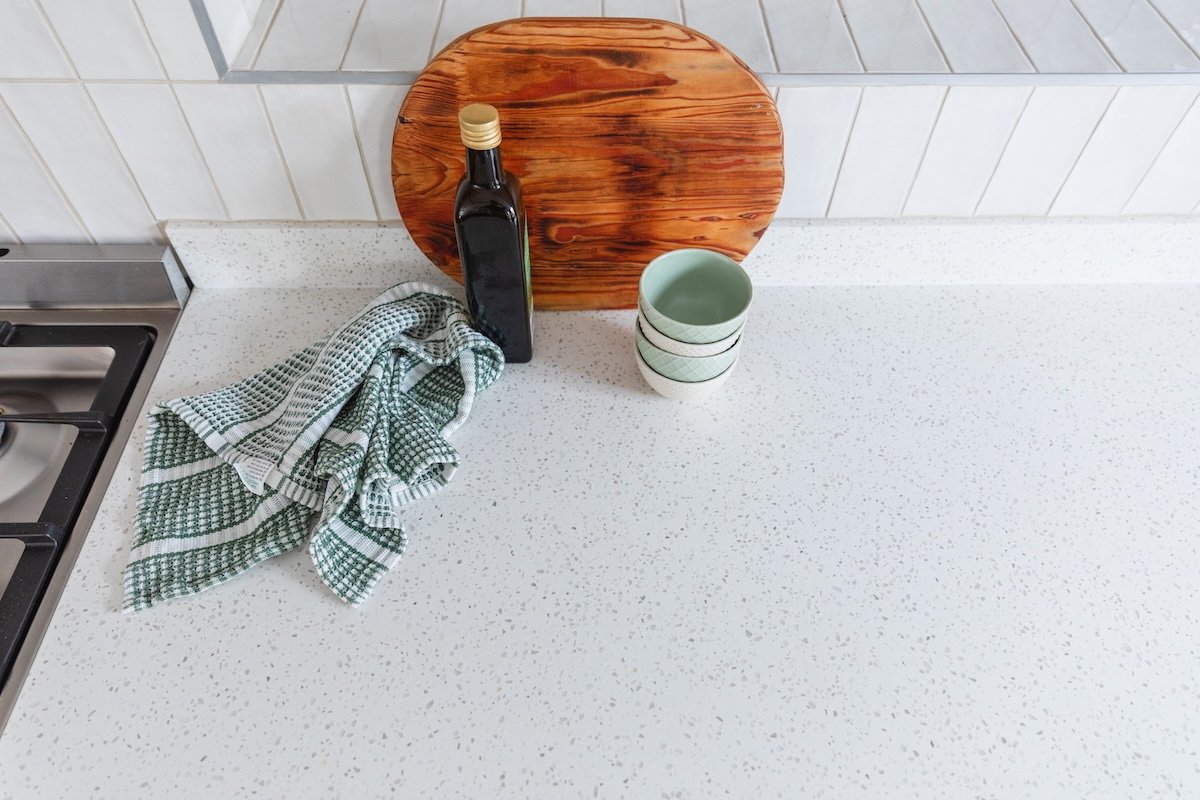
One alternative to quartz countertops is eco-friendly, silica-free alternatives like recycled glass and paper composites. Both eliminate silica risks while providing unique designs ranging from bold, contemporary glass patterns to sleek, solid-color paper finishes.
Recycled glass countertops incorporate post-consumer or post-industrial glass fragments bound in cement or resin, offering distinct visual textures from fine-ground particles to large, jewel-like shards. Notable glass brands include IceStone, Vetrazzo, Curava, GEOS, and Compac Obsidiana Zero. Glass surfaces are effective at resisting cuts, scratches, and heat, though stain-resistance and maintenance depend on whether a resin or cement binder is used.
Paper-based composites work well for those gravitating towards a solid color and solid surface materials, such as PaperStone, Richlite, and Fenix brands. Surprisingly durable, these heavy-duty panels are made from layers of post-consumer recycled paper or paper from FSC-certified forests, which are compressed under heat and pressure with a silica-free and petroleum-free phenolic resin.
While heat resistant to about 350 degrees Fahrenheit, minor scratches and stains may appear, but can be sanded out. “Fenix is a man-made resin and paper combination originally developed in Italy, and we love that it has a beautiful matte finish, feels soft to the touch, and is very durable,” explains Conallen.
Sintered Stone
“Sintered stone is another strong option for its resistance to heat, scratches, and stains,” notes Blima Ehrentreu, founder and CEO of The Designers Group (TDG) in New York City and other locations. Using a high-tech process, natural minerals like porcelain and glass are combined under immense heat and pressure to replicate metamorphic rock with minimal to zero crystalline silica.
The non-porous nature of sintered stone makes it resistant to staining, scratches, intense heat, and color-fading from UV exposure. Brands that make this type of surface include Lapitec, Dekton, Neolith, Florim, Sapienstone, and Caesarstone, which are actively eliminating or reducing silica content. In addition, many of these surfaces contain recycled content.
Soapstone
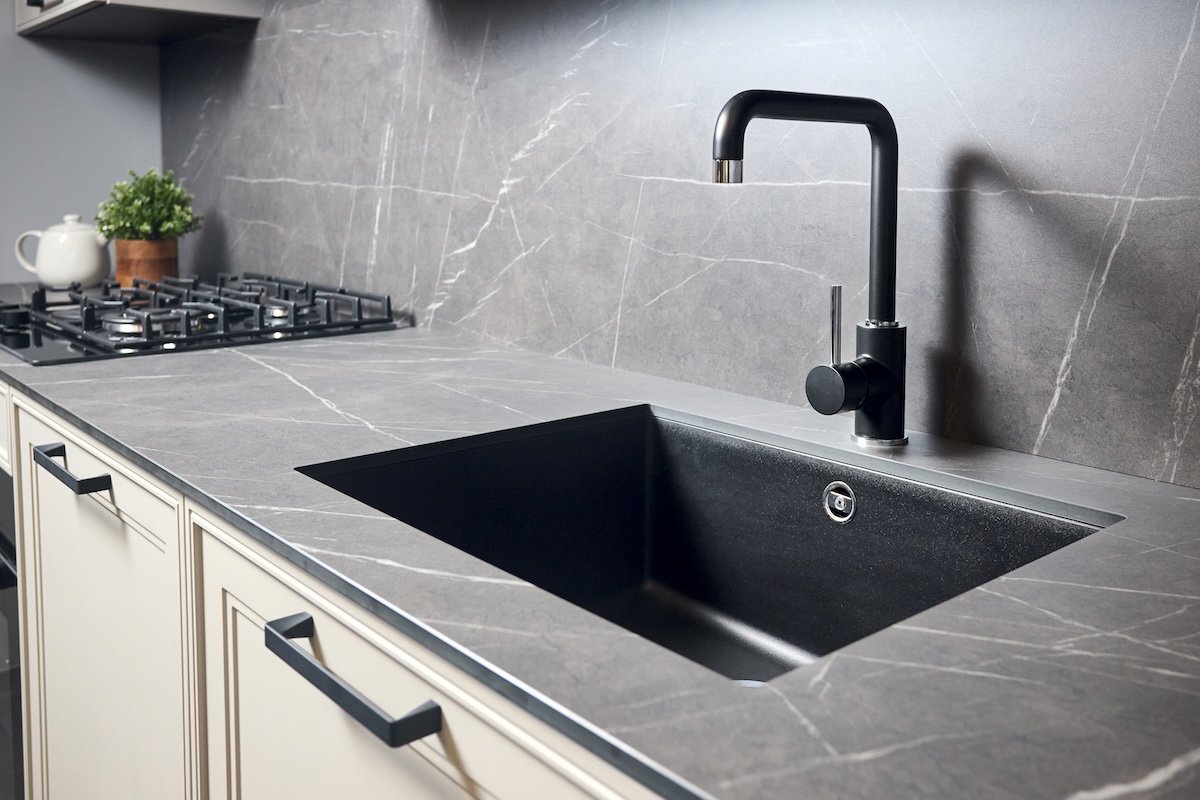
Conallen also loves the look of authentic materials like soapstone. “Each slab of stone carries unique characteristics, personality, and porosity,” she explains. Composed mostly of talc, this metamorphic rock is free of crystalline silica and has a distinctive, velvety feel. Soapstone offers design versatility, as it ranges in color from subtle grays and muted greens to charcoal or deep black, sometimes accented by marble-like veining. Not only does it offer a classic, understated elegance to modern spaces, but it is also a sustainable option given its low-energy extraction process, nontoxic nature, and recyclability.
From a functional standpoint, soapstone is very durable. It withstands heat, so you can set hot cookware directly onto the surface without trivets. It’s also nonporous so it doesn’t get damaged by acidic etching, spills, or bacterial growth. The only drawback is that it’s a softer material than most of the other options mentioned, so it can show minor scratches.