We may earn revenue from the products available on this page and participate in affiliate programs. Learn More ›
When you are brushing your teeth, using the toilet, or about to take a shower and you notice a bad smell coming from the shower drain, you shouldn’t just ignore it because it may be a symptom of a bigger issue. Shower drain smells are often linked to serious problems, like mold growth, clogs, or even drainage pipe leaks, which, if left untreated, could result in significant damage to the home.
A smelly shower drain should be inspected as soon as possible. In the best-case scenario, you may just need to clean the drain, but if the issue is beyond even what an experienced DIYer can handle, then you may end up having to call in a professional plumber to solve the problem before it can get out of hand. Use this guide to find out several reasons that could explain why your shower drain smells and how to resolve this issue.
Why does my shower drain smell bad?
1. The P-trap is dry.
The P-trap is the U-shaped drainage line directly under the shower drain. Its main purpose is to trap a small amount of water that helps to block sewer gases and odors from entering the home through the drain. “If a drain doesn’t get used for a long time the water in the drain can evaporate. This allows sewer gas into the room,” explains Travis Hargrave, Master Plumber and Owner of Hargrave’s Plumbing, located in and around Lafayette, Louisiana. So, if your P-trap is dry, then you may have a sewer smell in the bathroom due to the gases in the drain line coming back up through the drain and into the home.
Solution: Generally, when there is a sewage smell in a shower drain due to a dry P-trap, you can simply run the shower for a few minutes to refill the P-trap. This issue is common in guest showers or rarely used bathrooms. Ideally, you should try to run water once a month in these showers to prevent the P-trap from running dry. However, if the P-trap seems to dry out very quickly, then it may be due to a crack in the pipe, in which case you will need to hire a plumber to investigate and repair.
2. Mold is growing in the drain.
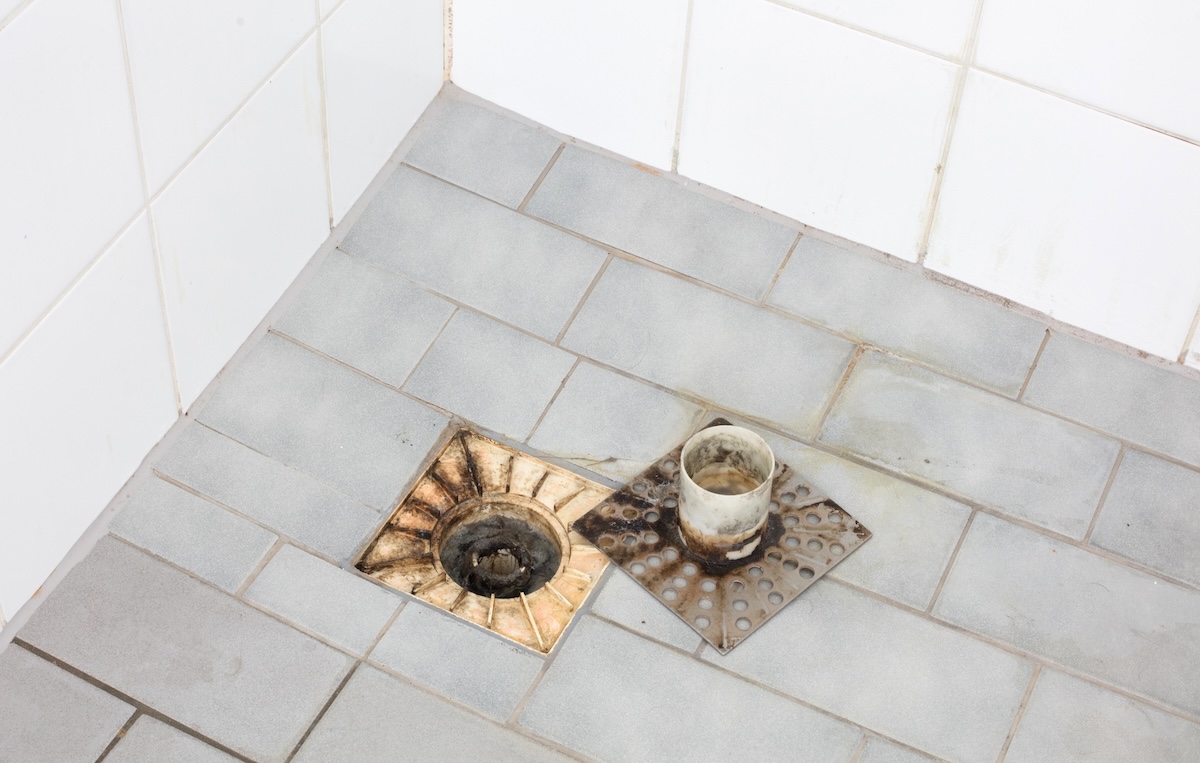
In some cases, smelly drains in the shower are a result of mold and mildew building up inside the drain or even on the outside of the drain, under the drain cover. The main reason why mold and mildew take root in the shower drain is that the moist, dark environment under the drain cover has the ideal conditions for mold growth, allowing it to thrive, especially in unseen areas.
Solution: Getting rid of the odors in the house caused by mold and mildew is often as easy as cleaning the shower drain. Start by removing the drain cover and scrubbing to eliminate mold and residue. Next, pour one cup of baking soda into the drain, then pour one cup of white vinegar into the drain, before covering the drain and allowing it to sit for about 15 minutes. After 15 minutes, flush the drain with hot water. For persistent mold, you can use a scrub brush to physically remove it, or try a diluted bleach solution of one part bleach to 10 parts water.
3. There is a buildup of soap scum, hair, and oils.
Normal use of your shower can lead to the shower drain smelling bad simply due to the gradual accumulation of oils, hair, and soap scum. Products that are heavy, oily, or contain high amounts of fats can harden, creating a thick, sticky residue on the inside of the pipe walls that is difficult to rinse away. You can reduce the amount of debris that get trapped in the drain by investing in a quality shower drain hair catcher that will prevent this debris from entering the drain.
Solution: Dealing with a shower drain that smells bad isn’t difficult. “Anytime you have an accumulation of smell we recommend pouring a diluted bleach mixture down the line. However, if the smell quickly returns you will want to call a pro,” says Hargrave. Alternatively, you can remove the drain cover and scrub the drain pipe with a long, narrow brush to remove trapped residue, then use an enzyme cleaner to eat away organic matter.
4. You have a clogged drain.
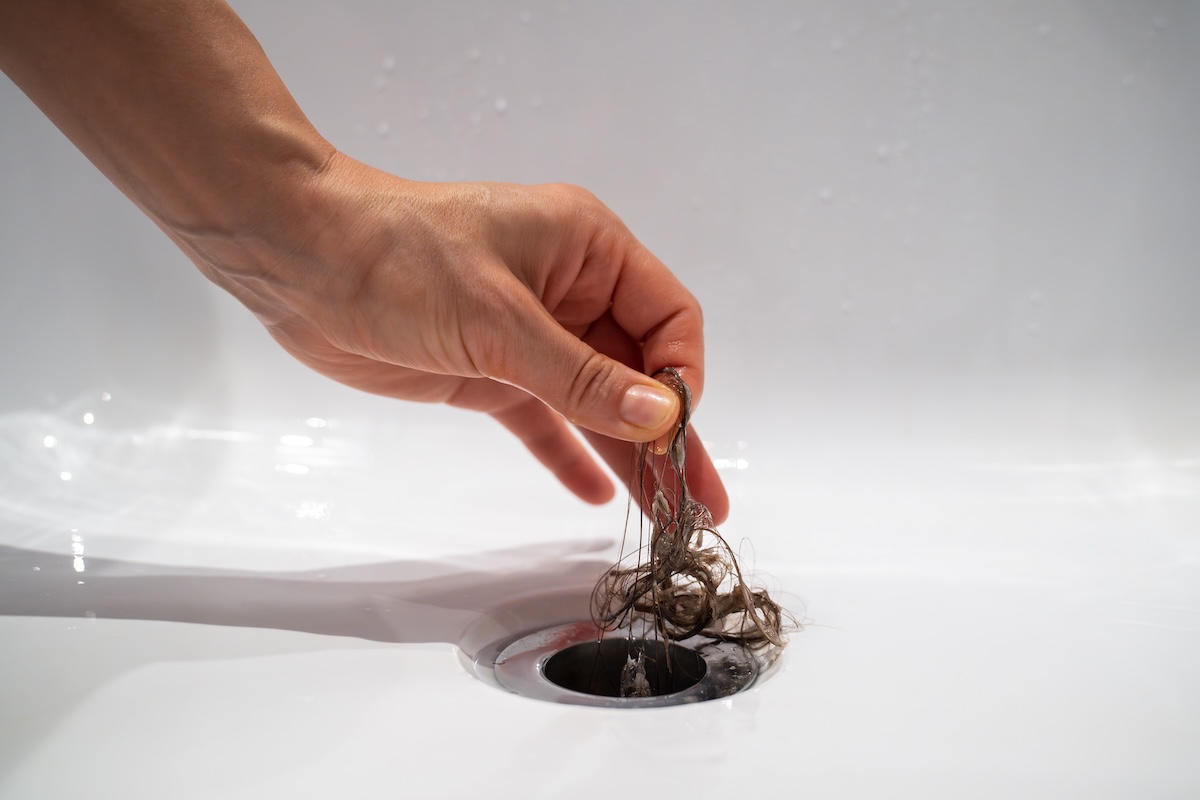
When the shower drain is clogged the hair, soap scum, oils, and other debris that naturally enter the drain will build up inside the drain line, preventing the waste water from flowing down into the drain and causing the shower drain to smell. Clogs can also occur deeper into the drain line, making it difficult for you to initially notice a problem. Hargrave mentions that “when the clog doesn’t allow for draining, the waste in the pipes work their way into the traps of showers, tubs, and even sinks.”
Solution: Calling in a plumber immediately will certainly be an effective way to unclog the shower drain, but the cost to snake a drain may not be worth it when you may be able to remove the clog yourself. DIYers with plumbing experience will likely have a drain snake in their tool box that they can feed into the shower drain to physically pull out or dislodge the clog.
If the clog is primarily made up of oils, then you may be able to dislodge the clog by pouring boiling water into the drain or using a chemical cleaner. Also, if the clog is made up of hair and is relatively close to the opening of the drain, you may be able to pull it out with a wire coat hanger. However, if these solutions do not work, then it’s recommended to call a plumber to handle this issue.
5. There is a layer of bacterial biofilm buildup.
Biofilm can look similar to mold, but it is actually made up of a colony of bacteria and bacterial waste. “The simple fact that drains are damp and dark makes them ideal for bacterial growth,” notes Hargrave. Bacterial biofilm appears like a muck, grime, or slime, and comes in many different varieties and colors, though it is most commonly pink or orange. When this glue-like substance builds up inside the shower drain, it causes a musty, unpleasant scent.
Solution: As you would with mold, it’s important to start cleaning bacterial biofilm away by removing the drain cover and physically scrubbing the area with an antimicrobial cleaning solution. You can use a soft-bristle brush to physically scrub the biofilm off of the visible surfaces, or even use a paint roller to scrub the inside of the drain line as best as possible.
After removing as much as possible, pour a mixture of Dawn dish soap, bleach, and water down the drain to kill and rinse away any remaining bacterial biofilm. You can also use a top drain cleaner, like a commercial enzyme cleaning solution, to get rid of the leftover bacteria and bacterial waste.
6. The drain pipes are leaking.
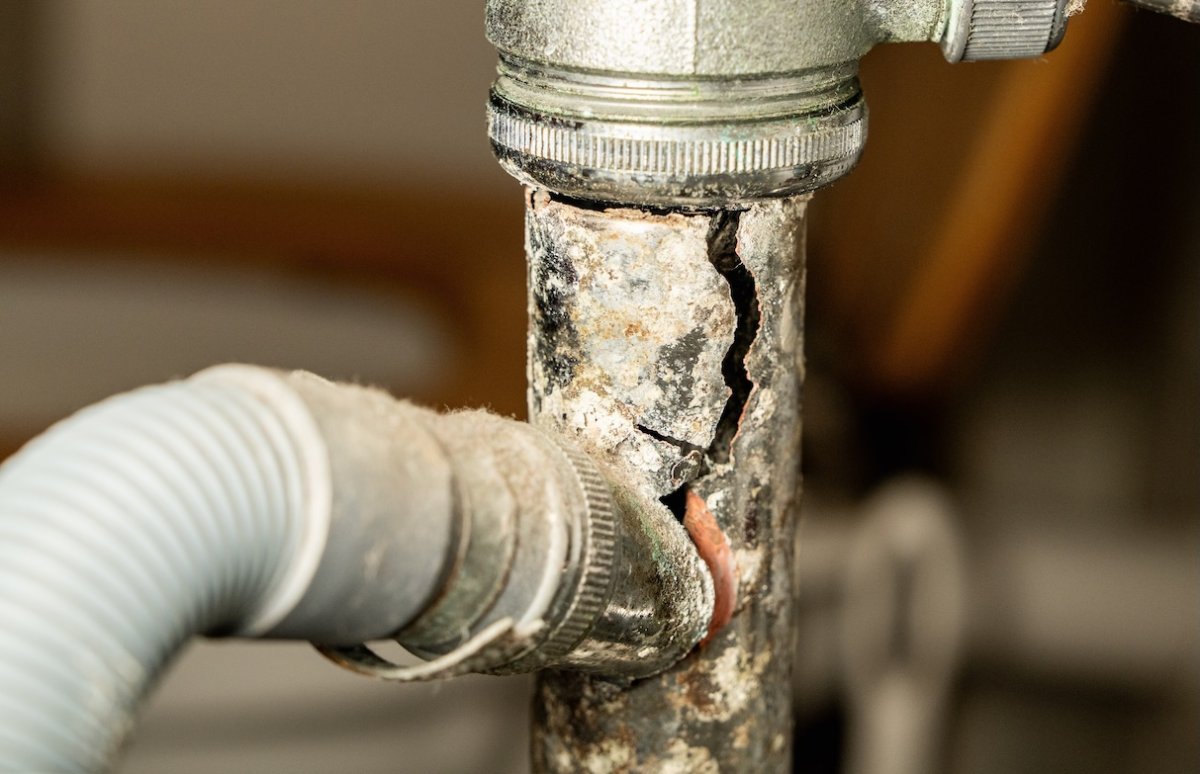
One of the more serious issues you might encounter if your drain smells bad is a leaking drain line. When this occurs, the crack or loose fitting that is responsible for the leak may allow waste water to seep into your floors and walls. Even if the actual amount of waste water escaping the drain line is minimal, the smells from the drain line will exit into the home, emanating through the walls and floors into the bathroom and the surrounding areas of the house.
Solution: Leaks generally occur around a joint or a connection, but this isn’t always the case. In some situations, the leak may be due to a crack in the pipe. Due to how difficult it is to locate the source of the leak and repair the line, it’s best to discontinue use of the shower and call a plumber as soon as you suspect the shower drain line is leaking. Depending on the scope of the damage, it’s possible that you may need to hire a water damage restoration expert as well.
When to Call a Professional
While there are many smaller issues that can be handled by a knowledgeable DIYer, there are also instances when it is best to leave the troubleshooting and repairs to a pro. “If the smell returns quickly, something is definitely wrong and a plumber should be called immediately. Our company usually starts with a sewer camera to see if we notice breaks in the line. We also use a gas leak detector to ensure the smell is actually coming from the drain,” says Hargrave. Generally, any complex or intensive repairs should be left to a plumber or water restoration professional who is capable of fixing the main issue and addressing any secondary problems, like rot, water damage, or mold growth.
FAQ
Q. How do you clean a shower drain trap?
Cleaning the shower drain trap is relatively easy. Start by removing the drain cover and pulling out any hair or gunk that is visible. Rinse the shower drain trap with hot water, then use a brush and an enzymatic cleaning solution to scrub the shower drain trap clean. Be sure to rinse the drain after cleaning to remove any leftover cleaning solution.
Q. Can I pour bleach down the shower drain?
Diluted bleach can be poured down the shower drain to help deal with mold, mildew, or bacterial biofilm as long as the drain is properly flushed after use, but you should not pour undiluted bleach down the drain as it may be harmful to your plumbing system.
Q. Is it okay to shower in stinky water?
When the water coming out of your shower head is stinky, this typically indicates that there is a higher than expected concentration of sulfur in the water. Showering in water that smells like sulfur is generally safe, but it can be unpleasant and may cause minor skin and hair dryness. Smelly water might also be a sign of bacterial growth in the water heater or the well, so it’s a good idea to have a plumber inspect your plumbing system if you encounter this issue.
Q. Is baking soda and vinegar safe for drains?
Using baking soda and vinegar to clean your drains is generally considered to be safe for modern, sound plumbing. This mixture is helpful in killing mold and bacteria, and can be put to use to help clear minor clogs or treat foul odors, though it is typically ineffective for serious clogs.
Q. Can I leave vinegar in my drain overnight?
The mild acidic nature of white vinegar is typically gentle enough that it will not harm most modern PVC pipes, so it is generally considered safe to leave vinegar in your drain overnight for routine maintenance or to address minor odors or bacterial buildup.