We may earn revenue from the products available on this page and participate in affiliate programs. Learn More ›
There comes an unfortunate time in the life of a deck owner when it becomes apparent that a beloved backyard party space doesn’t look as grand as it once did. Split boards, discoloration, some pronounced grain, and other defects can rob a deck of its former glory. The only choice is to rebuild—or is it?
If you’d like to breathe new life into an old deck, applying one of the best deck resurfacers might be the way to go. A resurfacer can coat an old, ugly surface and give it a brand-new look. Read on to discover shopping tips and considerations to keep in mind when choosing a deck resurfacer, and then explore some of the top products on the market.
- BEST OVERALL: Olympic Rescue It 3 gal. Timberline Deck Resurfacer
- BEST BANG FOR THE BUCK: INSL-X SU092209A-01 Sure Step Acrylic Anti-Slip
- BEST TINTABLE: Cabot DeckCorrect Tintable Satin Mildew Resistant
- BEST MILDEW-RESISTANT: Cabot DeckCorrect New Cedar Satin Mildew Resistant
- BEST POLYURETHANE: LR Liquid Rubber Smooth Polyurethane Deck and Dock
- BEST ANTI-SLIP: TotalBoat-0121G TotalTread Non-Skid Deck Paint
- ALSO CONSIDER: RUST-OLEUM 300081 Gallon 20X Tint Resurfacer
Before You Buy a Deck Resurfacer
When shopping for a deck resurfacer, it’s important to understand the difference between a deck stain, a deck paint, and a deck resurfacer. You might find the other options are better suited for your needs.
- Deck stains penetrate the wood, often changing its color but also accentuating the grain. Deck stains contain protectants that seal the wood from rain and snow, as well as minimize the effects of UV rays. They’re ideal for newer decks that still look good but need a protective finish.
- Deck paints create a thin shell over the deck, changing the color and protecting it from the elements. Deck paints do an admirable job of making the surface look even and uniform. They’re suitable for older decks, but the coating isn’t very thick.
- Deck resurfacers are ideal for older decks that are past their prime. These products create a thick coating on top of the deck that fills depressions, fastener holes, and pronounced grain.
An important note: There is no fix for an unsafe or compromised deck. If you’re dealing with rot, severe warping, or other structural issues, it’s best to replace the surface.
What to Consider When Choosing the Best Deck Resurfacer
There’s nothing quite like a fresh deck surface to enjoy with friends and family. And with the best deck resurfacer, your guests won’t even know an old deck lies beneath that beautiful coating. But choosing a deck resurfacer can be complicated. The following section will point out the most critical points to keep in mind while shopping for one of these products.
Ingredients
Deck resurfacers contain certain ingredients that make them suitable for particular uses. For example, many resurfacers include a gritty texture that creates a nonslip surface and fills cracks and gaps. This grit goes a long way toward creating a safe deck with a uniform look.
Other resurfacers might include rubberized polymers or polyurethane. Both of these materials create a flexible coat that can even self-heal in some circumstances. They’re also grippier than other finishes.
Some deck resurfacers contain mildewcide, which helps prevent mold and mildew from growing on the surface—a big plus for decks in shady and wet spaces.
Thickness
The main reason deck resurfacers work so well for their intended purpose is that they’re incredibly thick compared to paints or stains. This thick material sits on top of the wood and self-levels, filling into the worn grain, knots, and fastener holes. It also resists damage from foot traffic and patio furniture.
Although much thicker than paint or stain, it’s essential to understand that most deck resurfacers need at least two coats to truly replenish the look of a tired old deck. The first coat will fill those undesirable areas while the second (or third) coat makes them all but disappear.
Coverage
The one downside to deck resurfacers is their thickness doesn’t allow them to go nearly as far as a stain or a paint during application. In fact, DIYers can expect to use at least twice as much deck resurfacer for a given area than if they were to use a stain.
One gallon of the best deck resurfacer will usually cover only about 75 square feet. And, if the deck is particularly worn, a gallon might not even come close to that level of coverage. However, while the lower coverage might make the job more expensive than staining or painting, it’s still much cheaper than replacing the decking.
Color and Finish
The greatest benefit to deck resurfacers is that the sky’s the limit when it comes to color. Because these products are so thick and designed to hide the wood, manufacturers can offer them in a host of versatile hues. Browns, reds, greens, grays, and even black and white are available, and they can help blend a deck into the landscape around it.
There’s also a choice of finish when selecting the best deck resurfacer. Those who prefer a nonslip surface will enjoy the gritty, grippy textures. For those who prefer a smoother surface underfoot, these options are available as well. But, should you choose a smoother finish, recognize that it might not do quite as well at hiding imperfections as a grittier finish—an additional coat might be necessary.
Weather Conditions
All deck resurfacers protect deck materials from weather conditions like rain and snow. After all, water can’t permeate a shell of two or three coats of resurfacer. But there are other considerations to keep in mind.
If the deck is in a shady spot or an area that sees a lot of water exposure, a resurfacer containing mildewcide might be the only way to keep it clean and safe to walk on.
Also, keep in mind the amount of direct sunlight the deck sees when choosing the deck color. Dark colors might do an excellent job of creating contrast or hiding imperfections, but they also absorb a lot of heat from the sun. The deck surface could be uncomfortable to sit on and painful for bare feet or four-legged family members, particularly on hot, sunny days.
Drying Time
Deck resurfacers rarely dry quickly. Since you apply them in such thick coats, they take quite a bit more time to dry than a thin paint or even thinner stain. Most of the best deck resurfacers take between 24 and 48 hours to dry fully.
Because they take so long to dry, it’s important to plan the application when the weather cooperates. Imagine spending all day resurfacing a deck only to have rain come through a few hours later and make a mess of the deck and the yard. When applying a resurfacer, having 3 days of pleasant, dry weather is ideal.
Prep and Application
There are lots of pictures of DIY deck resurfacing jobs that appear to be peeling. In most cases, this is due to the DIYer’s failure to prep the surface and apply the product correctly. For optimal application, follow these instructions:
- Make any necessary repairs, including removing rotten boards or screwing down loose boards. Unlike refinishing a deck, there’s no need to sand or plane any of the surfaces unless large splinters are present.
- Clean the surface with a deck cleaner, a bucket, and a brush. Using a pressure washer is another option, but DIYers will have to wait longer for the deck to dry.
- Let the deck dry in the sun for around 24 hours—the surface must be dry for the resurfacer to adhere.
- Coat the surface with the resurfacer using a long-handled roller and a brush for tight spots. Be sure to maintain a wet edge to avoid lap marks.
- Apply the first coat and then let it dry according to the directions.
- Apply additional coats as necessary.
Our Top Picks
If a fresh deck surface sounds like part of this season’s plans, it’s time to start shopping for the best deck resurfacer. The following section will streamline the selection process as it contains some of the top options on the market. Be sure to keep the abovementioned considerations in mind when comparing these products.
Best Overall
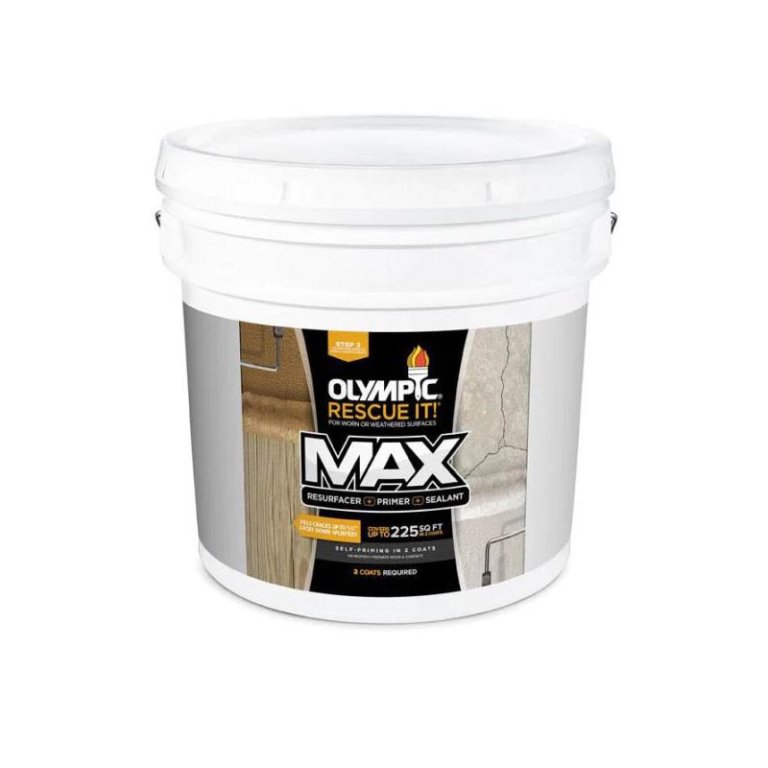
Olympic Rescue It 3 gal. Timberline Deck Resurfacer
See ItOlympic Rescue It Timberline Deck Resurfacer is worth checking out for anyone looking for a bit of extra versatility from a resurfacer. This product also contains a primer and a sealer, promoting adhesion and water resistance on older decks.
The formula can fill cracks up to ¼-inch deep while creating a uniformly textured surface. That texture coupled with this product’s mildew- and algae-resistant coating creates a nonslip surface. One 3-gallon bucket will cover up to 225 square feet, and the manufacturer highly recommends two coats. After applying the first coat, it’s ready for a second pass within 6 hours. The final coat is ready for foot traffic in 48 hours, and it’s ready for furniture in 72 hours.
Best Bang for the Buck
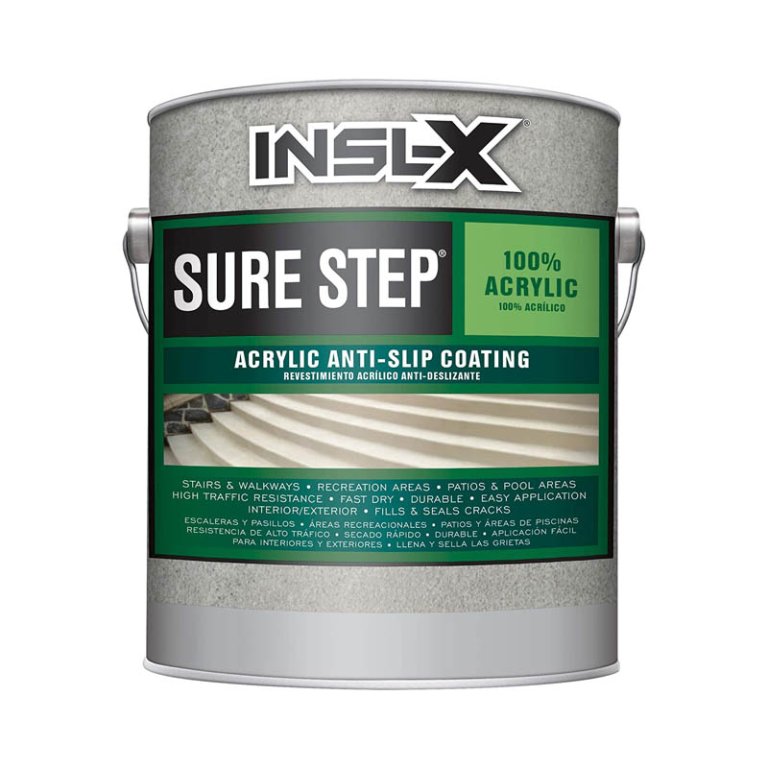
INSL-X SU092209A-01 Sure Step Acrylic Anti-Slip
See ItDIYers looking to stretch their deck resurfacing budget as far as it will go should give INSL-X Sure Step Acrylic Anti-Slip Coating some consideration. This product creates a nonslip surface on wood and concrete surfaces while also filling in small cracks to create a uniform finish. A 1-gallon can covers up to 120 square feet.
While this product is not a traditional deck resurfacer, it’s thicker than paint and provides a long-lasting finish. It protects against color fading and abrasions and is resistant to pounding water, giving the decking underneath a new life. This product is ready for light foot traffic in 24 hours and fully cures in 5 days. If additional coats are required or desired, it’s ready for recoating in 8 hours. Choose from six colors: desert sand, light gray, gray pearl, pine green, tile red, and saddle brown.
Best Tintable
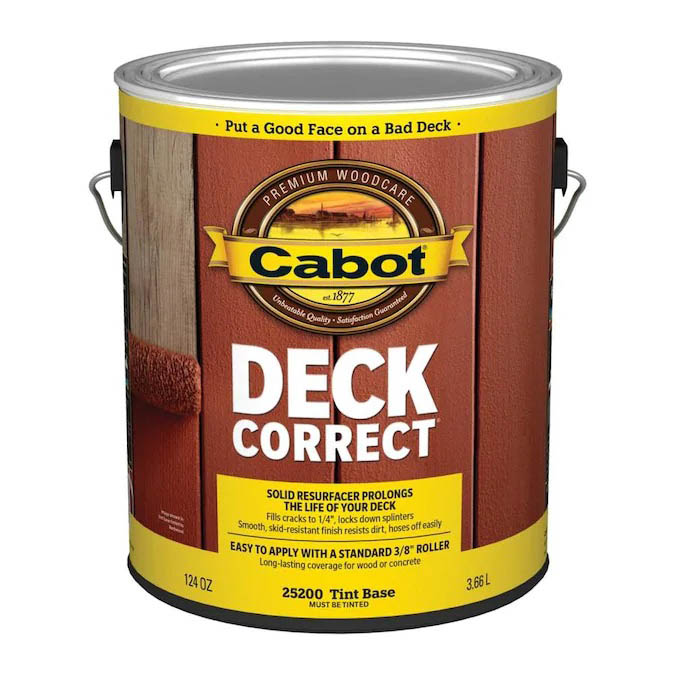
Cabot DeckCorrect Tintable Satin Mildew Resistant
See ItWhen a premixed color off the shelf just won’t do, check out Cabot DeckCorrect Tintable Satin Mildew Resistant Resurfacer. This product is a tintable base that users can have mixed to match any one of Cabot’s 51 colors, allowing them to pick the perfect color for their resurfaced deck.
This deck resurfacer can fill cracks up to ¼-inch deep and seals splinters below the surface, creating a safe and uniform look. The special formula also creates a nonslip surface and fights any mold or mildew growth, keeping the space as safe as it is attractive. While it requires two coats, the 1-gallon can covers up to 75 square feet.
Best Mildew-Resistant
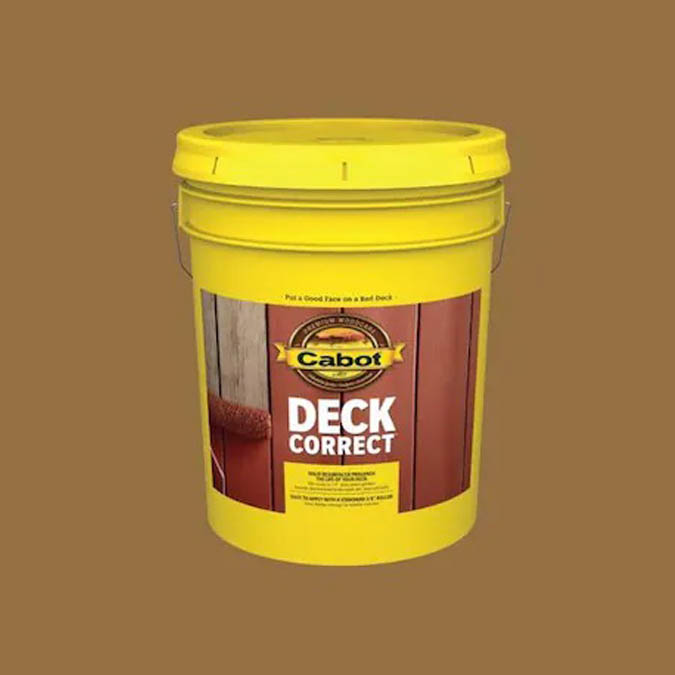
Cabot DeckCorrect New Cedar Satin Mildew Resistant
See ItMold and mildew can make any deck a slippery, dangerous surface for walking or lounging, and they tend to attack decks located in shady, moist areas. To give that weathered deck a safe, new surface, Cabot DeckCorrect New Cedar Stain Mildew Resistant deck resurfacer might be the product on which to call. This formula contains special agents that inhibit the growth of mildew while also creating an anti-slip texture.
This deck resurfacer features a thick coating that contains polycarbonate beads to fill in cracks up to ¼-inch deep, and it locks down splinters, creating a smooth and uniform surface over weathered and worn decks and wood surfaces. It does require two coats, but one 5-gallon drum can cover up to 375 feet.
Best Polyurethane

LR Liquid Rubber Smooth Polyurethane Deck and Dock
See ItWeathered decks in areas that see a lot of rain or standing water might find Liquid Rubber Smooth Polyurethane Deck and Dock Coating helpful. This product creates a thick polyurethane coating to apply over decks, docks, concrete, and other surfaces. The resulting layer is a nonslip waterproof shell with UV resistance.
Though this coating contains a polyurethane component, it’s still simple to apply with a brush and roller—no less convenient than other products. For maximum waterproofing and UV protection, weathered deck surfaces will require two or three coats, with the 1-gallon can covering up to 100 square feet. Choose among a range of 10 colors, from smooth white to textured saddle brown.
Best Anti-Slip
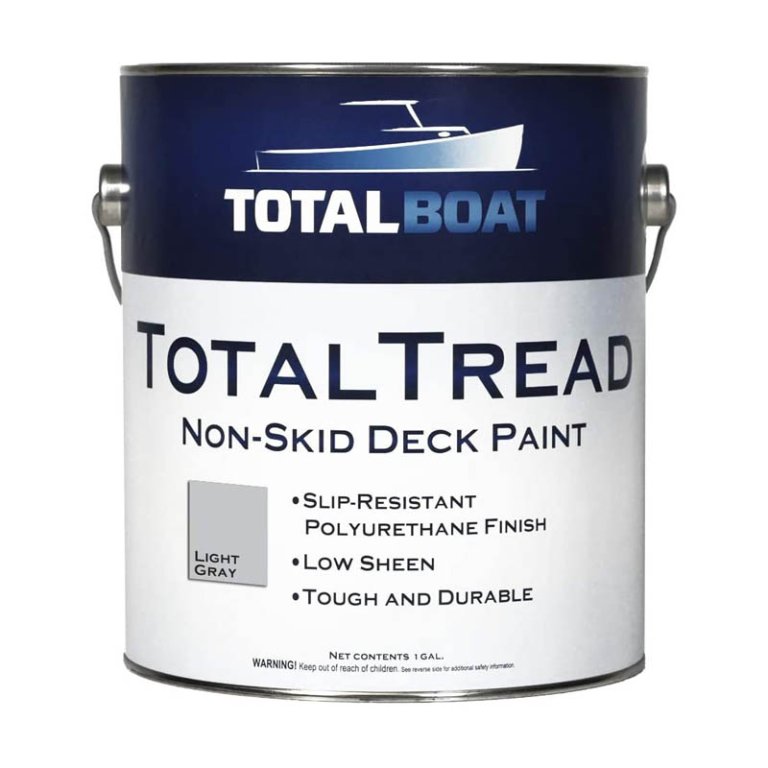
TotalBoat-0121G TotalTread Non-Skid Deck Paint
See ItFor the surest footing possible, why not turn to a product meant for the sea? TotalBoat TotalTread Non-Skid Deck Paint is designed for nautical applications on powerboats and sailboats but will work equally as well on a backyard deck.
TotalTread offers plenty of traction in dry and wet conditions, while its nonabrasive formula is comfortable underfoot. This makes it especially suitable for resurfacing decks around pools or hot tubs, where barefoot travel is most likely to happen. And best yet, the 1-gallon can covers up to 300 square feet, though additional coats are recommended for the best quality finish. Choose from white, beige, light gray, and gray finishes.
Also Consider
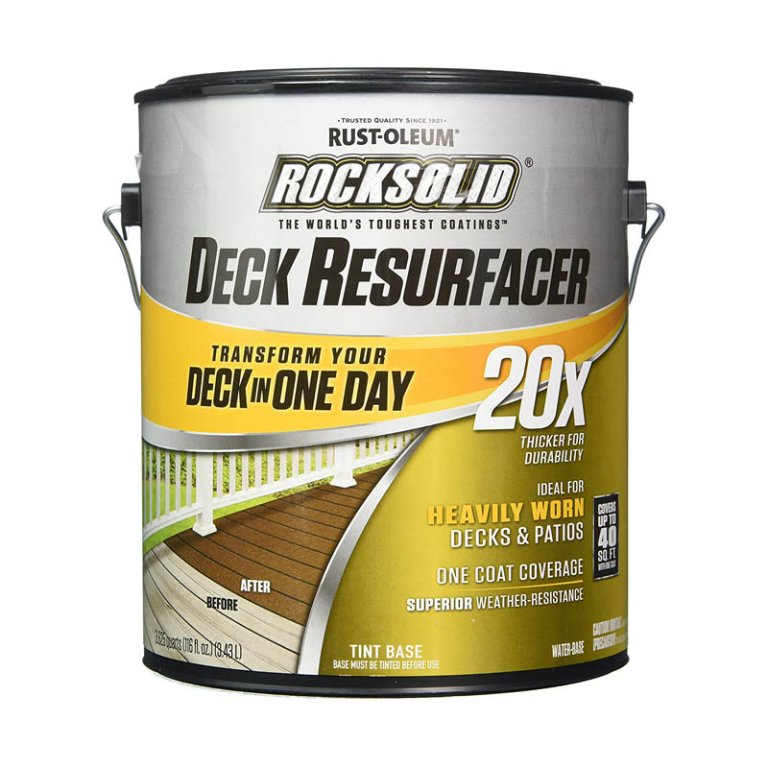
RUST-OLEUM 300081 Gallon 20X Tint Resurfacer
See ItWhen it comes to resurfacing heavily worn decks, an extra thick product like Rust-Oleum RockSolid 20X Deck Resurfacer might be the way to go. This specially designed deck resurfacer creates a restorative layer that is 20 times thicker than a standard deck paint, allowing it to fill cracks up to ¼-inch deep while creating a slip-resistant surface.
This 4-gallon bucket of deck resurfacer covers up to 160 square feet in one coat, and it’s ready for light foot traffic and furniture within 24 hours. It’s designed to offer top-notch adhesion and waterproofing to get as much life as possible from the decking surface underneath. The product is also suitable for concrete, allowing users to blend patio or walkway surfaces in with their decks.
FAQs About Deck Resurfacers
Even though all this information should’ve taken you below the surface on the best deck resurfacer, questions might be popping up like splinters on a hot day. The following section will aim to answer them, as it’s a collection of some of the most frequently asked questions about deck resurfacers.
Deck resurfacing is a method of adding new life to an older deck by covering the worn surfaces with a thick layer or membrane of nonslip material.
If your deck is suffering from rot, dry rot, splitting, or other issues affecting structural integrity, it is not safe for resurfacing. Resurfacing is for solid, affixed decking boards that are a few years past their prime—not structurally compromised decks.
Because the membranes are so thick, deck resurfacers can create a deck restoration that lasts more than 10 years without additional applications.