We may earn revenue from the products available on this page and participate in affiliate programs. Learn More ›
Walk the aisles of a home improvement store, and it seems that every project requires power tools—compound miter saws, circular saws, jigsaws, reciprocating saws—making hand saws seem like relics from the past. Though it might seem like there’s a power saw for every cutting need, the fact is that a hand saw for wood is still a vital tool. Sometimes, only the best hand saw can get the job done.
Using a hand saw obviously means that there’s no need for electricity or batteries. These tools are lightweight, portable, easy to use, and often the best choice for specific tasks. Need a clean finished cut on a 6×6 timber? Trimming a few small tree limbs? A hand saw is almost always the best choice.
We tested 11 highly rated hand saws from the most reputable tool brands, narrowing our final list down to these eight favorites. Whether you need a tool that can cut lumber, PVC pipe, metal, or branches, this guide can help. Read on to learn about the criteria we used to choose these saws, how they performed in testing, and why we think they are some of the best hand saws around.
- BEST OVERALL: DeWalt 15-Inch Hand Saw
↓ Jump to Review - BEST BANG FOR THE BUCK: Craftsman 15-Inch General Purpose Hand Saw
↓ Jump to Review - BEST FOR PRECISION CUTS: Irwin 6½-Inch ProTouch Coping Saw
↓ Jump to Review - BEST FOR WOODWORKING: Suizan 7-Inch Japanese Ryoba Pull Saw
↓ Jump to Review - BEST FOR CAMPING: Silky Gomboy 240 Folding Saw
↓ Jump to Review - BEST FOR CARPENTRY: Shark 15-Inch Carpentry Saw
↓ Jump to Review - BEST FOR GENERAL USE: Irwin 15- Inch Marathon ProTouch Coarse Cut Saw
↓ Jump to Review - BEST FOR PRUNING: Silky Zubat 330mm Professional Hand Saw
↓ Jump to Review
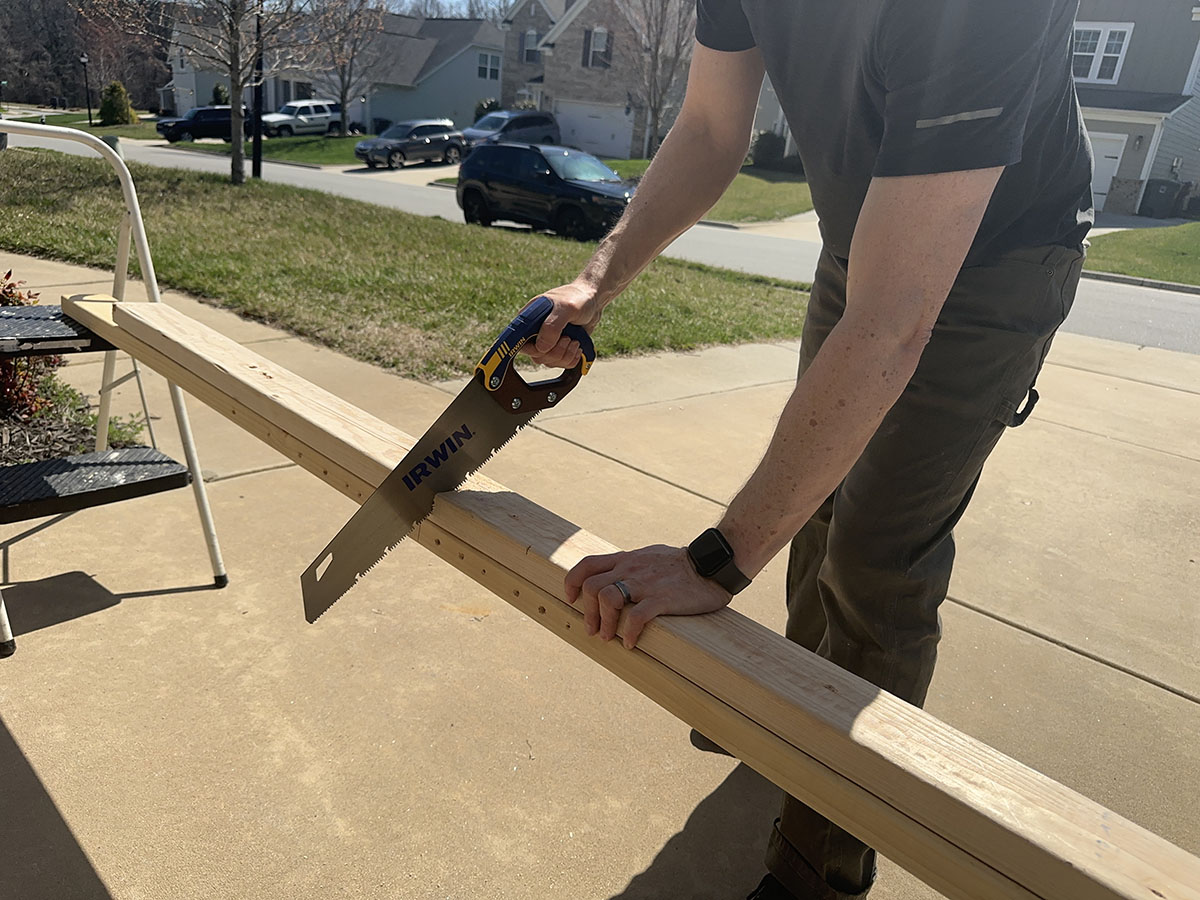
The Best Hand Saws At a Glance
| Product | Type | Number of Teeth | Length |
|---|---|---|---|
| DeWalt 15-Inch Hand Saw | Panel saw | 8 TPI | 15 inches |
| Craftsman 15-Inch General Purpose Hand Saw | Panel saw | 8 TPI | 15 inches |
| Suizan 7-Inch Japanese Dozuki Dovetail Hand Saw | Double-edge Japanese pull saw | 17 and 25 TPI | 7 inches |
| Irwin 6 ½-Inch ProTouch Coping Saw | Coping saw | 20 TPI | 6½ inches |
| Silky Gomboy 240 Folding Saw | Pruning saw | 7 TPI | 9 inches |
| Shark 15-Inch Carpentry Saw | Japanese Pull Saw | 10 TPI | 13 inches |
| Irwin 15- Inch Marathon ProTouch Coarse Cut Saw | Panel | 9, 12 at the tip | 15 inches |
| Silky Zubat 330mm Professional Hand Saw | Handsaw | 4.7 TPI | 13 inches |

Our Top Picks
Find out more about each of the saws we tested in the individual product reviews ahead. We discuss the tool characteristics, overall quality, and our personal observations from testing. One of these tools may be the best hand saw for your next project.
Best Overall
Photo: Ace Hardware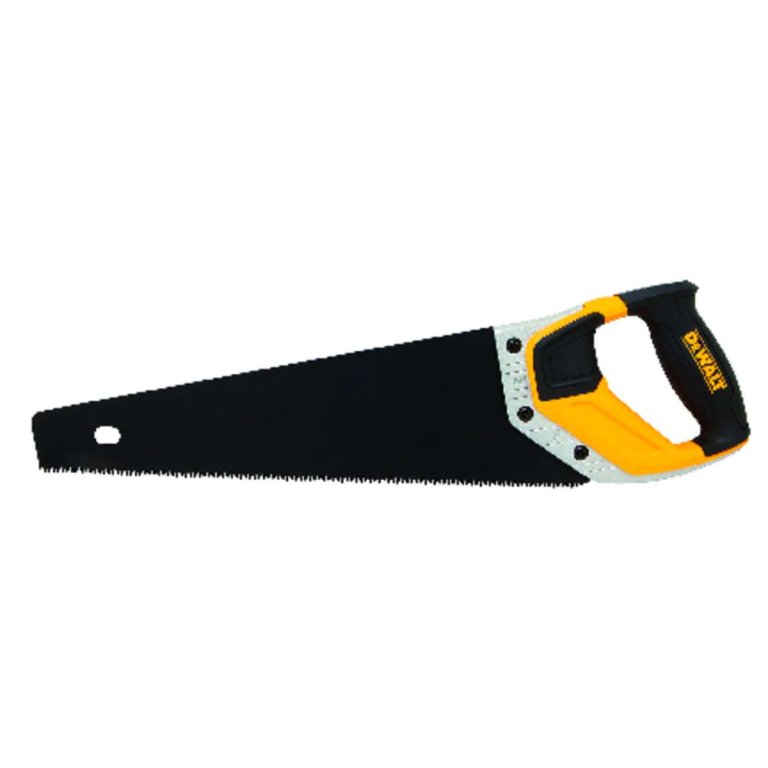
What We Like
- Triple-ground teeth cut faster than conventional cross-ground teeth
- Blade coating resists binding and sap buildup
- Cushioned grip makes the saw comfortable to use
- Compact size makes it easy to use
What We Don’t Like
- Somewhat heavier than other saws we tested
- Type Panel saw
- Number of teeth 8 TPI
- TPILength 15 inches
Our Ratings
| Ergonomics | 5/5 | Effectiveness | 4.7/5 | Cut Quality | 4/5 | Durability | 5/5 | Value | 4.3/5 |
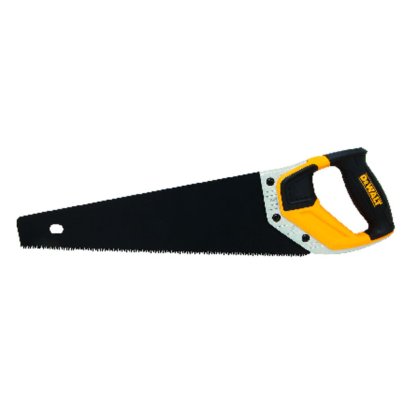
DeWalt has built a strong reputation for quality tools at a fair price. This 15-inch panel saw makes a great choice for general carpentry projects, including construction, fine woodworking, and repairs and maintenance. It features triple-ground induction-hardened teeth that enable the wood saw to cut up to 50 percent faster and stay sharp longer than other hand saws with traditional cross-ground teeth. A tough coating protects the high-speed steel blade from corrosion while reducing friction for easier, more efficient cutting strokes.
This 15-inch DeWalt hand saw has eight teeth per inch and is designed to cut on both the push stroke and pull stroke for rapid material removal. The blade attaches securely to the aluminum handle with three screws, and a cushioned synthetic grip increases user comfort. The handle features an integrated 45-degree and 90-degree angle guide. The metal hand saw weighs 16 ounces.
Based on average stroke count, the DeWalt saw did indeed cut faster than the other panel saws in our test group. It was comfortable to work with, moved smoothly through the wood, and worked well at different angles. It tracked well, easily making nice square cuts, and left fairly clean edges with just a few rough spots. We liked the compact size, although it bears mentioning that the shorter blade exposes each tooth to more wear and tear per cut compared to traditional 24-inch and 26-inch blades. Still, with the quality of the materials used to make this saw, we anticipate a long working life under typical conditions.
What our tester says: “The DeWalt saw’s coated blade seemed to move through cuts more smoothly than others we tested. It cut fast, felt good in-hand, and was large enough to trim a 4×4 post while compact enough to fit in my tool bag—everything I needed from a hand saw.”—Mark Wolfe, Product Reviews tester and writer.
Get the DeWalt 15-inch hand saw at Ace Hardware, The Home Depot, or Acme Tools.
Best Bang for the Buck
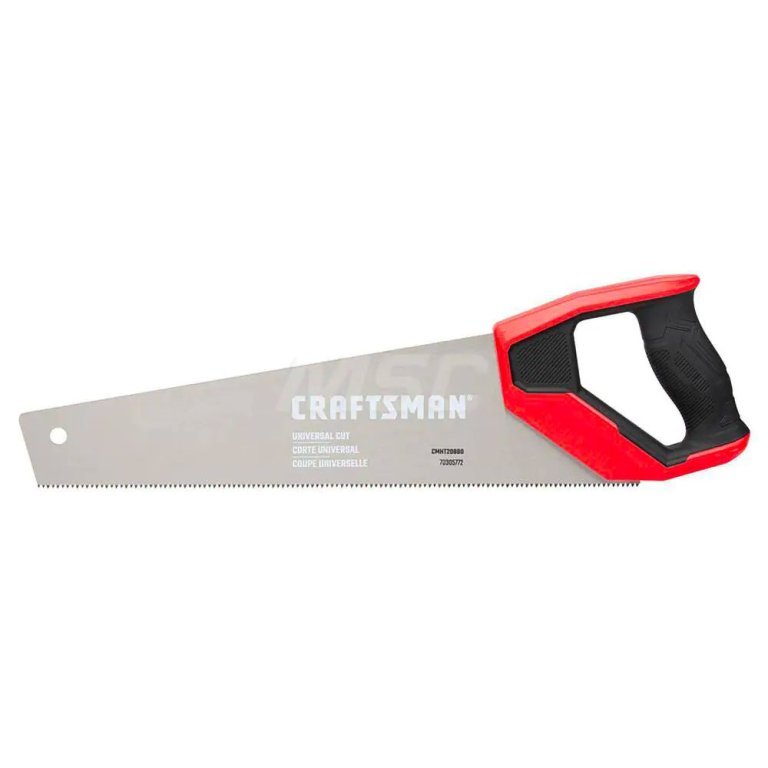
Craftsman CMHT20880 15-Inch General Purpose Hand Saw
Buy at Lowe’sWhat We Like
- Triple-ground teeth cut quickly and with less binding
- Induction-hardened teeth resist dulling and damage
- Handle with nonslip grip provides better control
What We Don’t Like
- Not suitable for plastic, concrete, drywall, or metal
- Type Panel saw
- Number of teeth 8 TPI
- TPILength 15 inches
Our Ratings
| Ergonomics | 5/5 | Effectiveness | 4.3/5 | Cut Quality | 4/5 | Durability | 4.5/5 | Value | 4.7/5 |
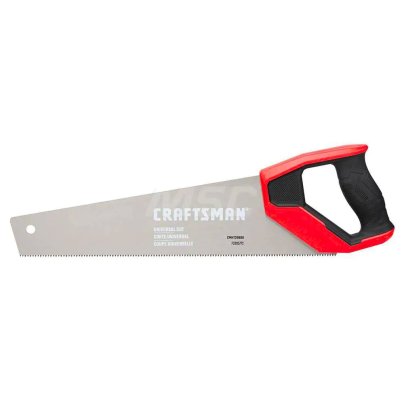
One advantage of hand saws is that they aren’t as costly as electric hand saws, and this 15-inch Craftsman tool is one of the most inexpensive models available. Yet it doesn’t compromise efficiency for price. It features an 8 TPI tooth configuration with triple-ground teeth that cut deeper on the downstroke and milder on the backstroke for fast, smooth material removal. With its induction-hardened teeth, the carbon steel blade will stay sharp for a long time.
For added control, this saw boasts a beefy handle and rubberized grip, giving users more control and comfort when sawing thicker boards. The handle also features built-in 90- and 45-degree angles for drawing clean and precise cut lines with the dull side of the blade.
We were impressed by the Craftsman hand saw’s fast and accurate cutting ability. In brand-new condition, it cut nearly as fast as the DeWalt saw, both on the single-stroke test and in the average strokes-per-cut test. However, the blade steel is a notch lower in quality, so we would expect it to dull somewhat sooner than our Best Overall pick; it’s also more susceptible to rust if left exposed to the elements.
The saw moved well, even through deep cuts in thicker wood, and left fairly clean edges. The handle felt comfortable in hand and aligned well with the blade for efficient work. We noted that the synthetic handle seemed to be molded directly to the blade, so it should remain nice and tight for a long time. Overall, this saw presented an excellent price-to-quality value.
Get the Craftsman hand saw at Lowe’s.
Best for Precision Cuts
Photo: Amazon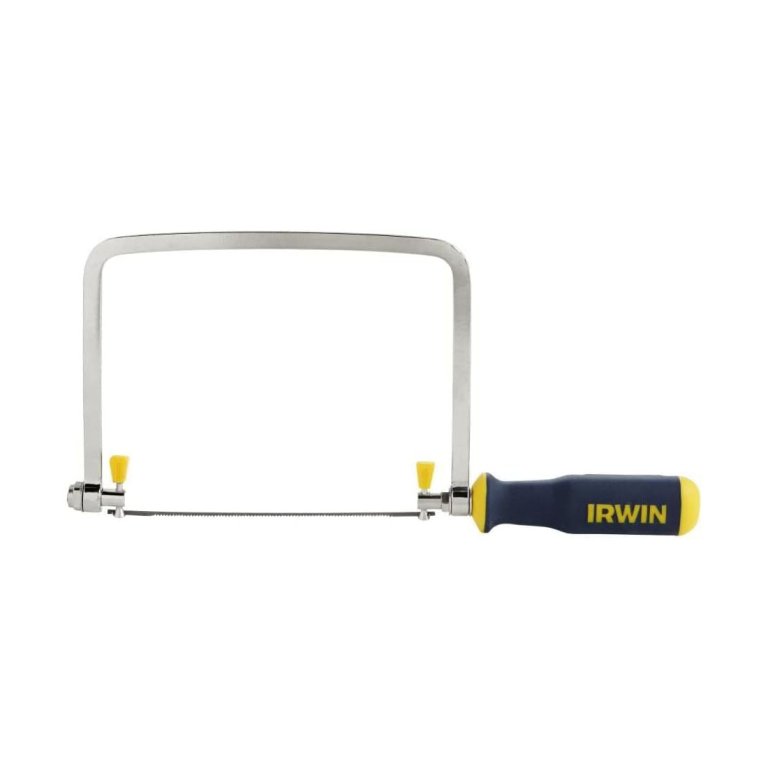
What We Like
- Good blade tension for clean, accurate cutting
- Ergonomic triangular handle offers better control and comfort
- High-speed steel blade offers better wear resistance
- Steel pins and retainers hold blade securely
What We Don’t Like
- Does not track well on longer straight cuts
- Type Coping saw
- Number of teeth 20 TPI
- TPILength 15 inches
Our Ratings
| Ergonomics | 5/5 | Effectiveness | 4.7/5 | Cut Quality | 5/5 | Durability | 5/5 | Value | 4.3/5 |
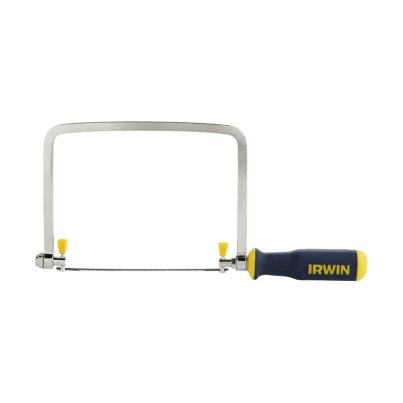
When cutting tight curves and ornate patterns in wood, a coping saw is the hand saw of choice. The Irwin ProTouch coping saw comes equipped with a sharp 20 TPI high-speed steel blade that makes extra-clean cuts in hardwoods and softwoods alike. The flat bar steel frame and ergonomic triangular grip provide outstanding comfort and directional control for pro-quality results.
This saw comes with a replaceable blade held in place by strong steel pins. Fine- and coarse-tooth replacement blades are readily available. Simply twist the handle to the left to remove the blade or to the right to increase blade tension. The saw frame measures 5.5 inches deep with a 6.5-inch blade. The saw weighs 10 ounces.
We liked the feel of quality and durability from the Irwin coping saw. The flat bar steel frame provided significantly stronger blade security compared to round steel frames on competing designs we have previously used. The thick steel blade-retention pins also felt much more durable than other models, and they held their position without twisting as we cut around tight curves.
The cushioned handle felt comfortable, and the triangular profile made it easier to control than a regular round handle. The included blade made nice, clean cuts as expected. While there are a few differences among the available coping saw models, this one offers some nice conveniences and precision-cutting ability that users will appreciate.
Get the Irwin hand saw at Amazon or Acme Tools.
Best for Woodworking
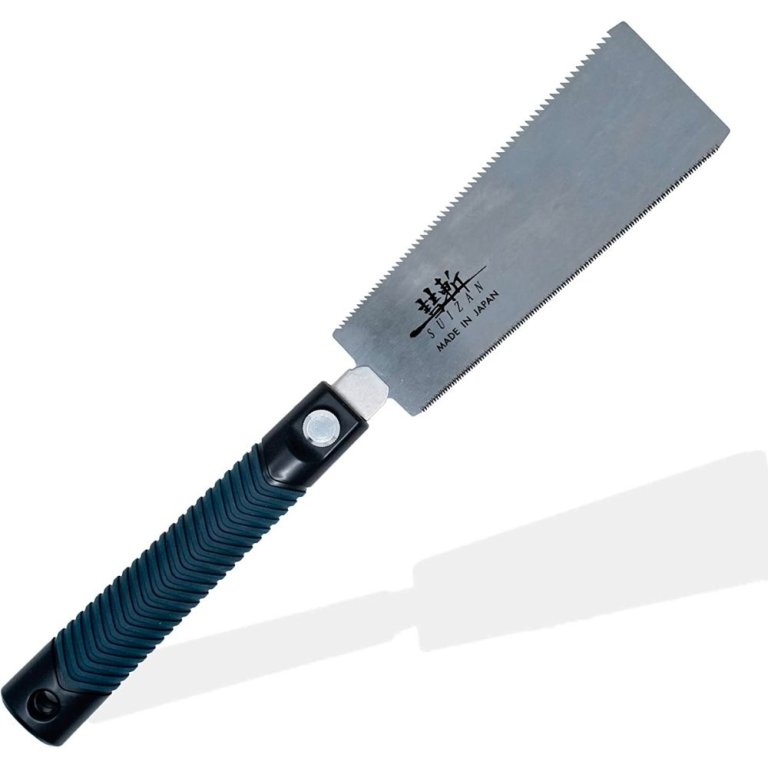
Suizan 7-Inch Japanese Ryoba Pull Saw
Buy at AmazonWhat We Like
- Extra-thin alloy steel makes cutting easier
- Double-sided design for cross cuts and rip cuts
- Hardened Japanese steel construction for superior edge retention
- Rubberized handle improves comfort and control
What We Don’t Like
- Blade cover doesn’t hold up to extended use
- Type Double-edge Japanese pull saw
- Number of teeth 17 and 25 TPI
- TPILength 7 inches
Our Ratings
| Ergonomics | 5/5 | Effectiveness | 4.3/5 | Cut Quality | 5/5 | Durability | 4.5/5 | Value | 4/5 |
Most Western-style saws cut on the push stroke. This Japanese hand saw flips the script with a blade that cuts on the pull stroke. What’s the advantage? Pull saws allow for more precise starts, which help with cutting accuracy. This saw also features a thin blade, allowing it to cut effortlessly through wood and making it a great handsaw for woodworking.
This Japanese pull saw offers two saws in one: a fine-tooth side that makes smooth crosscuts and a flip side that includes larger, more aggressive teeth for rip cuts. These features make this tool one of the best hand saws for woodworking. Made of premium-quality Japanese steel, both blades are extremely sharp and durable. A rubberized handle provides plenty of grip for excellent control.
We tested the Suizan Japanese Ryoba saw with a series of crosscuts, rip cuts, and 45-degree angled cuts in oak and cedar. As recommended by the manufacturer, we used the fine-tooth edge for crosscuts and the coarse-tooth edge when cutting with the grain.
With a few careful starting strokes, the saw tracked cleanly and made incredibly accurate straight cuts. The thin blade and sharp teeth worked fairly aggressively, especially considering the high tooth count. The length of the saw, 16 inches in total, and the pull-stroke design felt completely different from the other saws, but it was well-balanced. It was not a difficult adjustment for us.
Another unique aspect of the thin blade was its flexibility, which allowed it to make clean, flush cuts without marring the face of a board. With such versatility and clean cutting ability available from one tool, woodworkers could quickly find this as their primary hand saw.
Get the Suizan hand saw at Amazon.
Best for Camping
Photo: Amazon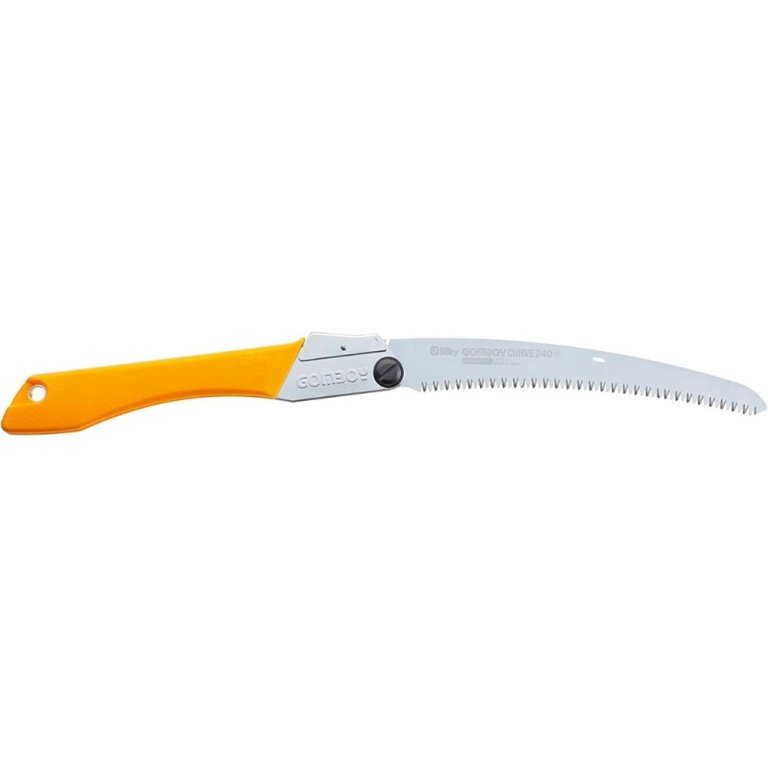
What We Like
- Cuts green and dried branches quickly and efficiently
- Curved blade increases tooth-to-wood contact for faster cutting
- Locking blade secures the tool for safer operation
- Hard plastic belt sheath for convenient carrying
What We Don’t Like
- Aggressive blade leaves some rough edges
- Type Pruning saw
- Number of teeth 7 TPI
- TPILength 9 inches
Our Ratings
| Ergonomics | 4/5 | Effectiveness | 4.7/5 | Cut Quality | 4/5 | Durability | 5/5 | Value | 4.3/5 |
The Silky Gomboy folding saw offers the aggressive cutting action and rugged durability required for a long working life in the wild. It features a 240-millimeter (9-inch) curved blade with seven razor-sharp teeth per inch, weighs 9.5 ounces, and comes with its own belt-carry sheath.
Its orange rubber grip is easy to see when lying on the grass or the forest floor and slip-resistant in sweaty hands or damp weather. Triple-edge ground teeth in a non-set configuration make for smooth and aggressive cutting in green or dead wood. The chrome-plated taper ground blade offers long-term durability, and it’s replaceable when it finally wears down.
In our tests, the Silky Gomboy saw felt very durable and easily cut through branches ranging from 2 to about 4 inches thick. The folding design and simple spring-lever locking device worked smoothly and easily. The in-line configuration worked much better than a bow saw in narrow branch intersections and offered similar, possibly better, overall cutting ability.
We especially liked the curved blade design of this mini hand saw for wood. It kept the teeth in contact with the wood through the full range of every saw stroke. This, combined with the aggressive tri-ground tooth geometry, made for fast, efficient cutting.
We also noted the value of the “non-set” blade: a hollow ground configuration with the thickness of the blade being greatest at the teeth, slightly thinner along the spine, and thinnest along the length of the midsection. This design feature reduced friction, further increasing efficiency, and prevented the blade from binding in the wood.
Get the Silky hand saw at Amazon, The Home Depot, or Cabela’s.
Best for General Carpentry
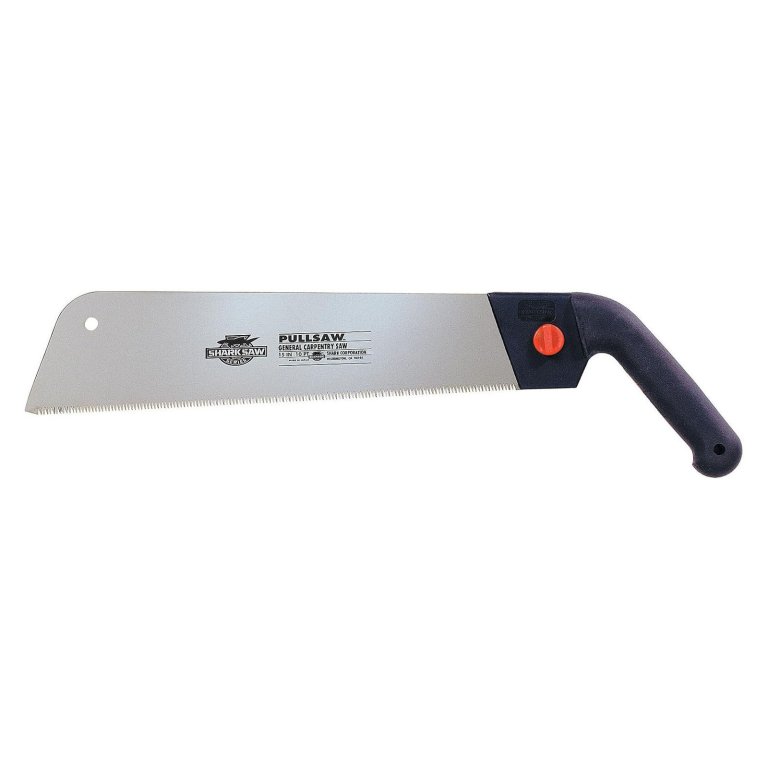
Shark 15-Inch Carpentry Saw
Buy at AmazonWhat We Like
- Aggressive blade style cuts quickly
- Thin kerf and pull style make precise cuts
- Comfortable rubberized grip.
What We Don’t Like
- Thinner blade has a greater tendency to bend
- Type Japanese Pull Saw
- Number of teeth 10 TPI
- TPILength 13 inches
Our Ratings
| Ergonomics | 4.5/5 | Effectiveness | 4/5 | Cut Quality | 4.5/5 | Durability | 4.3/5 | Value | 4.5/5 |
With its thin blade, tooth arrangement, and pull saw design, the aptly named shark is an exceptional saw for making precise cuts through lumber. With its thin kerf and high tooth count, we were able to execute the smooth, precise cuts we’ve come to expect from a Japanese-style pull saw. We cut through a 2×4 piece of pine and a piece of red oak board quickly while maintaining a smooth finish. We also appreciated this precision when making cuts through our 2-inch plastic PVC pipe.
One of the biggest advantages of the pull saw design is that it’s easier to make precise starts by allowing you to cut a groove by making a light push stroke. This not only sped up our cutting during testing but also ensured more accurate results. The pistol grip-style handle and rubberized grip made it easy to get a firm grip on this saw, giving us the confidence to make faster strokes and hence quicker cuts.
The saw’s blade does bend more easily than other handsaws, which takes some getting used to in order to avoid binding the saw into the wood. With its large size, the Shark is a great user-friendly alternative to traditional panel saws for cutting large dimensional lumber.
What our tester says: “This Japanese-style saw sliced easily through 2x4s when we were testing. There wasn’t the hesitation you get with a panel saw, and it removes a lot of material with each pull.”—Tony Carrick, Product Reviews tester and writer.
Get the Shark hand saw on Amazon.
Bet for DIYers
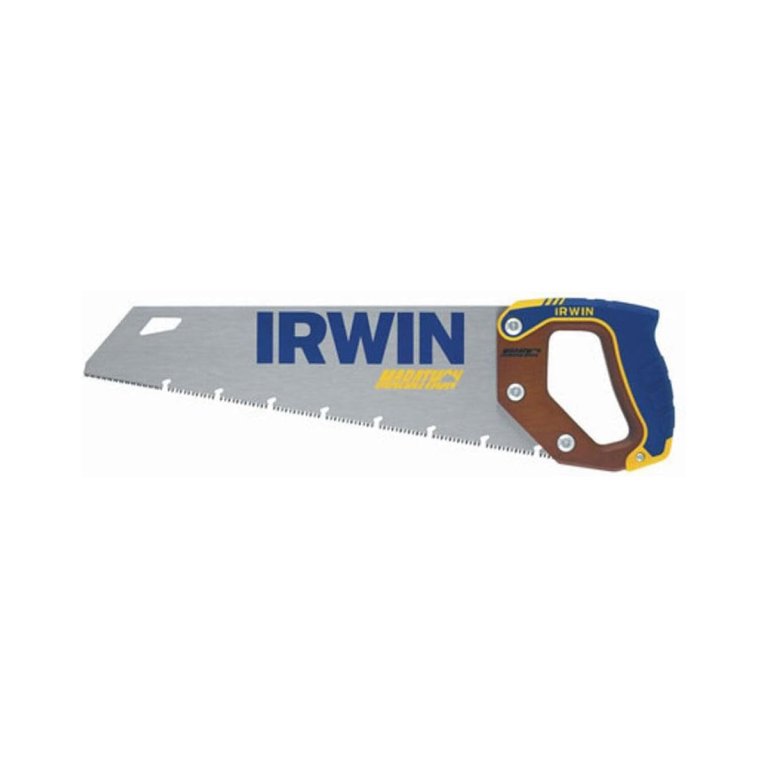
Irwin 15- Inch Marathon ProTouch Coarse Cut Saw
Buy at AmazonWhat We Like
- Comfortable rubberized grip
- Quick start tip for starting cuts
- Aggressive teeth arrangement that cuts quickly
What We Don’t Like
- Rougher cuts than other saws
- Type Panel
- Number of teeth 9, 12 at the tip
- TPILength 15 inches
Our Ratings
| Ergonomics | 4/5 | Effectiveness | 4.2/5 | Cut Quality | 4/5 | Durability | 4.5/5 | Value | 4.5/5 |
Irwin’s coarse-cut handsaw is a great workshop workhorse for making quick, if somewhat rougher, cuts through larger dimensional lumber. Irwin’s hand tools have a reputation for the comfort of their grips, and this saw is no exception. It features a wooden handle with a rubberized covering. This allowed us to get a firm, secure grip, which is exactly what you want when manually cutting through a 2×4.
Starting cuts with this saw is also very easy, thanks to the set of Easy Start teeth on the tip of the blade, which allowed us to cut a starting groove into the material before proceeding with longer cutting strokes.
The blade, which cuts in both directions, slices easily through wood. The blade is sharp and has strategically placed gullets that remove large amounts of waste as you cut, speeding up the whole process. We were amazed at how quickly we were able to make cuts through hard wood and treated lumber.
With its 9 TPI, this blade is designed for making fast cuts, so don’t expect it to leave the smoothest finish. Its solid design makes it a great all-around panel saw for manually cutting through a variety of different materials.
Get the Irwin ProTouch hand saw on Amazon.
Best for Pruning
Photo: Amazon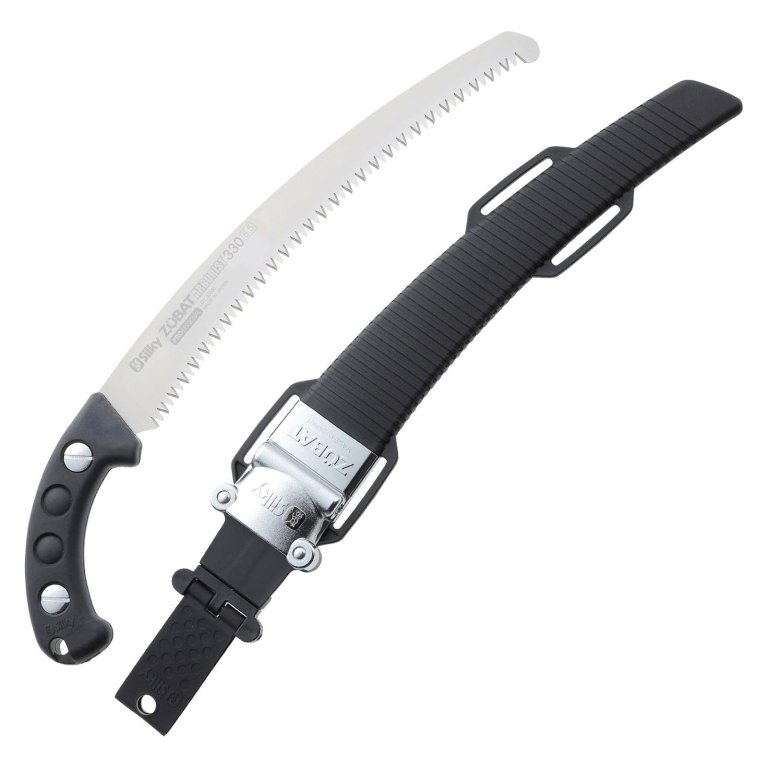
What We Like
- Blade removes a lot of material with each pass
- Rubberized handle is easy to grip
- Includes a scabbard that has a belt loop
What We Don’t Like
- One of the most expensive hand saws
- Type Handsaw
- Number of teeth 4.7 TPI
- TPILength 13 inches
Our Ratings
| Ergonomics | 5/5 | Effectiveness | 3.7/5 | Cut Quality | 5/5 | Durability | 5/5 | Value | 5/5 |
This arborist saw is designed to make quick work of pruning trees. It consists of a 13-inch Japanese steel blade that has a cutting capacity of 6.5 inches. With its extra-large teeth—it has a TPI of just 4.7—this arborist saw aggressively chews through wood with each pass. The blade also curves around limbs, getting more teeth-to-wood contact than a standard straight blade for faster cutting. Plus, it has a thin kerf that allows the blade to slide easily through the wood.
The saw’s aggressive teeth and curved blade were on full display during testing. We were able to saw through a 4-inch thick fallen limb in about 10 seconds, nearly as fast as a chainsaw, while applying just moderate force.
The Silky is also comfortable to use. The curved handle has a thick rubber grip and finger indentations, which allowed us to get a firm, comfortable grip, giving us the confidence to saw more aggressively. Despite its substantial blade, the saw is very lightweight, weighing just half a pound, which made it easy to reach up to saw higher branches. The saw also has a durable feel with a heavy-duty handle and nickel plating on the blade that resists rust.
The saw comes with a scabbard that has a belt loop, which is ideal if you plan on carrying it up a ladder, and built-in roller wheels that protect it from wear when sheathing and unsheathing the saw.
Get the Silky Zubat hand saw at Amazon or The Home Depot.
Jump to Our Top Picks
How We Tested the Best Hand Saws
| Testing Stats | |
|---|---|
| Products tested | 11 |
| Time spent testing | 4 days |
| Tests performed | 3 |
| Price range | $30-$120 |
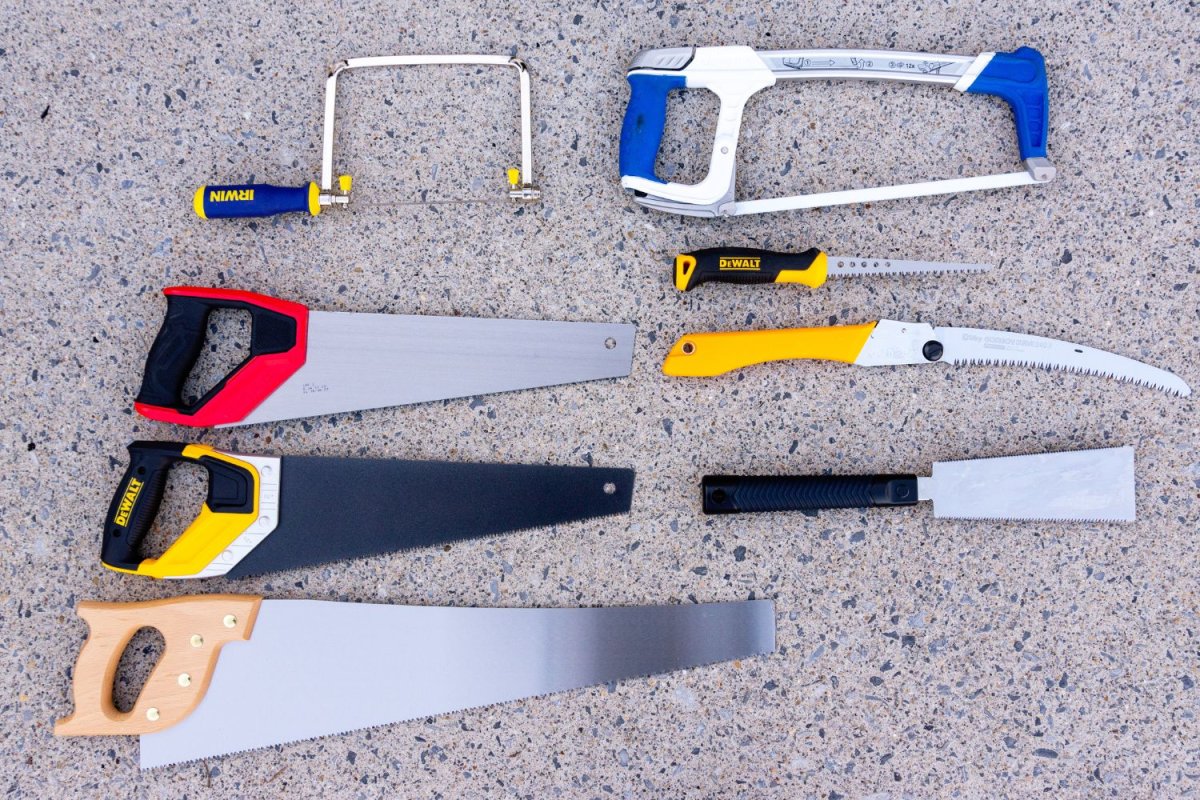
We researched the most sought-after hand saws in their respective categories and discovered that the best models are determined by type, size, tooth count, and suitability for cutting different materials. Our picks included panel saws for general carpentry, along with hacksaw, jab, coping, dovetail, and pruning saws for more specialized tasks. Our selections run the gamut from 4 to 24 teeth per inch (TPI) for fast, aggressive cutting or fine finish work.
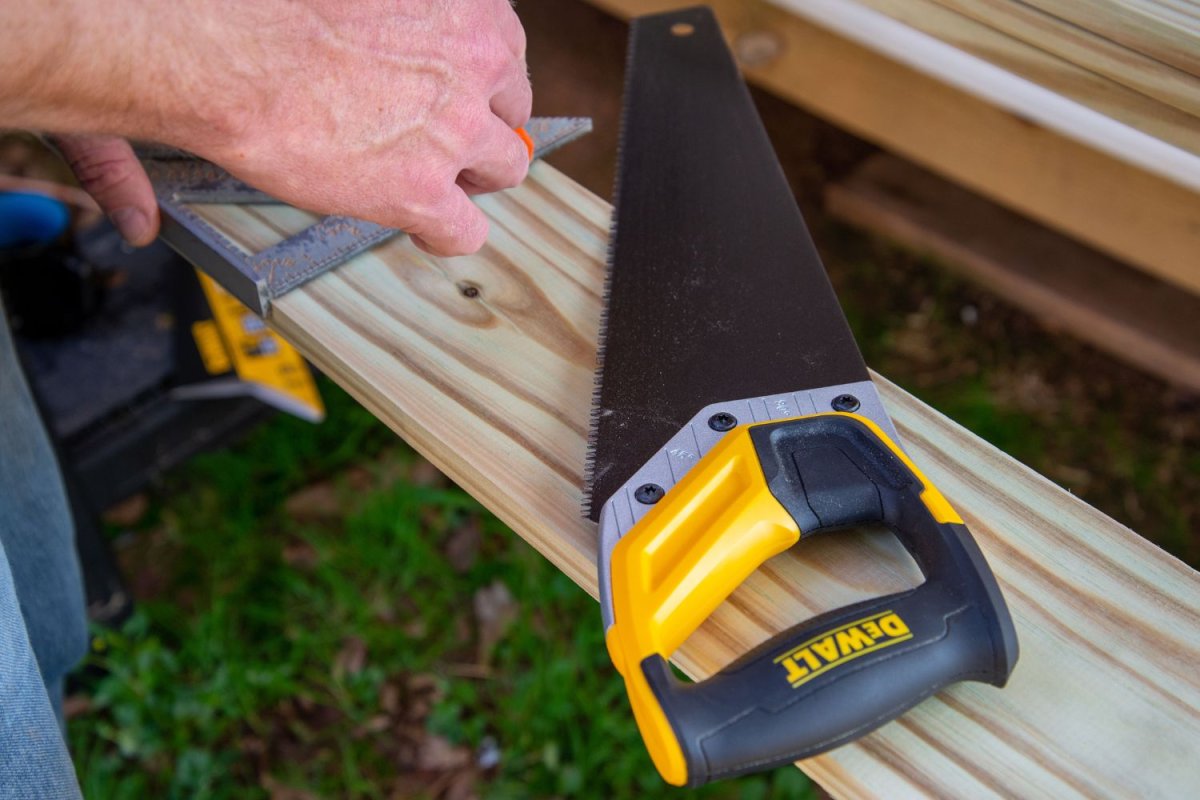
After unpacking and recording each saw’s size, weight, and TPI, we got busy, setting up “real-world” testing scenarios for each saw according to the tool’s design and intended use. Then we recorded our observations on a scoring rubric before awarding the “Best For…” awards used here.
We used the panel saws to cut 2×4 lumber across the grain and at a 45-degree angle, and ripped 1×6 boards parallel to the grain. To test the hacksaw, we cut a steel pipe and a T-post clamped in a vice, then assembled a PVC pipe through a piece of plywood to simulate a flush cut. We mounted a square of drywall between 2×4 boards and drew cutout guide lines to test the jab saw. (Though neither the hacksaw or jab saw made the final cut, as we found the other options to be more useful in most cases.)
We mitered sections of crown molding and baseboard trim at 45-degree angles and scribed the profiles at the ends in order to simulate fitting inside corners with the coping saw. To test the Japanese pull saw, we performed a series of crosscuts, 45-degree cuts, and rip cuts in several thicknesses of hardwood and softwood 1×4 boards. Finally, we tested the pruning saw by cutting through live branches and dead and dried limbs ranging from 2 to 4 inches in diameter.
| Product | Ergonomics | Effectiveness | Cut Quality | Durability | Value |
|---|---|---|---|---|---|
| DeWalt 15-Inch Hand Saw | 5/5 | 4.7/5 | 4/5 | 5/5 | 4.3/5 |
| Craftsman 15-Inch General Purpose Hand Saw | 5/5 | 4.3/5 | 4/5 | 4.5/5 | 4.7/5 |
| Suizan 7-Inch Japanese Dozuki Dovetail Hand Saw | 5/5 | 4.3/5 | 5/5 | 4.5/5 | 4/5 |
| Irwin 6 ½-Inch ProTouch Coping Saw | 5/5 | 4.7/5 | 5/5 | 5/5 | 4.3/5 |
| Silky Gomboy 240 Folding Saw | 4/5 | 4.7/5 | 4/5 | 5/5 | 4.3/5 |
| Shark 15-Inch Carpentry Saw | 4.5/5 | 4/5 | 4.5/5 | 4.3/5 | 4.5/5 |
| Irwin 15- Inch Marathon ProTouch Coarse Cut Saw | 4/5 | 4.2/5 | 4/5 | 4.5/5 | 4.5/5 |
| Silky Zubat 330mm Professional Hand Saw | 5/5 | 4.5/5 | 3.5/5 | 4.5/5 | 4.2/5 |
What to Consider When Choosing a Hand Saw
When selecting their first hand saw or its replacement, shoppers will want to keep these considerations in mind.
Types of Hand Saws
Learning about the saw types available can help users be more aware of what they need. Read on for the types of hand saws for cutting wood that are currently available:
- The classic carpenter’s hand saw is called a panel saw. It features a slightly angled handle with a wide blade that could be up to 26 inches long. Panel saws are a good hand saw for wood, from sheets to 2x4s.
- Hacksaws feature a 10- to 12-inch blade supported by a C-shaped frame that creates tension on the blade. Hacksaws have fine-tooth blades designed to cut smoothly through metal and plastic.
- A jab saw is a long, narrow saw with large teeth used to cut holes in building materials such as drywall. The blade features a pointy end, which can be pushed through the material without the need for drilling a hole. Some models may look more like a turkey carving knife than a traditional push-stroke saw.
- Woodworking saws, such as pull saws and coping saws, feature blades with fine teeth that make narrow, precise cuts.
Teeth
A hand saw’s teeth determine how quickly it cuts through wood and how clean a cut it makes. Tooth count is commonly referred to in TPI, also called points per inch. The fewer teeth per inch, the larger the teeth will be and the larger the spaces (or gullets) between them.
Coarse-tooth blades have one to seven teeth per inch. These blades can cut through large pieces of material quickly but not smoothly; the large teeth tear some of the wood’s fibers, leaving a rough finish.
Blades with 10 or more teeth per inch have smaller teeth with fewer gullets in between them. With more teeth per inch, the blade makes a smoother cut. But, since users are pulling more teeth through the wood, they’ll use a lot more power to slice through it.
Blade
Hand saw blades are made out of a hardened steel alloy that prevents the teeth from dulling too quickly, much like axes. While they use similar material, the shapes of blades can vary significantly, depending on the type of saw and its purpose.
- A general-purpose panel saw features a long, broad blade with large teeth designed to make quick, rough cuts through wood.
- Hacksaws have thin blades with many teeth and no gullets, allowing them to cut through metal or plastic easily.
- Woodworking saws feature thin blades to make cuts as precise as possible. The blade can cut in a curve and won’t get stuck in the wood mid-stroke. Some carpentry saws also cut on the pull stroke, which improves accuracy.
- A jab saw has a long, narrow blade with large teeth designed to cut quickly through drywall material.
Flex
Most hand saws have inherent flex, meaning the blade will bend. A saw’s flex can make straight cuts difficult. Saws with a thicker blade will be more rigid but require more effort to cut through the material. Thinner blades, on the other hand, will go through the material more quickly, but they have more flex.
Some small saws are designed to overcome this flex dilemma through designs that add support to the blade. Hacksaws, for example, feature a frame that holds the blade on both sides. An adjusting screw on the frame creates tension on the blade to prevent it from flexing while cutting harder materials, such as metal.
Tension
Proper blade tension is crucial to making a straight and even cut. When the saw blade is pressed against a solid object, it should bend slightly. A well-made saw blade will have a consistent curve when bent, meaning it shouldn’t bend at a sharper angle in any one spot. When the blade is released, it should immediately snap back to straight.
Some hand saws are designed to create tension on the blade. For example, hacksaw blades feature a C-shaped frame that connects to both ends of the thin saw blade. A tension adjustment allows users to increase the tension of the blade, making it more rigid. Some saws can create blade tension up to 50,000 PSI, creating the rigidity needed to cut harder materials like metal.
Handle
Given that a hand saw is operated manually, the handle is almost as important as the blade. A saw with a poorly designed handle will be difficult to control and uncomfortable to use.
Many saws are designed with ergonomic molded handles with rubberized grips to maximize control and comfort. But that isn’t the case with all hand saws. Some manufacturers design their saws with the classic, and aesthetically pleasing, stained-wood handles. While this design may sacrifice comfort, displaying a hand saw with this time-honored look certainly adds character to a workshop.
Length
Length refers to the cutting blade and does not include the handle. A longer saw will cut through more material on a single stroke, meaning fewer strokes are needed to complete a cut. Longer saws also tend to provide a more even and consistent cutting line. That said, saw length mainly comes down to personal preference. A larger person with a longer reach may feel more comfortable with a 26-inch saw, while someone with a shorter reach may prefer a 15-inch hand saw.
FAQs
If you still have questions about your new hand saw, check out these common queries and their answers.
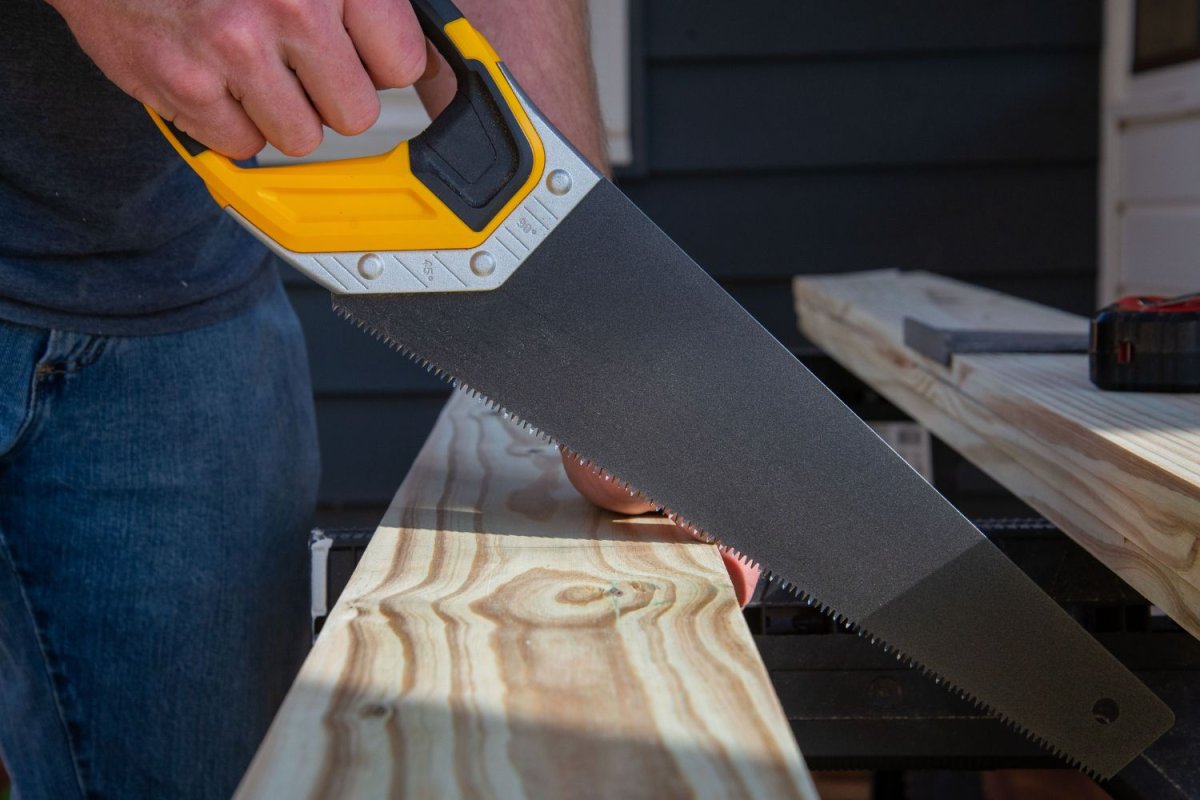
Use your thumb to help line up the saw blade with the cut line. Start with the teeth nearest to the handle. Make sure to start the cut next to the line, on the waste side. Make a few back cuts until you create a defined opening in the wood. Position the saw at a 45-degree angle with the material. With your elbow close to your body, start with a few short forward strokes to deepen the cut. Then begin making longer strokes.
To sharpen a hand saw blade properly, clamp it in a vice between two scrap wood pieces with the blade side facing up. Make sure the clamp grips the blade close to the cutting edge. Use a double-cut metal file to file the teeth until they are uniform in height.
To prevent rust, lubricate your saw after every use. You can use a variety of lubricants, including WD-40, gun oil, or paste wax. In addition to preventing the metal from oxidizing, the lubricant will also prevent sap buildup and help the blade slide through the wood.
Not necessarily. Hardened teeth and sharpenable teeth both have their pros and cons. Hardened teeth stay sharper for longer, which means you don’t need to worry about manually sharpening them. However, once they become dull, they can’t be sharpened and hence must be replaced. If you need a saw that’s going to see heavy use, it makes better sense to go with a sharpenable hand saw.
A panel saw is a type of hand saw, but not all hand saws are panel saws. Hand saws also include coping saws, pruning saws, and Japanese pull saws.
Meet the Testers
Tony Carrick has contributed to BobVila.com since 2020. He writes how-to articles and product reviews in the areas of lawn and garden, home maintenance, home improvement, auto maintenance, housewares, and technology.
Mark Wolfe is a product tester and writer with an extensive background in the nursery and landscaping industry. He kept his toolbox well-stocked in order to build or repair fences, walls, irrigation systems, and equipment on any given day. Now he tests and writes reviews about the latest hand tools, lawn-care products, outdoor power equipment, and other outdoor-living goods.