

We may earn revenue from the products available on this page and participate in affiliate programs. Learn More ›
Finding the best sanders for hardwood floors isn’t always straightforward—especially when the wrong tool can turn a weekend project into a grueling ordeal. For this guide, we drew on extensive product research and expert insight from Carly D. Harrington, owner of Floor Coverings International of South Atlanta, to help DIYers understand when sanding is realistic and when professional help is the smarter call. “Let’s face it, there are places for DIY and there are times to call the professionals,” Harrington says. “When it comes to sanding, staining, and shining those hardwoods, call the pros! They have the know-how and the right tools for the job.”
For those moving forward with their own refinishing project, we recommend the Makita 4-Inch by 24-Inch Belt Sander for its fast material removal and large, steady platform that helps keep floors flat. Harrington notes that deeper scratches, gouges, and pet or water stains often require professional sanding—“just because you can rent a drum sander, does not mean you should try it!”—but lighter surface wear can often be tackled with the right DIY-friendly tool. With proper prep, patience, and the appropriate machine, homeowners can achieve a smoother, more even finish. Below, we break down the features and performance details that define the best sanders for hardwood floors.
- BEST OVERALL: Makita 4-Inch by 24-Inch Belt Sander
↓ Jump to Review - BEST BANG FOR THE BUCK: Skil 3-Inch by 18-Inch Belt Sander
↓ Jump to Review - MOST VERSATILE: DeWalt Cordless Orbital Sander Kit
↓ Jump to Review - BEST FOR CORNERS: Wen Cordless Palm Sander
↓ Jump to Review - BEST PROFESSIONAL: Powr-Flite Orbital Floor Machine
↓ Jump to Review
Before You Buy a Sander for Hardwood Floors
Sanding wood floors can take several forms. Those repairing a small area may already own a general-purpose sander that will do the job. Generally speaking, though, whether one is laying a new floor or stripping and refinishing an existing one, the area can be quite large. Any machine to sand wood could be used to tackle the job, but many will result in the DIYer spending all day on their hands and knees.
According to Harrington, many homeowners underestimate how physically demanding and skill-dependent floor sanding really is. “There’s an art to the process to end up with smooth, flat results,” she explains. “A break in concentration can leave those floors with more waves than a day at the beach.”
While our list of top sanders for hardwood floors offers a variety of tools to make the job quicker and easier, the fastest is undoubtedly an industrial floor sander. Although heavy, these industrial tools are used standing up and are much more comfortable to use. Unfortunately, even the cheapest options cost thousands of dollars. The good news is that these sanders can be rented, and many big-name home improvement retailers offer this rental service.
It’s also important to do the math before investing in (or renting) a floor sander. DIYers who need to rent one for several days may find that the cost can soon add up to more than the price of buying a small floor sander. Most of these small sanders will take longer to sand a floor, but all of our picks are multipurpose tools that can be used for other jobs. Nevertheless, renting floor sanding equipment is certainly an option worth considering.
Harrington also notes that the type of wood determines whether DIY sanding is even appropriate. “If you’re not certain it is solid wood—usually wider than 3.25 inches—it’s probably engineered,” she says. “Without a thick veneer, sanding engineered wood is tricky even for pros. A novice can easily sand right through to the core.”
Hardwood Floor Sanders Comparison
| Power | Sanding surface | Dust collection | |
| Makita 4-Inch by 24-Inch Belt Sander | 11 amps; corded | 4-inch-by-24-inch belt | Soft bag |
| Skil 3-Inch by 18-Inch Belt Sander | 6 amps; corded | 3-inch-by-18-inch belt | Micro-filtration canister |
| DeWalt Cordless Orbital Sander Kit | 20V; cordless | 5-inch-diameter pad | Soft bag |
| Wen Cordless Palm Sander | 20V; cordless | 3.75-inch-by-5-inch pad | Soft bag |
| Powr-Flite Orbital Floor Machine | 1.5 hp; corded | 14-inch-by-20-inch pad | No built-in collection; shop vacuum can be used |
Our Top Picks
The following list offers a hardwood floor sander for almost every need and budget. Each has been assigned a category so buyers can quickly find the right tool, whether they are repairing a small section of floor or working through an entire house of hardwood floors.
Best Overall
Photo: Amazon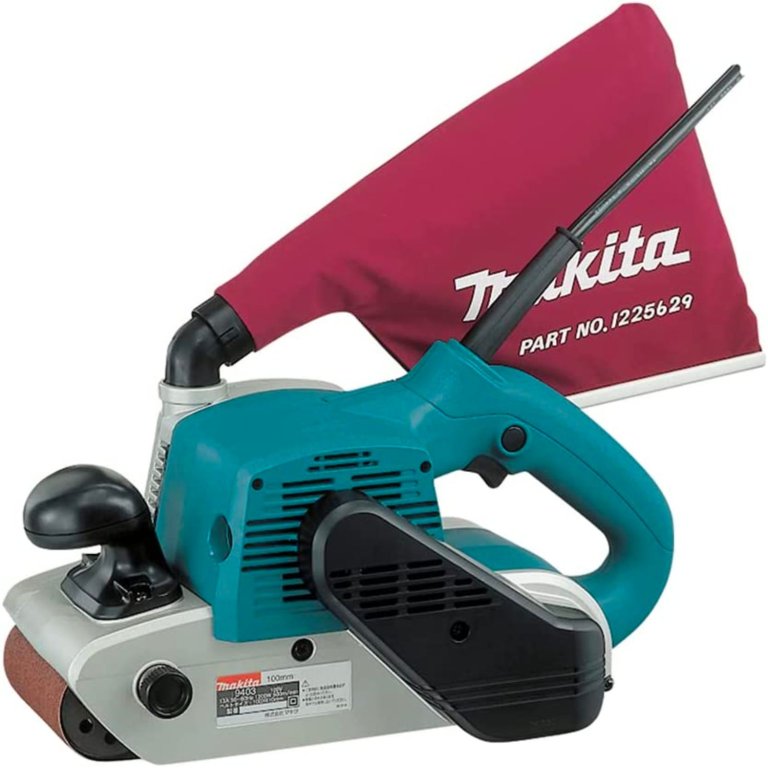
What We Like
- Fast material removal with 4-inch, 1,640-FPM belt
- Flush-sanding design with stable, high-control grips
- Large, steady platform keeps floors flat
What We Don’t Like
- Heavy 13-pound build tires users over time
Product Specs
- Power: 11 amps; corded
- Sanding surface: 4-inch-by-24-inch belt
- Dust collection: Soft bag
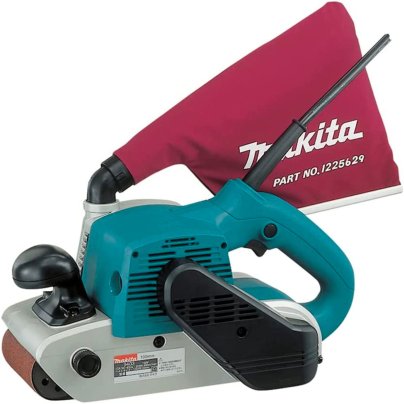
The Makita belt sander offers an ideal balance of features for most DIYers. It has a powerful 11-amp motor to tackle large floor areas, but it lacks the astronomical price of commercial floor sanders. It can also be used to sand beams, decks, doors, tables, or any other substantial woodworking project.
The 4-inch-by-24-inch belt and 1,640 feet-per-minute speed deliver remarkably rapid material removal. The substantial footprint makes for a stable platform, so it’s easier to keep floors even. The design is open on the right-hand side, allowing sanding flush to the wall, and a single lever makes for quick and easy belt changing. At 84 decibels, it’s also quiet for a sander with this level of performance.
The Makita 4-inch-by-24-inch belt sander is renowned for its reliability, and problems are almost unknown. However, while the chunky handles allow for good control, this powerful machine weighs 13 pounds and it does pull quite strongly. For this reason, it can be tiring to use for long periods.
Get the Makita sander for hardwood floors at Amazon, The Home Depot, or Acme Tools.
Best Bang for the Buck
Photo: Amazon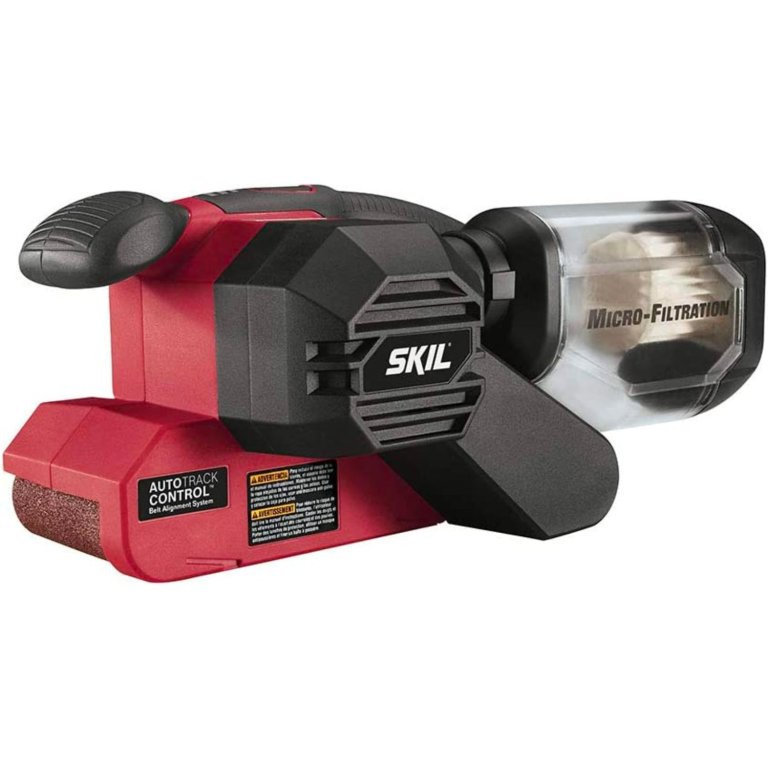
What We Like
- Light, maneuverable design at a competitive price
- Pressure control and auto-tracking keep belt aligned
- Clear micro-filter canister shows dust level easily
What We Don’t Like
- Occasional reports of overheating-related motor failure
- Some users say the filter clogs easily
Product Specs
- Power: 6 amps; corded
- Sanding surface: 3-inch-by-18-inch belt
- Dust collection: Micro-filtration canister
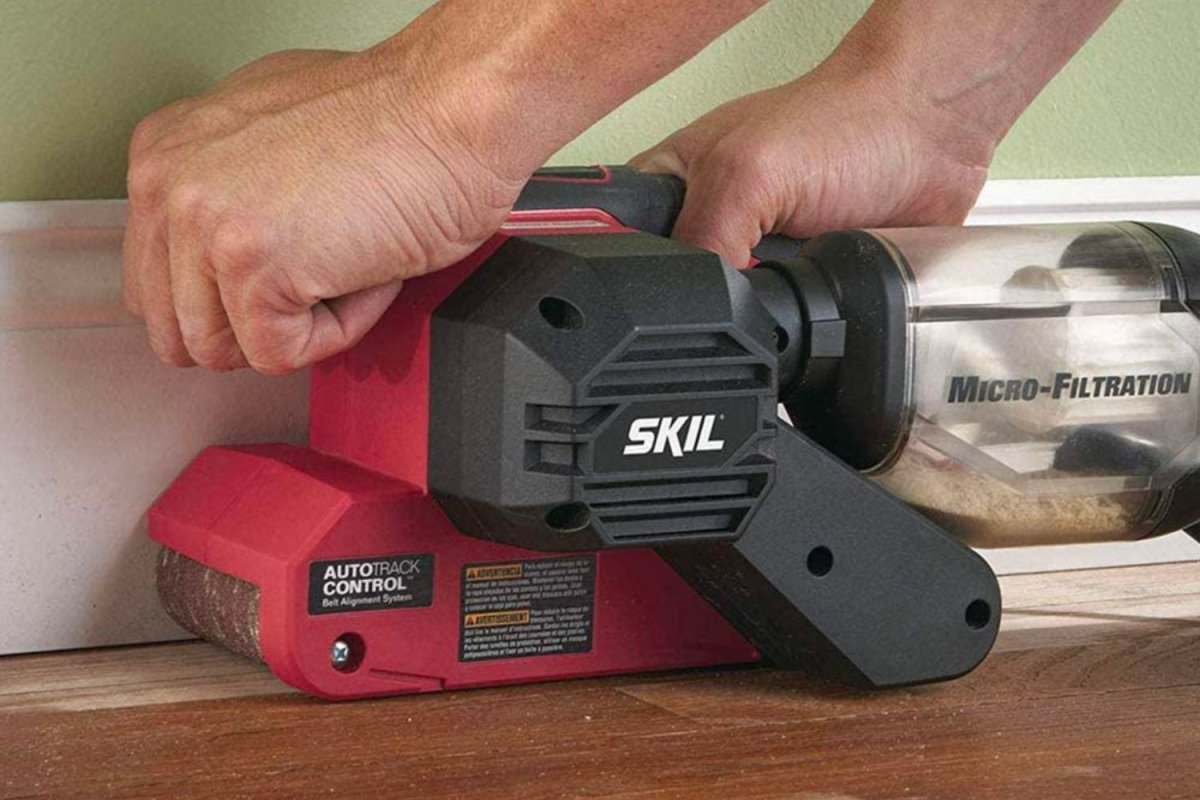
Belt sanders are the best tool for rapid material removal, but the size and power of some can make them difficult to manage. With its 6-amp motor, the 3-inch-by-18-inch Skil still delivers competitive performance, but its 6.4 pounds make it lighter and more maneuverable than many.
Pressure is monitored for optimum performance with red, yellow, and green LEDs. Keeping it in the green provides the best finish. It filters fine dust so it doesn’t get into the air, and the clear canister makes it easy to see when it needs to be emptied. Auto tracking ensures the sanding belt doesn’t stray, and changing it involves a single lever operation.
The Skil belt sander is a popular tool. Faults aren’t common, but some feel the filter clogs too easily, and there are a few reports of motor failures caused by overheating.
Get the Skil sander for hardwood floors at Amazon, The Home Depot, or Walmart.
Most Versatile
Photo: The Home Depot
What We Like
- Variable speed and random orbit for versatile sanding
- Efficient brushless motor maximizes runtime
- Competitive kit includes sander, battery, charger, bag
What We Don’t Like
- 2Ah battery limits runtime but spares are affordable
Product Specs
- Power: 20V; cordless
- Sanding surface: 5-inch-diameter pad
- Dust collection: Soft bag
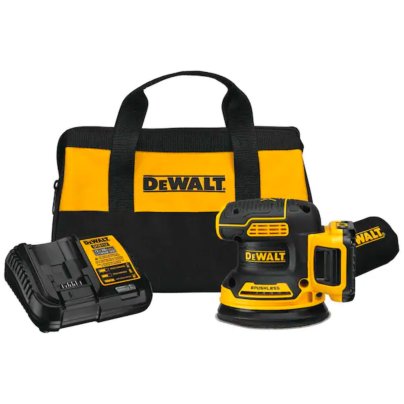
Random orbital action is used by many of the best industrial floor sanders because it removes material quickly while minimizing scratches. The DeWalt cordless sander uses the same principle, but on a smaller scale. The 5-inch-diameter sanding head means it can cope with large areas, but it’s compact and light enough for a host of other sanding tasks, such as stripping paint, sanding filler or putty, and doing general woodworking.
Cordless power makes the DeWalt sander portable, and the ergonomic rubber grip makes it easy to handle. A brushless motor maximizes battery efficiency and runtime. Additionally, the included charger and useful carry bag make for a competitively priced kit.
The DeWalt orbital floor sander provides outstanding reliability, and it’s difficult to fault. However, the 2Ah (amp-hour) battery will restrict working time somewhat unless a spare is added, which increases the overall cost.
Get the DeWalt sander for hardwood floors at Amazon, The Home Depot, or Acme Tools.
Best Detail
Photo: Amazon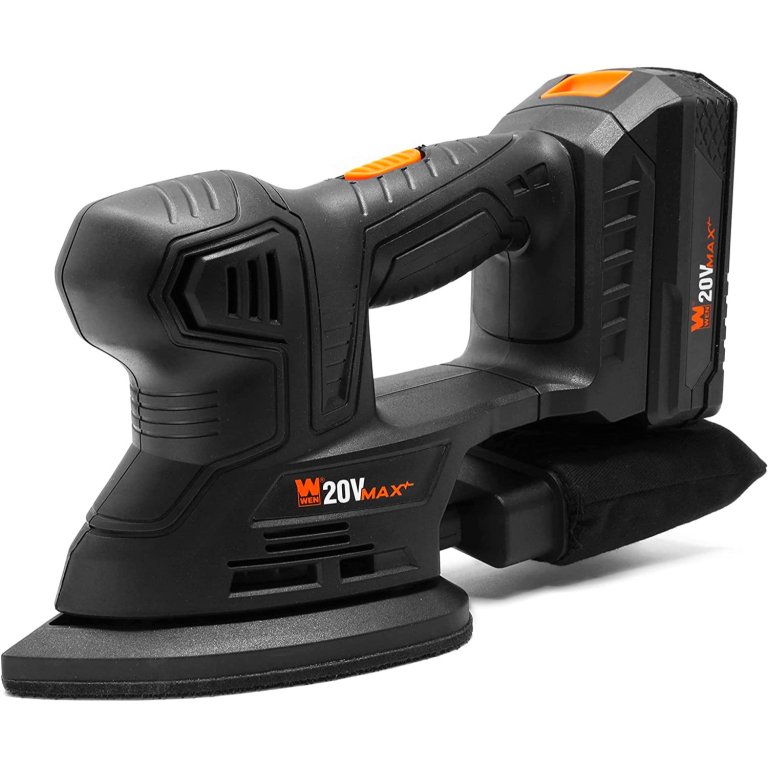
What We Like
- Triangular pad excels at intricate sanding work
- Consistent performance with handy LED charge indicator
- Ergonomic dual grip with quick-change hook-and-loop sheets
What We Don’t Like
- Some units arrive without dust bag; replacements frustrating
Product Specs
- Power: 20V; cordless
- Sanding surface: 3.75-inch-by-5-inch pad
- Dust collection: Soft bag
Even dedicated-edge floor sanders struggle around doorway moldings or around fixtures like toilets and tubs. That’s when a small hand floor sander like this cordless model from Wen comes into its own. The 3.75-inch-by-5-inch triangular pad can handle intricate detail, and it’s ideal for refinishing small areas of flooring. It can also come in handy for lots of DIY and woodworking projects.
The Wen palm sander might be small, but the 20V battery means it has plenty of power. There’s a useful LED charge gauge built in, and an ergonomic dual-grip handle provides maximum control.
While it is not a tool for sanding large areas of hardwood floor, it would be a great companion to a belt sander. The budget-friendly price makes it an affordable addition to any tool kit.
Get the Wen sander for hardwood flooring at Amazon, The Home Depot, or Walmart.
Best Professional
Powr-Flite Orbital Floor Machine
Buy at AmazonWhat We Like
- Large 14×20 pad sands floors quickly to edges
- Quick-change pads enable stripping, buffing, polishing
- Fan-cooled motor performs well at 69 decibels
What We Don’t Like
- Still a significant investment despite lower cost
Product Specs
- Power: 1.5 hp; corded
- Sanding surface: 14-inch-by-20-inch pad
- Dust collection: No built-in collection; shop vacuum can be used
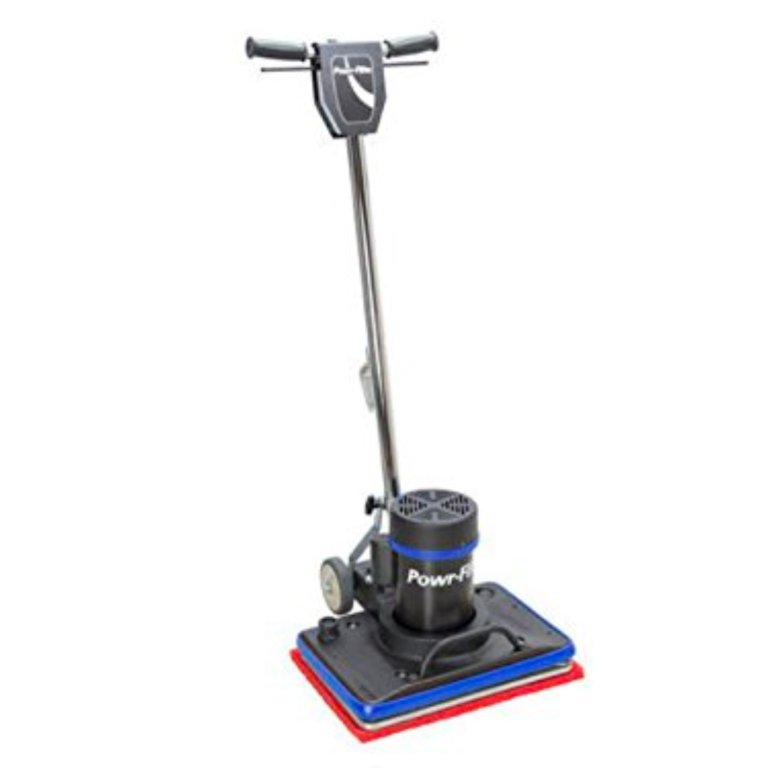
The Powr-Flite is a multifunction tool with a powerful, fan-cooled 1.5-horsepower motor that drives a 14-inch-by-20-inch orbital pad. The choice of pad defines function. In addition to sanding, it can be used for cleaning, buffing, or polishing. A pair of optional weights can be added to increase sanding pressure if required. Wheels with rubber tires make it easy to move the orbital floor sander around. With a noise level of just 69 decibels, it’s relatively quiet for tools in this category, too.
There is no built-in dust collection, but a dust port allows a shop vac to be attached. Although the Powr-Flite costs less than most other industrial sanders for hardwood floors and provides great versatility, it is likely too expensive for many beginners or for casual usage.
Get the Powr-Flite sander for hardwood floors at Amazon.
Jump to Our Top Picks
How We Chose the Best Sanders for Hardwood Floors
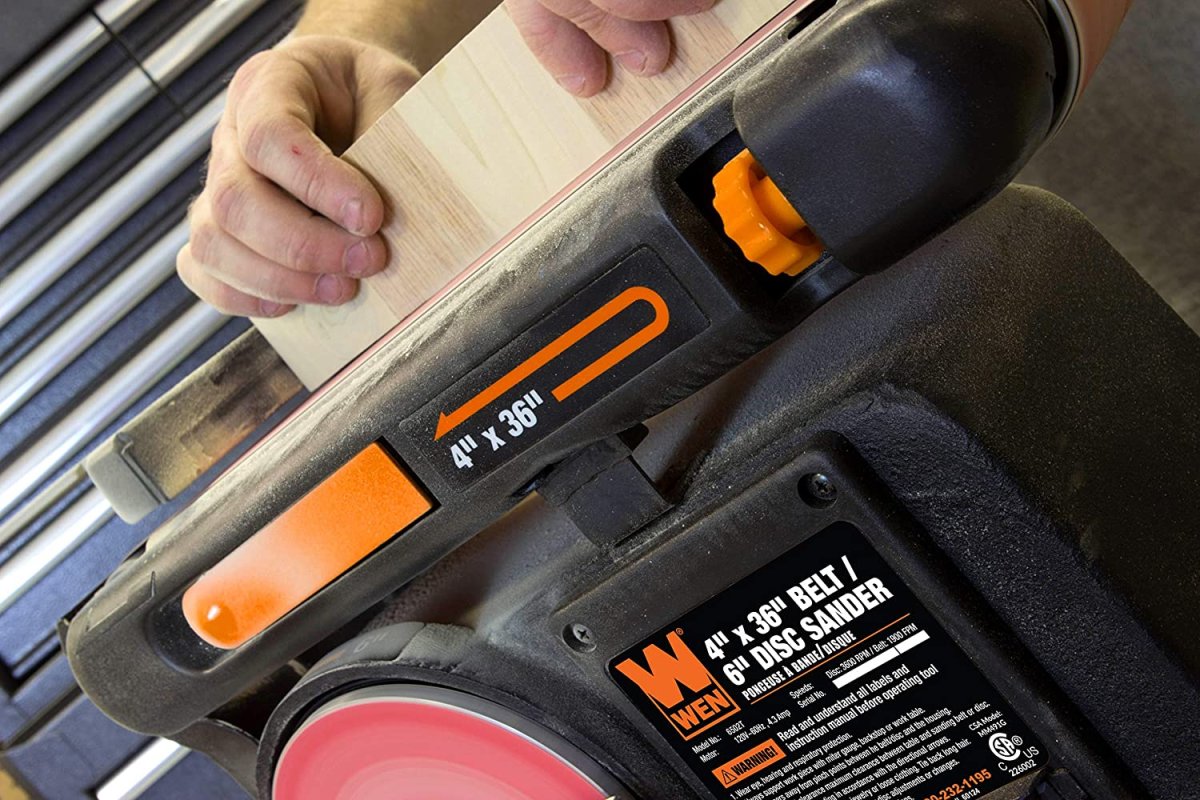
We’ve been keen DIYer for many years. Our experience includes bare-bones remodeling on multiple homes, and one tester owned their own woodshop. We’ve used many different types of sanders, and we know what to consider when working on hardwood floors.
To supplement this hands-on background, Harrington stresses proper prep as a major factor in success. “Remove all furniture, cover windows and fixtures, and tape outlets and vents,” she says. “Even with dustless methods, fine dust finds its way onto everything.”
In addition to our personal experience, the Bob Vila team researched dozens of different tools, comparing price and performance to find those that best meet the needs of typical DIY users. We also wanted to ensure that they offered lasting value. Long-term reliability was important, but so was versatility. Not a single one of these tools is solely for sanding floors; they can all tackle other tasks around the home.
What to Consider When Choosing a Sander for Hardwood Floors
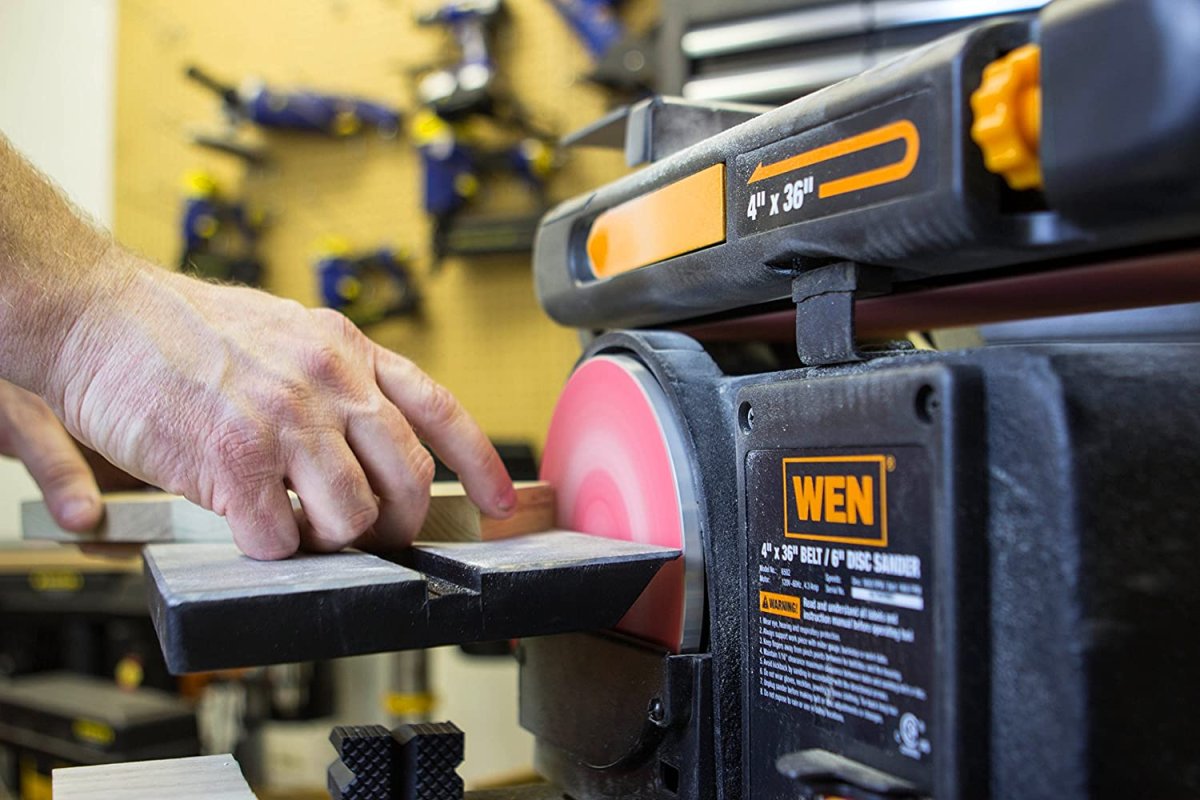
Brand reputation and cost can have major impacts on the choice of sander for hardwood floors. While both of these issues are important in terms of expected reliability and overall value, it’s perhaps more important to focus on the key performance issues first, and then shop for tools that meet those requirements.
Harrington reminds homeowners that sanding is only half the battle. “Once sanding is done and you have a fresh, clear surface, stain selection matters. Lighter stains hide scratches and make spaces feel bigger, while darker stains add richness.”
Types of Sanders for Hardwood Floors
Sanders for hardwood floors come in a number of different types and configurations, including DIY to commercial floor-sander options, and each has its pros and cons. While this section describes each type, similar principles apply to many of the smaller tools listed in our top picks. We’ve made comparisons where relevant.
Drum
Drum sanders are heavy-duty wood sanding machines that are popular with professionals and rental companies. They use the same principle as a belt sander, but in a large and upright form. They usually have very efficient vacuums with large bags for dust collection.
These types of sanders can remove a lot of material very quickly. As a result, they are great for sanding rustic floorboards or for removing thick varnish. In skilled hands, a drum sander for floors can cover large areas more quickly than any other type. However, since they can be aggressive, inexperienced users need to be careful. “Just because you can rent a drum sander does not mean you should try it,” Harrington cautions. “These machines remove material incredibly fast. One wrong move and you can take off more wood than intended.”
While using a drum sander, it’s important to keep it moving. Too much time spent on the same spot will cause depressions that are difficult to rectify.
Orbital Vibrating
The action of an orbital vibrating floor sander is similar to that of DIY handheld orbital tools, though the commercial versions are upright. A motor produces both rapid vibrations and a random orbital motion. Heads are either round or square and have an abrasive that’s held on either by clamps or by hook-and-loop fasteners.
Orbital vibrating floor sanders don’t remove material quite as quickly as drum sanders, but they are usually easier to control. They may also be multifunction machines and are often recommended for sanding exterior decks that are made of softwood. A change of pad allows many orbital vibrating sanders to buff hardwood floors or polish tile and marble.
Edge
As the name suggests, a floor edge sander is a tool that can sand right up to walls or baseboards. These are much more compact than either drum or orbital sanders, usually measuring between 12 and 18 inches tall with a sanding disc between 7 and 12 inches wide. In addition to a floor edge sander’s ability to handle edges, the size of this type of sander makes it useful for sanding hardwood floors in tight spaces such as bathrooms and utility areas.
Despite being smaller than other professional tools, they can still weigh around 50 pounds, so they’re much heavier than DIY alternatives. It is also necessary to bend over to use them, so users may need to take periodic breaks to avoid backaches.
Harrington adds that edge work is where many DIYers struggle to blend their results with the main field of the floor. “The edges tell the story,” she says. “If you rush that part, the difference will show once stain and poly go down.”
Power
Floor-sander power usually reflects the type of work the tool is expected to do. Commercial models typically have motors between 1 and 1.5 horsepower, and they can sand continuously for hours at a time. Belt sanders, the most powerful of the handheld models, have motors rated in amps, and a minimum of 6 amps would be ideal for DIY work. Cordless tools are rated in volts (V), and 20V models are recommended rather than lightweight 12V models that might bog down too often.
Speed tends to vary with the size of the machine. Professional floor sanders might seem comparatively slow, but they don’t need to be fast to be effective. Confusingly, belt sanders will often be rated in feet per minute, whereas rotations per minute (RPM) is used to rate detail and orbital sanders. This makes comparisons practically impossible.
Complicating comparisons further, some sanders have variable speed, and many are fixed. Variable-speed sanders can be useful when switching from hardwood to softwood, but otherwise, it’s not particularly important. Most people tend to run their sander at full speed anyway, which is perfectly acceptable. Harrington also points out that slower, mindful passes are often more effective than trying to rely on speed. “Let the machine do the work,” she says. “Forcing it or rushing only creates unevenness.”
Size
While it might seem obvious that a large floor sander will cover a particular area more quickly than a smaller model, choosing the bigger tool isn’t always best. For instance, large commercial sanders often weigh more than 100 pounds, and it takes a degree of physicality to muscle them around.
“Big upright machines shine in open spaces,” Harrington notes, “but in bathrooms, hallways, and laundry rooms, a nimble detail sander is sometimes the only tool that fits.”
Big upright machines are great for wide open spaces, but they can be impractical for small rooms. Even edge sanders are quite bulky. For those refinishing a bathroom, for example, and not wishing to move existing fixtures such as the toilet, a small detail sander can be invaluable.
Shopping for a Used or Refurbished Sander for Hardwood Floors
While many people may balk at the idea of spending money on a secondhand tool, a refurbished sander can be a win-win situation. It cuts down on waste, and it gives buyers the opportunity to acquire products that might otherwise be outside their budget.
Harrington advises checking whether refurbished tools come with updated pads or belts. “If consumables are worn, you’re not really getting a deal,” she says. “Make sure the parts that matter are fresh.”
Plus, today’s refurbished models are not the dubious equipment often found at neighborhood yard sales. Reputable manufacturers and retailers frequently offer high-quality refurbished sanders alongside new models.
Unlike tools that have been beaten to death and then returned on the day the warranty expires, often refurbished sanders have been tried and then returned within a relatively short time. They might also be tools that are in torn packaging or have only cosmetic damage.
So are refurbished flooring sanders any good? In our opinion, yes. There’s every chance they could represent an attractive bargain. However, care and common sense is needed when shopping.
- Specify the type of floor sander you want, and look at new models. Then see what you can get on the refurbished market that comes close to those specifications.
- Keep a tight rein on your budget: It’s easy to get carried away. The idea here is to save money or get a better value.
- Look for a substantial cost reduction. If the savings are only 10 or 15 percent, it might be better to buy new.
- Make sure you know exactly what is included. Cordless tools often won’t include a battery or charger, for example.
- Be sure to check the warranty and return periods before you order. Don’t make assumptions, even if you’ve purchased from the retailer before.
While refurbished, reconditioned, or renewed tools are often excellent, there’s always a chance that a tool could be a dud. Buy from a reputable source like Amazon Renewed or Walmart Restored, and check the floor sander as soon as it arrives so you can get your money back if there’s a problem.
Tips for Using a Sander for Hardwood Floors
Whether the user is a beginner or moderately experienced, some tips for using floor sanders for hardwood floors can prove quite useful. Here are a few specifics worth mentioning when it comes to using a sander for hardwood floors.
- It’s important to take adequate safety precautions. Getting wood dust in airways and lungs is uncomfortable at best, but it can cause serious respiratory problems. Always wear a dust mask and eye protection. Ear protection is also a good idea. Each of the tools in our top picks either has integrated dust collection or can have a vacuum attached. Empty them regularly to maintain efficiency.
- Those who haven’t used a particular type of sander will want to read the instructions carefully before starting. It’s particularly important to know how to turn the machine off quickly. Whenever practical, it’s a good idea to practice on a scrap piece of wood or an inconspicuous area.
- Learn about the different grades of sandpaper. Abrasives have different levels of grit from coarse (low numbers) for removing material quickly to smooth (higher numbers) for finish sanding. Tool manufacturers and rental companies can usually provide guidance on what will work best for their machine on the type of hardwood being sanded.
Harrington reinforces grit progression as a critical step: “Skipping grits is one of the biggest DIY mistakes. If you jump too far ahead, you’ll lock deep scratches into the wood.”
- Plan your approach to the task and decide where you intend to start and finish. Consider any obstacles or difficult areas. Fatigue is one of the biggest causes of problems when sanding, so take regular breaks and stop for the day if tired. The floor will still be there tomorrow.
FAQs
There is a lot to learn about the variety of sanding power tools available for hardwood flooring, and you may have a few lingering questions. Below are answers to some popular questions about the best sanders for hardwood floors.
The number of times a hardwood floor needs to be sanded will depend on what you’re trying to achieve. If an existing finish is being removed, then at least one pass (and possibly two) will be required. A third and fourth pass might be needed to make the surface smooth enough for finishing.
With new bare-wood floors, it will depend on the condition of the hardwood. One pass may be sufficient for high-quality flooring, but more may be required if rustic boards are used. Generally speaking, the aim is to remove any roughness and machining marks or swirls that would spoil the finish.
With any sanding process, it’s always a good idea to work in the direction of the wood grain. This helps reduce visible scratch marks. In most cases, it is recommended to start with sandpaper of around 35 grit, then move through a medium 60 grit to perhaps 100 grit.
However, when working with new wood that is reasonably smooth already, the initial grit may not be required. Move the sander up and down the room in the direction of the boards. Overlap each pass by a couple of inches so no patches are missed.
This is one of those “how long is a piece of string” questions. There are all kinds of variables that will affect how long it takes to sand a hardwood floor. The initial condition and the intended final appearance have a major impact, and so of course will the size of the area being sanded. Then there’s the size and type of sander being used. What’s most important is to allow plenty of time to prevent the risk of accidents.
The key to a good finish when sanding hardwood floors is removing as much dust as possible before applying wax, sealer, or varnish. A lot of dust remains in the air immediately after sanding, and it will settle out over a 24-hour period. Therefore, vacuuming immediately after and then a day later is a good idea.
Buffing shouldn’t be required until after the final finish has been applied and allowed to dry and cure for the period specified by the manufacturer. Buffing can then give a shine to the floor and bring out the natural warmth of the hardwood.
Use the correct grit progression, keep the sander moving with the grain, and avoid skipping grit levels. Fully empty or clean dust bags, as excess dust can create micro-scratches.
Start with coarse grit to remove finish, then work up to finer grits for smoothing. Move with the grain, overlap each pass slightly, and vacuum between sanding stages to keep dust from dulling results.
No—avoid wet mopping. Instead, vacuum thoroughly right after sanding and again 24 hours later once airborne dust settles. Apply stain or finish only when the surface is completely dry.