
We may earn revenue from the products available on this page and participate in affiliate programs. Learn More ›
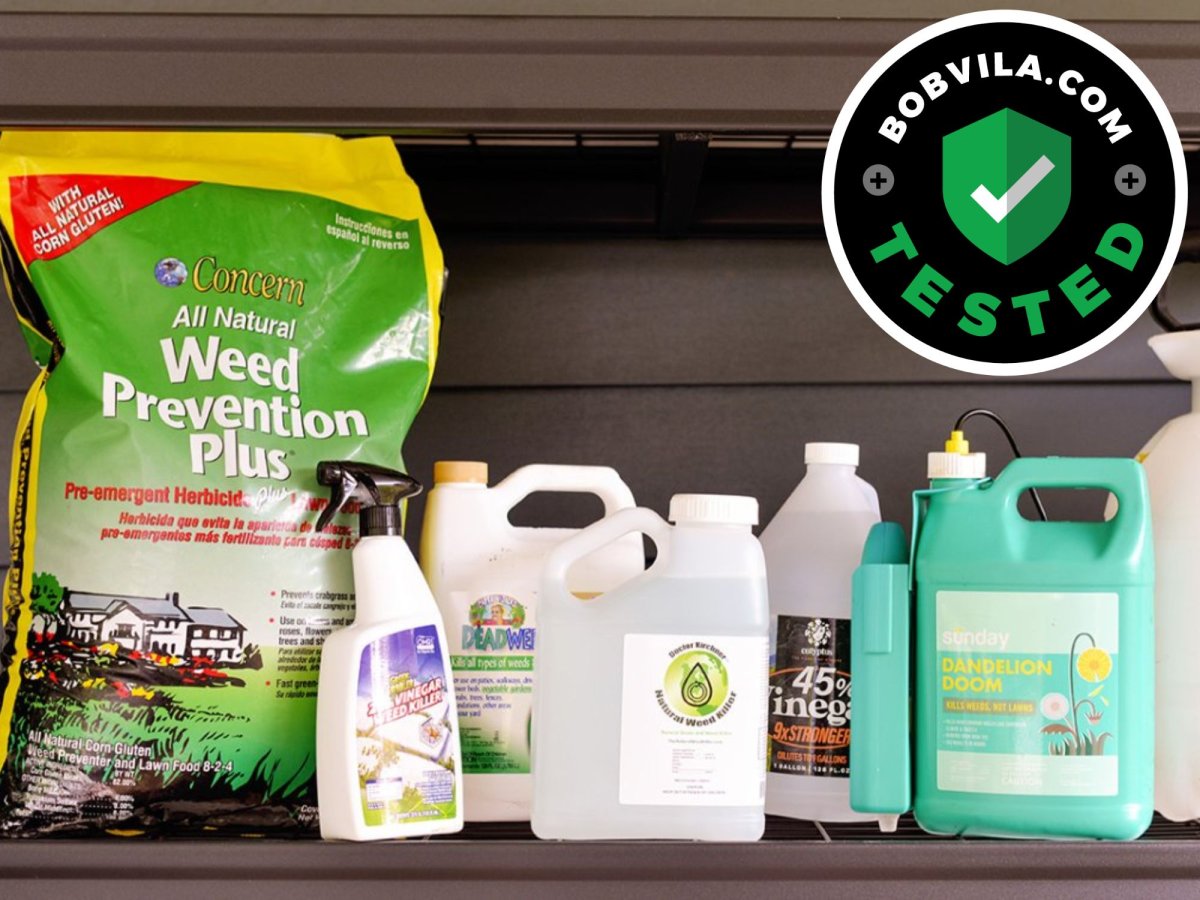
Weed killers can suppress invasive weed species and keep them from overrunning the lawn, garden, and landscape. But banishing weeds needn’t harm the environment. Generations of chemical researchers have developed numerous powerful herbicides for home use that are highly effective, relatively cheap, and easy to apply. We recently put five of these low-toxicity weed killers to the test to evaluate their efficacy.
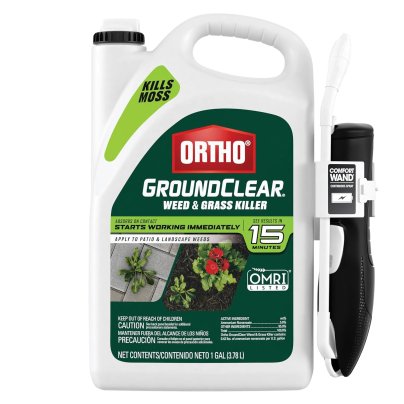
After testing each product for more than 2 weeks, our top pick is Ortho GroundClear. We sprayed it onto a large expanse of weeds and saw immediate changes within minutes, then die-off after about an hour. We also liked that it came ready to use with a convenient spray wand.
Other tested products also performed well. Read on for a list of the best weed killers on the market and key shopping tips to help you find the right one for your lawn care needs.
Key Takeaways
- Top Pick: Ortho GroundClear. Immediate results with a user-friendly spray wand, ideal for quick weed removal.
- Best Value: Spruce Weed Killer Spray. Effective, pleasant scent, and easy application with a battery-powered wand.
- Pet-Friendly Option: Bonide Captain Jack’s Deadweed Brew. Odor-free concentrate effective for large areas.
- DIY Alternative. Mix vinegar, salt, and dish soap for an eco-friendly homemade weed killer.
Bottom line: Discover the best weed killers for fast, reliable results, including top commercial options and a DIY solution.
- BEST OVERALL: Ortho GroundClear Weed and Grass Killer
↓ Jump to Review - BEST BANG FOR THE BUCK: Spruce Weed Killer Spray
↓ Jump to Review - BEST FOR LAWN WEEDS: Sunday Weed Warrior Herbicide
↓ Jump to Review - BEST FOR DANDELIONS: Sunday Dandelion Doom Herbicide
↓ Jump to Review - BEST FOR GRAVEL AREAS: Natural Armor All-Natural Weed & Grass Killer
↓ Jump to Review - BEST PET-FRIENDLY: Bonide Captain Jack’s Deadweed Brew Concentrate
↓ Jump to Review
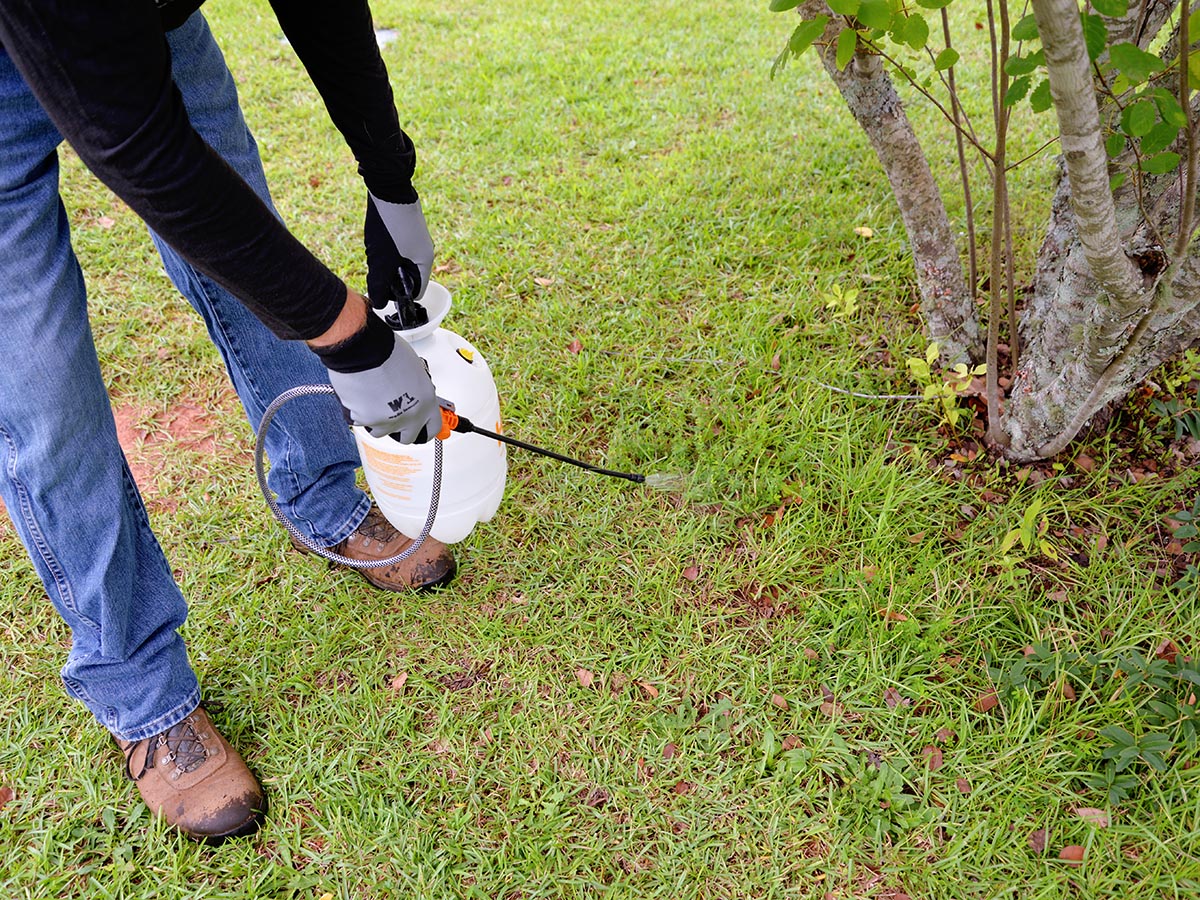
Before You Buy Weed Killer
Weed killer is an easy, one-step option for removing wild, unwanted grasses, but some of these products may not provide the results required by certain users. Some weed killers have the capability of killing all plant types, making them hard to use in close-quarter gardens, vegetable gardens, or grassy areas.
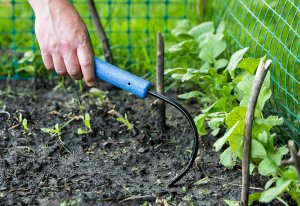
Bob Vila always recommends the traditional hands-on approach, pulling pesky weeds by hand or using a weeder to ensure that the only plants affected are the ones users want gone. Later in this article, we offer a DIY alternative to store-bought weed killers.
Weed Killers Comparison Chart
| Product | Type | Formula | Active ingredient |
| Ortho GroundClear Weed and Grass Killer | Contact | Liquid, ready to spray | Ammonium nonanoate |
| Spruce Weed Killer Spray | Contact | Liquid, ready to spray | Sodium lauryl sulfate, geraniol, cornmint oil |
| Sunday Weed Warrior Herbicide | Contact | Liquid, ready to spray | Ammoniated soap of fatty acids |
| Sunday Dandelion Doom Herbicide | Contact | Liquid, ready to spray | Iron HEDTA |
| Natural Armor All-Natural Weed & Grass Killer | Contact | Liquid, concentrate | Vinegar |
| Bonide Captain Jack’s Deadweed Brew Concentrate | Contact | Liquid, concentrate | Capric acid and caprylic acid |
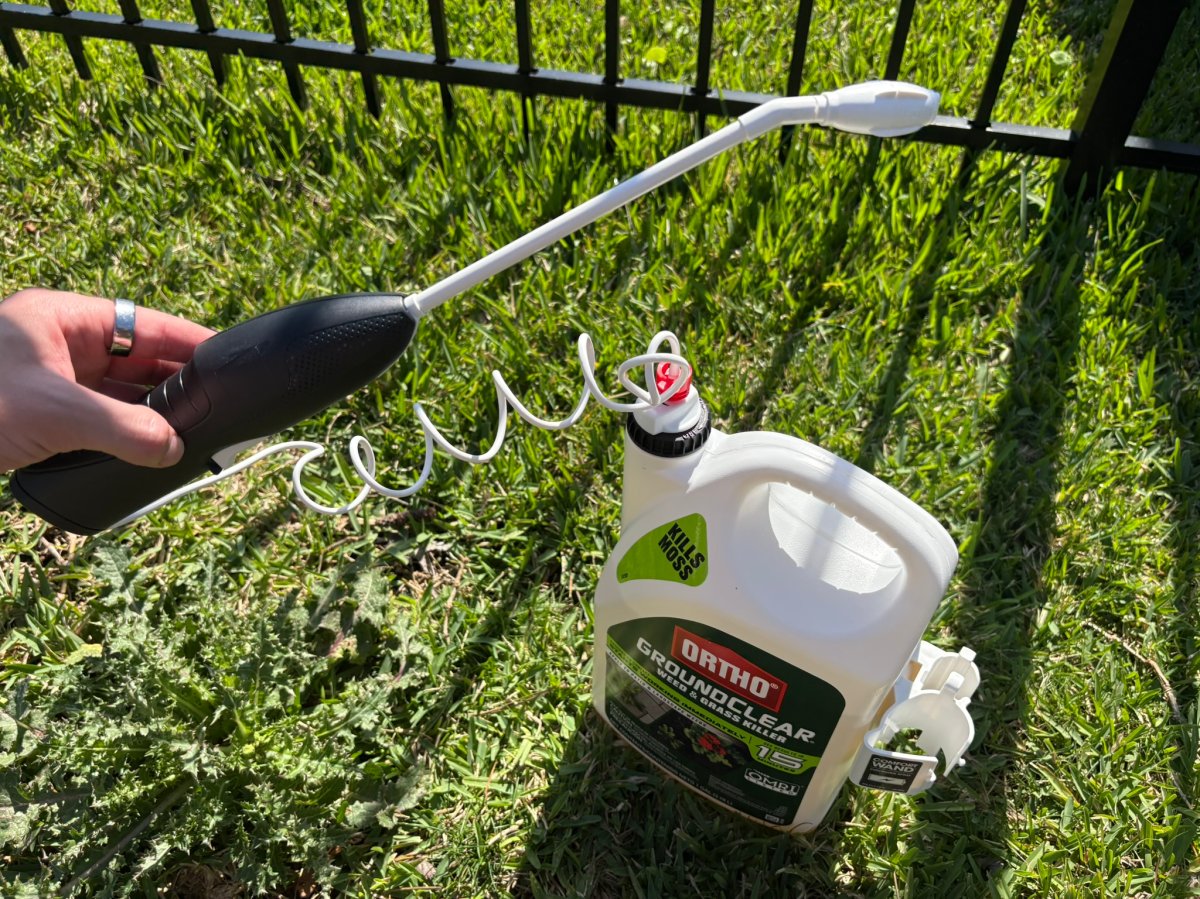
Our Top Picks
We tested a variety of highly effective weed killers with low environmental toxicity that are safe for regular yard and garden maintenance. Not all weed killers are the same. For that reason, our lineup includes options to stop annual pesky weeds from sprouting and to knock out tough perennial grasses throughout the landscape. Here’s how our choices performed in our tests, and why we think they are some of the best weed killers around.
Best Overall
Photo: Amazon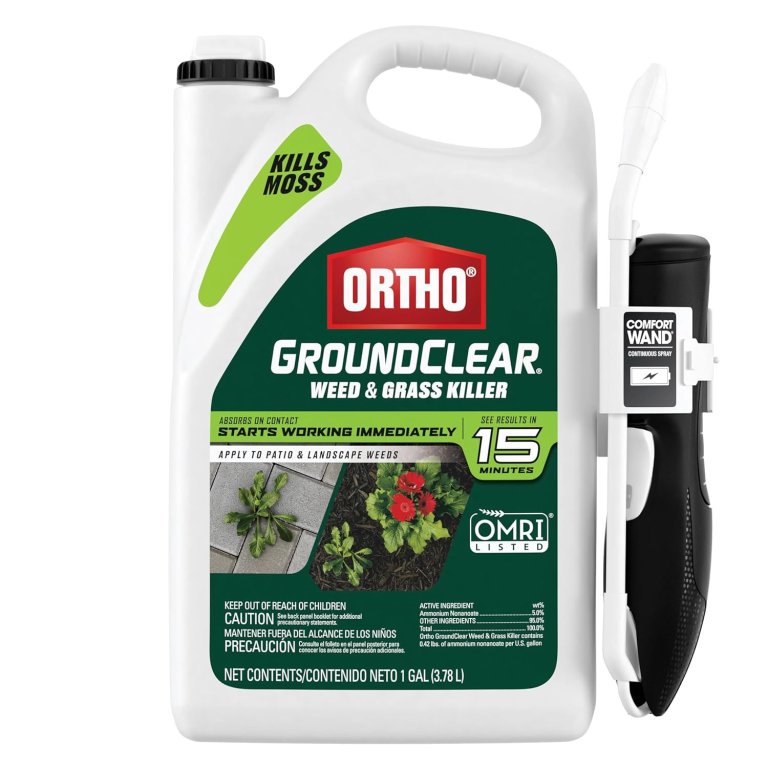
What We Like
- Extremely fast visible results
- Easy battery-powered spraying system
- Precise long-reach spray wand
- Effective on stubborn weeds
What We Don’t Like
- Kills grass and desirable plants
- Not suitable for lawn use
Product Specs
- Type: Contact
- Formula: Liquid, ready to spray
- Active ingredient: Ammonium nonanoate
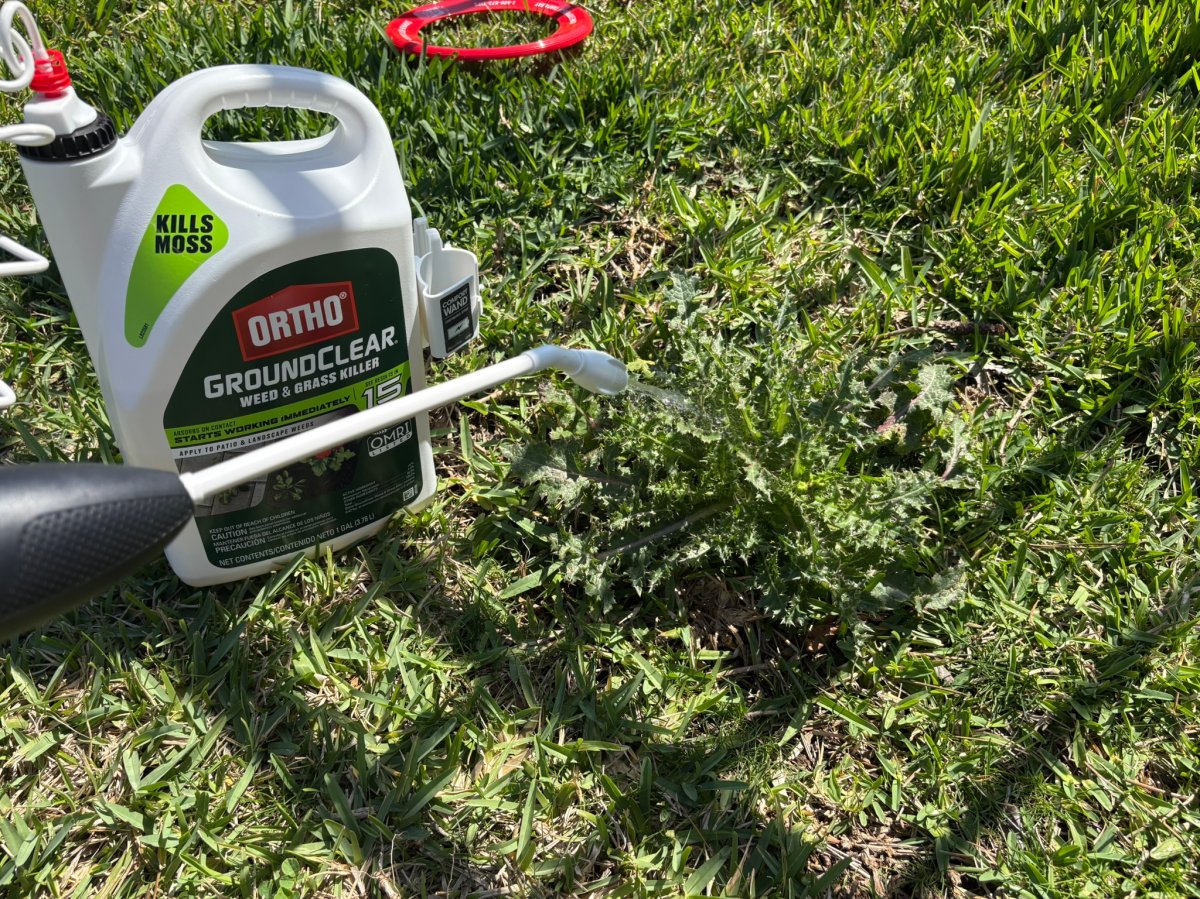
Ortho GroundClear impressed us straight away during testing, which is exactly why it earned our top spot. We tested it on several stubborn weeds growing through cracks and along the edge of a grassy area, applying the spray carefully to avoid nearby plants. Within about 15 to 20 minutes, we could already see the weeds starting to wilt. After roughly an hour in the Florida sun, many of them had turned completely brown and lifeless, making this one of the quickest weed killers we tested.
We also really liked how easy the included battery-powered sprayer was to use. Instead of constantly squeezing a trigger or pumping manually, we just pressed a button to keep the sprayer pressurized, which really helps if you have large areas to cover and don’t want sore arms afterwards. The long wand made it easy to target weeds in gravel areas, driveway cracks, and around landscaping without bending over too much or accidentally overspraying nearby plants.
In our testing, this formula worked especially well when we wanted quick, visible results. It’s a great option for clearing weeds from walkways, patios, and other problem spots fast. Just keep in mind that this is a nonselective weed killer, so it will damage or kill grass and other plants if sprayed directly.
What our tester says: “This completely destroyed any weed it touched in minutes. Just don’t spray your grass with it, trust me.”—Paul Rankin, Product Reviews writer and tester.
Get the Ortho GroundClear weed killer at Amazon (1 gallon), Lowe’s (1 gallon), Ace Hardware (24-ounce spray), or The Home Depot (24-ounce spray).
Best Bang for the Buck
Photo: Amazon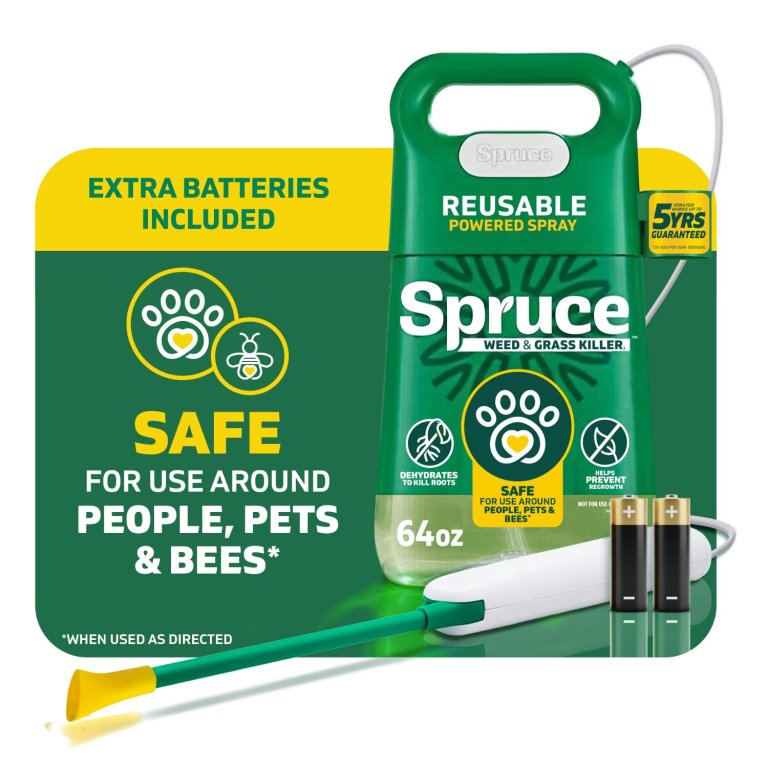
What We Like
- Nice lemony-mint scent
- Easy battery-powered application
- Fast and visible weed dieback
- Attractive, user-friendly packaging
What We Don’t Like
- Nonselective formula will kill grass
- Slightly slower than stronger formulas
Product Specs
- Type: Contact
- Formula: Liquid, ready to spray
- Active ingredient: Sodium lauryl sulfate, geraniol, cornmint oil
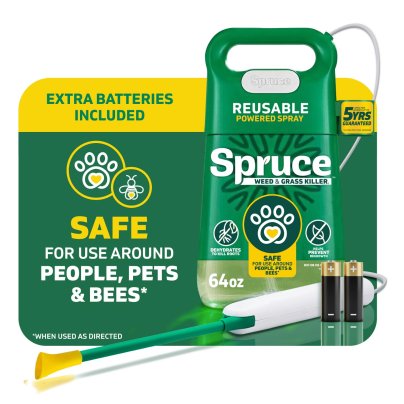
Spruce Weed Killer Spray gave us great performance with a nicely designed, user-friendly formula at a reasonable price point. Unlike many natural weed killers that rely heavily on vinegar and produce a strong, unpleasant odor, this plant-based formula uses water, essential oils, and surfactants, so it actually gave off a surprisingly fresh lemony-mint scent that made it much more pleasant to apply during testing.
The spray works by breaking down plant cells and dehydrating weeds. In our tests, it performed well against stubborn weeds, showing visible dehydration within about an hour before fully browning and dying by the following day. The included battery-powered wand sprayer was another standout feature, allowing for precise application with minimal effort and less direct contact with the spray itself.
Combined with its attractive packaging, easy application, and effective weed control, Spruce gives you a polished experience that feels more premium than its price suggests, making it one of the best-value natural weed killers we tested.
Get the Spruce weed killer (64-ounce spray and wand kit) at Amazon, Ace Hardware, Walmart, or Target.
Best for Lawn Weeds
Photo: Lowe’s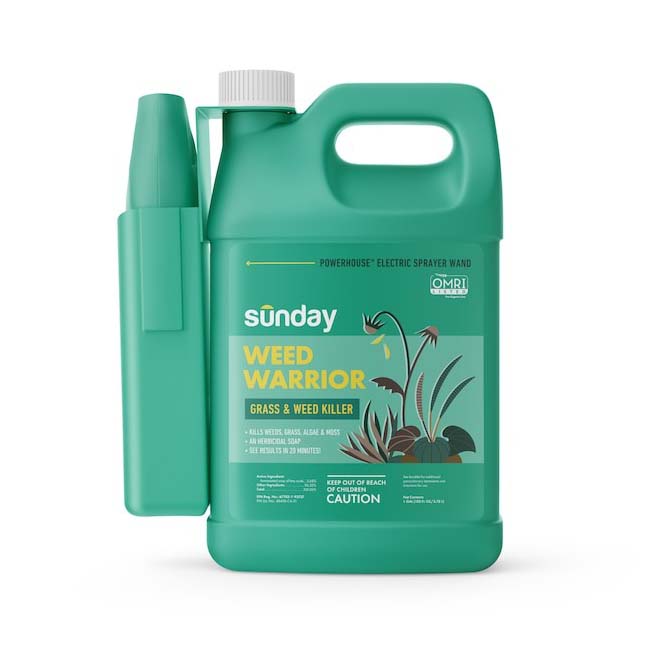
What We Like
- Noncorrosive soap-based formula dehydrates plants
- Features a convenient built-in sprayer
- Fast-acting formula kills weeds on contact
- More effective on grassy weeds than vinegar
What We Don’t Like
- Nonselective formula may kill desirable plants
Product Specs
- Type: Contact
- Formula: Liquid, ready to spray
- Active ingredient: Ammoniated soap of fatty acids
This gallon-size Sunday Weed Warrior is premixed and comes with its own battery-powered spray pump/wand. Its ammoniated soap formula adheres well to leaf surfaces and begins killing weeds and grass on contact. As a nonselective weed killer, it’s intended for targeted spot treatment only—overspray will damage or kill lawn grass. To use, give the jug a good shake, install the sprayer adapter into the cap, and start spraying.
We used Sunday Weed Warrior spray on crabgrass, clover, plantain, and wild violet, and it started working within 2 hours. This weed killer for lawns also penetrated and killed Bermuda grass shoots more thoroughly than the vinegar products. Near total dieback occurred after one application, whereas vinegar killed off only the surface leaves and left green blades beneath.
The battery-operated sprayer was easy to use and worked well, extracting almost every drop of liquid from the jug. Plus, a concentrated refill container is available to order directly from the manufacturer. Sunday Weed Warrior is an excellent, fast-killing weed killer for lawns, as long as users take precautions to prevent overspray.
What our tester says: “I tested Sunday Weed Warrior on crabgrass, clover, plantain, and wild violet in several lawn areas as well as on crack weeds on the driveway and sidewalk. It worked faster than vinegar-based products, with noticeable dieback in less than 2 hours and thorough brownout in about 18 hours.”—Mark Wolfe, Product Reviews tester and writer
Get the Sunday Weed Warrior weed killer at Amazon (32-ounce spot treatment, 2-pack) or Sunday (32-ounce spot treatment, 2-pack).
Best for Dandelions
Photo: Lowe’s
What We Like
- Selectively kills broadleaf weeds within a few hours
- Safe for use on lawn grass
- Includes a convenient, built-in sprayer head attachment
- Runoff will not harm adjacent plant roots
What We Don’t Like
- May take a few days to see results
- Should be applied 3 hours before rainfall
- Effectiveness depends on weather and weed maturity
Product Specs
- Type: Contact
- Formula: Liquid, ready to spray
- Active ingredient: Iron HEDTA
Selective herbicides that are safe for lawns and derived from natural ingredients are rare, but Sunday Dandelion Doom lawn weed killer spray fits the bill. The active ingredient, iron HEDTA, is bad news for broadleaf weeds but safe to use on grass. This 1-gallon package is ready to spray and comes with its own battery-powered sprayer attachment. Shake well, plug in the spray adapter, and spot spray dandelions, clover, thistle, and other weeds without damaging the lawn.
We tested Dandelion Doom in an out-of-the-way lawn area that was moderately infested with clover, dandelion, wild violet, crabgrass, and a few other weeds. After marking a small test plot, we sprayed the weeds individually, without being especially careful about overspray. After 24 hours, we noticed discoloration of the dandelion, clover, and violets. After the third day, most of the broadleaf weeds appeared dead.
Unlike other grass weed control sprays that cause weeds to dry out and turn brown, this product made the leaves turn black. The lawn grass and crabgrass appeared unaffected. Because of our curiosity about iron staining, we also sprayed a few weeds in cracks on the concrete driveway. The weeds died there in about 2 days, but the concrete did not stain. Sunday Dandelion Doom is an excellent choice to keep broadleaf weeds out of lawn areas.
Get the Sunday Dandelion Doom weed killer at The Home Depot (1 gallon), Target (32-ounce spot treatment), or Sunday (32-ounce spot treatment, 2-pack).
Best For Gravel Areas
Photo: Amazon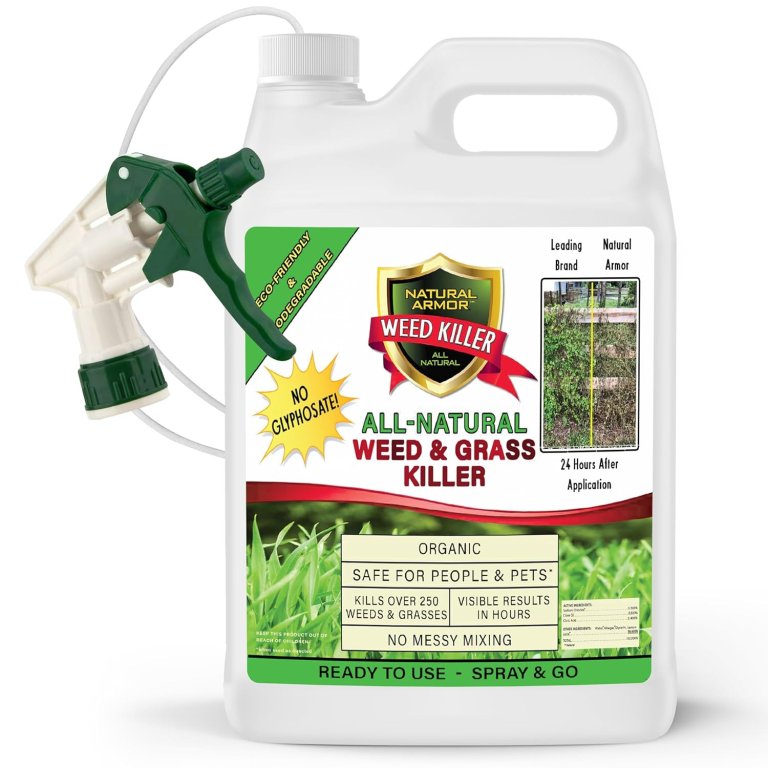
What We Like
- Fast results on driveway weeds
- No mixing required
- Works on many weed types
- Great for gravel areas
What We Don’t Like
- Overspray can harm nearby plants
- Less effective on mature weeds
Product Specs
- Type: Contact
- Formula: Liquid, concentrate
- Active ingredient: Vinegar
Natural Armor earned a spot on our list because it handled weeds in our gravel driveway quickly, without relying on harsh synthetic chemicals or complicated mixing. We tested it on patches of grass, dandelions, and small weeds growing between stones and along the edges of the driveway, and we started noticing visible wilting within a couple of hours. By the next day, most of the treated weeds were completely dried out and dead.
We also liked how simple this product was to use. The ready-to-use formula meant we could start spraying right away, and it’s also available in larger refill jugs if you need to treat bigger areas regularly. In our testing, the formula spread nicely over weeds thanks to the added soap ingredient, which seemed to help it coat leaves more evenly instead of immediately running off.
This weed killer worked best on younger, actively growing weeds during our tests, so we’d recommend spraying early before weeds become too established. Like most nonselective weed killers, though, it can damage nearby grass and plants if oversprayed, so careful application is important around landscaping and flower beds.
Get the Natural Armor weed killer at Amazon (1 gallon), Walmart (2.5 gallons), or Natural Armor (1 gallon).
Best Pet-Friendly
Photo: Amazon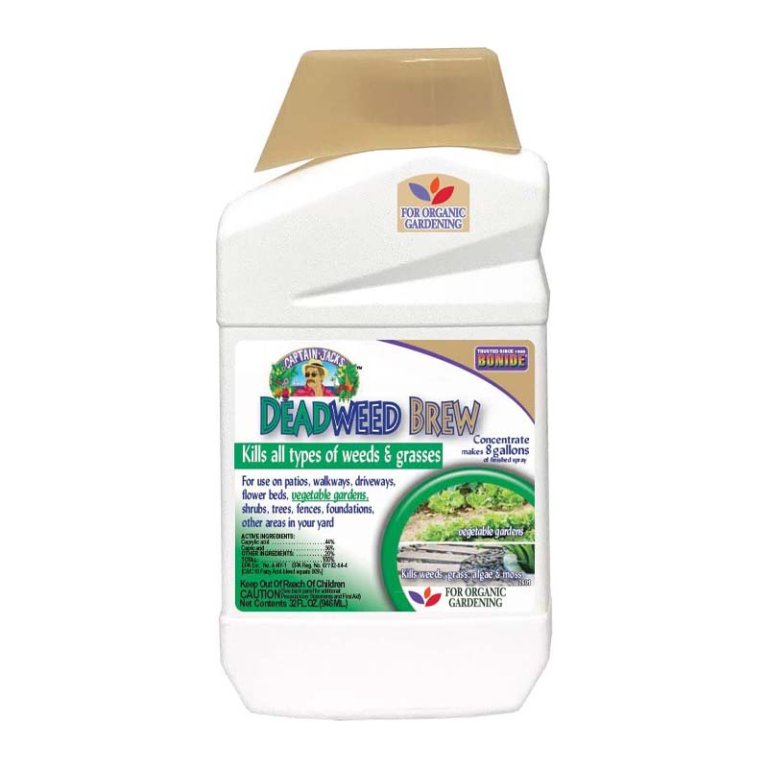
What We Like
- Pet-friendly weed killer
- Fast-acting on weeds, grass, mosses, and algae
- Makes up to 32 gallons of weed killer
- Gentle enough to be used with sprayers
What We Don’t Like
- Requires mixing with water before use
Product Specs
- Type: Contact
- Formula: Liquid, concentrate
- Active ingredient: Capric acid and caprylic acid
The active ingredient capric acid, a saturated fat that comes from coconut and palm kernel oils, kills broadleaf and grassy weeds by drying out the foliage. It makes Captain Jack’s Deadweed Brew an effective desiccant for gravel areas prone to weeds. The 32 ounces of concentrate come in a quart-size package with a dedicated measuring cup. Mix it with water to make up to 8 gallons of spray-on contact weed killer.
We tested Deadweed Brew on a secondary gravel driveway that was essentially two graveled tire tracks with a ridge of green weeds down the middle. Because of the tall, dense weed cover, we prepared the site by first mowing it down with a string trimmer and removing the clippings. Then we waited 3 days for some foliage regrowth to occur before broadcasting the spray over the entire weed zone with a backpack sprayer, having set the nozzle on a coarse spray pattern.
Within 4 hours after the midmorning spray application, the weed zone had turned a pale greenish brown. By the next morning, all the weeds were completely brown. We appreciated that this concentrate was odor-free, even at full strength. Captain Jack’s pet-safe weed killer eradicates lots of weeds over large areas without noxious odors.
Get the Bonide weed killer at Amazon, Lowe’s (1 gallon, ready to use), The Home Depot, or Walmart.
Or, DIY Your Own Weed Killer
Buying the best natural weed killer on the market is a reliable option for killing weeds. But, for those of us who prefer the DIY approach, there is an at-home remedy that kills weeds and can be made with the basic essentials found in most kitchens.
Bob Vila’s favorite recipe involves mixing the following ingredients in a large bowl:
- 1 gallon of white household vinegar
- 1 cup of salt
- 1 tablespoon of dish soap
After these ingredients are combined, the mixture should be poured into a spray bottle or sprayer and then applied to the unwanted plants. For best results, this mixture should be applied on a sunny day so the heat dries out and shrivels the weeds. The combination of the weed killer and the sun will attack the root systems of the weeds and speed up the killing process.
This mixture will create a full gallon of natural weed killer that can be applied to large or small patches of weeds. The remnants can be labeled and stored in the garage or with other cleaning supplies. It should be kept away from children and pets between weed control applications.ning supplies. It should be kept away from children and pets between weed control applications.
Jump to Our Top Picks
How We Tested the Best Weed Killers
| Testing Stats | |
| Products tested | 17 |
| Time spent testing | 2 weeks |
| Tests performed | 4 |
| Price range | $25 to $30 |
Retailers offer a broad selection of chemical, natural, and organic weed killers, but many herbicides are linked to such unintended consequences as toxicity to nontargeted plants and animals, water pollution, and human health risks.
Common weed killer options, like Spectracide Weed & Grass Killer Concentrate, Southern Ag Amine 2,4-D Weed Killer, and Ortho Nutsedge Killer for Lawns, use harsh chemicals. Because these ingredients can harm desirable plants, humans, and domestic pets, we chose to recommend products for lawn weed control that contain natural vinegar, corn gluten meal, capric acid and caprylic acid, and iron HEDTA, making them safe for homes with children and pets running around.
After researching 43 popular lawn and garden herbicides, we selected and tested six low-toxicity weed killers. We were confident that they would prove to be highly effective when used as directed and safer for regular use based on their human and environmental impacts.
We timed the application of weed killers to avoid inclement weather and tested each on a minimum of 100 square feet, according to the instructions on the labels. All liquid products were applied using a backpack sprayer, or the applicator included with the product when provided, with the spray nozzle adjusted to a coarse pattern to avoid spray drift. We inspected application areas 2, 4, 8, 18, and 24 hours after spraying and noted the patterns of dieback. Then we waited 7 days and began inspecting daily for signs of regrowth.
With each of the weed killers we tested, dieback occurred within 3 days or less of the initial treatment, with no signs of regrowth for 2 weeks or more. When regrowth of perennial or woody-stemmed weeds did occur, it was significantly diminished compared to the pretreatment appearance. Secondary applications of the same products on regrowth in each area led to similar dieback patterns along with even slower, less vigorous regrowth.
What to Consider When Choosing a Weed Killer
Weed killers are not interchangeable. Some herbicides kill on contact, while others work systemically. Some selectively kill specific types of weeds, and others kill a broad spectrum of vegetation. Be sure to consider the types of weeds that need to be controlled, where they are growing, their growth stage, and the weather conditions.
Even a well-reviewed weed killer will deliver poor results if it is applied incorrectly or if the product is not designed to solve a specific weed problem. For instance, a vegetation killer designed to eliminate and prevent driveway weeds would devastate a lawn, while a lawn weed killer would be ineffective against some of the tough weeds that grow in concrete cracks. To maximize product performance and minimize the risk of herbicide failure, factor in weed-killer type, weeds it should attack, and other properties when choosing the right commercial weed killer.
Type
If you want to avoid frustrating gardening mistakes, choosing the right weed killer for the job is crucial. Here are some of the most common types of herbicides.
- Contact weed killers work by destroying the part of the plant to which they are applied, usually within hours to days. They’re commonly used on annual weeds as nettle, chickweed, and crabgrass killers, which are easier to kill than perennial plants and generally die when their foliage or stems are destroyed.
- Systemic weed killers are absorbed into weeds and circulate within the plant’s interior after application, usually down to the roots. This destroys the entire plant from the bottom up, but it can take several days to several weeks to see results. Unlike contact weed killers, systemic products generally don’t state the specific period of time it takes to kill weeds. They’re a good option for perennial weeds such as dandelion, poison ivy, or ragweed, which are typically more difficult to kill because of their deeper roots.
- Residual weed killers, also often referred to as pre-emergent herbicides, provide extended weed control. They prevent weeds from germinating and growing for a period of between 3 and 12 months. While residual weed killers provide an effective barrier against new weed growth, they also prevent germination of any new seeds from favorable plants.
- Selective weed killers are meant to destroy weeds but not turfgrass or other beneficial plants in the vicinity, making them great treatments for lawn weed control. This type of product is a good option for use as a dandelion killer or for eradicating thistles on the lawn or in a flower bed.
- Nonselective weed killers eradicate weeds along with any other plants in the application area. Use these weed and grass killer options along the fence or pool, or in driveway or sidewalk cracks, where beneficial plants aren’t at risk.
Ingredients
Organic weed killers use ingredients like vinegar, which burns weed foliage with its acidic pH, and herbicidal soaps that dry out the weeds. Killing weeds naturally is an excellent option for situations where a non-toxic weed killer formula is crucial, such as in a vegetable garden, children’s playground, or dog park. The ingredients in natural and organic herbicides are biodegradable, so they pose the least threat to humans and animals and do not pollute waterways.
A natural herbicide for weeds is nonselective and most effective against young, tender weed seedlings, but it may kill any other plants in close proximity. Here are some other ingredients that may be included in organic weed killers.
- Sodium chloride weed killers work by attacking the weeds’ internal water balance and dehydrating them naturally from the root system up, effectively shriveling and killing them.
- Soap dehydrates and poisons weeds but is most effective when mixed with vinegar or salt.
- Iron HEDTA is registered with the Environmental Protection Agency as an effective weed killer against dandelions, white clover, daisies, buttercups, chickweed, and moss, specifically. It causes oxidation, which eventually kills the weeds.
- Fatty acids are contact herbicides that control, suppress, or kill weeds entirely. But, they may not be as effective if used alone.
- Capric acid and caprylic acid weed killers work best on small perennial plants and weeds. They function in tandem as a contact, post-emergent, nonselective weed killer that can kill grass, weeds, and plants in vegetable gardens.
Form
Weed killers typically come in either a liquid spray or granular formulation.
- Liquid weed killer: These formulas come in bottles with spray nozzles that are ready to use as well as concentrates that must be mixed before use. Some weed killers use spray bottles that attach to a standard garden hose for treating large areas, like entire lawns. Liquid weed spraying products are very effective because they are sprayed directly on the offending weed and can cling to even the smallest leaves.
- Granular: Granular weed control is usually distributed with a spreader, which makes it easier to apply over a large area, such as an entire lawn. Granules can also be mixed with dry fertilizer, a combo known as “weed and feed” that kills weeds as it nourishes. This ability to distribute herbicide and fertilizer over large areas makes granular forms ideal weed control for lawns.
Emergence
Emergence refers to the stage of weed growth at which weed killer is applied. Users have the option of either pre-emergent weed killers or post-emergent weed killers depending upon preference:
- Pre-emergent weed killers, sometimes labeled as “weed preventers,” target and kill the germinating (sprouting) seedlings of weeds before they emerge from the soil and become visible. This makes them the best herbicide to care for established lawns and flower beds. Although it is safe to use around established plants, users should not apply pre-emergent where they will be planting “good” seeds for desirable plants. Pre-emergent herbicides are generally applied before signs of weeds are visible. They will form a chemical barrier in the top layer of soil to stop the growth of seedlings underground for targeted weed killing.
- Post-emergent weed killers, also known as herbicides, are used to control existing weeds that have already emerged from the soil. Apply them to the leaves and stems of visible weeds in garden beds or in driveway and sidewalk cracks. They kill weeds by either destroying the foliage or stems, or traveling down to the roots and killing the entire root system. They are also the best choices to use as brush killers.
Weed Type
There are three types of weeds: annual, perennial, and biennial. Annual weeds live for a single season and then die with the arrival of winter, spreading their seeds to take root and grow the next year. Pre-emergent herbicides, which stop the seeds from germinating, are often the best solution for this type of weed.
Perennial weeds have root systems that store nutrients during cold seasons, which they use to grow in the spring. Biennial weeds have a 2-year growing season; the first year they grow and the second year they produce seeds before dying. Both perennial and biennial weeds are easier to kill in the late summer or fall, just before they go into their dormant stage. Liquid weed-killer sprays are the most effective option for perennial and biennial weeds.
Longevity
Some weed killers degrade in soil within a few days to weeks. While they require more frequent reapplication to keep weeds at bay, they allow users to replant the area sooner without risking damage to new plants. This makes them a better option for use in flower or vegetable gardens that are soon to be planted as well as in places where a weed preventer is less effective, like gaps between paver stones in the yard.
Longer-lasting weed killers stay in the soil and keep new weeds from growing in the application area for months or even a year after application. They’re a good option for lawns or gardens requiring lasting weed control, but they can also inhibit the germination of new plants in the area. Users should avoid applying these weed killers to areas where they plan to add new crops in the near future.
FAQs
If you’re wondering if weed killer is safe to use around pets and people or what type is best for killing weeds in driveway cracks, read on for answers to these and other commonly asked questions about these herbicides.
Though it depends on the type of weeds, the best weed killer for driveways will eliminate existing plants and prevent new growth from expanding driveway cracks. For this, the use of both a pre-emergent and post-emergent weed killer would be helpful.
Yes, some weed killers can be toxic to people and animals. Recent studies, however, show that even toxic weed killers can be safe around people and pets if the directions are followed closely and the product is used sparingly.
Natural weed killers are effective at killing young, tender weeds outright. Since perennial weeds have established root systems, they will likely grow back after being defoliated with a natural weed killer. One or more follow-up treatments on regrowth may be necessary to kill the toughest weeds.
Pulling weeds out of the ground from the root is the best bet for permanently killing them.
Yes, vinegar can be used as a weed killer. Some commercial weed killers use concentrated vinegar as a natural alternative to synthetic chemicals.