We may earn revenue from the products available on this page and participate in affiliate programs. Learn More ›
Cracks, divots, holes, or rot can crop up on wooden surfaces due to ordinary wear and tear, accidents, or DIY projects, which is why wood fillers are such an essential tool. These practical putties fill seams, repair gaps, and blend into natural wood grain to make damaged furniture, trim, and flooring look whole again.
Wood fillers come in both water-based and solvent-based formulas, each designed for specific project types, repair sizes, and application techniques. To help you find the right one for your project, we tested a range of top products in several real-world scenarios, and Minwax Stainable Wood Filler emerged as our favorite because it spreads easily, doesn’t shrink, repairs various types of damage, and leaves behind no odors. This guide explains how these formulations work and shares our hands-on testing insights to help you choose the best wood filler for your needs.
Key Takeaways
- Top wood fillers of 2026 revealed. Minwax Stainable Wood Filler leads for versatility and durability.
- Budget-friendly options available. Elmer’s Stainable Wood Filler offers great value without compromising quality.
- Specialized fillers for specific needs. Aqua Coat excels in sealing pores, while Goodfilla is ideal for large holes.
- Expert testing ensures reliability. Products were evaluated for ease of use, drying time, and finish quality.
Bottom line: Choosing the right wood filler depends on your project needs, with top picks tested for performance and versatility.
- BEST OVERALL: Minwax Stainable Wood Filler
↓ Jump to Review - BEST BANG FOR THE BUCK: Elmer’s Stainable Wood Filler
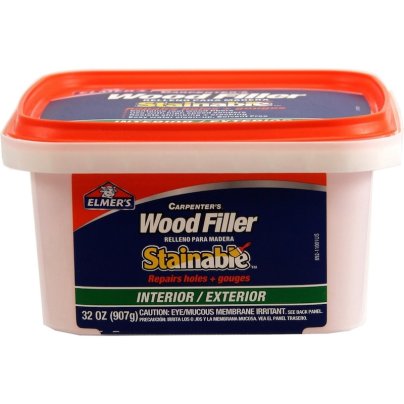
↓ Jump to Review - BEST FOR BEGINNERS: Elmer’s Carpenter’s Wood Filler
↓ Jump to Review - UPGRADE PICK: FamoWood Latex Wood Filler
↓ Jump to Review - BEST FOR SEALING PORES: Aqua Coat Clear Wood Grain Filler
↓ Jump to Review - BEST FOR HOLES: Goodfilla Heavy-Body Water-Based Wood & Grain Filler
↓ Jump to Review - BEST FOR FURNITURE: Coconix Floor and Furniture Repair Kit
↓ Jump to Review - ALSO CONSIDER: Elmer’s ProBond Wood Filler
↓ Jump to Review
Wood Fillers Comparison
| Product | Type | Indoor or Outdoor | Stainable |
|---|---|---|---|
| Minwax Stainable Wood Filler | Water-based | Both | Yes |
| Elmer’s Stainable Wood Filler | Water-based | Both | Yes |
| Elmer’s Carpenter’s Wood Filler | Water-based | Indoor | Yes |
| FamoWood Latex Wood Filler | Water-based | Both | Yes |
| Aqua Coat Clear Wood Grain Filler | Water-based | Indoor | Yes |
| Goodfilla Heavy-Body Water-Based Wood & Grain Filler | Water-based | Both | Yes |
| Coconix Floor and Furniture Repair Kit | Water-based | Indoor | No |
| Elmer’s ProBond Wood Filler | Water-based | Both | Yes |
Our Top Picks
Each of the following wood fillers was hands-on tested to ensure that our picks were up to snuff. We also organized these options based on features such as formula or intended use.
Best Overall
Photo: amazon.com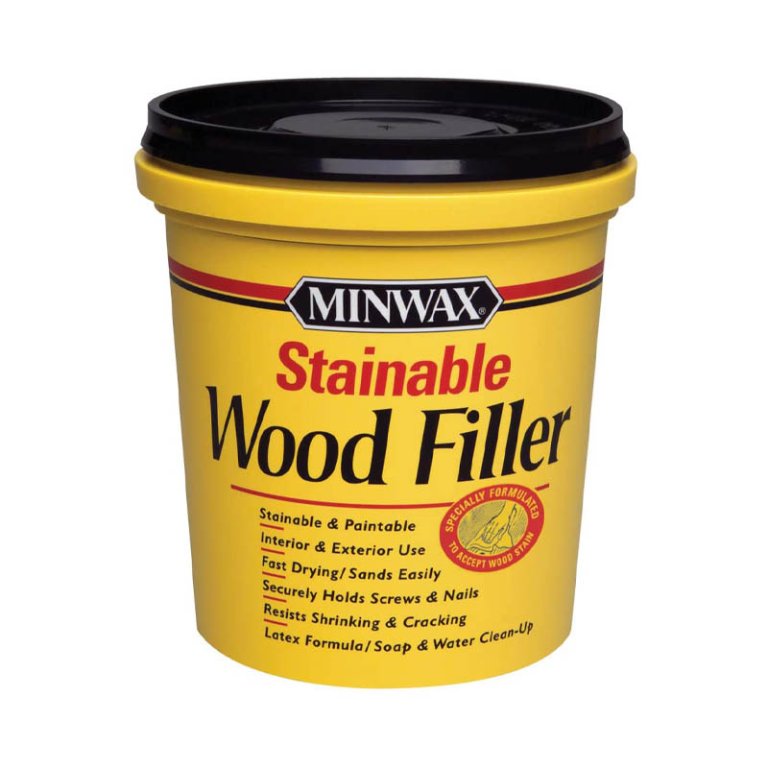
What We Like
- Spreads easily for beginners and professionals
- Low moisture formula prevents heavy shrinking
- Fills large nail holes, cracks, and gouges
- Dries clean without leaving behind odors
What We Don’t Like
- Large fibers may not seal smaller pores
Product Specs
- Type: Water-based
- Indoor or exterior: Both
- Stainable: Yes
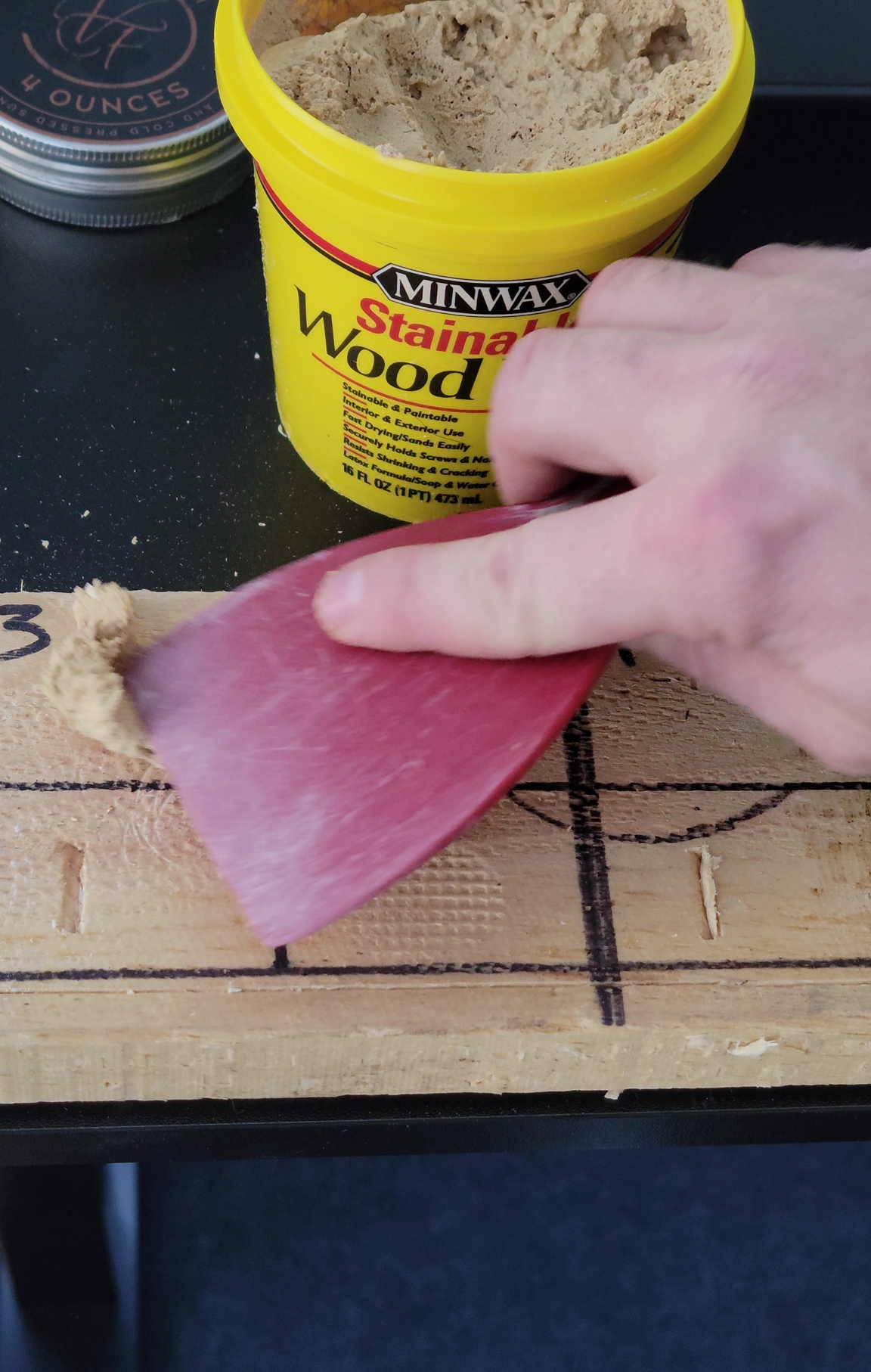
When it comes to versatile wood fillers, Minwax Stainable Wood Filler sits at the top of the heap. This water-based wax features a compound made with real wood fibers, leaving behind a strong, durable patch once dry. It’s suitable for indoor and outdoor wood filling, and it can take paint or stain.
During testing, the Minwax Stainable Wood Filler proved to be a joy to work with. Its relatively dry consistency leads to almost no shrinking at all once dry. Also, because of its consistency, we were able to roll small wads of it like putty to fill large holes. Despite its grainy consistency, it was easy to spread with a putty knife and sanded to a smooth texture. The only downside we could find is that the large fibers and grain could be too large to seal off small pores.
Get the Minwax wood filler at Amazon, Lowe’s, or Menards.
Best Bang for the Buck
Elmer’s Stainable Wood Filler
Buy at AmazonWhat We Like
- Precision applicator ensures easy, convenient application
- Odor-free formula safe for busy households
- Maintains volume without shrinking after mixing
What We Don’t Like
- Prone to separating during shipping
Product Specs
- Type: Water-based
- Indoor or exterior: Both
- Stainable: Yes
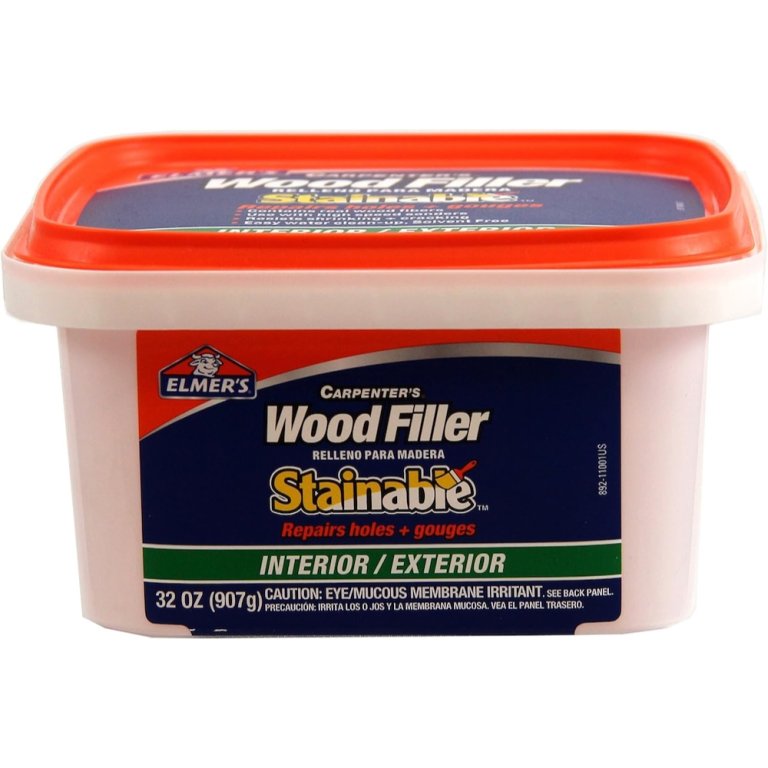
Suitable for both indoor and outdoor projects, Elmer’s stainable wood filler emits zero odor. Once dry, it can accept paint or stain.
During testing, we found the wood filler to have separated into a soupy liquid and a very stiff putty. After mixing (which was difficult to achieve in the tube), it reached a much better consistency and was easy to spread. The holes filled nicely, and despite its wetter consistency, it didn’t shrink much while drying.
Get the Elmer’s stainable wood filler at Amazon.
Best for Beginners
Photo: Ace Hardware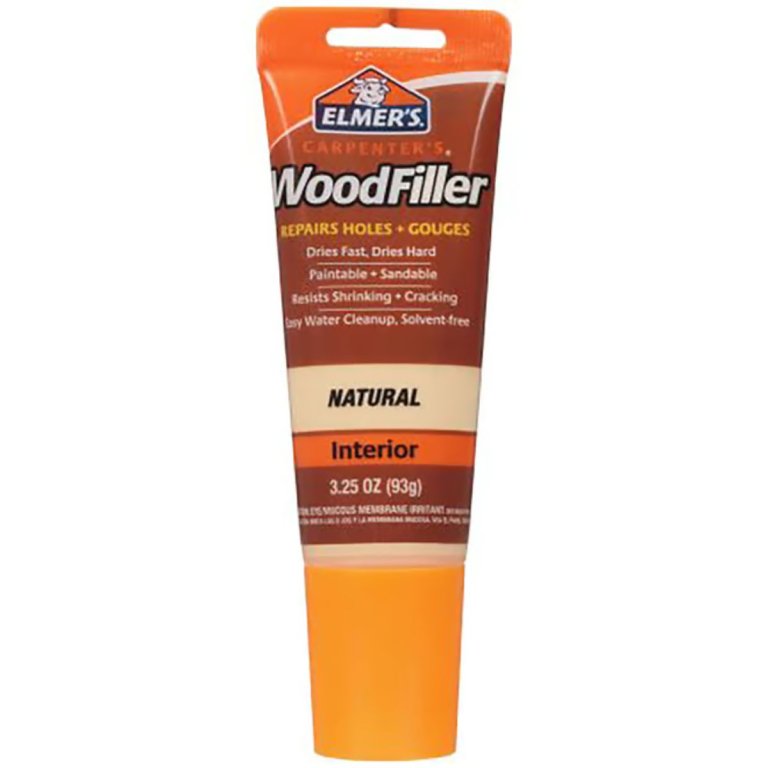
What We Like
- Applies purple and dries to wood color
- Smooth, sandable, stainable, and paintable finish
- Minimal shrinking compared to alternative options
What We Don’t Like
- Formulated exclusively for indoor use
- Slightly thicker consistency than competing products
Product Specs
- Type: Water-based
- Indoor or exterior: Indoor
- Stainable: Yes
Novice DIYers who aren’t sure how to tell whether wood filler is ready for sanding will want to consider Elmer’s Carpenter’s Color Change Wood Filler. This interior-only, no-mix, water-based product boasts a patented formula that goes on purple and then turns to a natural color when it’s dry and ready for sanding, staining, and painting. When applied to small repaired areas, the product’s color turns in as little as 15 minutes, and there’s no shrinking or cracking. When applied to deeper voids, the product dries in 2 to 8 hours.
Truth be told, we thought this product was a bit of a gimmick, so we didn’t have high hopes. In reality, it dried quickly without shrinking and sanded to one of the best finishes in the test. It was a little thick during application, but it packed well into the hole in the wood and sanded smoothly. This is definitely the real deal. The only downsides are that it’s a little thick (maybe because of the color additive), and it’s for indoor-only use.
Get the Elmer’s carpenter’s wood filler at Amazon or Ace Hardware.
Upgrade Pick
Photo: amazon.com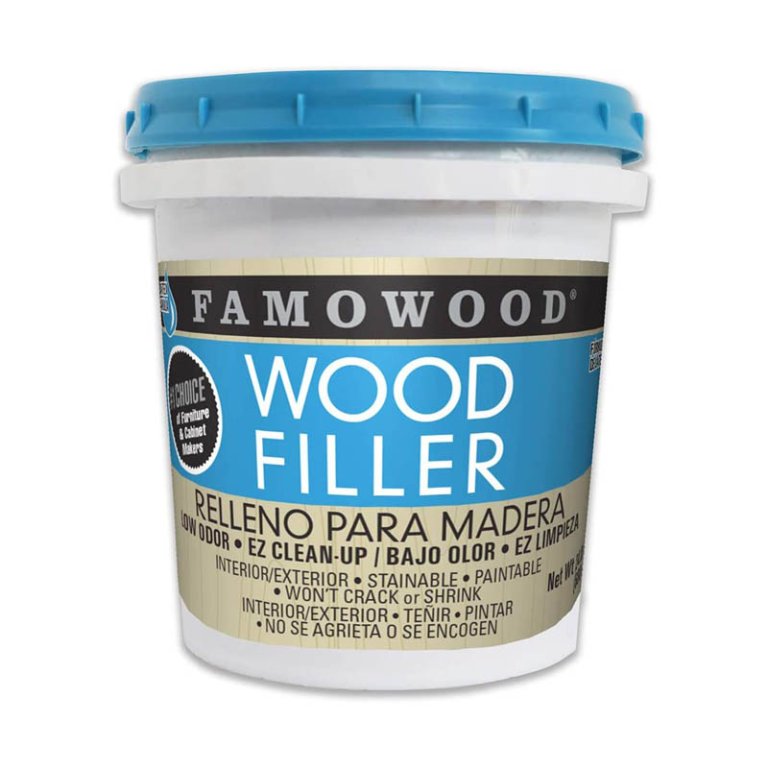
What We Like
- Creates a smooth finish on most woods
- Thick yet easy to spread smoothly
- Dries harder than wood in 15 minutes
What We Don’t Like
- Container can be difficult to open initially
Product Specs
- Type: Water-based
- Indoor or exterior: Both
- Stainable: Yes
For those looking for a premium product, the FamoWood wood filler is a worthy option. It has the versatility and viscosity to handle voids of different sizes, so one tub can handle almost any type of project. The formula is a combination of latex and real wood fiber, and it’s suitable for indoor and outdoor applications. Also, the filler cures in 15 minutes to a harder-than-wood surface. Once dry, it can be sanded, planed, or sawed. It can also be stained or painted.
Here’s the deal: This wood filler is thick. It’s so thick, in fact, that it settled to the lid of the tub and was extremely frustrating to open. However, once we got the tub open, FamoWood did nothing but wow us. Yes, it’s thick, but it was the easiest and smoothest to spread. It also rolls into small wads for plugging holes. The finish left behind was almost entirely shrink-free, and it filled the pores of the test piece entirely.
Get the FamoWood wood filler at Amazon or Walmart.
Best for Sealing Pores
Photo: amazon.com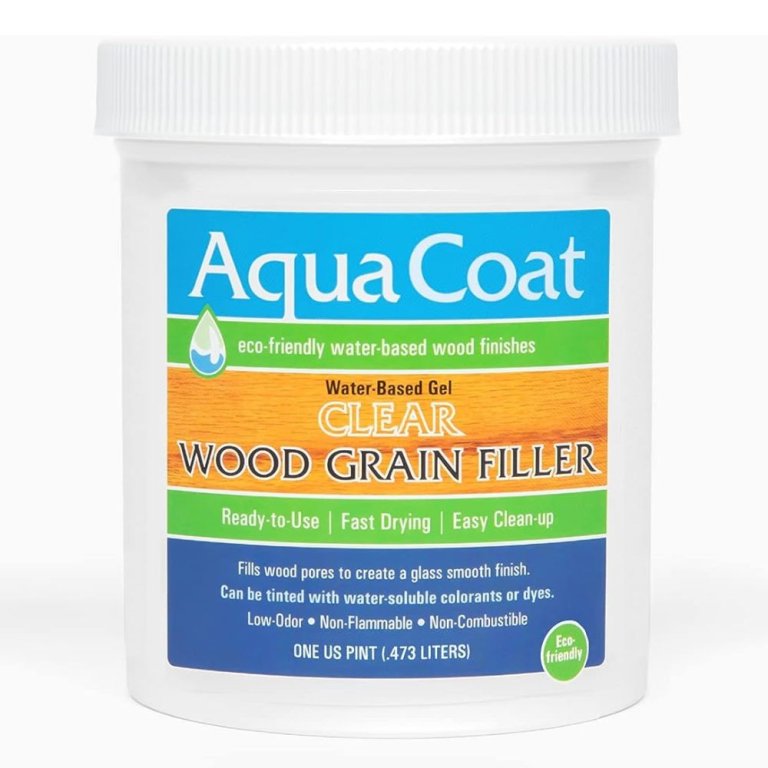
What We Like
- Water-based, eco-friendly formula
- Seals pores to minimize topcoat absorption
- Smooth gel consistency applies easily
What We Don’t Like
- Interior use only; unsafe for outdoors
- Shrinks noticeably compared to competing products
Product Specs
- Type: Water-based
- Indoor or exterior: Indoor
- Stainable: Yes
Some wood filler applications don’t require a thick, opaque layer of product. Those who prefer a simple, light, see-through coat that simply seals pores will want to check out Aqua Coat Clear Wood Grain Filler. This wood filler has a thick, milky texture that dries to a clear finish, and since it’s eco-friendly and water-based, cleanup is a breeze.
Admittedly, there are few applications for a wood filler product that doesn’t actually make holes and gouges disappear. However, when it comes to sealing pores, we found Aqua Coat to do an outstanding job. It applied easily and created a smooth, glass-like finish over the wood. Since it’s water-based and eco-friendly, it’s a better choice than polyurethane (for some applications). The downside is that it doesn’t fill holes particularly well, and it does shrink quite a bit. But keep in mind that this product is for sealing pores, not filling holes.
Get the Aqua Coat wood filler at Amazon or Walmart.
Best for Holes
Photo: amazon.com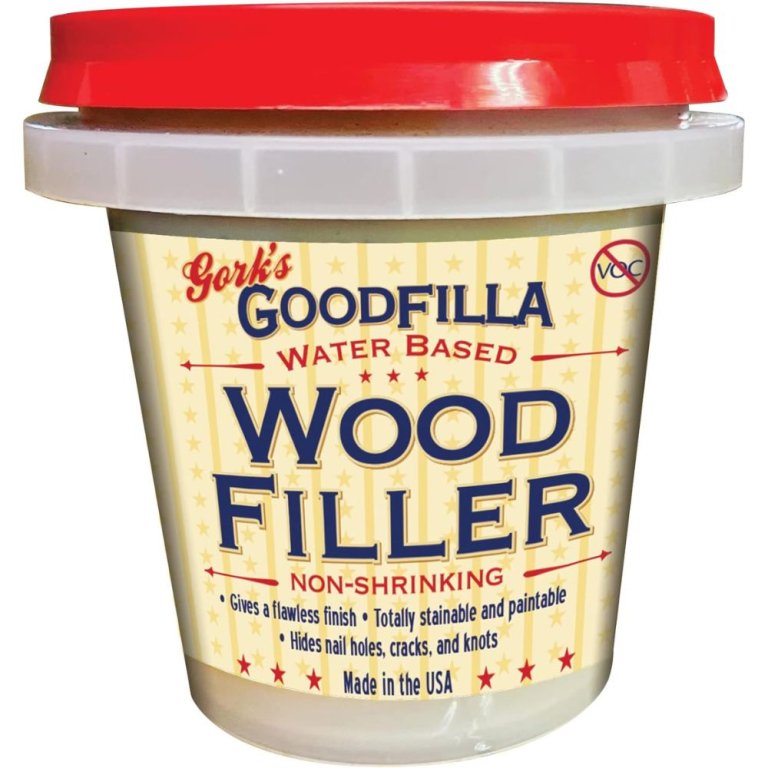
What We Like
- Fills large holes across multiple surfaces
- Zero-shrinkage formula stays stable after application
- Odor-free composition safe for busy households
- Easy to dilute with multiple color options
What We Don’t Like
- Thick consistency creates a learning curve
Product Specs
- Type: Water-based
- Indoor or exterior: Both
- Stainable: Yes
There are nicks and scrapes, and then there are large holes left from screws, lag bolts, and even carpenter bees. For those big, gaping holes, Goodfilla Water-Based Wood Filler might be the product to choose. This wood filler has a clay-like consistency that doesn’t shrink when dry, and it’s stainable and paintable.
As it came out of the tub, we noticed that Goodfilla didn’t spread easily, so it’s not exceptional for filling scrapes or small spots. We were able to dilute it with a bit of warm water to create a more spreadable consistency, although the clay-like consistency made it very easy to wad into small balls and fill large holes. It’s also odor-free, doesn’t shrink at all, and is suitable for indoor and outdoor use.
Get the Goodfilla wood filler at Amazon or Tractor Supply Co. (walnut color only).
Best for Furniture
Coconix Floor and Furniture Repair Kit
Buy at AmazonWhat We Like
- Includes all necessary color-matching repair tools
- Clear, easy-to-follow application directions
- Suitable for furniture, trim, molding, and baseboards
What We Don’t Like
- Slow drying time delays quick project turnarounds
- Shrinks when filling larger gaps
Product Specs
- Type: Water-based
- Indoor or exterior: Interior
- Stainable: No
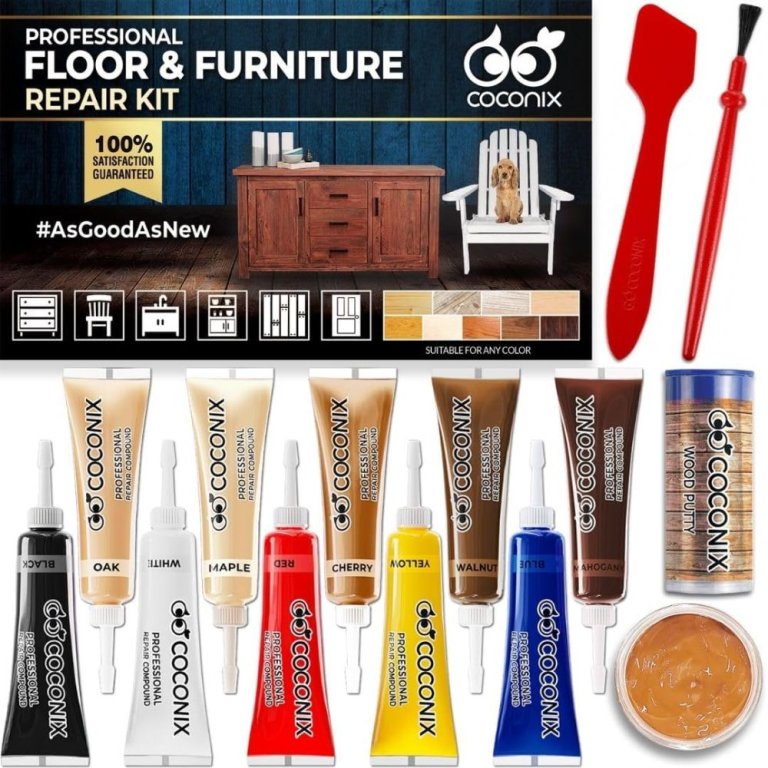
Small nicks and chips in antique furniture don’t always respond well to traditional wood fillers, making Coconix an attractive option. This repair kit comes with everything necessary to match nearly any color and apply the water-based filler for a top-notch furniture repair. This product is water-based and is only suitable for repairing indoor furniture.
This might not be a traditional wood filler, but there is a lot to like about this kit. First, using the included color guide as a reference, we were able to perfectly match the pine test piece. It doesn’t fill large voids or holes exceptionally well by itself, but it comes with a wood putty that does the trick before coloring over it. The mixing and application were simple as it comes with several base colors, a mixing cup, a spatula, and an application brush. We noticed that this product takes seemingly forever to dry completely (at least a day), and it will shrink; however, it might be the best way to match colors in chipped furniture and millwork.
Get the Coconix repair kit at Amazon.
Also Consider
Photo: amazon.com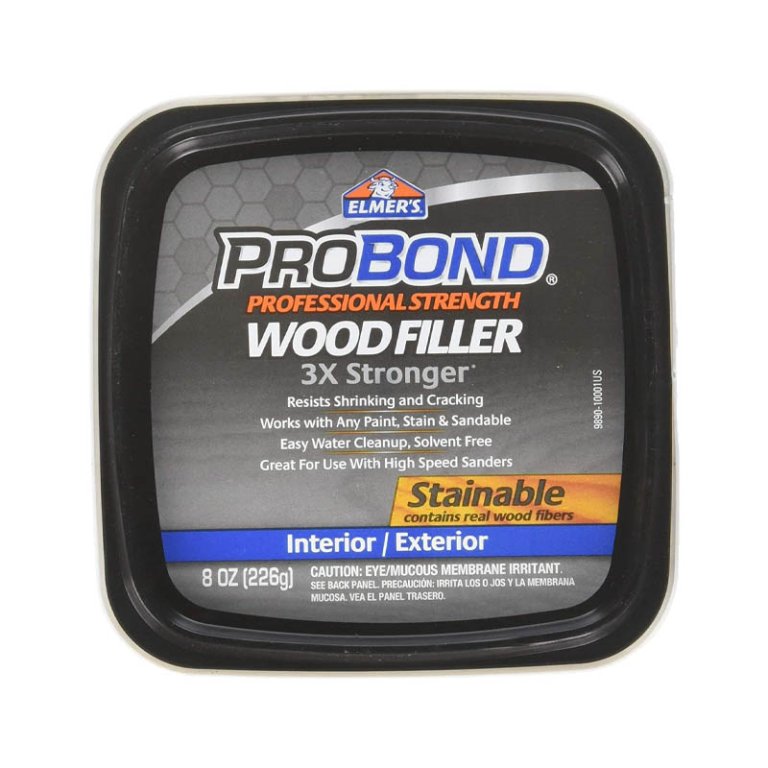
What We Like
- Wet consistency allows easy application
- Seals surface pores effectively
- Durable formula built for outdoor use
What We Don’t Like
- Durable formula built for outdoor use
Product Specs
- Type: Water-based
- Indoor or exterior: Both
- Stainable: Yes
Those looking for professional results at a reasonable price would do well to consider Elmer’s ProBond wood filler. This tub of water-based wood filler features ceramic microsphere technology, which allows the dried wood filler to be tougher and more durable than most other wood fillers. Because it’s suitable for exterior applications (as well as interior), that strength could be a big benefit.
Elmer’s ProBond was easy to apply, thanks to its slightly wet consistency. We felt that the finish it left behind was also very strong. Although the filler was slightly grainy, it seemed to fill the pores nicely on the test piece. However, this product did shrink quite a bit, most likely due to its high moisture content.
Get the Elmer’s ProBond wood filler at Amazon or Ace Hardware.
Jump to Our Top Picks
How We Tested the Best Wood Fillers
We consulted with Jonathan Warshaw, a woodworking expert who is the founder and owner of SimpleWoodworker, an educational woodworking site. Warshaw says of wood fillers that “it’s crucial to look for one that is durable, easy to sand, and that can be painted or stained to match the surrounding wood.” He goes on to say that “the versatility of the filler for both interior and exterior projects, as well as its drying time, are also important factors to consider.”
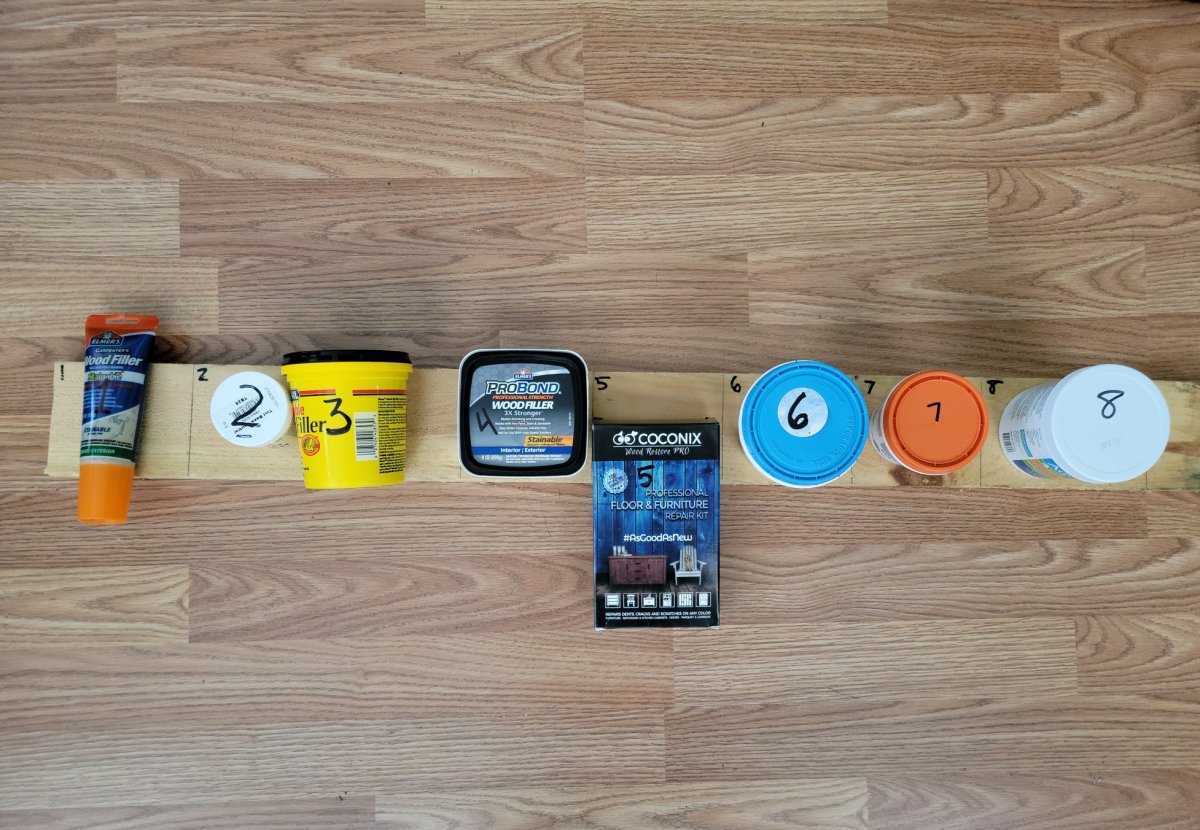
As we tested, we got pretty scientific with this wood filler comparison. First, we found one piece of pine that was large enough to divide into separate sections for the different wood fillers. Then we divided each section into four segments, each with its own scenario:
- A screwdriver point driven into the wood both with and against the grain, meant to simulate the holes left by finish nailers;
- A ¼-inch hole drilled straight through the board;
- A chip of wood taken from the test piece with a chisel; and
- A “Charlie Olson,” or an errant hammer strike shaped like a C or O.
Once each section was properly damaged, we set forth with the wood fillers to fill them in. When they were dry, we sanded the fillers to see how well they cured the damage. The result gave us all the information necessary to suggest the best wood fillers based on their strengths and weaknesses.
Types of Wood Fillers
Wood fillers come in either water- or solvent-based formulas. Either can be used to fill wood voids or pores, but they have several differences.
- Water-based wood fillers are generally a mix containing cellulose, wood fiber, latex, or gypsum. They tend to have a less potent odor, and they emit few, if any, volatile organic compounds (VOCs). Some water-based wood fillers are more versatile than their solvent-based counterparts because they can be readily diluted with water and used in projects requiring thinner filler. Water-based fillers typically dry in about 15 minutes, and cleanup requires only soap and water.
- Solvent-based fillers tend to consist of vinyl or epoxy. They have a higher VOC content and are correspondingly smellier. Solvent-based wood fillers take about an hour to dry, and cleaning up after use calls for acetone or turpentine. Cost-wise, solvent-based fillers are pricier than water-based fillers because they’re more resistant to water, humidity, extreme heat and cold, and rot, making them best suited to exterior wood projects and applications.
What to Consider When Choosing a Wood Filler
Now that you have read about some of the best products on the market, here are some important features to consider when selecting the best option for a given project or intended use.
Task
Wood fillers typically handle one or more specific tasks. Some are suitable for filling voids such as divots, holes, or gouges in all wood species. Others are for filling pores in open-grain woods with large pores visible to the naked eye, such as oak or elm, to smooth their naturally coarse texture. (As the filler inundates the pores, it levels any unevenness to achieve a finish particularly desirable on furniture.) The most versatile fillers can fill either voids or pores.
Consistency
Wood fillers can have thick (putty-like) or thin (pancake batter–like) consistencies. Thicker fillers are primarily for filling voids, while thinner fillers mainly fill pores in open-grain woods. It’s important to choose the right consistency for your project, as thicker fillers contain large particles that don’t readily fit into the pores of open-grain woods, and thinner fillers generally lack the body to adequately fill voids. (Tip: In a pinch, some thicker fillers can be thinned with water to fill pores.)
Color
The most common fillers come in white or wood-inspired shades; clear versions for filling pores are also available. If you don’t plan to ultimately stain or paint the piece, opt for a filler in a shade that either closely matches or contrasts with the original wood color, depending on whether you want to play down or play up the filler color. If you do intend to coat the cured filler with stain or paint, be sure to pick a stainable or paintable product, either in white or in a shade that’s lighter than the stain or paint you’ll use.
Application Environment
Fillers are generally for “interior-only” or “interior/exterior” use. This serves as an indication of how well the filler will hold up in the stated environment during application, while wet, and after it has dried.
- Interior-only fillers can be safely applied indoors to wooden pieces that will stay indoors, such as a coffee table. If that same product is applied outdoors or to a piece that will live outdoors, such as a patio table, the filler will be more likely to freeze or harden while wet from exposure to extreme cold or heat, or it may crack or shrink over time once dry.
- Interior/exterior fillers can be applied in either environment and to wood pieces that will live indoors or out since they can withstand extreme weather without hardening during application or cracking/shrinking once dry. Water-based interior/exterior fillers are more versatile because they’re durable enough for outdoor projects yet emit virtually no odor while wet. While solvent-based interior/exterior fillers are safe to apply in both environments, it’s best to use them for heavy-duty outdoor projects (e.g., filling gouges or replacing rotted decking), where their highly weather-resistant solvents can handily defend against the elements and the fumes they emit while wet will quickly dissipate in the air.
Packaging
Wood fillers are packaged in tubs, squeeze tubes, and sticks. Those in tubs are either no-mix and can be applied with a putty knife or spreader, while two-part fillers must be mixed before application. For tube fillers, you need only squeeze out a scant amount to fill voids or pores, while with stick fillers, simply rip off a small chunk and apply by hand. Tubs, which hold the most product, tend to be most economical and are suited to larger projects, while sticks are the least cost-effective and best used to repair scratches and cracks.
FAQs
Even with all that background on the best wood fillers, you might have a few additional questions. This section aims to fill you in on the most frequently asked questions about the best wood fillers. Be sure to check for an answer to your question listed below.
Wood filler is designed to be stained or painted, and it goes on before the finishing coats. Wood putty is primarily for after finishing, and it comes in predetermined colors. Be advised that wood filler is designed to be durable enough for exterior use, while wood putty is suitable for indoor projects.
It depends on the product, but some wood fillers are suitable for use both indoors and out. Typically, epoxy-based wood filler is durable enough for outdoor applications. Just be sure that the surface is stained and sealed ahead of any inclement weather.
Yes, almost all wood fillers are paintable; however, some are also suitable for staining. Be advised that some fillers may not work effectively with paint and may require a primer for an even, long-lasting look. Additionally, wood filler should be allowed to dry completely before any paint is applied (users will want to consider waiting up to 24 hours).
Meet the Tester
Tom Scalisi is a full-time DIY and construction writer for many of the largest websites in the industry, including BobVila.com, This Old House, Family Handyman, and Forbes as well as his own pest control blog. He spent years working in the trades and industrial building maintenance and has had plenty of experience using wood fillers.
Additional research provided by Manasa Reddigari.