We may earn revenue from the products available on this page and participate in affiliate programs. Learn More ›
Rating: 4.7/5
Our team has tested scores of power stations over the past few years, from pocket-size units that double as flashlights to large systems capable of powering an entire home. For the most part, they can be taken at face value: Simply determine your power needs and buy the power station with enough capacity to meet those needs. On the other hand, input/output specs don’t tell the complete story.
This year, I tested the EcoFlow Trail 300, whose lithium-ion battery offers a 288-watt-hour capacity and 300-watt maximum output power—exactly the same specs as the Anker Solix C300 that I tested last year. Ahead, I’ll break down my experience with Trail 300 before comparing and contrasting the two in different applications.
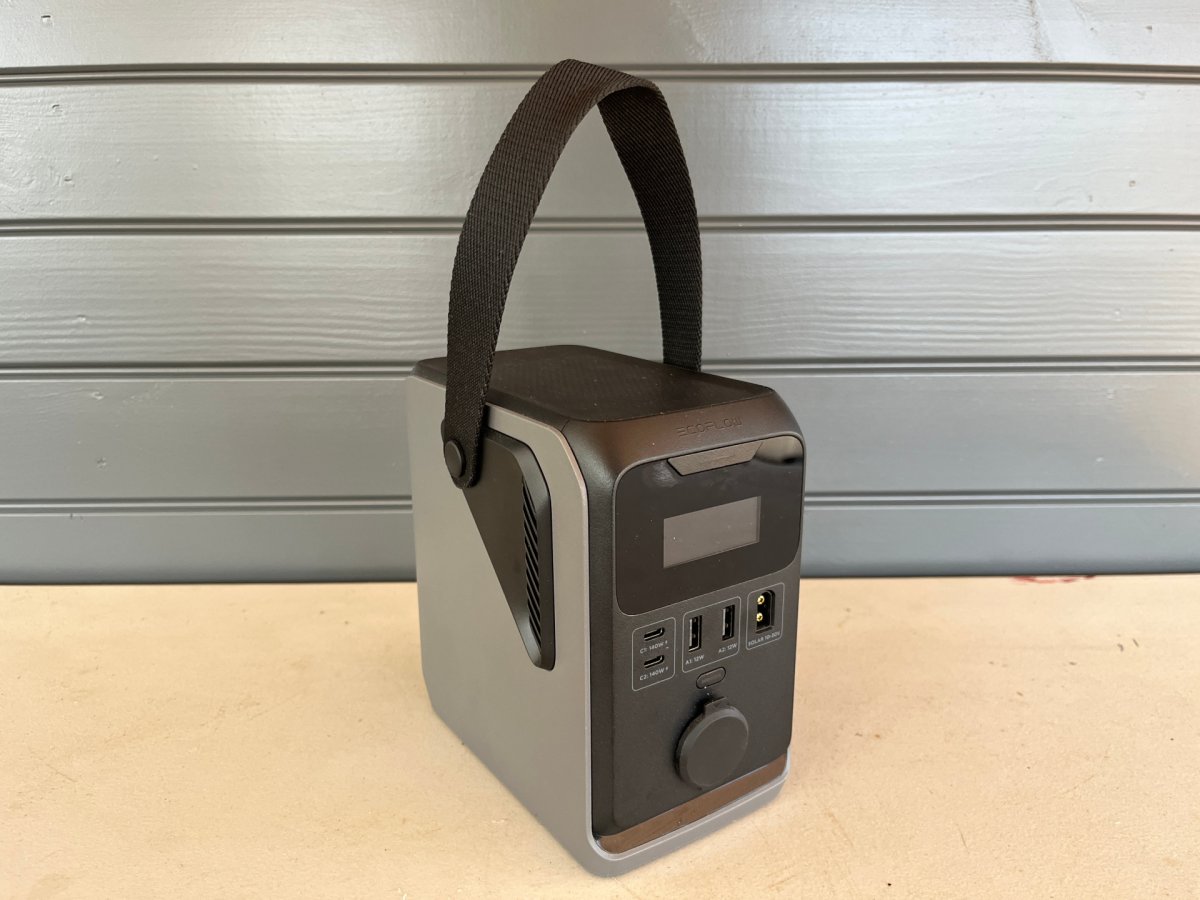
EcoFlow released the Trail 300-watt DC power station in late summer 2025 as a more compact, lightweight, and portable option than its popular River series. Unlike larger power stations, the Trail 300 only delivers DC power, but it can be charged using either an AC wall outlet or DC sources, including solar, car outlet, or another power station. The unit is equipped with two USB-A 12-watt outlets, two USB-C 140-watt in/out outlets, a 12-watt car outlet, and a 110-watt solar/car charging port. It includes a woven nylon loop handle and weighs 5.7 pounds.
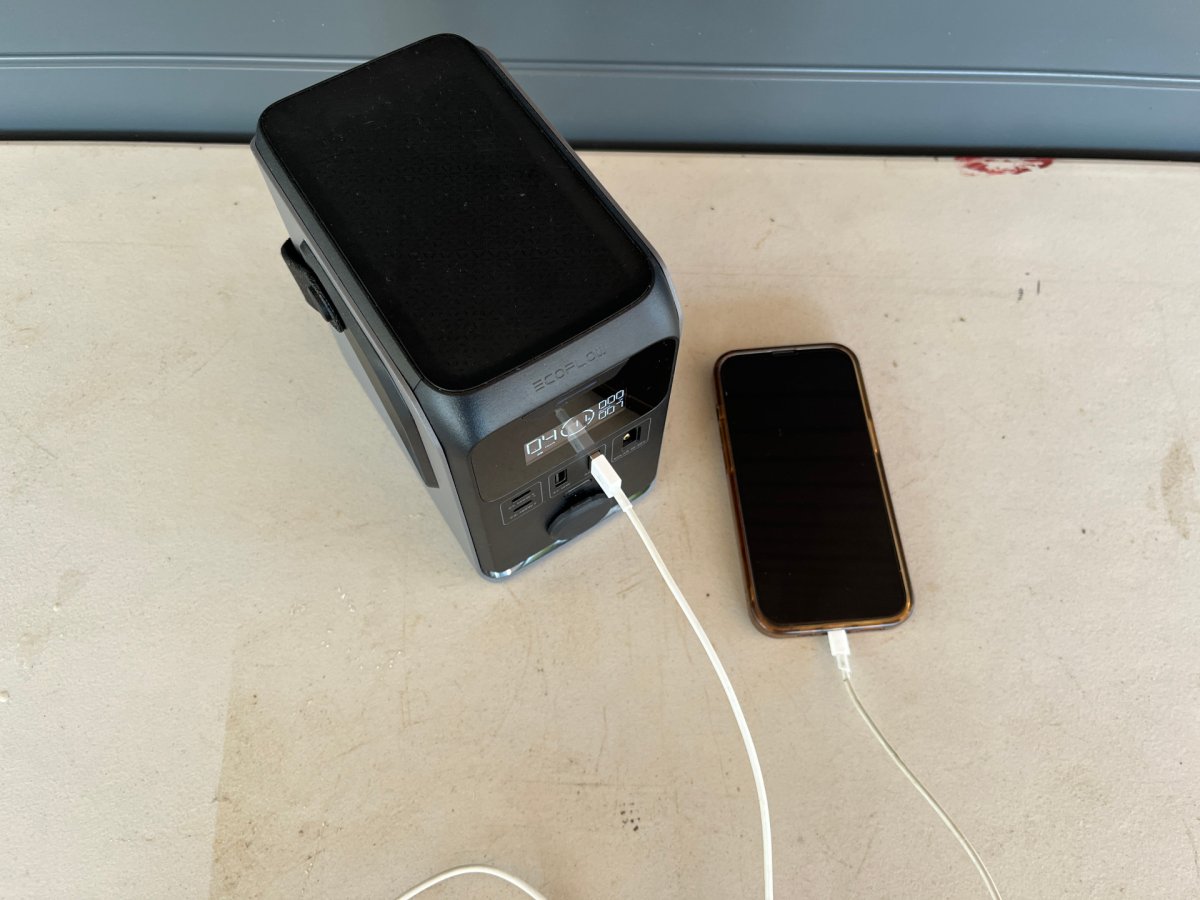
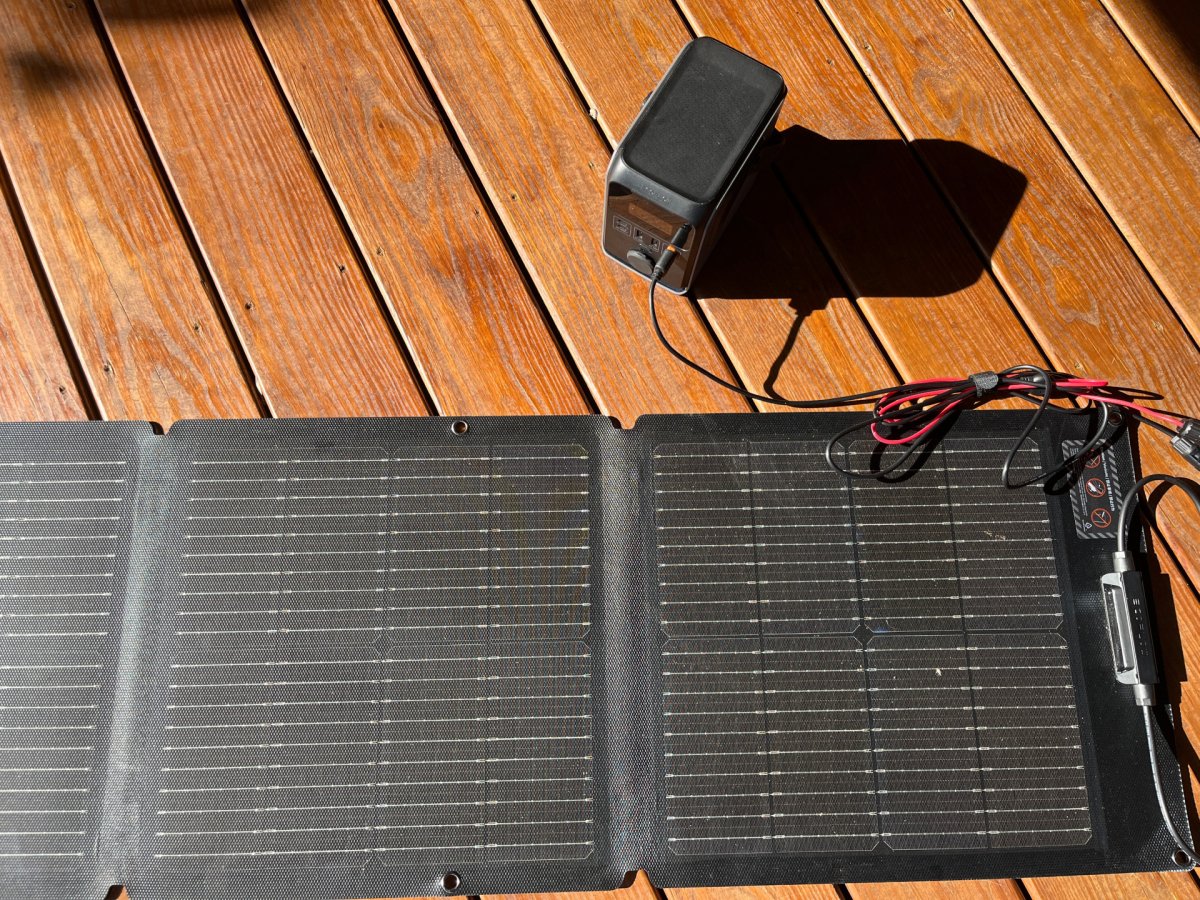
Typical use cases for power stations of this size include mobile work, camping, and short-term backup for home outages. They come in handy for charging phones, laptops, cameras, and drones, or running very small appliances like lights and fans. To test the Trail 300, I used it as the sole charging point for my phone and laptop for a month. I took it everywhere, and used a foldable 100-watt solar panel to charge the power station on the go.
EcoFlow Trail 300
Photo: Amazon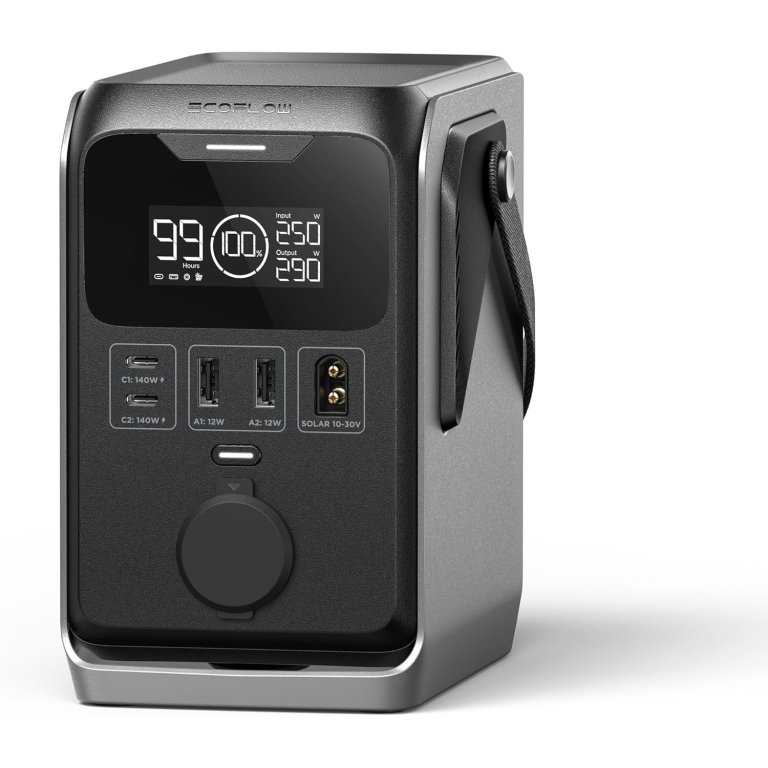
I was mostly impressed by the volume of work I was able to accomplish while powering my electronics with this power supply. I opted to test with my phone and laptop because I use both for my job. I am working with a 3.8-volt, 3.2 amp-hour/12.4-watt-hour phone battery, and a 7.6-volt, 4.6 amp-hour/53.8-watt-hour laptop battery. My projects entail writing, capturing and processing still images, audio and video, and video conferencing on both devices. The batteries get depleted several times per week. On some workweeks, I have to charge the phone daily. With that amount of usage, I was surprised that the Trail 300 was always able to power through entire weeks. I only had to charge it on the weekends.
Charging the power station took an average of 8 hours to replenish it from below 20 percent to a 100-percent charge using my 100-watt solar panel. I could have shortened the recharge time by actively repositioning the panel for maximum efficiency, but instead, I just laid the panel flat on the ground. The days when I charged it via solar were mostly sunny with some clouds moving through, so I believe this method captured a realistic solar charging time. Using a wall outlet and USB-C charger, recharging took about 2 hours.
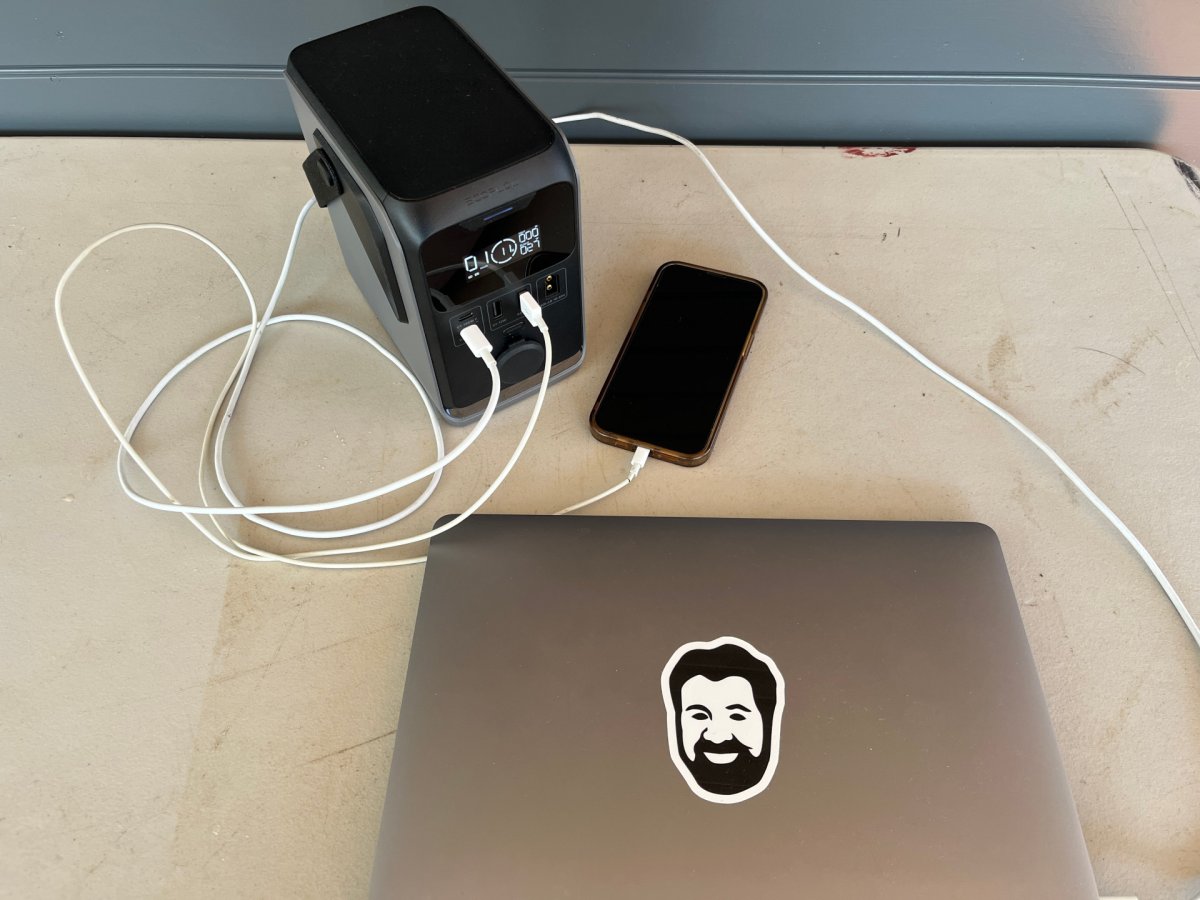
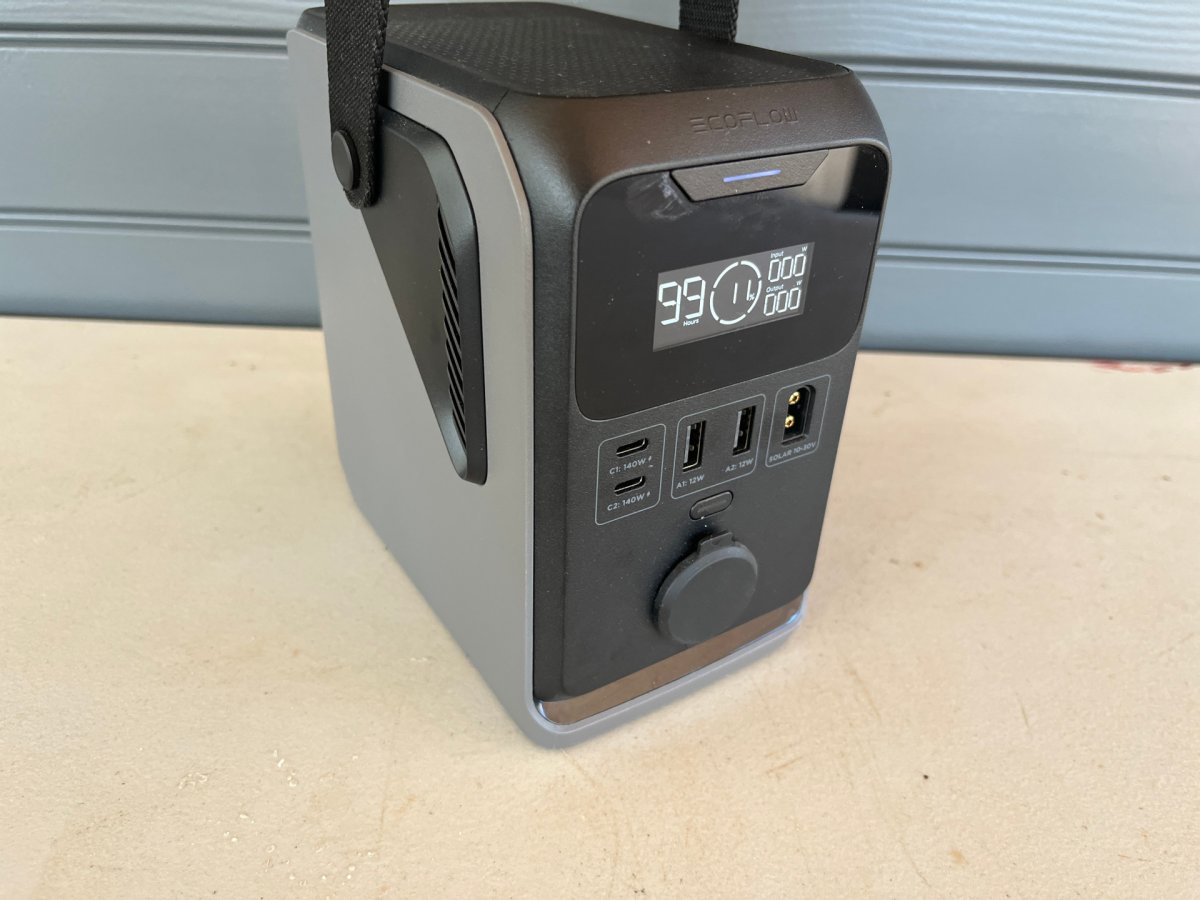
Overall, I really appreciated having a power backup ready to go at all times and not having to worry about it running out during the workweek. Those attributes make it easy to be productive anywhere there’s a cell signal. The same is true for the Anker Solix C300 that I tested last year. However, the Trail 300 weighs about half a pound less thanks to a more streamlined interface. It also lacks an LED light, which the Anker includes.
The EcoFlow Trail 300 and the Anker Solix C300 are capable of the same light-duty jobs. Either one would make a fine short-term charging backup when the power goes out at home. For working remotely, I prefer the simplicity and lighter weight of the EcoFlow Trail 300. It offers week-long runtime, fast charging, and no unnecessary extras. For camping, I like the Anker’s slightly smaller footprint and built-in lantern, but I don’t love that its 12-volt car power port doesn’t have a cover.
Where to Buy
Photo: Amazon