We may earn revenue from the products available on this page and participate in affiliate programs. Learn More ›
A couple of years ago, I installed and tested the Waterdrop G3P600 Reverse Osmosis System under the sink of my Nashville office condo’s kitchenette. That testing experience earned it a spot on our best under-sink water filters guide. Back then, having a reverse osmosis system at the office felt like a novelty for me and my officemates.
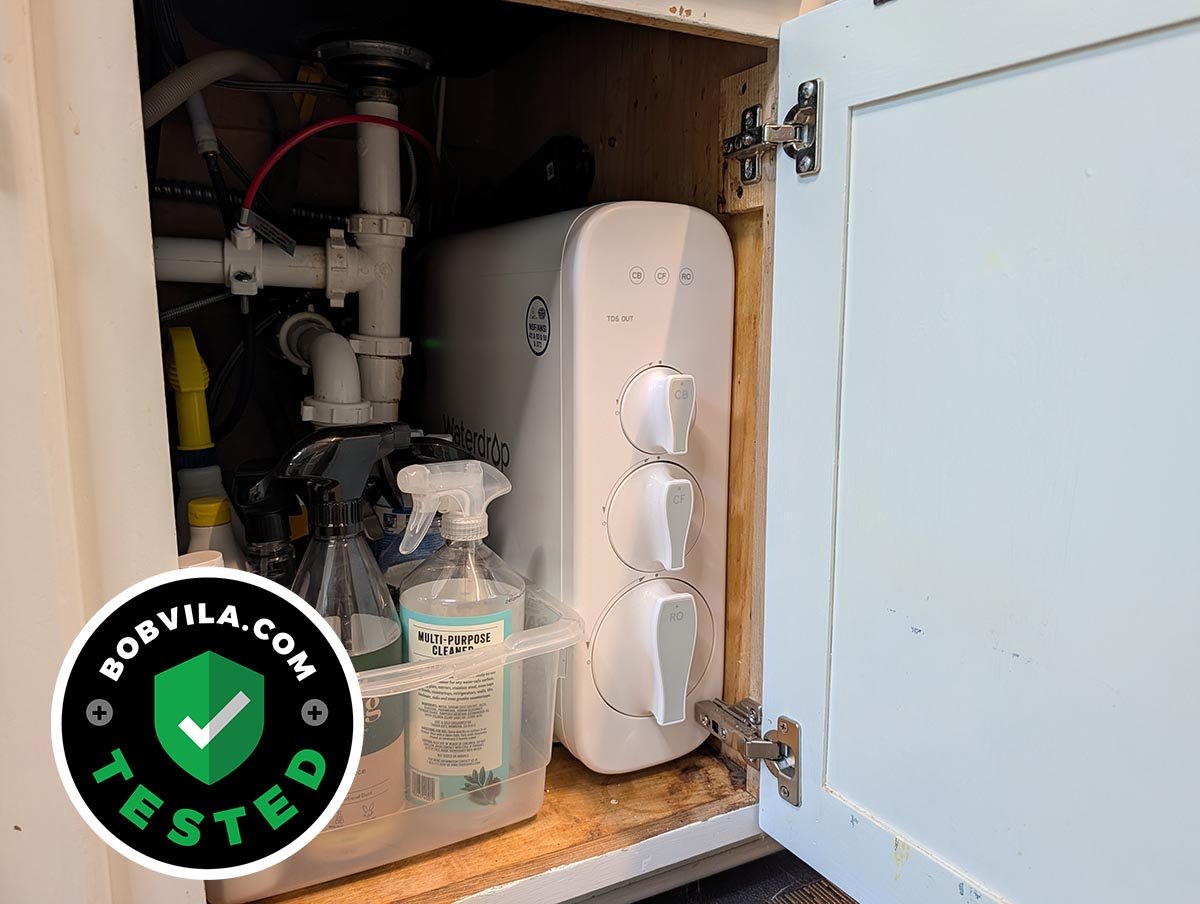
This time around, my family was involved so the stakes were higher: I installed and reviewed the new Waterdrop G3P800 Reverse Osmosis System right in our home, under our main kitchen sink. Not to spoil anything, but that novelty has morphed into a requirement.
Best Tankless
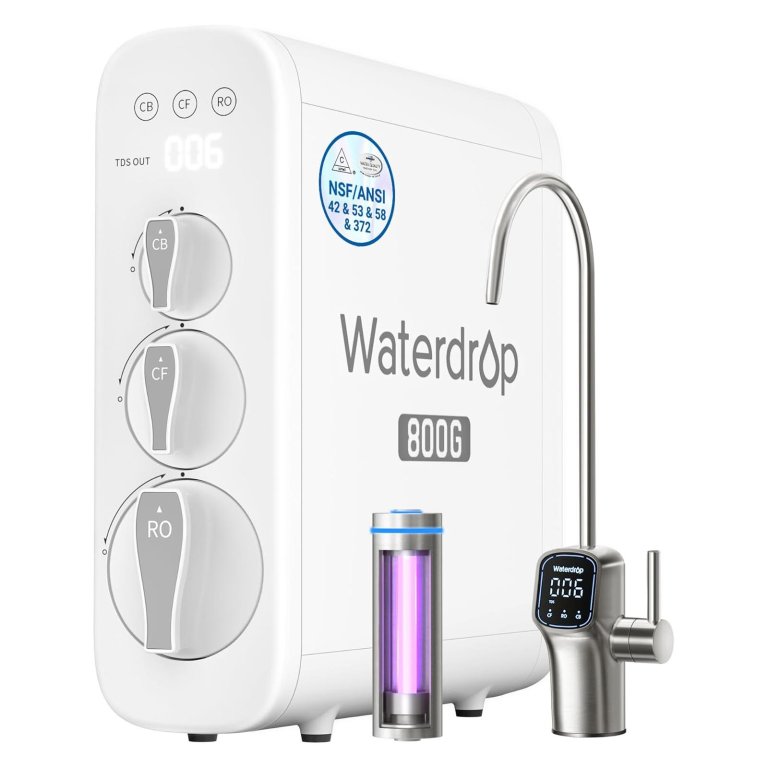
Waterdrop G3P800 Tankless Reverse Osmosis System
Buy at Amazon Buy at The Home Depot Buy at WaterdropWhat We Like
- LED UV Sanitizer purifies beyond standard RO systems
- Improved efficiency with 3:1 pure-to-drain ratio
- Easy installation with push-to-connect fittings and a water line cutter
- Water purity indicator displays total dissolved solids in PPM in real-time
- Space-saving design fits almost any under-sink cabinet
What We Don’t Like
- Makes an audible groan when dispensing water
- Requires proprietary filters; no generic alternatives
Specs
- Type: Reverse osmosis
- Filter life: 6 months to 2 years, depending on filter type
- Contaminants removed: PFOA (perfluorooctanoic acid), PFOS (perfluorooctane sulfonate), fluoride, heavy metals, salts, and large particles


Installation
If plumbing projects usually make you sweat, you can breathe a sigh of relief. From unboxing to running water, the entire installation of the G3P800 took me under an hour. Although I did need to install a GFCI 110-volt outlet next to an existing junction box that supplies power to our garbage disposal, the Waterdrop installation itself was a breeze.
The experience was nearly identical to my time with the G3P600. It was incredibly easy and came with fantastic instructions. For this model, Waterdrop included a dead-simple water line cutter to ensure every cut was perfectly straight. That small detail gave me total confidence when snapping together all the push-to-connect fittings for the water and waste lines. As with my Waterdrop G3P600, my G3P800 hasn’t had a single leak.
The sleek faucet, complete with an LED display, was straightforward to mount and connect to the system. Since our sink had a pre-drilled hole for a sprayer or drinking-water faucet, installation took just one bonnet nut, a single push-to-connect fitting, and one power/data cable to the base unit. The only real difference in setting up the G3P800 vs the G3P600 was the addition of the inline UV sterilizer. Hooking that up required a simple snip to the included water lines (remember that handy little cutting tool) and one more power connection to the Waterdrop base unit.
How It Works
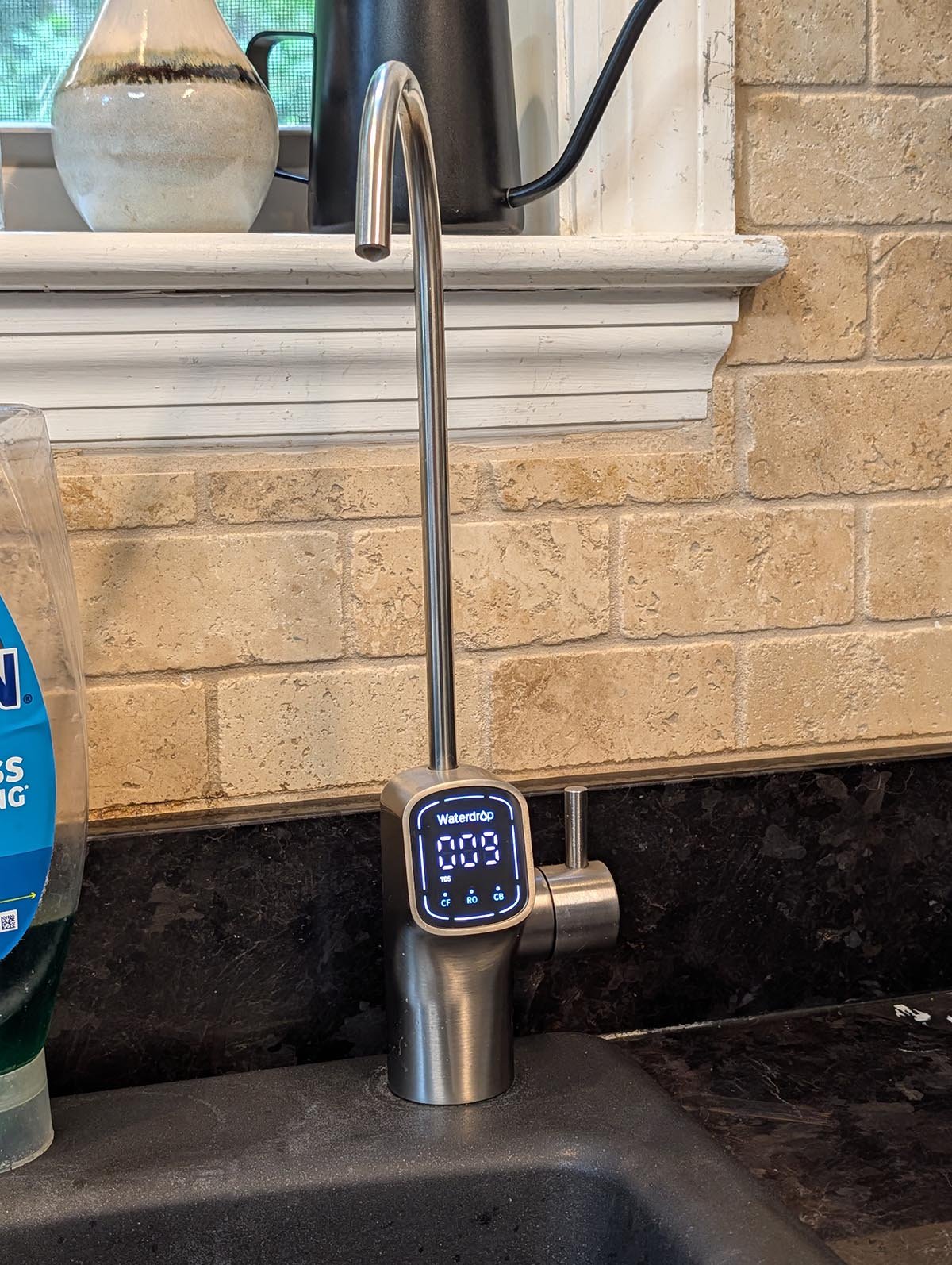
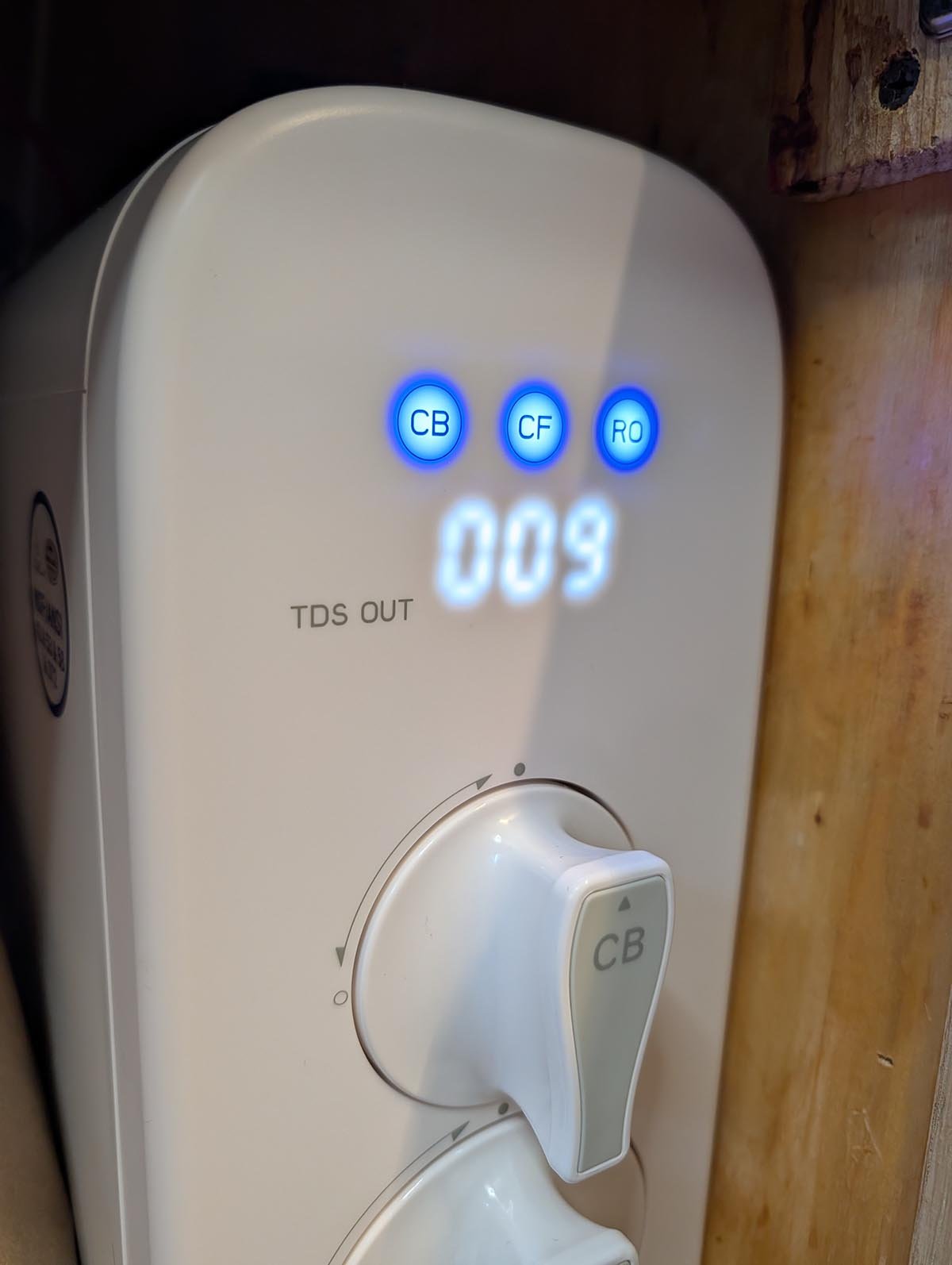
On the surface, operating this system feels identical to the G3P600. Turning the lever on the faucet simultaneously activates the reverse osmosis system and the inline UV filter, producing a light groaning noise from the under-sink unit. The faucet’s LED springs to life, displaying the filter status and a real-time total dissolved solids (TDS) reading in parts-per-million. As of this writing, the G3P800 reads 8. (For context, even on our 2-year-old Waterdrop system at the office, I have never seen this value climb above 15.)
Behind the scenes, this unit is putting in serious work. Reverse osmosis systems operate by using household water pressure to force tap water through a semi-permeable membrane. Combined with a robust 10-stage filtration process, the Waterdrop strips out microscopic impurities, heavy metals, and dissolved solids that traditional carbon filters can miss. The addition of the UV filter grants an extra layer of peace of mind by actively neutralizing bacteria and viruses right before the water hits your glass.
Improved Efficiency and Wastewater Ratio
The Waterdrop G3P800 is also remarkably efficient, drastically reducing wastewater compared to older Waterdrop models and competing brand models. Instead of dumping one cup of water down the drain for every two cups of filtered water produced, this unit wastes just one cup for every three cups of clean water. Paired with a massive flow rate of up to 800 gallons per day, you’re getting a fast, steady stream of pure water with significantly less environmental guilt.
Easy Upkeep
Maintenance on the G3P800 is just as painless as the initial setup thanks to its three front-loading filter cartridges. Installing or replacing them requires nothing more than a simple quarter-turn. It takes almost zero effort, and the system is engineered so that swapping out a filter produces no leaks. There’s no need to struggle with specialized wrenches, shut off main water valves, or worry about mopping up puddles inside your cabinetry—you simply twist, pull, push, twist, and get right back to enjoying clean water after a few minutes of flushing the new filter.
Is the Waterdrop G3P800 worth it?
Our home actually has a whole-home carbon filter that we paid several thousand dollars for. If I’m being honest, I’ve always been a bit bitter about that investment because it made absolutely no difference in the taste of my water, tea, coffee, or SodaStream beverages.
For a fraction of that cost, the Waterdrop G3P800 makes a real, undeniable difference in the quality of anything we make or cook. My wife managed a Starbucks for years, so we both know exactly how crucial reverse osmosis water is to crafting the perfect beverage. When contaminants, chlorine, fluoride, and other minerals are completely stripped away, the stark improvement in taste is impossible to ignore.
Upgrading our kitchen with the Waterdrop G3P800 has been a total game-changer. Going forward, our family will always have a Waterdrop reverse osmosis system in our home.
Where to Buy
Waterdrop G3P800 Tankless Reverse Osmosis System
Buy at Amazon Buy at The Home Depot Buy at Waterdrop