We may earn revenue from the products available on this page and participate in affiliate programs. Learn More ›
Rating: 4.8/5
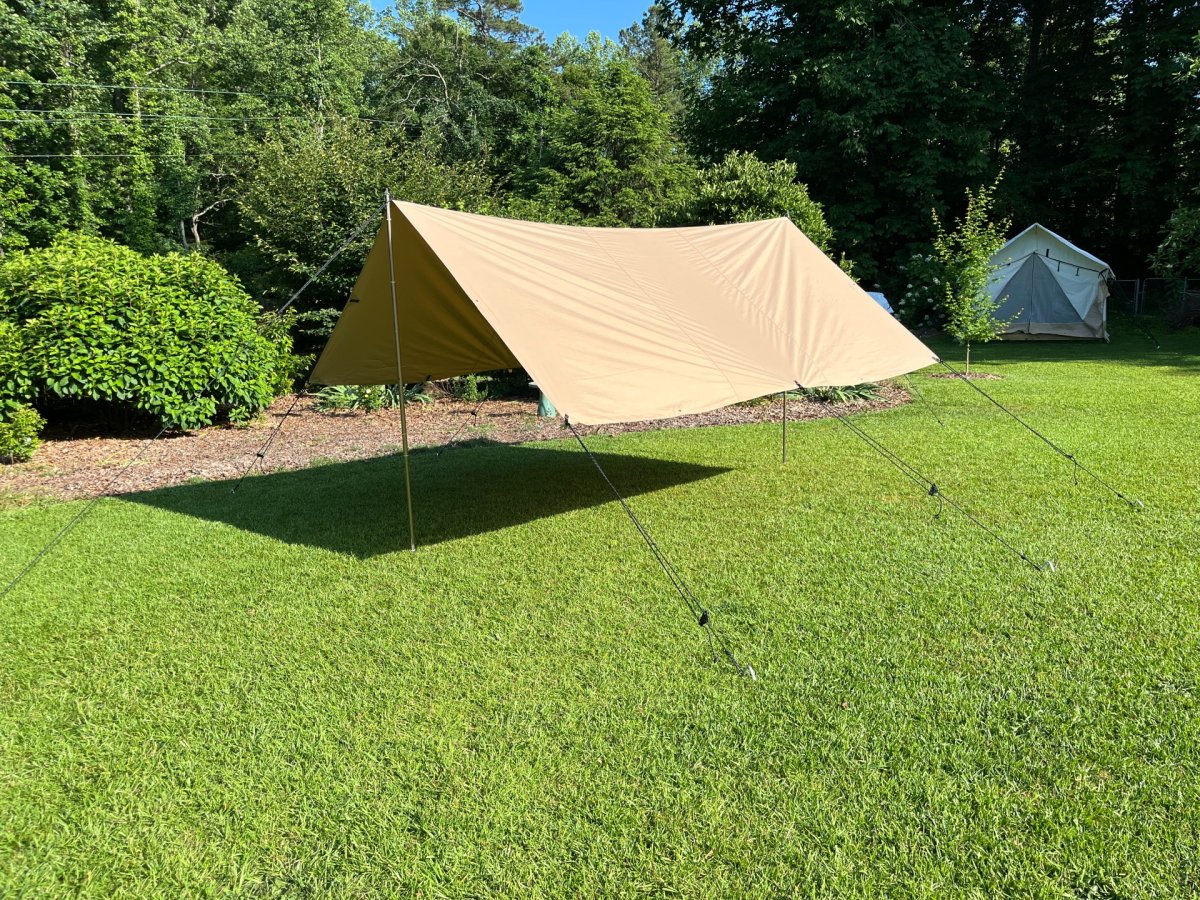
When it comes to summertime backyard living, a little shade goes a long way, which is why I tested the White Duck Sunshade Tarp 170. In places where tree cover is scarce, adding a pop-up canopy is a cheap and easy way to get instant shade, but I needed something more durable that I could leave in place for a few days (or weeks) at a time.
White Duck’s canvas is supposed to hold up better than nylon, plus this kit shades a larger area and offers better rain protection than a standard pop-up, but it’s also three to four times more expensive. After leaving it set up in my backyard for a month, I’m confident that it’s worth the added cost.
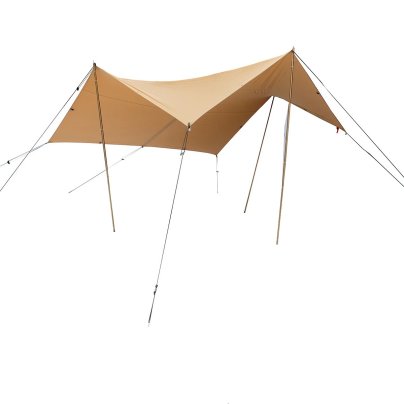
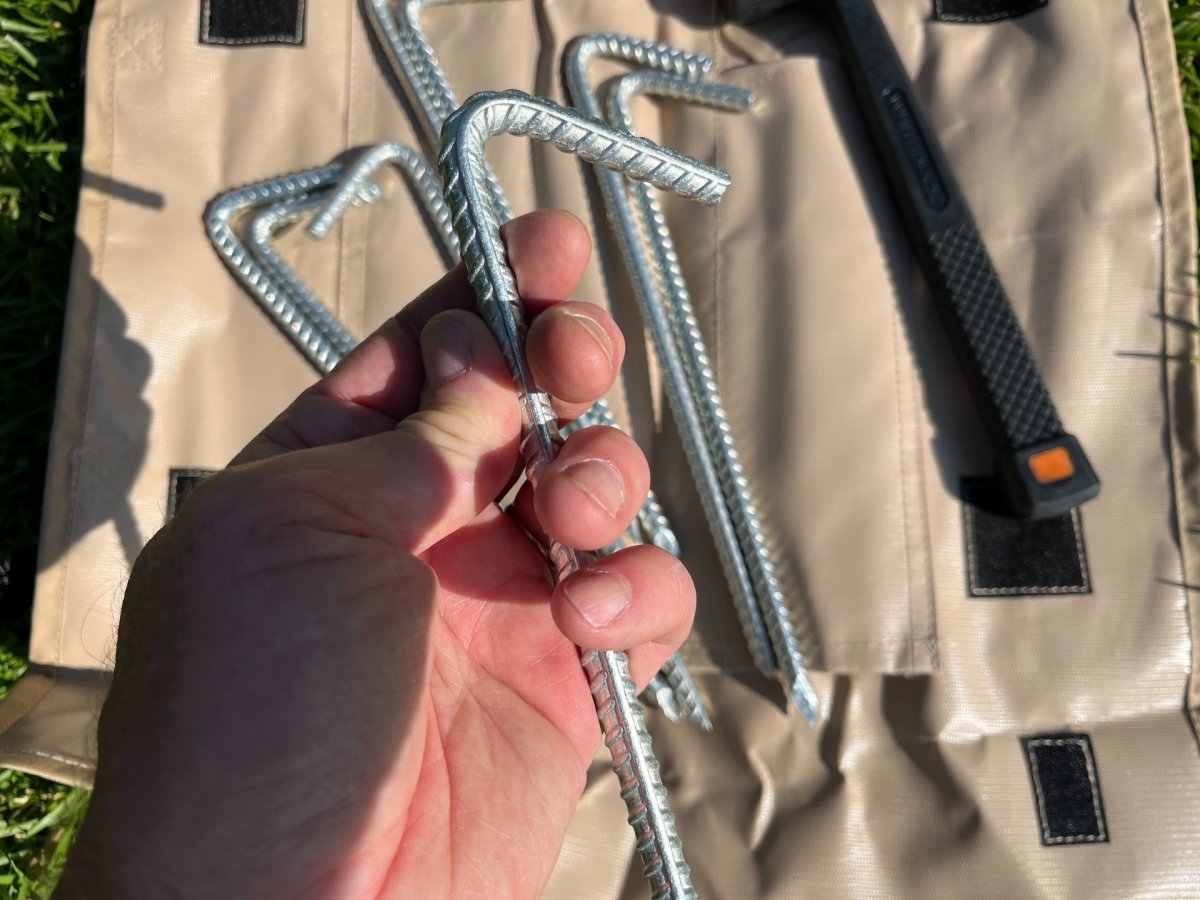
The Sunshade 170 kit includes a 13-by-13-foot canvas tarp, three telescoping aluminum poles, eight heavy-duty steel J-pegs, a mallet, and a waterproof canvas storage bag. The tarp is made of water-repellant, weather-resistant performance canvas, and includes 16 reinforced loops and rustproof grommets. It comes with heavy-duty reflective guy ropes to secure the tarp. The fabric’s water-repelling treatment helps prevent mold and soil buildup. All in all, the complete kit weighs 31 pounds.
To the uninitiated, setting up a tarp for shelter against sun and rain may seem complicated or daunting, but White Duck’s system dispensed with most of the guesswork. The kit included an owner’s manual with illustrated step-by-step instructions for setting up the tarp in A-frame, saddle, lean-to, and triangular shelter configurations. The guy ropes came pre-tied to the tarp, with metal sliders already in place for tensioning, and the telescoping poles were equipped with a spring pin system for easy height adjustments.
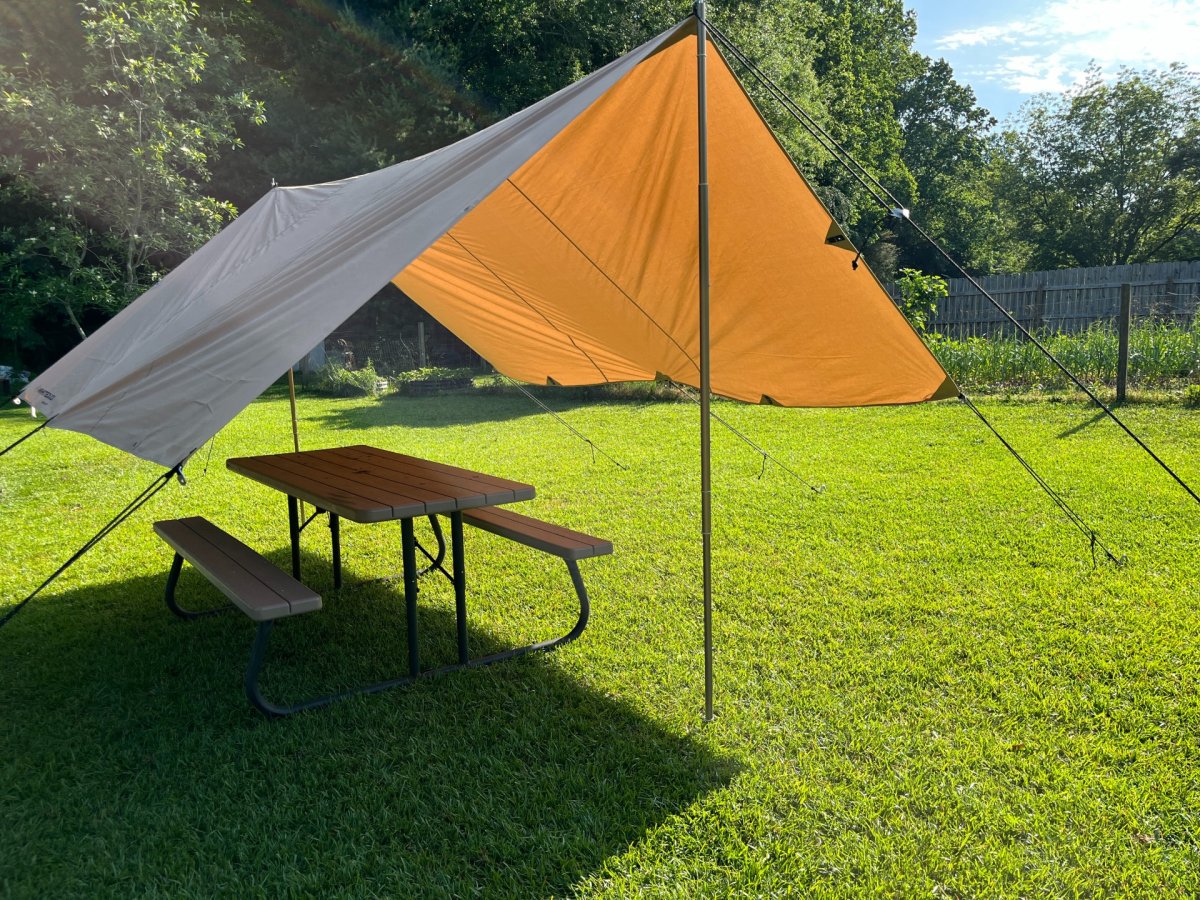
Assembly took about the same amount of time as setting up and anchoring a pop-up canopy. I was able to do it by myself in about 20 minutes. With a little practice, two people should be able to set up in half that time. On the downside, access to the area under the tarp was somewhat restricted in comparison to a pop-up. We had to be careful not to trip over guy lines and stakes around the perimeter, but there was plenty of space under the tarp for a crowd. With our 6-foot picnic table under the tarp, we could have easily added a second one.
The canvas tarp was much better equipped than a pop-up to handle sudden storms, high winds, and long-term exposure to the elements. I tested it during a particularly volatile stretch of weather when we experienced winds up to 35 miles per hour and at least one storm that dumped more than 2 inches of rain. The sunshade tarp assembly held up well with only occasional minor line adjustments needed. If we needed to head into the house to get out of the elements, at least we didn’t have to worry about taking down the tarp.
I really liked the Sunshade Tarp, even though it is heavier and more expensive than some of the alternatives. The variety of assembly options gives it the flexibility to adapt to different settings and situations. For example, a high saddle configuration could provide optimum shade with less heat buildup, but an A-frame positioned closer to the ground might be better for rainy or windy weather. And because it is so durable, it may outlast several cheap pop-ups and pay for itself over time.
Get the White Duck Sunshade 170 at White Duck Outdoors.