We may earn revenue from the products available on this page and participate in affiliate programs. Learn More ›
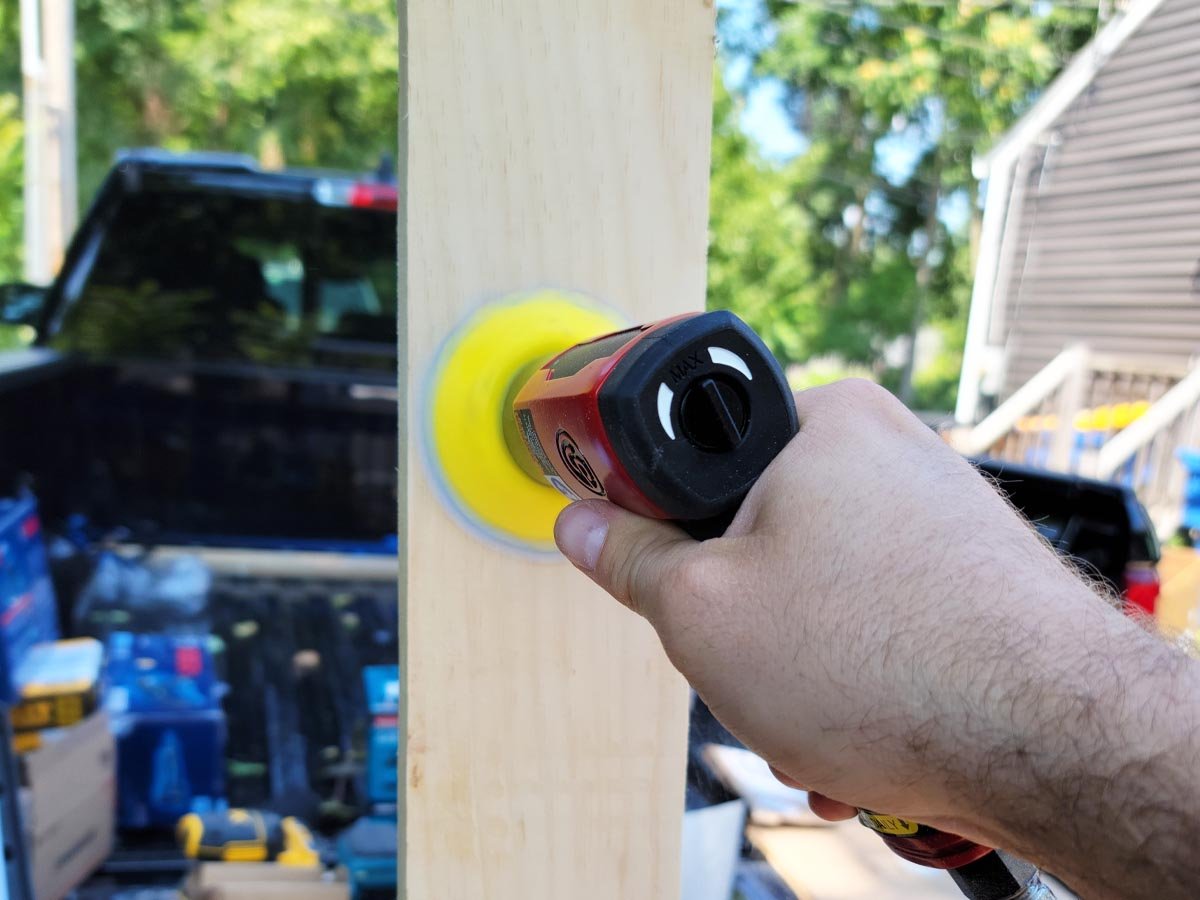
Using a random orbital sander—a power tool that features a sanding pad that simultaneously spins and oscillates (orbits) in an elliptical pattern—can be an excellent solution when standard woodworking rules become impossible to follow. For example, while sanding with the wood grain prevents marks, grain patterns aren’t always linear. Since random orbital sanders don’t just move in a single direction, they drastically reduce visible sanding scratches regardless of grain orientation.
But because there are so many models on the market, choosing the right one can feel overwhelming. After testing 11 popular picks, we found eight we love, with the Makita cordless random orbital sander earning our top award for its ease of use, multiple speed settings, and versatility across different project types. Read on to see how it and the rest of the best random orbital sanders available today performed during our hands-on tests.
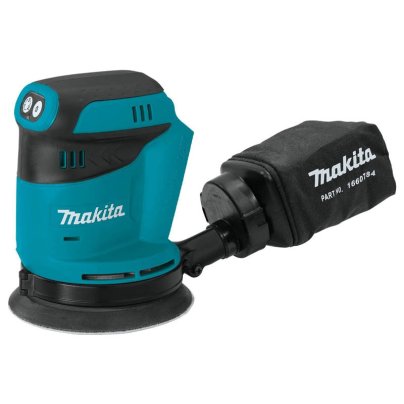
- BEST OVERALL: Makita 18V Random Orbital Sander
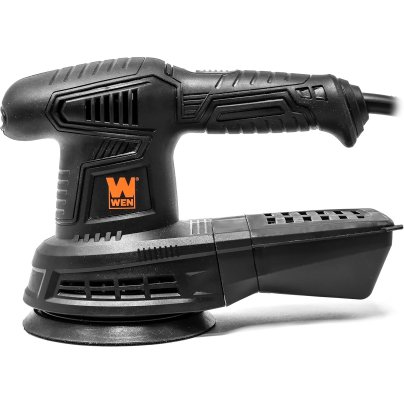
↓ Jump to Review - BEST BANG FOR THE BUCK: Wen 3.7-Amp Variable Speed Random Orbital Sander
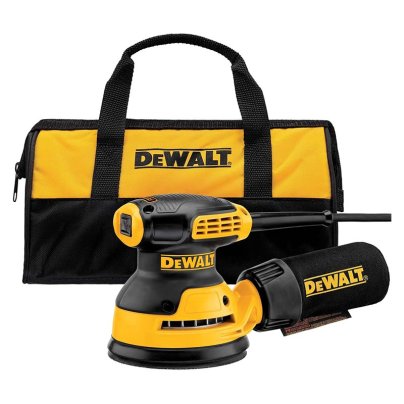
↓ Jump to Review - BEST CORDED: DeWalt 3-Amp Single Speed Random Orbital Sander
↓ Jump to Review - BEST CORDLESS KIT: Ryobi One+ 18V Random Orbital Sander Kit
↓ Jump to Review - BEST CORDLESS: DeWalt 20V Variable Speed Random Orbital Sander
↓ Jump to Review - BEST FOR BEGINNERS: Black+Decker 20V Max Random Orbital Sander
↓ Jump to Review - BEST HEAVY-DUTY: Milwaukee M18 Random Orbital Sander
↓ Jump to Review - BEST ERGONOMICS: Bosch 2.5-Amp Random Orbital Sander/Polisher
↓ Jump to Review
Best Random Orbital Sanders Compared
| Product | Size | Speed | Power | Our Rating |
| Makita 18V Cordless Random Orbital Sander | 5 inches | 7,000; 9,500; and 11,000 OPM | 18V battery (sold separately) | 4.7/5 |
| Wen 3.7-Amp Variable Speed Random Orbital Sander | 5 inches | 6,000 to 13,000 OPM | 3.7-amp corded motor | 4.7/5 |
| DeWalt 3-Amp Single Speed Random Orbital Sander | 5 inches | 12,000 OPM | 3-amp corded motor | 4.6/5 |
| Ryobi One+ 18V Random Orbital Sander Kit | 5 inches | 10,000 OPM | 18V battery | 4.4/5 |
| DeWalt 20V Variable Speed Random Orbital Sander | 5 inches | 8,000 to 12,000 OPM | 20V battery (sold separately) | 4.6/5 |
| Black+Decker 20V Max Random Orbital Sander | 5 inches | 12,000 OPM | 20V battery | 4.3/5 |
| Milwaukee M18 Random Orbital Sander | 5 inches | 7,000 to 12,000 OPM | 18V battery (sold separately) | 4.6/5 |
| Bosch 2.5-Amp Random Orbital Sander/Polisher | 5 inches | 7,500 to 12,000 OPM | 2.5-amp corded motor | 4.6/5 |
Our Top Picks
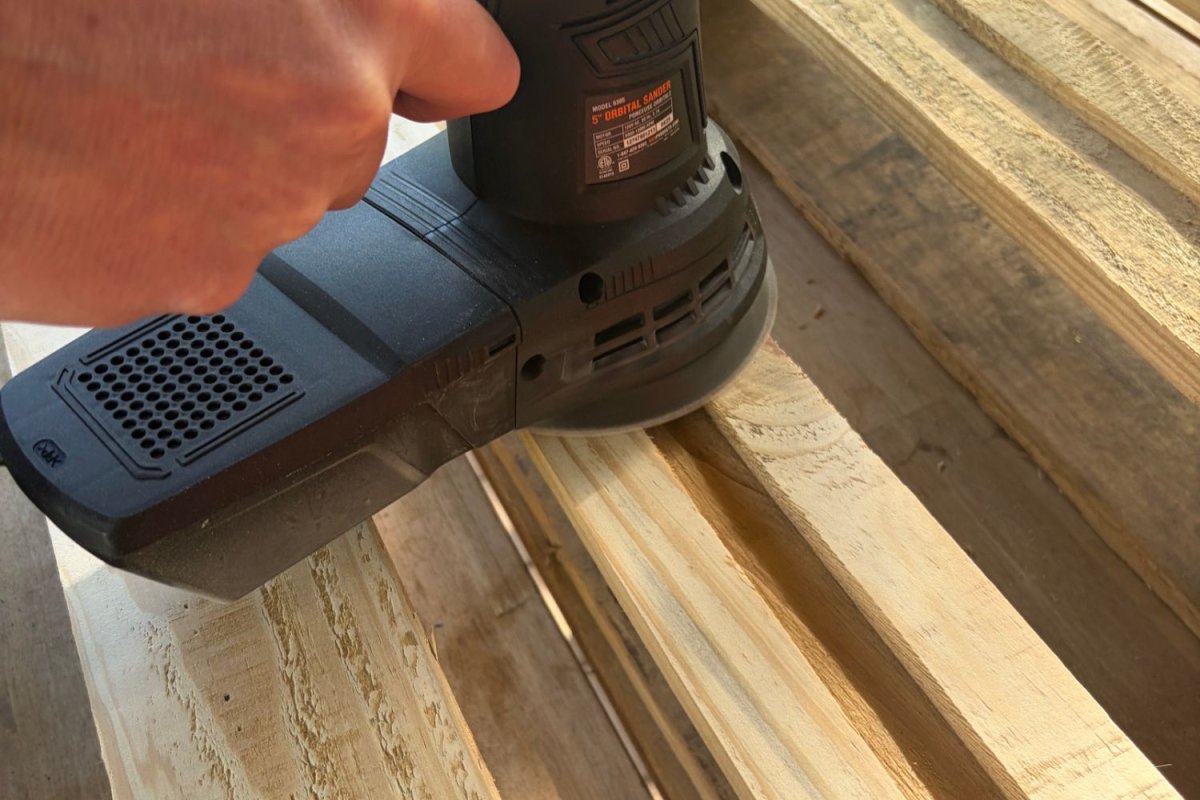
After hands-on testing, we selected these sanders for their reliable performance. The following reviews cover our insights, each model’s key features, and the tasks they’re best suited to handle.
Best Overall
Photo: Amazon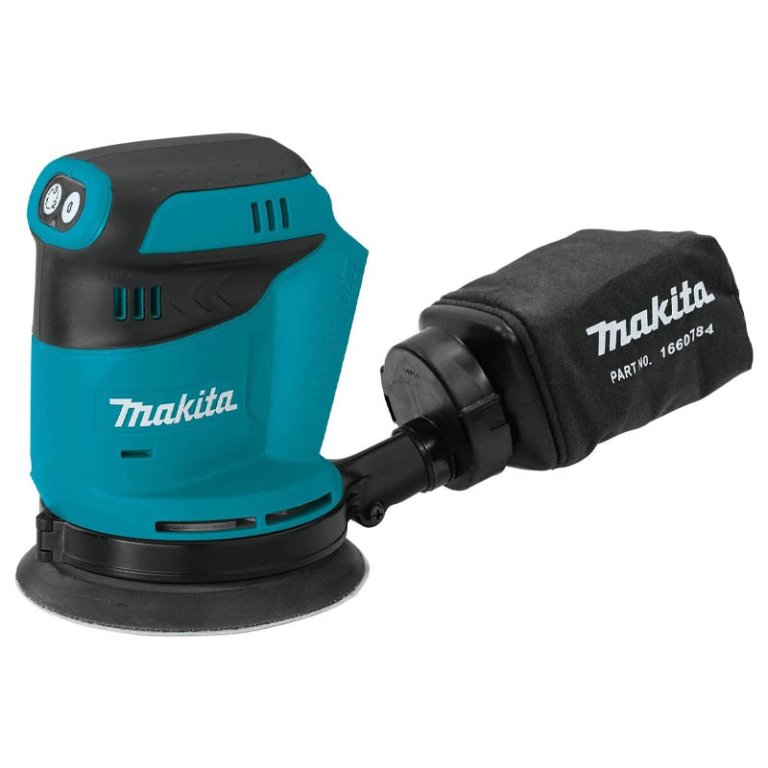
What We Like
- Cordless portability allows for sanding anywhere
- Adjustable speeds for different materials and aggressiveness
- Comes with a large battery for a longer runtime
What We Don’t Like
- A little tall for a palm sander
Product Specs
- Size: 5 inches
- Speed: 7,000; 9,500; and 11,000 opm
- Power source: 18V battery (sold separately)
Our Ratings
| Ease of Use | 4.7/5 | Performance | 4.8/5 | Ergonomics | 4.5/5 | Value | 4.5/5 |
When electrical outlets are scarce, or when there’s a need for free range of motion to complete a project, the variable-speed Makita cordless orbital sander is worth a look. This sander uses the brand’s 18-volt (V) batteries, and it’s available with a 5.0 amp-hour (Ah) battery for up to 65 minutes of sanding at low speed and 32 minutes at high speed. It also comes with a charger and a carrying bag.
This sander features three adjustable speeds, including 7,000, 9,500, and 11,000 OPM. While it doesn’t have an extra handle, it is (just) compact enough for one-handed use. Also, this model comes with a dust-collection bag, and it uses hook-and-loop 5-inch 8-hole sanding discs.
We realized a few things while testing the Makita. First, it’s a bit tall compared to the others, and the button markings are somewhat strange: off is “0” while on/speed change is “1, 2, 3.” While that made speed adjustments a breeze, turning it off was confusing. However, we did like how the dust bag was easy to remove, preventing dust from shooting everywhere like other models.
What our tester says: “The Makita was the smoothest of all the cordless models we tested, and having three speeds made it effective for different project types. We had no trouble getting rid of scratches or rough spots.”—Tom Scalisi, Product Reviews tester and writer
Get the Makita random orbital sander at Amazon or The Home Depot.
Best Bang For The Buck
Photo: Amazon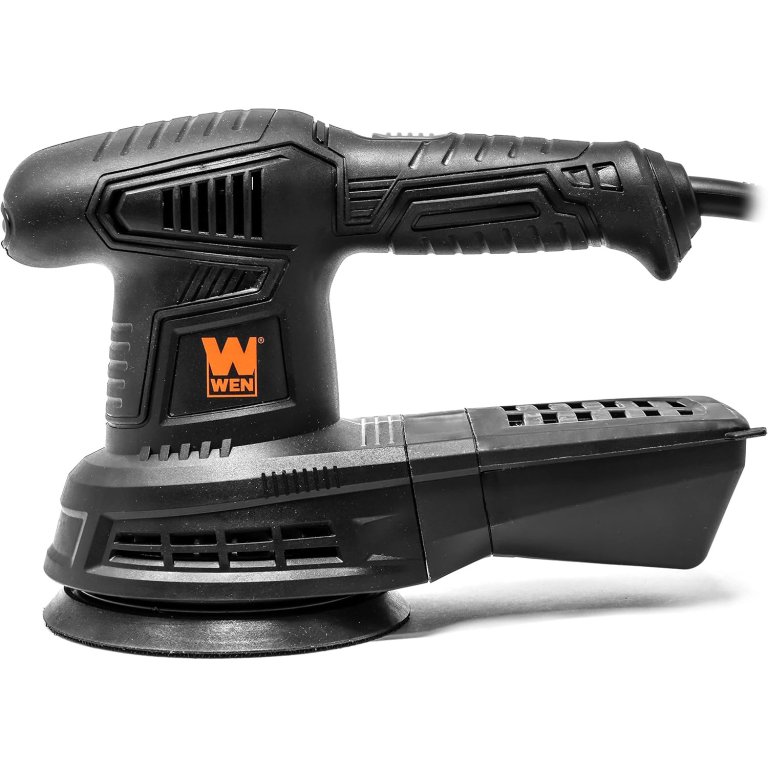
What We Like
- Excellent performance at a low price
- Comfortable dual-grip design
- Variable speed functionality improves control
What We Don’t Like
- Cord limits mobility
Product Specs
- Size: 5 inches
- Speed: 6,000 to 13,000 OPM
- Power source: 3.7-amp corded motor
Our Ratings
| Ease of Use | 4.5/5 | Performance | 4.7/5 | Ergonomics | 4.5/5 | Value | 4.8/5 |
As a variable-speed model with plenty of power, Wen’s 3.7-amp random orbital sander offers a lot without asking you to fork over a fortune. It has the widest speed range of any of the models we tested (6,000 to 13,000 OPM), so you can go nice and slow for lighter finish sanding or turn things up for faster material removal. The 5-inch hook-and-loop pad makes swapping out sanding discs easy, and the dual-grip design (palm grip plus main handle) helps prevent hand fatigue while increasing sanding control.
This Wen handheld sander really surprised us during testing. Even though we’re big fans of the brand, the fact that it costs less than half of some similarly powered models had us worried at first. Turns out, though, it did equally well removing stain from boards as it did getting rid of rough material on an old pallet. Since you can put one hand on the palm grip and the other on the handle, we also found it incredibly comfortable to use. The only real downside is that, as a corded unit, it doesn’t offer the same unrestricted movement as battery-powered models.
What our tester says: “Before testing this Wen, we wondered why it only costs about $40. After testing it, we wondered how it only costs about $40. Performance is excellent, ergonomics are comfortable, and dust collection is effective. What’s not to love?”—Michelle Larson, Product Reviews tester and writer
Get the Wen random orbital sander at Amazon, The Home Depot, or Wen.
Best Corded
Photo: Amazon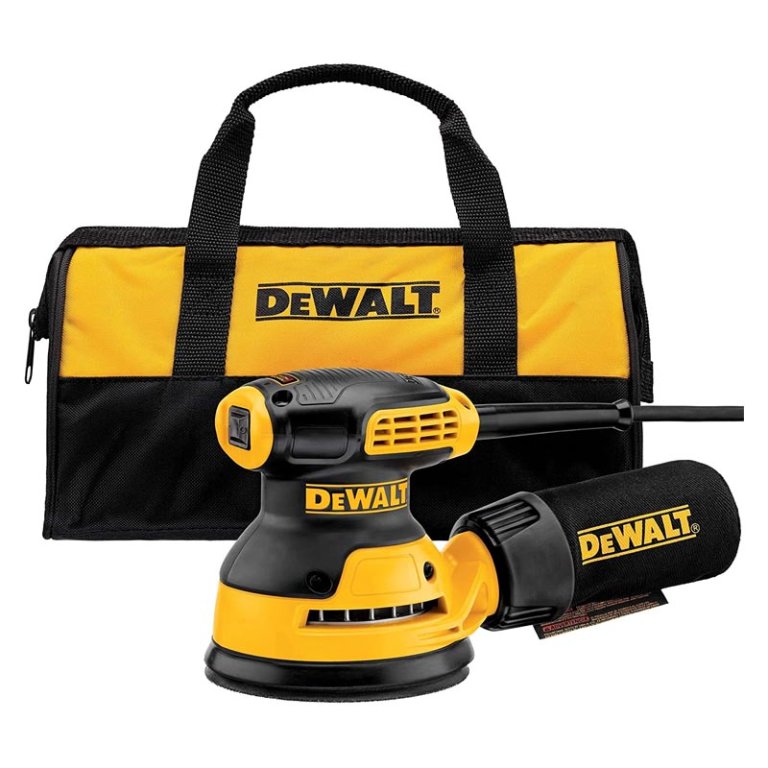
What We Like
- 12,000-opm high-speed sanding
- Great dust-bag design
- Lightweight and compact
What We Don’t Like
- Single-speed only
Product Specs
- Size: 5 inches
- Speed: 12,000 opm
- Power source: 3-amp electric
Our Ratings
| Ease of Use | 4.3/5 | Performance | 4.5/5 | Ergonomics | 4.25/5 | Value | 5/5 |
For those looking for a random orbit sander with continuous corded power, check out the DeWalt single-speed corded electric sander. The 5-inch sander comes with a detachable dust-collection bag for catching sawdust. It also comes with a soft carrying bag to keep things organized.
This 5-inch 4-pound sander’s 3-amp motor is designed for reduced vibration while also offering up to 12,000 OPM of speed. This palm sander features a rubberized palm grip to further reduce vibration and increase comfort, making the tool easier to use over the duration of a project. However, do keep in mind that this sander has just one speed (and it’s a high one), so be sure to use the correct sandpaper at all times.
To be honest, we were kind of skeptical about comparing a single-speed random orbital sander to other models with more features and flexibility. However, this corded orbital sander from DeWalt proved more than worthy during our test. First, it felt lighter than the other corded models, and it was quite comfortable in hand thanks to its compact and low-profile design. The dust-collection bag worked well, and we found emptying it was very easy, as it has a coiled spring inside that collapses to push dust out. The bag also has a collar that twists into place for a secure fit and easy removal. And while it only has one speed, that speed will be plenty for most users.
Get the DeWalt corded random orbital sander at Amazon or The Home Depot.
Best Cordless Kit
Ryobi One+ 18V Random Orbital Sander Kit
Buy at The Home DepotWhat We Like
- Includes battery, charger, and 3 sanding discs
- Reduced-vibration operation improves comfort and control
- Cordless design weighs less than 3 pounds
What We Don’t Like
- Only 1 speed
Product Specs
- Size: 5 inches
- Speed: 10,000 OPM
- Power source: 18V battery
Our Ratings
| Ease of Use | 4.5/5 | Performance | 4.3/5 | Ergonomics | 4.5/5 | Value | 4.3/5 |
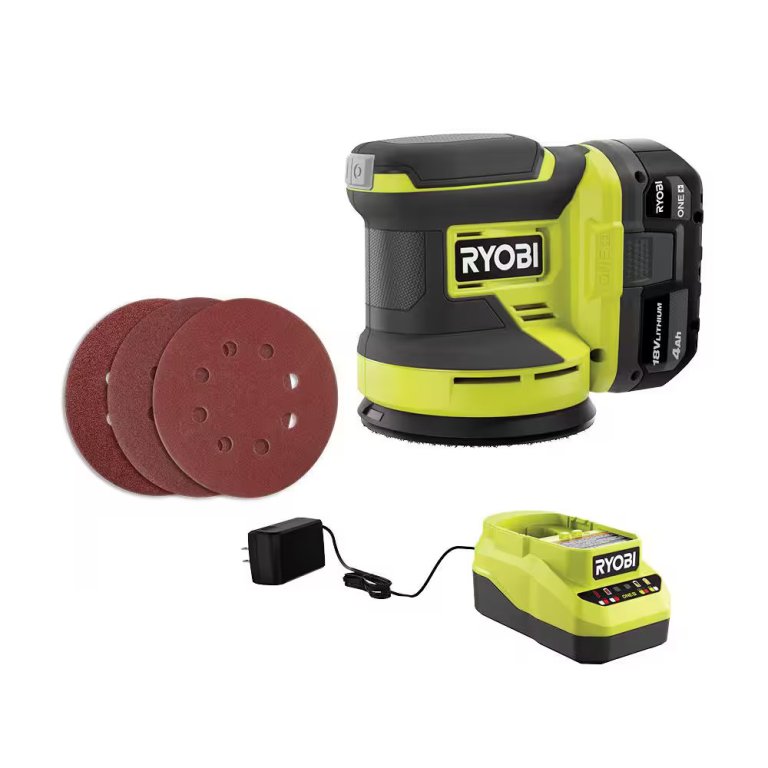
Sold as a package that includes the 18-volt sander, 4.0 Ah battery, charger, and three sanding discs, this Ryobi kit has everything you need to get going. As a user-friendly single-speed model, it operates at 10,000 OPM and features hook-and-loop discs for easy sandpaper swaps. Ryobi also claims that it produces significantly less vibration than previous models for improved control and a swirl-free finish.
During testing, we found the Ryobi incredibly easy to handle. Its compact body and light weight felt manageable both horizontally and vertically, and we liked that both the top and the front were rubberized to provide two comfortable places to grip. The dust bag holds plenty of material, and you can connect the port to 1¼-inch or 1⅞-inch wet/dry-vacuum hoses if desired. While it would be nice if it offered more than one speed, if you’re looking to handle paint prep, furniture touch-ups, or small repairs, it ultimately has everything you need.
Get the Ryobi random orbital sander at The Home Depot.
Best Cordless
Photo: Amazon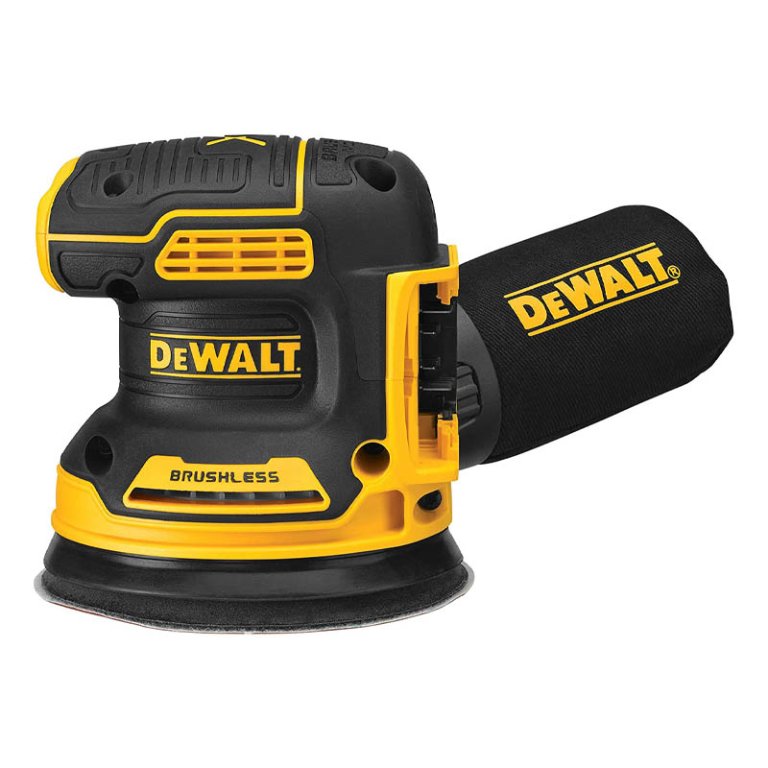
What We Like
- Adjustable speeds for controlling aggressiveness
- Compact and lightweight design for control
- Offers cordless portability
What We Don’t Like
- Ours had a loose shroud
Product Specs
- Size: 5 inches
- Speed: 8,000 to 12,000 opm
- Power source: 20V battery (sold separately)
Our Ratings
| Ease of Use | 4.8/5 | Performance | 4.5/5 | Ergonomics | 4.8/5 | Value | 4.5/5 |
Any DIYers, woodworkers, or cabinetmakers—professional or weekend warrior—should check out the DeWalt cordless variable-speed random orbital sander. This 5-inch cordless sander features a compact design for ease of use as well as variable speeds between 8,000 and 12,000 OPM for controlling aggressiveness on different surfaces. It also features a one-handed locking dust bag that allows the user to empty it fuss-free.
This sander utilizes 5-inch 8-hole hook-and-loop sanding discs, allowing for quick changes between grits or when one pad runs out. While this particular model doesn’t come with a battery or a charger, it’s compatible with the brand’s 20V Max battery lineup. This allows users already invested in DeWalt tools to take advantage of their stock of batteries.
The DeWalt cordless random orbital sander did not disappoint during our test. This model features DeWalt’s collared dust bag that is not only easy to take on and off but also simple to empty thanks to the coiled spring inside. We also liked this model’s size as it was light and compact but still provided lots of power when needed. It was also fairly smooth during use; however, the rubber shroud around the disc on our model was loose and rubbed the disc, but all it required was some fidgeting to get it back in place.
Get the DeWalt cordless random orbital sander at Amazon, Lowe’s, or The Home Depot.
Best For Beginners
Photo: Amazon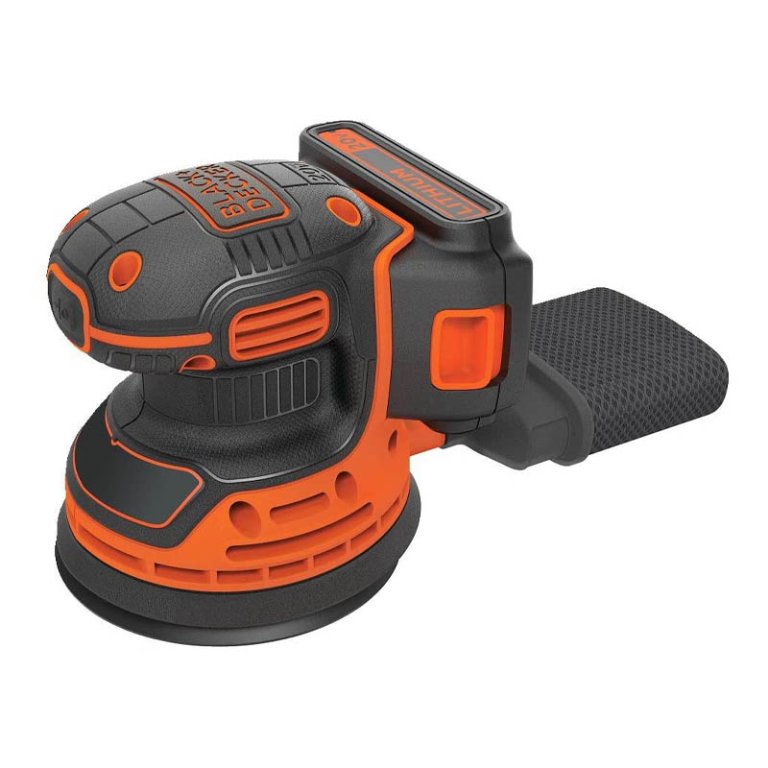
What We Like
- 12,000-opm top speed
- Affordable price point
- Allows for quick sanding disc changes
What We Don’t Like
- Only 1 speed (but it is fast)
Product Specs
- Size: 5 inches
- Speed: 12,000 opm
- Power source: 20V battery
Our Ratings
| Ease of Use | 4.5/5 | Performance | 4/5 | Ergonomics | 4/5 | Value | 4.8/5 |
When it comes to getting started on refinishing or other DIY tasks, this Black+Decker model is tough to beat. The 5-inch orbital sander comes with a 20-volt 1.5 Ah lithium-ion battery, a charger, and a detachable dust collection system, allowing beginners to start sanding without purchasing separate power accessories. It weighs just over 3 pounds and features a molded-rubber grip for comfort and reduced fatigue.
The Black+Decker random orbital sander uses hook-and-loop sanding discs that make changes quick and easy, and its single-speed design keeps operation simple. For bigger projects, it might be slightly underpowered, and the dust-collection bag is a bit underwhelming, but everything else is spot-on. The grip is comfortable, and we found its size and weight incredibly comfortable during our vertical-sanding test. Especially considering the price, there’s a lot to like about this Black+Decker.
Get the Black+Decker random orbital sander at Amazon or Walmart.
Best Heavy-Duty
Photo: Amazon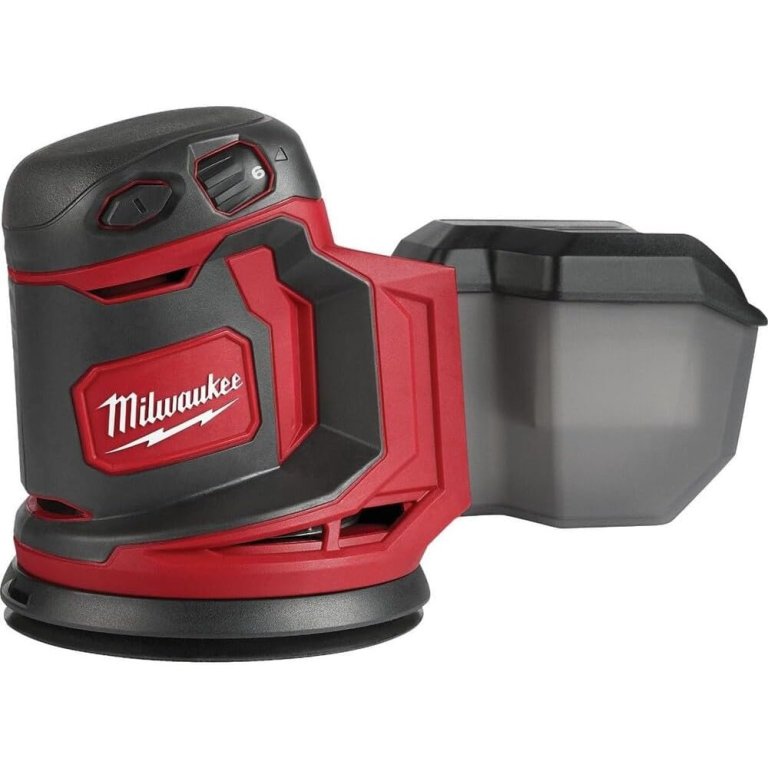
What We Like
- Powerful variable-speed performance
- High 12,000 OPM maximum speed
- Universal vacuum hose adapter included
What We Don’t Like
- Came with a dust bag, not the canister with filter pictured
Product Specs
- Size: 5 inches
- Speed: 7,000 to 12,000 OPM
- Power source: 18V battery (sold separately)
Our Ratings
| Ease of Use | 4.7/5 | Performance | 4.8/5 | Ergonomics | 4.5/5 | Value | 4.3/5 |
As with most Milwaukee tools, the M18 random orbit sander is built for demanding sanding tasks. Thanks to its 5-inch sanding pad and variable-speed dial that adjusts from 7,000 to 12,000 OPM, it’s easy to match this pick’s output to the material and task at hand. The hook-and-loop pad makes grit changes quick, and the cordless design is great for tasks nowhere near an outlet.
During testing, the Milwaukee’s performance on stained wood, a rough pallet, and vertical sanding was among the best. It felt capable and controlled at every speed, providing us with more than enough power for big jobs while still letting us pull back for more careful finish work. As a higher-priced tool-only pick, however, it may be more than you need unless frequent or demanding projects are part of your routine. And oddly enough, the unit we received came with a more standard dust bag rather than the canister with filter online retailers show for this model (2648-20). But if you’re using it for all it’s capable of, you’re probably popping on the included hose adapter anyway. Add a fine-grit sanding disc, and you could even grab it for quick drywall-patch touch-ups.
Get the Milwaukee random orbital sander at Amazon, Ace Hardware, The Home Depot, or Northern Tool + Equipment.
Best Ergonomics
Photo: Amazon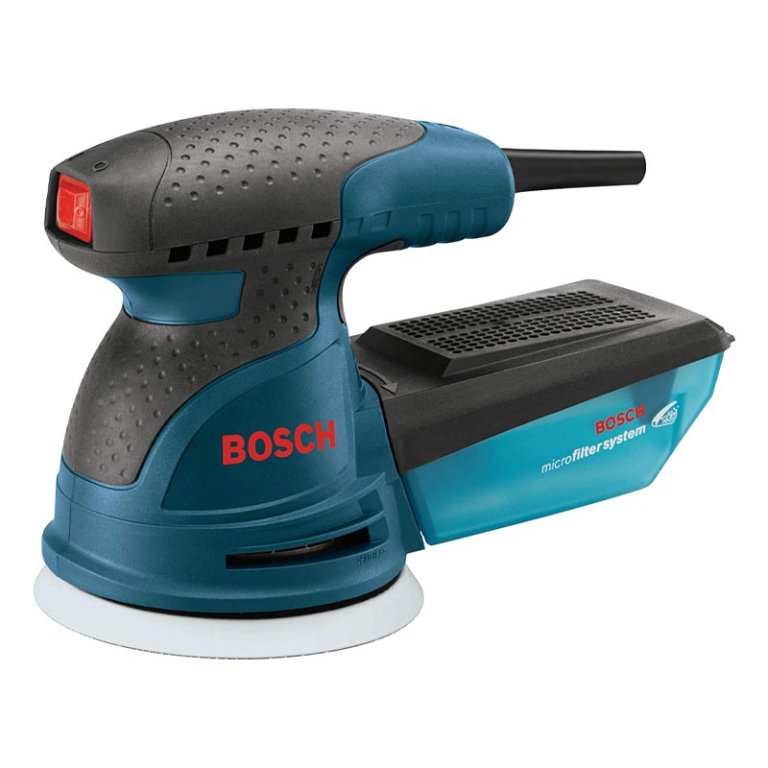
What We Like
- Comfortable rubber grip
- Excellent air-filter design
- Affordable price point
- Easy to change speeds
What We Don’t Like
- It’s a little heavy for a palm sander
Product Specs
- Size: 5 inches
- Speed: 7,500 to 12,000 opm
- Power source: 2.5-amp corded motor
Our Ratings
| Ease of Use | 4.7/5 | Performance | 4.5/5 | Ergonomics | 4.8/5 | Value | 4.7/5 |
For light-duty sanding with an easy-to-control palm sander, check out the Bosch 5-inch random orbital sander/polisher. This model features a corded design with a 2.5-amp motor, giving users continuous power without the need to manage battery life. It comes with a dust-collecting cartridge as well as a built-in test port for vacuum connection.
This model from Bosch packs a lot of capability into a small package. It features variable speeds between 7,500 and 12,000 OPM, allowing users to choose the best speed for the project, such as sanding furniture. Despite being small, it uses 5-inch hook-and-loop sanding discs for plenty of surface area and quick changes.
There is a lot to like about this sander from Bosch. Let’s start with the most impressive feature: the dust bag. This model’s dust-collection bag features an actual pleated air filter that allows air to pass through while catching dust particles. It also detaches easily without a cloud of dust blowing through the air. We also like the affordable price point, making it a steal (in our opinion). While we did think it felt a bit heavy compared to other cordless models, we liked the comfortable rubber grip and the fact that users could change speeds easily.
Get the Bosch random orbital sander at Amazon or The Home Depot.
Jump to Our Top Picks
How We Tested the Best Random Orbital Sanders
| Products tested | 11 |
| Tests performed | 8 |
| Price range | $40 to $175 |
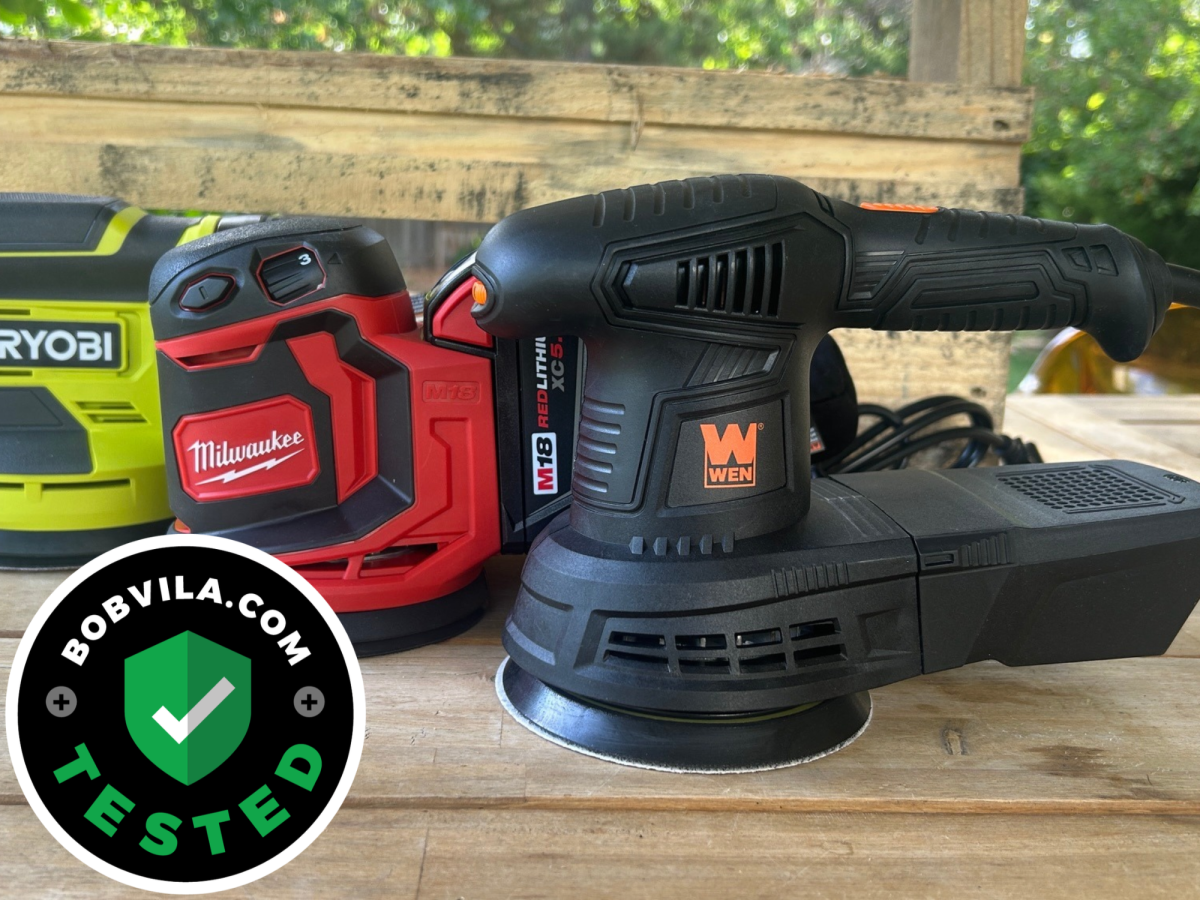
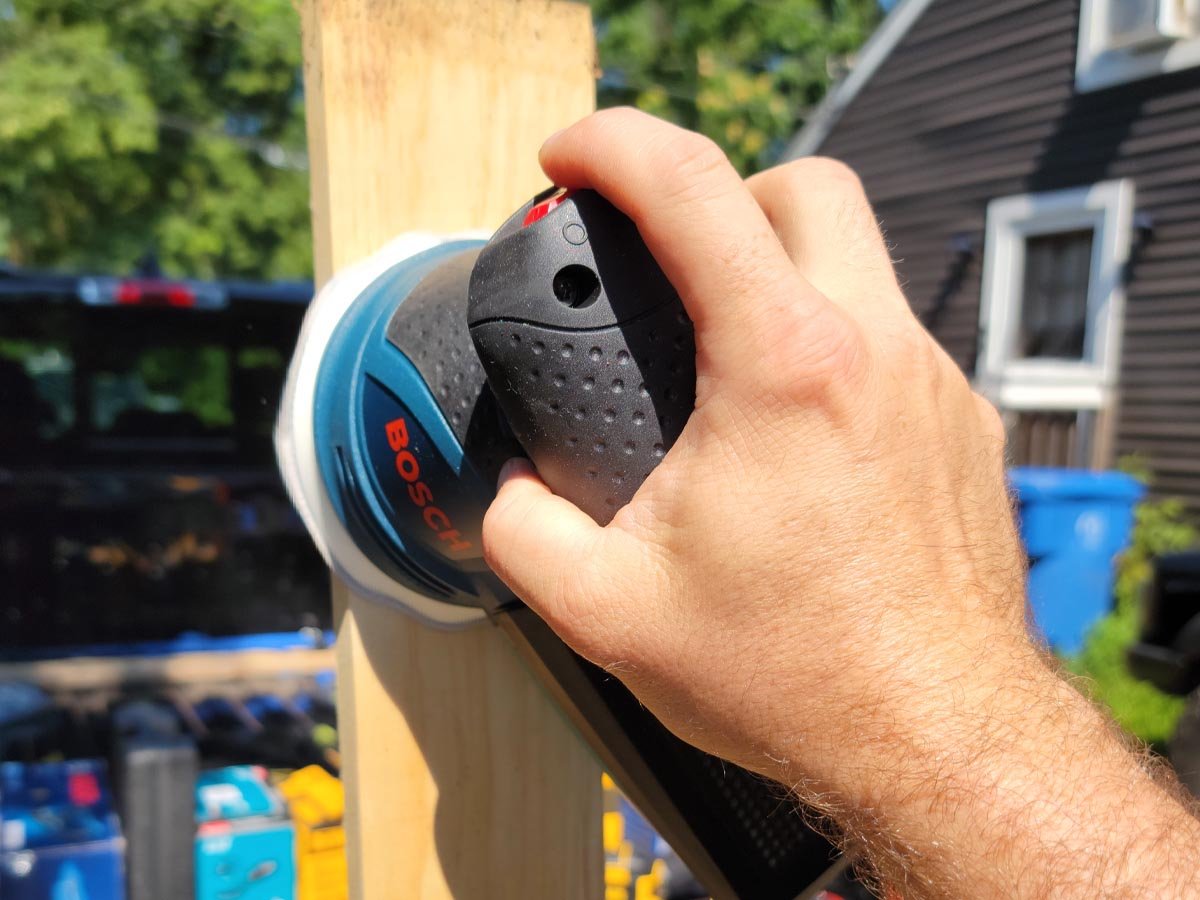
To begin our tests, we charged each model’s batteries (if necessary) and attached their dust collection bags (if included). Next, we used 80- and 120-grit sandpaper on stained pine to determine how quickly each tool removed material and how well it smoothed scratches. We also pit each one against a particularly rough wood pallet to see how effectively it could level an uneven surface. Finally, we simulated sanding a door or another vertical surface by standing a board on edge.
These tests allowed us to evaluate each model’s sanding speed, finish quality, comfort, and overall ease of use. We then assigned an award based on each tool’s standout strength and noted any shortcomings in our “What We Don’t Like” bulleted lists.
Our Testing Scores
| Product | Ease of Use | Performance | Ergonomics | Value |
| Makita 18V Cordless Random Orbital Sander | 4.7/5 | 4.8/5 | 4.5/5 | 4.5/5 |
| Wen 3.7-Amp Variable Speed Random Orbital Sander | 4.5/5 | 4.7/5 | 4.5/5 | 4.8/5 |
| DeWalt 3-Amp Single Speed Random Orbital Sander | 4.3/5 | 4.5/5 | 4.25/5 | 5/5 |
| Ryobi One+ 18V Random Orbital Sander Kit | 4.5/5 | 4.3/5 | 4.5/5 | 4.3/5 |
| DeWalt 20V Variable Speed Random Orbital Sander | 4.8/5 | 4.5/5 | 4.8/5 | 4.5/5 |
| Black+Decker 20V Max Random Orbital Sander | 4.5/5 | 4/5 | 4/5 | 4.8/5 |
| Milwaukee M18 Random Orbital Sander | 4.7/5 | 4.8/5 | 4.5/5 | 4.3/5 |
| Bosch 2.5-Amp Random Orbital Sander/Polisher | 4.7/5 | 4.5/5 | 4.8/5 | 4.7/5 |
What to Consider When Choosing a Random Orbital Sander
When shopping for a random orbital sander, keep the following features in mind. Choosing the right model and brushing up on the basics of sanding wood will help you get the best results.
Speed Variations
Many random orbital sanders have a single speed, but some models feature variable speeds that alter the sander’s aggressiveness. A higher speed is helpful when quickly grinding down finishes and high spots (as when removing varnish from an old bookcase). A lower speed is better suited for fine sanding (to achieve a smooth surface on a tabletop, for example).
Also, understand that while most tools use revolutions per minute as their standard of speed, random orbital sanders use the term “OPM,” which stands for oscillations per minute. Oscillation is essentially a revolution but with a random, oval path rather than a tight circle.
A lack of variable speeds shouldn’t be a deal breaker, however, as success can be achieved simply by using the appropriate sandpaper grit (coarse to deal with rough work, medium for smoothing, and fine for finish work).
Disc Size
The standard disc size for random orbital sanders is 5 inches in diameter, and there are a wide variety of generic 5-inch sandpaper discs in any hardware store or home improvement center. DIYers can also find detail sanders with smaller 1- to 4-inch discs that are handy for sanding in tight spots. For larger projects (such as sanding a hardwood floor), 6-inch or larger discs or even upgrading to a belt sander is the best bet.
Dust Collection
Some random orbital sanders come with attachable dust bags that collect some of the wood dust generated while sanding. Others include attachments that can be connected to a standard wet/dry vacuum hose for dust collection. These collection methods won’t remove every speck of dust (always wear a dust mask when sanding), but they can greatly reduce it, so they’re good options to look for, especially when sanding indoors.
Power Options
Random orbital sanders are powered in one of three ways: electrical cords, rechargeable batteries, or compressed air (pneumatic). Each method has its benefits.
- Corded: Because there’s no battery to recharge, corded sanders are always ready to go as long as there’s an electrical outlet nearby. Just plug in the corded random orbital sander and get to work.
- Cordless: These sanders are great when sanding far from a power source, such as when building the kids a tree house without an extension cord long enough to reach. With a cordless sander, however, the battery’s charge is a limitation to be considered. Users will usually get 30 to 45 minutes on a single charge, and many keep a spare battery on hand to continue working while the first battery charges.
- Pneumatic: Powered by compressed air, pneumatic sanders are a good choice for the woodworker who has a central air compressor to power a number of air tools. Small, pancake-type air compressors, however, are not always powerful enough to run a sander without frequent stops to recharge with air. For the best results, use a pneumatic sander with an air compressor that can produce an air volume of 40 cubic feet per minute or higher.
Weight
While a small orbital sander may weigh as little as 1.5 pounds and a large one 7 pounds or more, most 5-inch random orbital sanders weigh between 2 and 4 pounds. Lighter sanders create less hand and wrist fatigue, especially if sanding a vertical surface, such as wood paneling.
Extra Handle
Most random orbital sanders feature a top palm grip that makes it easy to maneuver with just one hand. If there’s going to be a lot of sanding in the future, however, it may be a good idea to go for a model with an additional side grip that allows two-handed control.
Some sanders and polishers also feature a barrel grip, similar to some jigsaws. The barrel grip allows the user to keep their hand closer to the work surface, improving leverage and control.
FAQs
Power sanders make quick work of smoothing rough trim, decks, railings, and virtually any other type of wood project, and random orbital sanders figure among the most popular types of sanders due to their ability to smooth wood without leaving telltale cross-grain marks. Those who are expanding their power-tool collection to include random orbital sanders will likely have a few questions.
Random orbital sanders employ two different types of motions: spinning and oscillating (moving in an elliptical fashion). The combination of these two sanding movements keeps the sander from leaving marks on the wood.
Orbital sanders move the sanding pad in a fixed orbital pattern, while random orbital sanders combine that orbital movement with pad rotation to help reduce visible sanding marks. Another type of sander, a rotary sander, spins a disc on a fixed axis for more aggressive material removal but can leave more visible swirl marks.
Random orbital sanders are used for primary sanding steps, such as removing coarseness or roughness from the wood surface. They are often followed up by sanding either with a small hand sander for wood like a finish sander or with fine-grit sandpaper.
No, but using a random orbital sander will help remove most of the roughness. A finishing wood sander can be used afterward to create a very smooth surface.
Use a lower speed for fine sanding, delicate surfaces, or between-coat smoothing, and a higher speed for removing finish or leveling rough areas. When in doubt, start at a medium speed and let the sander’s weight do the work rather than pressing down.
Start by removing the battery (for cordless models) and emptying the dust bag or canister. Then, store the sander and any spare sanding discs in a clean, dry place, such as its case or a covered tool box.
Since most random orbital sanders have 5-inch discs, they’re too big for reaching tight inside corners or detailed profiles, and they can still leave swirl marks or uneven spots if used with too much pressure, a worn disc, or poor technique.
Meet the Testers
Michelle Larson has been a writer and editor for more than 10 years in the fields of health, business, and the home. Because she’d rather spend a little more up front than buy a tool or appliance twice, she strongly believes in the power of testing for finding quality items that are meant to last.
Tom Scalisi is a freelance writer specializing in the home design, construction, tools, and automotive industries. He has been involved in the trades for over 15 years as both a contractor and a commercial building mechanic. His work has been featured on This Old House, Family Handyman, and Forbes. As a lover of all things tools, construction, and DIY, he’s always looking for new tools and techniques while also sharing his knowledge with the DIY world.
Additional research provided by Glenda Taylor.