We may earn revenue from the products available on this page and participate in affiliate programs. Learn More ›
When it was time to choose a direction for the look and feel of my new home, I knew I wanted a modern, spa-like essence so that it truly felt like a relaxing retreat. I quickly turned to biophilic design for guidance. It’s rooted in the idea that humans have an innate need to connect with nature, from the biophilia hypothesis proposed by biologist E.O. Wilson in 1984. Biophilic home design is about bringing nature indoors through certain materials, patterns, light, color, and greenery. These natural design elements are picturesque and including them has been shown to reduce stress, boost physical and mental health, and improve cognitive function.
While biophilic design has been around for years, it’s expected to take center stage in 2026 as homeowners move beyond houseplants to incorporate materials, textures, and structures that create calm, restorative interiors, according to Premier Timber Frame Builders. “Biophilic design is more than just adding greenery,” says Omar Stoltzfus, the company’s timber-frame expert. “It’s a craft using materials that genuinely connect people to nature. Wood does that instinctively: you can see it, feel it, and respond to it on a sensory level,” says Stoltzfus. Unlike synthetic finishes, timber introduces warmth, variation, and a sense of honesty, making interiors feel calm and restorative.
Learn more about how wood enhances home design and ways you can incorporate wood elements into your home.
How Wood Enhances Home Design
Premier Timber Frame Builders notes a rising demand for designs that incorporate wood, reflecting the desire for spaces that feel healthy mentally, emotionally, and environmentally. “People want spaces that feel restorative, not overstimulating,” Stoltzfus explains. “Incorporating real wood brings the outdoors in, creating environments that feel balanced, human, and alive.”
Through exposed beams, natural finishes, and timber structures, wood is a foundational element that shapes healthier, more connected, and visually comforting spaces where people can truly feel grounded, says Stoltzfus. Wood offers these benefits:
- It is also functional.
- Wood offers a sensory experience through different tones, grain patterns, textures, and scents.
- It is aesthetically pleasing.
- The natural material exudes comfort and warmth and provides character.
- Wood is timeless since it ages gracefully.
Finally, decorating with responsibly sourced wood helps support sustainability goals, as it stores carbon, is renewable, and often requires less energy to process than steel or concrete.
Ways to Incorporate Wood in Your Home
I had fun choosing a variety of décor pieces in different wood colors and species throughout my house. Here are some examples of how you can add wood to your design:
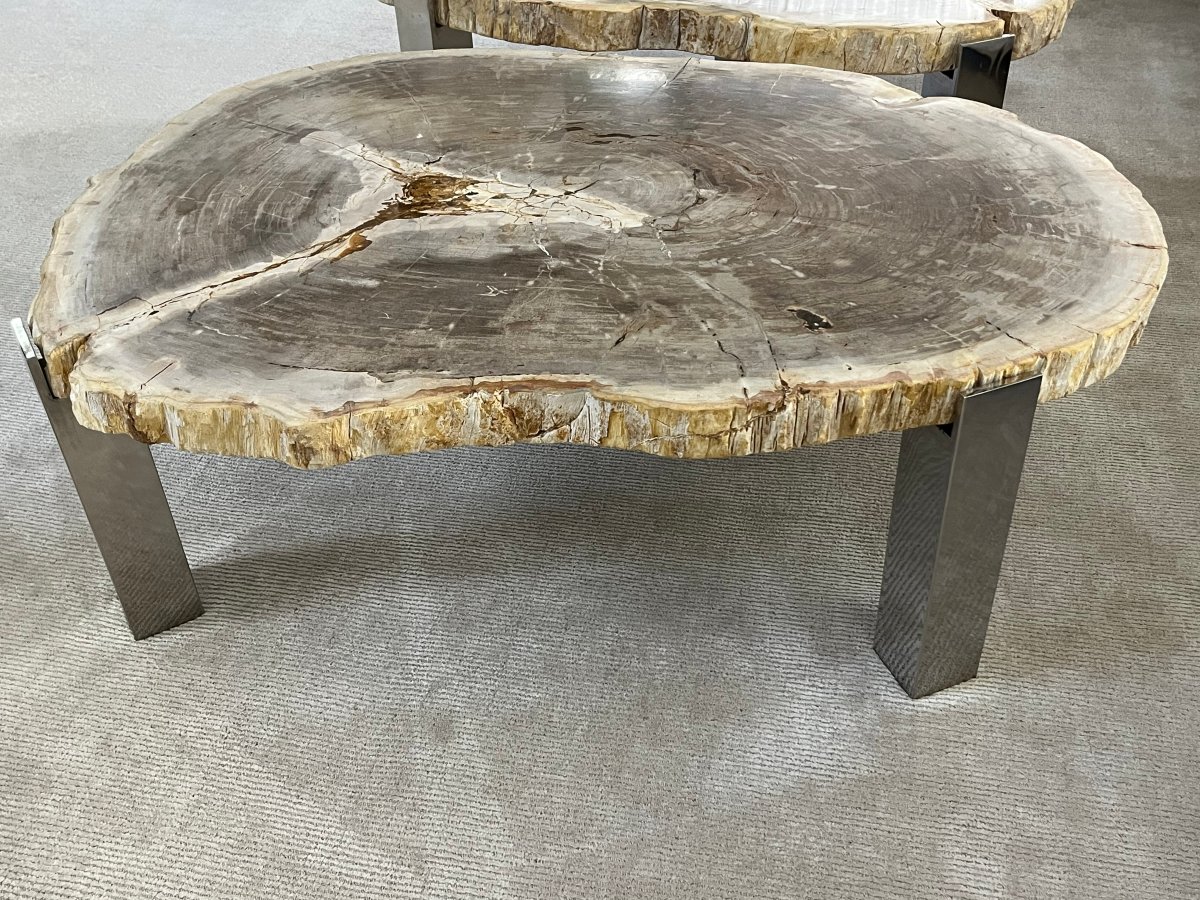
Furniture: Wooden pieces of furniture bring a natural touch and texture to any space. One of my favorite choices is a coffee table in my family room that is made of a crosscut piece of a tree trunk, revealing the circular growth rings. It’s also accented with chrome, creating a modern look.
Flooring: A popular choice, wooden floors add warmth and a natural feel to a home.
Cabinetry: Another common option, wood cabinets in endless colors, designs, and finishes can create an organic focal point in the kitchen.
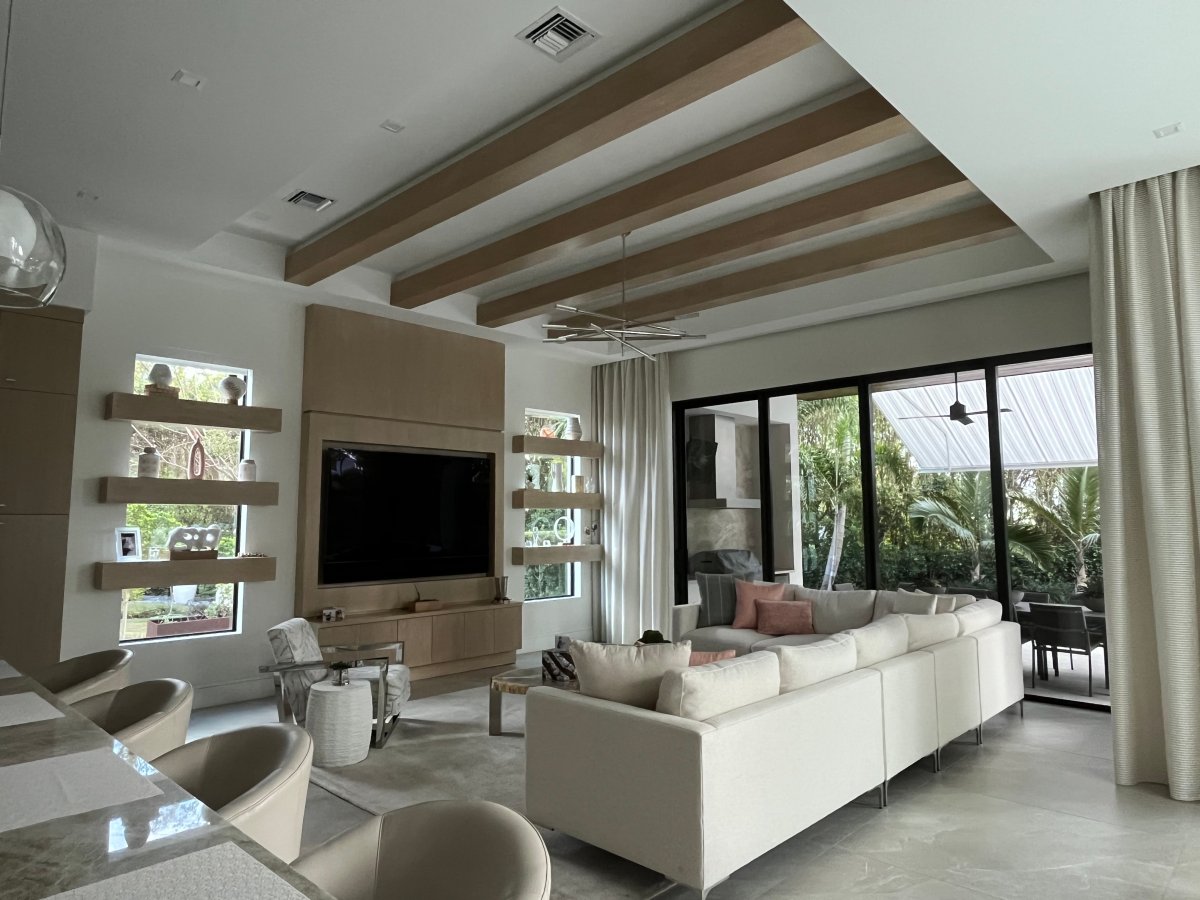
Built-in units: There are several wooden built-in units in our home, including in my husband’s office, in the family room to house the television and storage below it, and in the loft where we store games and art supplies.
Open shelving: A wonderful way to display books, home décor items, or houseplants, floating wooden shelves are both convenient and attractive. Gray wooden open shelves in my husband’s office match his built-in desk.
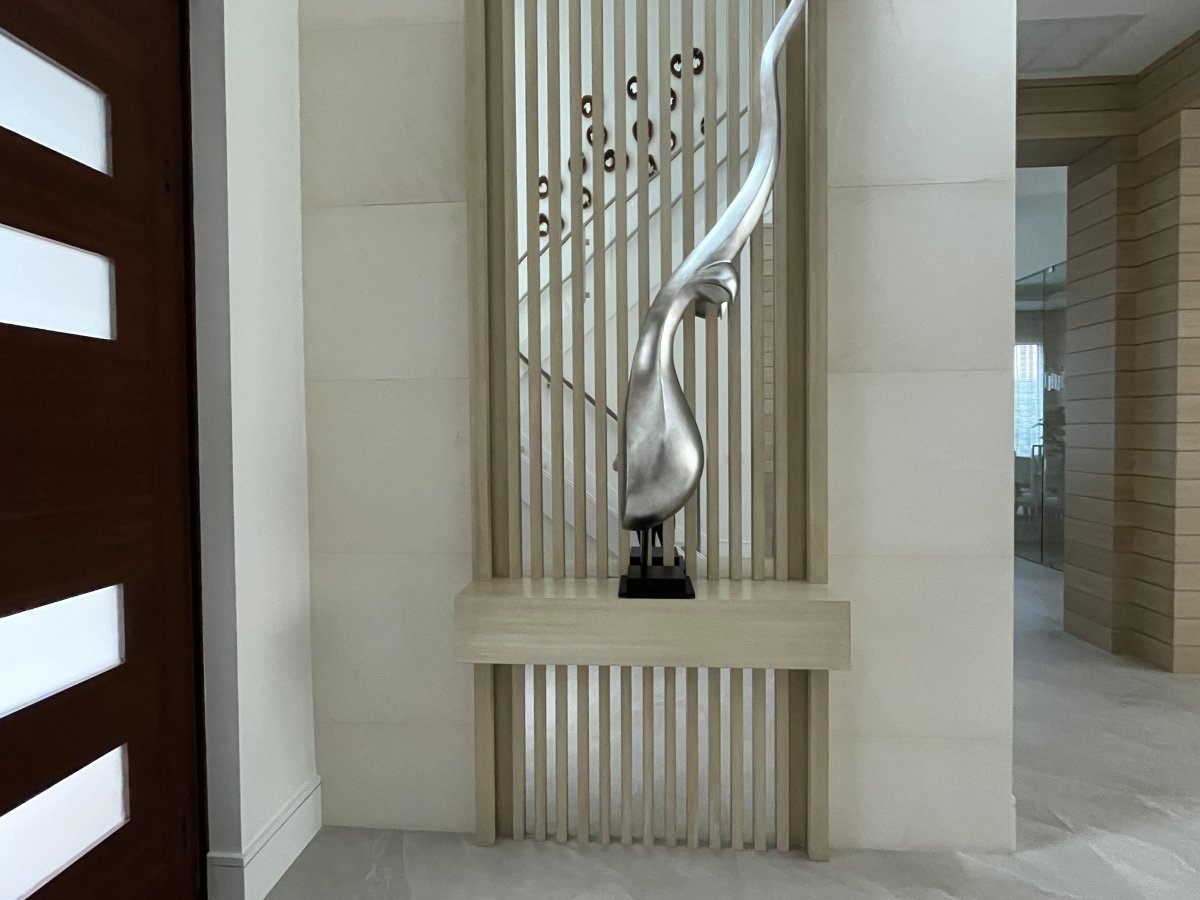
Wood paneling: Add texture, coziness, and handcrafted appeal to a space by installing a wood accent wall. Wood slat walls are a fresh take on the 1970s wood paneling, offering a sleek, simple look that is soothing to the eye. Upon entering my front door, a floor-to-ceiling wood slat accent wall makes me so happy.
Structural elements: Incorporating wooden beams, columns, or posts in a home’s design can create a sense of grounding and connection to nature. My house has several wooden beams in the living room area near the front door and wooden ceiling beams in the family room that match the built-in television unit.
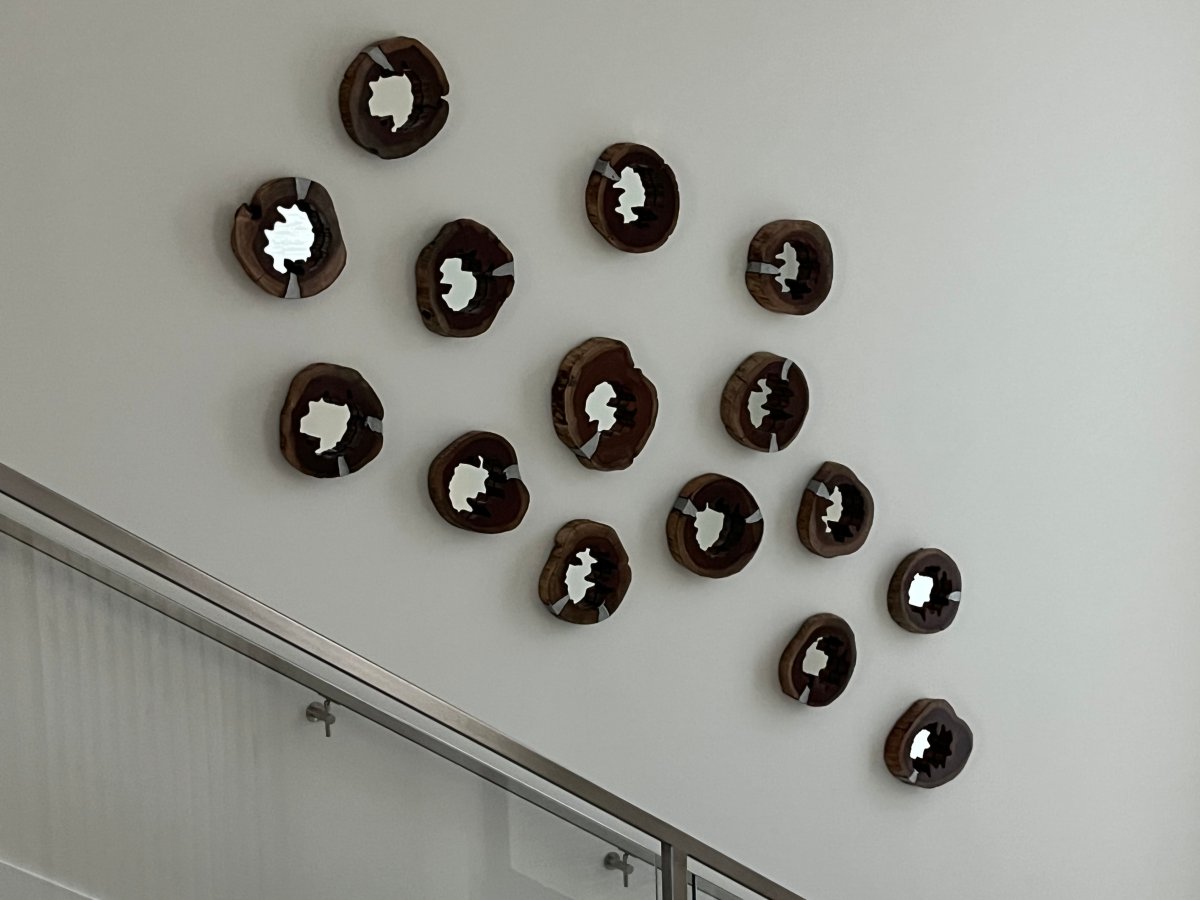
Art and other accents: Finally, you can sprinkle all kinds of wooden accents throughout your home to add character and interest, such as wooden frames, lamp bases, art, mirrors, decorative boxes, and sculptures. One of my favorite wooden accents in my home is a grouping of mirrors set in cross-cut pieces of wood, similar to the coffee table I mentioned earlier.
Tips for Biophilic Wood Design
Once you make the decision to include wood features in the design of your home, it’s helpful to follow some guidelines. The last thing you want is to overdo it and turn your home into a log cabin.
- Choose certified, sustainably sourced wood.
- Keep the natural grain for added visual and tactile benefits; don’t try to hide it with dark paint or stain.
- Avoid pieces with too many knots that can distract from the soothing contour lines.
- Pair wood with neutral palettes and other organic forms, while providing some contrast using modern materials like concrete, steel, and glass.
- Use natural light to highlight wood textures.
- Consider the amount of wood used in a space; too much wood can create chaos and overstimulation, while too little won’t elicit a beneficial response.
- Never use synthetic wood to try to replicate natural wood.