We may earn revenue from the products available on this page and participate in affiliate programs. Learn More ›
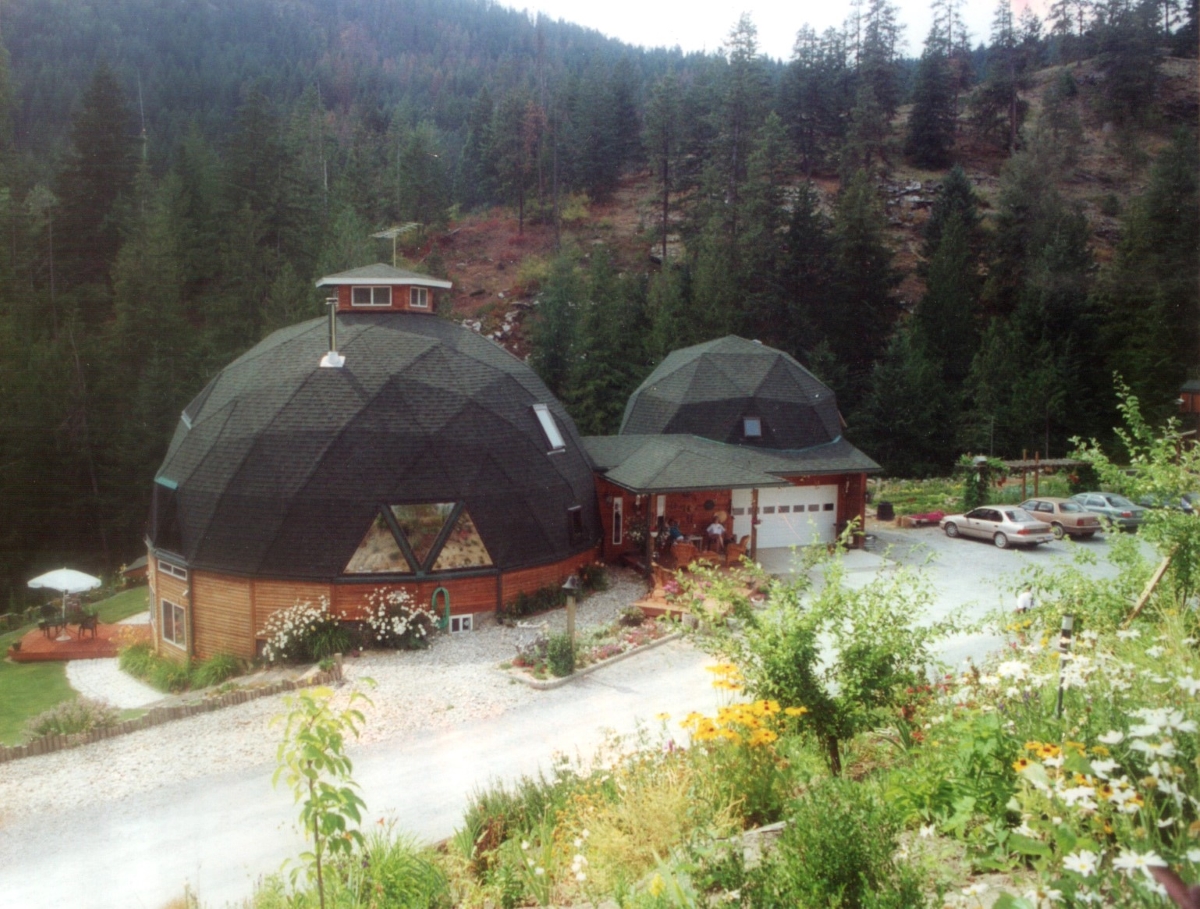
Since the 1920s, engineers and architects have touted geodesic dome homes as durable, affordable, and energy-efficient designs. Their spherical shape is formed by an interlocking network of triangles that distribute weight evenly across the roof and within the space. “A sphere takes the least surface area to cover a given volume,” says Travis Larson of Bagley, Minnesota, who built his geodesic dome home with his wife in 1980 and has retired after years in the construction business.
Larson explains that with 30 percent less surface structure in a dome than in a typical rectangular house, there’s also “30 percent less wall to lose heat through.” But while energy efficiency and alternative living may have been the draw in the 1970s and ‘80s, dome homes have plenty of other benefits. Tessa Hill and her husband Dennis Johnson, who own Natural Spaces Domes in North Branch, Minnesota, have been designing and fabricating dome homes for more than 50 years. Hill attributes some of the resurgence in the popularity of dome homes to the fact that “durability and resilience to extreme weather have become increasingly important to today’s homeowners.”
Modern dome houses are strong and weathertight, and there are plenty of floor plans and size options available. The advantages of geodesic domes for homes, cabins, and even glamping structures are clear, but I still had some questions about the logistics of dome building and quirks of living in a geodesic dome home.
1. Why would you use triangles to build a house?
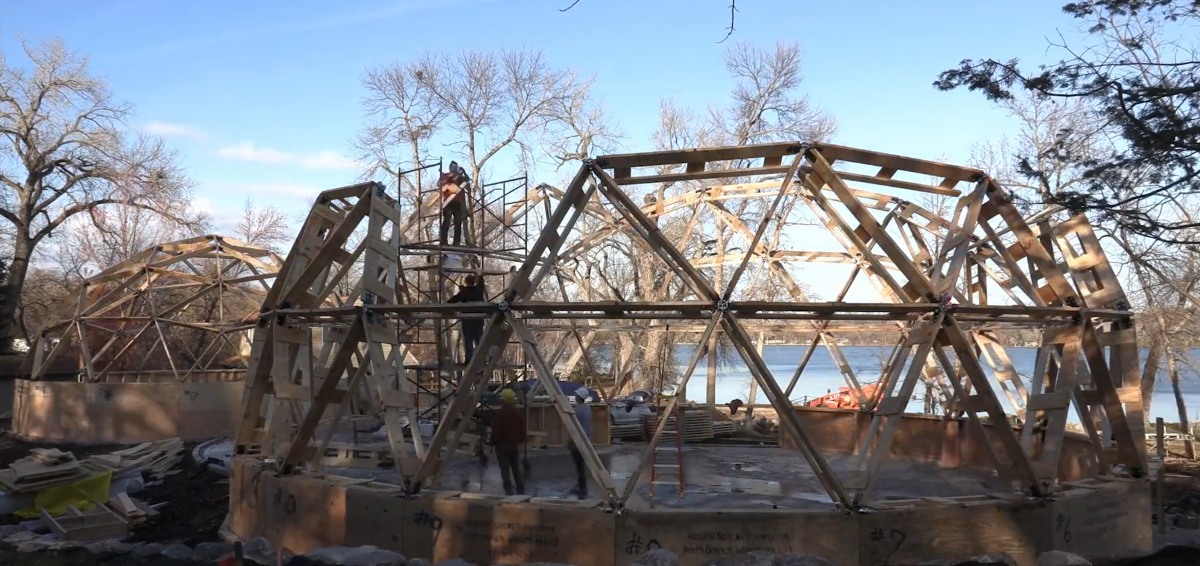
Though materials have gotten stronger and lighter since the 1920s, the essential strength of the triangle hasn’t changed. Triangles are twice as strong as rectangles. Geodesic domes combine the strength of triangles with the shape of a sphere for added toughness. “The geometry distributes loads evenly, making domes exceptionally resistant to high winds, heavy snow loads, and seismic forces,” says Hill.
Larson says that most of the domes he built “had 16-inch dome walls and struts.” Natural Spaces has learned how to produce 15- to 21-inch-wide struts. Thicker walls offer more room for insulation, improving the domes’ energy efficiency. Geodesic dome homes typically begin with a foundation (gravel or concrete) and hub-and-strut framework to form the sphere.
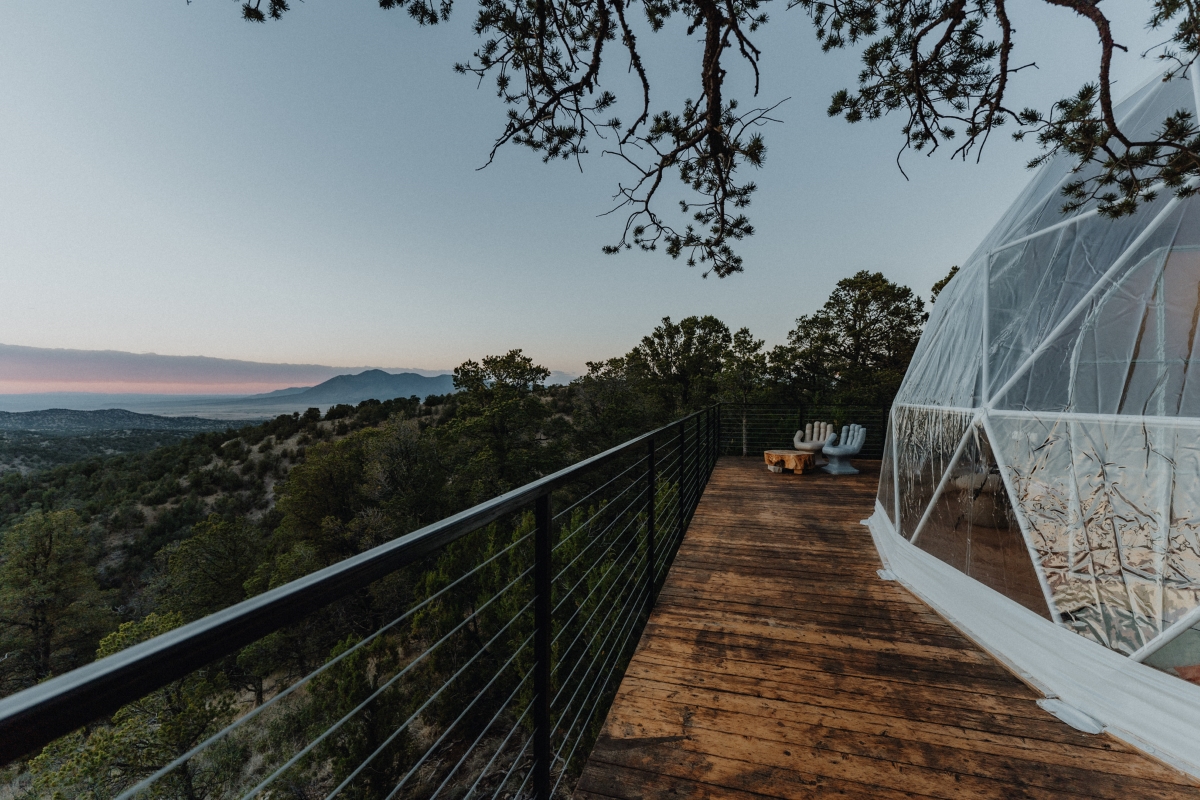
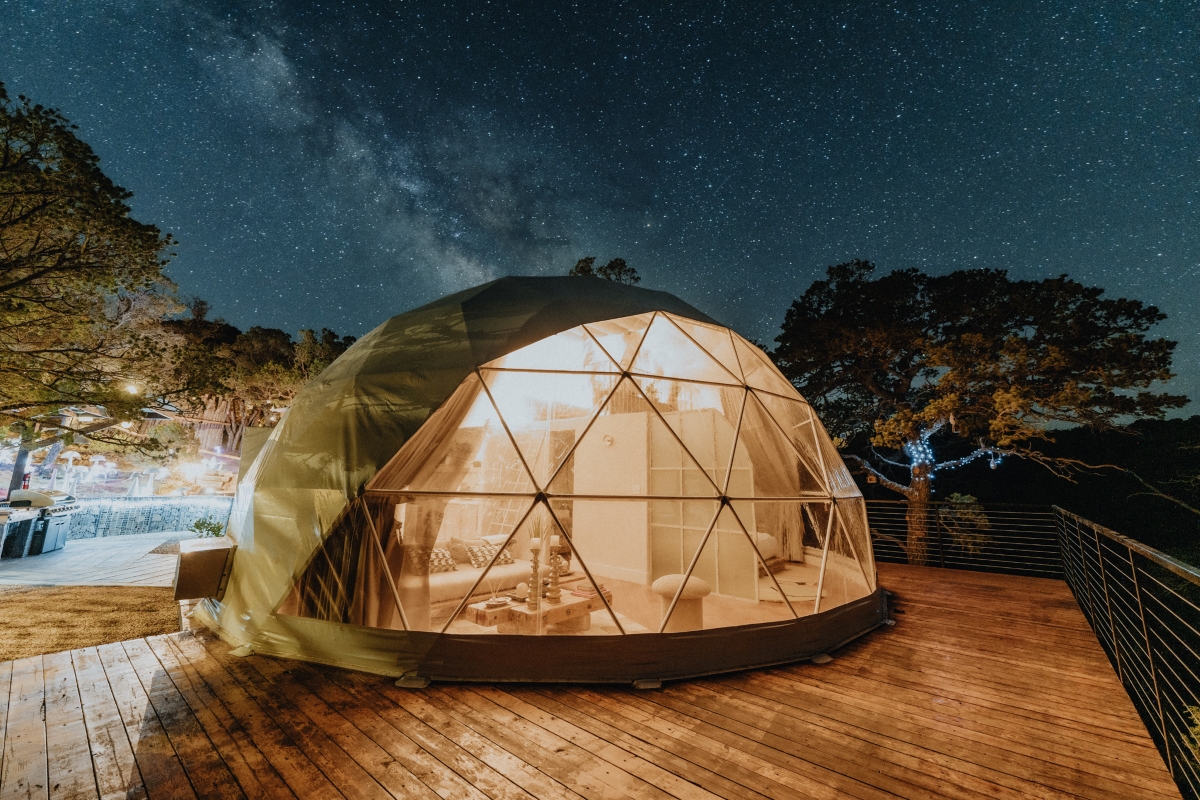
Less permanent options, such as dome tents and glamping domes, can sit directly on even ground and are a low-cost geodesic dome home option. “Our glamping domes use a traditional geodesic design with a metal skeleton frame and a durable exterior cover,” says Pelon Saenz, owner of El Mistico Ranch in Nogal, New Mexico.
2. How can I build a dome home if I don’t remember high school geometry?
The geometry skills needed to design a geodesic polyhedron framework would make my head spin. Fortunately, you don’t need to do the math yourself—you can just get a dome house kit. Natural Spaces and other geodesic home manufacturers and designers offer plans or kits in a variety of dome diameters and floor plans, as well as a range of models. You can also customize materials and features like window placement and size.
“You can get a complete kit that comes with the foundation, the floor framing, and the dome system (windows, whole works),” Larson says. And although everything needs to fit within the dome’s geometry, Larson has tricks for pulling it all together, such as using a triangle panel as a guide to cut insulation to fit.
3. How much does it cost to build a geodesic dome house?
The cost of a geodesic dome home varies depending on size, materials, and the degree of customization. Capable DIYers can save by doing most of the work themselves. Ordering prefabricated dome houses and simple materials also helps keep down the cost of building a geodesic dome. Small dome tent kits with PVC-coated covers can run as little as $1,200 to $4,000. Prices of more permanent kits vary, and buyers also need to factor in land costs, permitting costs, and the expense of running utilities to the dome site. Natural Spaces offers a construction cost guide to help their clients estimate final costs. In 2025, those costs ranged from as low as $120 per square foot for owner-built domes to $350 per square foot for licensed contractor builds.
When Larson built domes, his crew would set up and cap the foundation on-site, erect the framework and panels, and place windows. He says they could easily put up a “hub and strut or small dome in less than a day,” while large domes typically took 2 days. His clients would then find local contractors to finish the inside, saving money on housing an out-of-town crew. Larson usually returned to roof the dome a month or so later. Installing and replacing a roof can cost more for a geodesic dome home than for a traditional house and requires some skill.
A permanent dome with steel or aluminum framing can last up to 50 years, while tent-like polycarbonate domes last about 10 years.
4. What about the interior walls and ceilings—can you drywall walls that aren’t vertical?
Unless you build your dome as a greenhouse, you probably want some solid walls for privacy inside dome homes. “Tongue-and-groove wood interiors remain popular, particularly for homeowners who appreciate a warm, natural aesthetic,” says Hill. In most cases, this wood paneling also comes in prebuilt triangular sections. Larson says most dome owners opt for spruce, pine, or cedar.
While you can use drywall for the insides of the dome walls, “the installation and long-term upkeep can be more challenging due to the geometry of the structure,” says Hill. She suggests stained or painted plywood installed with lattice boards over the joints for a sleeker look.
5. How do you place furniture against the angled walls?
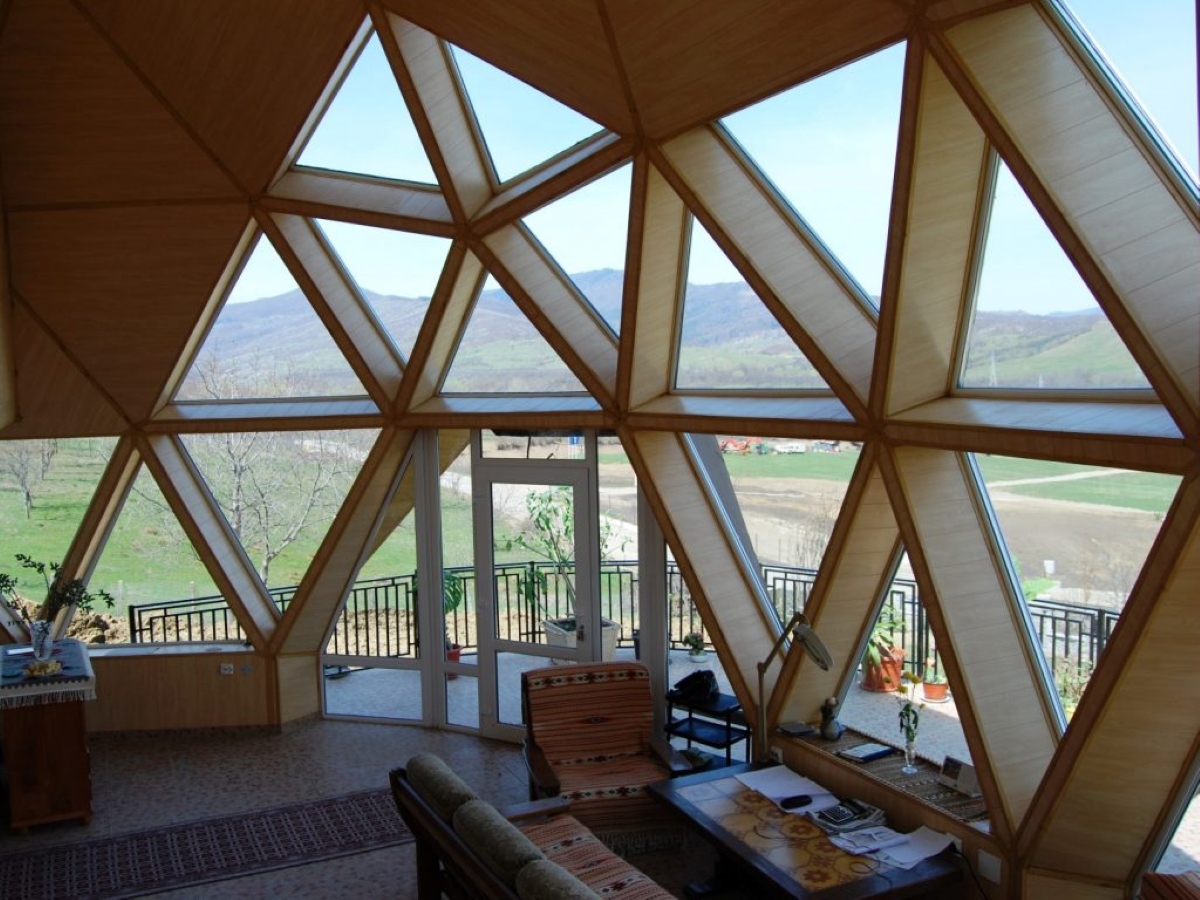
Every dome is unique, and many dome dwellers insist on maintaining those natural curves for built-ins like kitchen cabinets. Arranging furniture is “different, but not necessarily harder,” says Hill. Larson adds: “Every wall is at least 8 feet long, and you can typically put sofas and tables against the dome if you want.”
“We didn’t have any issues at all” with interiors, says Saenz of El Mistico Ranch. The ranch worked with Monica Saenz of MOSA Design in El Paso, Texas, who handled layouts and styling. In fact, dome architecture offers the ultimate open concept, with plenty of floor space to accommodate partitioned rooms, furniture, and decor. (For instance, I think I would add lots of plants.) “Once people adjust to thinking beyond straight walls, most find the space highly adaptable and creative rather than limiting,” adds Hill.
6. How do you fit a rectangular door into a triangular opening?
I imagined that all doors and windows in a geodesic dome home would have to be triangular, but dome companies have solutions for this, too. For example, manufacturers offer 1- to 4-foot-high risers to hold awning windows, and extensions allow the builder to remove three or so triangles on the bottom row and build a frame that squares up the wall. “That would contain the operable windows, exterior doors, and patio doors,” says Larson.
Larson also points out that 2-story domes need egress windows to meet building codes. For second-story egress, “we would remove one strut and frame a dormer,” he says. Though many dome windows are prefabricated to fit in a triangular space, extension framing can accommodate operable windows large enough for egress.
7. Can domes have interior walls?
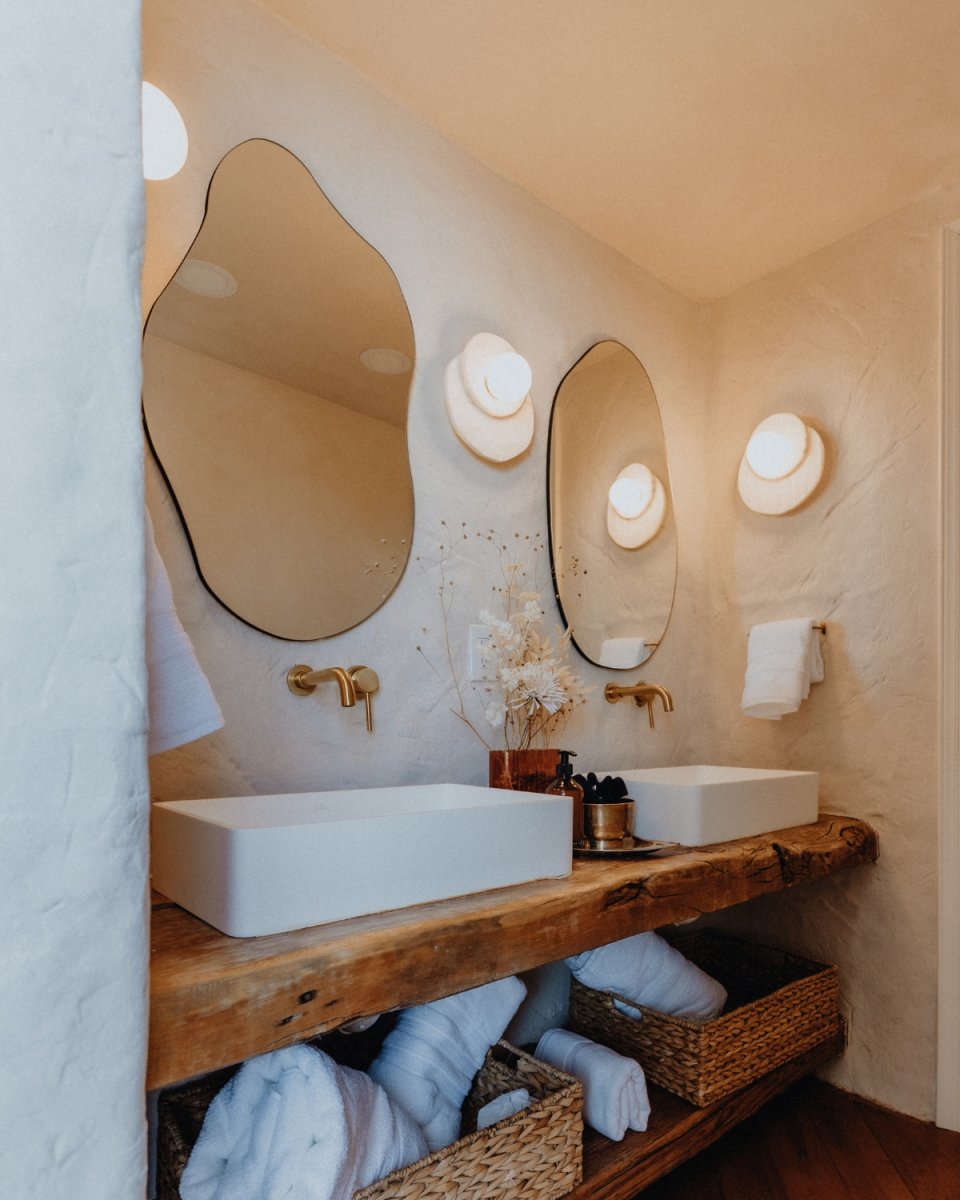
Open concepts are airy and beautiful, but there are limits. For instance, you still want privacy in a bathroom. “Since the dome’s really self-supporting, you can do anything you want inside,” says Larson. Adding 2×4 framed partition walls covered with drywall is typical, and breaking up the space is a matter of taste and design. “Many domes incorporate short vertical walls or interior partition walls,” adds Hill. These can provide privacy, comfort, and convenience without affecting openness and views.
For El Mistico Ranch’s domes and even many permanent dome homes, maximizing views and comfort are key. “We were very mindful of spacing and orientation to maintain privacy from neighboring units without sacrificing the landscape experience,” says Saenz, of El Mistico’s domes, which all face north toward mountain views.
8. How do you hang window coverings and artwork?
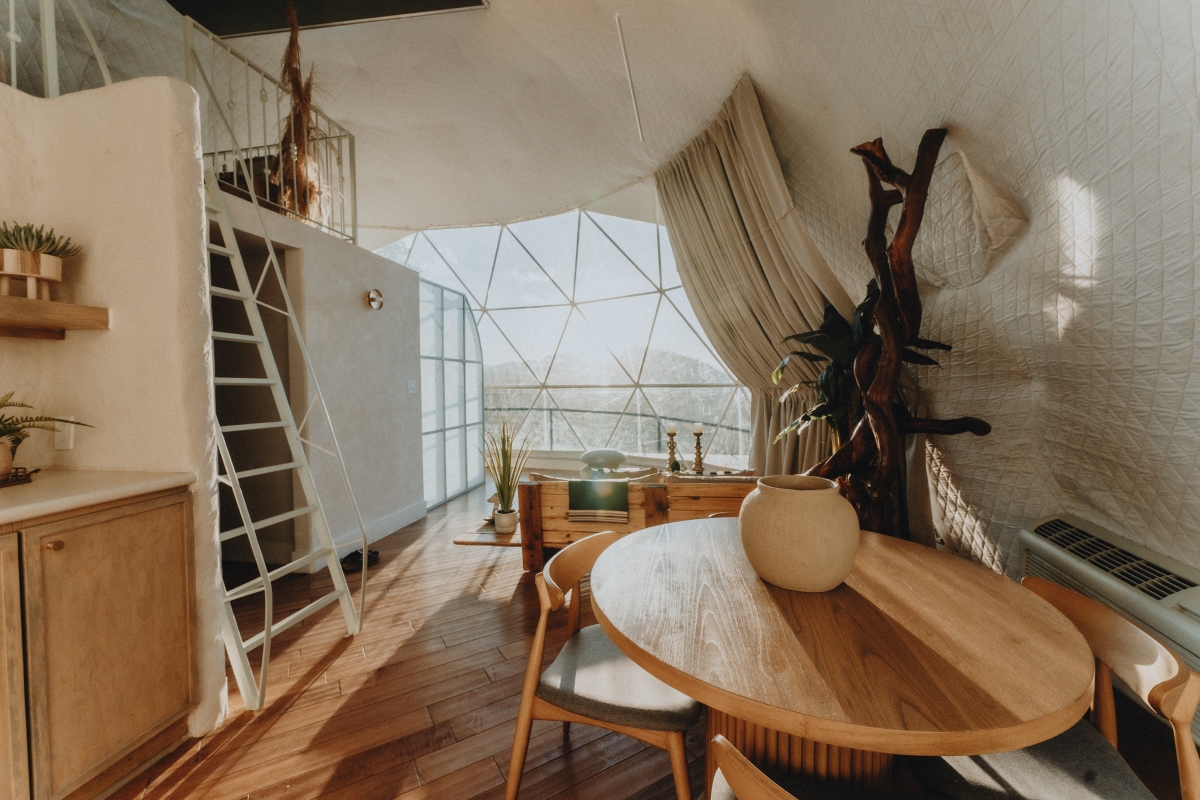
Larson notes that the sloping walls of dome homes don’t work well for hanging artwork. “But you have all your interior partition walls for that,” he says. Hill often sees dome owners displaying art on dome house interior walls or vertical sections, “where it becomes a focal point.” She adds that while there are many creative solutions for window coverings, owners often opt to let light shine in instead of blocking it.
9. What’s the temperature like inside the domes?
“I have a seven-window arrangement, side by side, and it all faces south,” says Larson. So “you’re gonna get good heat in winter, but bake in summer.” Adding operable windows up high or on the north side of the dome can help cool things down in summer. He adds that his dome requires no air conditioning and that the basement below the home is a nice summer alternative on the few hot days. Otherwise, the sphere’s efficient temperature distribution and thick insulation help keep a geodesic dome warm in winter and cool in summer.
El Mistico Ranch’s glamping domes include an inner insulated lining that helps regulate temperature year-round for summer and winter comfort.
10. Where do you hide plumbing, HVAC, and mechanical systems?
Any building in a spot like northern Minnesota needs some form of heating. With its angular design and openness, a dome doesn’t seem to offer much space for ductwork and vents. “Radiant floor heating works exceptionally well in dome homes,” says Hill. Heat rises, and the dome circulates the warm air efficiently.
The thick walls also leave plenty of room for running electrical, says Larson. Insulated wall cavities can hold electrical or other mechanical runs, and partition walls are excellent for stacks and plumbing. Contractors can install heating or ductwork in floors or basements. Larson says he has only one large cold air return in his dome home, since its openness requires returns only in larger, sealed-off rooms.
11. What’s the best thing about living in a dome home?
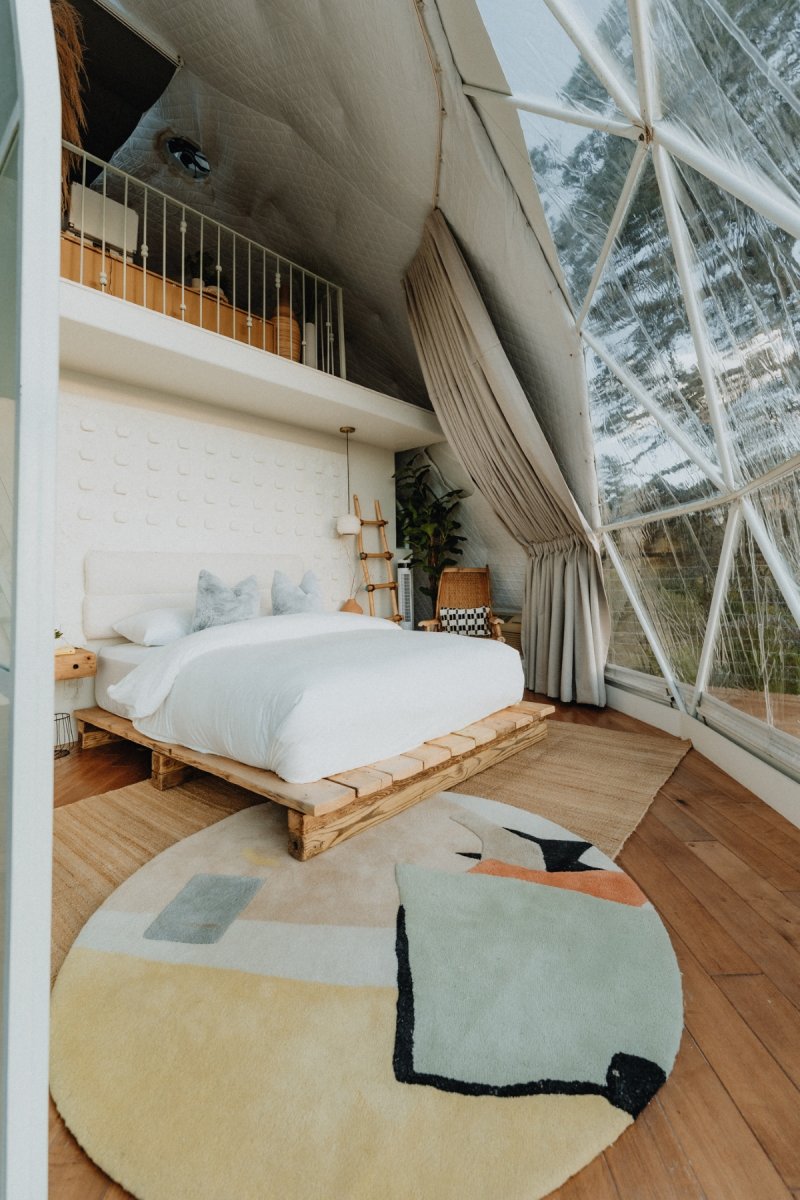
Larson loves the openness of dome living, the tongue-and-groove paneling, and the big triangle windows. He admits that his “kids were kind of ostracized” when they were younger and domes were less prevalent. “They thought we were rich, but it really didn’t cost that much, and we built it ourselves,” he says.
Hill loves the combination of a dome’s structural strength and the interior experience. “Dome spaces are open, calm, and light-filled,” she says. “Many homeowners comment on what they describe as the spirit of the dome and the sense of peace and connection it provides.” Reviews on stays in El Mistico Ranch domes use words like “enchanting,” “great views,” “immersion in nature,” and “coziness.” As for his dome home, Larson says, “It’s a fun place to live, and I really enjoy it.”