We may earn revenue from the products available on this page and participate in affiliate programs. Learn More ›
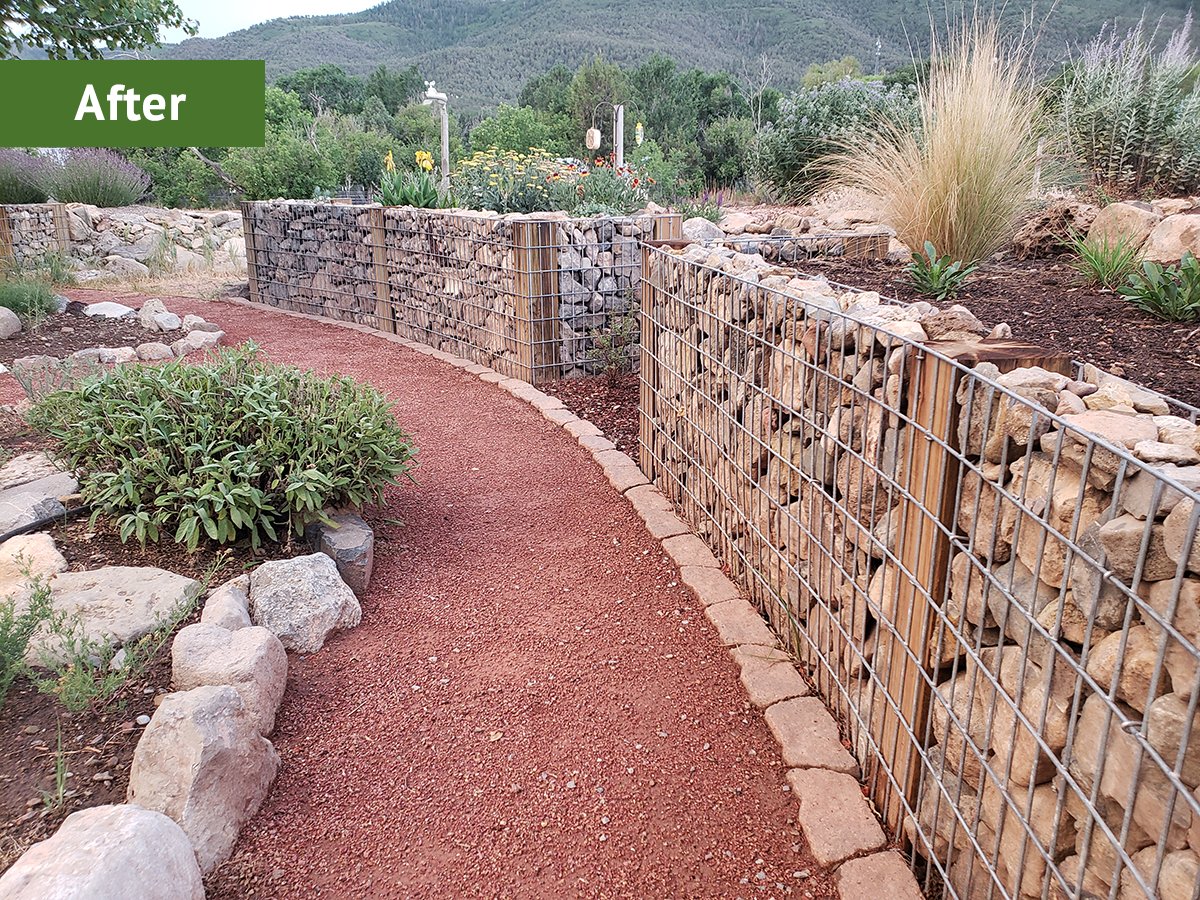
“When the landscape gives you rocks, make rock walls” is our tortured twist on an old metaphor. My husband and I have built numerous gabion walls over the years, filling metal fence frames with mostly existing rocks from our Southwestern yards. Our largest DIY gabion wall project solved the problem of crumbling rock sides along an ornamental garden. Since moving to another property, we have used gabion walls to create a raised bed and a few small retaining walls in a naturally sloped area of the backyard.
To me, a gabion wall is one of the easiest ways to create dividers and raised beds against fences or slopes, all with a more natural look than other fencing materials like stacking pavers for hardscaping. When done correctly, they also are durable and a fun DIY project, especially if you already have rocks on hand.

Why We Opted for Large Gabion Walls
Our first DIY gabion wall project was large but necessary. The property we purchased in southeastern New Mexico had a large circular garden that the home’s original owners had designed and built to precision. The border wall inside the garden was made of rocks stacked along a small slope. Between plant roots, deer, and gophers, some holes and small avalanches began to appear. Repairing a cave-in was really difficult, since it would cause adjacent slides.
Switching to gabion walls was the perfect solution for using the existing rocks, halting erosion and damage, and even expanding the garden’s upper beds to include accessible raised beds around most of the garden. It was also less expensive than other options—we already had the main filler material and devised a way to DIY our own frame instead of having to purchase gabion wall baskets.
Why We Also Built Small Gabion Walls
After our initial project with large curved gabion walls, we felt pretty confident in building other sizes. These walls can be a quick and easy hardscaping solution for adding small retaining walls. We had a few naturally sloped areas in our Albuquerque yard where a gabion wall helped break up the look and helped terrace a slope.
We also added a gabion wall to create a raised bed where the footing of an existing block fence showed due to the yard’s slope. By adding the wall and filling in behind it, we could hide the ugly part of the fence and add a new raised bed for wildflowers. This time, we had most of the filler rocks we needed, but bought some colored rocks to mix in and to fill all of a small retaining wall.

How We Framed Our Gabion Walls
With an existing circular garden and bordered path, we needed to curve our large gabion walls slightly and custom-fit them to the existing design. To duplicate the function of commercial baskets available for gabion walls, we used wooden beams and horse fence panels (with 2-inch by 4-inch openings) to create a hollow fence structure. Placing the beams no more than about 5 feet apart within a wall or section provided stability and helped to curve the wall, since the metal panels are only slightly flexible.
We dug holes and sunk the beams in the ground 10 to 12 inches deep for stability. You can further secure them by pouring quick-setting cement into the hole once the beam is level, though we only had to compact and wet the soil around the beams. We dug a shallow trench between beams to sink the panels a few inches (below the level of the bordering pavers). We cut the panels to fit the height and width of the fence and secured them to the beams by hammering in galvanized fence staples.
Because the horse panels we bought measured 5 feet by 16 feet, we could use one panel cut to height to span several supporting beams. Once the front and back panels were in place, we could begin filling the baskets. In summary, we used the following tools and materials to build the frames:
- Post-hole digger
- Pressure-treated wood beam (6x6s for our large walls, but 4x4s or 4x6s on others)
- Galvanized horse fence panels
- Galvanized 9-gauge fence staples
- Galvanized tent stakes (or similar bendable metal stakes at least 2 inches longer than the basket width)
- Bolt cutters to cut fence panels
- Level
- Hammer
- Needle-nose pliers

How We Filled the Fences
The relatively small opening in our fence panels accommodated a variety of rock sizes. We removed and sorted some of the existing walls’ rocks, filling wheelbarrows, and left some others in place to select as needed.
We first laid a layer along the bottom of each section using some of the larger and flatter rocks or construction materials (like busted-up concrete) if available. We then began setting each rock in by hand, turning them if necessary to fit. We also turned some attractive rocks on their side to face the front of the wall. I always worked in layers, moving horizontally across an entire lower row of a section before going up a level.
As we filled the frames, we wanted the rocks to fit tightly enough to stay in place but not so tightly that they would push against the metal panel and bulge the walls. So we stopped every foot or two and intermittently placed spacers to help hold the basket width steady. As I finished filling a row or two, my husband would use needle-nose pliers to wrap galvanized tent stakes from the front to back of the fence where needed to prevent bulging, and I would continue, fitting rocks on the next layer up around the metal stakes. We did not add fencing to the top of our baskets, but saved smaller and attractive rocks to place along the top layer of each fence.

Tips on DIY Gabion Walls
You can use your imagination and existing materials in gabion walls, opting for whatever height, width, beam size, and rock filler that you like. For best results, consider the following tips:
- When calculating height and purchasing materials, remember to add the underground depth of the beams (8 to 12 inches for stability) and the metal panels (2 to 4 inches).
- Use a heavy-duty metal panel, not chicken wire, which will bend and bulge easily.
- Preserve the beams longer by staining or sealing them before beginning.
- Level beams in all directions (from ground to top, height with other beams, and alignment along front and back).
- Consider trimming large panels; ours did not fit in the pickup bed, so we brought along gloves and bolt cutters to cut them to the height we needed (along the long side) in the Tractor Supply parking lot.
- We used the short sides of the leftover panels to create ends for our fences.
- The weight of the rocks can increase and shift as you add layers, so take steps to add a tightening spacer.
- If you purchase landscaping rocks as filler, make sure they are large enough to match the grid openings in the panel you choose.
- If you don’t want to take the time needed to place socks by size, shape, and appearance (though that was my favorite part), use rocks similar in size and color, but be careful when filling your baskets to avoid damaging the panels or overfilling areas.
- After completing the fence (or before mounting panels if you prefer), you can use a grinder to smooth out rough cuts on the metal.
- If you backfill behind the walls to create raised beds, recycle large sheets of cardboard to lay against the back of your fence to help prevent soil from pushing into the wall as you add it. The cardboard eventually will break down; you can slice off any that shows along the top.