We may earn revenue from the products available on this page and participate in affiliate programs. Learn More ›
When you invest in a new set of tools or your existing tools break beyond repair, the next most obvious step is to get rid of your old tools. The problem is that most tools cannot just be tossed in the trash for curbside pickup. This is especially true for any tools that have batteries or internal electronic components.
In addition to recycling programs and alternative methods of disposal, donation, or second-hand sales, your local government and local waste management facilities will likely have recommendations and regulations for how to properly dispose of old tools. So, before making the mistake of setting your old tools out for curbside pickup, use this guide to find out how to recycle old power tools properly.
How to Recycle Working Tools
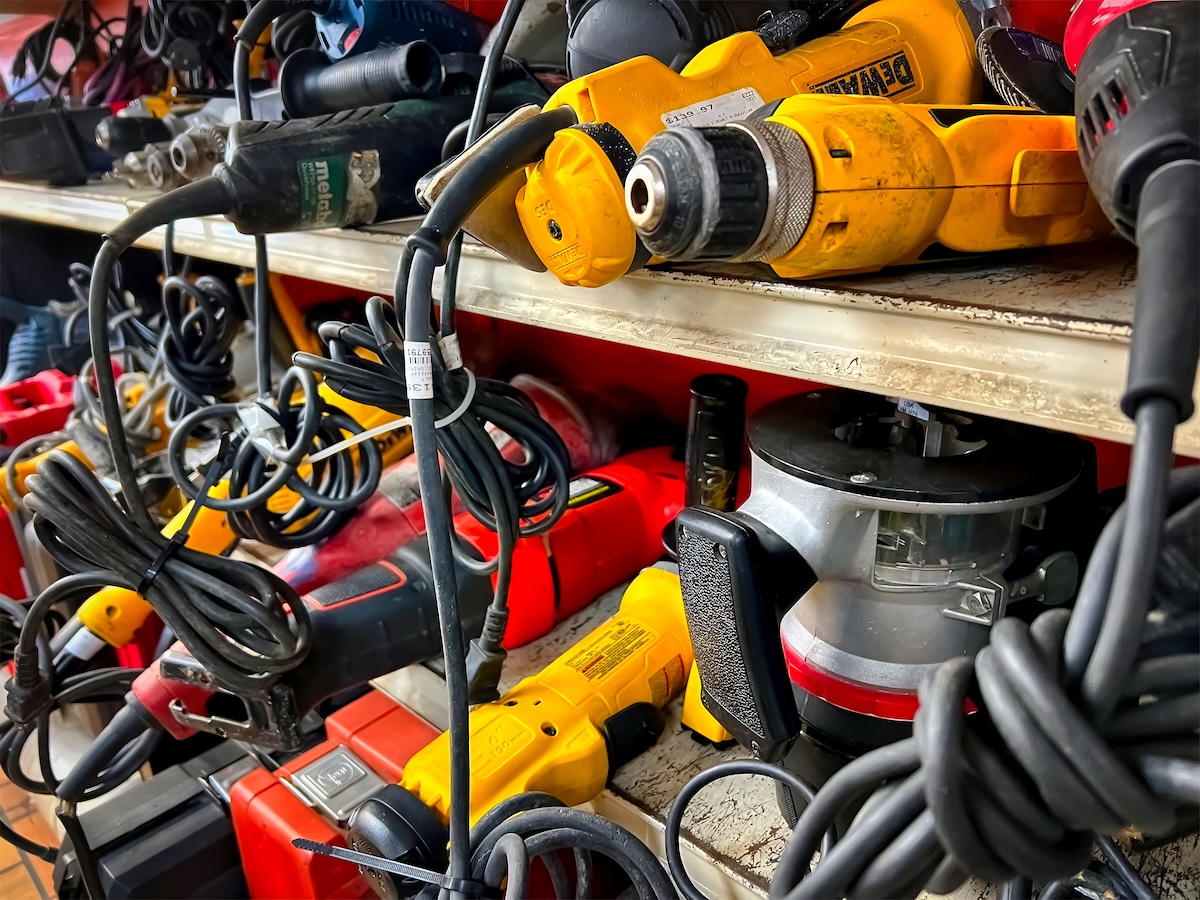
Recycling is not only intended for broken tools and parts, but you can also recycle any working tools that you are no longer using. “If a tool is still in good working condition, the best option is to offer it for sale or donate it to someone who can use it. Extending the life of a tool is the first and best way to ultimately conserve resources and reduce environmental impact,” says Dan Fitzgerald, Senior Director of Sustainability at Stanley Black & Decker, Inc.
Putting your old working tools up for sale on an internet marketplace is often a fast, reliable way to ensure the tool goes to a new home instead of ending up in a landfill. This method can also give you a small return on your original investment. If you aren’t worried about recouping the cost of the tool, then try reaching out to a local community garden or a secondhand shop to donate the tool. There are also companies like Hilti that offer buyback programs for their products so that they can recycle the component parts internally.
How to Recycle Broken Tools
Dealing with broken tools can often be more straightforward than trying to sell lightly used tools. However, “broken tools should first be investigated for repair before considering recycling,” recommends Fitzgerald. “Stanley Black & Decker offers services where replacement components can be purchased to keep your tool going at toolservicenet.com.”
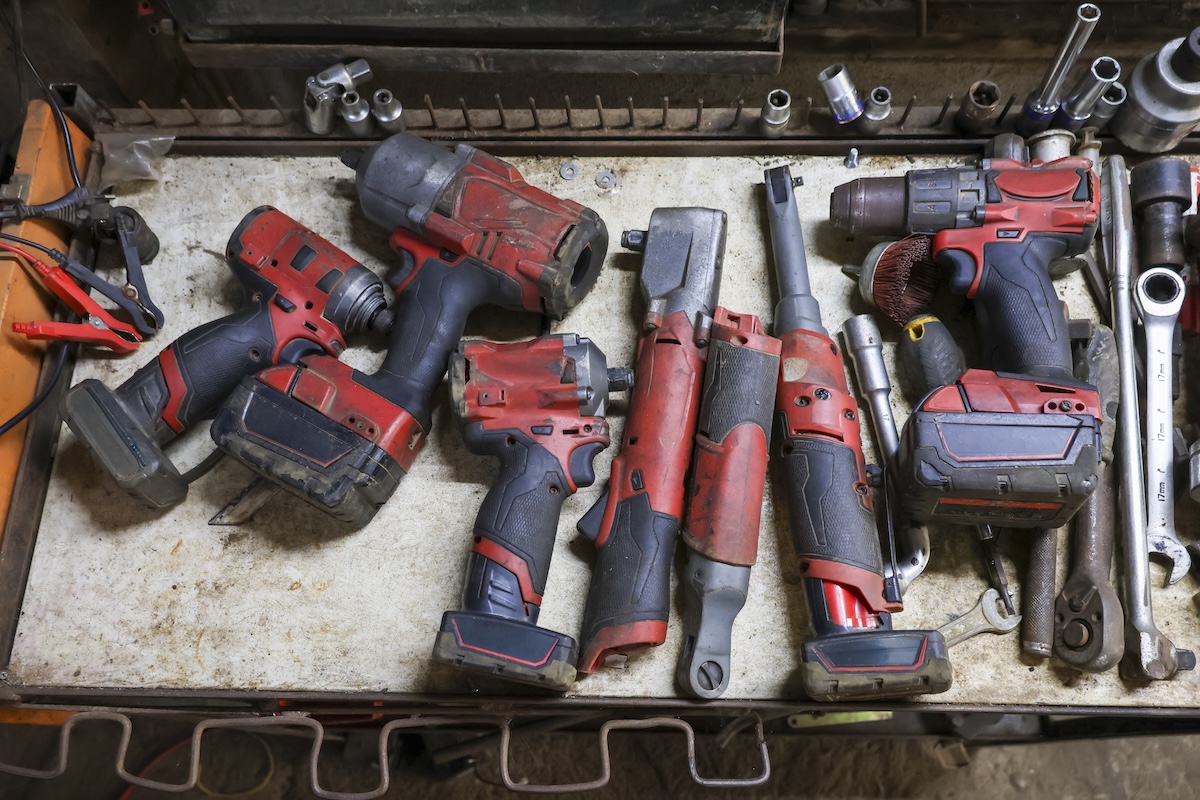
If you have determined that a tool cannot be repaired, then your next step is to look into local waste collection facilities. Some tools, like hammers, wrenches, and screwdrivers, are easy enough to take to a scrap yard, but tools with integrated batteries or internal electronic components need to be taken to municipal e-waste collection centers or specialized recycling companies.
Alternatively, you may be able to take old, broken tools to businesses such as Best Buy for e-waste recycling, while some tools could be disassembled and sold for parts to those who want to repair their existing tools.
How to Recycle Tool Batteries

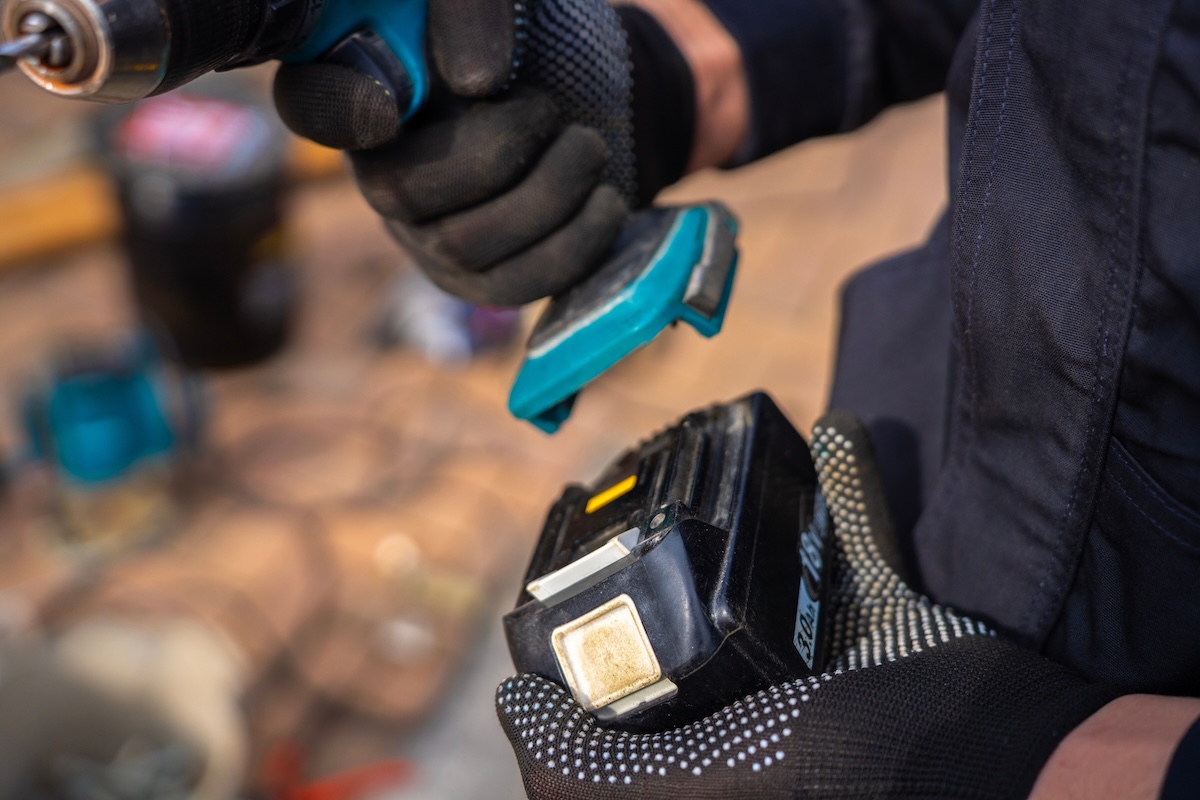
One of the main difficulties with recycling your old power tools is figuring out how to recycle tool batteries. Never put batteries into your household waste as these batteries can be crushed during trash collection or at recycling facilities, potentially causing fires and endangering waste management workers. One option is to take these batteries to a retail drop-off location, like those offered at some Best Buy, Lowe’s, and The Home Depot stores. The Battery Network offers a location-based searchable list of local retailers that accept old batteries.
Another option is to head to a local e-waste recycling facility, though if the battery is swollen or leaking, it cannot be placed in a standard drop-off bin. Instead, contact a hazardous waste facility for collection. Fitzgerald notes that “when recycling tool batteries, it’s essential to remove them from the tool unless the battery is permanently integrated, as is sometimes the case with products like cordless hand vacuums and smaller drills and screwdrivers. Removable batteries should always be recycled separately from the tool itself.”
How to Recycle Tool Accessories
Tool accessories like drill bits, blades, sanding discs, and even plastic cases may need to be handled differently than the actual tools. However, it depends on the accessory’s materials and whether or not they contain any electric components like wires or lights.
Generally, metal tool accessories, like bits and blades, are the easiest to recycle. Simply take them to a scrap metal yard or to a local recycling facility. Accessories with a significant amount of plastic or e-waste will need to be recycled through an e-waste recycling facility or through a specialized recycling program. You may also be able to send accessories to companies like TerraCycle.
Are old tools worth scrapping?
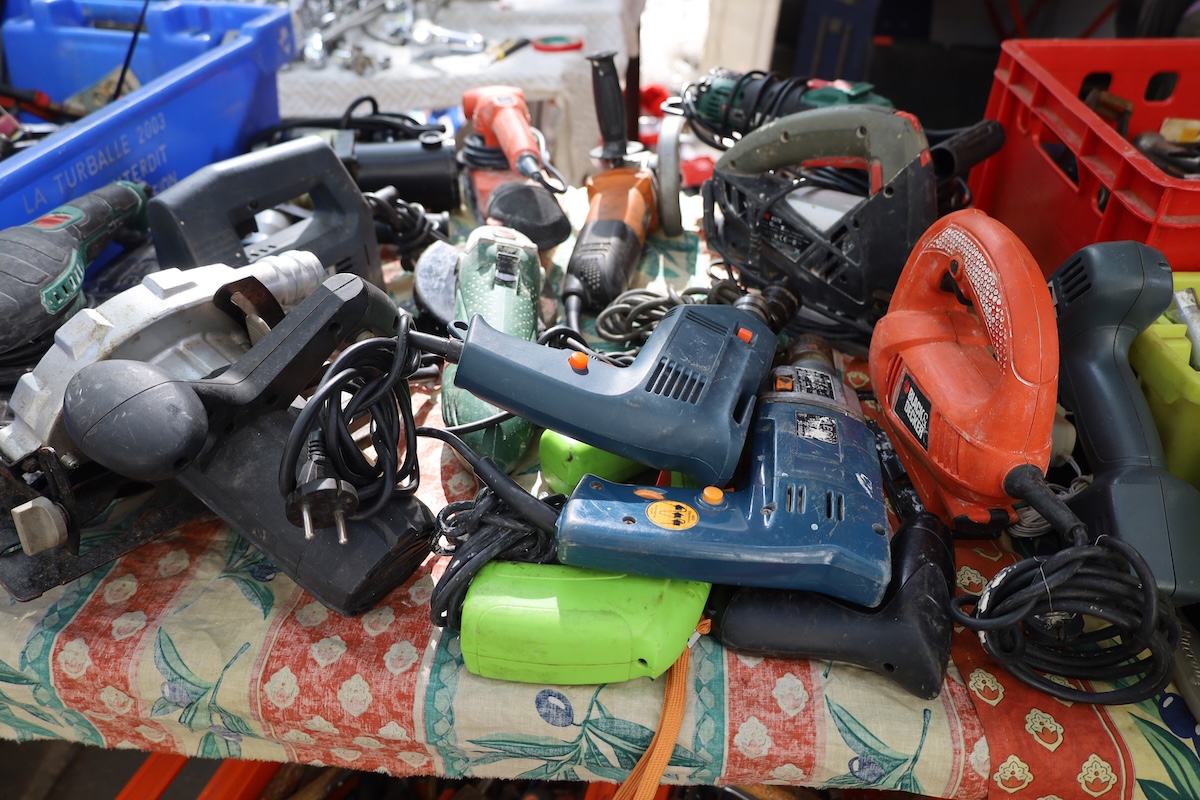
If you are looking to make money on your old tools, then taking them to a scrap yard isn’t usually the best option. Instead, try to sell any lightly used tools online to recoup some of the initial cost. However, if you are simply looking for a place to dispose of your old tools safely and responsibly, then a local scrap yard can be an effective choice.
While broken metal tools can be brought to a local scrap yard since metal is highly recyclable, broken power tools, like drills, saws, and drivers, can also be stripped for copper, motors, and aluminum. If a tool is broken, damaged, or beyond repair, you may want to keep it in a designated bin where you can collect old tools that are ready for disposal so you can make fewer trips to the scrap yard. (Just be sure to remove the batteries and recycle those properly before putting them in your collection bin.)
Are there programs available for tool recycling?
Trying to figure out where and how to recycle your old tools? There are many resources available, both nationally and locally, so it’s worth researching the best options available for you for the specific tools, batteries, or accessories you want to recycle. One of the easiest methods is to search for applicable recycling centers through your local government’s website, or through dedicated sites like Earth911 and Recycle Nation.
You may also be able to find companies and manufacturers with sustainability programs that are set up to take old or broken tools for responsible recycling. “In the U.S., we partner with The Battery Network (formerly Call2Recycle US), and in Canada with Call2Recycle to ensure responsible end-of-life battery management,” says Fitzgerald. “Additionally, tools and tool accessories can be recycled through…Terracycle programs” including the following:
- Tools and Products with Non-Removable Batteries:
- Tools and Products without Batteries or with Batteries Removed:
Tool Recycling Tips
When old tools are recycled, the materials and component parts can be reused rather than just taking up space in a landfill. But knowing how to recycle old tools isn’t always straightforward. Use these helpful tool recycle tips to make the process easier, so you can keep your garage and workshop free of clutter.
- Never place lithium-ion or other rechargeable batteries in household trash or curbside recycling.
- Investigate whether local electronic drop-off locations will also accept power tools.
- Take advantage of local drop-off sites. It is often more efficient and environmentally friendly than mailing in a single tool, as it consolidates shipping and reduces the carbon footprint of getting the product back to the recycling center.
- Separate metal parts from plastic, wood, or fiberglass handles before recycling.
- Drop off old power tools at some manufacturer service centers.
- Remove all batteries (lithium-ion, Ni-Cd) before bringing them to designated, specialized depots to prevent fire hazards.
- Take metal tools without plastic handles to a scrap yard.
- Donate usable tools to organizations like Second Chance Tools.
- Let professional recycling facilities take apart tools to remove copper components.
- Do not throw away battery chargers. They contain copper and can be recycled.
- Remove excessive dirt or mud before recycling. However, tools do not need to be clean to be accepted for recycling.