We may earn revenue from the products available on this page and participate in affiliate programs. Learn More ›
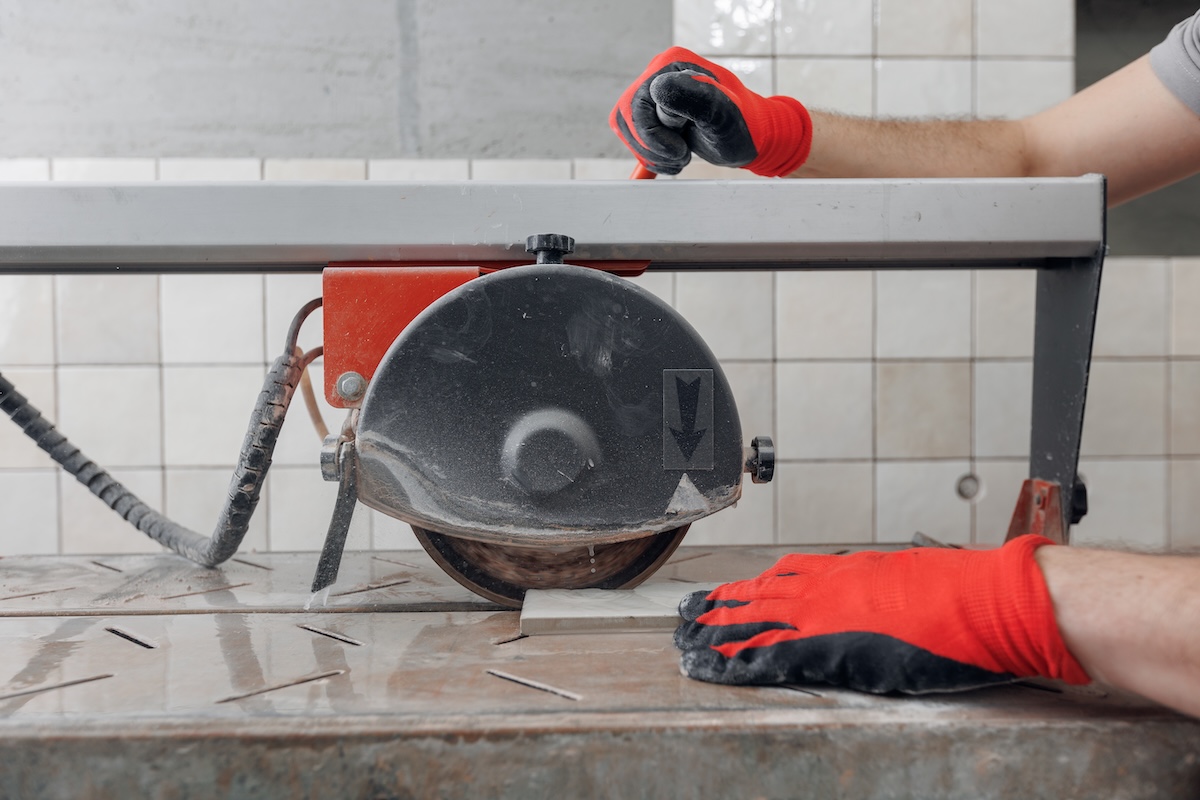
There’s no need to avoid a tiling project just because you’ve never used a wet tile saw. With some simple setup advice and careful execution, you can get started cutting tile for that new bathroom floor or kitchen backsplash.
“Slow and steady wins the race,” says Andy Doyle, a NARI-certified remodeler who specializes in kitchens and baths at Doyle Remodeling. “Take your time and invest in the proper tools, and your tile project can be a success.”
Whether you rent a wet saw or buy one, these guidelines will teach you what you need to know to use a wet saw to cut tile.
Why use a wet saw to cut tile?
While the labels “tile saw” and “wet saw” are often used interchangeably, “tile saws” is a broad category that includes wet saws. The two main categories of dry-cutting tile tools are tile cutters and circular saws.
- What is a manual tile cutter? A manual tile cutter has a hardened wheel that scores the tile. You then press the handle down firmly to use the breaker foot to snap the tile at the scored line. Manual tile cutters, such as the QEP 24-Inch Manual Tile Cutter, are inexpensive and easy to set up, but cutting tile with them can be slow and requires practice, and most are not suitable for natural stone tiles.
- What is a powered tile cutter? Powered dry tile cutters like the DeWalt 4⅜-Inch Wet/Dry Handheld Tile Cutter feature circular blades. They work quickly and are less expensive than wet saws, but you’ll have to deal with a lot of dust. They are also more prone to chipping tiles than wet saws are.
- What is a wet saw? Wet saws are powered tile saws that use water to cool the blade and manage dust. They also have other features that make them easier, faster, and safer to use than dry saws. DeWalt’s 10-Inch Wet Tile Saw With Stand is the top pick in our guide to the best tile saws.
Buying vs. Renting a Tile Saw
A high-quality wet tile saw with a stand can cost up to $1,000. The expense might make sense if you plan to do a great deal of tile work. But if you’ll be cutting tile for just one project, renting a wet saw will probably be lighter on your wallet. It will also save you from having to maintain the saw or find a spot to store it. However, if you have only a few straight tile cuts to make, consider purchasing a manual tile cutter at a fraction of the cost of a powered tile saw.
• Rent a wet saw if you have a lot of tile cuts to make for just one project.
• Buy a wet saw if you have a lot of tile cuts to make for many projects.
Parts of a Wet Saw
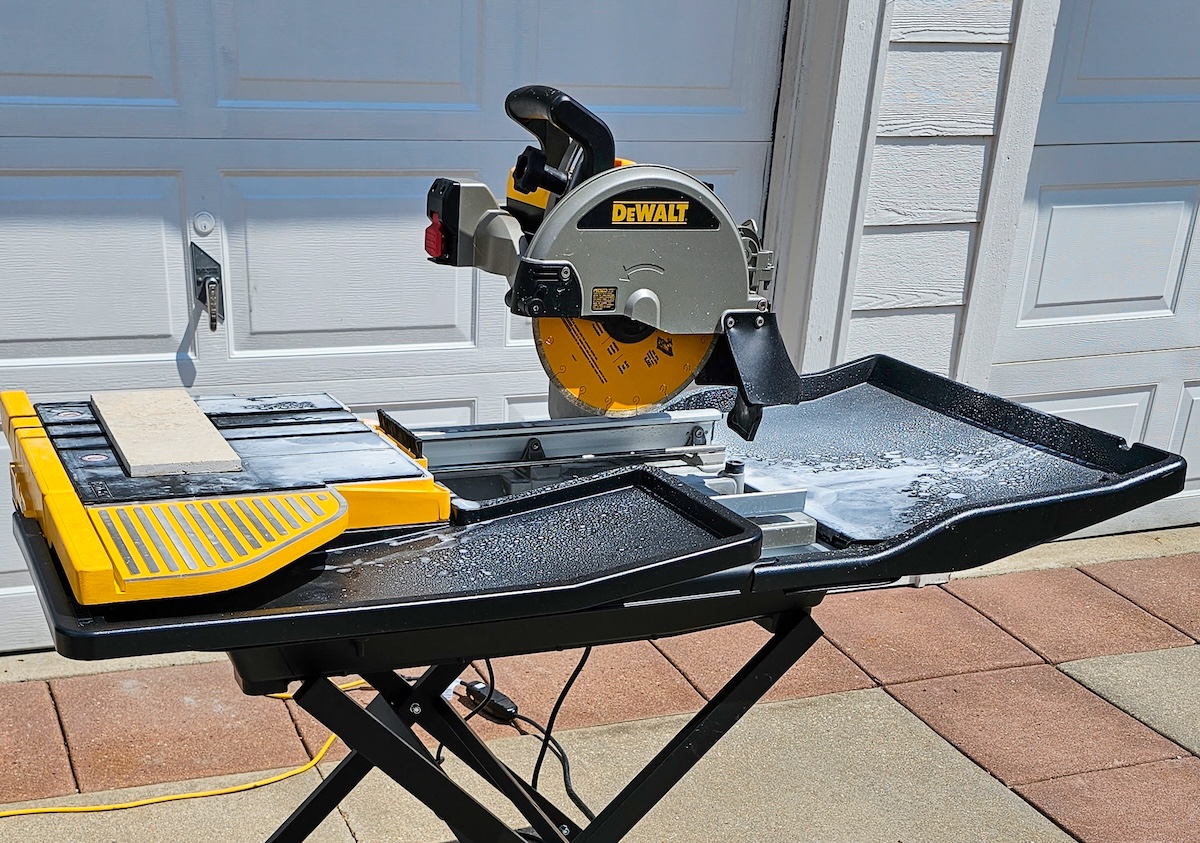
Depending on the saw’s design, either a sled moves under a fixed cutter head, or the user pushes the tile through the blade, as with a table saw. It’s good to check that the blade and fence or sled are parallel.
Wet saws often have a pump that needs to sit properly in the water reservoir, and the cord should have a drip loop, meaning that the cord must loop below the level of the electrical outlet so dripping water won’t travel to the power source. Users should also make provisions for both handling overspray and getting the dirty water out of the saw. While some wet tile saws offer special features, most have the following parts:
Saw blade: Circular diamond blade that cuts the tile. (Note: It doesn’t cut skin as easily as other types of blades.)
Splash guard: Reduces the amount of water lost during cutting and cuts down on refilling the pan or reservoir.
Deck: The flat surface where you place the tile for cutting.
Fence: A guide that runs parallel to the blade and provides a surface to move the tile along during a cut.
Blade guard: A safety feature located on the top of the saw blade.
Water reservoir: Keeps the saw blade cool during cutting.
Gauges: Provide reference points for cutting tile to size without having to use a tape measure.
On/off switch: Turns the saw on and off.
Angled jig: Guides an angled cut through the saw blade.
Tools and Materials
Tools & Materials
Bobvila.com may earn a commission from purchases made through these links.
- Garden hose, both for filling the reservoir and cleaning the tool
- Grease pencil
- Kneepads (for larger floor installation)
- Tape measure
How to Use a Wet Saw to Cut Tile
Wet saws make quick, precise, and clean cuts in tile, but only if you use them properly. Here’s how to use a tile saw safely and efficiently.
Step 1: Set up the wet tile saw and work area.
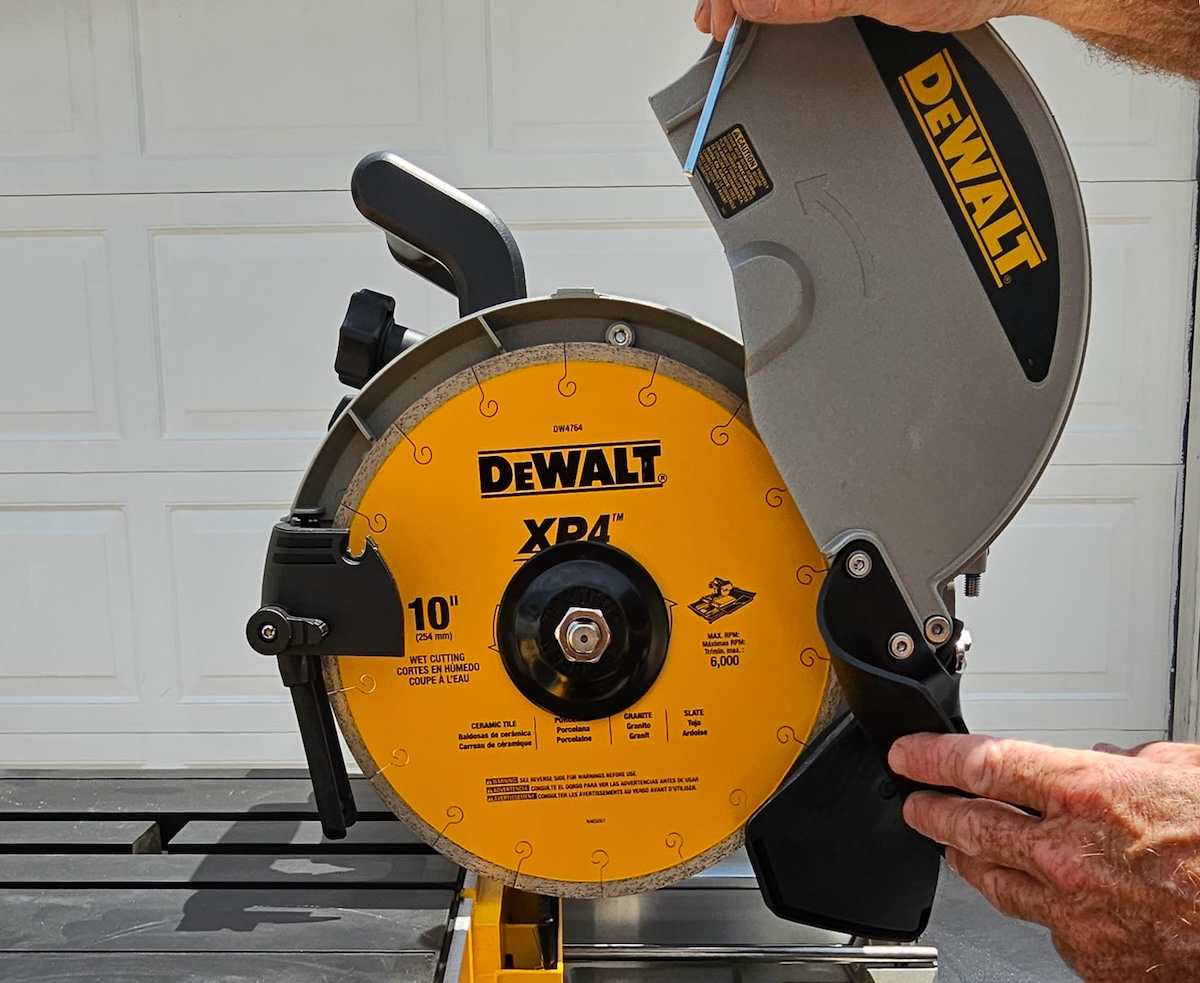
Set up the wet saw on a flat surface that’s near your project and lay out a drop cloth to manage drips and overspray. If the saw has a stand, make sure the body of the saw and the stand are properly connected.
For saws that don’t have a stand, use a stable surface like a foldable work table. Some people may get away with using the ground as a work surface, but this puts the user in an awkward position and isn’t how the saw was designed to be used.
Step 2: Fill up the water reservoir.
If the wet saw has a pump, be sure it is oriented correctly in the reservoir and that there’s enough water in the pan or reservoir. If not, fill it. There must always be enough water to ensure that the blade stays cool during cuts.
Step 3: Keep the water and electricity separate.
Even though the wet saw is designed to safely use water, as water and electricity don’t mix, there are a few precautions to take before getting started.
- For corded wet saws, make sure cords and extension cords have a drip loop to prevent water from traveling back to the power source.
- For cordless models, store batteries and chargers where they won’t get wet. Also, while the energy in batteries is technically contained in the battery pack, chargers do not like repeated exposure to water. Wet saws create a mist that can get inside the charger’s vent fins.
Step 4: Proactively manage overspray.
The body of ceramic tile—all the stuff you don’t see when it’s installed—consists largely of clay. When this clay combines with water and a blade spinning at about 4,000 RPMs, it gets sprayed past the body of the saw. If you’ve set up your workspace against a wall, deck, or some other surface that can stain, you’ll have a real mess to clean up. Use large pieces of cardboard, drop cloths, or other protection to help control the overspray.
Step 5: Measure and mark the tile where it needs to be cut.
You may need to trace where a tile needs to be cut, or you might choose to measure and mark your cuts. Either way, if these marks are made with a pencil, they may be lost when the tile gets wet, so many tile installers use a grease pencil.
Step 6: Adjust the wet saw for the cut.
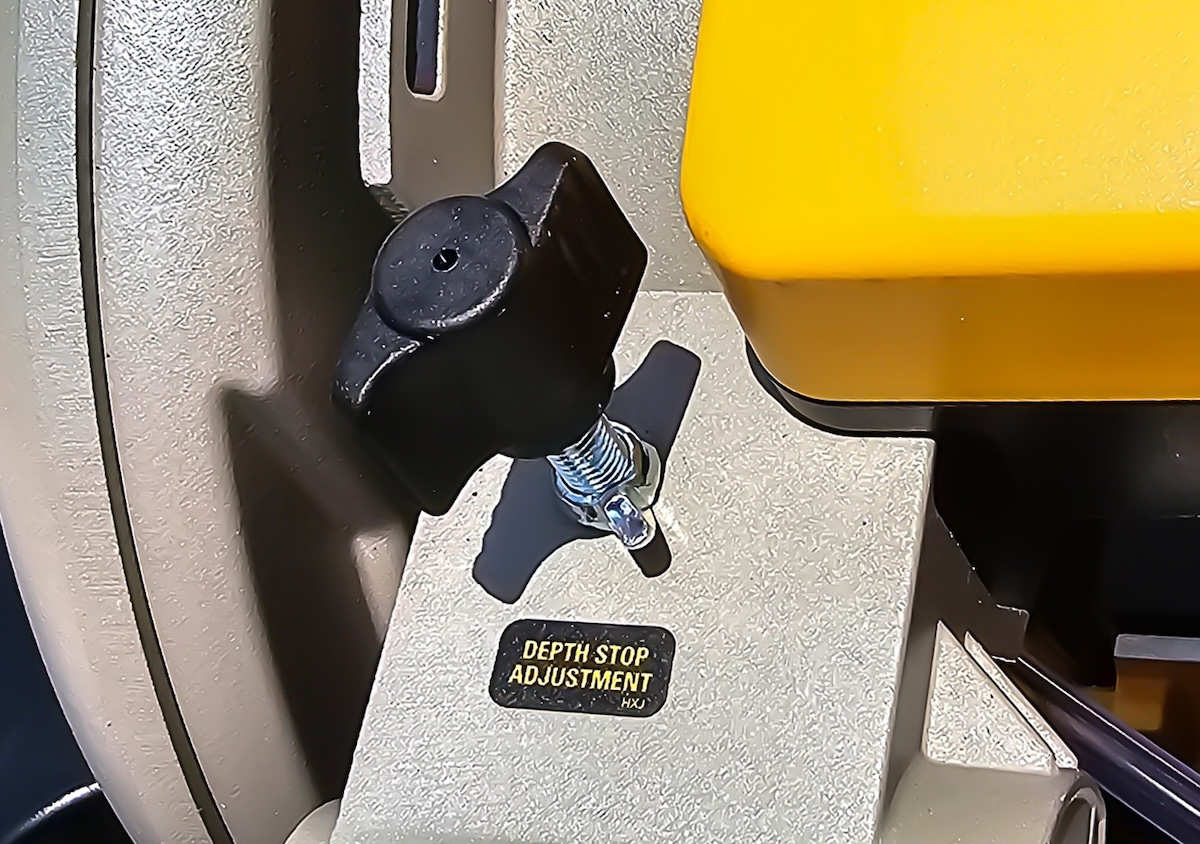
If you are making a straight cut, adjust the fence to the width of the cut and lock it in place. For angled cuts, an angled jig can help guide the tile through the saw blade. Have a push stick handy to keep your fingers away from the saw blade during the cut.
Step 7: Turn on the wet saw.
If you are using a cordless wet saw, make sure the battery is fully charged before you get started. Avoid plugging wet saws into extension cords, but if you must use one, make sure it’s a heavy-duty cord that’s rated for the tool.
Step 8: Guide the tile, but let the saw do the work.
Gently guide the tile, glazed side up or face down for brittle tile, through the wet saw, but let the saw do the cutting. You may be tempted to force it, especially if you’re in a hurry or just think that more force will make the process go faster. But as with most tools, forcing work through can make other things go wrong: a blade can deflect, the work can get jammed, or the tile can get kicked back at the user. Get a feel for the balance between progress and force.
Step 9: Check the water reservoir and fill it as needed.
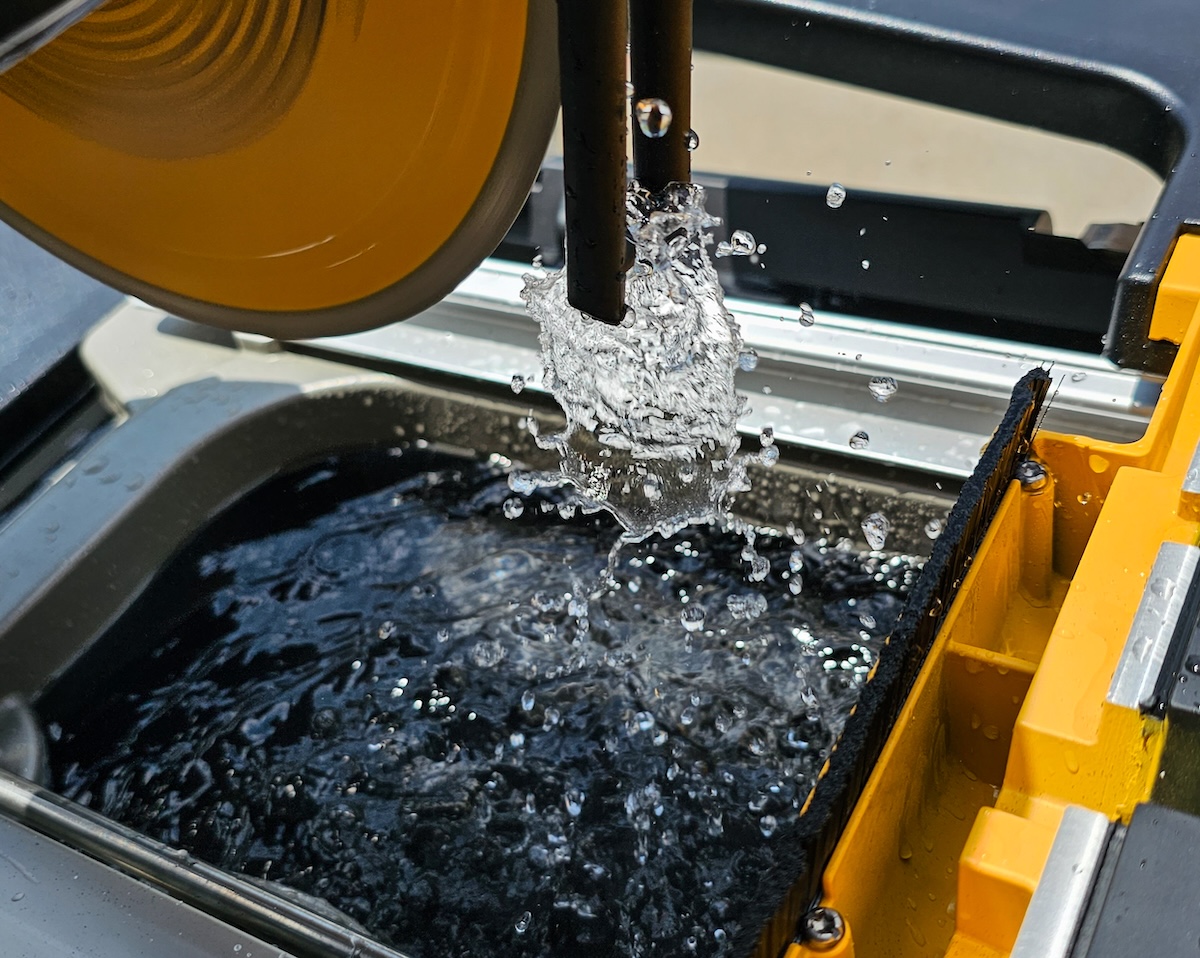
Cutting tile uses water, and the water reservoir may need to be filled during a project. Check after every few cuts to make sure there’s adequate water so you don’t burn through blades or cause other problems during use.
Step 10: Empty the water and properly store the wet saw after use.
When you’re done cutting tiles, unplug the wet saw or remove the batteries. To keep your wet saw working properly, empty the water and wipe down the tool with a dry rag at the end of each day’s use.
Tips for Using a Wet Saw
Safety Tips
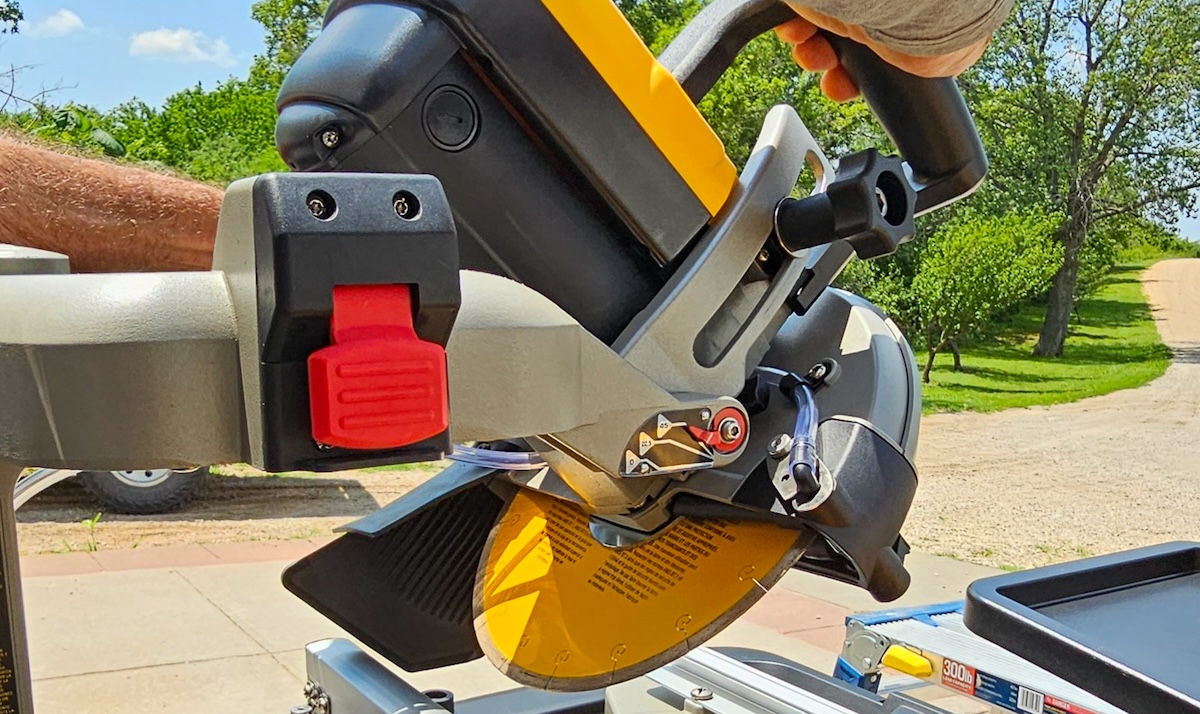
Cutting tile with a wet saw can be arduous, slow, messy, and loud. Wet saws are also one of the few tools that combine water and electricity, and whether the saw is corded or cordless, water and electricity don’t mix.
- “If possible, set up as close to the work area being tiled for efficiency,” says Doyle. “This may require setting up tarps or plastic to contain the mess.”
- Practice on a few extra tiles first if you’ve never cut tile before so you’ll have the technique down before you get to pieces that matter.
- For cordless tools, isolate the chargers from water and overspray.
- Read the directions and understand how the pump needs to sit in the water reservoir.
- “Always use a good, sharp blade and the appropriate blade for the tile you’re working with,” says Doyle. If you’re cutting glass tile, for instance, “using a standard blade can destroy some expensive tile or leave you with poor results.”
- For corded tools, make sure you have a drip loop in the cord so water drips down from the cord rather than running into the power source. This applies to extension cords, too.
- The best way to cut porcelain tile, which is harder than ceramic tile, is with a specialty blade.
- For small units that don’t have a stand, use a stable work surface (not the ground) so you can work accurately and while standing up.
- Understand how far the overspray is traveling and make provisions. Once the water gets dirty, the overspray can be a real mess.
- “Let the blade do the work and don’t force things. Slow, even pressure is your friend,” says Doyle. After using the saw for a bit, you’ll see how fast it does (and doesn’t) cut.
- “In the winter, if we’re cutting outside, I always try to swap out the water periodically with hot water,” says Rob Robillard, owner, general contractor, and carpenter at Concord Carpenter. “That’s so we don’t freeze our hands off.”
- “Sometimes when cutting smaller mosaic tiles, you may need to create a zero clearance to make cuts,” says Doyle. “A scrap piece of tile board works most times, and you may find aftermarket inserts for your specific saw. 3D-printed options are out there online.”
- “I always create a back protection area,” says Robillard. “I typically will use the Zipwall poles and some plastic and create a three-sided space, including the floor, of course, to capture any spray of water.”
- Change the water and rinse out the pan after each use.
Maintenance Tips
Like all power tools, a wet tile saw will continue to work well only if it’s properly cared for. “Maintain it and keep it clean,” says Doyle. “This can be easily forgotten when you’re in a hurry.” Remember to clean promptly after use—the sludge that builds up on the saw’s parts can be tough to remove if you let it get hard. Follow the manufacturer’s recommendations for care and cleaning, and mind these maintenance tips:
- Run the pump with a clean bucket of water after each day’s use.
- Hose off the saw parts.
- Empty the water reservoir after use.
Final Thoughts
Cutting tile with a wet saw is quick and efficient, but the process requires careful setup, a little practice, and an eye toward safety. (Remember: Mixing water with electricity can be dangerous!) However, if you take some simple precautions, work carefully, and keep the water reservoir full, on your next tiling project, you’ll be cutting tiles like a pro.
Q. Is it better to cut tile wet or dry?
You can successfully cut tile wet or dry with the right tools. Manual snap cutters don’t rely on water for cuts, but wet saws do rely on water. If you need to cut a lot of tile, a wet saw can be a better option since it provides a faster way to cut tile.
Q. Do you tile up or down on a wet saw?
It depends on the type of tile. For glazed tile, you can usually achieve a more accurate cut when the glazed side is facing up. For brittle tile, place the tile face down to reduce the amount of cracking or chipping on the finished-side.
Q. Are wet saws messy?
Yes, wet tile saws can be messy. The water helps reduce the amount of dust but the water spray happens through the cutting process. It’s important to set up a drop cloth and wear protective gear when operating a wet saw.
Q. Do wet saws need a hose?
It depends on the type of wet tile saw you are using. Small, portable wet saws often rely on a hose to deliver the water needed to cut tile. Larger saws have a water reservoir that needs to be filled, but doesn’t necessarily need a hose to fill it.
Q. Why doesn’t a wet saw cut skin?
Wet tile saws use a circular diamond blade that cuts the tile but doesn’t cut skin as easily as other types of blades because they grind instead of cut. While they ‘cut’ tile, this type of saw blade actually grinds the tile. However, we still call the process cutting.