
We may earn revenue from the products available on this page and participate in affiliate programs. Learn More ›
While many homeowners spend hours focusing on interior color palettes and furniture placement in each room of their homes, it’s important to not forget about the windows. Even though windows may be part of a different scheme in each room, they become a collection when viewed from the sidewalk. And that view may be either ignored or treated as an afterthought when it comes to interior design choices. However, window treatments are a unique design tool that function as both a visual anchor for your indoor living space and as a primary contributor to creating a consistent exterior character for your home.
When blinds or drapes are chosen haphazardly room-by-room in different colors, types, and materials, the outside of the house can appear disjointed to neighbors and friends. The lack of coordination may also potentially turn away prospective buyers before they even reach the front door. By choosing uniform window coverings, you can create a cohesive, polished look that significantly boosts curb appeal while also enhancing your home’s energy efficiency, privacy, and light control. Whether you prefer a matching set or a more nuanced approach to consistency, refining what hangs in your windows is one of the simplest ways to ensure your home makes a stunning first impression from every angle.
Uniform window treatments boost curb appeal.
Consistent window treatments send an immediate message of purposeful design, giving a home’s exterior a polished, fluid look, says Annie Santulli of Annie Santulli Designs in Palm Beach Gardens, Florida. “When each window is included in the design plan, the entire façade feels balanced and architecturally unified,” she explains.
This consistency brings a subtle sophistication that improves curb appeal. It also creates symmetry and visual harmony while conveying a well-maintained home. “The goal is not complete uniformity, but a well-balanced combination of scale, color, and placement across every window,” says Santulli.
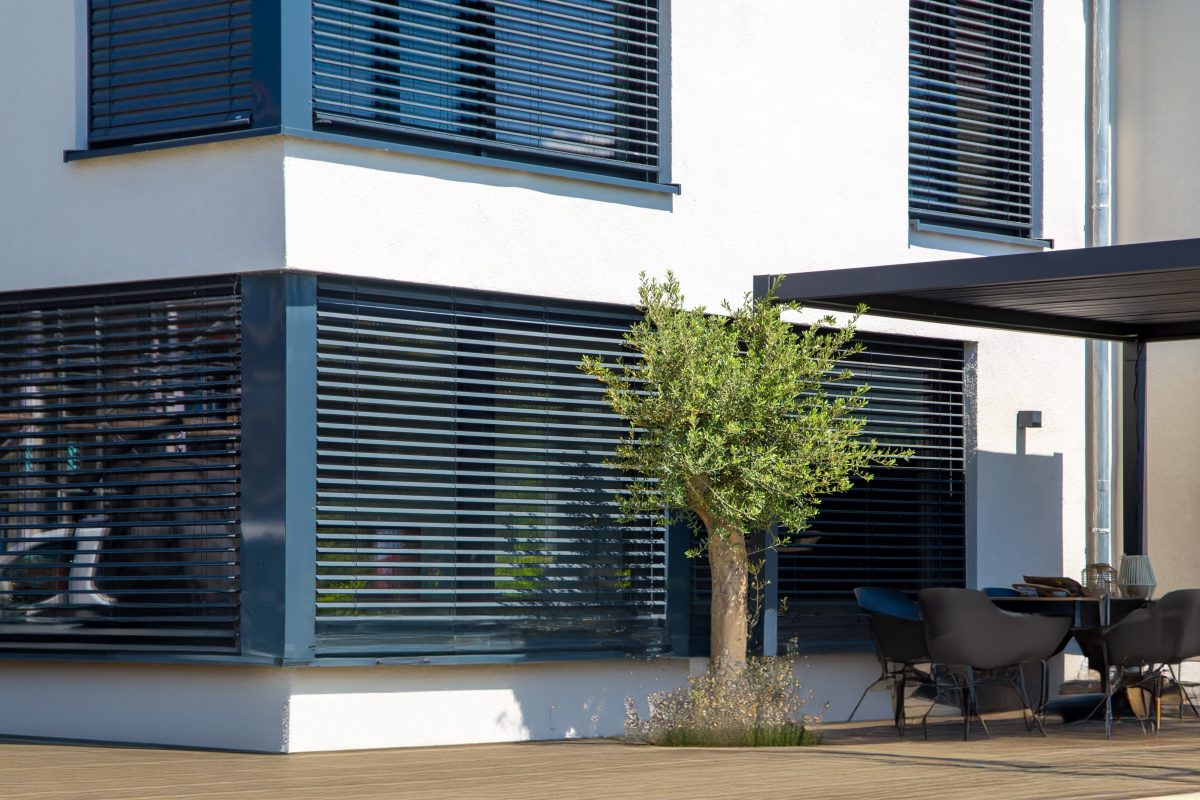
Try these tips when selecting consistent window treatments.
Window treatments serve different aesthetic purposes on the interior and exterior of the home, and both need to be considered when planning your coherent design, says Santulli. “Indoors, they become a frame for the ever-changing outdoor canvas; outdoors, let the window size, architectural style, and surrounding scenery inspire your selections.”
She suggests choosing window treatment materials and colors that flow gracefully from room to room, even if each space has different functionality needs. “For instance, a consistent linen or woven backing throughout the home can have the opacity adjusted to suit each room’s unique character.”
Here are additional parameters to consider:
- Prioritize uniformity for street-facing windows. Ensure that all windows visible from the front of the house use the same style and color to avoid a scattered or neglected appearance.
- Don’t ignore upper and side windows. Maintain the same treatment style on second stories and visible side-facing windows to ensure the polished look wraps around the entire home.
- Stick to neutral colors. While you can be bold with interior colors, a cohesive, elegant look is created when the side of the treatment facing the street is a neutral shade or white.
- Layer for flexibility. Use a base treatment (like cellular or solar shades) for exterior uniformity, then layer with decorative drapes or valances on the inside to suit individual room decor.
- Coordinate hanging styles. Avoid mixing different mounting styles on the front of the home. For example, don’t pair a valance on one window with pinch-pleat drapes on another.
- Align slats and angles. For a tidy and intentional look, ensure that the slats on all blinds or shutters are tilted at the same angle across the front of the house.
- Create architectural alignment. Match your treatment style to your house’s aesthetics: sleek roller shades for modern homes, wood blinds or Roman shades for Craftsman styles, and shutters for traditional Colonial or Mediterranean homes.
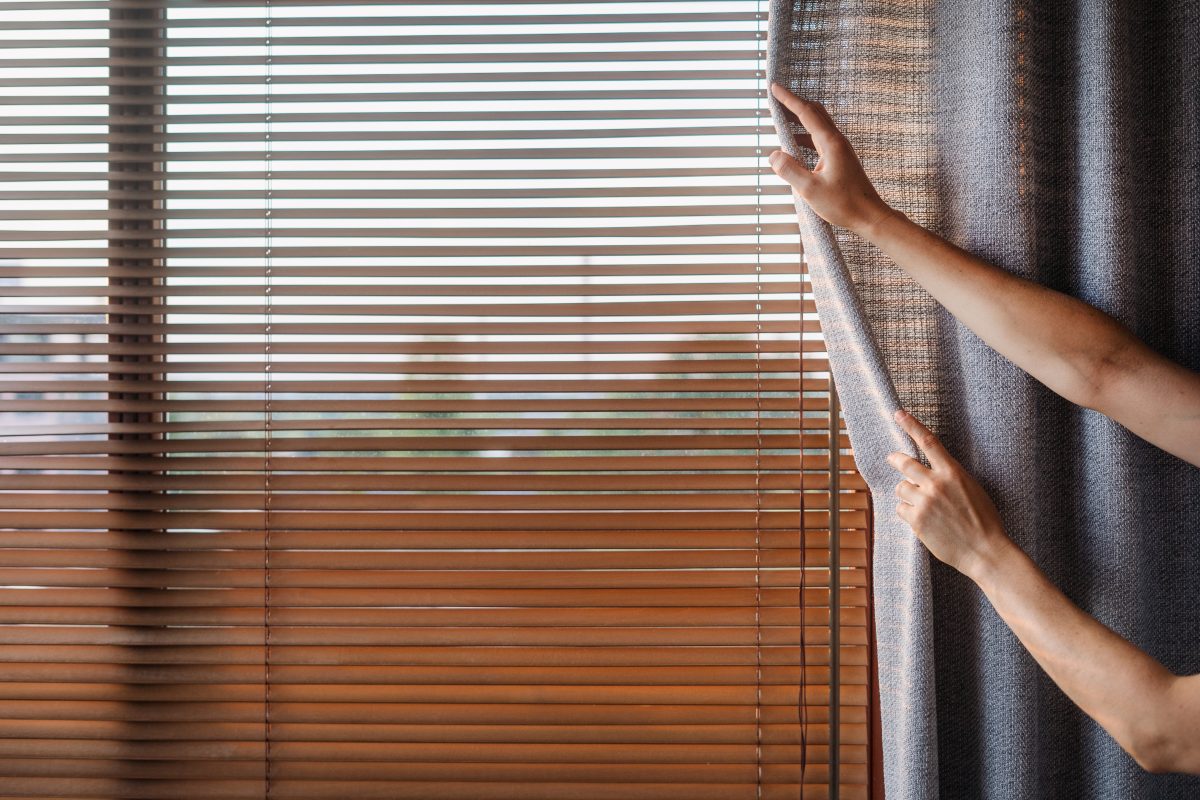
Window treatments can improve energy efficiency, privacy, and natural light inside your home.
Window treatments do more than just look good; they also affect how comfortable your home feels every day by affecting energy use, lighting, and privacy.
Energy Efficiency
Window treatments provide an extra layer of insulation, reducing heating and cooling costs and enhancing your home’s energy efficiency. Research shows that double-cell cellular shades, for example, can reduce heat loss up to 40 percent in winter and reduce solar heat gain up to 60 percent in summer.
The most energy-efficient options include honeycomb/cellular shades due to their air-trapping pockets that prevent hot air from coming inside, thermal-lined curtains, lined Roman shades, opaque solar roller shades that block some sunlight, and smart blinds that adjust automatically based on sunlight.
“Layering window treatments can improve insulation and temperature control, keeping your home cozy and energy-efficient,” says Santulli. Pair thermal-lined curtains with cellular or solar shades to create a multi-layer defense against energy loss.
Light Control
Window treatments also help control how much light enters a space, which can help improve mood, reduce energy costs, and create a more welcoming environment. The right window coverings can also diffuse harsh glare into a soft, ambient glow while protecting your interior.
Sheer shades and light-filtering roller shades allow soft light to enter a space while maintaining a level of privacy. Plantation shutters and horizontal blinds feature louvers or slats that allow you to precisely direct light away from screens or artwork to prevent UV fading. Solar shades are ideal for intercepting heat and UV rays while allowing you to maintain a view of the outdoors.
“The aim is to soften natural light, not shut it out,” explains Santulli. “This is where I enjoy adding a hint of glam with metallic sheers, letting light sparkle throughout the room without ever feeling harsh or exposed.”
Privacy and Security
Finally, the right window treatments provide privacy by obscuring the view from the outside world and serve as a deterrent to potential intruders. Opaque materials, heavy drapes, and blackout roller shades are essential for ground-level windows, bedrooms, and bathrooms where complete seclusion is required. For windows facing busy streets, cellular shades or vinyl blinds offer a clean look while blocking the view of passersby.
“For privacy, I like to layer airy sheers with more substantial panels, letting sunlight filter in while still providing coverage when needed,” says Santulli.