
We may earn revenue from the products available on this page and participate in affiliate programs. Learn More ›
Imagine that your ceiling is discolored or you spot a water stain high up on an interior wall. Before you take out a home equity line of credit (HELOC) loan for an expensive new roof, you’ll want to investigate whether this is really a roof problem after all. Often, the leak isn’t actually coming from your roof. We spoke to a couple of home experts to find out what other issues they typically see in the field that might look like a roof leak at first glance but actually aren’t. You’ll also learn some critical signs of a water leak and how to deal with them appropriately without ripping off your entire roof.
1. Upper-Floor Plumbing Leaks
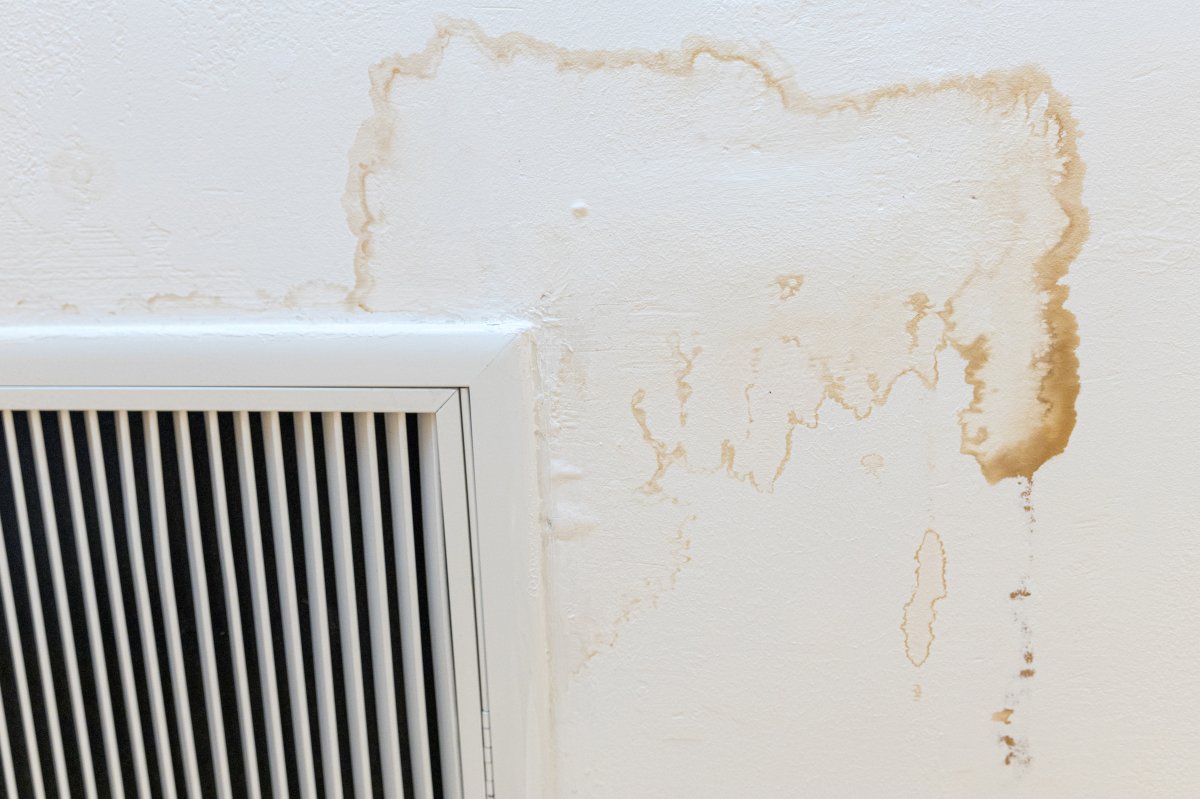
One of the most common problems that looks like a roof leak is any type of upper-floor plumbing leak. Signs like ceiling water stains (often brown) or dripping are frequently linked to plumbing fixtures located directly above the affected area, with bathrooms, kitchens, and laundry rooms being the most common culprits, says Justin Thomas, project manager at Vie Home Services in Ponte Vedra Beach, Florida. “Leaks can originate from worn pipe connections, failed seals, or even small cracks in drain lines. Because water can travel along framing, the visible damage may appear far from the actual source.”
To resolve these types of issues, Thomas recommends running plumbing fixtures individually to isolate the issue. Then repairs can range from simple seal replacements to more involved pipe work. You might want to call a licensed plumber to pressure-test lines and inspect hidden connections.
2. Condensation From an Under-Insulated Attic
Condensation in the attic is another issue that often fools homeowners, says George Lokko, owner of Y2 Design & Build in Columbus, Ohio. “During the winter, warm air from inside the house rises into the attic,” he explains. “If the attic doesn’t have enough ventilation, that moisture condenses on the underside of the roof sheathing and drips down onto the insulation and ceiling below.” This ends up looking exactly like rain coming through the roof.
To fix this problem, you’ll want to improve airflow in the attic, which might entail installing an energy recovery ventilator (ERV) system to help balance air quality and remove moisture and heat. “Also, make sure soffit and ridge vents are doing their job, and seal up air leaks from the living space,” says Lokko. Bathroom exhaust fans venting into the attic instead of outside is a big red flag.
Thomas also sees issues with improper use of spray foam insulation, particularly in tropical or subtropical environments. “This prevents proper ventilation to areas like attics and floor cavities between stories,” explains Thomas. To spot this problem, look for diffuse moisture, damp insulation, and no direct correlation to rainfall. “The solution is to remove spray foam insulation from ventilation intake/exhaust and to install exhaust fans,” he says.
3. HVAC Condensation Problems
Air conditioning systems produce condensation, which is normally carried away through a drain line. But when that system fails, water can overflow, drip down, and mimic a roof leak and cause a stain, says Thomas. This is especially common in warmer climates, where HVAC systems run frequently and produce more moisture.
“The solution is to check for clogged condensate lines, damaged drain pans, or poorly insulated ductwork,” recommends Thomas. Installing better insulation around the ducts and performing routine maintenance like flushing the drain line, can prevent most of these issues.
4. Failed Window Flashing
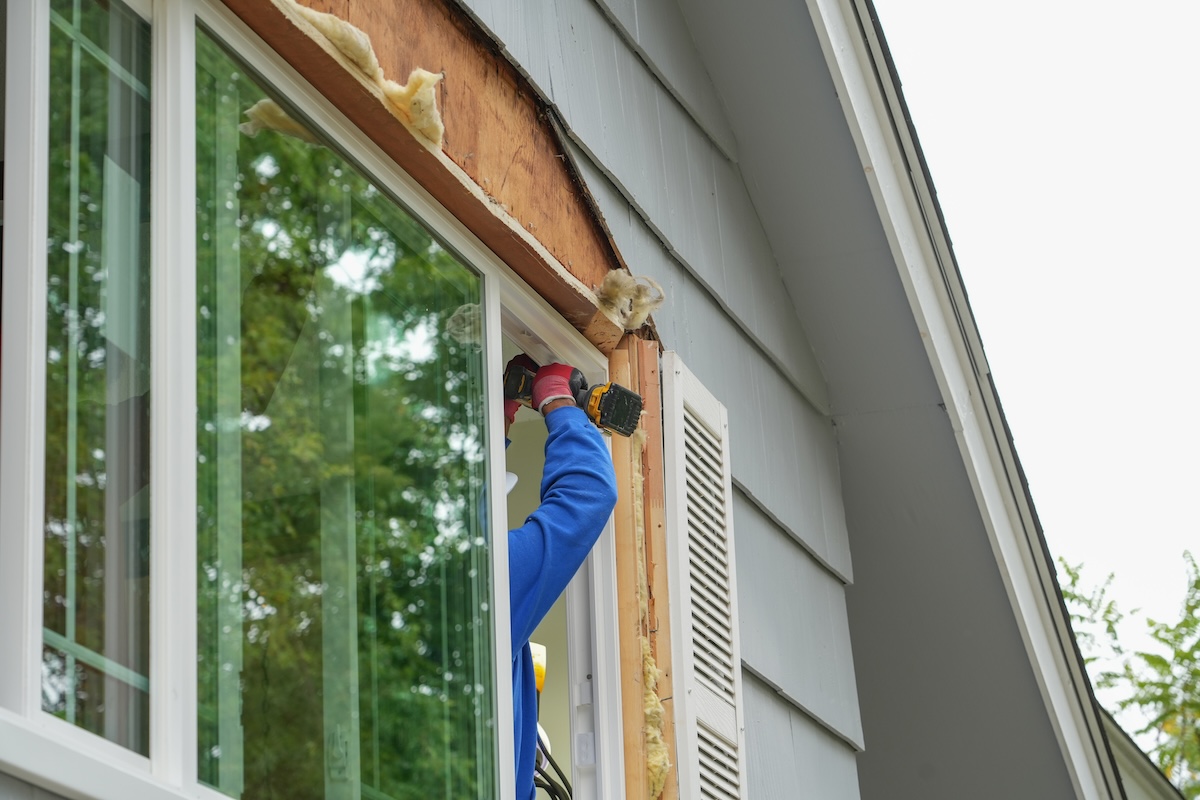
During construction, home builders typically install window flashing, a thin material that’s added to the framing around windows, to prevent water from seeping in and causing structural damage. But over time, this seal can start to loosen, resulting in a tiny gap around the window that allows water to enter.
“When windows aren’t flashed properly on upper floors, wind-driven rain can get behind the siding and run down inside the wall,” explains Lokko. “It eventually shows up as a stain at the top of the wall where it meets the first floor ceiling, which looks just like a roof leak.” This will only happen during heavy rain with the right wind direction.
To identify exactly where the problem is coming from, Lokko recommends conducting a water leak hose test. “Start at the bottom of the window and work your way up until you find where the water’s getting in,” he says. The remedy is re-flashing the window and making sure the weather barrier behind the siding is sealed up with caulk.