We may earn revenue from the products available on this page and participate in affiliate programs. Learn More ›
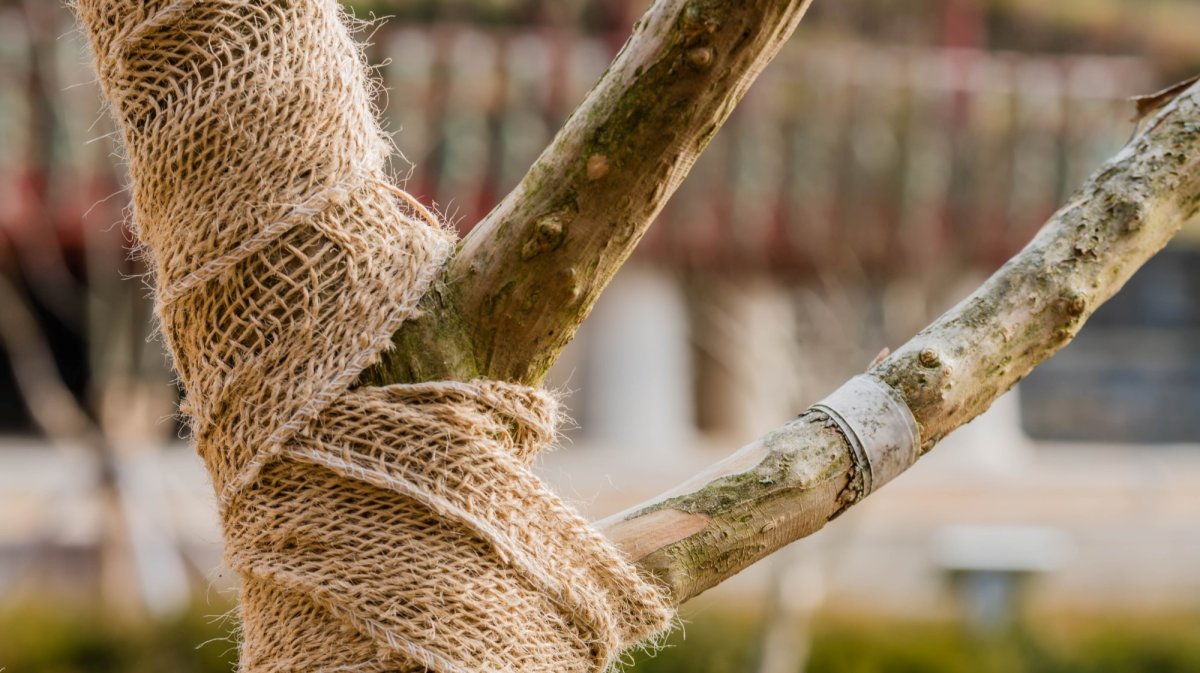
It may sound like an odd practice, but wrapping a tree can be worthwhile. Once trees drop their leaves, they no longer benefit from their protective canopy, and hazards can damage young and thin-barked trees, along with some evergreen trees and shrubs. “Cold temperatures, drying winds, ice, and hungry wildlife can injure trees during winter,” says Fred Breglia, ISA, a certified arborist and author of the upcoming book titled Big Trees: A Tour of the World’s Biggest Trees.
And it’s not just the cold that makes trees susceptible to damage. Adding a tree wrap around the trunk can protect the bark from harsh winter sun when leaves no longer shade it. Ahead, learn why tree wrapping helps some trees flourish and survive colds—and how you can wrap trees for winter safely and effectively.
Benefits of Wrapping Trees for the Winter
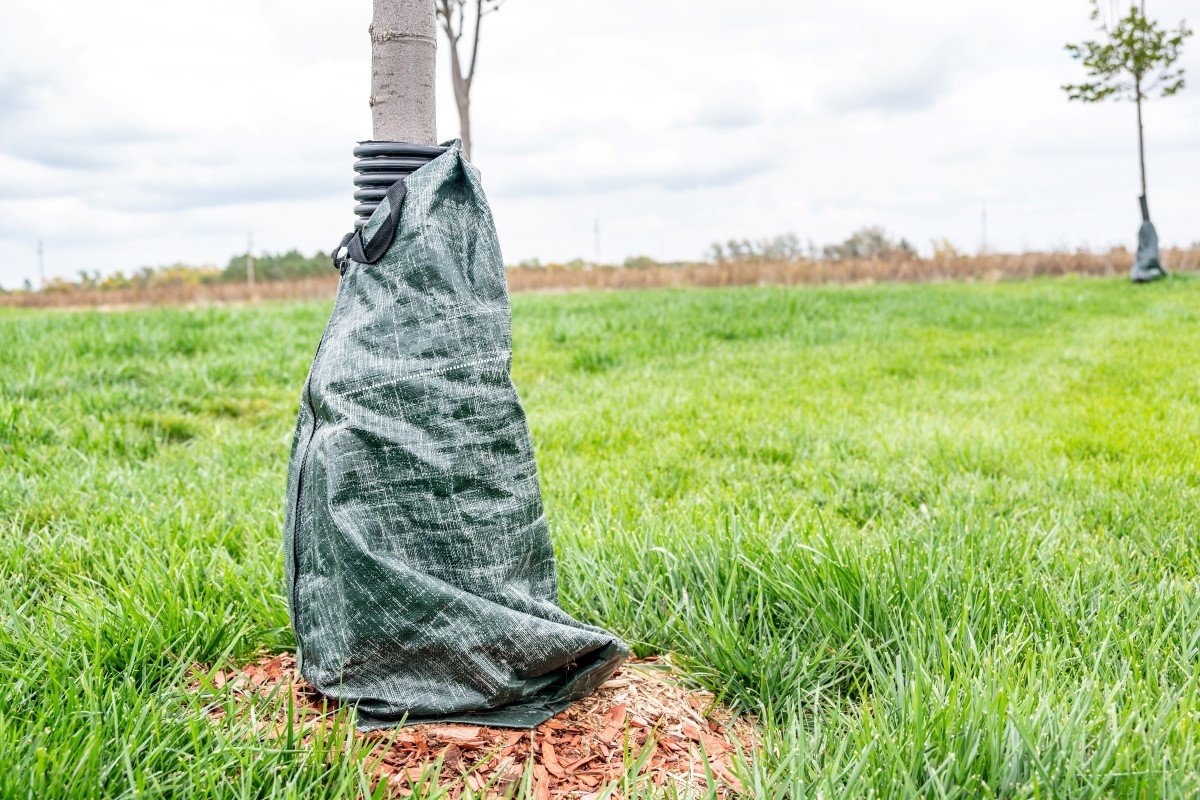
Young trees, like those that have been growing for up to two seasons, are especially susceptible to winter damage. Wrapping immature and thin-barked trees helps prevent trunk damage from sun and freeze-thaw cycles. Some evergreens also benefit from a full-tree wrap for winter or a screen to prevent browning foliage, and other young trees can be saved from animal munching or rubbing damage with a fence wrap.
Prevent Sunscald and Cracks in Bark
Rapid temperature changes in winter combine with an empty canopy to expose trees to frost cracks or sunscald. Vertical frost cracks can make a tree more vulnerable to pests or diseases. Sunscald is even more serious. “Sunlight warms frozen bark, then shade or nightfall causes it to refreeze and die,” says Breglia. Sunscald usually occurs on a trunk’s southwest side, where winter sun is most intense and the bark warms up the most. It can cause a jagged vertical wound along the tree trunk and dry, cracked, sunken, or dead bark.
Trees are more susceptible to sunscald include those less than 2 years old and species with thin bark, such as:
- Silver maple
- Red maple
- Birch
- Redbuds
- London plane
- Sycamore
- Basswood
- Crabapple and other fruit trees
Prevent Winter Browning
Another type of cold damage is winter browning, or desiccation injury, which “occurs when evergreen needles and rhododendron leaves lose moisture faster than frozen soil can replace it,” says Breglia. He adds that low temperatures, freeze-thaw cycles, sun, and wind can worsen winter damage on evergreens or semi-evergreens. “Browning often occurs on the south or southwest side of conifers, though wind exposure may also damage the north side,” Breglia says.
Trees and shrubs most susceptible to winter browning include broadleaf evergreens, needled evergreens, or those with scale-like leaves, such as:
- Azaleas, rhododendrons
- Boxwood
- Holly and grape holly
- Mountain laurel
- Fir
- Spruce
- Pine
- Yew
- Hemlock
- Arborvitae
- Juniper
- False cypress
Minimize Animal Damage
Deer and other browsers can munch on buds of trees in winter when food is scarce, but they also can bite into tender bark. Even in early fall, bucks look for small tree trunks to rub against as new antlers form and cause itching. “Voles, mice, and rabbits can severely damage young trees and shrubs by eating their bark in winter,” adds Breglia.
As always, young trees are most vulnerable to severe damage, along with some trees that wildlife prefer.
- Rutting bucks and deer prefer elms, maples, dogwoods, magnolias, willows, birches, and evergreens. They also enjoy other young trees.
- Rabbits most often damage crabapples, apples, redbuds, honey locusts, barberry, roses, and small evergreens.
When to Wrap a Tree for Winter
If you have a young tree or a tree or shrub species vulnerable to winter damage, you generally need to learn how to use tree wrap so you can prepare it in fall before the first winter frost. The precise timing varies by region and the type of damage that can occur. For example, if deer visit your landscape, you might need to wrap young trunks by late summer or as soon as you see bucks growing antlers.
For potential vole and mice damage, wrap trunks before the first snowfall. Most young trees will benefit from wrap protection for at least two winter seasons. In all cases, be sure to remove tree wraps by spring and never leave them on all year.
How to Wrap a Tree
The most common way to wrap a tree trunk for winter tree protection is with a poly or fabric tree wrap or plastic guard. A tree wrap should be breathable and a light color. Breglia says the material should “conform to the trunk but also allow airflow without trapping moisture.”
Tools & Materials
Bobvila.com may earn a commission from purchases made through these links.
- Small trowel or shovel
- Wood stakes or metal T-posts
- Metal or rubber mallet
- Staple gun and staples, garden wire, or UV-resistant cable ties
- Metal T-posts
- Metal mallet
- Commercial tree wrap or a plastic tree guard
- Twine or heavy-duty tape
- Burlap (and if necessary, chicken wire)
- Tall fencing
- Hardware cloth or chicken wire
Step 1: Clear around the bottom of the tree trunk.
Using a small trowel or shovel, gently scrape away any debris or leaves against the trunk and dig about 1 inch below the soil surface all around the trunk. This helps to set your tree wrap taut against the trunk and just below ground level.
Step 2: Begin wrapping from the ground up.
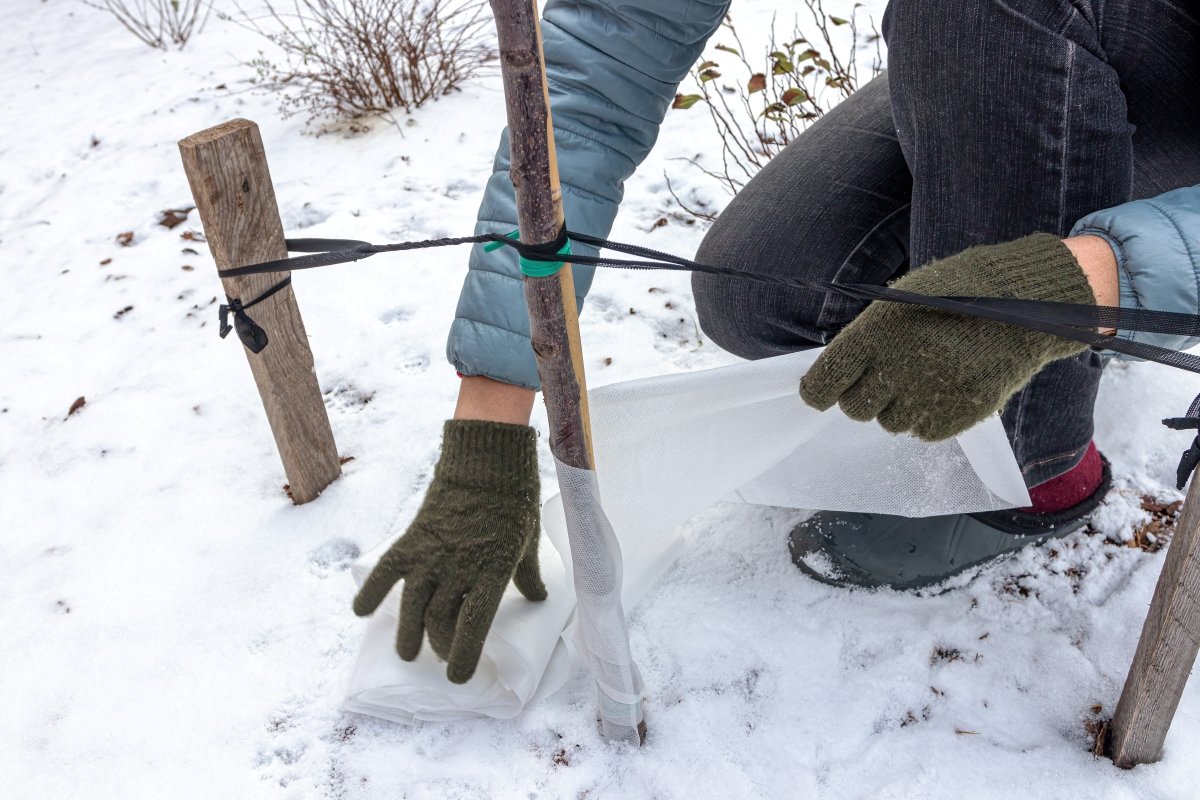
Start at the lowest point of trunk exposure and begin to wrap around the trunk, ensuring each pass overlaps by at least ⅓ of the wrap’s width so there is no exposed bark.
If you’re using a plastic guard, widen the opening and place it around the tree, ensuring it sits just below ground level.
Step 3: Secure the wrap below the bottom branches.
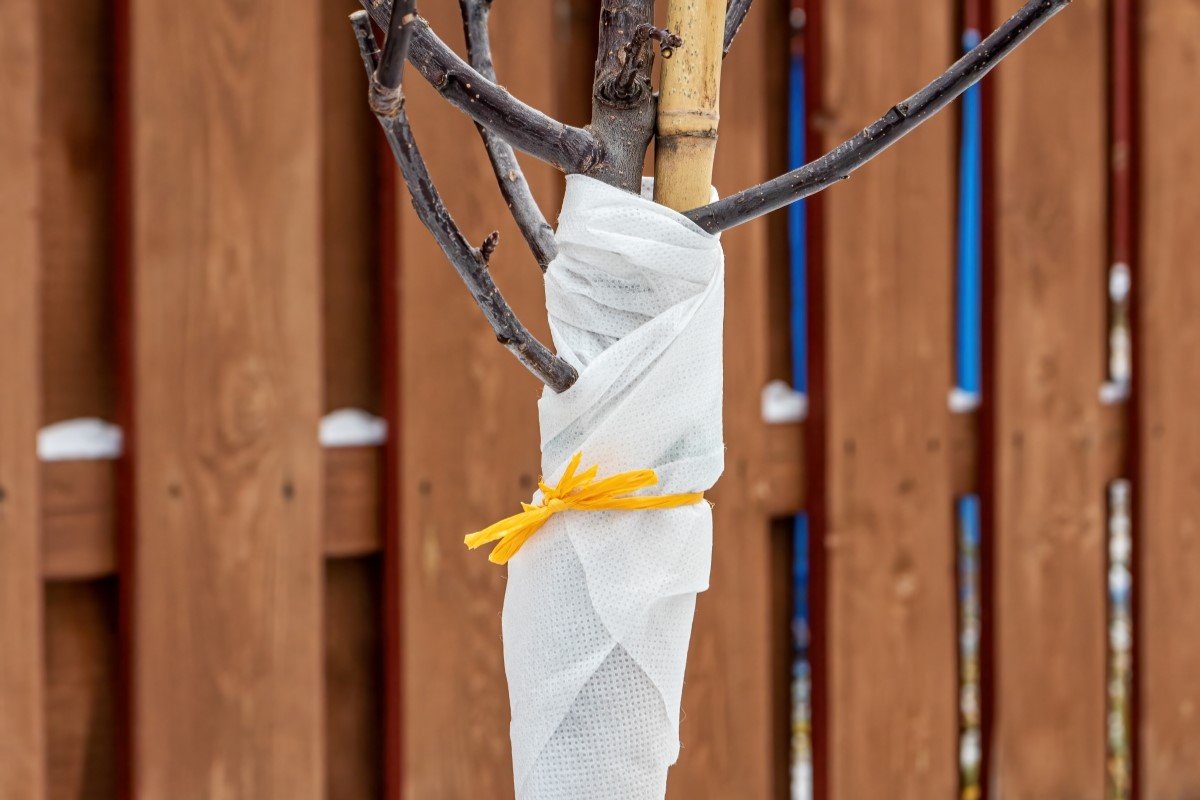
Continue to wrap the trunk until you reach the area just below the tree’s lowest branch. When you’re finished wrapping, secure the wrap with heavy-duty tape or twine. Do not staple or puncture the tree.
If using a plastic guard, add another guard above the lower one, cutting it if necessary to end just below the branches. Secure it to the bottom guard per manufacturer directions or with heavy-duty tape.
Step 4: Check for looseness or damage.
Check the wrap from time to time to make sure it remains secure at the top and has not loosened or been damaged below.
Step 5: Remove the wrap in spring.
When the cold weather is over, carefully remove the wrap from the tree.
How to Wrap a Shrub or Tree to Prevent Winter Browning and Deer Damage
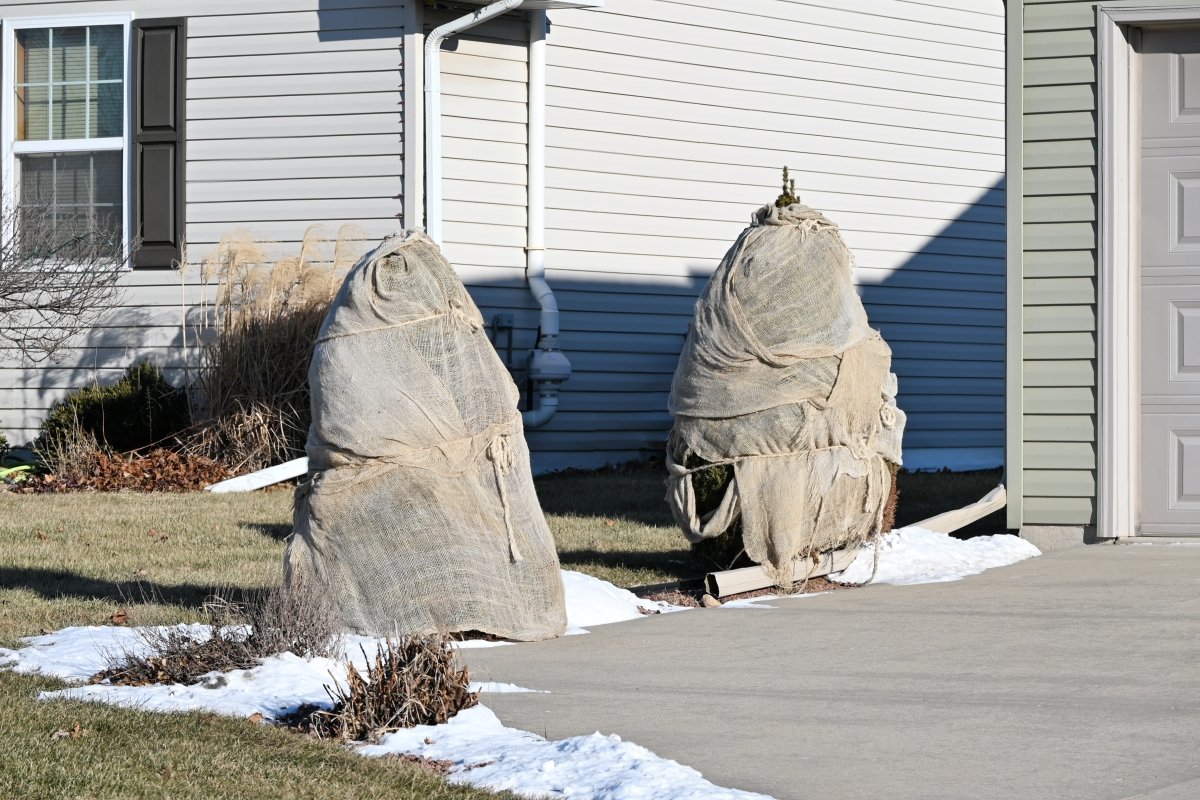
Although you can loosely wrap an entire shrub or tree in burlap to prevent winter browning, it is best to build a barrier around the plant, typically with stakes. “Use a burlap windbreak placed a few inches from the foliage, or loosely wrap multistemmed evergreens to block drying winter winds without trapping moisture,” says Breglia. If you wrap a tree or shrub in the fabric to protect it from wind or moisture loss, leave a hole at the top to allow sun and air to get in.
If you want to prevent winter wind damage like browning, install a burlap or shade fabric screen around the tree. Here’s how:
- Pound 4- to 5-foot tall stakes into the ground about 2 feet out from the shrub’s width or tree’s canopy.
- Surround the entire plant if protecting it from multiple winter dangers or just create a wall on the south or southwest side of the tree.
- Attach burlap or canvas to the poles using metal staples into wood stakes or by using twine, garden wire, or UV-resistant zip ties.
- For an extra-secure windbreak or to protect it from both deer and wind, wrap chicken wire, hardware screening or welded farm fencing around the stakes, overlapping at the end. A deer fence should be at least 6 feet tall.
- To also protect a shrub or tree from winter damage and deer, add burlap to fencing with wire ties along the top, middle, and bottom of the fence. Secure the burlap close to the ground and leave the top open for airflow (assuming it is high enough to prevent deer access).
How to Wrap a Tree Trunk to Prevent Small Animal Damage
As long as your tree wrap is secure and at least 1 inch below ground, it can protect the trunk from most small animal damage. If you only need to protect against animals and not sunscald or browning, consider this method suggested by Breglia:
- Dig a trench for the fencing 2 to 3 inches below the soil to protect from voles and rabbits.
- Measure and cut hardware cloth or chicken wire (to deter rabbits). Include 2 inches below ground and at least 18 to 24 inches above your expected snowfall totals, since snowfall temporarily raises ground level.
- Set hardware cloth (or chicken wire) into the trench and wrap around the trunk so that it overlaps.
- Be sure to remove the guard in the early spring to prevent girdling of the tree trunk.
Final Thoughts
When wrapping trees for winter, always remember to remove the tree wrap in spring. Each spring, check trees and shrubs for any damage as growth resumes, like discolored needles, split bark, or areas that appear to have been nibbled on or stripped by animals. Breglia also advises watering trees well in spring and summer (and after planting a tree) so they are healthy when entering the winter season.
FAQ
Q. Does tree wrap actually help?
When properly placed, tree wrap can protect many trees and shrubs from winter damage. The trunks of young and thin-barked trees are particularly vulnerable to frost cracks, sunscald, and animal damage, so covering the trunk can keep a tree from the type of damage that could eventually result in taking the tree down and replanting.
Q. What should you wrap a tree with?
Tree trunks are best wrapped in light-colored breathable fabrics especially designed for tree wrapping or plastic tree guards that surround a trunk. Some gardeners use burlap, but it can result in damage and is best used as a light wrap or screen to protect trees from winter browning or animal damage. Breglia recommends against the use of wound paint or dressing for young trees; paint will not protect trees from animal damage.
Q. When is too late to wrap a tree for winter?
Always wait to wrap a tree in fall as it goes dormant and before the first hard frost. If you miss the first frost, wrap the tree as soon as the trunk has dried out to prevent repeated injury. Never wrap or leave wrap on a tree in spring or summer growth phases. And the best time to wrap a tree is when it is young (first 1 to 3 years of growth).
Q. What are other ways to protect trees for winter?
Some trees or shrubs need only temporary winter protection from unusual frosts or storms. A burlap screen or windbreak also can protect trees in winter. Spreading a 2- to 3-inch layer of mulch around the tree, at least the width of its root ball or canopy, can protect tender roots from repeated winter freezing and thawing. Breglia says that anti-dessicant sprays can help prevent drying out of trees and shrubs. Fencing can keep browsing animals away from evergreens.
“Proper placement of winter injury-sensitive plants, such as rhododendrons, boxwood, yew, or arborvitae can reduce the chance of winter damage,” adds Breglia. Finally, healthy trees can best survive winter, so watering and other care steps in spring and summer help protect tender trees in winter.