We may earn revenue from the products available on this page and participate in affiliate programs. Learn More ›
Grass seed is an affordable way to establish or repair a lawn, and for homeowners in warm climates, choosing the right variety can make the difference between patchy turf and thick, healthy growth.
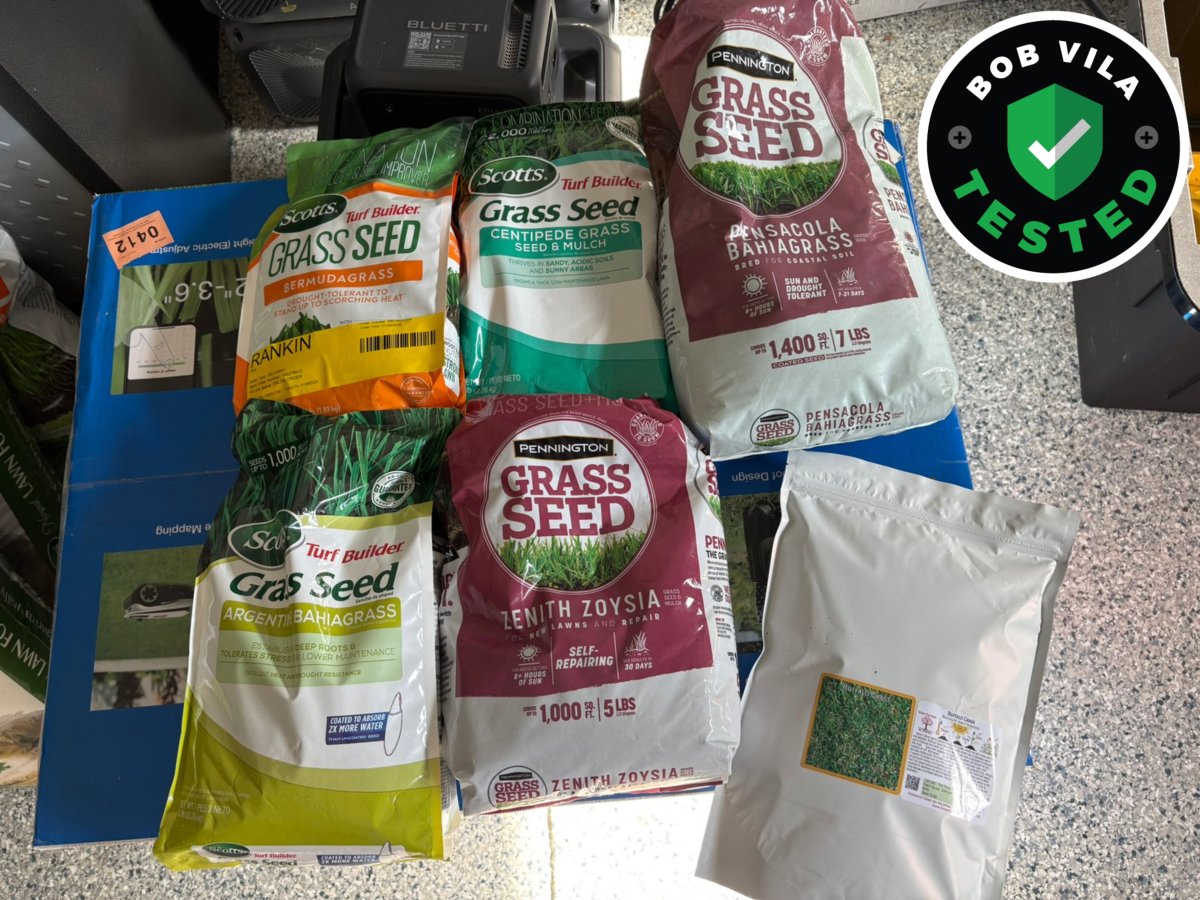
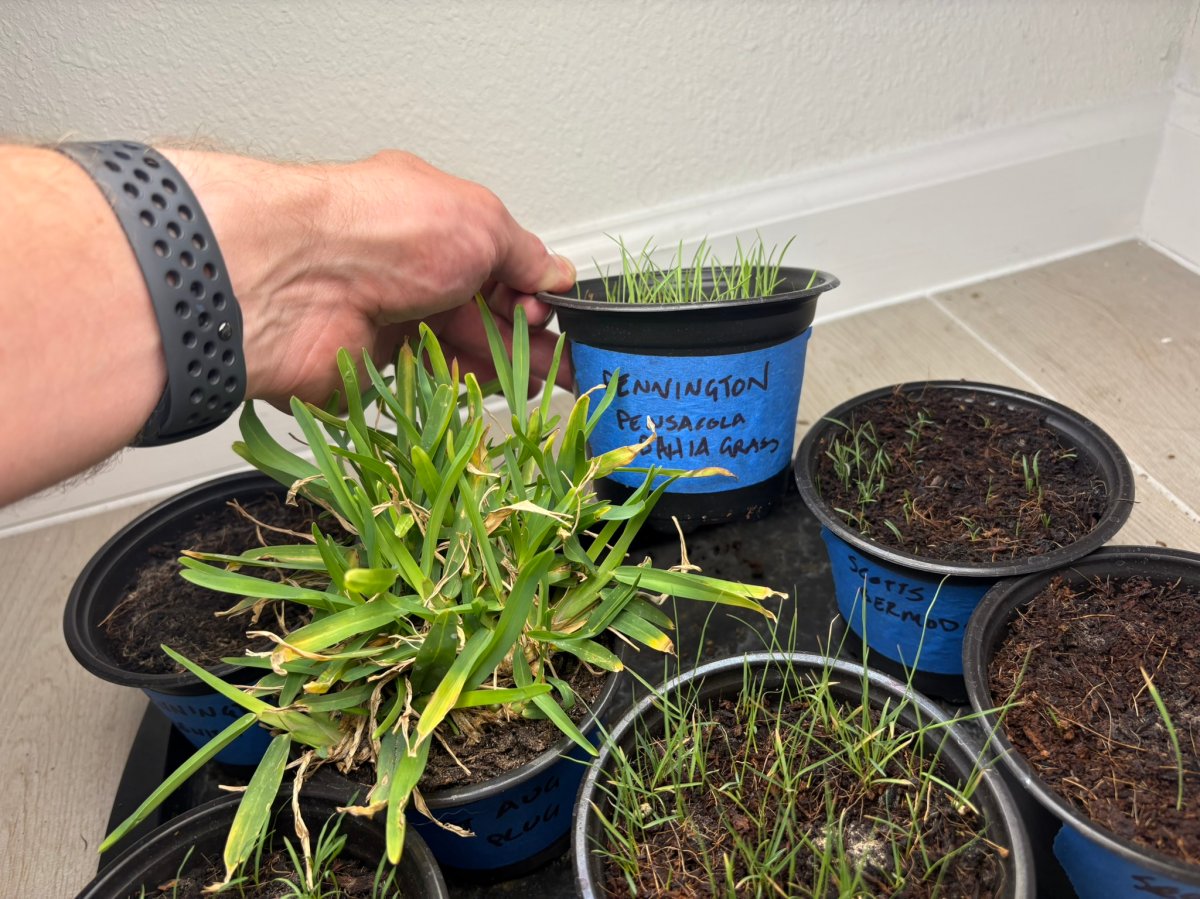
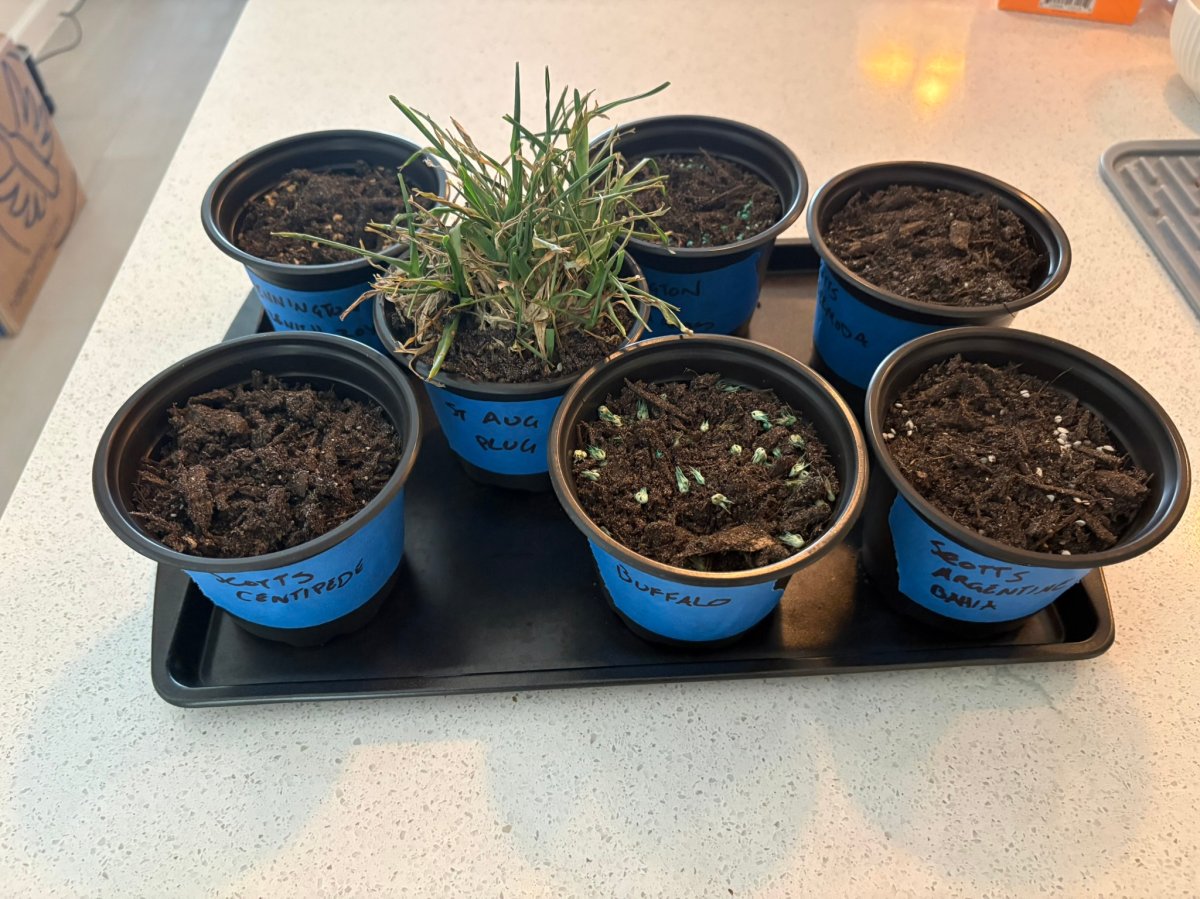
To find the best options for Florida conditions, we tested seven different grass seeds, including a St. Augustine grass plug, by planting them in identical small pots and growing them indoors under a full-spectrum grow light for one month. Each pot received the same soil, watering schedule, and light exposure so we could directly compare germination speed, growth height, and overall density as the grasses established.
Florida’s tropical and subtropical climate allows lawns to stay green year-round, but heat, humidity, sandy soil, and periodic drought can make it difficult for the wrong grass variety to thrive. Some seeds are designed for fast germination and quick coverage, while others focus on drought tolerance or durability in high-traffic areas. Testing the seeds side by side made it easier to see which options produced the strongest and most consistent growth.
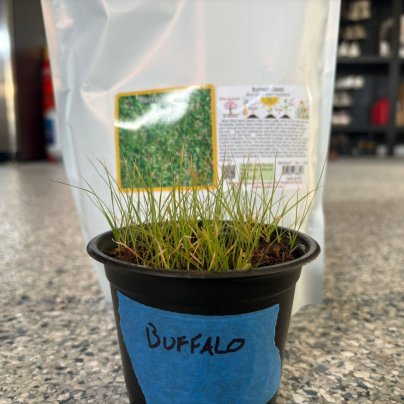
After one month, Everwilde Farms Buffalo Grass Seed stood out as our favorite overall pick. It germinated quickly and ultimately produced the tallest and thickest grass in our test pots, making it a strong choice for homeowners looking for quick, dense lawn coverage.
We also spoke with Kody Ketterling, founder of the lawn and garden company K-IT Products, who notes that climate and soil conditions play a major role in grass selection. “The choice of your grass can be determined by how much water and humidity they can take and if you have the proper drainage of water through the soils,” he says. Keep reading to learn what features to consider when shopping and to explore our picks for the best grass seed for Florida lawns.
- BEST OVERALL: Everwilde Farms Buffalo Grass Native Grass Seeds
↓ Jump to Review - BEST BANG FOR THE BUCK: Scotts Turf Builder Grass Seed Argentine Bahiagrass
↓ Jump to Review - BEST FOR MIXED LIGHT: Scotts Turf Builder Centipede Grass Seed & Mulch
↓ Jump to Review - BEST DROUGHT-TOLERANT: Pennington Pensacola Bahiagrass
↓ Jump to Review - BEST FOR FULL SUN: Scotts Turf Builder Grass Seed Bermudagrass
↓ Jump to Review - BEST PLUG: Florida Foliage St. Augustine Palmetto Grass Plugs
↓ Jump to Review
Our Top Picks
To identify the best grass to seed in Florida, we compared seven popular options by planting them under identical conditions and tracking germination speed, growth height, and overall density over an entire month. The following picks stood out for their ability to establish quickly, grow thick turf, and handle the heat and humidity common to Florida landscapes.
Best Overall
Photo: Paul Rankin for Bob Vila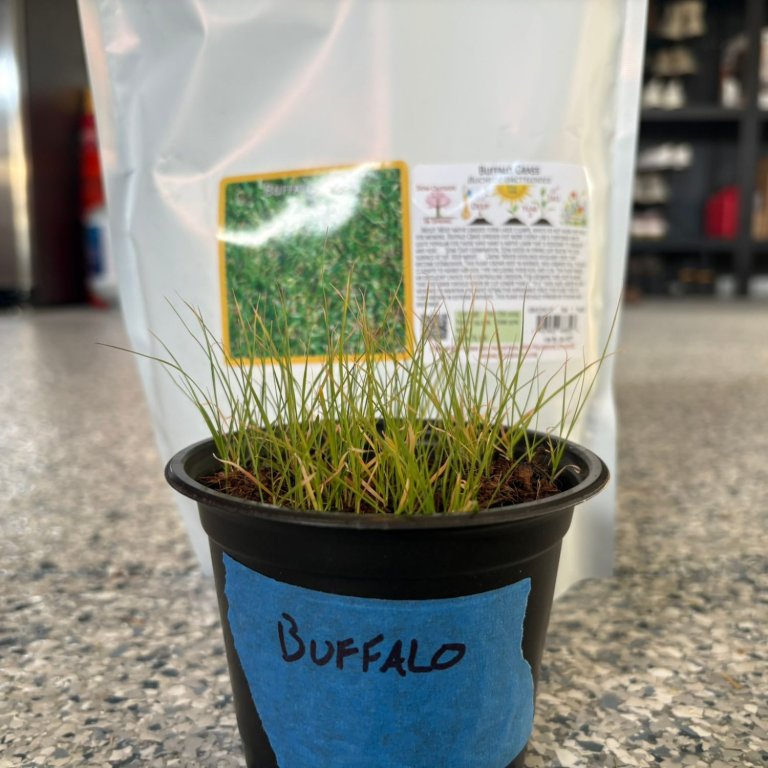
Everwilde Farms Buffalo Grass Seed is a warm-season variety known for its durability and low-maintenance growth. Buffalo grass tolerates heat, drought, and poor soils well, making it a practical choice for lawns in challenging climates. Seeds are typically planted just below the soil surface and kept lightly moist until germination, which usually occurs within 14 to 21 days. Once established, the grass spreads by stolons and rhizomes and performs best when maintained at a mowing height of 2 to 3 inches.
In our testing, this seed was the fastest and most vigorous grower. The seeds themselves were noticeably larger and greener than most of the other varieties we tested. After the first month, the grass had already reached about 3 to 4 inches tall, and it produced the thickest coverage of all seven test pots. The blades were slightly wispy, but the speed and density of growth made it our top overall pick.
Best Bang For The Buck
Photo: Paul Rankin for Bob Vila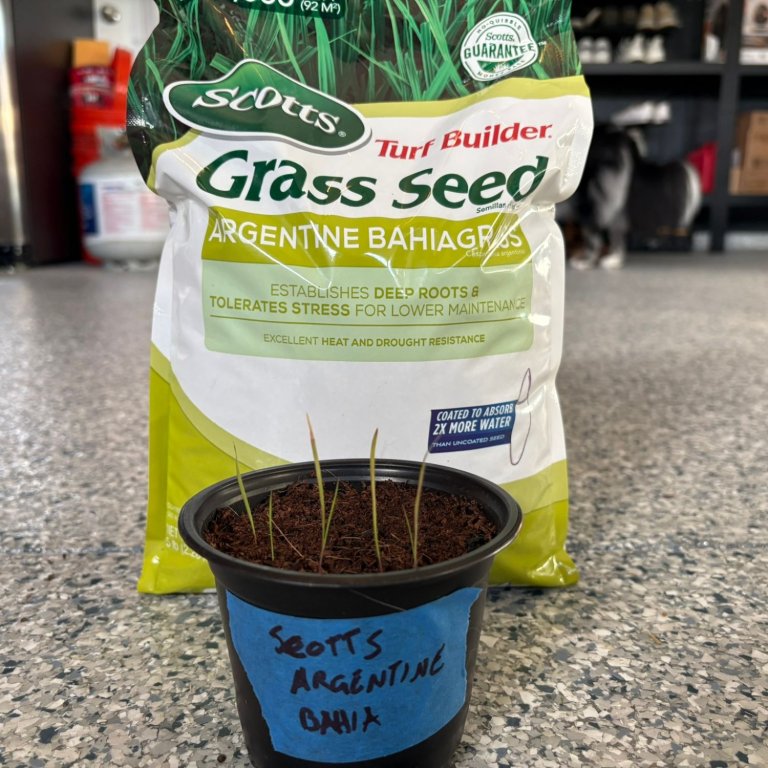
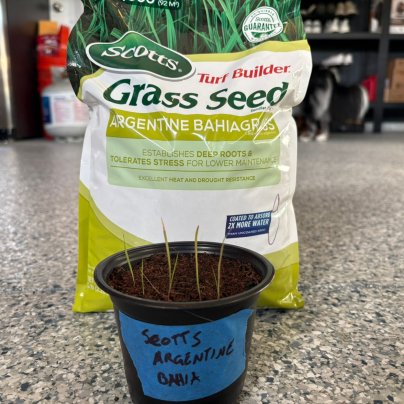
Scotts Turf Builder Argentine Bahiagrass Grass Seed is designed for hot, sunny lawns in southern coastal climates, making it a common choice for Florida landscapes. Argentine bahiagrass develops deep roots that help it tolerate drought, heat, and sandy soil, which can reduce watering and maintenance needs once the lawn is established. Each seed is coated to help it absorb up to twice as much water as uncoated seed, aiding germination. The coarse-bladed grass performs best in full sun and can be used to seed a new lawn or overseed an existing one.
In our one-month grow test, this seed produced fewer shoots than most of the other varieties we tested, with only about 10 blades emerging in the pot. However, the grass that did grow appeared healthy, green, and relatively tall—reaching roughly 3 inches by the end of the test period. While establishment was slower and thinner than some competitors, the growth we observed suggests a durable grass that may take longer to fill in but can perform well once established.
Best For Mixed Light
Photo: Paul Rankin for Bob Vila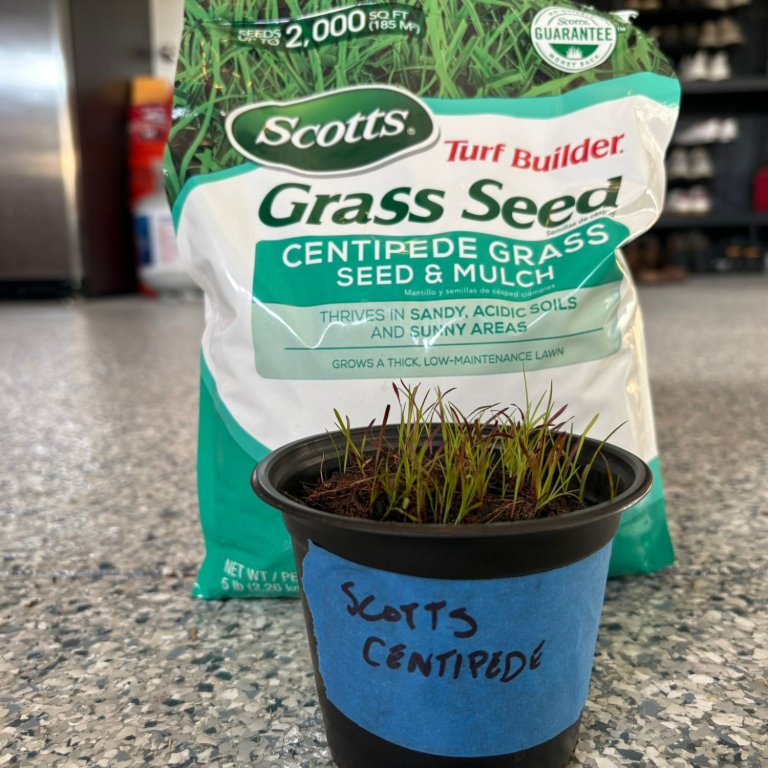
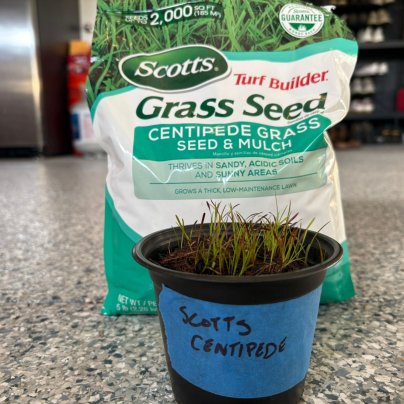
Scotts Turf Builder Centipede Grass Seed & Mulch is designed for lawns with sandy, acidic soils, conditions commonly found across Florida and the southeastern United States. This mix combines grass seed with mulch to help retain moisture during germination and encourage thicker establishment. Centipede grass grows best in full sun to light shade and develops a medium-textured lawn with moderate drought tolerance. The product can be used for starting a new lawn or overseeding existing turf, with a 5-pound bag covering up to 665 square feet for new lawns.
In our one-month grow test, this was one of the most visually striking grasses we planted. The pot filled in with thick, tall blades that produced excellent coverage compared to many of the other seeds. The grass also developed an interesting mix of green and purple tones, creating a vibrant look under the grow light. Strong density and healthy growth made this one of the best-performing seeds in our test.
Best Drought-Tolerant
Photo: Paul Rankin for Bob Vila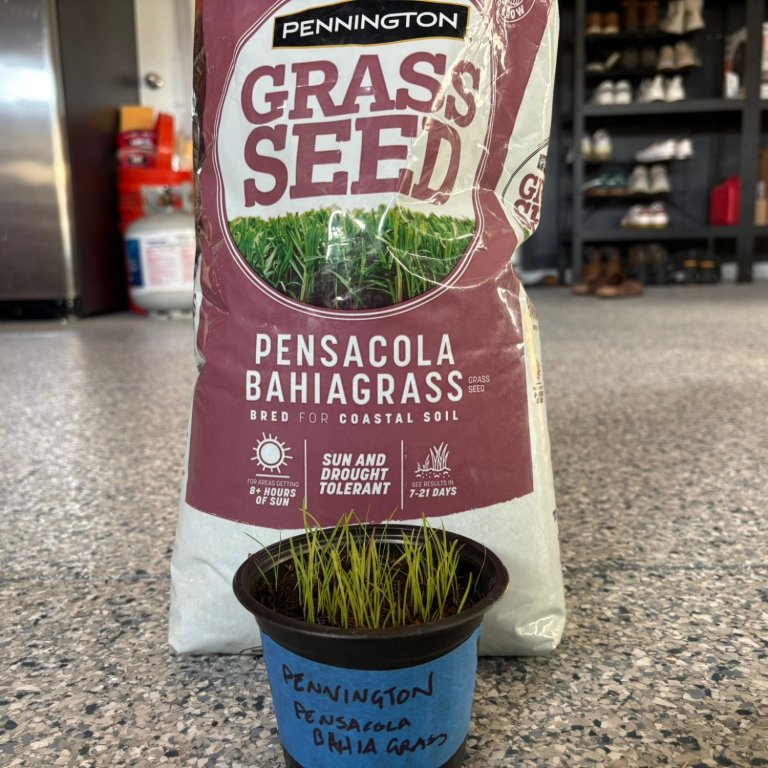
Pennington Pensacola Bahiagrass is a low-maintenance warm-season grass bred for sunny coastal lawns, making it a strong candidate for many Florida landscapes. This variety is known for its deep root system, which helps it tolerate drought, poor soils, and high heat. It performs best in lawns that receive at least 8 hours of direct sun and can establish relatively quickly, with germination typically occurring within 7 to 21 days. Pensacola bahiagrass is also valued for its durability and disease resistance, making it a practical option for large yards or low-maintenance turf.
In our one-month grow test, this seed produced healthy, vibrant green grass and established more densely than several other varieties we planted. While it didn’t match the thickness of our top-performing buffalo grass, it still created one of the fuller pots in the test. The blades also developed a rich green color, making this one of the best-looking grasses we grew during the trial.
Best For Full Sun
Photo: Paul Rankin for Bob Vila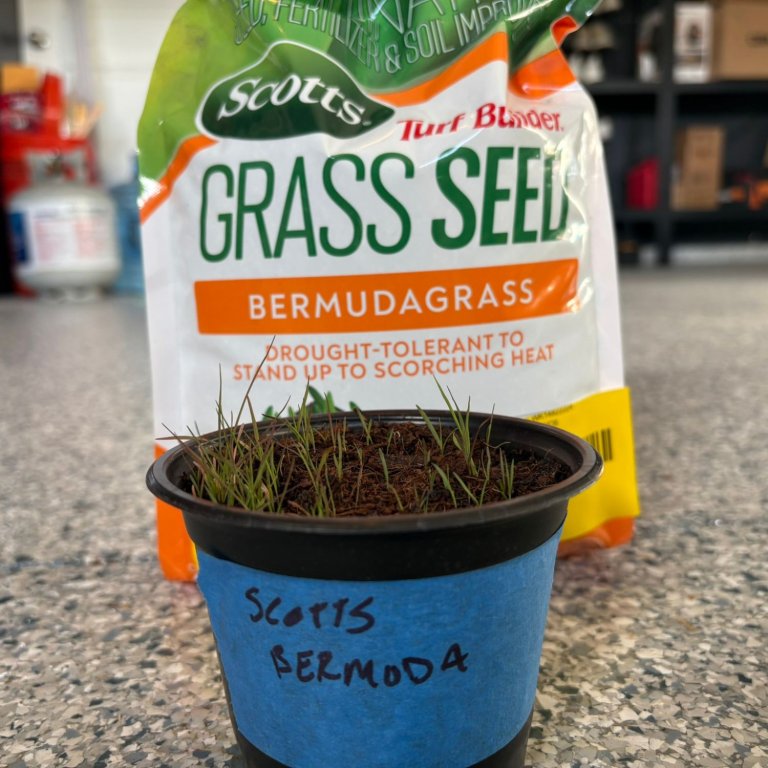
Scotts Turf Builder Bermudagrass Grass Seed is designed for full-sun lawns that need strong drought resistance and durability, making it a popular choice for hot southern climates. This blend includes Scotts’ Root-Building Nutrition, which combines seed, fertilizer, and a soil improver to help establish deeper roots and a stronger lawn. Bermudagrass is known for its ability to withstand heavy sun exposure and foot traffic, and it can be used to seed a new lawn or overseed an existing one.
In our one-month grow test, this seed started more slowly than several of the other varieties we planted. By the end of the test period, the grass reached about 1 to 2 inches tall and produced moderate coverage in the pot. While it wasn’t as thick as the buffalo, bahiagrass, or centipede grass at this early stage, the steady growth suggests this variety may continue to fill in and thicken as it becomes established.
Best Plug
Florida Foliage St. Augustine Palmetto Grass Plugs
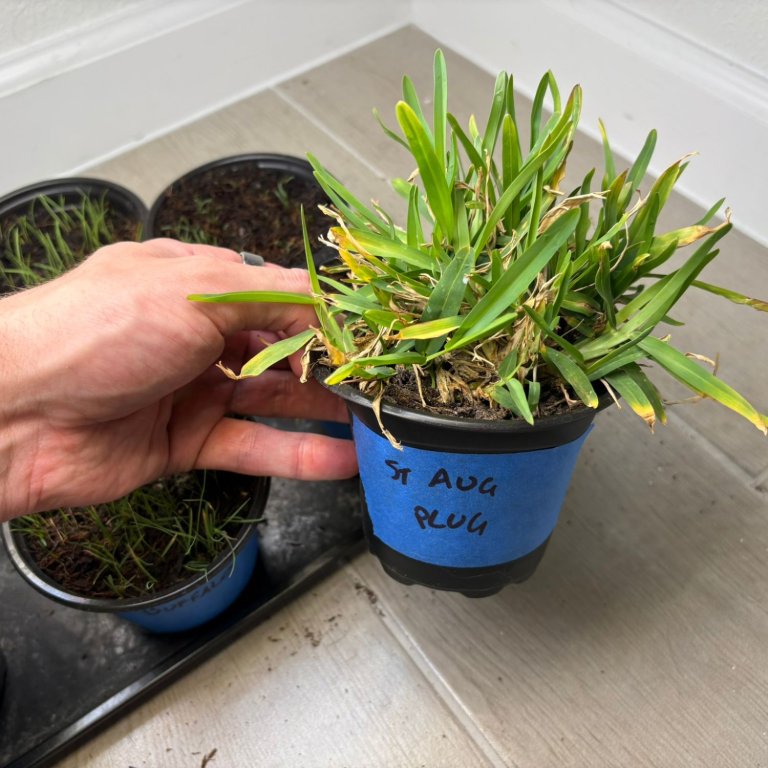
Buy at Amazon Buy at Florida Foliage Buy at WalmartFlorida Foliage St. Augustine Palmetto Grass Plugs offer a practical way to establish or repair a St. Augustine lawn, one of the most common turf types in Florida. Because St. Augustine grass is rarely grown from seed, plugs are typically used to fill bare spots or gradually spread grass across a yard. Palmetto is a popular cultivar known for its finer texture, improved color, and strong tolerance to shade, heat, and drought. When properly maintained and mowed at about 3 to 4 inches, it develops a dense, soft lawn that works well in both residential and commercial landscapes.
Although this product isn’t a seed, we included it in our testing since St. Augustine is so widely used in Florida. We planted the plugs in a pot and grew them under the same conditions as the other grasses. After one month, the plant remained vibrant green and thick, and a long stolon had begun to develop, showing how this grass spreads over time. While plugs establish more slowly than seeds, they can gradually fill in bare areas to create a lush lawn.
Jump to Our Top Picks
What to Consider When Choosing Grass Seed for Florida
Though it’s easy to assume that all grass seed mixtures offer similar performance, several factors affect their functionality after planting. Keep reading to learn about the most important features when choosing the best grass seed for Florida lawns.
Florida Grass Types
Many types of grass seed thrive in Florida, each of which has both advantages and disadvantages. Here are some of the different types of Florida grass varieties and seeds.
Bahia
Bahia grass is a popular choice for Florida lawns thanks to its heat tolerance and low-maintenance nature. Its deep root system helps it survive dry periods, and it grows well in sandy or less fertile soils. Bahia also requires less fertilizer than many other turf varieties, making it a cost-effective option for large yards.
However, Bahia grass tends to have a coarser texture and more open growth pattern, so it may not create the dense, carpetlike lawn some homeowners prefer. It also performs best in full sun, as shade tolerance is limited.
Bermuda
“Bermuda grass is another type of grass that is widely used because of its color and look,” says Kody Ketterling. This grass grows aggressively and forms a dense, fine-textured lawn that handles heavy foot traffic well. Its deep root system also helps it tolerate drought once established.
“This grass needs to be cut weekly and can be invasive if not taken care of,” warns Ketterling. Bermuda spreads quickly and may creep into flower beds or walkways if not maintained. It also turns brown during cooler winter temperatures, particularly in North Florida.
Buffalo Grass
Buffalo grass is a drought-tolerant, low-maintenance turf that naturally thrives in dry conditions. Its deep root system allows it to access moisture below the soil surface, reducing watering needs. It can also form a dense, soft lawn that works well for moderate foot traffic.
Because buffalo grass is native to North America, it adapts well to local ecosystems and can support biodiversity. However, it typically performs best in full sun and low-traffic areas, and it may not grow as uniformly as some traditional turf species.
Centipede
Centipede grass is often called the “lazy man’s grass” because it requires relatively little mowing or fertilization. It grows well in acidic, sandy soils and handles Florida’s heat and humidity with ease. Its slow growth rate means fewer mowing sessions throughout the season.
The trade-off is that centipede grass doesn’t tolerate heavy foot traffic well and can become thin in high-use areas. It’s also somewhat susceptible to certain pests and diseases if not properly maintained.
Seashore Paspalum
Seashore paspalum is a premium turfgrass known for exceptional salt tolerance, making it ideal for coastal Florida properties. It forms a dense, dark-green lawn with a fine texture and adapts to various mowing heights.
This grass also tolerates heat, humidity, and saline irrigation while requiring fewer chemical treatments than many turf varieties. However, it is less commonly available as seed, and most homeowners establish it using sprigs, plugs, or sod.
St. Augustine
“St. Augustine grass grows really quick and is usually the go-to grass for most people in the Florida regions,” says Ketterling. It forms a thick, lush lawn and performs well in both sun and partial shade.
However, St. Augustine grass varieties cannot be grown from seed. Instead, it must be installed using sod or plugs. Sod offers immediate coverage but costs more, while plugs are more affordable but take time to spread and fill in.
Zoysia
Zoysia grass is valued for its dense, fine-textured lawn and strong weed resistance. “It is kind of a universal grass in that it can handle many different types of environments,” explains Ketterling. It tolerates full sun to partial shade and holds up well to foot traffic.
“This grass grows very tight and dense, so weeds struggle to grow in this grass,” Ketterling adds. While zoysia is drought tolerant once established, it takes longer to establish than many other grasses and still requires regular mowing and maintenance to keep it looking its best.
Climate
Florida features two primary climates: tropical (in the southernmost part of the state) and subtropical. It’s also home to four USDA hardiness zones. Before choosing a grass type to plant, verify the hardiness zone in your area.
- Zone 11a and 11b extend from Key West to Marathon and include the rest of the Florida Keys and some parts of Miami. Its temperatures are as low as 40 to 45 degrees Fahrenheit.
- Zones 10a and 10b encompass the remainder of South Florida, including the Everglades. Temperatures can drop to 30 or 35 degrees Fahrenheit.
- Zones 9a and 9b are mostly comprised of interior, central Florida, and north of Orlando, where temperatures can drop to 20 degrees Fahrenheit.
- Zone 8b is the coldest Florida hardiness zone, encompassing Gainesville, Pensacola, and Tallahassee. On some winter nights, temperatures can dip to 15 to 20 degrees Fahrenheit.
Soil Type
Along with the climate, the soil type on the intended site affects which type of grass seed will be most suitable. The most common soil types in Florida are sandy, clay, and loamy, while rocky and silt soils are less common. Establish which seed type is best for the soil type on your property because there’s not one best grass seed that grows anywhere in Florida.
Before choosing grass seed, test the soil by having it professionally evaluated or using a home test kit to establish its pH level. This will be a determining factor in which type of seed will perform best.
Shade Tolerance
Grasses are generally categorized as either warm-season or cool-season varieties, but on top of that, it’s essential to consider shade tolerance. Some cool-season grasses, for example, still need full sun to thrive.
Survey your property to determine how much sunlight it receives at various points throughout the day. Then, decide whether a sun-loving or shade-tolerant grass would work best for your green lawn. Varieties that do well in shady conditions include tall fescue and centipede grass, which can handle partial shade. Bermuda grass and Bahia, on the other hand, do best for lawns that get full sun.
Site Size
When choosing a bag of grass seed, it’s important to establish the size of the site to determine the quantity needed. Most bags of seed will list a recommended area size that the seed will cover (in square feet). The quantity of seed in a bag doesn’t necessarily translate directly to coverage area, since certain types of seed spread more than others.
Bag sizes vary widely, so be sure to compare price per ounce while taking coverage area into consideration.
FAQs
While you now know more about choosing the best grass seed, you might still want more information about how to use it. Here are some answers to some of the most frequently asked questions about Florida grass care and how to grow grass in Florida.
You can plant grass seed year-round in south Florida, but in the northern part of the state, it’s best to plant in spring or summer.
Overseed your lawn when daily temperatures are consistently around 7
Yes, depending on the microclimate and the seed variety chosen, some grasses grow all year in Florida. Others might slow down growth noticeably as temperatures drop, but many will remain green.
Most warm-season grass seeds germinate within 7 to 21 days in Florida, depending on the variety, soil temperature, sunlight, and consistent moisture. Other varieties may take longer to grow.
Seed is more affordable and ideal for large areas, while sod provides instant coverage but costs more. Some grasses, like St. Augustine, are typically installed as sod or plugs.
Meet the Tester
Paul Rankin is a Florida-based product reviewer who tests lawn and garden tools and materials. He evaluates products through hands-on trials to deliver practical, straightforward recommendations.
Additional research provided by Savannah Sher