We may earn revenue from the products available on this page and participate in affiliate programs. Learn More ›
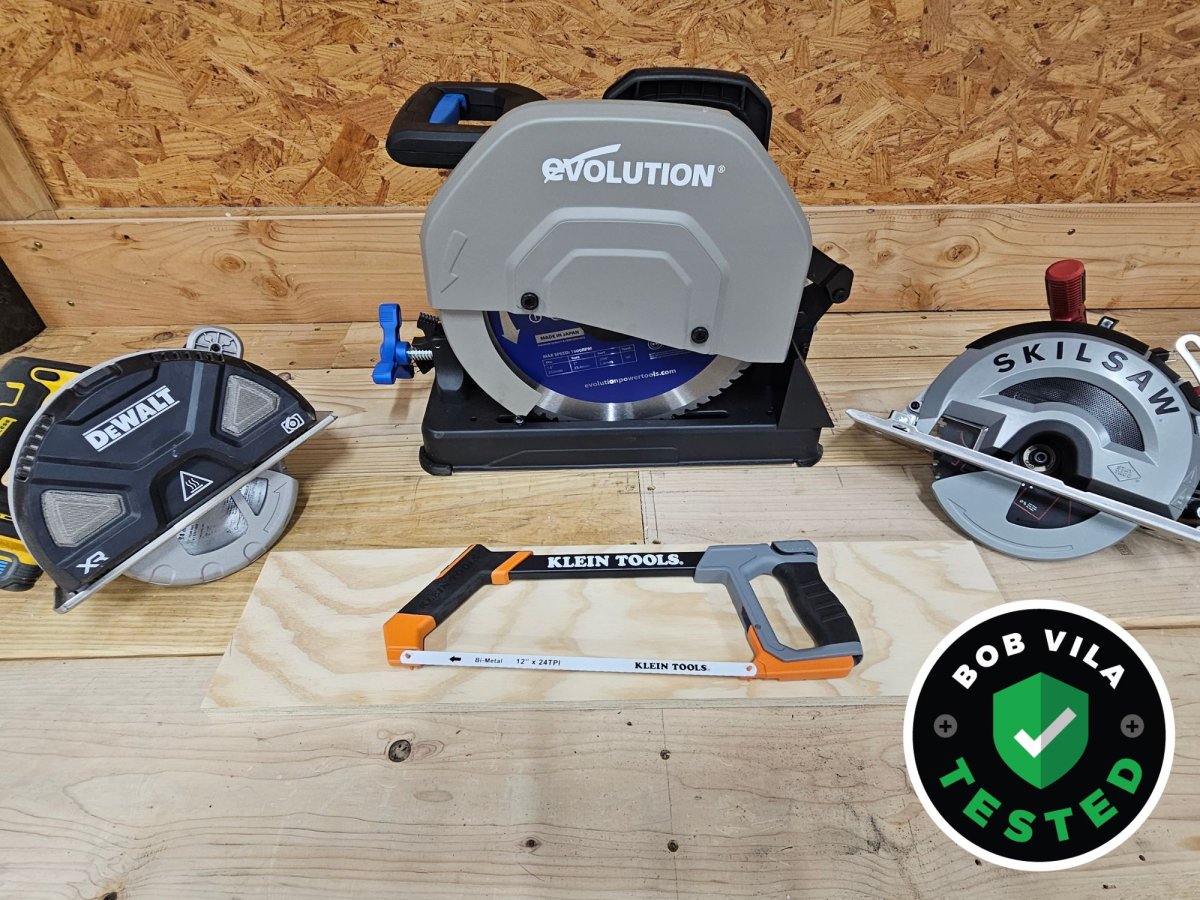
Metal-cutting power saws are designed to make clean cuts through steel, aluminum, and other tough materials that would be slow and exhausting to tackle by hand. We tested five top models, including circular, chop, and band saw styles, along with a manual option for cutting a range of metal stock to compare power, control, debris management, and overall performance.
The right saw can mean the difference between smooth, accurate cuts and rough edges with flying sparks. Our top pick is the DeWalt DCS383B 20V Max XR 7-1/4″ Metal-Cutting Circular Saw, which delivered fast, spark-reduced cuts, excellent balance, and built-in chip collection.
Ahead, we detail the features that matter most and break down how each model performed so you can choose the best metal-cutting saw for your shop or jobsite.
Best Overall
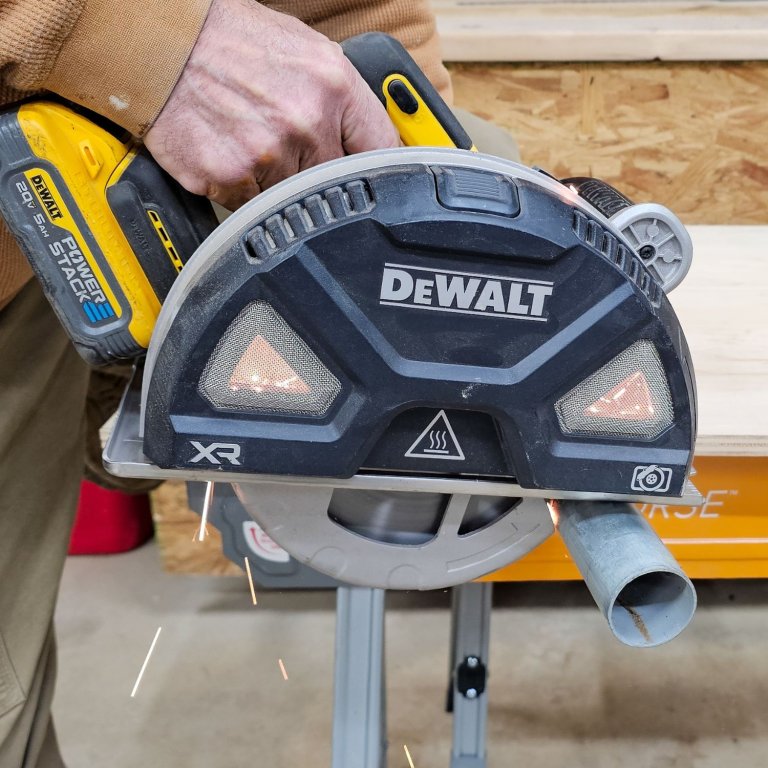
DeWalt 20V 7-1/4″ Metal-Cutting Saw
Rating: 4.8/5
Buy at Amazon Buy at The Home Depot Buy at Ace HardwareWhat We Like
- Built-in chip collector for hot metal shards
- Smooth, spark-free cutting performance
- Balanced, ergonomic design for better control
What We Don’t Like
- Loud under heavy cutting loads
Product Specs
- Type: Metal-cutting circular saw
- Power: 20V (battery, tool-only)
- Weight: 13.35 pounds
The DeWalt Metal Cutting Saw took the top spot in our testing because it changes the way DIYers and pros approach metal cutting. It powered through steel siding, corrugated panels, and ¼-inch aluminum without producing sparks or the flying steel shards and scorched edges we’ve come to expect from metal saws. Its performance was strong enough that we also named it a game changer in BobVila.com’s 2025 Tool of the Year competition.
Its integrated chip collector impressed us by capturing hot metal shards and noticeably reducing cleanup and burn risk. We appreciated the clear sightline and, while it’s not a lightweight saw at 13.35 pounds, it’s well balanced, which made it easier to guide long cuts accurately. The brushless motor delivered consistent power under load, and blade changes were quick, keeping the workflow moving.
It’s loud—there’s no getting around that—but every dedicated metal saw is. For pros trimming steel studs daily or DIYers tackling occasional metal projects, we found this saw to be safer, cleaner, and more controlled than retrofitting a wood saw or hauling out a bulky chop saw.
More Metal Cutting Saws We Recommend
Best Manual
Photo: Glenda Taylor for Bob Vila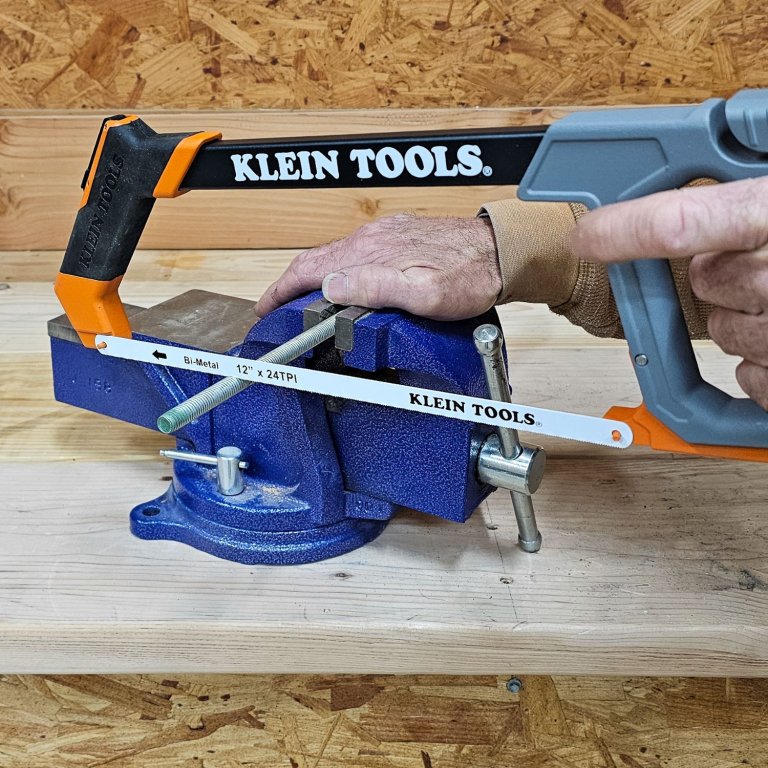
Specs:
- Type: Manual
- Power: NA
- Weight: 2 pounds
The Klein Tools Hacksaw is a manual metal-cutting option, with a high-tension frame that lets you adjust blade tension for clean controlled cuts. We liked its onboard blade storage and multiple blade mounting angles for cutting screws that are straight, jab, or flush, or for cutting metal or pipe.
Best Bang for Your Buck
Photo: Amazon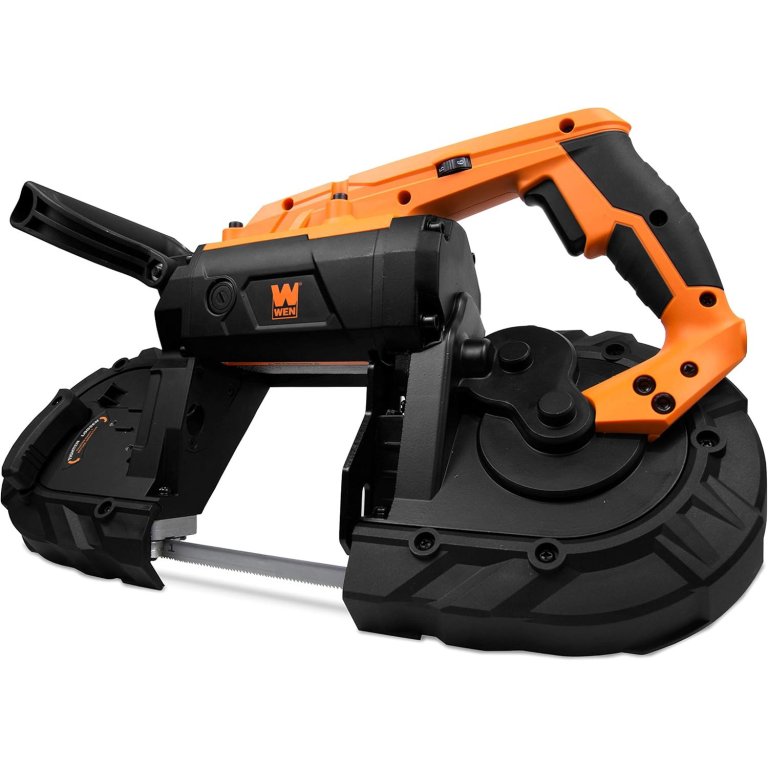
Specs:
- Type: Portable band saw
- Power: 10A corded
- Weight: 14.5 pounds
The Wen 94396 portable corded band saw makes cutting metal and easier with variable speed control and a compact 5-inch cutting capacity. Its integrated chip blower helps keep the cut line clear so you can work more confidently when cutting pipes in tight spots.
Best for Workshop
Photo: Glenda Taylor for Bob Vila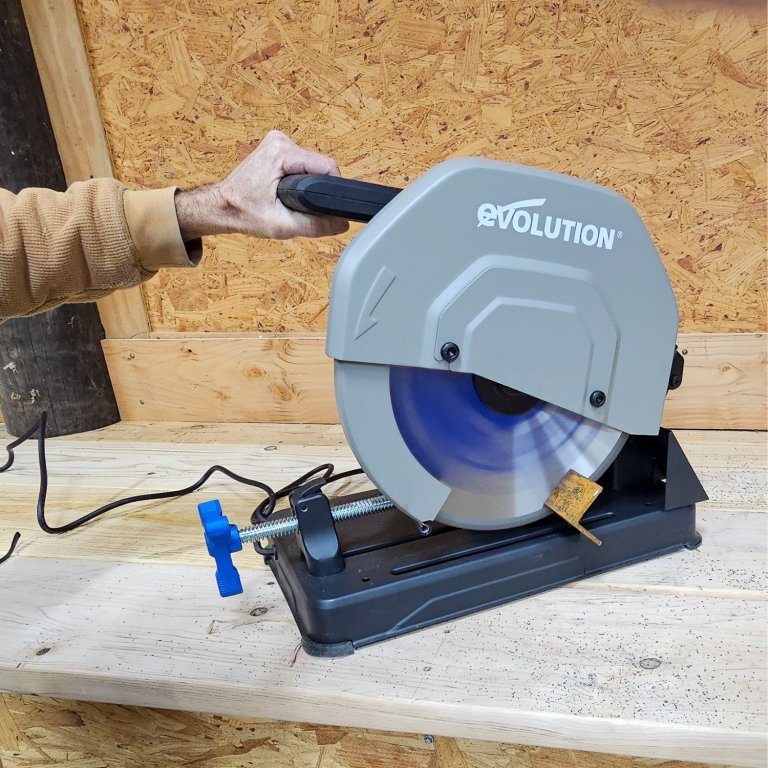
Specs
- Type: Chop saw
- Power: 15A corded
- Weght: 60 pounds
The Evolution S355CPSL metal cutting chop saw is a top choice for those who need a rugged, corded saw that cuts through ⅜-inch steel like butter. Its quick-release vise, adjustable miter capacity, and integrated chip deflector make it well-suited to a permanent place in the workshop.
Best for Jobsite
Photo: Glenda Taylor for Bob Vila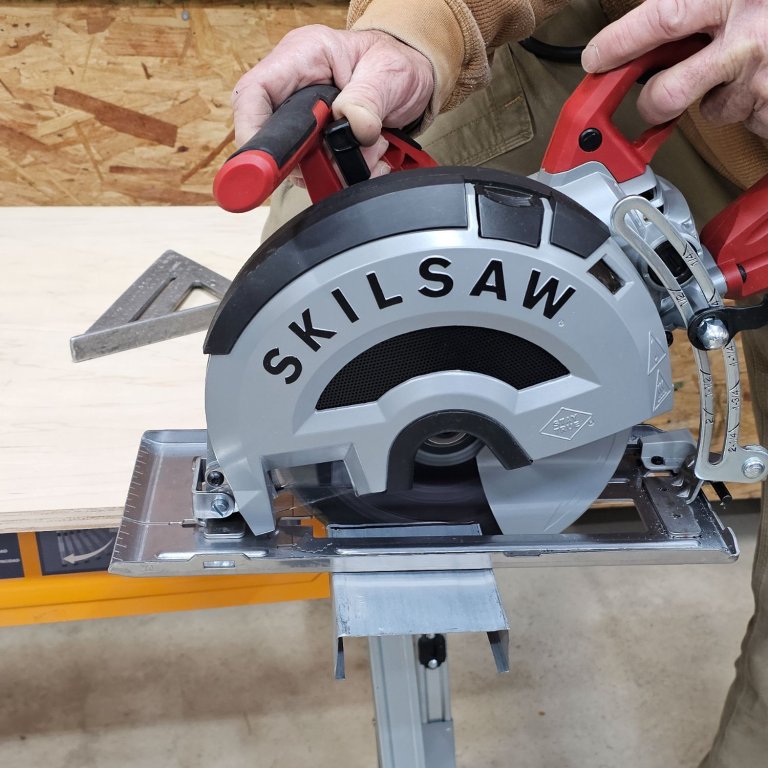
Specs:
- Type: Circular saw
- Power: 15A corded
- Weight: 15.5 pounds
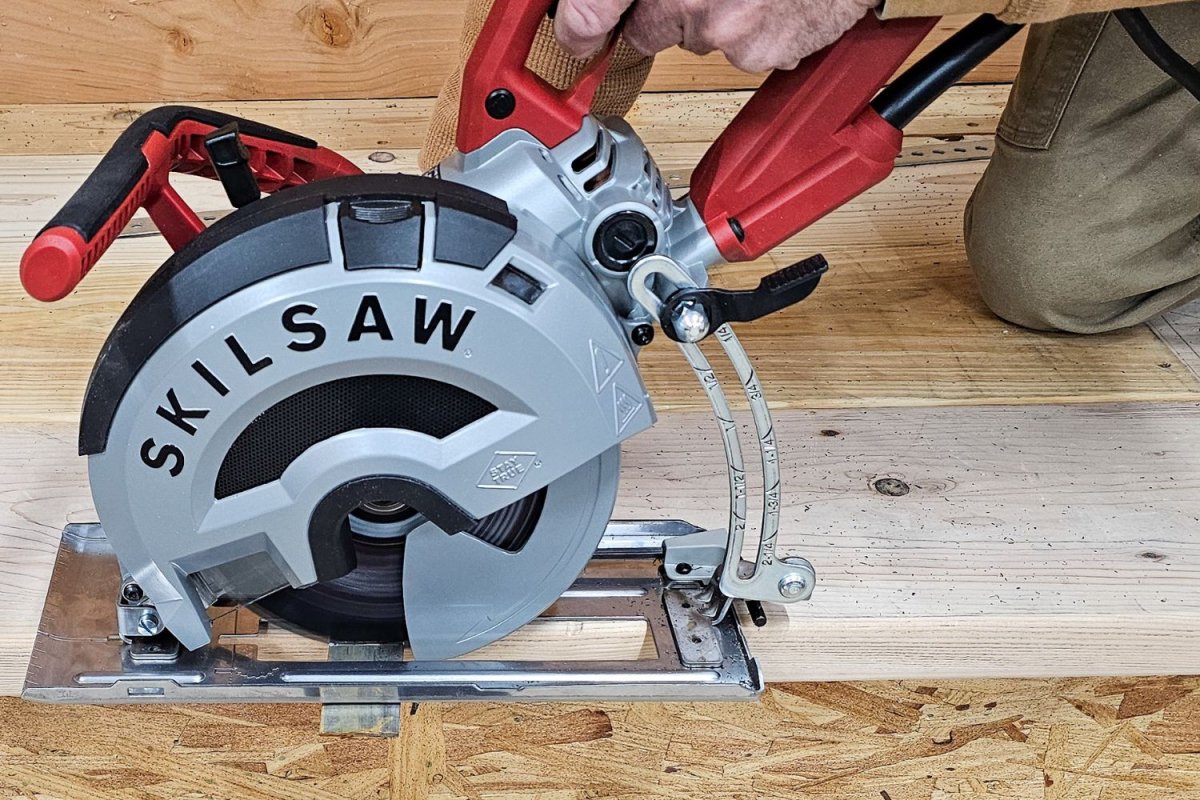
The Skilsaw Outlaw Worm Drive Metal Saw is made for serious metal work, pairing a powerful 15-amp motor with worm drive gearing that delivers strong torque and steady cutting performance. We appreciated its left-side blade design for visibility and the oversized chip tray that manages debris during heavy cutting sessions.
What to Consider When Choosing a Metal-Cutting Saw
Finding the best saw for cutting metal isn’t as straightforward as it might seem. Different sizes, power options, and cutting capacities are available. Also, it’s important to consider how it will be used: Will the tool be stationary in a workshop, or do you need a portable saw? To get the right combination of both performance and value, take the following considerations into account.
Type and Size
Several types of tools are used for cutting metal. The type of metal and its thickness will determine the best one for your project.
- Chop Saws
Chop saws use a downward cutting motion similar to a miter saw and are typically equipped with either a carbide-tipped blade or an abrasive wheel. They’re best for fast, straight cuts through thicker stock like steel pipe, angle iron, and solid bar. - Band Saws
Metal-cutting band saws use a continuous toothed blade that delivers smooth, controlled cuts with minimal sparks. Portable versions are popular on jobsites, while larger stationary models offer greater capacity and precision in the shop. - Circular Saws
Metal-cutting circular saws resemble traditional wood saws but use specialized carbide blades designed for steel and aluminum. They’re well-suited for sheet metal, roofing panels, and framing components where controlled, spark-reduced cuts are important. - Portable Band Saws
Compact and handheld, this saw type allows for controlled cuts in tight spaces and on installed materials. They’re commonly used by electricians, plumbers, and metal fabricators for cutting conduit, pipe, and threaded rod. - Hacksaws
Hacksaws are manual tools that use a tensioned, replaceable blade to cut metal without power. While slower than electric options, they’re inexpensive, portable, and useful for small or occasional jobs.
Angled Cuts and Fence Adjustment
Chop saws get their name from the rise and fall of the blade. Unlike a woodworking miter saw, the blade cannot be rotated or tilted. Instead, a rotating fence is fitted, and the workpiece is clamped against it at the required angle.
Handheld metal-cutting band saws are typically used for cutting pipe or rebar. In theory, they can cut at any angle, but their freehand nature can make it difficult to maintain accuracy. Workshop versions of this saw can offer great versatility, either with a rise-and-fall action similar to a chop saw or by using a flat table to support the workpiece, which is then fed into the blade.
Motor Power and Source
Since it’s the maximum available from a standard electrical outlet, corded motors are often restricted to 15A (amps) of power, so workshop models often have a motor of this size. More portable saws are usually powered by 10A motors, which, strictly speaking, are less powerful but still deliver good performance. Heavy-duty models are frequently assigned a horsepower rating rather than amps, and a dedicated circuit is sometimes required to run them.
The power for cordless metal-cutting saws is rated in volts (V) instead of amps, which describes the battery capacity. Light-duty 12V models are the smallest, 18V or 20V models are the most common, and powerful 36V tools are now available.
Vise Adjustment and Blade Change
Chop saws and workshop band saws feature a vise for securely clamping the work during cutting. Unlike a standard vise that has two jaws, most have a single jaw that closes against the fence. The distance the jaw can open defines the maximum size of the workpiece that it can accommodate. Quick-release mechanisms are a convenient addition to many of these saws.
Changing blades is straightforward on chop saws, which usually have a way to prevent rotation while the main nut is loosened and a new blade is fitted. Band saws are a bit more involved because blade tension and tracking must be set, but it’s not a difficult task.
Safety
Metal cutting saws invariably have blade guards that expose the minimum amount of blade necessary to cut metal while offering maximum protection for the operator. Spark deflectors are also common, but while they do a good job of suppressing most of the material thrown off, users should still wear safety goggles or glasses.
The design of a band saw makes it impractical to have a full blade guard, so a length of blade remains exposed at all times. Extra care must be taken when using these tools.
Trigger locks, another important safety feature, help prevent accidental operation. Some handheld metal-cutting saws have a soft start, which reduces the initial torque when the trigger is pulled, thus making them easier to control.
Portability
The ease of transporting a tool that cuts metal depends largely on the type of saw. Handheld band saws and metal-cutting circular saws, which are similar to their woodworking counterparts, are usually light and very portable.
Chop saws vary in weight, so we considered models that weigh from about 20 pounds to more than 50 pounds. That’s still fairly movable, but weight might be a factor if the tool must be taken to and from a jobsite every day.
Heavy-duty workshop band saws can weigh 100 pounds or more, so they aren’t typically considered portable. Some, however, have wheels to move them around if necessary.
Additional Features
Metal-cutting tools may have few design specs and extra features to make them easier and more convenient to use.
- The best metal chop saws have big handles that allow easy access for a gloved hand and are comfortable to use for long periods.
- A shaft lock allows blade changing with a single wrench.
- Some chop saws have chip trays to collect waste and make cleanup easier.
- Variable speed on band saws allows the user to match the cutting rate to the type of material for more efficient sawing.
- On cordless tools, a brushless motor offers greater battery efficiency than brushed motors.
- With a circular saw, it can be difficult to see where the blade is actually cutting, so some models have laser guides that project forward. More basic models simply contain a guide arrow on the bottom plate.

Safety Tips for Using Metal-Cutting Saws
Any saw that can cut metal has the potential to be dangerous, but taking a few simple precautions will help prevent accidents.
- Read the manufacturer’s instructions carefully. Electric saws for metal cutting can be quite dangerous, so make sure you understand how the machine works and how to turn it off quickly.
- Always wear protective goggles or safety glasses. Cutting metal with a saw is usually quite noisy, so wearing ear protection is also a good idea.
- Metal can sometimes get hot when being sawed, and cut edges can be sharp. Experts recommend that you wear strong, heat-resistant gloves.
- Make sure any guards are in place correctly. Although you may be tempted to remove them for a better view, don’t.
- Sparks are often generated when cutting metal. Make sure flammable liquids are well away from the work area.
- Securely clamp the item you plan to cut, and never lift a workpiece into a rotating saw blade. If the metal catches or is thrown out, it can cause serious injury. Band saws with vertical tables are an exception, as the workpiece cannot be pulled into the blade.
FAQs
The information in this guide provides a comprehensive explanation of the key features of the best metal-cutting saws. However, if you have additional questions, check out our answers below.
A hand saw for cutting metal is called a hacksaw. Powered saws are often called chop saws or cut-off saws, but metal-cutting band saws and metal-cutting circular saws are also available.
Because some saws are better at particular tasks than others, no single answer exists as to which saw is the best. This guide considers the various features and offers a variety of solutions.
A cut-off saw usually has an abrasive disk rather than a toothed blade. It works similarly to an angle grinder, but it’s mounted on a sturdy base, which helps provide stability and improve both control and accuracy.
Each of the listed metal-cutting saws could be described as a cold-cut saw, because unlike metal-cutting lathes and mills, they don’t use lubricants.
No. Saws designed for cutting wood might be able to cut soft metals like aluminum or brass, but cutting metal with a hand saw is no walk in the park. And if you expect your standard hand saw to double as a steel-cutting saw, forget about it. On the other hand, with the right blade, you can cut metal with a jigsaw or reciprocating saw.
Yes, it’s possible, but it depends on the type of saw and the blade fitted. Sawdust tends to clog metal-cutting saw blades because they have lots of small teeth. However, if you cut wood on a regular basis, a dedicated saw is usually a worthwhile investment.
Meet the Tester
Glenda Taylor is a contractor, product tester, and writer focusing primarily on construction, DIY tools, and home appliances.
Additional research provided by Bob Beacham.