We may earn revenue from the products available on this page and participate in affiliate programs. Learn More ›
Standard hammer drills are powerful tools that can drill through a variety of tough materials, but if you plan on drilling a hole larger than ½ inch through concrete, you’ll need a rotary hammer drill for the job. These mighty tools have little trouble drilling through concrete slabs, concrete blocks, stone, and other tough materials using drill bits up to a foot long. Flip a lever, and the same tool becomes a compact demolition hammer. It can strip tiles from walls, knock down brick walls, and break up asphalt.
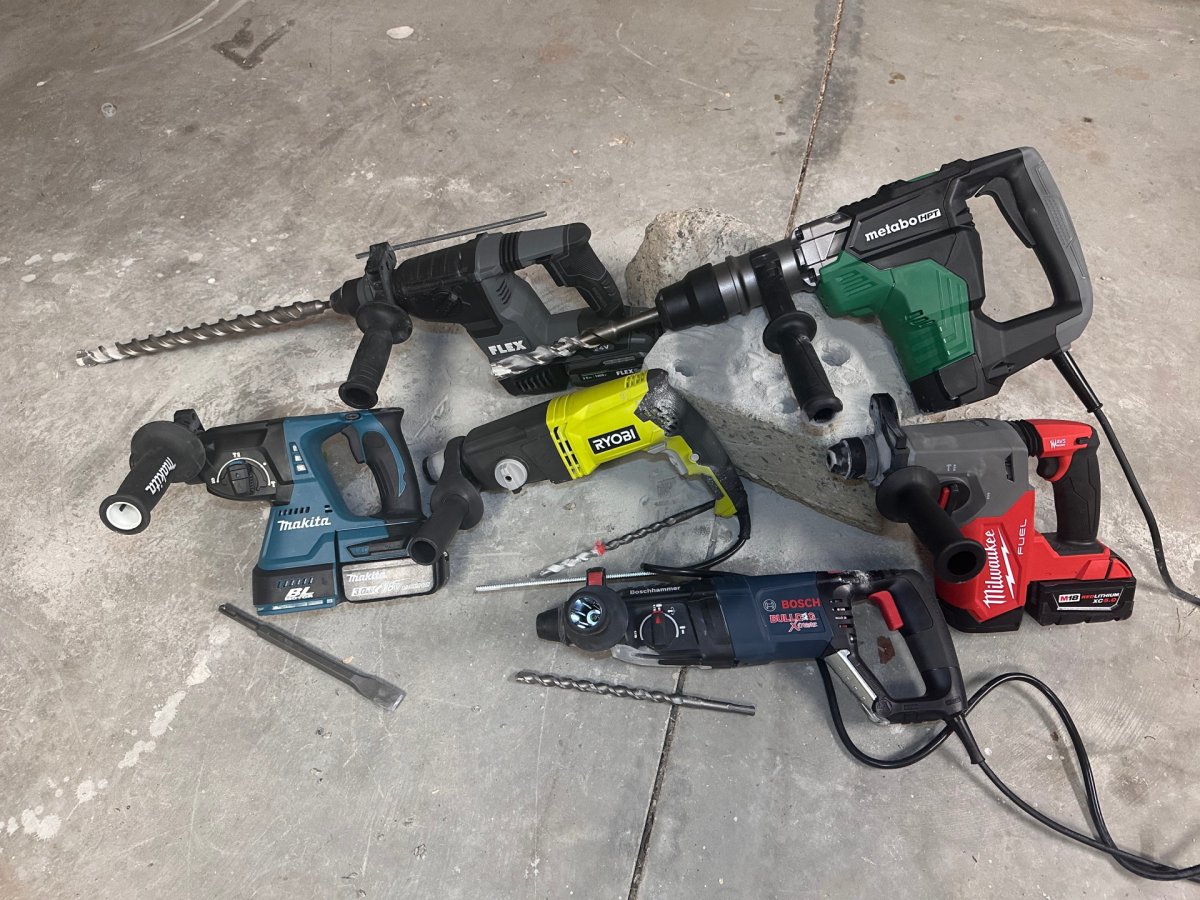
We tested seven different rotary hammer drills to find the best models on the market right now. When the concrete dust cleared, the Flex FX1551A-Z SDS Plus rotary hammer drill emerged as the clear favorite, largely thanks to its impressive drilling power. Keep reading to learn how to choose a model that’s well suited for a variety of purposes, and check out the list of some of today’s best rotary hammer drills below.
- BEST OVERALL: Flex FX1551A-Z 1-Inch SDS Plus Rotary Hammer Drill
↓ Jump to Review - BEST BANG FOR THE BUCK: Ryobi SDS65 Rotary Hammer Drill
↓ Jump to Review - BEST UPGRADE: Milwaukee M18 FUEL 1-Inch SDS Plus Rotary Hammer
↓ Jump to Review - BEST CORDED: Bosch SDS Plus Bulldog Xtreme Rotary Hammer Drill
↓ Jump to Review - BEST COMPACT: Makita 18V LXT Cordless SDS Plus Rotary Hammer Drill
↓ Jump to Review - BEST POWER: Metabo HPT 1 9/16-Inch SDS Max Rotary Hammer Drill
↓ Jump to Review - BEST CORDLESS: DeWalt 20V MAX XR Rotary Hammer Drill
↓ Jump to Review
Rotary Hammer Drills Comparison
| Product | Drilling Capacity (concrete) | Impact Energy | BPM |
|---|---|---|---|
| Flex FX1551A-Z 1-Inch SDS Plus Rotary Hammer Drill | 1 inch | 1.9 ft./lbs. | 4,350 BPM |
| Ryobi SDS65 Rotary Hammer Drill | 1 inch | N/A | 4,200 BPM |
| Milwaukee M18 FUEL 1-Inch SDS Plus Rotary Hammer | 1 inch | 2 ft./lbs. | 4,800 BPM |
| Bosch SDS Plus Bulldog Xtreme Rotary Hammer Drill | 1 inch | 2.0 ft./lbs. | 5,800 BPM |
| Makita 18V LXT Cordless SDS Plus Rotary Hammer Drill | 1 inch | 1.7 ft./lbs. | 4,700 BPM |
| Metabo HPT 1 9/16-Inch SDS Max Rotary Hammer Drill | 1-9/16 inches | 6.3 ft./lbs. | 2,800 BPM |
| DeWalt 20V MAX XR Rotary Hammer | 1 inch | 1.55 ft./lbs. (2.1 joules) | 4,600 BPM |
Our Top Picks
The following picks cover some of the best tools for both DIY and trade users. To make it easier to find the best rotary hammer drill for your needs, we assigned each of our favorites an award to highlight its defining features.
Best Overall
Photo: Lowe’s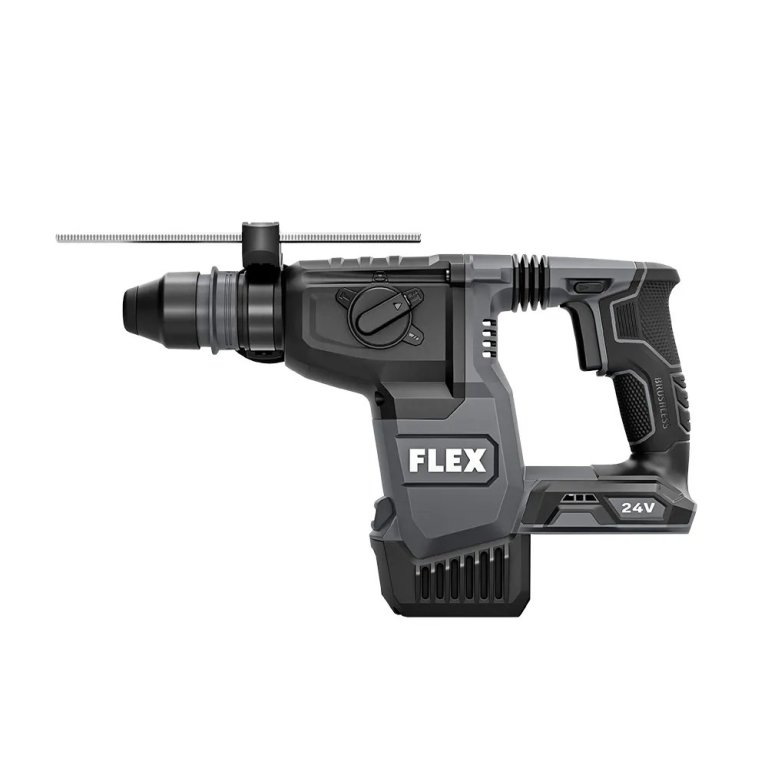
What We Like
- Tremendous power in a cordless design
- Smooth operation even when using larger bits
- Balanced design with ergonomic grip
What We Don’t Like
- Lacks safety auto-stop feature
Product Specs
- Drilling capacity (Concrete): 1 inch
- Impact energy: 1.9 ft./lbs.
- BPM: 4,350 BPM
Our Ratings
| Ease of Use | 5/5 | Ergonomics | 4.5/5 | Performance | 4.9/5 | Value | 4.7/5 |
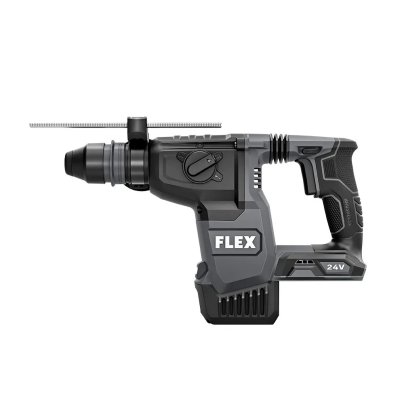
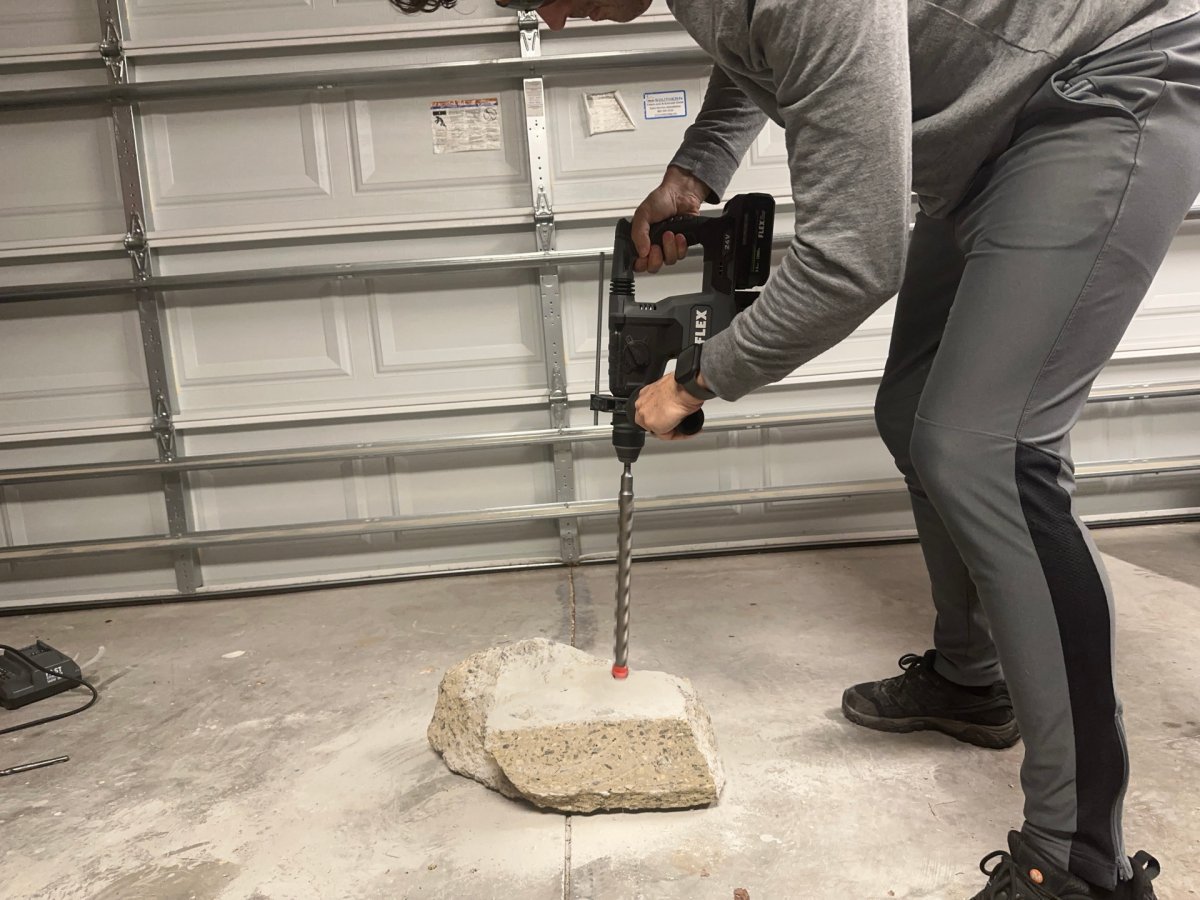
Fitted with a large 24-volt battery, this cordless rotary hammer drill from Flex delivered impressive drilling performance. It bested all of the SDS Plus hammer drills in our testing, completing our 1-inch drill bit test in just 45 seconds and drilling a half-inch hole in just over 10 seconds. Only the Metabo SDS Max we tested was faster.
What’s more, Flex accomplishes these impressive drilling feats smoothly. Drilling through concrete is a rugged job, but drilling with even larger rotary hammer drill bits felt easy with the Flex. We experienced less vibration than with other rotary hammer drills, even when using a larger bit. We only wish the Flex came with an auto-stop safety feature to go with all that power.
Weighing about 9 pounds with its 5Ah battery, it’s not the lightest rotary hammer drill we tested, but it’s relatively compact and well balanced, making it easy to use.
We also liked the versatility of the Flex SDS Plus rotary hammer drill. It’s the only model we’ve seen that comes with an additional ½-inch drill chuck, so you can use it with both SDS and standard drill bits. The Flex rotary hammer drill isn’t cheap, but it’s worth the investment if you find yourself drilling into concrete regularly or do so as part of your job.
What our tester says: “The Flex boasts tremendous drilling power while still being easy to use with smooth operation and minimal vibration. “—Tony Carrick, Product Reviews tester and writer.
Get the Flex rotary hammer drill at Acme Tools or Flex.
Best Bang For The Buck
Ryobi SDS65 Rotary Hammer Drill
Buy at The Home DepotWhat We Like
- Drills holes up to 1 inch in diameter
- Surprisingly effective at chipping concrete
- Easy to change settings and adjust side handle
- Cost-friendly; great for a DIYer’s budget
What We Don’t Like
- Lacks the muscle of other rotary hammer drills
Product Specs
- Drilling capacity (Concrete) : 1 inch
- Impact energy: N/A
- BPM: 4,200 BPM
Our Ratings
| Ease of Use | 4/5 | Ergonomics | 4/5 | Performance | 3.9/5 | Value | 4/5 |
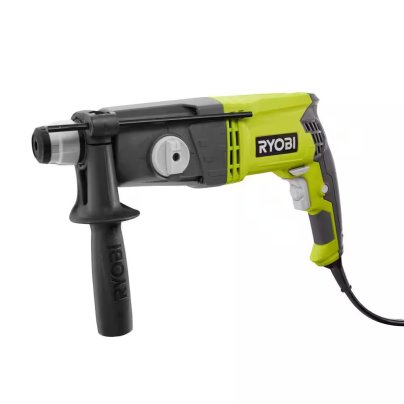
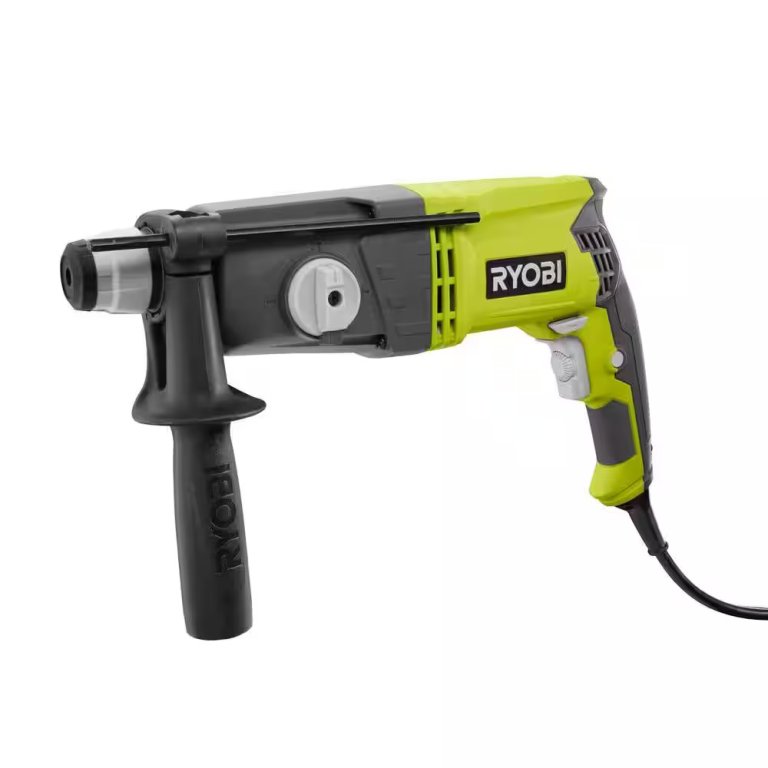
Ryobi’s Rotary SDS Plus corded rotary hammer drill may lack the power of some of the other hammer drills on this list, but it can get the job done at a far cheaper price point.
Ryobi’s smaller 6.5-amp motor resulted in drilling that, while slower, was still capable. As long as we used slow, steady force and allowed the bit to breathe periodically, we didn’t experience any bogging down—even when drilling a 1-inch-diameter hole. It took 1 minute and 12 seconds to drill a 3-inch-deep hole into our concrete slab and more than 30 seconds to bore a ½-inch hole into our hunk of concrete, both of which were among the slowest times recorded. Though slower, it’s a worthy compromise given that the Ryobi SDS Plus hammer drill costs, in some cases, hundreds of dollars less than other higher-performing rotary hammer drills.
Other notable features include a depth gauge and a handle that you can loosen and reposition on the fly using one hand. As with other rotary hammer drills, the Ryobi has settings options for drilling, hammer drilling, or chiseling. It’s a great choice for DIYers who may need to drill holes through concrete or large holes in lumber from time to time.
Get the Ryobi rotary hammer drill at The Home Depot.
Best Update
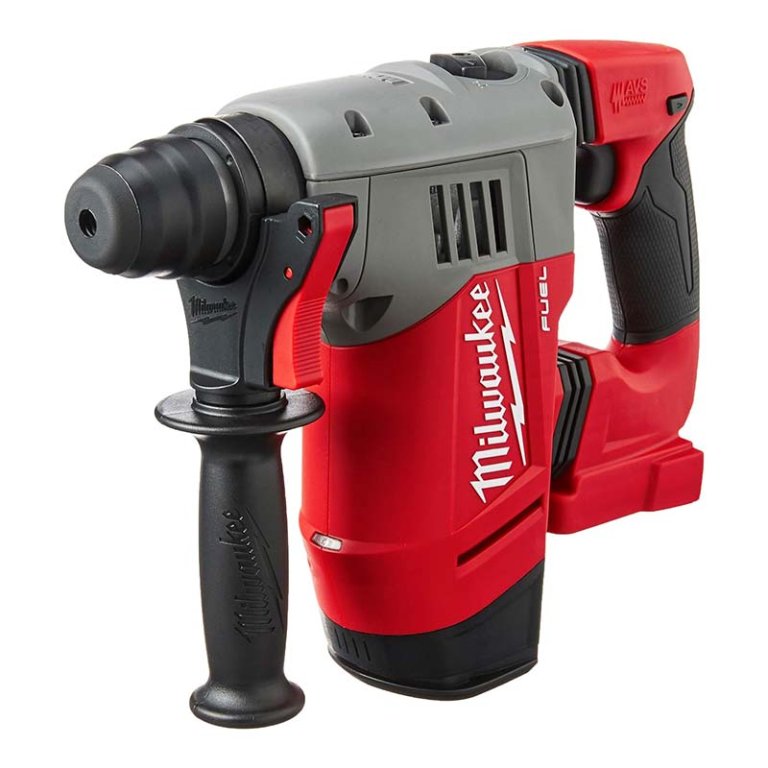
Milwaukee M18 FUEL 1-Inch SDS Plus Rotary Hammer
Buy at The Home Depot Buy at Ace Hardware Buy at WalmartWhat We Like
- Excellent power output in a cordless package
- Compact size makes it easier to use
- Patented AUTOSTOP safety feature
What We Don’t Like
- Has a premium price tag
Product Specs
- Drilling capacity (Concrete): 1 inch
- Impact energy: 2 ft./lbs.
- BPM: 4,800 BPM
Our Ratings
| Ease of Use | 5/5 | Ergonomics | 5/5 | Performance | 4.5/5 | Value | 4.3/5 |
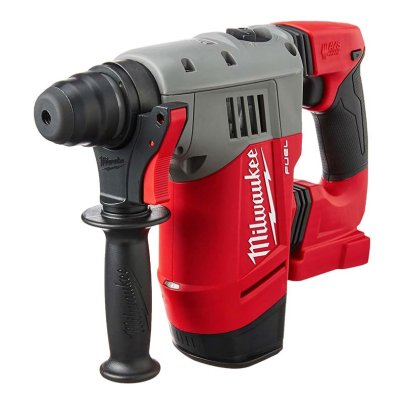
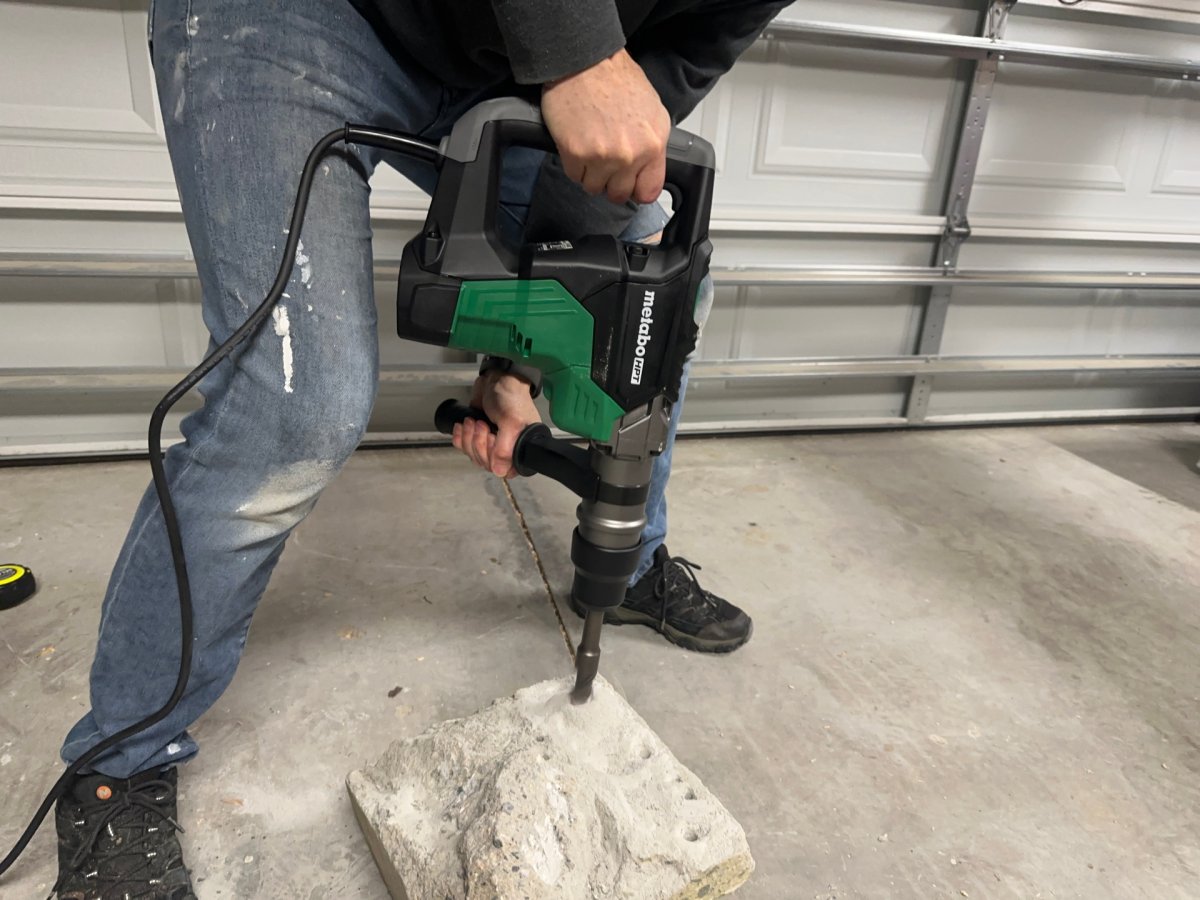
Milwaukee’s 18-volt FUEL rotary drill is built and priced with professionals in mind. It was among the top performers during testing, boring a 1-inch-wide, 3-inch-deep hole into concrete in about 50 seconds. That dropped to 15 seconds for our ½-inch drill bit. Only the cordless Flex and SDS Max Metabo rotary hammer drills were faster.
As has been the case with the dozens of other cordless Milwaukee power tools we’ve tested in the past, the black and red brand always managed to squeeze this kind of performance into a small package. This was one of the most compact rotary hammer drills we tested, yet it put out a class-leading 2 ft./lbs. of impact energy.
That compact size, coupled with its low vibration, also made it one of the more comfortable drills to use. The Milwaukee is designed for the pro worksite, so it also has a solid, sturdy feel and a proprietary AUTOSTOP feature that protects your wrists in the event the bit binds up in concrete. Milwaukee’s 18-volt FUEL is easily the priciest rotary hammer drill we tested, making it a tough sell for anyone but professionals and serious DIYers who need the drilling power and durability this tool offers.
Get the Milwaukee rotary hammer drill at The Home Depot, Ace Hardware, Walmart, or Northern Tool + Equipment.
Best Corded
Photo: Amazon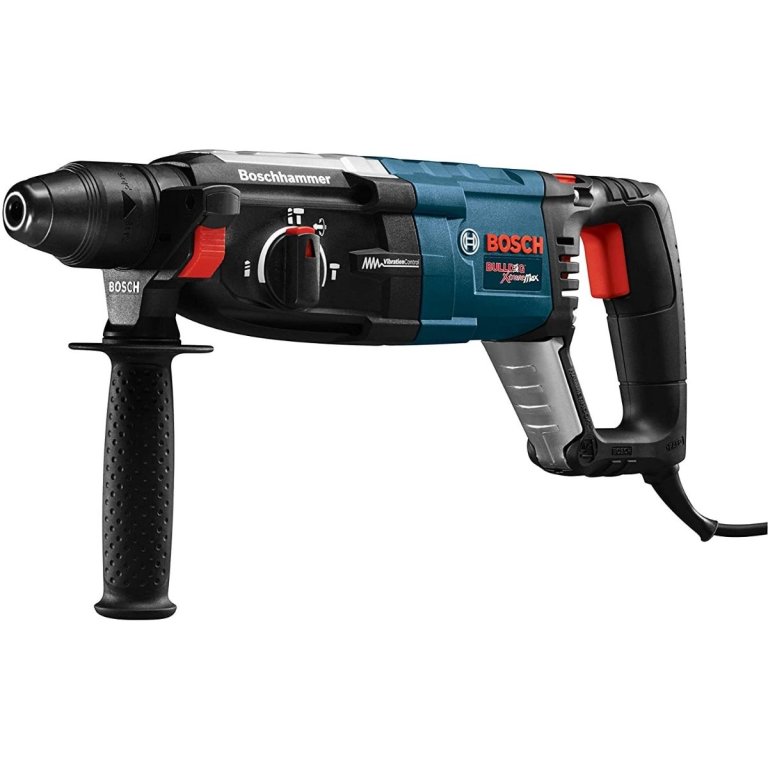
What We Like
- Lightweight design makes it easy to use
- Easy to adjust side handle
- Comes with a hard carrying case
What We Don’t Like
- Lacks the drilling speed of other competitors
Product Specs
- Drilling capacity (Concrete): 1 inch
- Impact energy: 2.0 ft./lbs.
- BPM: 5,800 BPM
Our Ratings
| Ease of Use | 4.5/5 | Ergonomics | 4.5/5 | Performance | 4.1/5 | Value | 4.3/5 |
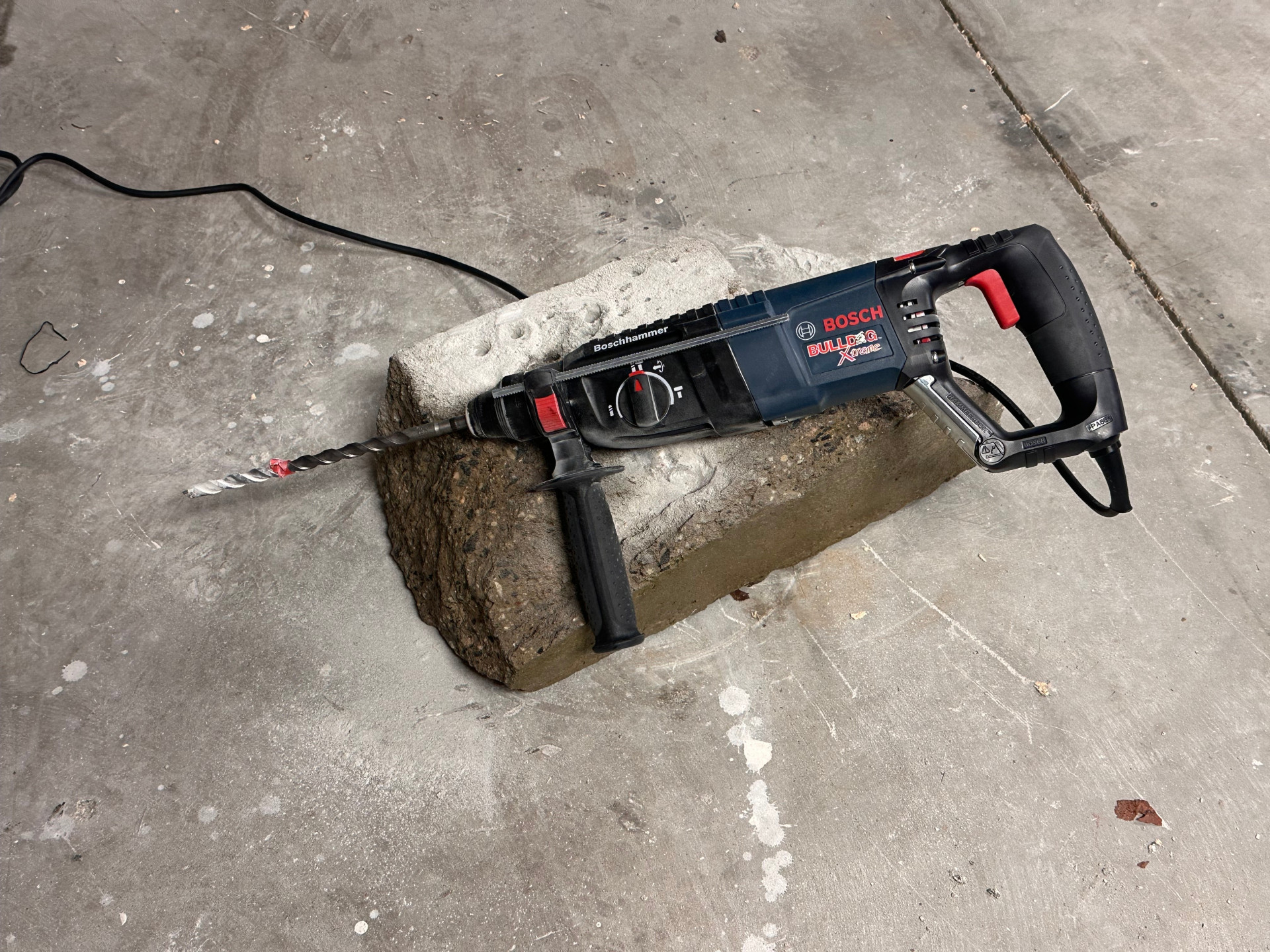
Bosch’s Bulldog Xtreme is a great all-around corded hammer drill that has enough power to drill larger holes through denser materials, while still being easy to operate and reasonably priced. With a 7.5-amp motor that reaches a maximum of 5,800 BPM with 2.0 ft./lbs. of torque, the Bulldog capably passed each of our drilling tests, albeit at a slower pace. It took us about 70 seconds to work through 3 inches of concrete with a 1-inch bit and just under 30 seconds with a ½-inch drill bit. While those times placed it among the slower drills we tested, it drilled clean holes without binding up in the material.
At just 6.4 pounds, it was the lightest rotary hammer drill we tested. That light weight, coupled with an ergonomic grip, made the Bosch Bulldog easier to use and control than some of the heavier models we tested. It offers a user-friendly design, solid drilling performance, and an affordable price tag, making it an ideal choice for the home workshop.
What our tester says: “The Bosch Bulldog isn’t the most powerful rotary hammer drill, but it offers solid, reliable performance at a DIY friendly price. “—Tony Carrick, Product Reviews tester and writer.
Get the Bosch rotary hammer drill at Amazon, Lowe’s, or The Home Depot.
Best Compact
Photo: Amazon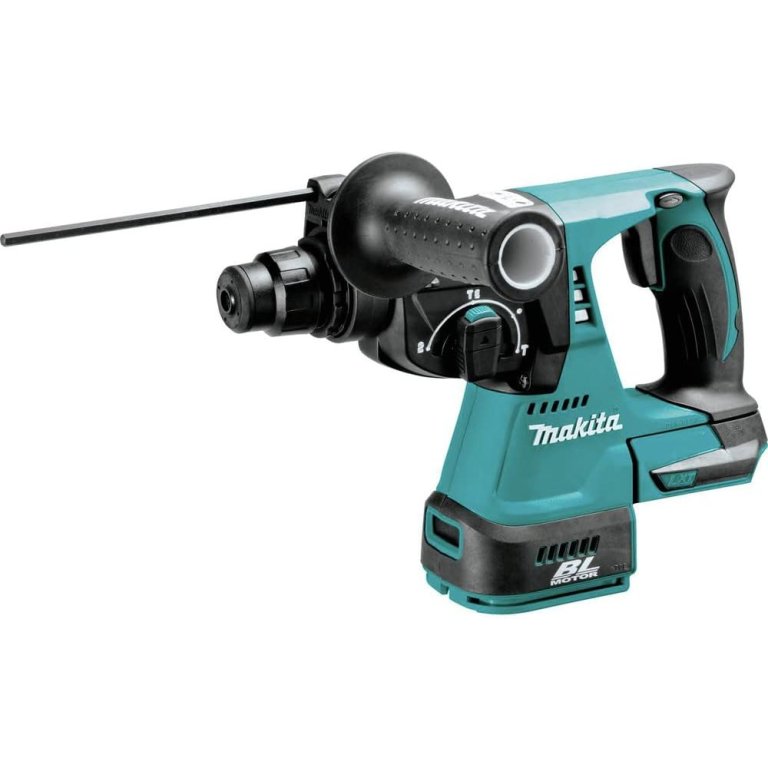
What We Like
- User-friendly design; lightweight and compact
- Comfortable grip on handles
- Easy to load and unload bits
What We Don’t Like
- Lacks power of other corded rotary hammer drills
Product Specs
- Drilling capacity (Concrete): 1 inch
- Impact energy: 1.7 ft./lbs.
- BPM: 4,700 BPM
Our Ratings
| Ease of Use | 5/5 | Ergonomics | 5/5 | Performance | 3.6/5 | Value | 4/5 |
Weighing in at under 8 pounds with its battery equipped, Makita’s 18-volt cordless rotary hammer drill was the lightest of the rotary hammer drills we tested. Its compact size, coupled with an ergonomic rubberized grip on both the trigger handle and side handle, gave it a comfortable, nimble feel. It was noticeably easier to control than heavier cordless models.
While we liked the feel of the Makita SDS Plus rotary hammer drill, it lacks the power of those heavier cordless models. Drilling a ½-inch-diameter, 3-inch-deep hole into concrete took us 35 seconds, about twice as long as the two other cordless models we tested.
The Makita felt underpowered for larger jobs. It took us over two minutes to drill a 3-inch-deep hole with our 1-inch bit. This is a rotary hammer drill better suited for lighter-duty jobs. While the Makita isn’t budget priced, it is more affordable than other cordless rotary hammer drills. This lower price and user-friendly compact design make the Makita SDS Plus rotary hammer drill a good choice for DIYers looking for a cordless rotary hammer drill they can use to take on light to moderate jobs.
Get the Makita cordless SDS Plus rotary hammer drill on Amazon or The Home Depot.
Best Power
Photo: Ace Hardware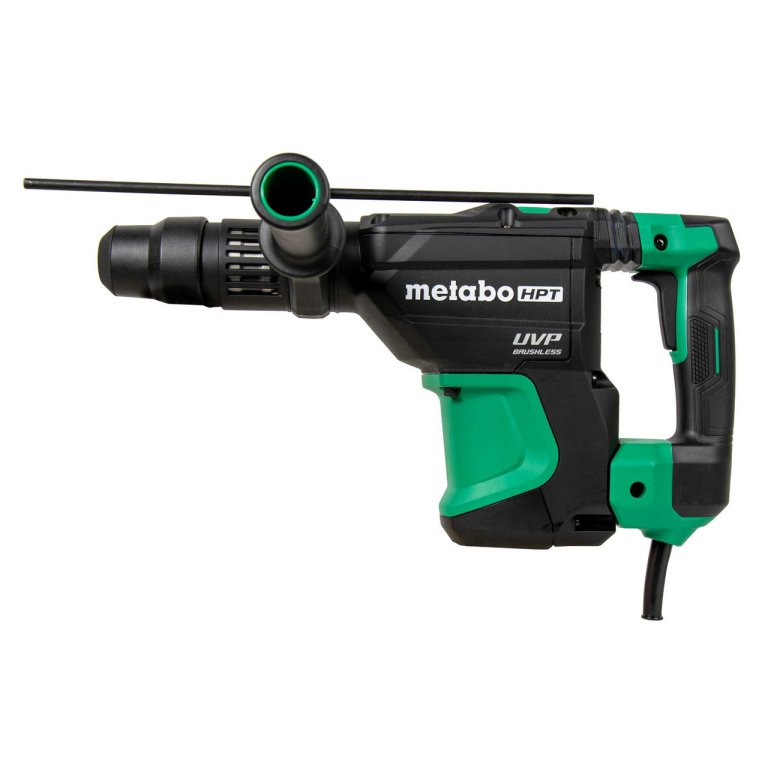
What We Like
- Low vibration for a large rotary hammer drill
- Drills large diameter holes quickly
- Safety mechanism protects wrists
What We Don’t Like
- Bulky and heavy compared to competitors
Product Specs
- Drilling capacity (Concrete): 1 9/16 inches
- Impact energy: 6.3 ft./lbs.
- BPM: 2,800 BPM
Our Ratings
| Ease of Use | 4/5 | Ergonomics | 4/5 | Performance | 4.6/5 | Value | 4.3/5 |
If you’re planning a larger concrete demolition job or need a drill that can quickly bore larger holes through concrete, then this Metabo SDS Max rotary hammer drill is a solid choice. Its whopping 6.3 ft./lbs. of impact energy translated into powerful drilling. As expected, we blazed through our 1-inch drill bit test, drilling to 3 inches in just 30 seconds, far faster than any of the SDS Plus rotary hammer drills we tested. With that kind of power, the bit didn’t struggle to turn, even while it was deep inside our hunk of concrete.
Though light for an SDS Max rotary hammer drill, the Metabo is bulkier and heavier than the SDS Plus drills we tested. At 11 pounds, it required more effort to hold while drilling. Despite its intimidating power, the Metabo feels surprisingly quiet in the hands, drilling with minimal vibration. Plus, it’s equipped with a needle pin slip clutch, a safety mechanism that prevents the drill from whipping around and injuring the user’s wrist should the bit catch in the concrete.
While an SDS Plus hammer drill will suffice for most DIYers’ needs, the Metabo SDS Max heavy-duty hammer drill is great for those who need to drill a lot of large holes in concrete.
Get the Metabo HPT rotary hammer drill at Acme Tools or Ace Hardware.
Best Cordless
Photo: Amazon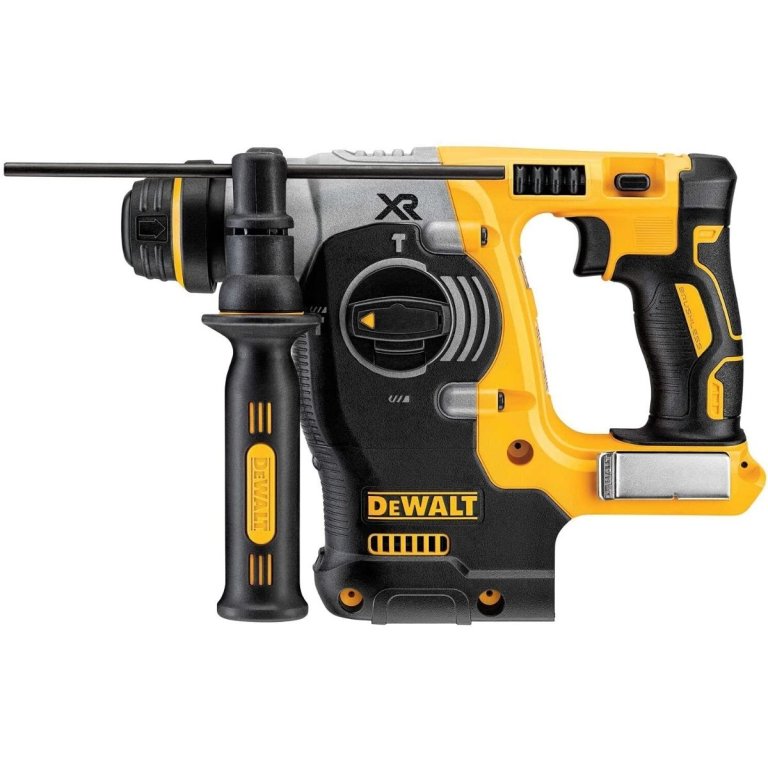
What We Like
- Three operating modes for versatility
- Low vibration and ergonomic design
- Cordless convenience and consistent power
What We Don’t Like
- Lengthy battery recharge time
- Slight wobble in the accessory handle
Product Specs
- Drilling capacity (Concrete): 1 inch
- Impact energy: 1.55 ft./lbs. (2.1 joules)
- BPM: 4,600 BPM
Our Ratings
| Ease of Use | 4.5/5 | Ergonomics | 4.5/5 | Performance | 4.5/5 | Value | 4.3/5 |
The DeWalt 20V MAX Rotary Hammer Drill delivers serious power for drilling into concrete, brick, and stone—all without a cord. We tested it on multiple masonry surfaces, and it consistently drilled smooth, clean holes with minimal vibration. The drill offers three operating modes—drill, hammer drill, and hammer-only for light chipping—making it useful for professional and DIY use.
At about 6.4 pounds without the battery, it’s noticeably lighter than most rotary hammer drills, and the ergonomic design with a nonslip grip and adjustable side handle improves control during demanding jobs. Its SDS chuck securely locks bits in place, and the included depth-stop rod helps ensure precise hole depths.
Paired with a 5Ah lithium-ion battery, it ran efficiently, though recharging each battery took over 3 hours. We did notice a slight wobble in the accessory handle, but overall, the build quality felt solid and well-balanced.
While it’s priced higher than some competitors, the DeWalt’s combination of performance, comfort, and cordless convenience makes it a top choice for those who frequently drill into masonry. It’s ideal for contractors or serious DIYers who want reliable power without being tethered to an outlet.
Read our full review: DeWalt 20V MAX XR Rotary Hammer
Get the DeWalt 20V MAX cordless rotary hammer at Amazon (tool only) or Acme Tools.
Jump to Our Top Picks
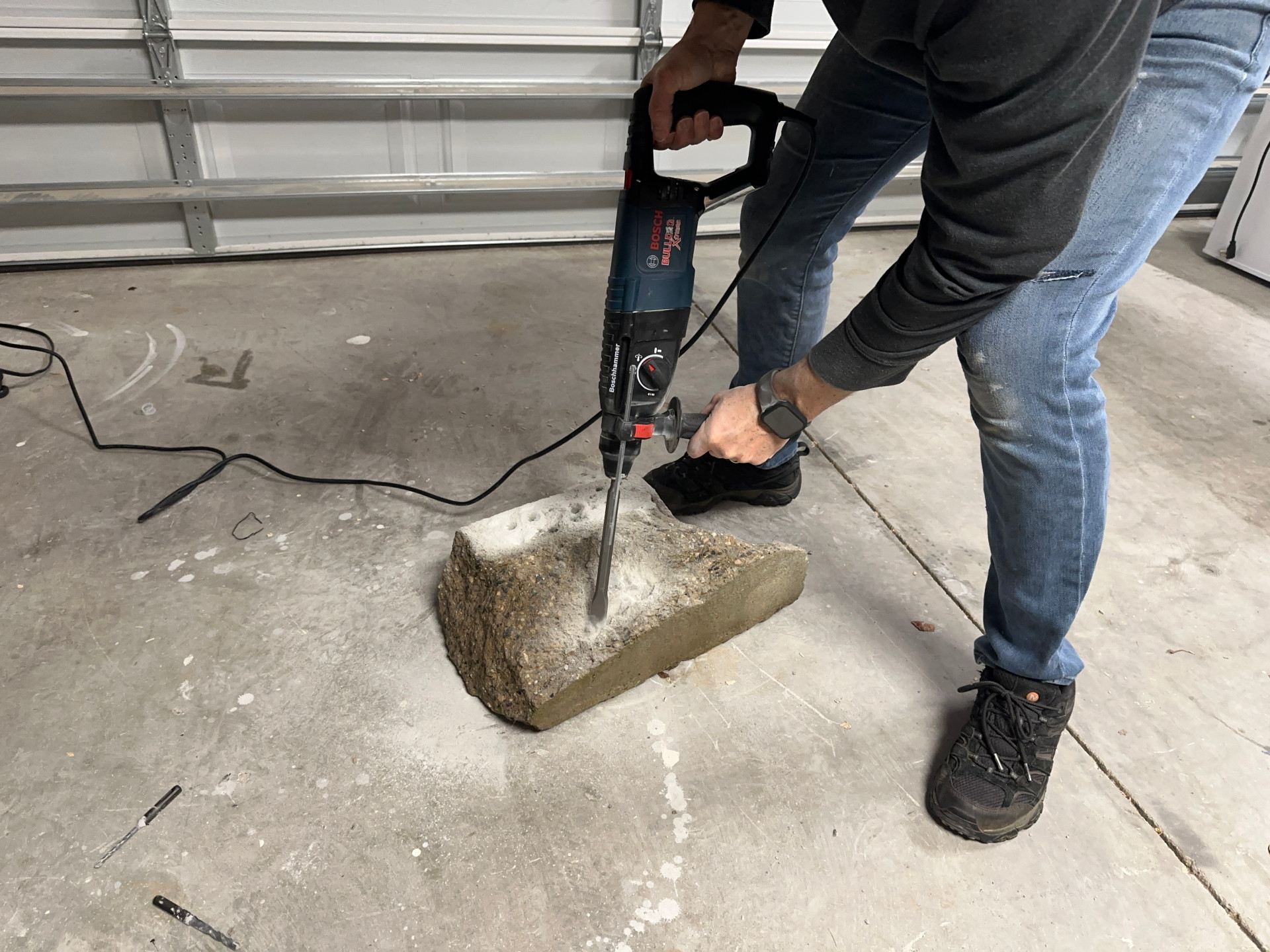
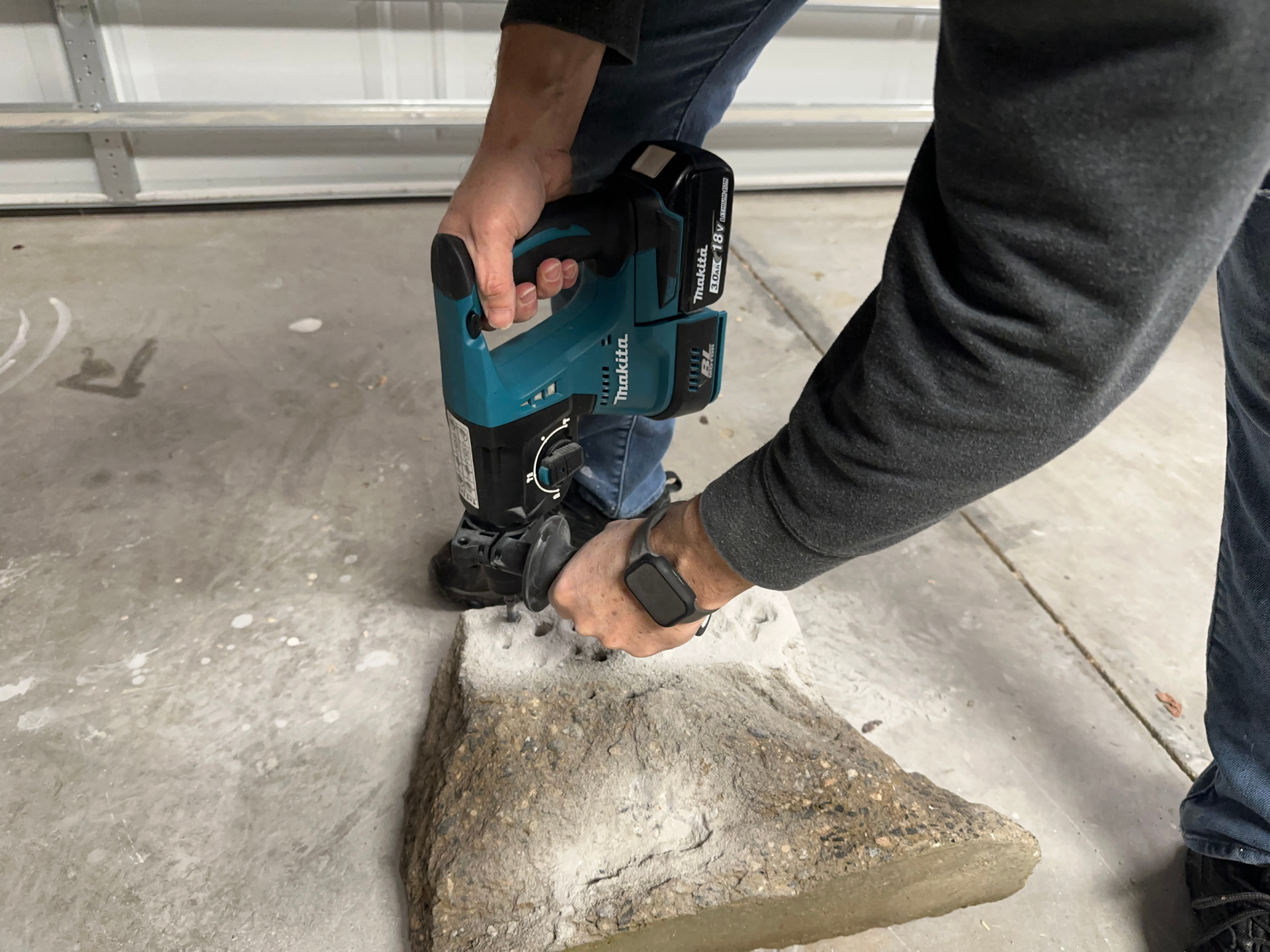
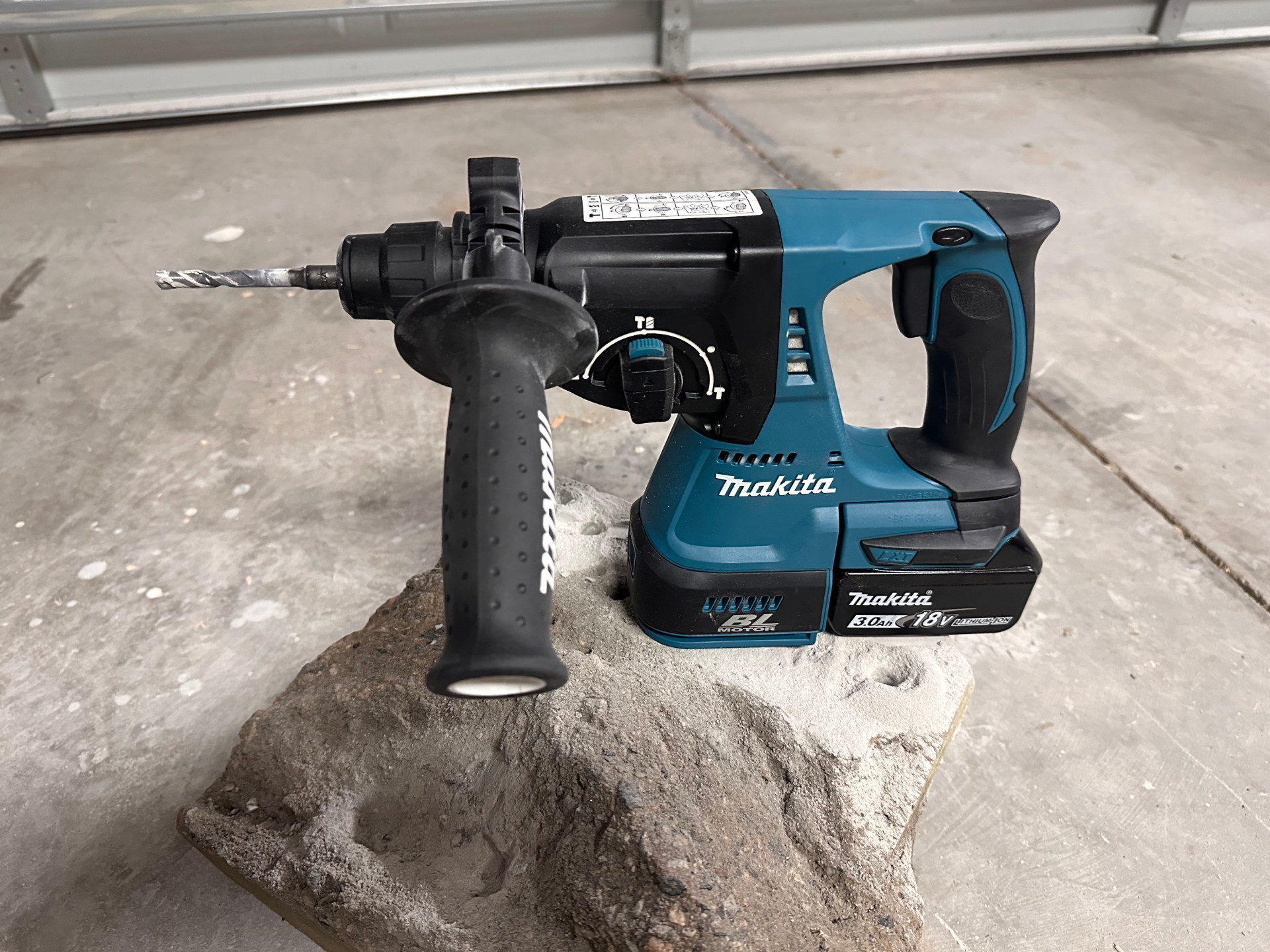
How We Tested the Best Rotary Hammer Drills
| Products tested | 7 |
| Time spent testing | 4 hours |
| Tests performed | 4 |
| Price range | $90 to $400 |
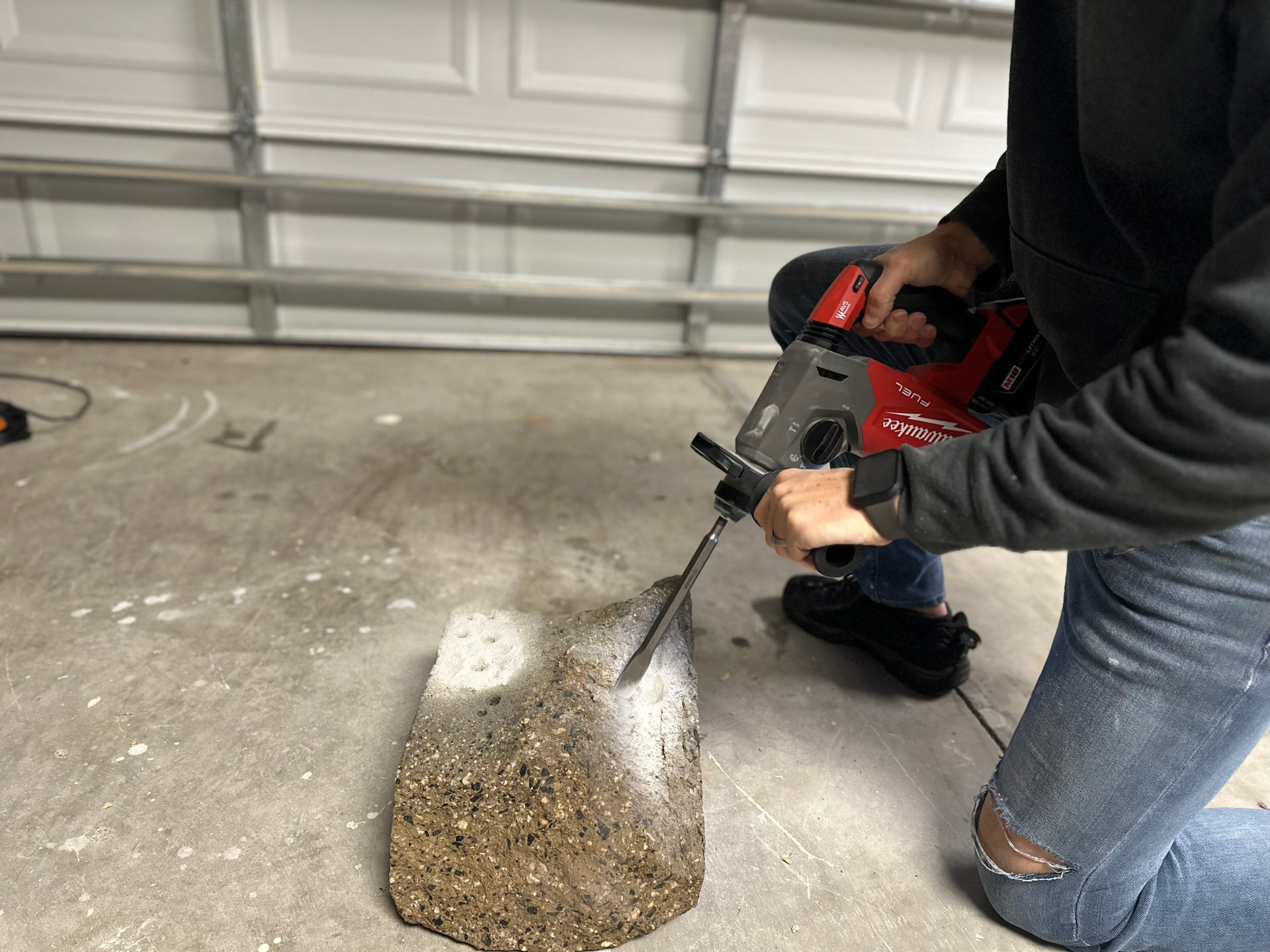
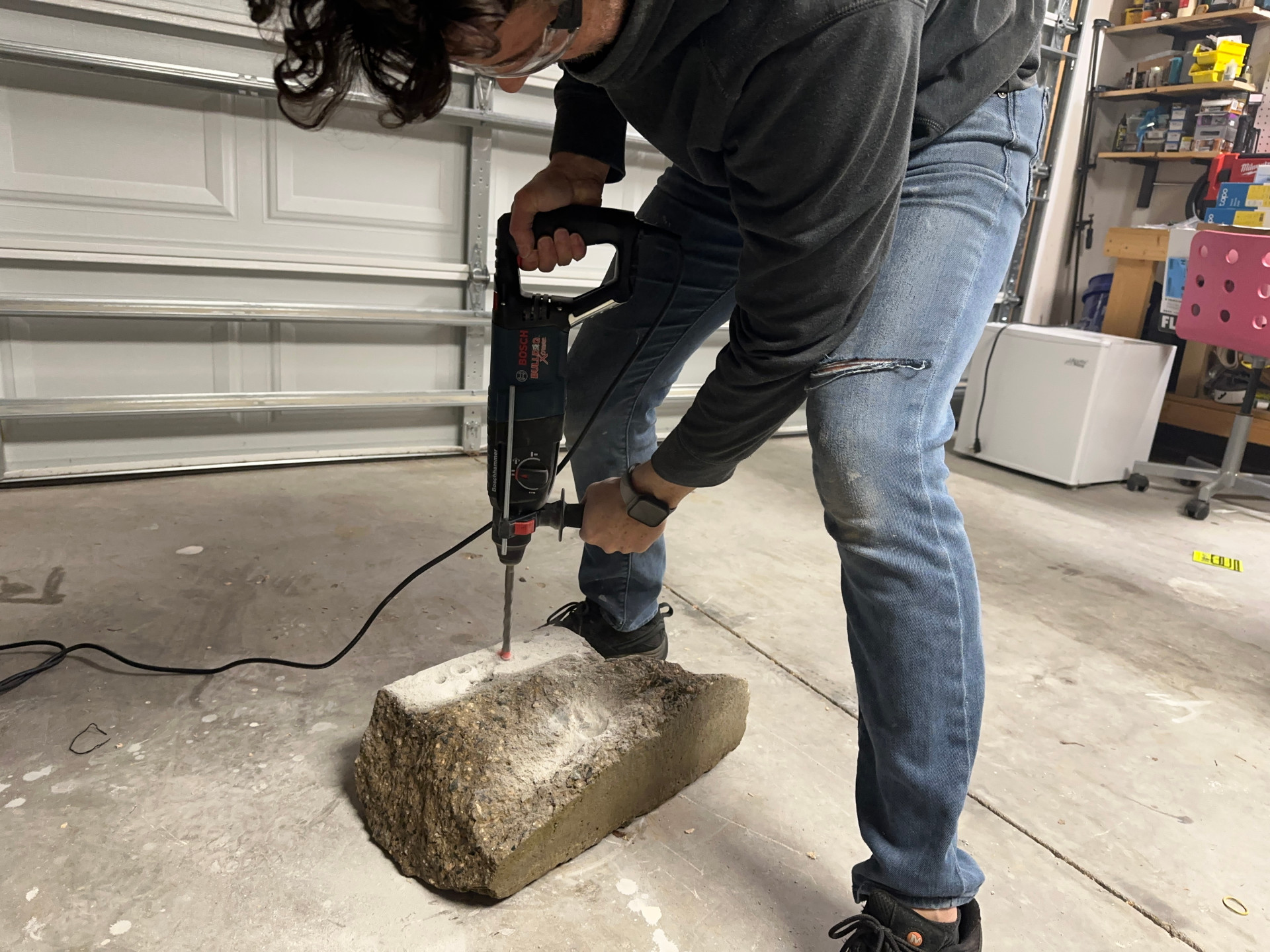
To identify the best rotary hammer drills, we considered more than a dozen models from leading manufacturers, evaluating each for performance, comfort, durability, and ease of use. We tested every drill by boring multiple holes into various types of masonry, including concrete, brick, and cinder block to assess drilling speed, vibration control, and overall power.
Each model was also fitted with a chipping bit to evaluate its hammer-only mode for removing mortar or performing light demolition work. We noted ergonomics, balance, and grip comfort during extended use, as well as runtime and battery recharge time for cordless models.
Each tool was then scored using a detailed rubric that assigned points for power, efficiency, design, and value. The combined scores were used to determine the best overall hammer drill and to categorize the remaining models according to their best use cases.
| Product | Ease of Use | Ergonomics | Performance | Value |
|---|---|---|---|---|
| Flex FX1551A-Z 1-Inch SDS Plus Rotary Hammer Drill | 5/5 | 4.5/5 | 4.9/5 | 4.7/5 |
| Ryobi SDS65 Rotary Hammer Drill | 4/5 | 4/5 | 3.9/5 | 4/5 |
| Milwaukee M18 FUEL 1-Inch SDS Plus Rotary Hammer | 5/5 | 5/5 | 4.5/5 | 4.3/5 |
| Bosch SDS Plus Bulldog Xtreme Rotary Hammer Drill | 4.5/5 | 4.5/5 | 4.1/5 | 4.3/5 |
| Makita 18V LXT Cordless SDS Plus Rotary Hammer Drill | 5/5 | 5/5 | 3.6/5 | 4/5 |
| Metabo HPT 1 9/16-Inch SDS Max Rotary Hammer Drill | 4/5 | 4/5 | 4.6/5 | 4.3/5 |
| DeWalt 20V MAX XR Rotary Hammer | 4.5/5 | 4.5/5 | 4.5/5 | 4.3/5 |
What to Consider When Choosing a Rotary Hammer Drill
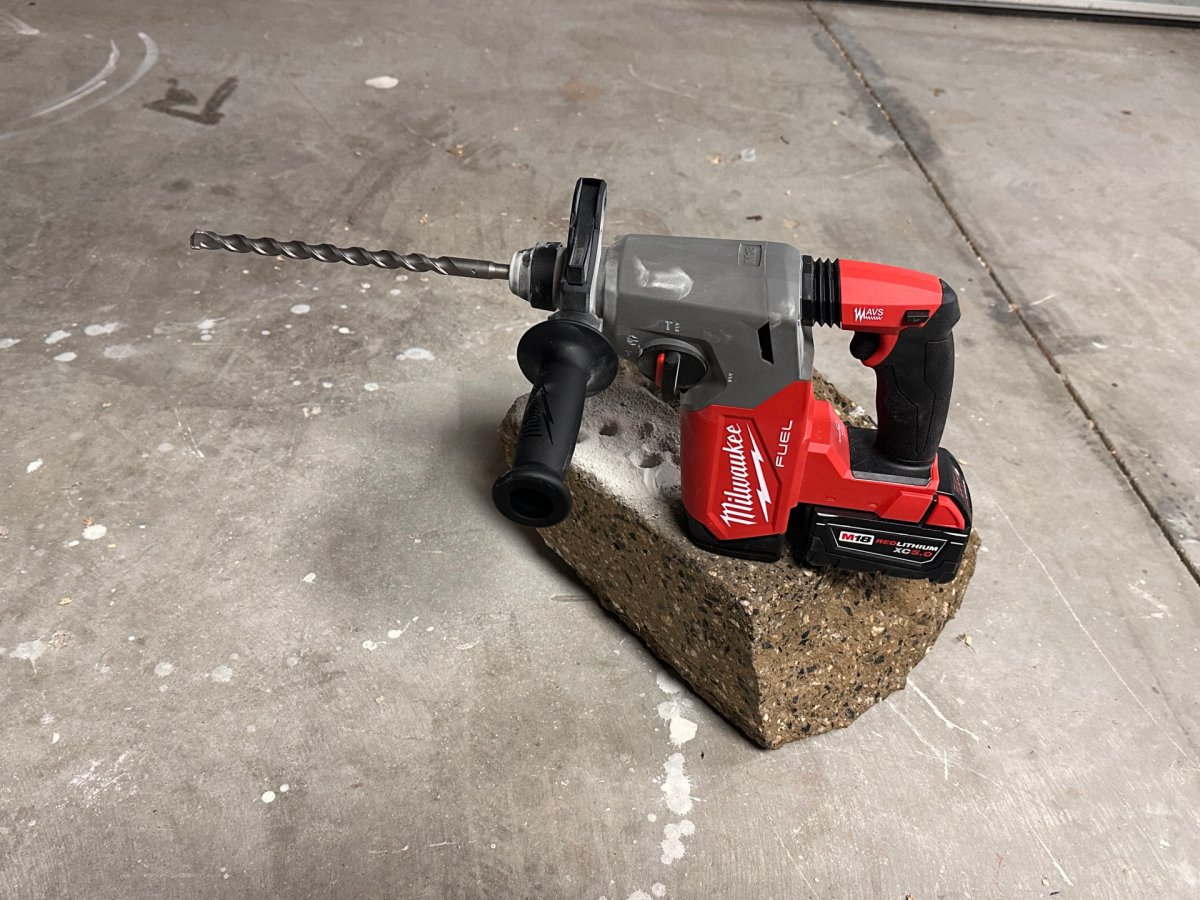
Because rotary hammer drills are so popular, manufacturers offer a wide variety of options for potential buyers to choose from, but options can lead to confusion. By focusing on key performance and physical characteristics, you can determine the best model for your needs and ensure you make the most of your purchase.
Type
Before considering the various technical aspects of rotary hammer drills, it’s important to determine whether a corded or cordless model is best for your needs. Cordless models dominate the market for standard hammer drills, but it’s not quite so clear-cut when it comes to rotary hammer drills.
Being tethered to a wire is not the most convenient option, but rotary hammer drills are power-hungry tools, so cordless models powered by batteries can sometimes fall short. The standard 18- or 20-volt batteries (rated at 1.5- or 2.0-Ah, or amp-hours) used for most drill/drivers would offer very limited runtimes. Often, cordless rotary hammer drills include 3- or 4-Ah versions to mitigate this, but even then, a spare battery is something of a necessity for those who want reliable continuous operation. An extra battery adds a substantial amount to the price, so a cordless rotary hammer drill often ends up being significantly more expensive than a corded model.
It’s worth mentioning that “bare tools” often seem like a great value, but they come without a battery or charger. If you already have other cordless tools from that manufacturer and the equipment is compatible, then you can save money by buying a bare tool. However, always check the specifications carefully before purchasing.
While cords can be inconvenient and most of the time an extension cable is required, they do provide consistent power for all-day work. As a result, around half of the best rotary hammer drills available are corded.
Power
Corded tools are rated by the number of amps that their motors use. Rotary hammer drills tend to be rated at 8 amps and above. The most powerful models are 13 or 14 amps. While 15 amps is the theoretical maximum (the most a standard outlet can supply), most manufacturers allow a margin that reduces the chances of a breaker tripping during a power surge.
Cordless tools are rated by voltage, and range from 18 to 36 volts. While the rating shows the maximum power available, it’s also important to consider the battery’s (or batteries’) amp-hours. Amp-hours can be compared to the amount of gas in the tank. For example, a 4.0-Ah battery will run twice as long as a 2.0-Ah battery. While this may not have a major impact on DIY users, professionals who want to maximize runtimes want the highest-Ah batteries available.
Performance
Most hammer drills give a figure for RPM (revolutions per minute), but rotational speed isn’t very important for rotary hammer drills. Some manufacturers provide it, but many do not. Instead, the majority rate the tool’s capabilities by giving a maximum hole diameter. Sometimes two are given: one for a solid drill bit, the other for a core bit (often used to bore holes for pipework).
The other important performance figure is the impact energy, which essentially represents the power of the hammer action. This is often given in foot-pounds, but sometimes in joules (J), which is the international system for measuring energy: 1 foot-pound = 1.356 joules.
BPM or impacts per minute (IPM) are frequently quoted. It’s the speed of the hammer action. A faster speed can be assumed to mean more aggressive performance, but actual impact energy is a more accurate measure.
Chuck
Most rotary hammer drills use an SDS chuck. These do not open and close like a standard three-jaw chuck. They have a sliding sleeve and a mechanism that clamps onto slots in the drill bit or chisel. It’s a very positive locking method with no chance of the bit slipping.
There are two sizes: SDS and SDS Plus have a 10-millimeter shank, while SDS Max has an 18-millimeter shank. While SDS bits will fit SDS Plus tools, they will not fit SDS Max or vice versa, so it’s important to buy the right size bits.
There is an alternative on some hammer drills called a spline chuck. Rather than utilizing slots, the bits have splines that lock them in place. Spline chucks are much less common, and bits are not interchangeable with SDS.
Operation Modes
One of the reasons rotary hammer drills have become so popular is their versatility, with three distinct operating modes available.
The first two are much like what’s found on any hammer drill. The first allows the drill to be used as an ordinary drill, which simply rotates. The second activates a percussive hammer action. This is much stronger on a rotary hammer drill than on a standard hammer drill.
The third mode disengages the rotary action, and the tool works entirely as a powerful hammer, to which chisels of different widths can be fitted. This mode is excellent for light chipping and demolition, as well as drilling with large bits, making a rotary hammer drill the ultimate hammer drill for concrete when tackling large or numerous holes. Broad chisels can make short work of removing tiles from walls or floors. Narrower and pointed chisels can be used for demolition work, including breaking up concrete slabs or asphalt. For the most demanding industrial demolition work, you’ll likely want to use a pneumatic rotary hammer.
Design and Ergonomics
A rotary hammer drill can be quite a bulky tool, but they are usually well balanced. Handles are open to allow for use with gloved hands. A large trigger also helps make the tool easier to use. Rubberized areas increase comfort and provide a secure grip.
An auxiliary handle that can rotate 360 degrees is usually provided at the front, allowing it to be moved to where it offers the best additional support. A rotary hammer can generate a lot of torque, so the additional handle helps keep it under control. Not using it can risk a nasty wrist injury.
Given that these tools have a powerful hammer action, it should be no surprise that they vibrate. This can quickly prove tiring for the operator. Better models have vibration control, with some including a shock absorber between the main body and the handle.
Attachments and Accessories
The main accessories for rotary hammer drills are the variety of SDS drills and chisels already mentioned above. These usually need to be purchased separately, though some tools include them. Many models have a handy depth gauge for use when drilling.
Rotary hammer drills often kick up a lot of dust, some of which has been linked to lung and kidney diseases. Even though some of the better rotary hammer drills incorporate dust ports that can be used with other extraction equipment, always wear respiratory protection when using a rotary hammer drill. While this is a matter of personal choice for the DIY user, OSHA now has rules concerning workplace exposure, so it could well be a necessity for the professional.
FAQs
The article above provides valuable information on the technical aspects of these tools and can help you choose the best rotary hammer drill for your needs. However, during our research, we found a number of common questions that are of concern to potential buyers. The following section addresses those questions.
Generally speaking, a demolition hammer is even more powerful than a rotary hammer. It focuses on demolition and does not include a drilling function.
They usually refer to the same thing. SDS describes the type of chuck, of which there are three: standard SDS, SDS Plus, or SDS Max. The majority of rotary hammer drills are fitted with one of these, while a few use what’s called a spline chuck instead.
It is impossible to say how long a rotary hammer drill will last, because it is dependent on the amount of use it gets and how hard it works. For light DIY use, a rotary hammer can last many years. Used every day in a tough job site environment, it may last perhaps 2 or 3 years.
Rotary hammer drills are rugged tools that don’t need much maintenance. Some need periodic lubrication of the hammer mechanism, though others are sealed. Those with brush motors will eventually need their brushes replaced. On average, this is required every 7,500 hours. Check the manufacturer’s instructions for a specific tool’s maintenance requirements.
Some say SDS means Slotted Drive Shaft. However, Bosch, who invented it, calls it the Slotted Drive System.
The SDS dimension is the maximum recommended drilling diameter in concrete, though the actual maximum will depend on the material. So 1-inch SDS means the rotary hammer drill in question is capable of drilling a maximum 1-inch-diameter hole. The largest diameter that is generally available is 1 9/16-inches.
No. A regular drill probably doesn’t have the power to use an SDS drill bit efficiently, but the main reason is that the regular chuck won’t hold them securely. Using them would be unsafe.
Meet the Testers
Tony Carrick is a freelance writer specializing in home improvement, landscaping, technology, home security, and design. His articles have been featured on such sites as Popular Mechanics, Futurism, SFGate, Pro Tools Review, and more.
Glenda Taylor is a product tester and writer specializing in the construction, remodeling, and real estate industries. She tests a wide range of power tools as well as other home improvement, household, and lawn-and-garden products.
Additional research provided by Bob Beacham.