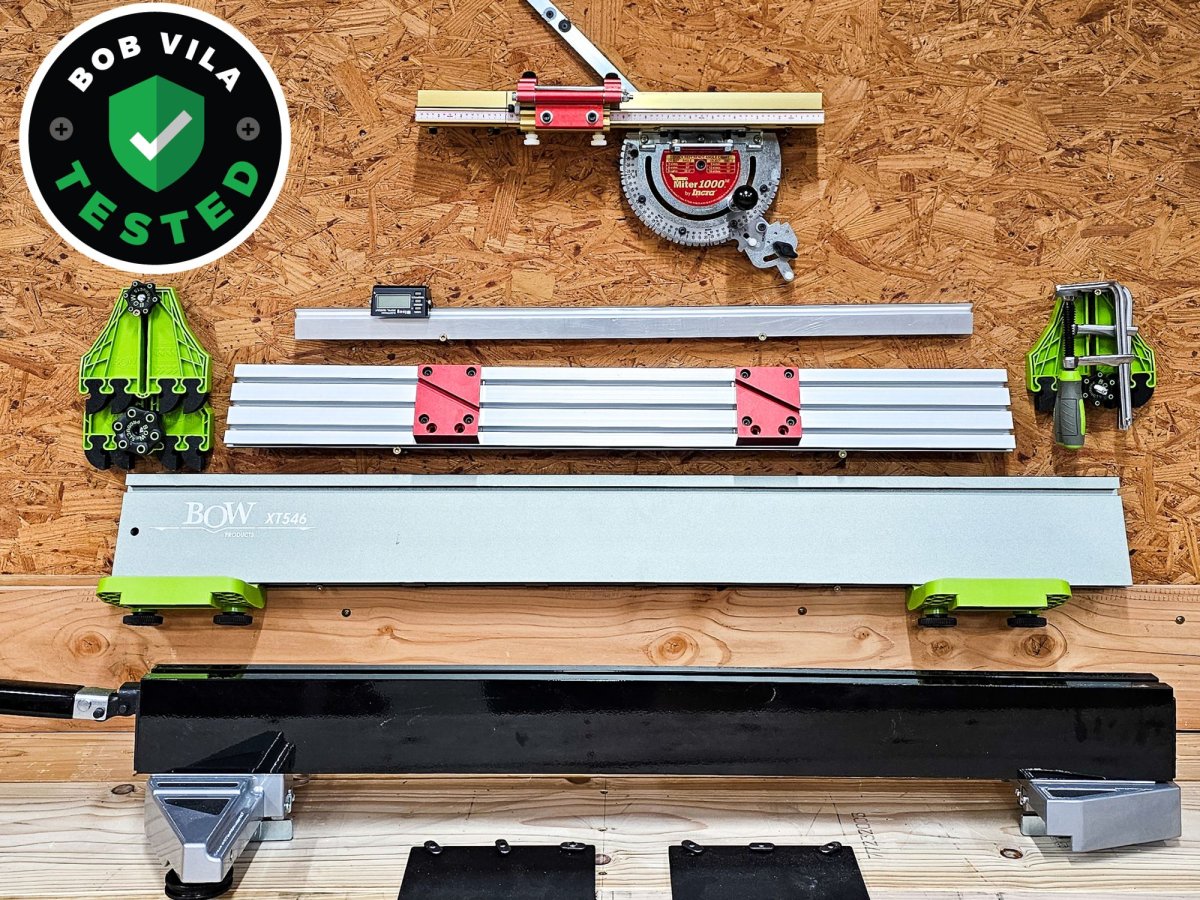
We may earn revenue from the products available on this page and participate in affiliate programs. Learn More ›
Table saw fences play a critical role in making precise, repeatable rip cuts on solid wood and sheet goods. We tested several after-market fence systems and accessories on our own table saws, evaluating installation, locking consistency, smooth travel, and overall stability to determine which upgrades truly improve performance for both pros and serious DIYers.
A quality fence directly affects cut accuracy, safety, and workflow. As with other power tools, a fence that drifts out of alignment or flexes under pressure can ruin material and slow progress. Our top recommendation, the Bow XT Xtender Fence System, stood out for its modular design, smooth adjustability, and added stability from integrated accessories.
Ahead, you’ll find the features we liked best and those we think could be improved, all with the intent of helping you choose the best table saw fence for your shop.
Best Overall
Photo: Glenda Taylor for Bob Vila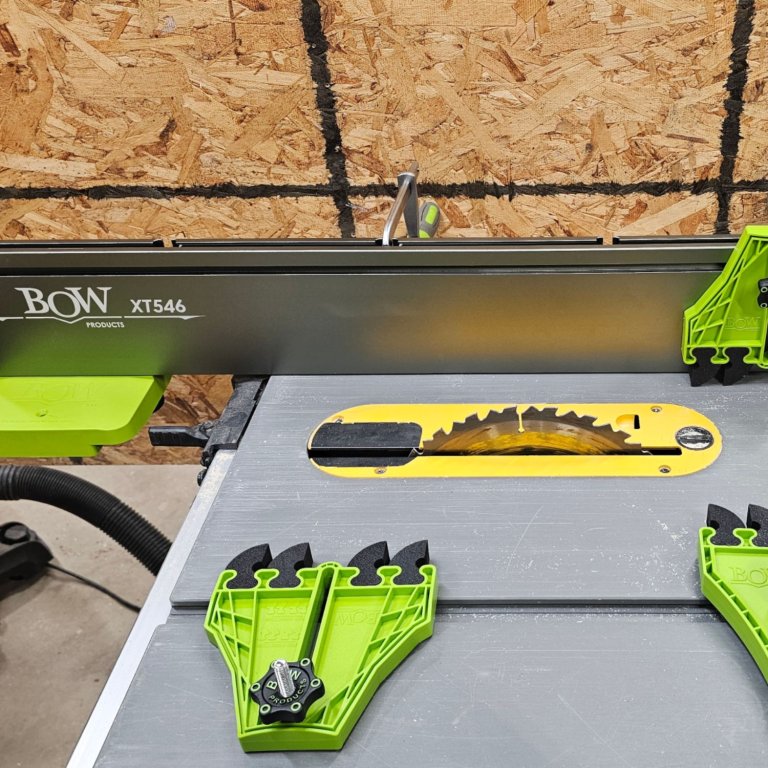
What We Like:
- Easy repositioning of featherboards
- Modular system with multiple T-slots
- Added infeed/outfeed stability with feed supports
What We Don’t Like:
- Many components are sold separately
Product Specs:
- Type: T-track fence platform with multiple slots
- Locking Style: T-track fence clamps
- Material: Aluminum extrusion
- Compatibility: Compact, portable, cabinet saws, and bandsaws
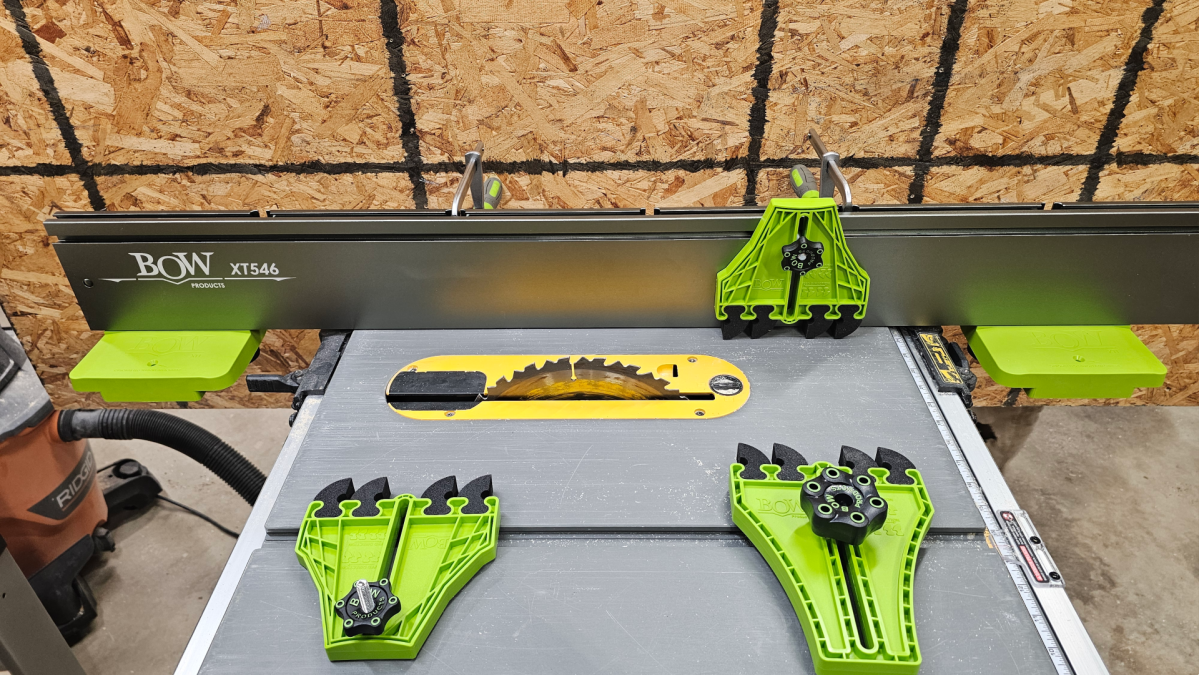
The Bow XT Xtender fence system is more than just your everyday rip fence—it’s a user-friendly modular platform. Its aluminum extrusion body features multiple T-slots that accept table saw accessories like the FencePRO featherboards, which allowed us to configure the fence for different cuts. It really excelled during testing. We were impressed with how easily the featherboard clamps slid and locked into position when switching between materials.
The system attaches to an existing fence using clamps, making it compatible with most saw types. We actually borrowed the Bow’s clamps while testing other models that didn’t include them.
The feed supports helped control longer boards and reduced the tendency for the workpiece to tip while ripping. The featherboards provided consistent side pressure and noticeably improved feed control. Installation was a breeze. Thanks to the system’s modular design, we were able to use as few as one extra component or the entire bundle, with all pieces attaching securely using thumb knobs.
The Bow is not going to replace a high-end dedicated saw fence system, but for most pro and DIY woodworkers, it’s more than suitable. It was easily our favorite of all we tested.
More Table Saw Fences We Recommend
Best for Pros
Photo: Glenda Taylor for Bob Vila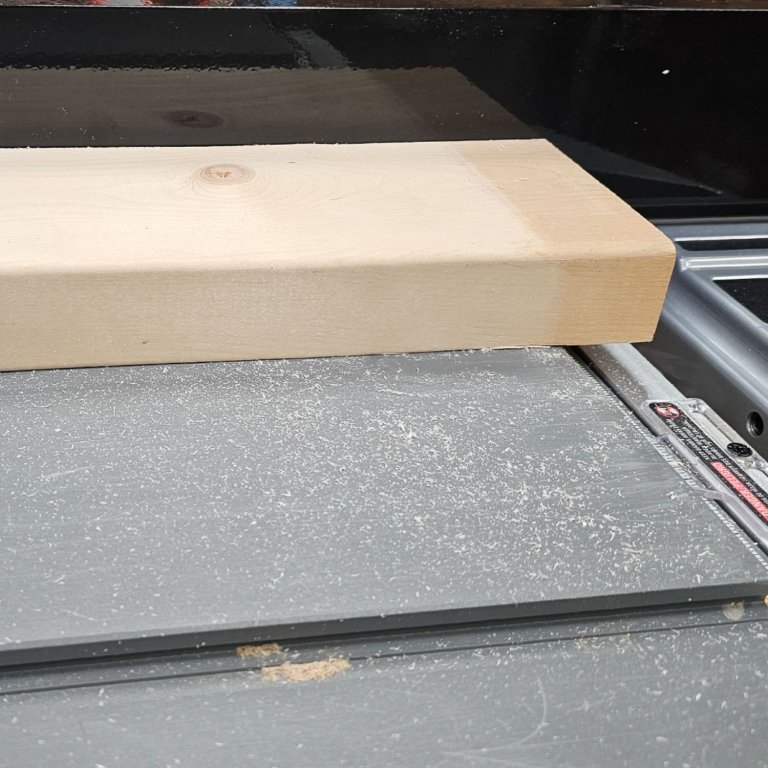
Product Specs:
- Type: T-square roller fence
- Locking Style: Lever lock
- Material: Aluminum
The Shop Fox W1410 is a rock-solid upgrade for woodworkers who want ultrasmooth fence travel and precise alignment. It delivers accurate, stable performance, but installation and rail alignment were time-consuming, so it’s best suited for users comfortable with a more involved setup process.
Best for T-Tracks
Photo: Glenda Taylor for Bob Vila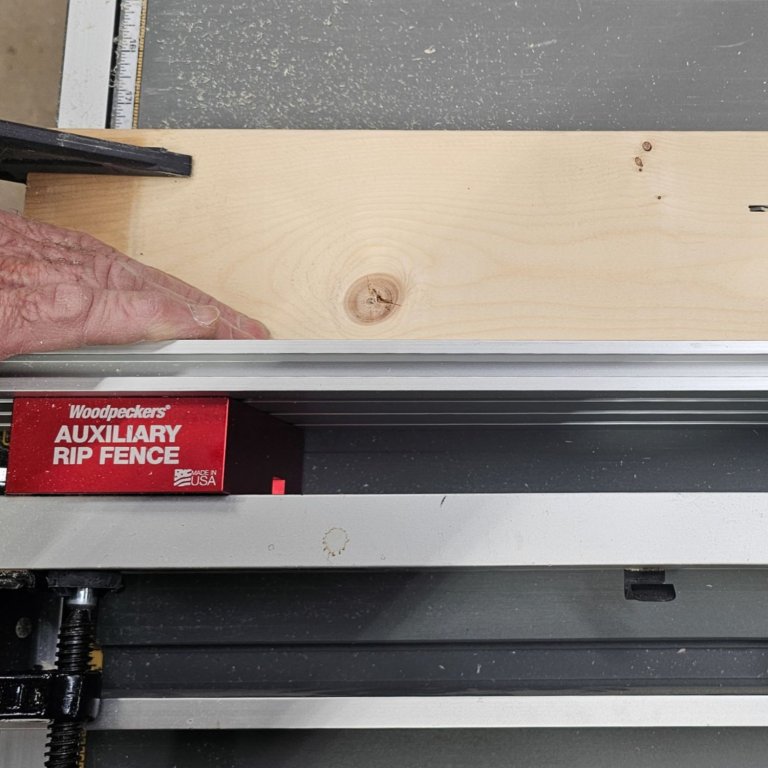
Product Specs
- Type: Auxiliary rip fence
- Locking Style: T-track clamps
- Material: Aluminum
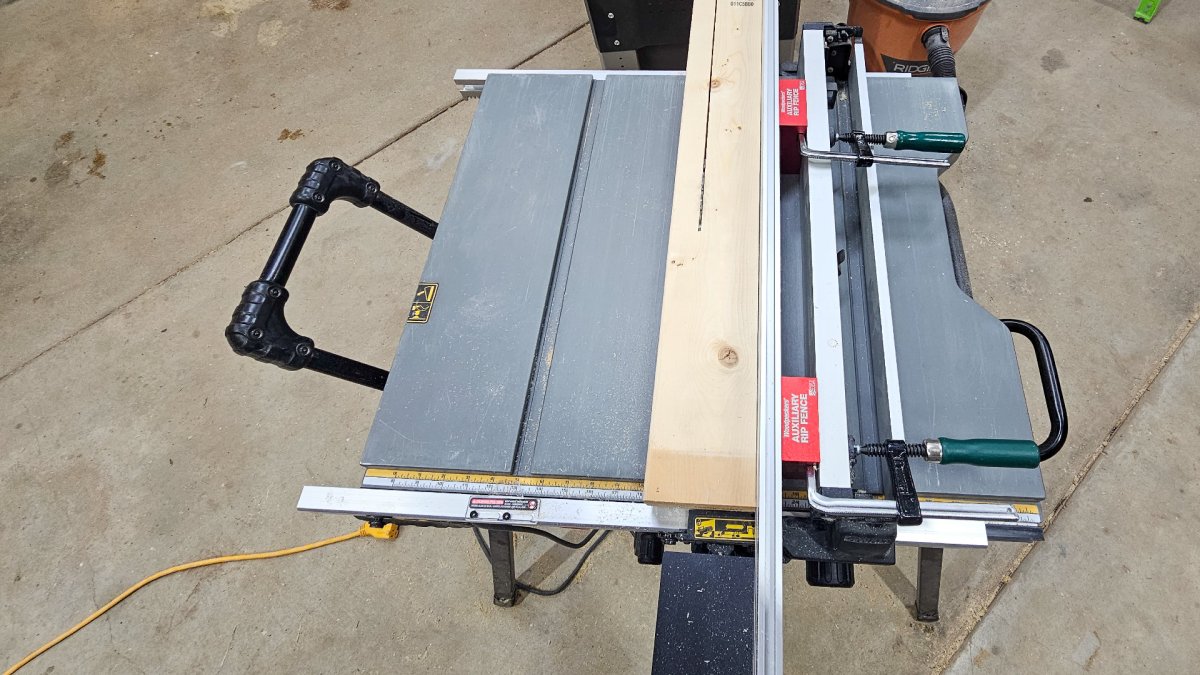
The Woodpeckers ARF-48 Auxiliary Rip Fence provides a long, straight reference for improved rip accuracy and accessory mounting. It clamps onto most standard table saw rip fences using track clamps (sold separately), which are sold separately and are required for installation.
Best for Beginners
Photo: Glenda Taylor for Bob Vila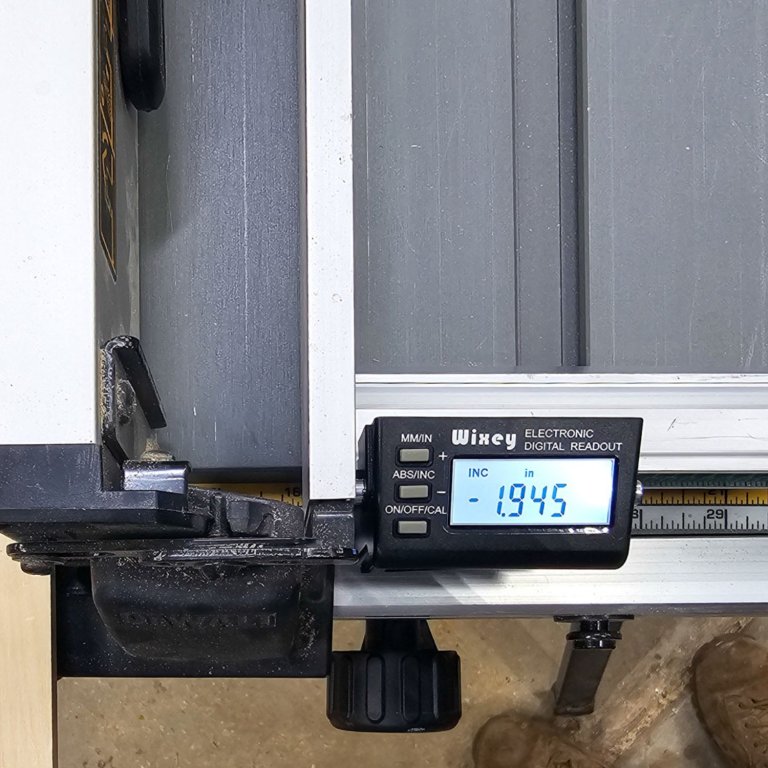
Product Specs
- Type: T-square auxiliary
- Locking Style: Magnetic mount
- Material: Aluminum
We liked the Wixey WR 700’s strong magnetic fence mount and clear digital display, which made dialing in measurements quicker and more precise. However, while it generally read accurately, we found it just a bit inconsistent at times and had to double-check settings occasionally.
Best for Angle Work
Photo: Glenda Taylor for Bob Vila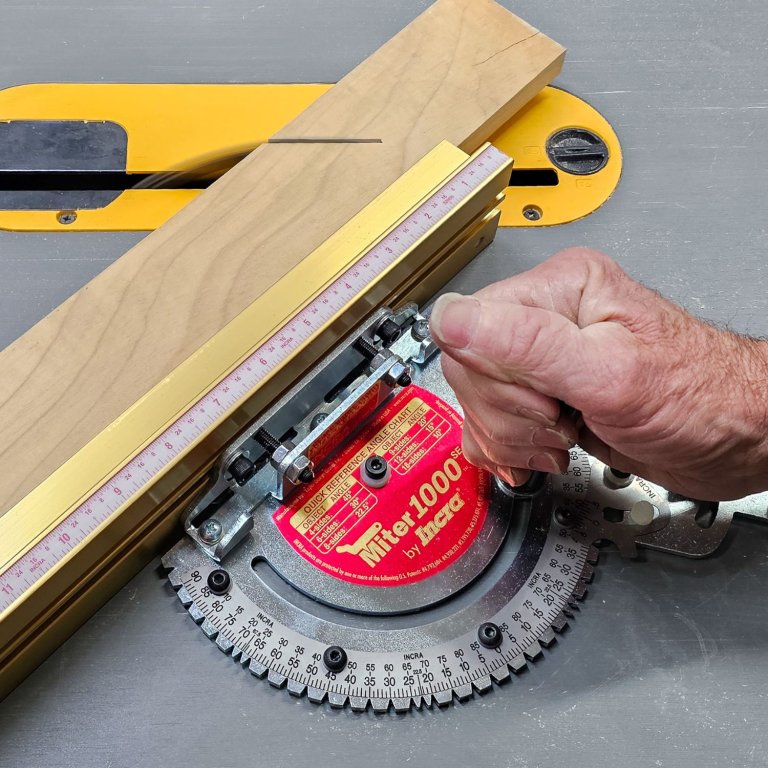
Product Specs:
- Type: Telescoping with miter
- Locking Style: AngleLock with 41 Stops
- Material: Aluminum/Steel
The Incra 1000SE fence delivers precise, repeatable angle cuts with its telescoping fence and indexed stops. In testing, it made crosscutting more accurate and efficient. Its adjustable miter bar and flip-stop system give a stable, smooth feel that’s especially useful for fine woodworking and angled joinery.
What to Consider When Choosing a Table Saw Fence
If a table saw isn’t producing consistent, accurate cuts, the fence is often the culprit. A poorly made fence that doesn’t lock securely or flexes under pressure can shift during a cut and compromise precision. When evaluating a table saw fence, pay close attention to the key features that affect stability, alignment, and overall performance.
Type
There are two types of table saw fence: standard (sometimes called sliding) and T-square. Sliding table saw fences are often those supplied with smaller, portable table saws. They run along rails fitted to the front and back of the saw table. On higher-quality models, a rack-and-pinion drive allows for more precise positioning.
T-square table saw fences also run along a rail on the front of the table, usually with a three-point locking system. This provides strong support and holds the main part of the table saw fence in place. As a result, this type doesn’t always need a rail on the far side of the table, though a rail is often supplied as an option. If the T-square fence requires fitting only on the front of the table, it doesn’t need to be a precise length. The fence can be shorter or longer than the table width and still function perfectly well.
Compatibility
Standard table saw fences need to be a specific length and cannot be modified, so their versatility is limited. Standard table saw fences are often brand-specific, so a DeWalt fence, for example, will fit only DeWalt saws.
Although T-square fences are not universal table saw fence systems, they generally fit a wider range of saws. However, the mounting holes for their rails may not match up, so compatibility still needs to be checked.
Typically, the rails on a table saw fence can be modified by drilling additional holes to suit the layout of a particular saw. This is fairly common practice, and several instructional videos are available for woodworkers who would rather make modifications than choose a different fence.
Rip Capacity
Rip capacity refers to the maximum distance between the blade and the fence, but it’s largely determined by the table saw and rail system, not just the fence. In most cases, the right side of the blade offers greater rip capacity, and that is typically the figure manufacturers highlight.
Because rip capacity depends on rail length and table width, upgrading a fence won’t necessarily increase cutting width unless the rails extend far enough. Some table saw fence extensions feature longer rails to expand capacity, while others may extend beyond the table and require additional support. Keep in mind that longer rails improve cutting width but can be cumbersome in smaller shops.
Material
The main body of the table fence is made from aluminum, steel, or a combination of both. Strictly speaking, steel is stronger while aluminum is lighter, though both provide equally good rigidity in the way they are formed for table saw use.
Some high-quality fences have laminated plywood faces. This material is intended to make the wood being sawed slide more easily across the surface. The downside is that the laminate eventually will wear and need to be replaced, and although it’s not difficult, it is time-consuming.
The mounting rails are almost always made of steel. They need to be strong to resist the clamping forces and the wear of the fence attachment running up and down them regularly.
Additional Features
Though table saw fence systems usually have a clear measuring scale, and some even have a small magnifying glass to make reading the scale very easy, positioning the table saw fence accurately can be a bit hit-and-miss. Microadjusters allow very precise placement by using thumbwheels to move the fence the last few fractions of an inch. Unfortunately, they are not always fitted, though several are available separately.
Digital table saw fence readouts are another option. These provide the user with a quick and precise visual display rather than requiring the user to check ruler markings. However, once again, these are usually aftermarket extras rather than features included with the fence.
Tips for Using and Maintaining Table Saw Fences
The best table saw fences should be fairly easy to set up and use, but it is important to follow the manufacturer’s instructions to ensure maximum accuracy.
- Make sure to keep the table saw and fence as clean as possible. Any sawdust, wood chips, or dirt caught between contact areas can impact precision. A shop vac or dust-extractor hose can be used to reach difficult areas. Take the fence off from time to time for a thorough clean.
- There’s an old woodworker’s adage that says one should measure twice and cut once. That applies to table saw fences, too. Check the settings carefully.
- A feather board can be clamped to the table to ensure the user’s work stays in contact with the fence.
- Always use a push stick when feeding stock to keep hands away from the saw blade.
FAQs
We’ve covered the key features of accurate table saw fences and examined real-world examples. Below, we answer common questions to further clarify how the best table saw fences can improve accuracy, safety, and overall woodworking performance.
Yes, a miter gauge can guide crosscuts without a fence, but ripping without one is unsafe and usually inaccurate. Freehand cuts are strongly discouraged, as they increase the risk of kickback and poor results. For straight, repeatable rip cuts, a fence is essential.
Yes and no. Some are, but others may require drilling of the table saw or removal of some components. It is a good idea to check compatibility, or what work may be required, before you buy.
Upgrading typically involves installing an aftermarket fence system designed for improved rigidity, smoother travel, and more reliable locking. Many models are made to fit common saws, though installation may require drilling or rail adjustments.
In theory, the fence needs only to guide the material past the saw blade. However, in our opinion, a full-width fence offers better control. The standard fences fitted to high-quality table saws are usually full width. In terms of rail length (and thus ripping capacity), it will depend on the space you have available and the sizes of material you need to cut.
No, table saw fences vary in design, locking mechanisms, materials, rail systems, and overall accuracy, which significantly affects performance and ease of use.
Most fences are positioned to the right of the blade for greater rip capacity, though some setups allow left-side mounting.
Most fences remain mounted on the saw; otherwise, store it flat or hang it securely to prevent bending or misalignment.
Meet the Tester
Glenda Taylor is a contractor, product tester, and writer focusing primarily on construction and power tools. She tests a wide range of power tools as well as other home improvement, household, and lawn-and-garden products.