We may earn revenue from the products available on this page and participate in affiliate programs. Learn More ›
Tankless water heaters provide hot water on demand, heating it instantly as it flows through the system rather than storing it in a tank. This allows for a virtually endless supply of hot water while taking up far less space than traditional models. Because they heat water only when needed, tankless water heaters are also more energy efficient, reducing wasted energy and lowering utility bills.
Thanks to our experience managing professional plumbing projects, we know it’s crucial to choose a tankless water heater that fits both the property and the household’s needs. That means considering flow rate, power source, and a few other important factors. After reviewing a range of top models, we chose the Rinnai RU180iN Tankless Water Heater as our top pick for its energy-efficient operation, ample flow rate of up to 10 gallons per minute, and easy-to-use controls.
Below, you’ll learn how the best tankless water heaters work and why the following units made our list of recommendations.
- BEST OVERALL: Rinnai RU180iN Tankless Water Heater
↓ Jump to Review - BEST BANG FOR THE BUCK: Rheem RTEX-13 Electric Tankless Water Heater
↓ Jump to Review - BEST ELECTRIC: Stiebel Eltron Tempra 36 Plus Tankless Water Heater
↓ Jump to Review - BEST GAS: Rinnai RL75iN Tankless Natural Gas Water Heater
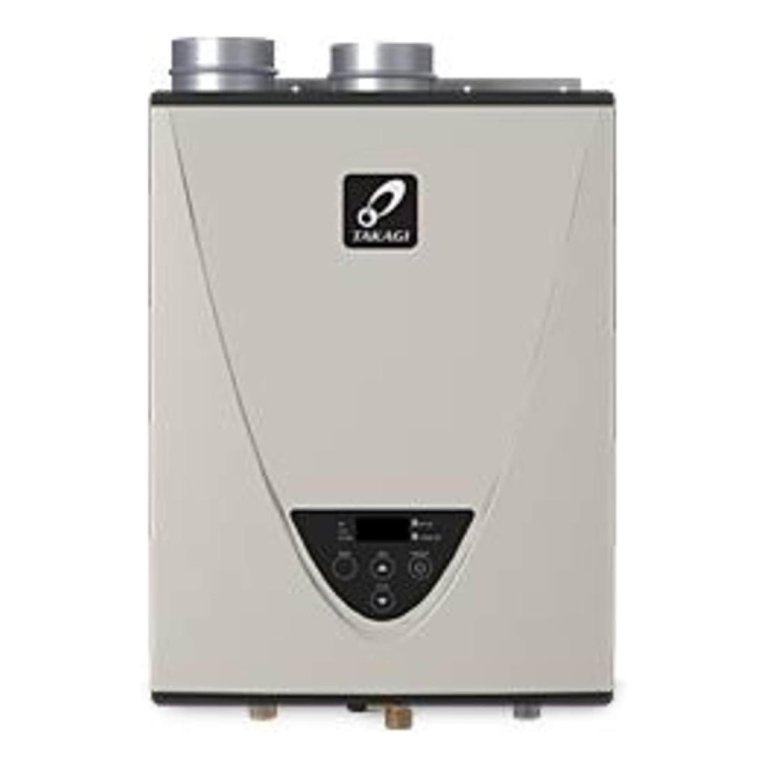
↓ Jump to Review - BEST CONDENSING: Takagi T-H3-DV-N Condensing Gas Tankless Water Heater
↓ Jump to Review - BEST NON-CONDENSING: Rheem RTEX-36 Electric Tankless Water Heater
↓ Jump to Review - BEST WHOLE-HOUSE: Rinnai RE199iN Tankless Water Heater
↓ Jump to Review - BEST PORTABLE: Camplux AY132 Tankless Water Heater
↓ Jump to Review
Before You Buy a Tankless Water Heater
On-demand water heaters are becoming increasingly popular, but there are a few considerations to keep in mind when deciding between a tankless water heater and a traditional tank model.
First, cost: Tankless heaters cost more upfront, typically between $1,000 and $3,000 before installation. With installation costs included, the price averages about $2,000 to $6,000. By comparison, traditional storage-tank models usually cost $1,000 to $2,000 installed.
Next, household hot water demand is a factor. If multiple showers, a washing machine, and a dishwasher all need to run at the same time, a tankless model may struggle to supply enough hot water to all locations simultaneously. Bigger families with high simultaneous demands may be better served by a traditional storage-tank model, as a tankless unit with the required capacity could be overly expensive.
Installation is another consideration. Converting from a storage-tank system often requires reconfiguring electrical wiring, gas and water piping, and ventilation for gas units. Installation typically takes longer and costs more than replacing a traditional heater.
By weighing these factors alongside the benefits—on-demand hot water, energy efficiency, and space savings—you can choose the best water heater for your home and lifestyle.
Tankless Water Heaters Comparison
| Product | Fuel Type | Flow Rate | BTUs/Wattage |
|---|---|---|---|
| Rinnai RU180iN Tankless Water Heater | Natural gas | Up to 10 gallons per minute (GPM) | 15,000 to 180,000 British thermal units (BTUs) |
| Rheem RTEX-13 Electric Tankless Water Heater | Electric | Up to 3.17 GPM | 13 kilowatts (kW) |
| Stiebel Eltron Tempra 36 Plus Tankless Water Heater | Electric | Up to 7.5 GPM | 36 kW |
| Rinnai RL75iN Tankless Natural Gas Water Heater | Natural gas | Up to 7.5 GPM | 10,300 to 180,000 BTUs |
| Takagi T-H3-DV-N Condensing Gas Tankless Water Heater | Natural gas | Up to 10 GPM | 15,000 to 199,999 BTUs |
| Rheem RTEX-36 Electric Tankless Water Heater | Electric | Up to 8.8 GPM | 36 kW |
| Rinnai RE199iN Tankless Water Heater | Natural gas | Up to 9.8 GPM | 10,400 to 199,000 BTUs |
| Camplux AY132 Tankless Water Heater | Propane | Up to 1.32 GPM | 34,000 BTUs |
Our Top Picks
Each energy-efficient tankless water heater below made our list after extensive research. Whether you’re after an electric, natural gas, or propane model for a small home or a large one, one of these options should be an excellent fit for your needs.
Best Overall
Rinnai RU180iN Tankless Water Heater
Buy at AmazonWhat We Like
- Produces hot water for up to 5 appliances
- Energy Star certified
- Compact wall-mounted design is relatively easy to install
- Wi-Fi ready for remote operation
What We Don’t Like
- Takes a few minutes to heat up on first use
Specs
- Fuel type: Natural gas
- Flow rate: Up to 10 GPM
- BTU range/wattage: 15,000 to 180,000 BTUs
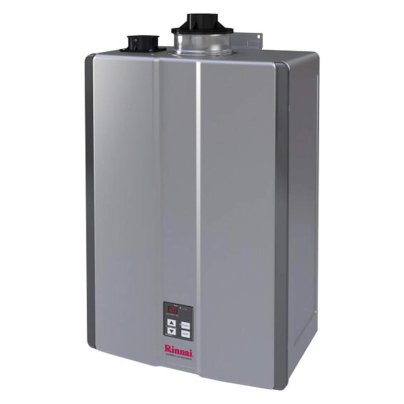
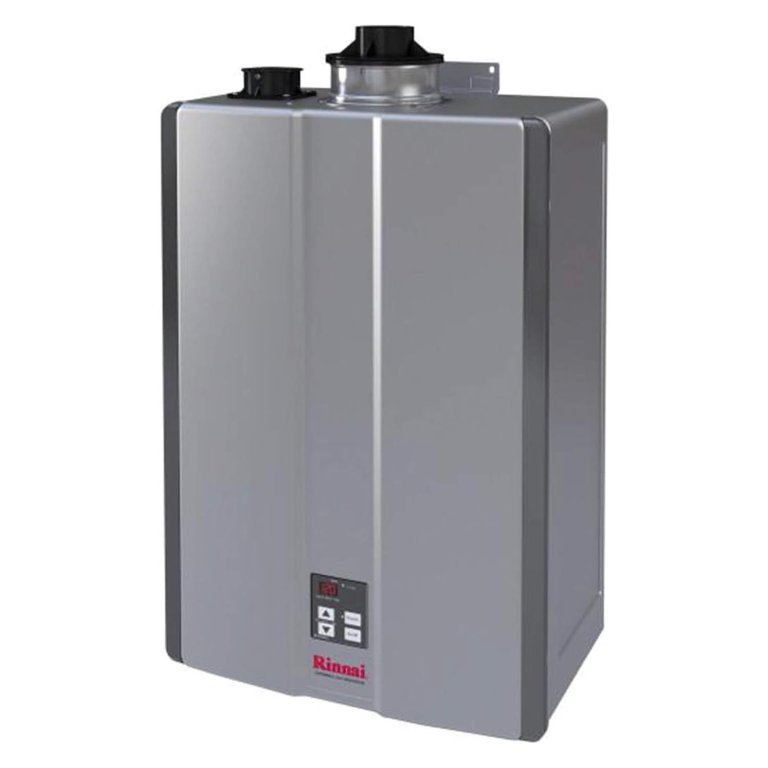
The Rinnai RU180iN high-efficiency water heater delivers impressive performance, with a maximum flow rate of 10 GPM, which is enough to supply hot water for up to five appliances at once. Its 180,000 BTU maximum is more than enough to ensure that a household of teens and adults can all complete their morning routines without any drop in water temperature.
Even though it’s a natural gas model, the Energy Star–certified unit has an efficiency rating of between 93 and 96 percent. This is mostly due to its condensing feature, which captures as much heat from the exhaust as possible before it’s released through the ventilation system, maximizing energy use.
What our tester says: “When it came time to replace my old tank water heater, my plumber highly recommended Rinnai due to its reputation for quality. He determined the 180,000 BTU 10 GPM model best fit my family’s hot water needs. The appliance heats the water quickly and is easily adjustable via the straightforward display on the front of the machine. I especially like that it doesn’t take up floor space in my basement—it fits neatly on the wall. There is a slight delay in hot water delivery first thing in the morning, when the tank has not been used for hours. However, once it’s activated, the hot water is readily available for the rest of the day.”—Debbie Wolfe, Product Reviews tester and writer
Get the Rinnai RU180iN tankless water heater at Amazon.
Best Bang for the Buck
Photo: Amazon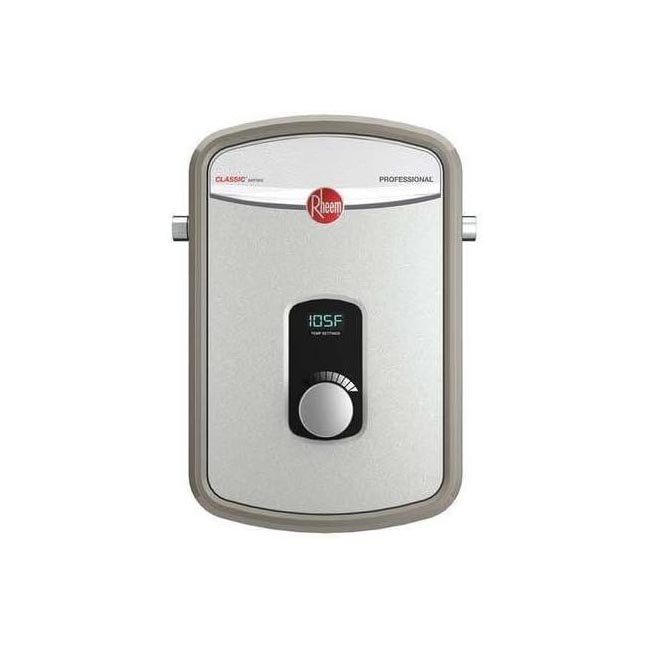
What We Like
- 99 percent efficiency rating
- Flow rate is perfect for 1 to 2 people
- Dial is easy to use
What We Don’t Like
- Won’t heat enough hot water for larger households
Specs
- Fuel type: Electric
- Flow rate: Up to 3.17 GPM
- BTU range/wattage: 13 kW
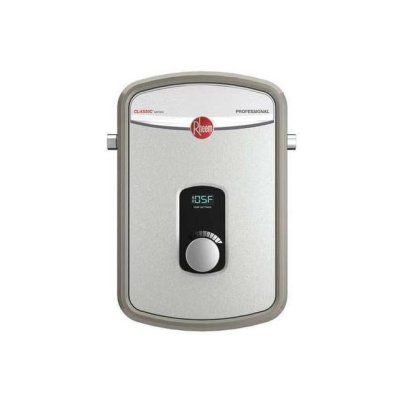
This budget-friendly Rheem RTEX-13 tankless electric water heater boasts an impressive 99 percent efficiency rating, meaning nearly all the energy you pay for goes directly into heating water, rather than being lost through ventilation, which can happen with gas models.
While it isn’t suited for large households with multiple fixtures running at once, its 3.17 GPM maximum flow rate is more than adequate for an apartment or cottage with one or two occupants. Combined with its low price—and the generally lower cost of electric tankless units compared with gas—this model offers a great value.
Get the Rheem RTEX-13 tankless water heater at Amazon or The Home Depot.
BEST ELECTRIC
Stiebel Eltron Tempra 36 Plus Tankless Water Heater
Buy at Amazon Buy at Lowe’s Buy at The Home DepotWhat We Like
- Silent operation
- Advanced Flow Control feature preheats water
- Easy-to-use digital display with simple dial control
What We Don’t Like
- Some reports of poor heating power
Specs
- Fuel type: Electric
- Flow rate: Up to 7.5 GPM
- BTU range/wattage: 36 kW
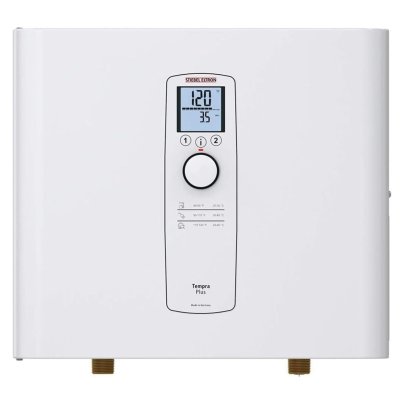
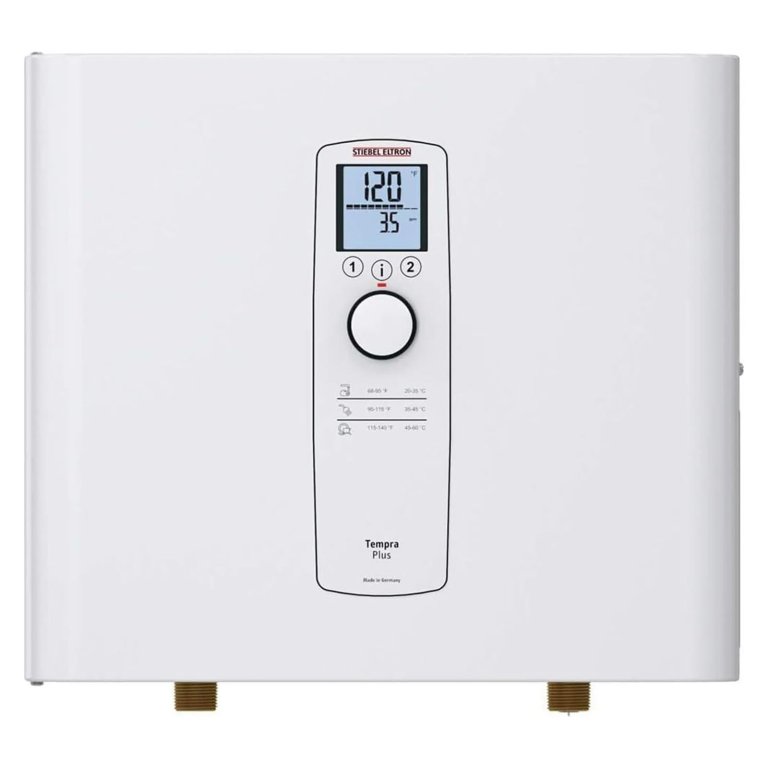
The Stiebel Eltron Tempra 36 Plus is a high-efficiency tankless water heater that delivers a 99 percent efficiency rating, silent operation, and a maximum flow rate of 7.5 gallons per minute in warmer climates. Weighing roughly 19 pounds, it’s small and lightweight, making it easy to wall-mount. Like all electric tankless water heaters, this model offers immediate cost savings on both the unit price and installation costs.
The unit’s Advanced Flow Control feature ensures water stays consistently hot during ongoing use, ensuring showers don’t cool down or fluctuate in temperature. A bold digital display shows accumulated cost savings, allowing you to see how much you’ve saved by upgrading from an inefficient model.
Get the Stiebel tankless water heater at Amazon, Lowe’s, or The Home Depot.
Best Gas
Photo: Amazon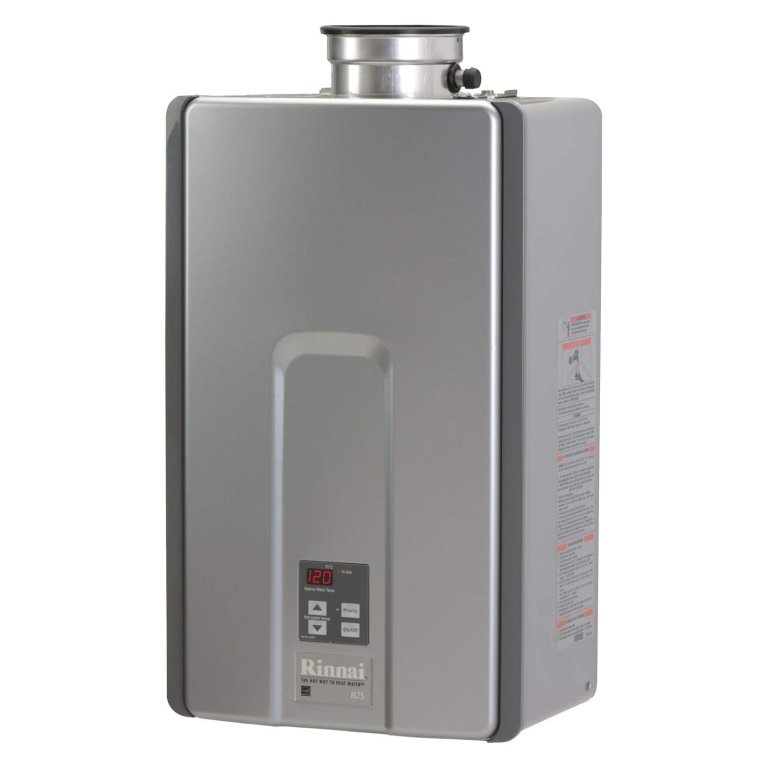
What We Like
- Wi-Fi capability for remote control and monitoring
- Recirculation technology helps reduce hot water wait time
- Suitcase-size unit is relatively easy to install
What We Don’t Like
- Descaling maintenance recommended to increase water heater lifespan
Specs
- Fuel type: Natural gas
- Flow rate: Up to 7.5 GPM
- BTU range/wattage: 10,300 to 180,000 BTUs
The Rinnai RL75iN is a powerful, high-performance tankless water heater that guarantees a steady and efficient supply of hot water. With a maximum output of 180,000 BTUs and a max flow rate of 7.5 GPM, this model provides consistent hot water for all your household needs.
The RL75iN is equipped with Wi-Fi capability, offering convenient remote control and monitoring through a compatible device. Homeowners can also pair it with an external pump for on-demand recirculation, significantly reducing wait times and ensuring hot water is available whenever needed.
Get the Rinnai RL75iN tankless water heater at Amazon or The Home Depot.
Best Condensing
Takagi T-H3-DV-N Condensing Gas Tankless Water Heater
Buy at AmazonWhat We Like
- Provides plenty of heating power for most households
- Compact unit with an impressive flow rate
- Control panel is easy to understand
What We Don’t Like
- Can be noisy when running
Specs
- Fuel type: Natural gas
- Flow rate: Up to 10 GPM
- BTU range/wattage: 15,000 to 199,000 BTUs
With an impressive 10 GPM flow rate, the Takagi tankless water heater provides an ample supply of hot water for an entire household’s needs. This means you can say goodbye to inconvenient cold showers and hello to endless hot water on demand. Depending on your area’s inlet temperature, this high-capacity unit can accommodate three to four bathrooms at once.
Beyond its powerful output, the Takagi unit is engineered for energy efficiency. Its condensing technology recaptures and reuses exhaust heat, which maximizes energy use and reduces utility bills, all while offering an eco-friendly way to heat water without compromising on performance.
Get the Takagi tankless water heater at Amazon.
Best Non-Condensing
Photo: Amazon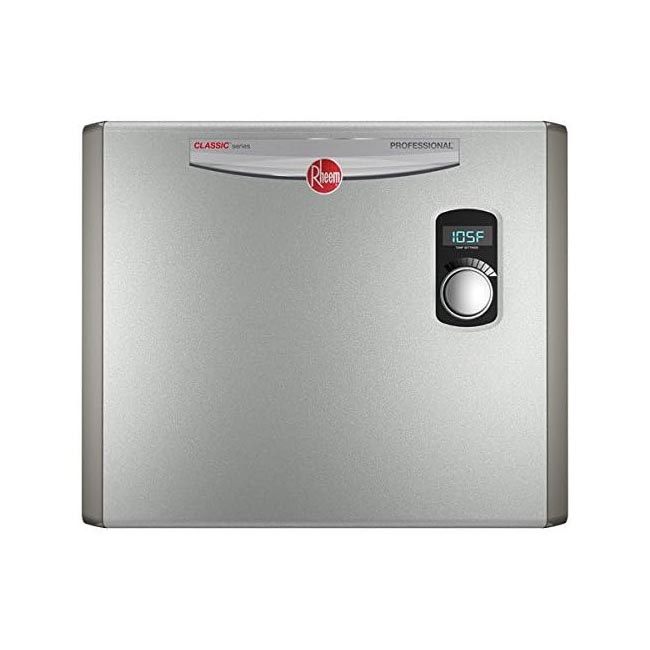
What We Like
- Compact design doesn’t take up much space
- Self-modulation technology provides instant access to hot water
- Digital temperature display with simple dial control
What We Don’t Like
- Flow rates depend on area’s inlet water temperature
Specs
- Fuel type: Electric
- Flow rate: Up to 8.8 GPM
- BTU range/wattage: 36 kW
The Rheem RTEX-36 electric tankless water heater is a highly efficient and compact unit built to meet demanding hot water needs. As a non-condensing system, it delivers an impressive 99.8 percent energy efficiency rating, which helps reduce energy consumption and lower utility costs. Despite measuring just 18.25 inches high by 21.63 inches wide, it can deliver a maximum flow rate of up to 8.8 GPM, making it a strong choice for apartments, condos, and smaller homes that still need reliable hot water performance.
The unit’s digital temperature control is easy to set via dial, ensuring the water stays at your preferred temperature. Moreover, the Rheem RTEX-36 features self-modulation technology that automatically adjusts its heating power to match hot water demand, maximizing efficiency and preventing unnecessary energy use.
Get the Rheem RTEX-36 tankless water heater at Amazon or The Home Depot.
Best Whole-House
Photo: Amazon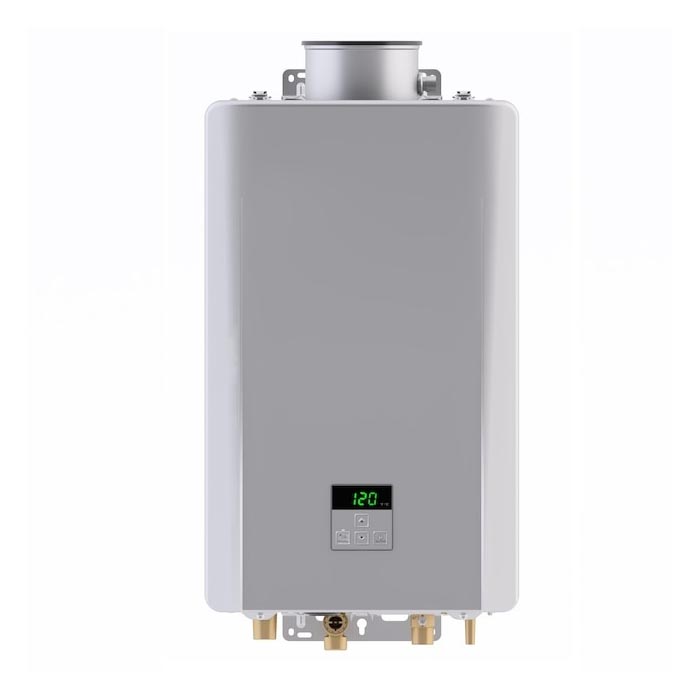
What We Like
- Can easily provide water to several fixtures at once
- Non-condensing model means a more affordable price point
- Saves energy by only running when needed
What We Don’t Like
- Requires robust ventilation that can handle high temperatures
Specs
- Fuel type: Natural gas
- Flow rate: Up to 9.8 GPM
- BTU range/wattage: 10,400 to 199,000 BTUs
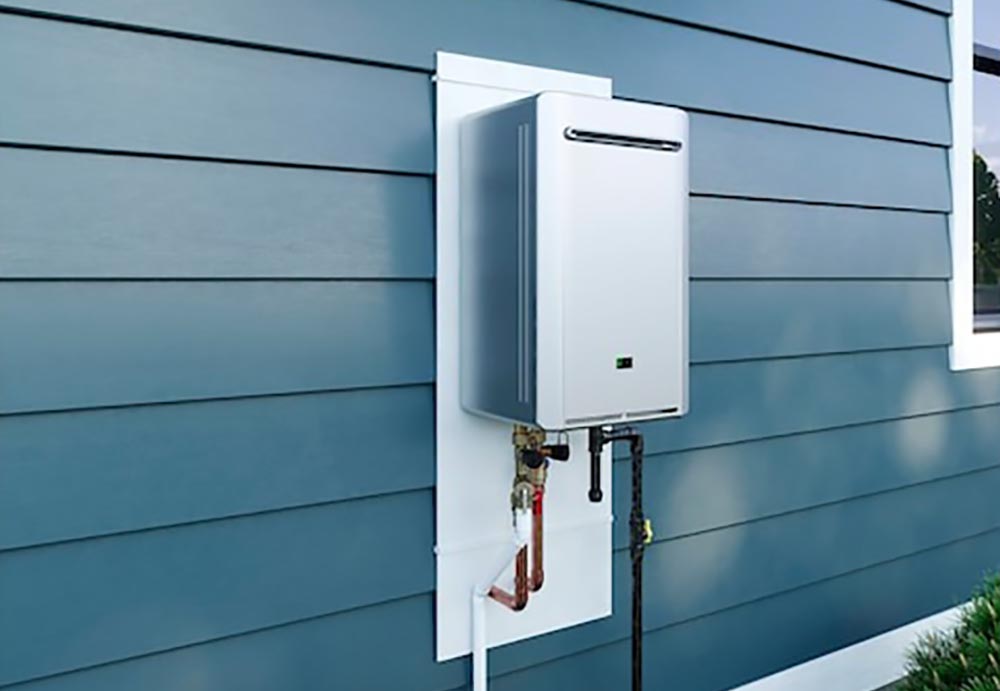
An endless supply of hot water awaits with the Rinnai RE199iN tankless water heater for whole-house use. Rinnai boasts it can supply hot water to up to six fixtures at once thanks to its 9.8 GPM flow rate and a powerful 199,000 BTU maximum output. All this makes it ideal for keeping busy morning routines running smoothly and argument-free.
As a non-condensing tankless gas water heater, its 0.82 uniform energy factor isn’t as high as electric or condensing gas units. However, the non-condensing design also makes it more affordable, offering strong performance for large families in long-term homes. While the energy savings may not be dramatic, they’ll still be noticeable over time.
Get the Rinnai RE199iN tankless water heater at Lowe’s or The Home Depot.
Best Portable
Photo: Amazon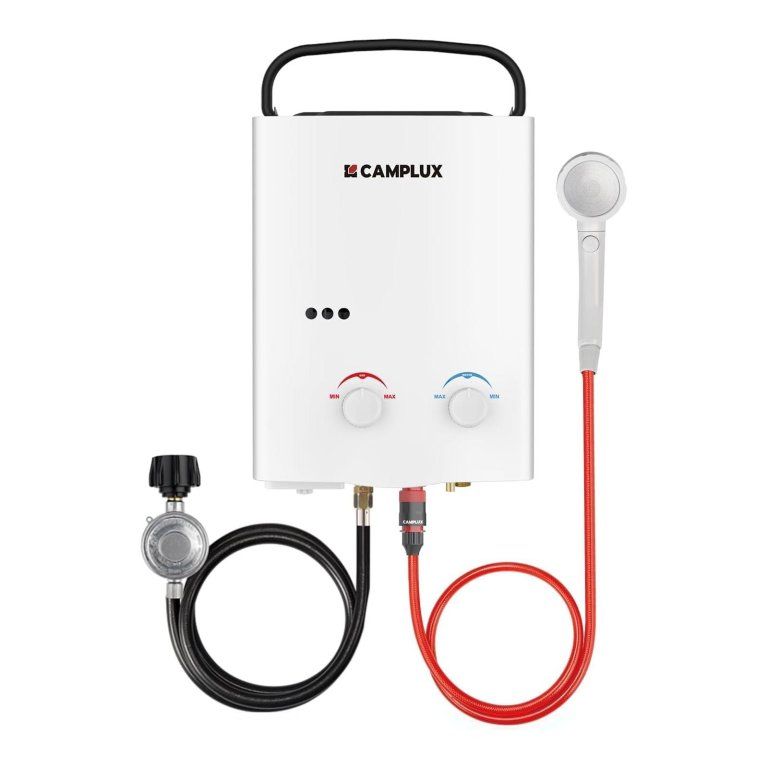
What We Like
- Lightweight and easily portable small tankless water heater
- 2 dials for controlling temperature and water flow
- Easy installation; can even hook up directly to a hose spigot
- Has an attached shower head for convenience
What We Don’t Like
- As a portable unit, it requires somewhat careful handling
Specs
- Fuel type: Propane
- Flow rate: Up to 1.32 GPM
- BTU range/wattage: 34,000 BTUs
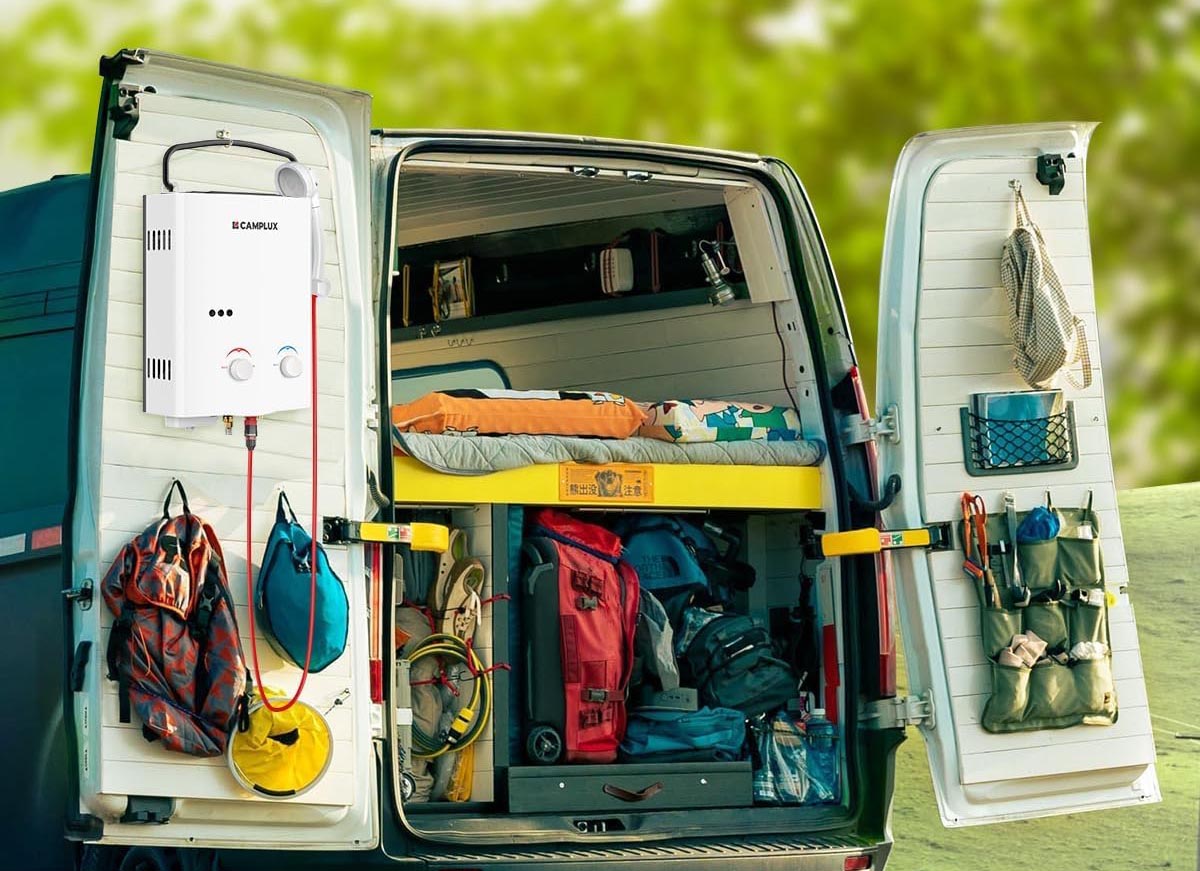
The Camplux portable propane tankless water heater is an ideal solution for RV adventures, offering lightweight convenience and reliable hot water on the go. Weighing just 10 pounds, it’s designed for easy portability and simple setup. It has two straightforward control dials that make adjusting water flow and temperature quick and intuitive, giving you a comfortable hot water experience wherever your travels take you.
The Camplux RV tankless water heater attaches directly to a hose spigot, eliminating the need for bulky installations or complicated plumbing. Operating at a flow rate of 1.32 GPM and 34,000 BTUs per hour, this outdoor tankless water heater efficiently delivers hot water for showers, dishwashing, and other campsite activities—helping make every road trip more comfortable and enjoyable.
Get the Camplux tankless water heater at Amazon or The Home Depot.
Jump to Our Top Picks
How We Chose the Best Tankless Water Heaters
We researched dozens of popular tankless water heaters across several categories and found that the best models are differentiated by their fuel type, flow rate, power input, energy efficiency, and other special features.
When it comes to gas vs. electric water heaters, electric tankless water heaters are the most common choice due to their high energy efficiency and ease of use, while natural gas and propane models offer strong performance for whole-house setups or portable use. No matter the type, the above options have ample flow rates of 1 to 10 gallons per minute (GPM) to meet a range of hot water needs. They can serve anywhere from one- or two-person households to larger families and feature energy-efficiency ratings from 81 to 99 percent. Many have easy-to-use dials or touch screens, self-modulation controls, safety shut-off features, Wi-Fi compatibility, and silent operation.
What to Consider When Choosing a Tankless Water Heater
Immediate access to hot water and reduced energy consumption year-round are just two of the benefits of a tankless hot water system. To choose a tankless water heater based on features that will be most beneficial to your home, consider the fuel type, flow rate, power consumption, and more.
Fuel Type
There are three main types of water heaters: natural gas, propane, and electric. Gas models typically deliver higher power output than electric models, enabling them to support higher flow rates and heat more water at once. However, operating cost depends heavily on local utility prices; gas is often cheaper per BTU, but not always.
Gas tankless heaters usually have a higher upfront cost than electric units, and installation can be more complex due to gas line sizing and venting requirements. Electric tankless heaters generally cost less to purchase and install, but many homes—especially older ones—may require an electrical panel upgrade to meet the high amperage demands.
- Natural gas is usually the least expensive fuel source and is piped directly into many homes. It’s well-suited for long-term use in high-demand households, and the lower fuel cost can offset the higher upfront investment over time. However, natural gas isn’t available everywhere, and running a new line into the home can increase installation costs. Natural gas also isn’t ideal for RVs or camping due to the lack of portability.
- Propane is often more expensive than natural gas and electricity, and it typically requires a separate storage tank. Still, propane has a higher energy content per cubic foot than natural gas, allowing propane tankless heaters to deliver strong performance. Because propane is portable, it’s a popular choice for RVs and mobile setups.
- Electric tankless water heaters are the lowest-cost option to purchase and install, and they offer efficiency ratings about 10 percent higher than gas models. While this can translate to energy savings, operating costs depend on local electricity rates and the home’s electrical capacity. If an electrical upgrade is needed, that can add significantly to the total cost.
Flow Rate (GPM)
A tankless water heater’s flow rate determines how much hot water it can deliver at one time, measured in gallons per minute (GPM). Each fixture draws a portion of that flow—most showers use around 2.5 to 3 GPM, tubs up to 4 GPM, and faucets 1 to 1.5 GPM.
Choosing the right flow rate depends less on the number of people in the home and more on how many fixtures run at the same time. If your household regularly runs multiple showers or appliances together, you’ll need a higher GPM unit. Whole-house tankless water heaters provide hot water to an entire home and typically offer much higher GPM than point-of-use models, which are sized for a single fixture.
Point-of-use tankless heaters can be a smart add-on if you have one high-demand bathroom, or if you want to supplement a traditional tank water heater or an indirect water heater.
Power Input (BTU)
Power input, measured in BTUs, indicates how much energy a tankless water heater needs to heat water to your desired temperature. For example, if the incoming water is 40 degrees Fahrenheit and you want 120 degrees Fahrenheit at the tap, the heater must raise the temperature by 80 degrees Fahrenheit.
A 2.5-GPM shower uses about 150 gallons of water per hour. Heating 40 degrees Fahrenheit to 120 degrees Fahrenheit requires roughly 100,000 BTUs per hour, assuming 100 percent efficiency, which no system truly achieves. Lower efficiency or additional fixtures running simultaneously will increase the BTU requirement.
A general sizing formula is:
(500 x GPM x Temperature Rise = Required Power Input in BTU per Hour)
Efficiency Percentage
Note that 500 (or 499.8 rounded up) is derived from the weight of a gallon of water (8.33 lbs) multiplied by 60 minutes.
Use this as a starting point to determine the BTU range suitable for your climate and household demand.
Venting
Gas tankless water heaters must vent combustion exhaust safely outside the home. Venting requirements vary based on the heater’s location and the type of venting needed. Some installations may allow for a direct vent through an exterior wall, while others require a longer vertical run through a chimney to the roof. Venting material can significantly affect installation cost.
Electric tankless water heaters don’t require venting at all, which is why they are often easier and cheaper to install.
Condensing vs. Non-condensing
Steam or water vapor is a byproduct of the fuel burning in a tankless water heater. The steam releases through ventilation ducts or piping to the outside. The difference between condensing and non-condensing is when the steam is released.
- Non-condensing tankless water heaters vent steam immediately, which requires heat-resistant (and more expensive) venting materials. Because some heat is lost during venting, these models typically have efficiency ratings around 80 to 85 percent. However, non-condensing water heaters are usually less expensive to purchase.
- Condensing tankless water heaters capture and reuse residual heat before venting cooler exhaust outdoors. This design increases efficiency—often up to 98 percent—and allows for the use of lower-cost venting materials. While condensing units cost more upfront, they may reduce long-term operating costs.
The Advantages of Owning a Tankless Water Heater
The advantages of a tankless model are numerous, which is why they often have a higher initial price tag. However, that upfront cost can be offset by energy savings of between 24 and 34 percent compared to storage-tank water heaters, according to the U.S. Department of Energy.
Tankless heaters also take up significantly less space because they don’t store gallons of water in advance. Their nearly instant heating process lets you enjoy your home’s amenities without running out of hot water during a shower or wash cycle.
- Tankless water heaters take up less space than storage-tank water heaters.
- Tankless models reduce energy waste and lower long-term utility costs.
- Tankless heaters provide instant, on-demand, continuous hot water—no more worrying about cold showers.
FAQs
Don’t buy until you review the answers to a few common tankless water heater questions below.
Tankless water heaters work with heating elements (or heat exchangers) to heat cold water entering the unit. When a faucet is opened, a flow-activated switch turns the heating element on. Water then moves through a series of heated loops inside the unit, which provides enough time for it to reach the desired temperature before exiting at the hot water outlet.
The size of the tankless water heater you need depends on your household’s occupancy, usage habits, home size, and local climate—lower average temperatures require higher output. Generally, homes with one to three occupants require 3- to 5-GPM water heaters. Larger households with four or more people may need a model capable of providing 8 to 9 GPM.
Start by shutting off the electricity, water, and gas (for gas units). Attach hoses to the hot- and cold-water isolation valves. The hot-water hose should hang freely, while the cold-water hose connects to a pump.
Fill a 5-gallon bucket with about 4 gallons of clean white vinegar, submerge the pump, and place the open end of the hot-water hose in the bucket. Open the valves and run the pump to circulate vinegar through the unit for 45 minutes to an hour.
When done, turn off the pump, empty the bucket, and run cold water through the system for about 5 minutes to flush out the vinegar. Close the valves, disconnect the hoses, and restore water, power, and gas. Test the system. If it doesn’t function properly, double-check connections or contact a licensed plumber for help.
Installing a tankless water heater is a complex process that involves tasks like soldering pipes, making gas connections, upgrading wiring, and following local codes. Because proper installation is essential for safety and performance, it’s best to hire a licensed professional.
The cost of a tankless water heater can vary depending on several factors, including the brand, model, capacity, features, and the region where you live. On average, a tankless water heater can cost anywhere from $150 for more compact and portable models to $2,000 or more for whole-house, high-output models. (Installation is an additional cost.)
No. Tankless systems heat water on demand, so they don’t run out the way storage-tank units can. However, they can be overloaded. If demand exceeds their maximum flow rate, you may see reduced temperature or flow at some fixtures.