We may earn revenue from the products available on this page and participate in affiliate programs. Learn More ›
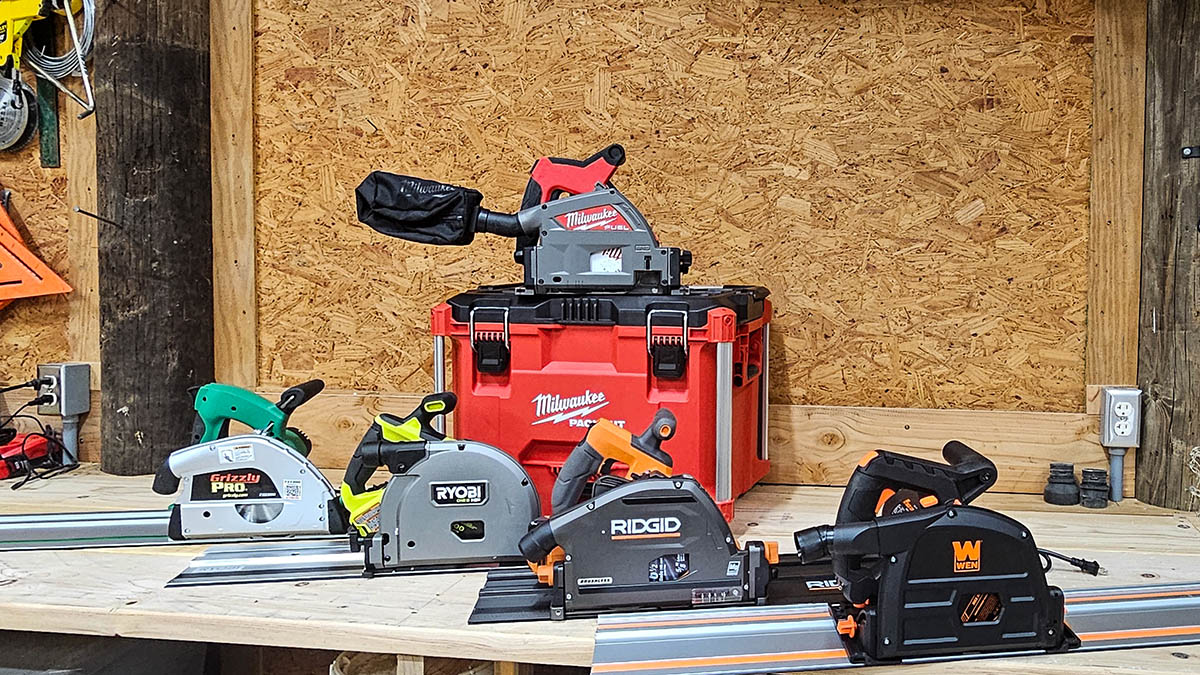
For ripping sheet goods or trimming long boards to width, a track saw offers a level of accuracy and control that’s often easier to manage than a table saw, especially when working alone or handling large panels. Designed to ride on a guide rail, track saws excel at making straight, repeatable cuts in plywood, MDF, and lumber. We tested nine track saws in our own workshops to see how they handled real-world cuts, setup, and day-to-day usability.
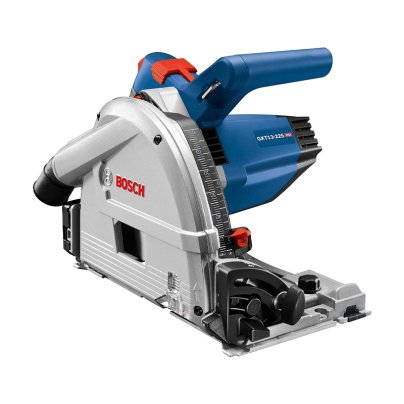
Finding a quality track saw matters because small differences in rail engagement, power delivery, and plunge action can make or break cut accuracy. The best models glide smoothly on their tracks, maintain consistent speed under load, and leave clean edges with minimal tear-out. After testing, our top pick is the Bosch GTK13-225L Professional Track Saw, which stood out for its powerful performance, smooth tracking, and wide bevel range that handled demanding cuts with confidence.
Ahead, we’ll break down what to look for when choosing a track saw for your workshop and share hands-on impressions from our testing to help you compare the best track saws for your workshop or jobsite.
- BEST OVERALL: Bosch GKT13-255L Professional Track Saw
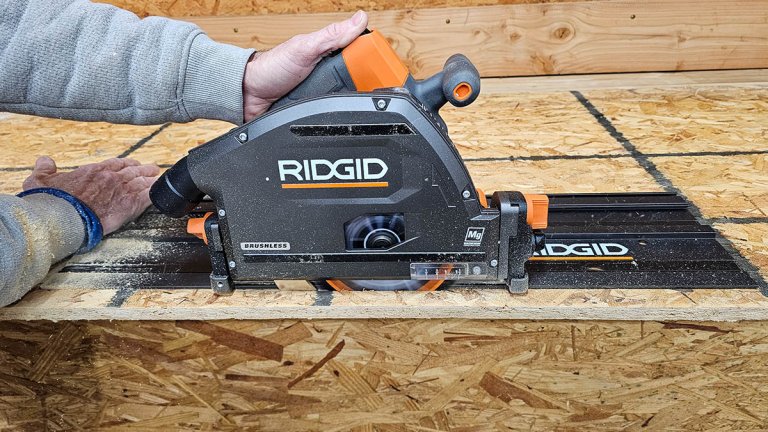
↓ Jump to Review - BEST RUNNER UP: Ridgid 18V Brushless Cordless 6.5-Inch Track Saw Kit
↓ Jump to Review - BEST BANG FOR THE BUCK: Makita 6.5-Inch Plunge Circular Saw With Tool Case
↓ Jump to Review - BEST MULTI-MATERIAL SAW: Evolution 7.25-Inch Circular Track Saw Kit
↓ Jump to Review - BEST FOR JOBSITES: DeWalt DWS520K Corded 6.5-Inch Track Saw Kit
↓ Jump to Review - BEST WEEKEND WARRIOR: Wen CT1065 Plunge-Cut Circular Saw Bundle with Track
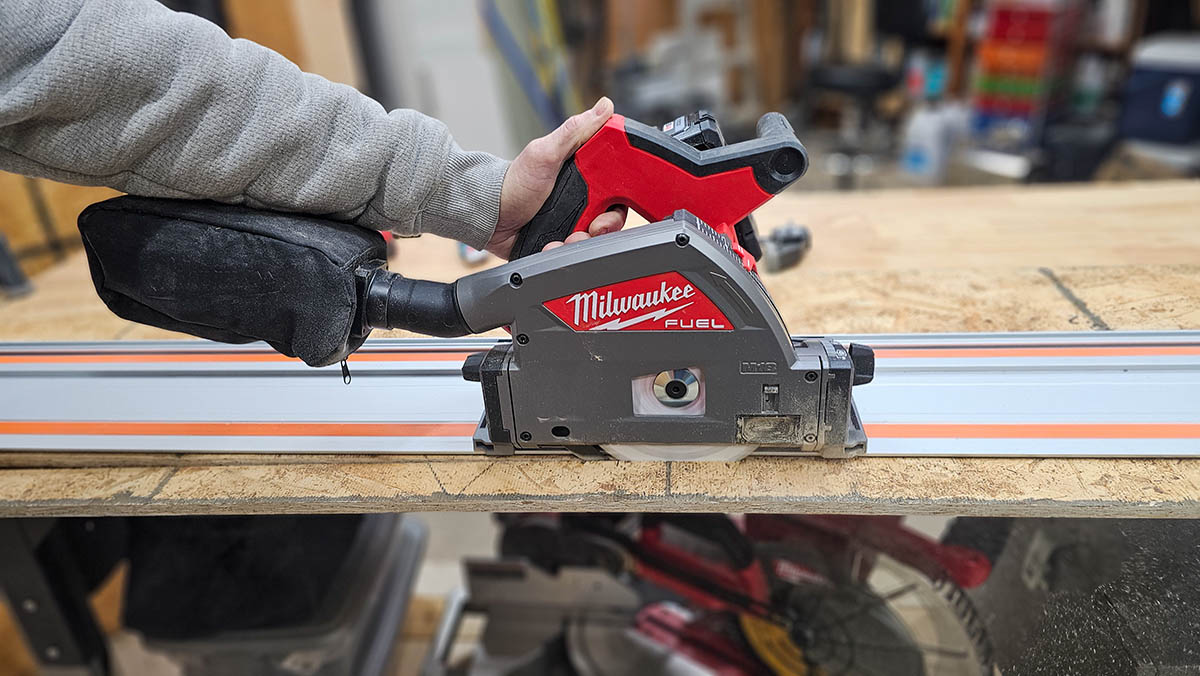
↓ Jump to Review - BEST CONTRACTOR PICK: Milwaukee M18 Fuel 6.5-Inch Plunge Track Saw Kit
↓ Jump to Review - BEST BEGINNER SAW: Ryobi ONE+ HP PTS01 18V Brushless 6.5-Inch Track Saw
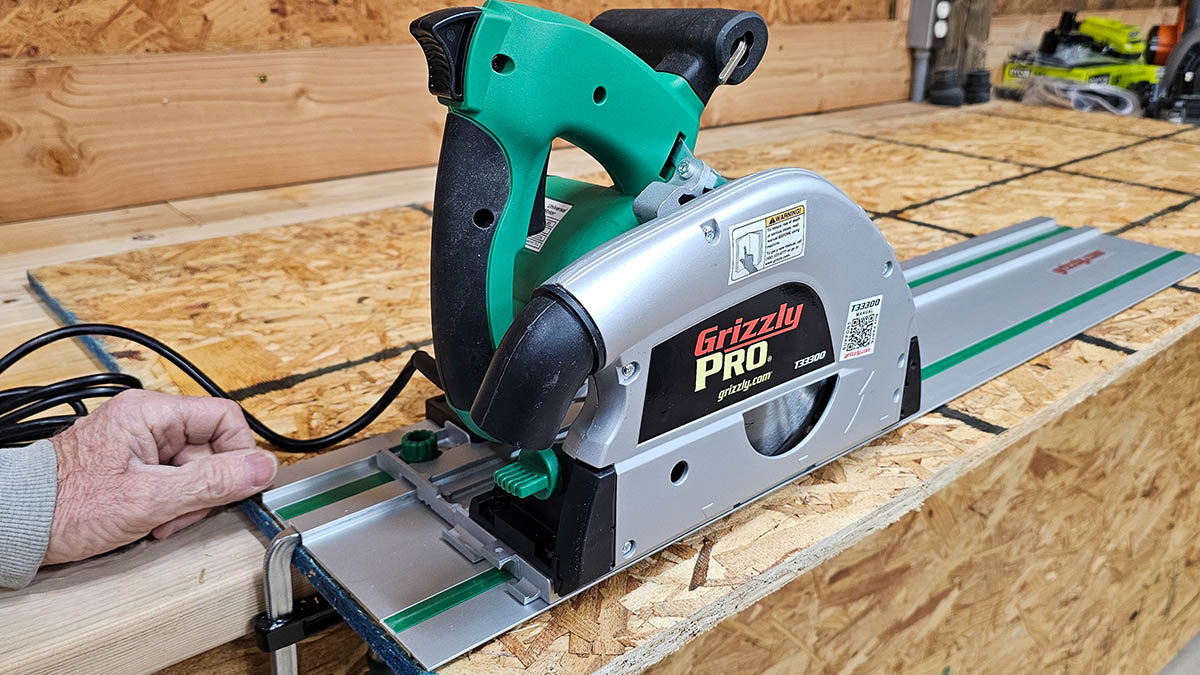
↓ Jump to Review - BEST ALL-PURPOSE: Grizzly Pro T33300ZX 6.25-Inch Track Saw Bundle
↓ Jump to Review
Best Track Saws Comparison
| Product | Type | Bevel | Tracks included |
| Bosch GKT13-255L Professional Track Saw | Corded, 13-amp | -1 to 47 degrees | No (base kit) |
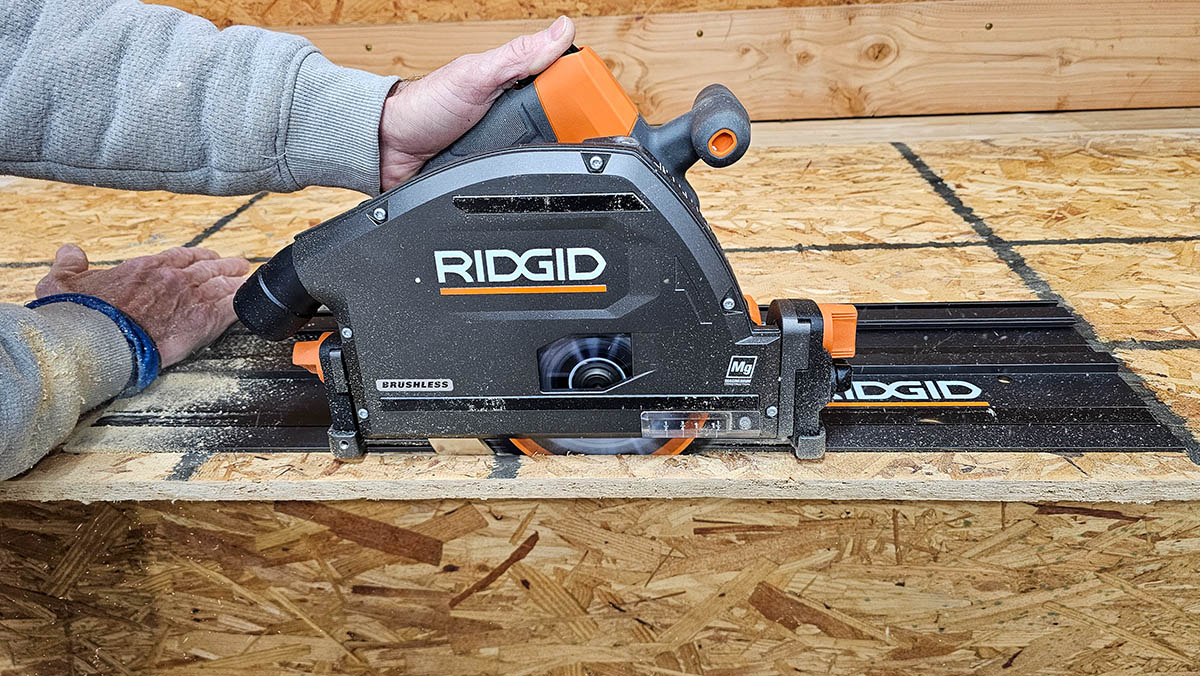
| Ridgid 18V Brushless Cordless 6.5-Inch Track Saw Kit | Cordless | -1 to 47 degrees | Yes, 55 inches |
| Makita 6.5-Inch Plunge Circular Saw With Tool Case | Corded, 12-amp | -1 to 48 degrees | Yes, 55 inches |
| Evolution 7.25-Inch Circular Track Saw Kit | Corded, 15-amp | 0 to 45 degrees | Yes, 40 inches |
| DeWalt DWS520K Corded 6.5-Inch Track Saw Kit | Corded, 12-amp | 0 to 47 degrees | No (base kit) |
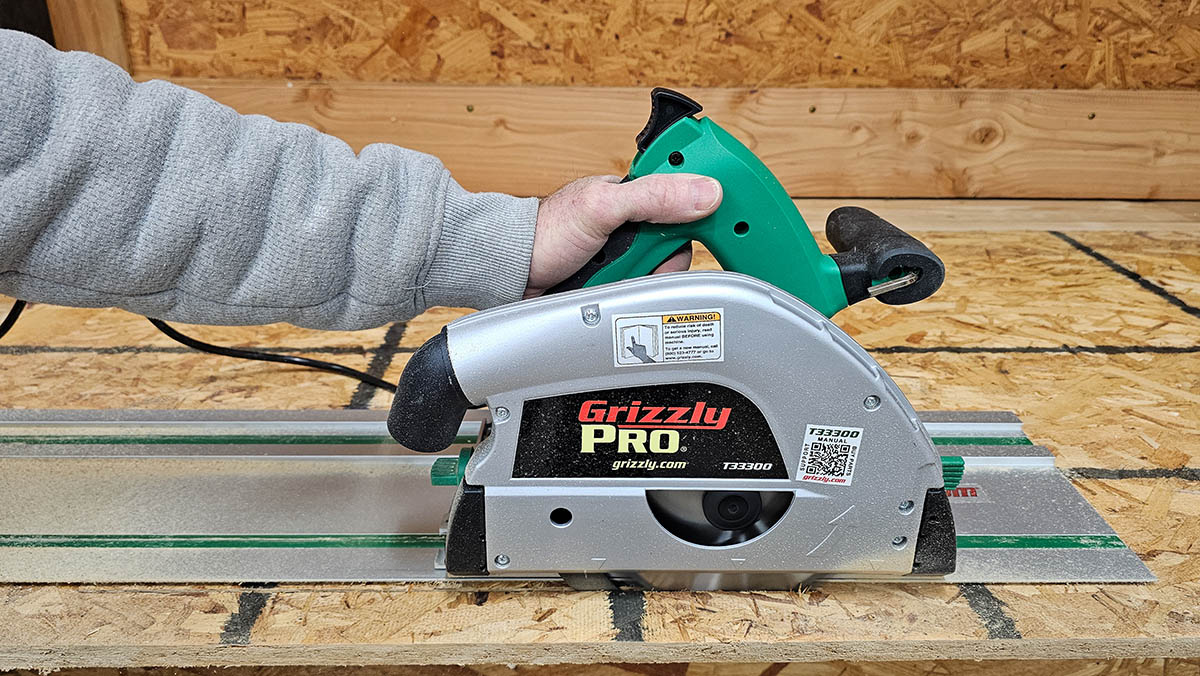
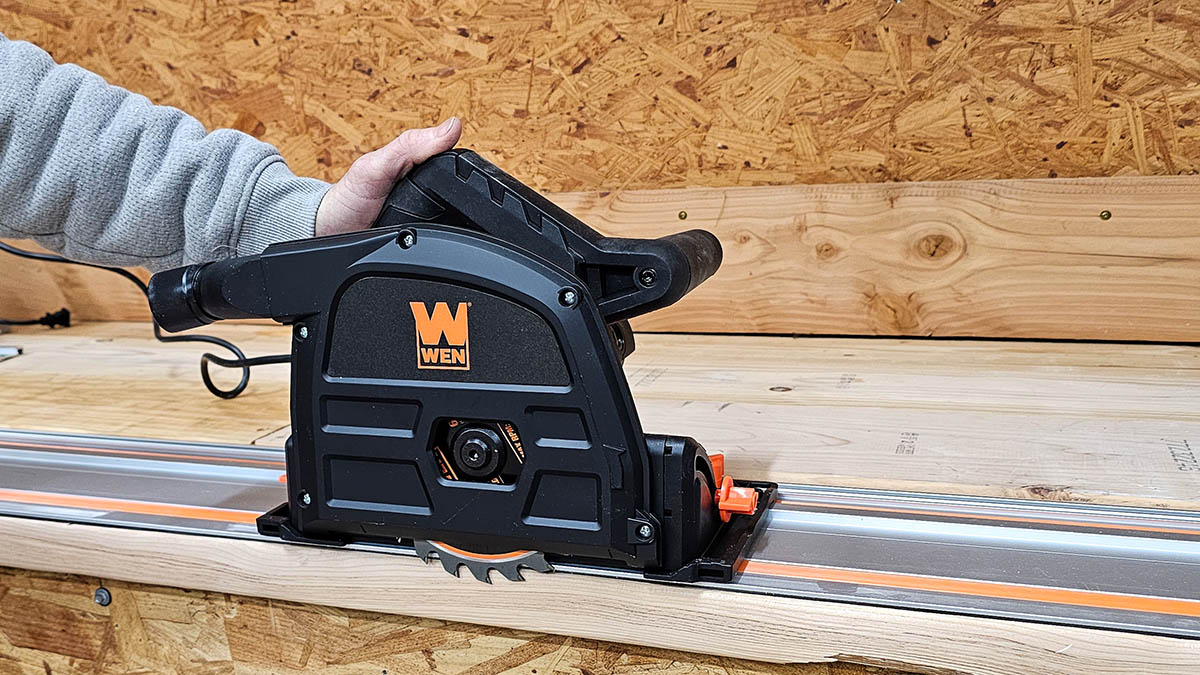
| Wen CT1065 Plunge-Cut Circular Saw Bundle with Track | Corded, 10-amp | 0 to 45 degrees | Yes, 100 inches (2 x 50″) |
| Milwaukee M18 Fuel 6.5-Inch Plunge Track Saw Kit | Cordless | 0 to 45 degrees | No (base kit) |
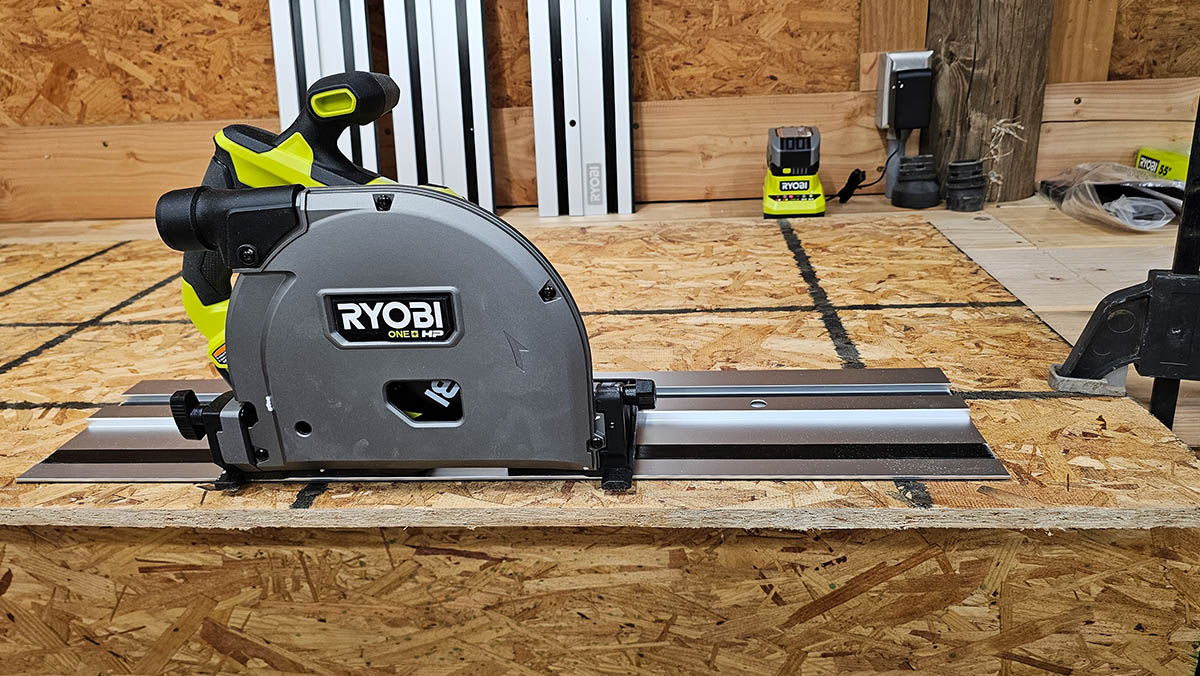
| Ryobi ONE+ HP PTS01 18V Brushless 6.5-Inch Track Saw | Cordless | -1 to 48 degrees | Yes, 55 inches |
| Grizzly Pro T33300ZX 6.25-Inch Track Saw Bundle | Corded, 9-amp | 0 to 45 degrees | Yes, 108 inches (3 x 36″) |
Our Top Picks
We field-tested all of the products on our top picks list for the best track saws. Our findings aim to help shoppers choose a high-quality saw that fits their needs and budget.
Best Overall
Photo: Mark Clement for Bob Vila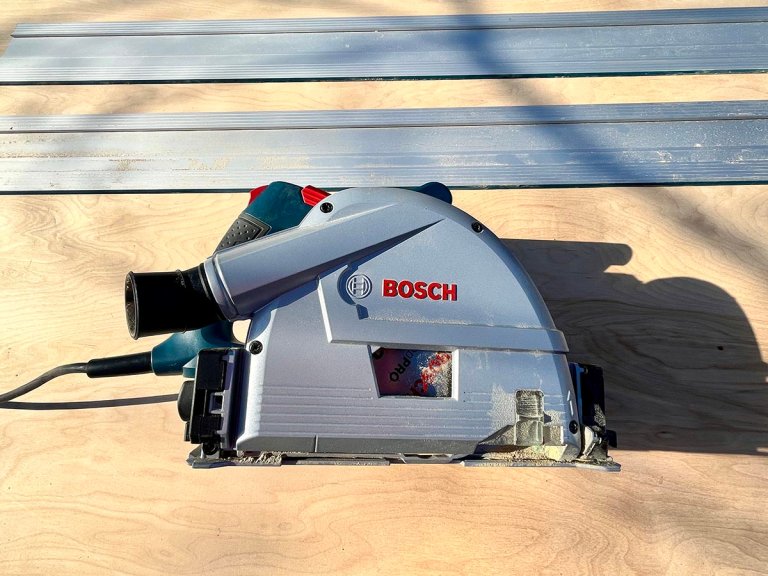
What We Like
- Most powerful option on our list
- Plunge-cut track saw
- Wide range of options for bevel cuts
- Provides splinter-free cuts
What We Don’t Like
- Most costly option on the list
Product Specs
- Type: Corded, 13-amp
- Bevel: Yes, -1 to 47 degrees
- Tracks included: Yes, two 63-inch-long tracks
Our Ratings
| Ease of Use | 5/5 | Cut Quality | 5/5 | Build Quality | 4.3/5 | Value | 4.7/5 |
The track saw from Bosch performed better, faster, and more efficiently than the rest we tested. Of all the saws in our test group, it was the easiest to engage the thin rail on its track—no fussing around trying to get it right. During testing, it slid easily.
The motor functions smoothly even under stress, like while cutting red oak or composite decking. It ran without a hitch while we used it, and there was no need to dial down its variable speed because the cuts were crisp with near-zero tear-out or blade marks and left in the work.
It comes with a high-quality carry case to keep rails safe on a jobsite or in a busy shop. The ability to connect up to 126 inches of rail, plus the longest cord on any track saw we tested, makes it an absolute go-to for long rips and crosscuts in deck-building activities.
There was zero vibration with a nice, upright handle position, sensible switches, and easily the most power. Plus, it can provide -1 to 47-degree bevel cuts. This saw delivered on all counts.
What our tester says: “I think the Bosch track saw is top drawer, and its few downsides—a proprietary blade arbor and a storage box handle that the user has to snap into place and unsnap to use—are minor.”—Mark Clement, Product Reviews tester and writer
Read our full review: Bosch GKT13-255L Professional Track Saw
Get the Bosch track saw at Amazonor The Home Depot.
Best Runner Up
Bosch GKT13-255L Professional Track Saw
Buy at The Home DepotWhat We Like
- Strong cordless cutting performance
- Good dust control
- Comfortable handle design
What We Don’t Like
- Rail engagement takes practice
Product Specs
- Type: Cordless
- Bevel: -1 to 47 degrees
- Tracks included: Yes, 55 inches
Our Ratings
| Ease of Use | 4.9/5 | Cut Quality | 5/5 | Build Quality | 4.3/5 | Value | 4.8/5 |
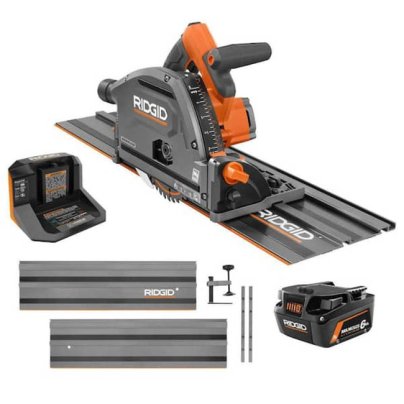
The Ridgid 18V track saw punches above its price point. In testing, it delivered consistent, steady cuts through sheet goods and hardwoods, without the hesitation or bogging we sometimes see from battery-powered models.
Once set on the rail, the saw tracks smoothly, though it takes a bit more attention to get the engagement just right compared to premium systems. After a short learning curve, our cuts stayed straight and true, with minimal tear-out along the cut line.
Power delivery was strong, especially for a cordless saw. It handled longer rip cuts without feeling strained, and runtime with the included battery was sufficient for project-level work rather than just quick trim cuts. The saw feels solid and balanced, and the grip and controls are intuitive enough to stay comfortable during longer sessions.
Overall, Ridgid’s track saw offers a compelling mix of performance and value. It may not have the refinement of higher-end systems, but for users who want cordless freedom without stepping into top-tier pricing, it holds its own.
Get the Ridgid track saw at The Home Depot.
Best Bang for the Buck
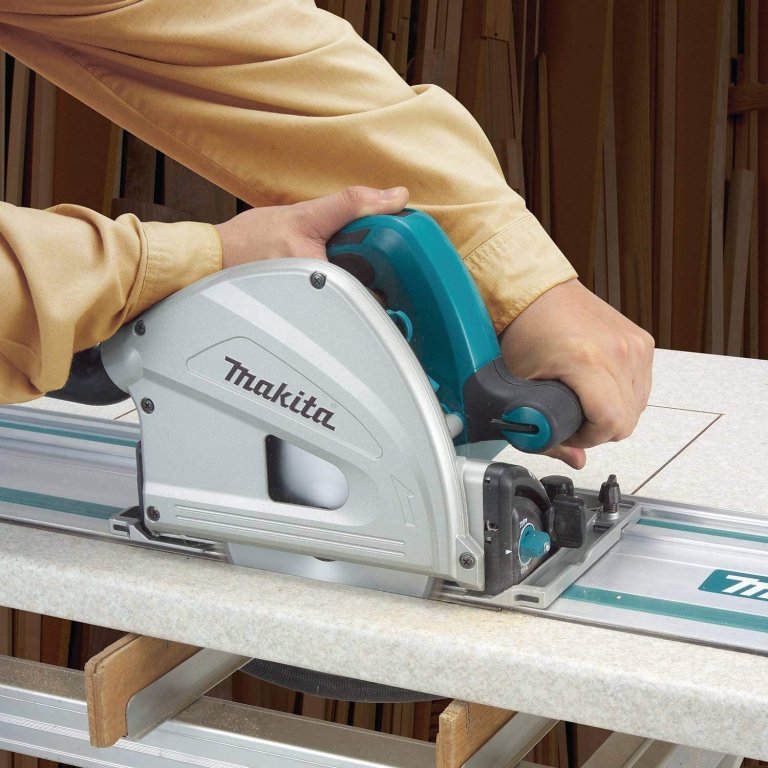
Makita 6.5-Inch Plunge Circular Saw With Tool Case
Buy at Amazon Buy at The Home Depot Buy at Acme ToolsWhat We Like
- Excellent power for heavy-duty straight cuts
- Operates smoothly, even while cutting dense materials
- Plunge-cut track saw
- Stackable tool case
What We Don’t Like
- Struggled slightly through composite decking rips
- Electronic brake is a little soft
Product Specs
- Type: Corded, 12-amp
- Bevel: -1 to 48 degrees
- Tracks included: Yes, 55 inches
Our Ratings
| Ease of Use | 4.9/5 | Cut Quality | 4.9/5 | Build Quality | 4.5/5 | Value | 4.7/5 |
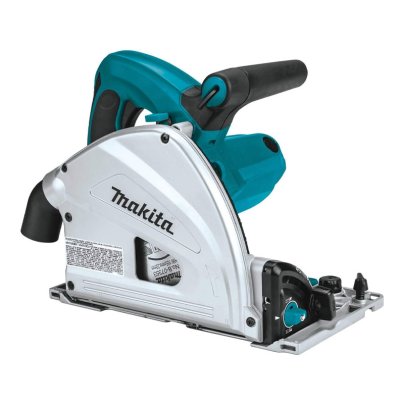
This track saw has our favorite plunge-action in the bunch. It’s just simple and seamless. It delivered beaucoup power and supremely clean cuts with few saw marks at full speed in oak and zero tear-out in maple plywood. It is also a great value with an all-pro performance at a reasonable price that yields a terrific cost-to-value ratio.
With a 55-inch-long rail, the Makita runs smoothly and simply, and it delivered top-notch cuts in everything we threw at it. It has a nice kit box, a soft-ish start, and an easy electronic brake, though it’s worth noting that the saw labored a bit while cutting super-dense composite decking.
Get the Makita track saw at Amazon, The Home Depot, or Acme Tools.
Best Multi-material Saw
Photo: Amazon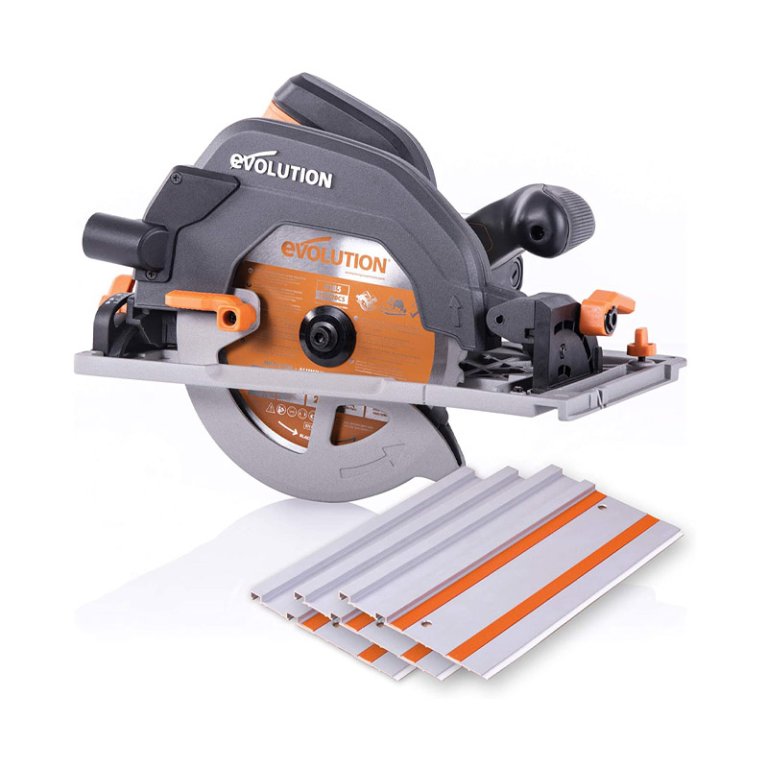
What We Like
- 15-amp motor
- Blade cuts up to 2.5 inches deep
- More manageable for crosscutting
What We Don’t Like
- Short track requires moving it more often
Product Specs
- Type: Corded, 15-amp
- Bevel: 0 to 45 degrees
- Tracks included: Yes, 40 inches
Our Ratings
| Ease of Use | 4.6/5 | Cut Quality | 4/5 | Build Quality | 4.5/5 | Value | 4.7/5 |
The Evolution track saw kit is a unique take on the category. While it is a circular saw that rides on a track and is entirely suitable for some carpentry jobs like resizing a hollow core door (it performed nicely doing so), this is, first and foremost, a circular saw. It just happens to have a shoe (aka base or plate) that adapts to its 40-inch screw-together track. As a result, the fact that it left clean cuts in almost nothing else isn’t a demerit.
This tool is designed for the occasional straight cut in finish stock but is better suited to sizing metal roofing or cutting square tube steel, PVC pipe, or plastic roofing.
It delivers full-on circ saw power, not woodshop whisper-quiet precision. It doesn’t plunge, and the guard has to be raised to engage the track and item being cut. But for what it’s designed to do, it does it well.
Get the Evolution track saw kit at Amazon, The Home Depot, or Lowe’s.
Best for Jobsites
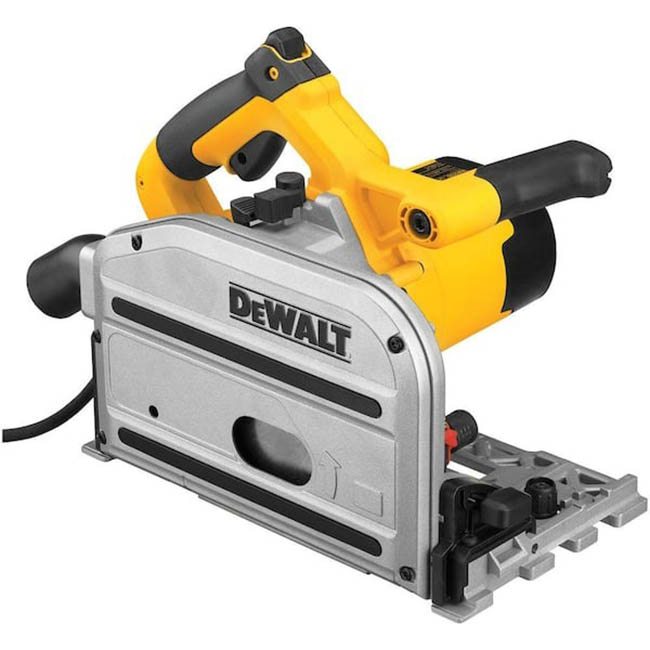
DeWalt DWS520K Corded 6.5-Inch Track Saw Kit
Buy at The Home DepotWhat We Like
- Makes clean cuts in hardwood
- Nice long cord
- Plunge-cut ability
What We Don’t Like
- Labored in dense material
- Long throw on release switch
Product Specs
- Type: Corded, 12-amp
- Bevel: 0 to 47 degrees
- Tracks included: No (base kit)
Our Ratings
| Ease of Use | 4.8/5 | Cut Quality | 4/5 | Build Quality | 4/5 | Value | 4.5/5 |
Surprisingly, DeWalt’s corded track saw labored through maple ply, composite decking, and even finger-jointed pine. The tool vibrated in use and delivered some tear-out in maple ply at the top speed setting, which was easily cleaned up by dialing down to 4.
Its plunge is more of an arc where the motorhead has to be pushed forward; that takes some getting used to. Combined with the long throw of the release switch, it doesn’t have the smoothest plunge in the bunch.
A more top-mounted handle makes long rips a little tougher to make if walking along the rip is not possible, like when cutting a sheet of plywood in half. The adjustment knobs and speed dial are super tight and difficult to move.
Ideal as a jobsite or work truck saw, it’s got a long cord, nice kit box, and, while it delivers less than top-notch performance, it’s still a far cry from using a table saw to break down a sheet of MDF and will deliver the straight cuts needed in a decking project.
Get the DeWalt track saw kit at The Home Depot.
Best Weekend Warrior
Photo: Glenda Taylor for Bob Vila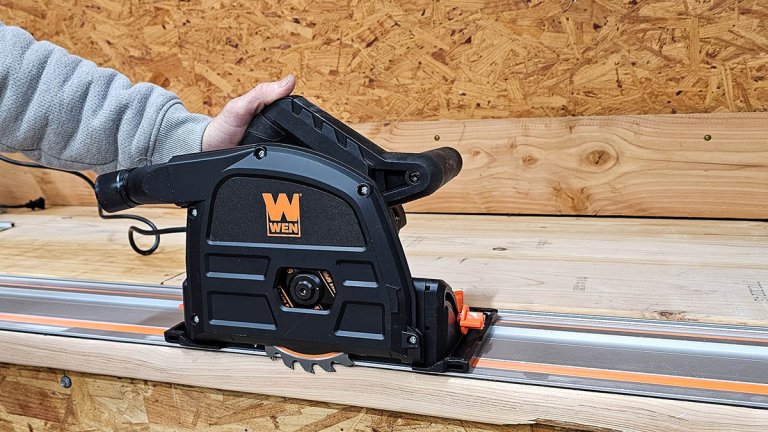
What We Like
- Simple setup on rails
- Decent cut quality
- Good dust port
What We Don’t Like
- Less powerful than we’d like
Product Specs
- Type: Corded, 10-amp
- Bevel: 0 to 45 degrees
- Tracks included: Yes, 100 inches (2 x 50″)
Our Ratings
| Ease of Use | 4.1/5 | Cut Quality | 4.5/5 | Build Quality | 4.8/5 | Value | 4.5/5 |
The Wen 6.5-inch track saw surprised us for the price, especially because it comes with 100 inches of rails. It’s clearly aimed at homeowners and occasional users, but for practical cuts, it delivers more than the bare minimum. Once seated on the included tracks, it made straight, serviceable rips through plywood, MDF, and soft hardwoods with decent consistency.
This saw isn’t going to rival premium models in power or refinement. There’s a bit more vibration and the rail engagement isn’t as buttery smooth as higher-tier models we tested, but it gets the job done without fuss—even though you have to take a little more care. Dust collection works as expected, and the overall feel, while basic, is intuitive for users stepping into track saw workflows for the first time.
For DIYers and budget-minded builders who want straight cuts without a steep price tag, the Wen is a solid entry point.
Get the Wen track saw at Amazonor Lowe’s.
Best Contractor Pick
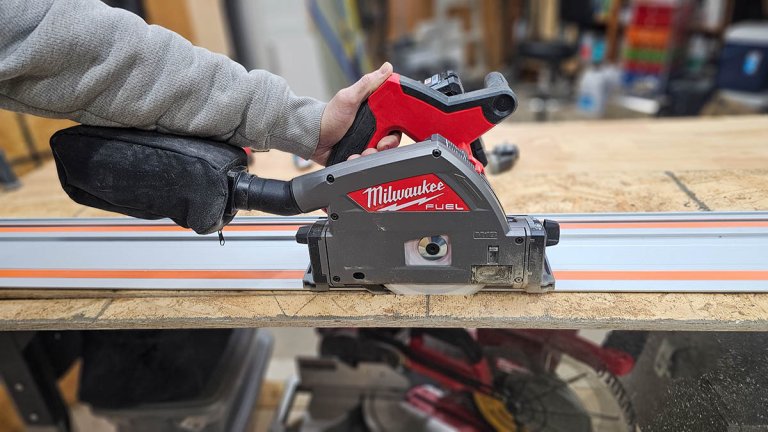
Milwaukee M18 Fuel 6.5-Inch Plunge Track Saw Kit
Buy at The Home DepotWhat We Like
- Powerful cuts even in hardwood
- Excellent dust control
- Smooth plunge action
- Works with multiple rails
What We Don’t Like
- Eats batteries on long rips
- Premium price point
Product Specs
- Type: Cordless
- Bevel: 0 to 45 degrees
- Tracks included: No (base kit)
Our Ratings
| Ease of Use | 5/5 | Cut Quality | 5/5 | Build Quality | 5/5 | Value | 4.7/5 |
The Milwaukee M18 Fuel track saw excelled on bigger cuts. It delivered clean cuts in ply and solid hardwoods without hesitating or bogging down, even when we pushed it through thicker panels. The variable speed control and smooth plunge action make it more of a pro tool than a typical cordless saw.
Dust collection was strong, too. With a vac hooked up, we experienced very little airborne overflow, and that’s a real plus on jobsite setups. It doesn’t come with rails, but it adapts to several other rail brands. We tested it on the Wen rails, and it gave us straight, splinter-free cut edges.
What our tester says: “This is not the lightest saw in the group, and the battery drained quickly on extended rips, but this could be remedied by using high-output packs for serious cutting days. Nonetheless, if you need cordless precision and power for demanding cuts, this Milwaukee stands out.”—Glenda Taylor, Product Reviews tester and writer
Get the Milwaukee M18 track saw at The Home Depot.
Best Beginner Saw
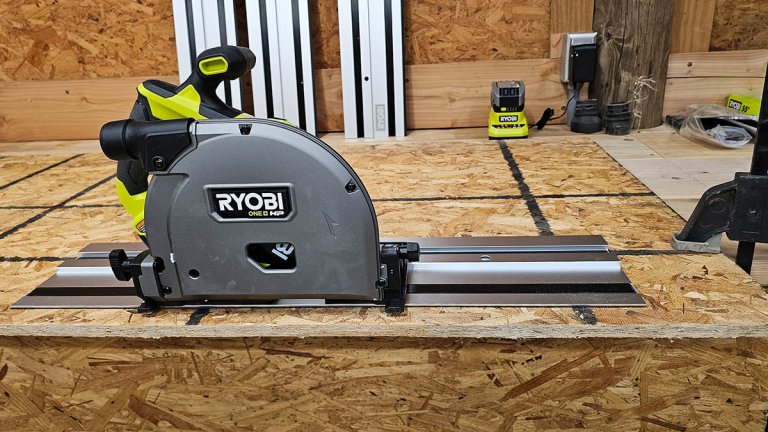
Ryobi ONE+ HP PTS01 18V Brushless 6.5-Inch Track Saw
Buy at The Home DepotWhat We Like
- Good balance of power and runtime
- Kit includes two batteries
- Easy setup on rails
- Solid dust collection
What We Don’t Like
- Rail alignment feels finicky
- Not as refined as premium models
Product Specs
- Type: Cordless
- Bevel: -1 to 48 degrees
- Tracks included: Yes, 55 inches
Our Ratings
| Ease of Use | 4.5/5 | Cut Quality | 4/5 | Build Quality | 4.5/5 | Value | 4.7/5 |
The Ryobi ONE+ track saw proved capable across a spectrum of test cuts, striking a nice balance between power and runtime. With two 4.0 Ah batteries in the kit, we didn’t feel rushed to swap packs during moderate ripping and crosscutting work. Its brushless motor delivered consistent performance through plywood, melamine, and softer hardwoods without noticeable bogging.
On the rails, it tracks straight once you get dialed in, although the initial alignment took a bit more patience than some of the others we tested. Dust collection was effective when paired with a vac, keeping our workspace cleaner and our lines visible, and that adds up on long projects.
For homeowners and DIYers stepping up from basic circular saw work, the Ryobi offers a solid cordless experience without a premium price. It’s not as silky smooth as higher-end saws, but it gets the job done with minimal fuss.
Get the Ryobi track saw kit at The Home Depot.
Best All-purpose
Photo: Glenda Taylor for Bob Vila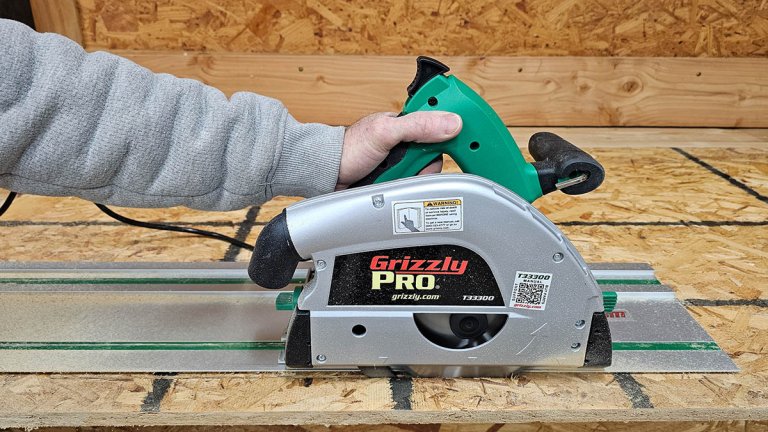
What We Like
- Straight, solid cuts
- Long rails included
- Easy plunge action
What We Don’t Like
- Track alignment can bind
- Depth gauge slightly off
Product Specs
- Type: Corded, 9-amp
- Bevel: 0 to 45 degrees
- Tracks included: Yes, 108 inches (3 x 36″)
Our Ratings
| Ease of Use | 4.6/5 | Cut Quality | 4/5 | Build Quality | 4.5/5 | Value | 5/5 |
The Grizzly Pro track saw bundle delivers strong value for those who want a corded system that does the basics well. With three 36″ rails included, it’s ready to rip full-length sheets right out of the box without hunting down extra pieces. In our tests, it produced clean, accurate cuts on plywood and panel goods and delivered a strong and stable plunge track saw action.
That said, the system isn’t without quirks. Getting multiple track pieces to line up perfectly took some extra time, and we noticed occasional binding where the sections met, so we had to tweak them several times to keep the saw from binding at the rail seams. We also found that the depth gauge reads a bit shallow, so do a quick check with a square before you make your first cut.
Still, for DIYers and home workshops on a budget, this Grizzly bundle makes long, straight cuts easier than using a freehand circular saw, even if it isn’t as polished as higher-end options.
Get the Grizzly Pro track saw at Tractor Supply Co.or The Home Depot.
Jump to Our Top Picks
How We Tested the Best Track Saws
| Testing Stats | |
|---|---|
| Products tested | 9 |
| Time spent testing | 3 days |
| Tests performed | 4 |
| Price range | $100 to $450 |
To select track saws for testing, we evaluated models from multiple manufacturers and narrowed the field to nine that met our standards for performance, value, and availability. Each saw was tested on common materials, including plywood, MDF, and hardwood, to assess cut accuracy, tear-out control, plunge smoothness, and consistency over long rips. We also evaluated how securely each saw engaged its guide rail, how easily bevel and depth settings could be adjusted, and how comfortable the tool felt during extended use.
Dust collection was assessed with a shop vacuum attached, and cordless models were run through sustained cuts to observe real-world battery performance. Each saw was scored on performance, ease of use, build quality, and overall value, with pricing and included track saw accessories factored into the final rankings. Our picks reflect tools that delivered reliable, repeatable results under practical working conditions.
| Product | Ease of Use | Cut Quality | Build Quality | Value |
| Bosch GKT13-255L Professional Track Saw | 5/5 | 5/5 | 4.3/5 | 4.7/5 |
| Ridgid 18V Brushless Cordless 6.5-Inch Track Saw Kit | 4.9/5 | 5/5 | 4.3/5 | 4.8/5 |
| Makita 6.5-Inch Plunge Circular Saw With Tool Case | 4.9/5 | 4.9/5 | 4.5/5 | 4.7/5 |
| Evolution 7.25-Inch Circular Track Saw Kit | 4.6/5 | 4/5 | 4.5/5 | 4.7/5 |
| DeWalt DWS520K Corded 6.5-Inch Track Saw Kit | 4.8/5 | 4/5 | 4/5 | 4.5/5 |
| Wen CT1065 Plunge-Cut Circular Saw Bundle with Track | 4.1/5 | 4.5/5 | 4.8/5 | 4.5/5 |
| Milwaukee M18 Fuel 6.5-Inch Plunge Track Saw Kit | 5/5 | 5/5 | 5/5 | 4.7/5 |
| Ryobi ONE+ HP PTS01 18V Brushless 6.5-Inch Track Saw | 4.5/5 | 4/5 | 4.5/5 | 4.7/5 |
| Grizzly Pro T33300ZX 6.25-Inch Track Saw Bundle | 4.6/5 | 4/5 | 4.5/5 | 5/5 |
What to Consider When Choosing a Track Saw
Think of a track saw like a circular saw with track capability. While track saws aren’t new, they’re relatively new to the home DIY scene, so it can be tough to know which model might work for a particular scenario or budget. Here are some tips to consider when shopping for the best track saw.
Blade Size
Similar to table saw blades, a track saw’s blade size has everything to do with the thickness of the material it can cut. Most track saws use 6½-inch blades and are capable of cutting materials around 2 inches thick.
Track saws with larger blades, in the 8¼-inch range, cut materials closer to 2¾ inches thick. Miniature track saw models use blades 4½ inches in diameter, and they cut materials just larger than 1 inch thick.
Speed Settings
Some of the best track saws feature speed settings, which is a differentiator compared to their circular saw counterparts. Controlling the speed allows the user to avoid burning the wood, dulling the saw blade, and creating more splinters than necessary.
If a track saw features speed adjustments, they’re typically in the range of 2,000 to 5,000 RPM. For soft materials like framing lumber or pine plywood, the high-speed settings are best. It’s best to dial the speed down toward the lower end of the range for dense woods like locust or walnut. The lower speed helps prevent unsightly burn marks and keeps the blade in good cutting condition.
When slowing down blade rotation, be mindful of kickback. Some track saws have anti-kickback features built in.
Bevel Capacity
Track saws with adjustable bevels are far more flexible and versatile than other models. Most of a track saw’s duty consists of making 90-degree square cuts. However, the ability to make bevel cuts can save the user an extra step in the production process.
Cutting 45-degree bevels on boards or sheet goods helps when building bookshelves or furniture, as it increases the surface area for better glue contact. It also creates a clean joint without the need for edge-banding to cover undesired plywood edges.
Motor Power
Corded track saws, like circular saws, should be powerful enough to get the job done. It’s difficult, though, to quantify their power in a useful way that a new tool shopper can understand.
Manufacturers have modeled most track saws after sidewinder-style circular saws (also called Direct Drive motors), and they love to boast about amperages on their packaging. However, amperage actually pertains to the amount of electrical current the motor can draw; it doesn’t directly represent power.
For cordless track saws, the power is a little easier to judge based on the battery’s voltage rating. A 20-volt battery-operated saw will generally be more powerful than an 18-volt saw. There are exceptions to this rule, but this is a general guideline to follow.
Corded vs. Cordless
The debate has raged forever as to which is better: corded or cordless track saws. When it comes to a track saw, the saga continues. On one hand, corded track saws will usually feel more powerful, and users don’t have to worry about changing batteries. That’s particularly helpful in the middle of a tough cut (like a thick piece of oak or walnut).
Stopping in the middle of a cut to change the battery may result in unsightly saw marks on the cut edge. On the other hand, cordless track saws don’t have a power cord to get hung up on the end of a lengthy board while ripping it to width. This can also force work to stop to adjust the cord, resulting in the same unsightly marks or accidentally moving the track, even ever so slightly.
Ultimately, it comes down to what’s more important to the user: unlimited power (where power is available) or portability (as long as there are spare batteries on hand).
Cord Length
It might not seem like a big deal, but cord length can directly affect the usability of any saw but especially a track saw. Roofers and framing carpenters sometimes remove the standard cord on their circular saw and replace it with a 25-foot cord, so the cord ends are less prone to snagging behind them.
With a track saw, the longer the cord, the greater the range for manipulating long tracks and materials. Users almost always require an extension cord, but they can hang up. If the track saw uses a 6-foot cord but cutting an 8-foot sheet of plywood is on the to-do list, the extension cord may need to be pulled along as you cut. Eventually, the cord may get caught at the end of the track.
Of course, this can be avoided altogether by hanging the cord off to either side of the workpiece, but still, a longer range will help keep the cord from hanging up on a workbench or sawhorse.
Track Length
Sawing guide rails come in different lengths for obvious reasons. For the workshop, however, it’s best to have a 2-, 4-, and 8-foot track for quick and easy setup and consistent results. Some tracks are modular, and they’re great for jobsite work. This allows a user to snap or bolt smaller lengths together and use them as a longer woodworking track, ideal for composite decks where parting boards are often cut into the decking to hide cut ends.
Crosscutting a 12-inch-wide board is easy with a track saw, but it doesn’t require a 4-foot track. Similarly, ripping a plywood sheet is what track saws are best at, but a 4-foot track will be an inconvenience if it has to be reset halfway through the cut. Resetting the track also adds a degree of error to the cut. If the user is not careful, they may end up with a long cut that isn’t as straight as it could be. This negates the purpose of a track saw.
Safety Features
Track saws are not just circular saws with specially designed bases that ride along a track, though they share the circ saw’s DNA. They have variable speed, plush motors, a much better blade and are purpose-built for dialed-in work. However, the very nature of a track saw makes it safer to use than a circular saw over long cuts.
The track provides a predetermined path for the saw blade, so it’s possible to look ahead and see if there are any obstacles that might cause kickback. Should the saw kick back, cam locks featured in several models will stop the saw from pushing back at the user or jumping off the track.
Many carpenters guide their circular saws with a site-built jig called a “shoot board” or “shooting board.” Essentially a “track” made from plywood, it’s a go-to for when cuts really need to be straight, like when trimming a door.
Track saws take this principle to an entirely different level with anti-chip rubber strips on the track edges and gummy rubber strips on the bottom of the track to help keep them in place. However, they’re not infallible, and for serious cuts, clamps are available that lock the track to the table. There are also chip guards and high-quality blades for the kinds of work these saws are tasked to do.
Tips for Using a Track Saw
Track saws make big things small, cleanly, and accurately, and the same safety rules apply for track saws as for typical circular saws. You should wear hearing and eye protection to prevent injuries, and avoid wearing loose clothing. Also, be sure that the blade isn’t going to contact anything before cutting.
Follow basic electric saw guidelines, including being mindful of the cord’s location before you start cutting longer boards. If possible, position the cord so it won’t snag on the track or get caught between the workpiece and the table while cutting.
Occasionally, the tracks on track saws don’t line up perfectly straight. When that’s the case, you can cut them square with a miter saw (as long as they’re aluminum). Be sure to wear ear and eye protection as well as gloves while cutting to prevent injuries.
- Use the same safety precautions you would with a circular saw.
- Be mindful of the cord to prevent it from snagging while cutting.
- If the tracks don’t line up perfectly, square them up with a miter saw.
- Use track saw clamps to hold your material securely.
FAQs
That’s a lot of information about the best track saws, and it may seem a bit overwhelming. Don’t let a few nagging questions derail your shopping; the following section aims to answer the most frequently asked questions about the best track saws. Be sure to look below for an answer to your question.
No, not exactly. Track saws are based on sidewinder-style circular saws, but they’re not the same. Circular saws have smooth bases that glide along the workpiece. Track saws have grooves that snap into a track to allow for straight cuts.
Yes, you can, but they’re not as easy to use without a track. The pressure it takes to hold the saw in the plunged position can affect accuracy. By using the saw properly, you’ll get better results.
Most track saws can cut just over 2 inches deep; however, some of the larger track saws can cut up to 2½ inches deep, similar to the depth you can cut with a jigsaw.
Track saws usually have blade-change settings that lock the plunging action in place. Once it’s in the blade-change mode, the user simply loosens the arbor nut holding the blade in place and replaces the blade.
Track saws are typically more expensive, require setup time with guide rails, and lack the versatility and speed of table saws for repetitive cuts.
A track saw is highly accurate, producing straight, repeatable cuts with minimal tear-out when properly set up and paired with a quality guide rail.
Meet the Tester
Mark has spent his whole life in home improvement and maintenance. A carpenter and professional remodeler, he loves telling stories about tools and how-to’s in any way he can. With his wife, Theresa Clement, he developed the blog MyFixitUpLife, opening the way to other home improvement adventures: trade shows, podcasting, and television.
Glenda Taylor is a contractor, product tester, and writer focusing primarily on construction and DIY tools. She tests a wide range of power tools as well as other home improvement, household, and lawn-and-garden products.
Additional research provided by Tom Scalisi.