We may earn revenue from the products available on this page and participate in affiliate programs. Learn More ›
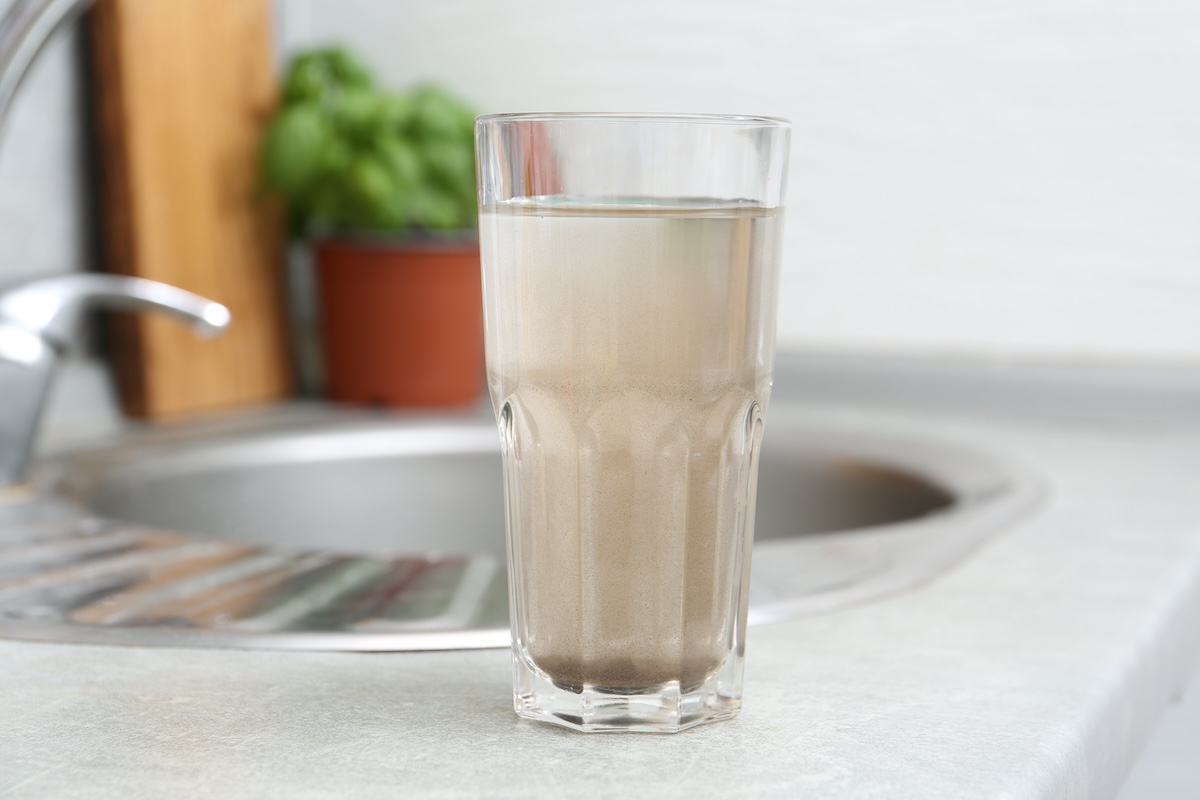
Clean, potable water is essential for everyday life: You need it to drink, cook, wash, and bathe all from the comfort of your home. When the water coming from your taps starts to smell weird, look odd, or taste funny, it can be distressing. The good news is that the causes of these problems are usually common ones, and the remedies well known and fairly easy to implement (especially for water quality issues that occur in specific geographical locations, as detailed by this EPA Consultants report).
While it may be frustrating to find out that your tap water might not be as clean and pure as you thought, there are solutions available to you. Troubleshooting is easy once you match your water’s problematic odors, appearance, or tastes with these corresponding solutions.
1. Your plumbing fixtures have white, chalky mineral deposits.
Problem: When you notice white or chalky mineral deposits around your plumbing fixtures, this is a sign that your home has hard water. Hard water occurs when water has elevated mineral content, generally made up of high concentrations of calcium and magnesium. This can leave unsightly residue on your plumbing fixtures, create limescale buildup in your appliances that use water, and can make your hair and skin feel rough and dry.
Solution: There are a few ways to remove hard water staining, including using citric acid-based cleaners or vinegar to help dissolve any mineral deposits left on these surfaces. But to deal with the root of the problem Robert Schwachenwald, plumber and owner of Bizzy Bee Plumbing Inc., mentions that you can “treat high mineral content with a point-of-use filtration system to resolve taste concerns, but you should contact a plumber if the taste changes suddenly, indicating advancing corrosion or water quality shifts.” Alternatively, you can invest in a whole-home water softener to treat the water as soon as it enters the home.
2. The water looks cloudy or rusty.
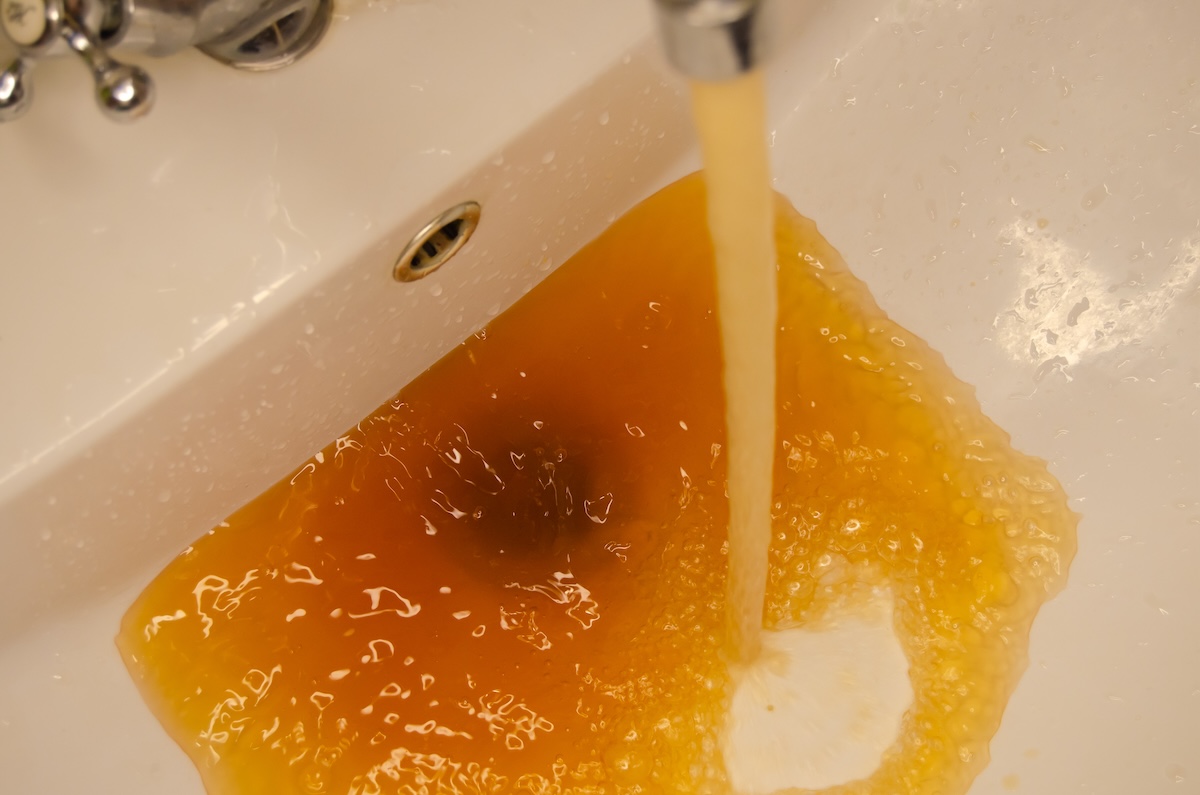
Problem: If your water looks cloudy or rusty, it typically indicates a high amount of iron or manganese in the water. While this is not usually a direct health hazard, these contaminants can cause significant aesthetic problems, like rusty-orange or black staining. You will often see the stains on plumbing fixtures, sinks, tubs, and water-using appliances. And in some cases, it can even stain your clothing after using the washing machine.
Solution: The surest method for dealing with high iron or manganese in your household water is to invest in a water softener with an iron removal feature. Depending on the size of your home and how prevalent the issue, you can choose a point-of-use softener or a whole-home water softener as an effective solution for reducing iron levels. Another option is to install an oxidizing filter to help eliminate iron and prevent staining.
3. Your water smells like rotten eggs.
Problem: It’s never pleasant when your water has an odd scent or taste, such as a rotten egg odor. Schwachenwald explains that this is typically caused by “hydrogen sulfide gas from bacteria reacting with magnesium in water heaters.” It can occur outside of your water heater as well, though this is less likely for most homes. When hydrogen sulfide occurs in high enough concentrations, it causes the rotten egg stink, leaving an unpleasant odor on hair and clothing, while accelerating the corrosion of metal parts in appliances.
Solution: If the issue seems to occur in both the hot and cold water, then it’s best to install a whole-house activated carbon filter to remove the hydrogen sulfide from the water as it enters the home. You can also invest in a specific sulfur water treatment system designed specifically to remove these odors and improve the overall water quality. However, if the smell is only present in your hot water, Schwachenwald says that you can often fix this issue with “water heater flushing, but if it keeps happening, the element in the water heater may need to be replaced.”
4. There’s a gritty texture left in your sinks, and water from the faucet is brown.
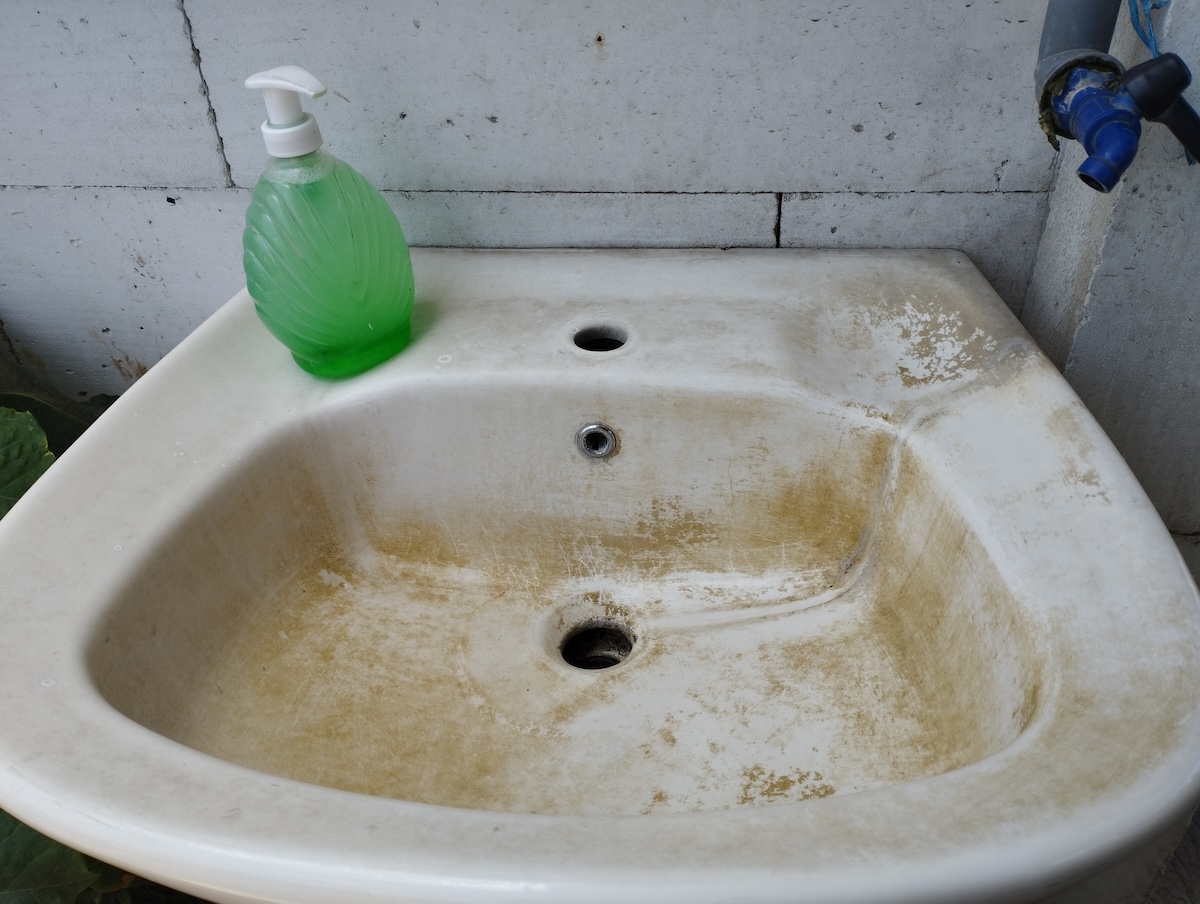
Problem: The sight of brown water flowing out of your tap can be disconcerting, but this is often a minor issue caused by disturbed plumbing, such as when the water to the home is shut down for a short period of time. Similarly, a gritty texture in your sink usually indicates the presence of sediment, rust, or mineral buildup that has been dislodged. Schwachenwald mentions that it often “comes from aging pipes or water heater sediment. They should really be flushed every year to get rid of mineral buildup.”
Solution: Before you take any drastic measures, Schwachenwald suggests “running the cold water for a few minutes. If the brown color stops, it was caused by sediment disturbance, but if it keeps happening, it is time for a water heater flush or evaluation of your aged plumbing.” In extreme cases you may need to replace aging pipes in the home, but if you suspect the sediment is entering from outside your house, then installing a sediment filter with a low micron rating can effectively remove particles and improve water clarity.
5. Your water has a musty smell and fishy taste.
Problem: A musty smell or fishy taste point to compounds that have been released into the water due to decayed vegetation. Generally, this type of issue is associated with different forms of algae. While it is not toxic, the scent and smell are unpleasant. For well water, these odors can indicate contamination from surface runoff or bacterial buildup within the well system.
Solution: These odors are not usually harmful, but it’s still recommended to have your water tested, especially if you use a well system. In the short term, you can run cold water for several minutes to flush out stagnant water and check if the smell disappears. If the home has a water filter, then this could be a sign that the filter is saturated and needs to be replaced. Musty odors that persist should be reported to your municipal water supplier.
Best Home Water Testing Kit

Tap Score Advanced Home Water Test Kit
See ItThe Tap Score Advanced water test kit is ideal for analyzing all kinds of drinking water, whether it’s from a municipal water utility or a private well. The kit includes three vials with easy instructions for sampling directly from the faucet and a prepaid shipping label to submit the samples for testing. Tap Score’s EPA-certified lab checks 114 water-quality parameters and posts the results to your account about 2 weeks after shipping, or 10 days after the lab receives the samples. The results come with a personal “tap score” calculated by the company’s algorithm based on your water’s aesthetics, its impact on your health, and its impact on your plumbing.
6. Your sinks have a slimy, black or reddish-brown residue.
Problem: One of the more serious situations you could encounter is a slimy, black or reddish-brown residue in your sinks, faucets, and water-using appliances. This residue is typically made up of bacteria colonies and bacterial waste. Seeing this type of residue in your drains is relatively harmless, but when it is coming from your clean water fixtures, it can indicate that the water is contaminated. Unfortunately, even well-operated, state-of-the-art treatment plants cannot always ensure that drinking water is entirely free of microbial pathogens.
Solution: The first step you should take if you suspect bacterial contamination is to have the water tested. This test will identify the type and concentration of the bacteria. In the short term, you should boil all water before using it and consider installing a whole-home water filter with a sub-micron rating. For long term bacterial contamination issues and preventative measures, consider installing an ultraviolet sterilization disinfection system or an automatic chlorinator that will continuously inject safe levels of chlorine into the water to eliminate bacterial growth.
7. There are blue-green stains on your plumbing fixtures.
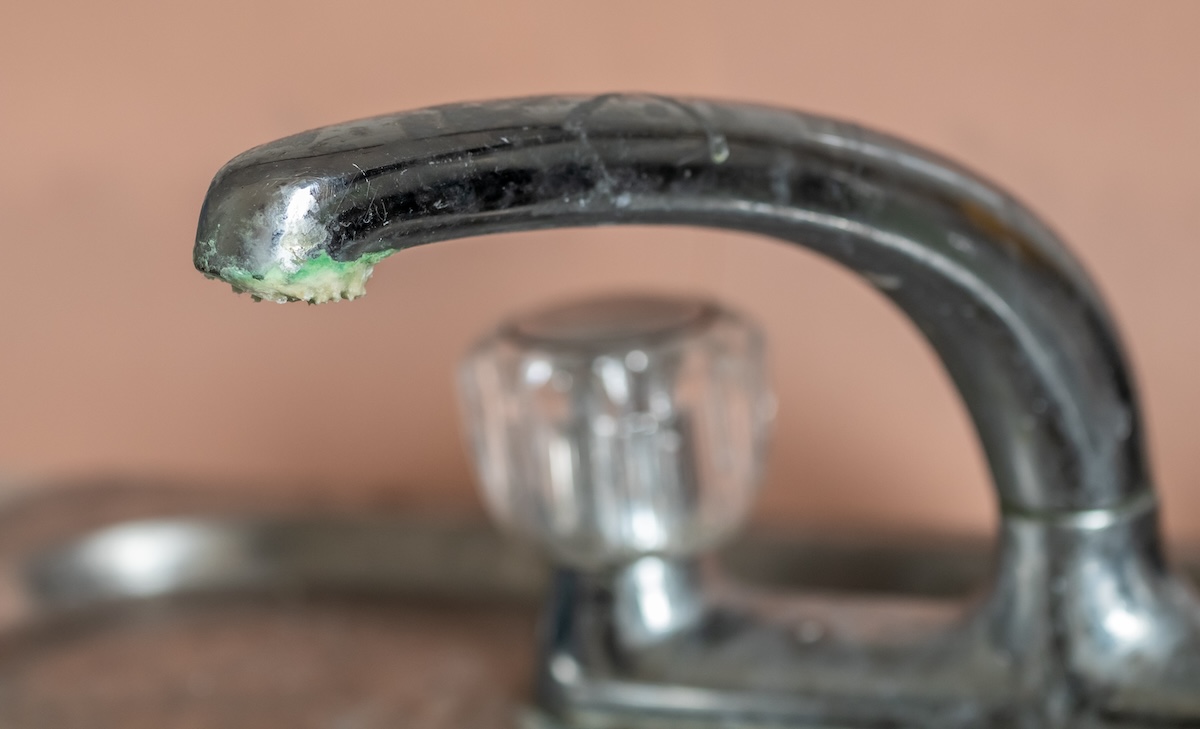
Problem: When the pH of the water is low, the water is acidic. This acidic state can cause those blue-green stains on sinks, tubs, showers, and toilets. Acidic water isn’t generally a health hazard, but it does pose a risk to your plumbing infrastructure. Exposure to the water can lead to premature damage of the pipes, fixtures, and metal components of your water-using appliances.
Solution: Testing the water will confirm whether the water is acidic or not. Acidic water can be treated by installing an acid-neutralizing filter or putting in a soda ash feeder to raise the pH. “Over half of our service calls involve water quality or appearance concerns. Water is always interacting with pipes, valves and fixtures, so if it is persistent, worsening, or affecting multiple fixtures, call a plumber,” says Schwachenwald.