We may earn revenue from the products available on this page and participate in affiliate programs. Learn More ›
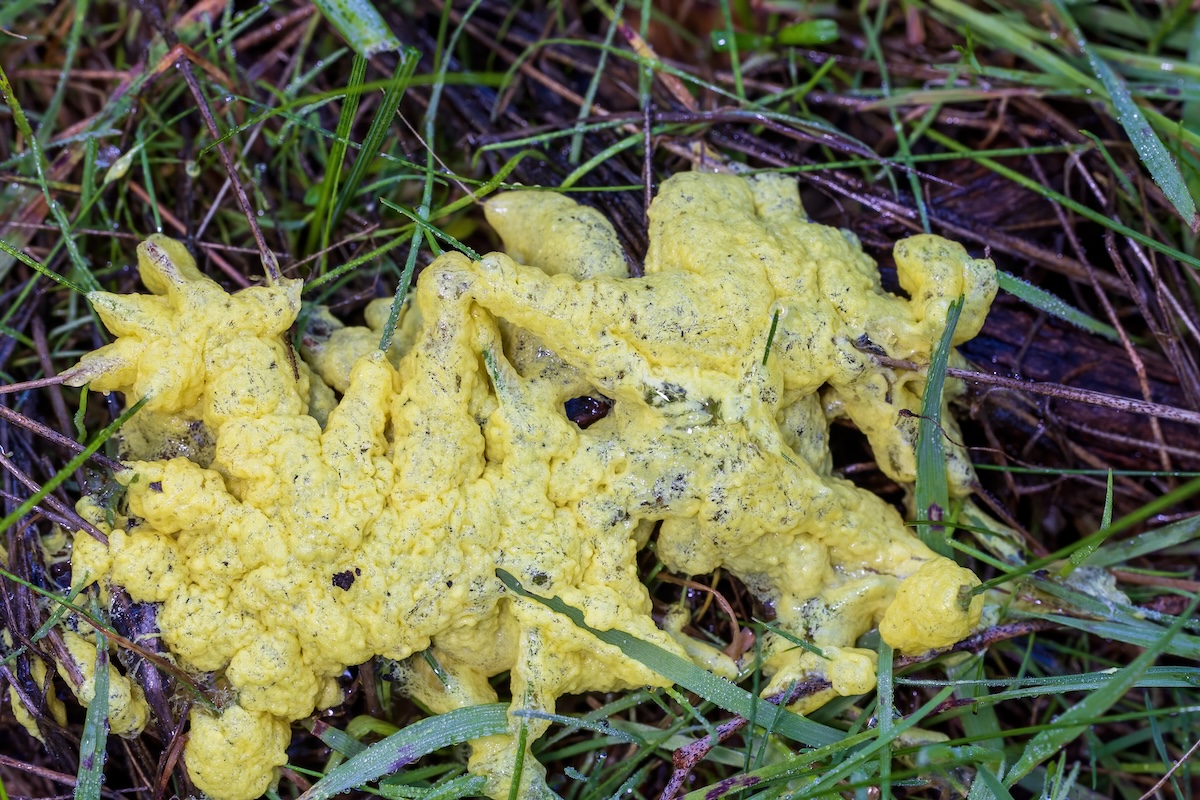
On a lovely walk in the woods one day, you come upon a striking yellow mass puddled on mulch or leaf litter. It’s an interesting, low-growing flower, you might think. Upon closer inspection, however, you wonder if a pooch had left the contents of her stomach along the side of the trail.
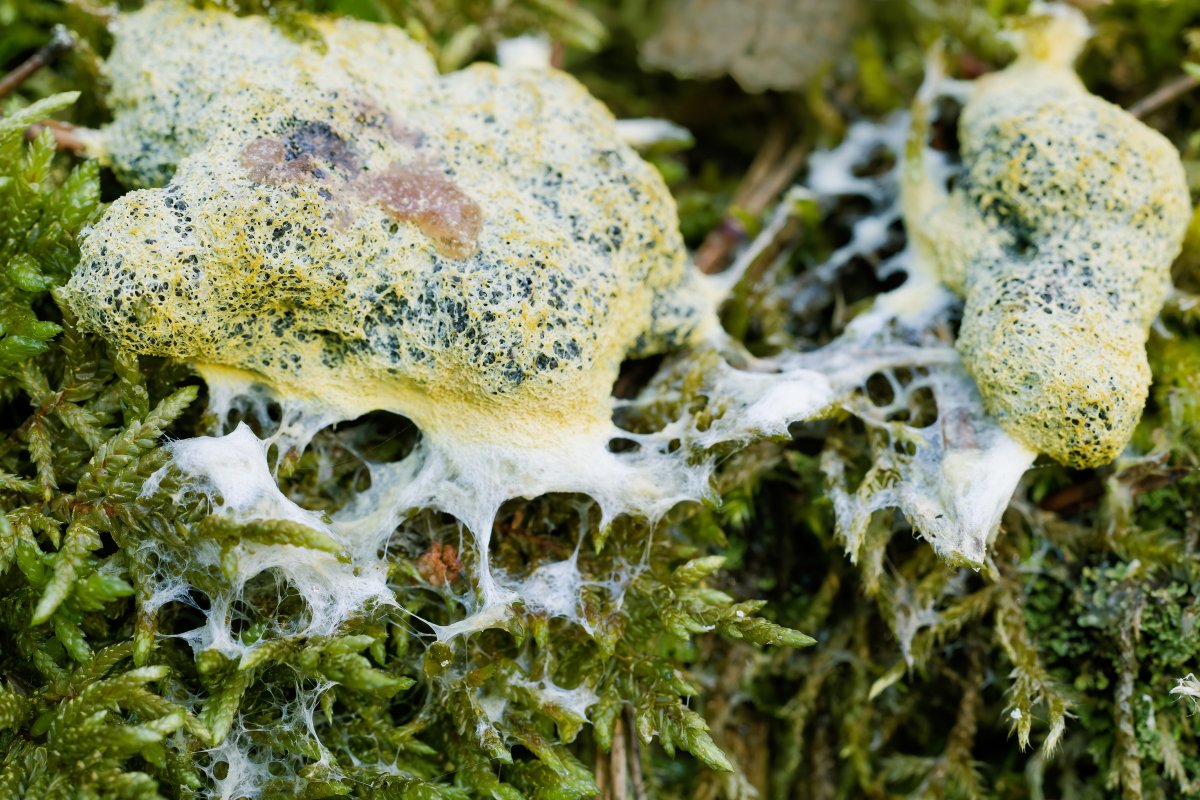
Odds are, it’s neither flower nor regurgitated breakfast. It’s probably dog vomit slime mold, or Fuligo septica, also known colloquially as scrambled egg slime. Neither a mold nor a fungus, it is an amoeba-like, single-celled organism. The mass you see is thousands or millions of cells that have merged to form a single unit (a plasmodium) that feeds on decaying or dead organic matter.
What causes dog vomit slime mold?
Dog vomit slime mold occurs when a group of Fuligo septica spores settle into a welcoming environment. Carried by the wind, insects, or other animals, they find a home in shady, humid areas with plenty of moist organic material, such as mulch or decaying leaf matter.
You might find a growing pile of yellow yuck lawn fungus in your grass if you’ve been a bit generous with irrigation or in areas with poor drainage. Or, the dog barf fungus might be attracted to the fresh, healthy mulch you just put down around your large shade tree. You’ll more typically find scrambled egg slime in spring or fall, because the organism does best in moderate temperatures, though timing can vary based on climate.
Is dog vomit slime mold harmful?
Despite its appearance, dog vomit slime mold—sometimes called dog vomit fungus— is not harmful to people, pets, or other animals. While some folks with specific allergies might see a mild response, in general, this organism is harmless. In fact, it performs a beneficial function, breaking down organic material into the soil and enriching it.
Additionally, compounds in dog vomit slime mold have shown potential for use in antibiotics, antimicrobials, and cancer treatment. Dog vomit slime mold might also be helpful in environmental site remediation because of its ability to absorb toxic heavy metals, such as zinc, and convert them into inactive, less harmful forms.
Fuligo septica Life Cycle
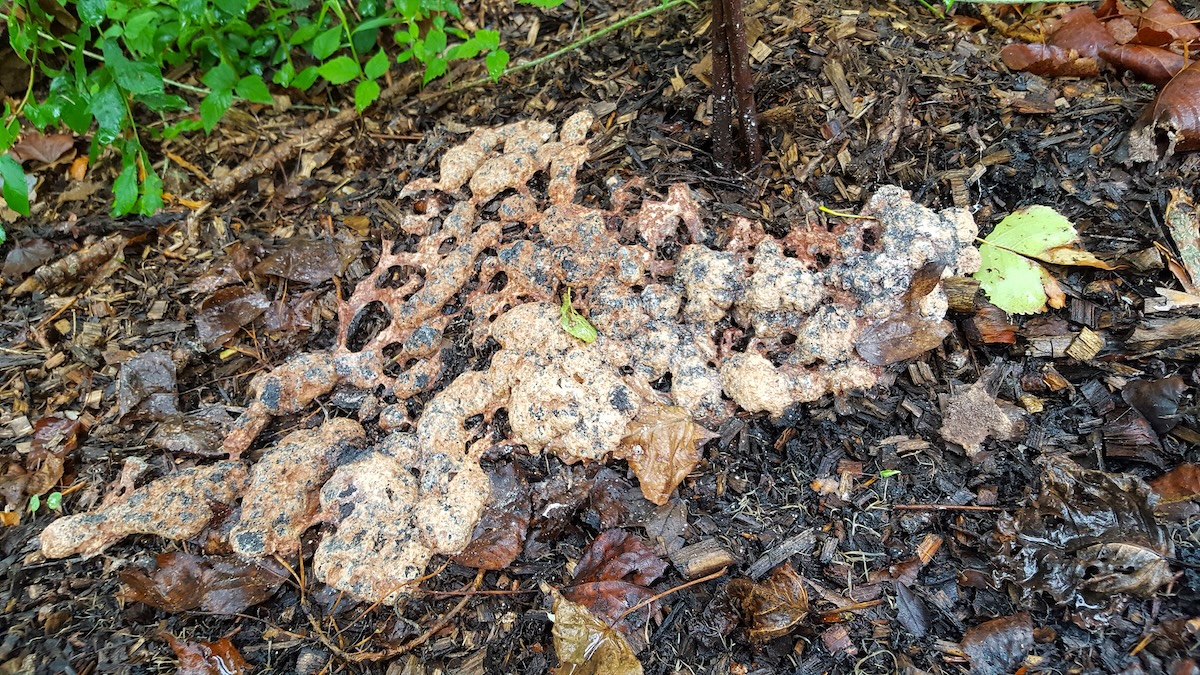
Dog vomit slime mold begins its life in your yard as a microscopic spore blown in by the wind or carried in by an insect or animal. The spore might have been blown or carried about for years or even decades. Once it lands in a conducive environment, however, the spore absorbs water and begins to develop into an amoeba-like organism. Several of these come together to work as a team to gather resources, initially forming an egg-white-like blob that can move around at a very slow pace, searching for food.
As food supplies dwindle, dog vomit fungus in mulch and other places turns yellow practically overnight, which is, of course, when humans tend to notice it. Over 24 to 48 hours, it dries out, becoming tan or brown. It eventually breaks open and releases millions of spores.
How to Clean Up Dog Vomit Slime Mold
Dog vomit slime mold isn’t dangerous, so there’s no urgent reason for you to remove it. If you just can’t stand the looks of it, however, here are some ways to get rid of it.
• Scoop it away. If you’re wondering how to get rid of dog vomit slime mold, you can simply use a shovel to scoop the pile of yuck into a plastic bag, which you can then seal and dispose of.
• Rake it into the surrounding area. Break up and distribute the pile using a bow rake. Exposing it to air will help dry it out more rapidly.
• Avoid overwatering. Prevent slime mold from taking hold by not overwatering your lawn or other parts of your garden, or regrading areas that retain water.
• Switch mulch. You might want to try using a different type of mulch that is less welcoming to dog vomit slime mold. A nonorganic mulch, such as pebbles, might be a good choice.
A Case for Leaving the Mold Be
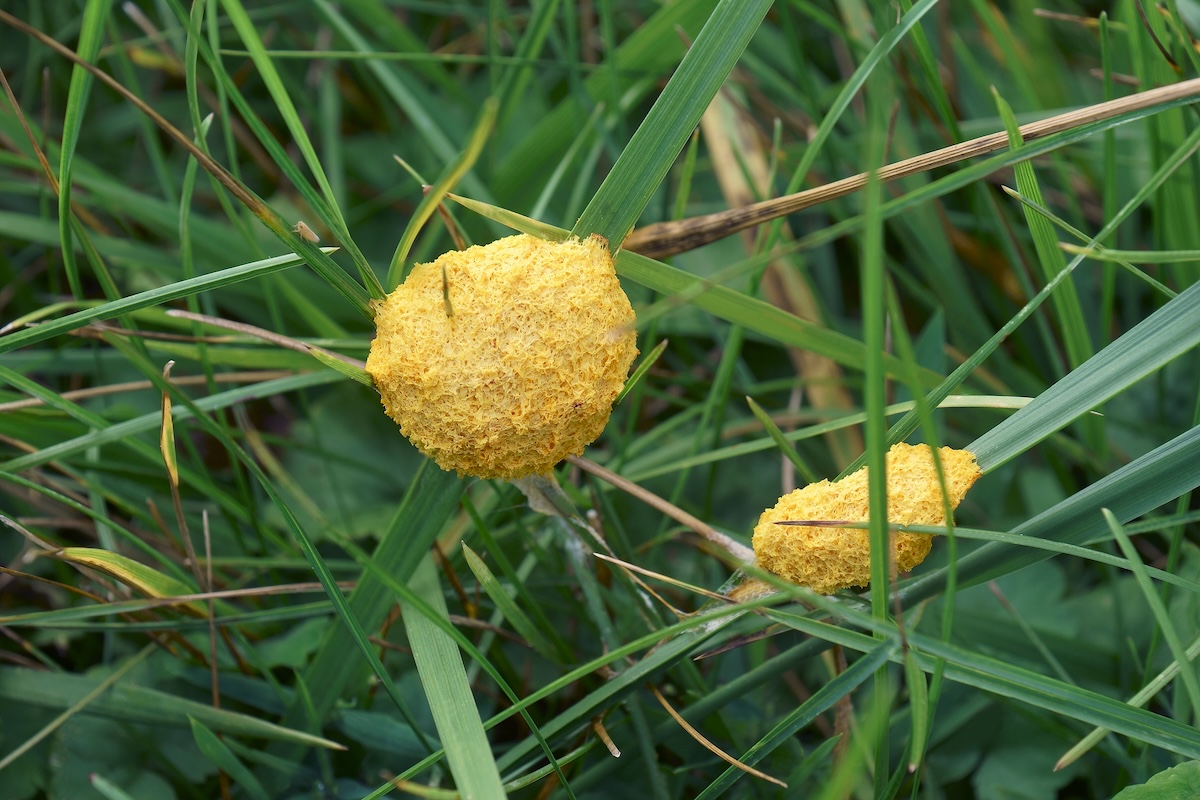
When you consider that Fuligo septica and its cousins have survived and thrived on our planet for about a billion years, and that the organism exists in its vibrant (albeit gloppy) yellow form for just a day or two, maybe you’ll consider just leaving it to do its thing for a few more hours. It’s harmless, it enriches your soil, and it’s a striking example of Mother Nature’s astonishing interconnectedness and resilience.
FAQ
Q. Does dog vomit slime mold harm nearby plants?
Almost always, the answer is no. The only circumstance in which this slime mold might harm plants is if a particularly heavy patch develops over small seedlings and suffocates them. Slime molds have been seen to grow up the stems of plants, but this is rare.
Q. Are there different types of slime mold?
There are several classifications of slime mold, and they encompass about 1,000 species. They are found all over the world, in many climates and at many elevations.
Q. Can dog vomit slime mold grow indoors?
It’s unlikely that you’d find dog vomit slime mold growing inside your home, but it is possible if, for example, a water leak has caused structural wood or decorative trim to rot and some spores work their way indoors.