
We may earn revenue from the products available on this page and participate in affiliate programs. Learn More ›
No matter how skilled you are with a paint brush and roller, painting water-based paint over oil-based paint without intervention and proper preparation is a problem waiting to happen. Because water-based paint isn’t able to adhere to oil-based paint, you may see cracking, peeling, or even sheeting off of the paint, even if it feels dry.
The good news is that it’s pretty easy to test a surface and determine if there’s oil-based paint on it—and the simple methods below require nothing more than common household supplies.
1. Do a scratch test.
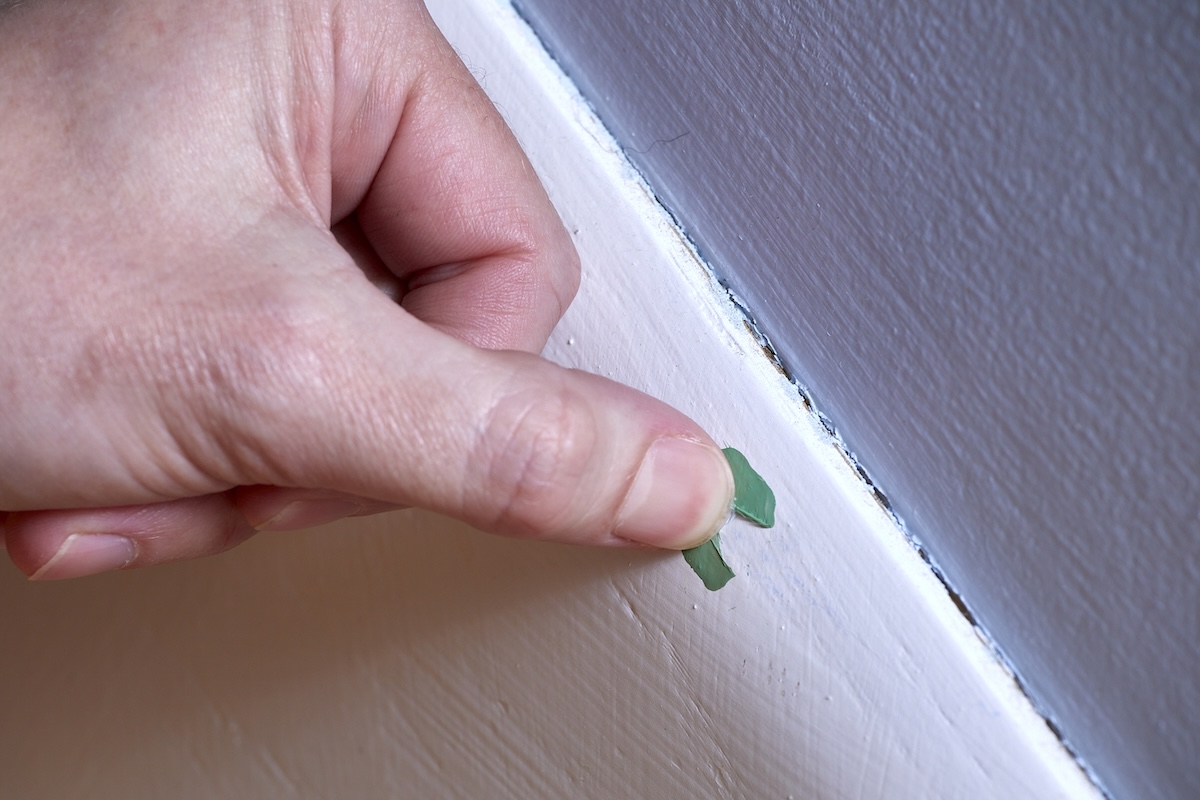
While the scratch test doesn’t provide an immediate result, it only requires water-based paint and a paint brush. And you just have to wait until the paint is dry—just a few hours or overnight—to test it. Here’s how to test for oil-based paint.
- Choose an inconspicuous spot on the painted surface to test.
- Paint a little spot of water-based paint over the paint with a paint brush.
- Let the paint completely dry. Waiting overnight is a good idea.
- After the paint is dry, try to scratch it off with a fingernail. If the new paint comes off easily, then you’ll know the surface has oil-based paint.
2. Rub the surface with nail polish remover.
Cotton ball
Acetone-based nail polish remover
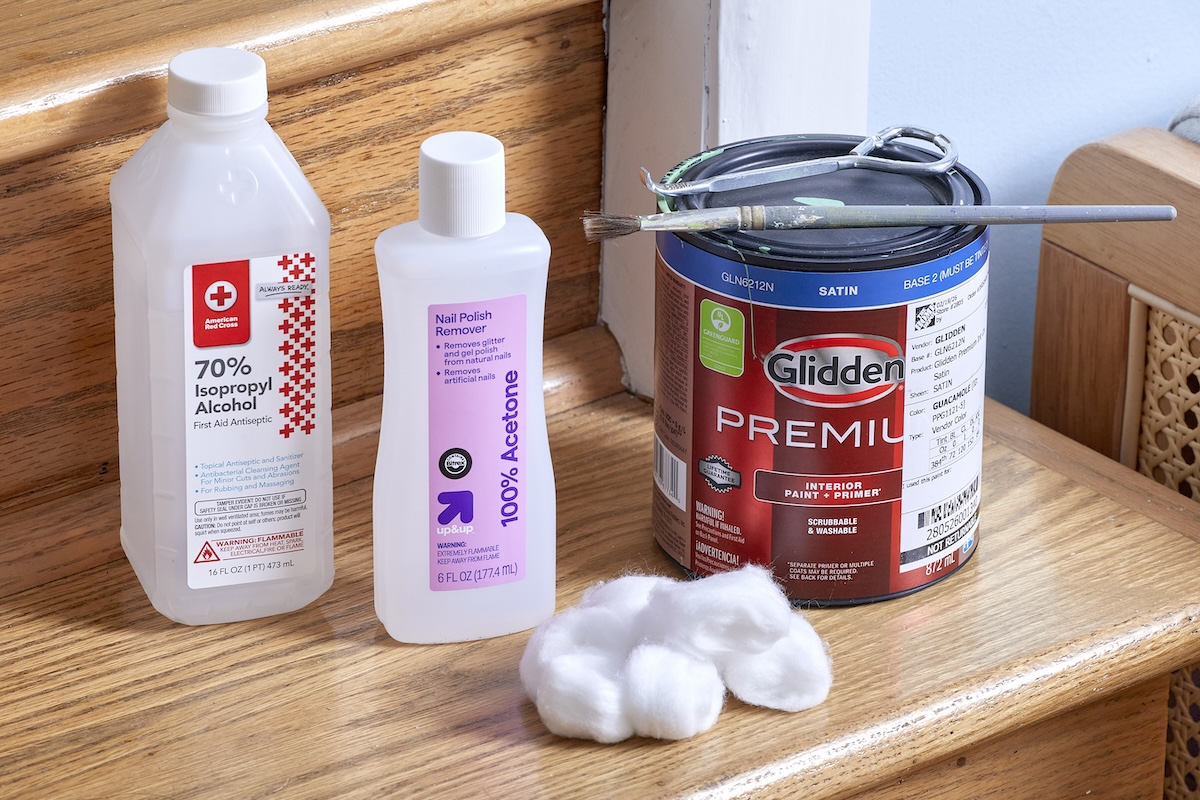
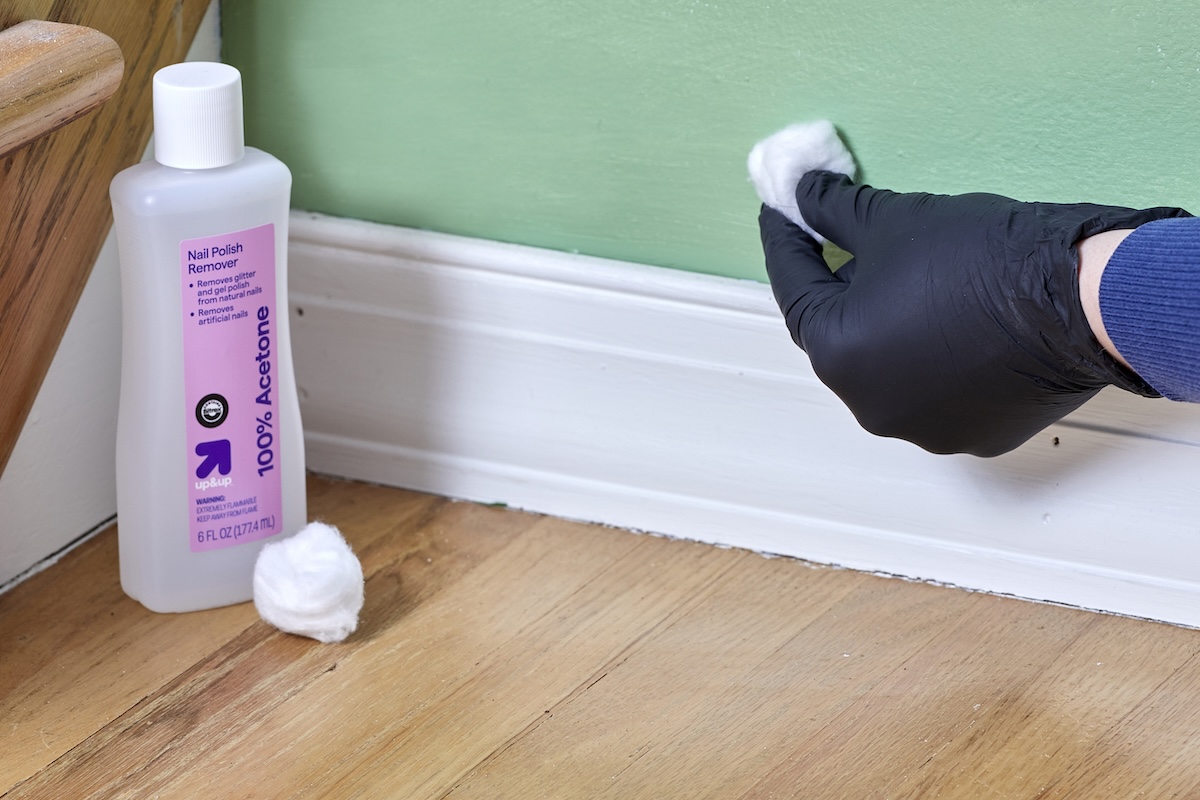
If you want to paint the surface right away, you can use an acetone-based nail polish remover to quickly determine whether the paint on the wall is oil-based. It’s important to select a nail polish remover that contains acetone.
- Saturate a cotton ball with acetone-based nail polish remover.
- Dab the cotton ball on the painted surface.
- If the painted surface looks cleaner and shinier and does not come off on the cotton ball or if it softens, then it’s oil-based paint. However, if you see paint on the cotton ball, the surface has water-based paint on it.
3. Rub the surface with isopropyl alcohol.
Cotton ball
Isopropyl alcohol or rubbing alcohol
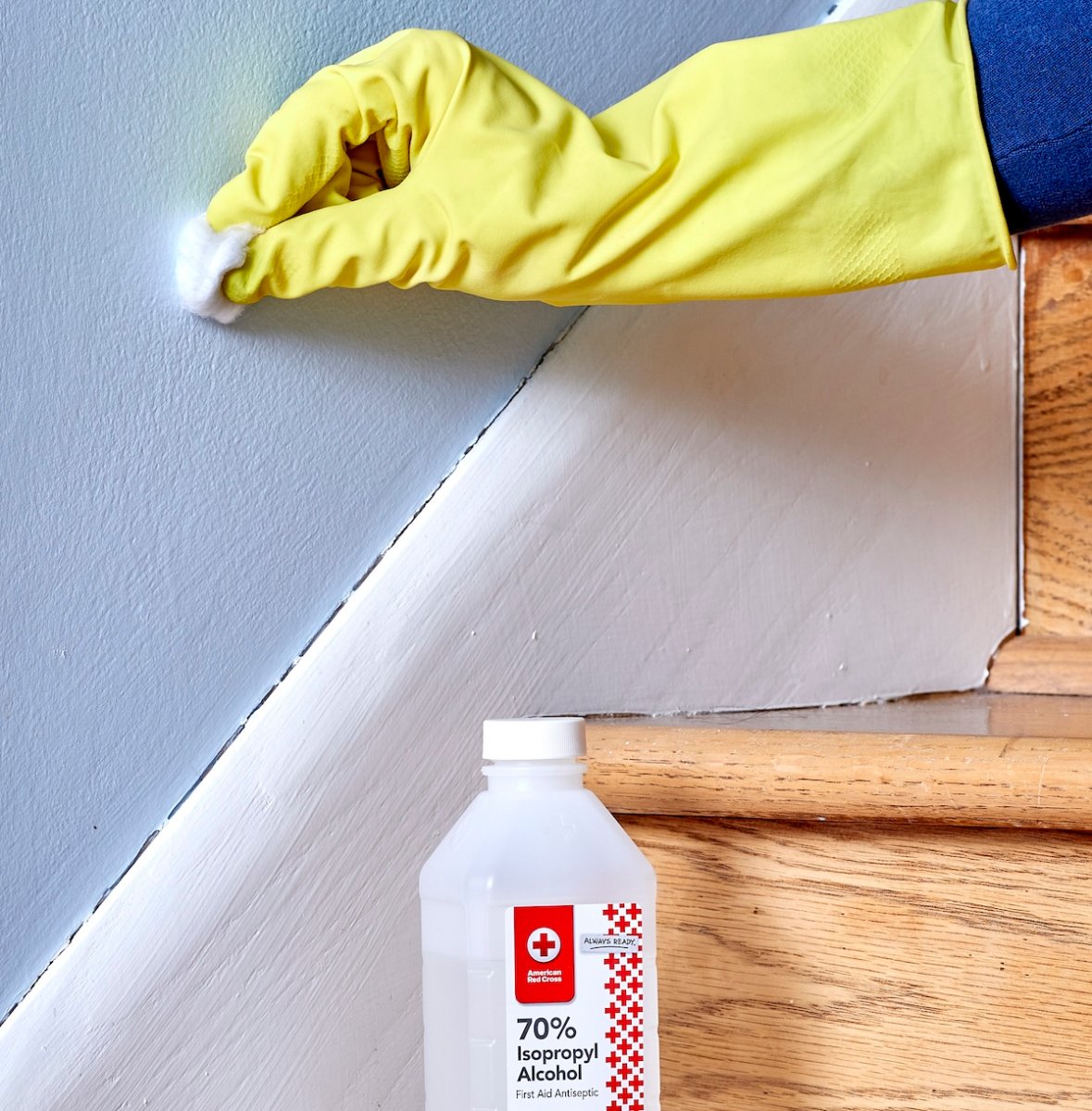
If you don’t have acetone-based nail polish remover or time to wait for paint to dry for the scratch test, test the surface with isopropyl alcohol.
- Saturate a cotton ball with isopropyl alcohol.
- Apply the cotton ball to the painted surface.
- Lift the cotton ball off of the surface and see if the paint transfers on to the cotton ball.
- If paint doesn’t transfer, then it’s oil-based paint.
What to Do If You Find Oil-Based Paint
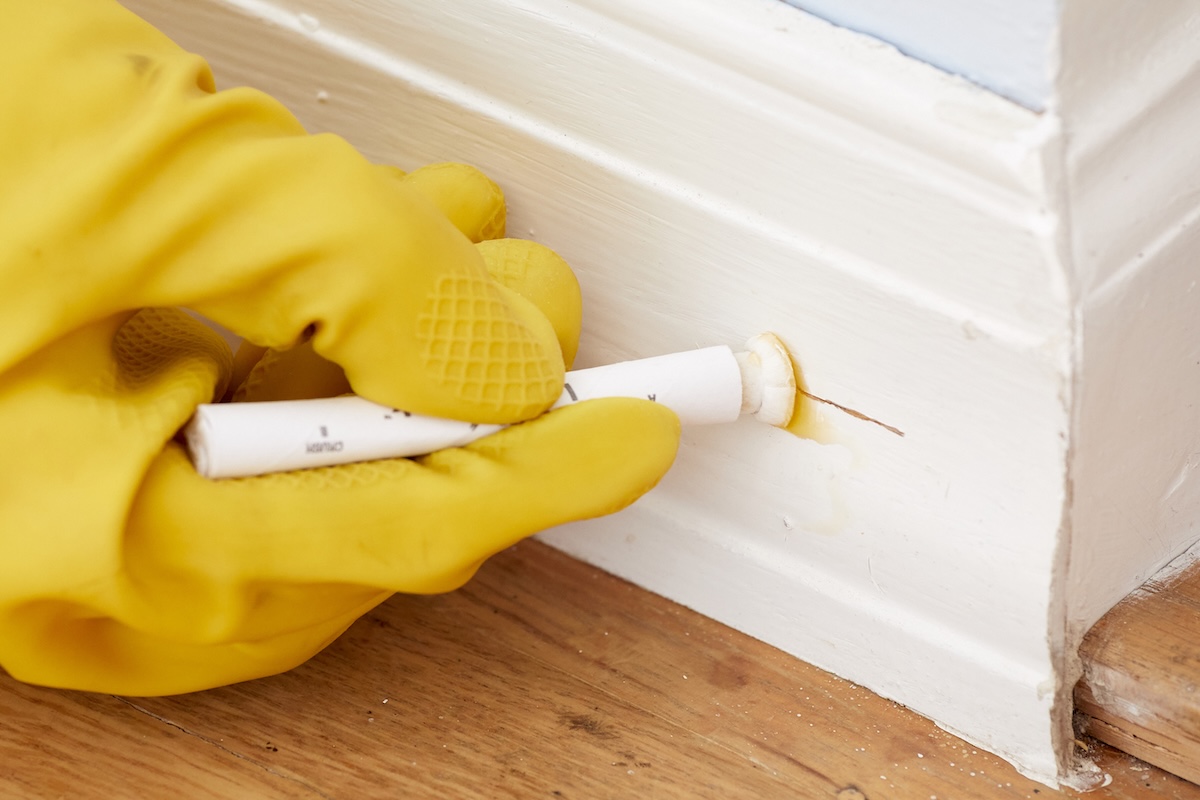
Lead paint test kit
Rag
Sandpaper
Bonding primer
Paint brush
If the surface you want to paint is covered in oil-based paint, you can still apply a new coat of paint. However, it’s important to test the paint for lead before doing anything else. If it does not contain lead, you can either use oil-based paint or do some simple prep work so that water-based paint, like a latex interior paint or stain, will adhere.
The Best Home Lead Paint Test
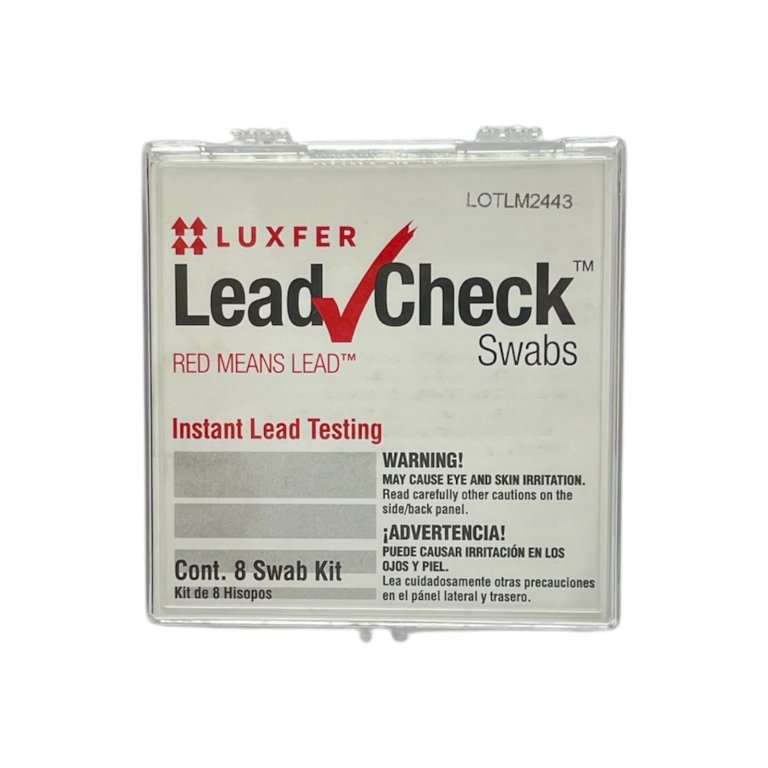
LeadCheck Disposable Lead Test Kit
The LaadCheck kit is accurate, easy to use, and one of the only two lead test kits recognized by the EPA. Read the full review.
See It at Lowe's See It at WalmartHere’s how to prep the surface.
- Test the painted surface for lead. If it does not contain lead, proceed to the next step. If it does test positive, you’ll want to learn more about how to safely remove lead paint.
- Clean and remove any dirt or grease.
- Sand to remove the paint sheen.
- Prime with a bonding primer so the latex paint or stain can adhere.
Final Thoughts
If you want to paint old furniture or walls that haven’t been touched in many years, you may be facing oil-based paint that doesn’t let water-based paints like latex adhere. The good news is that it’s fairly easy to find out if a surface is covered in oil-based paint. Take the time to test so that your paint project is successful. Not finding out can turn a fairly easy DIY project into a mess that needs to be completely redone.