We may earn revenue from the products available on this page and participate in affiliate programs. Learn More ›
Ever since someone put a club and stone together to make the first axe, it has remained a handy tool that has made life easier. Sure, you could fire up a chainsaw to do many things that an axe can do — like chopping wood for fuel, creating wood sculptures, prepping building materials, and clearing land, but an axe doesn’t require any fuel, is way easier to transport, and quieter.
While it may be one of the original tools that humans used, it’s still a tool that comes with risks and it’s important to know how to use an axe safely. It’s also crucial to know the differences among the various axes so you know which one will best suit your needs and how to use it safely and with the right technique.
Parts of an Axe
It’s helpful to know the names for the main parts of an axe so that it’s easier to compare various models, and decide which type is right for your needs. Here are some key axe parts:
- Axehead: The axehead is the metal cutting part of an axe.
- Eye: The eye is the hole in the axehead where the handle fits.
- Cheek: The cutting blade of the axehead is the cheek.
- Edge: The edge is the cutting part of the axe. It’s also called the blade or bit.
- Poll: The poll is the back end of the axehead. It’s usually solid metal that helps balance and control the axe.
- Handle: The handle is the long part of the axe that you grip. It can be made from wood, steel, or fiberglass.
- End knob: The bottom of the handle is the end knob.
Axe Safety Tips
It’s not hard to imagine how things can go really wrong when using an axe. In addition to practicing with the axe so you feel confident using it, there are guidelines you should follow to stay safe.
- Never work with an axe when you are tired or distracted.
- Always be careful walking in the woods with an axe, as tripping can be dangerous. Hold it with the blade pointing away from you.
- Look around you for bystanders before swinging an axe.
- Never store an axe within reach of children.
- Make sure you have a steady stance on solid ground that’s not covered in anything slippery like wet leaves or ice before swinging an axe.
- Never use an axe in the dark or at dusk.
Techniques for Using an Axe
While it may seem like power is the most important part of successful axe-swinging, control and technique have greater influence on success. Even though the weight of the axe helps increase the force, trying to swing an axe that’s too heavy for your abilities is never a good idea. You’ll have better success if you reach for an axe that’s a comfortable weight.
No matter the task, the technique for using an axe is similar.
- Grasp the handle near the top with your dominant hand and the bottom of the axe handle with your nondominant hand.
- Pull the axe back (either overhead for chopping or diagonally upwards or laterally for felling).
- Aim at the mark you want to strike.
- While keeping your wrists in line but not locked, swing your arms and follow through with your body.
Felling
Most felling strokes are diagonal, but some are horizontal to create a notch in the tree so it will fall. Always position your body (or halt your swing) so that the follow-through does not hit your body. And never stand in the path of where the tree may fall.
Best Overall Axe
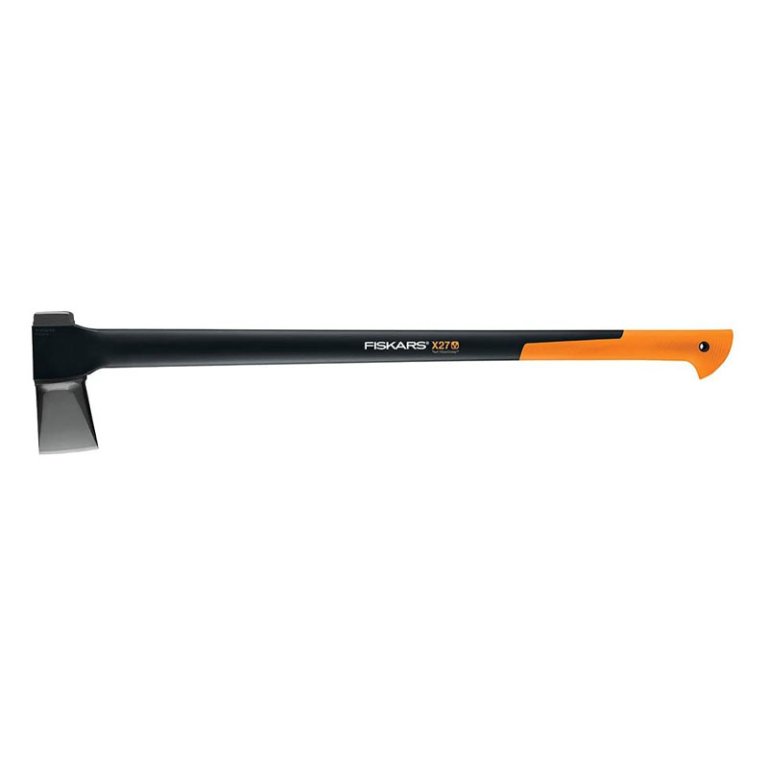
Fiskars X27 36-Inch Super Splitting Axe
The Fiskars X27 is 36 inches long and weighs 6.3 pounds; requires strength to wield but cuts decisively. Read the review.
See ItLimbing
Limbing can be more dangerous than felling because you are dealing with smaller pieces and a great deal of sharp force near your body. Often, limbing happens while you are standing on a fallen tree. But if you aren’t, make sure there is ample distance between you and the arc of the axe swing. It’s usually easiest to start at the bottom of the tree and work your way to the top branches, swinging in the direction of the top of the tree as you go.
Bucking
After a downed tree is limbed, it’s ready to be bucked into transportable lengths. Make sure the log won’t roll before you begin. Then, stand on the log and strike the axe below and between your feet.
Log Splitting
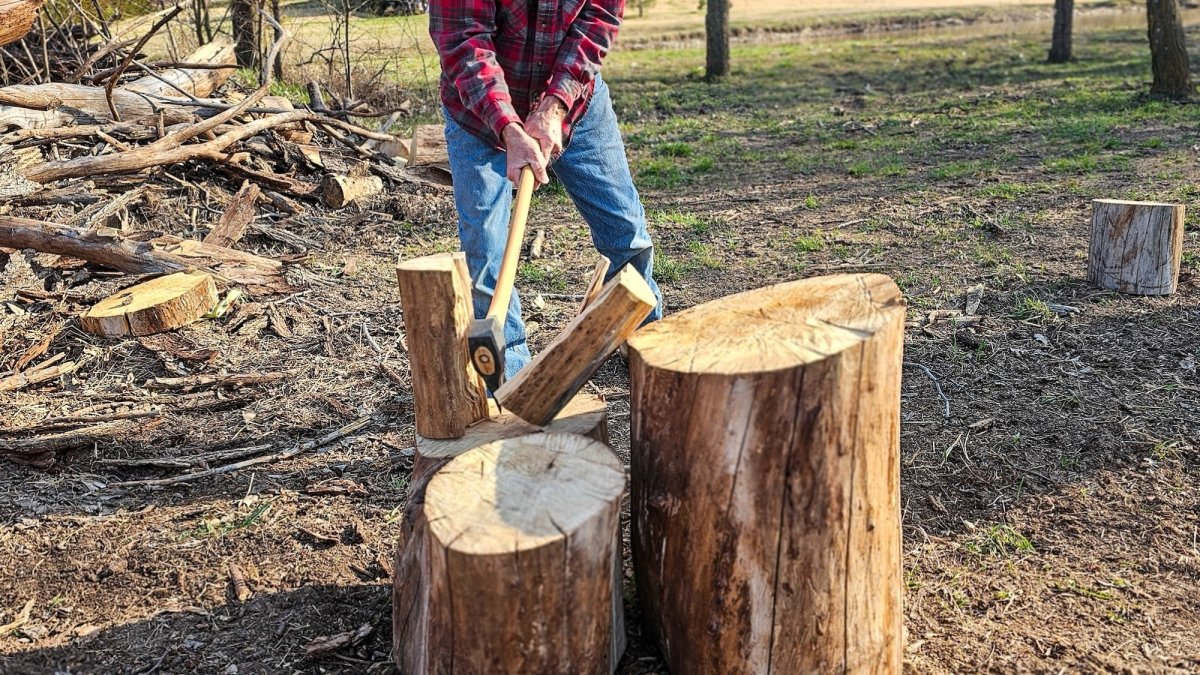
Cutting logs along the grain is called splitting. A split log dries out faster, and will be ready quicker for a fireplace or fire pit. After placing a log vertically on a chopping block, aim at the face and swing the axe to make contact.
Axe Throwing
A competitive activity that’s become popular in recent years, axe throwing is usually done in a controlled space. While standing with your nondominant leg forward and at least 12 feet away from the target, pull the axe back over your head. With arms slightly bent, release the axe forward. Just like in golf, follow-through is essential.
Tips for Maintaining an Axe
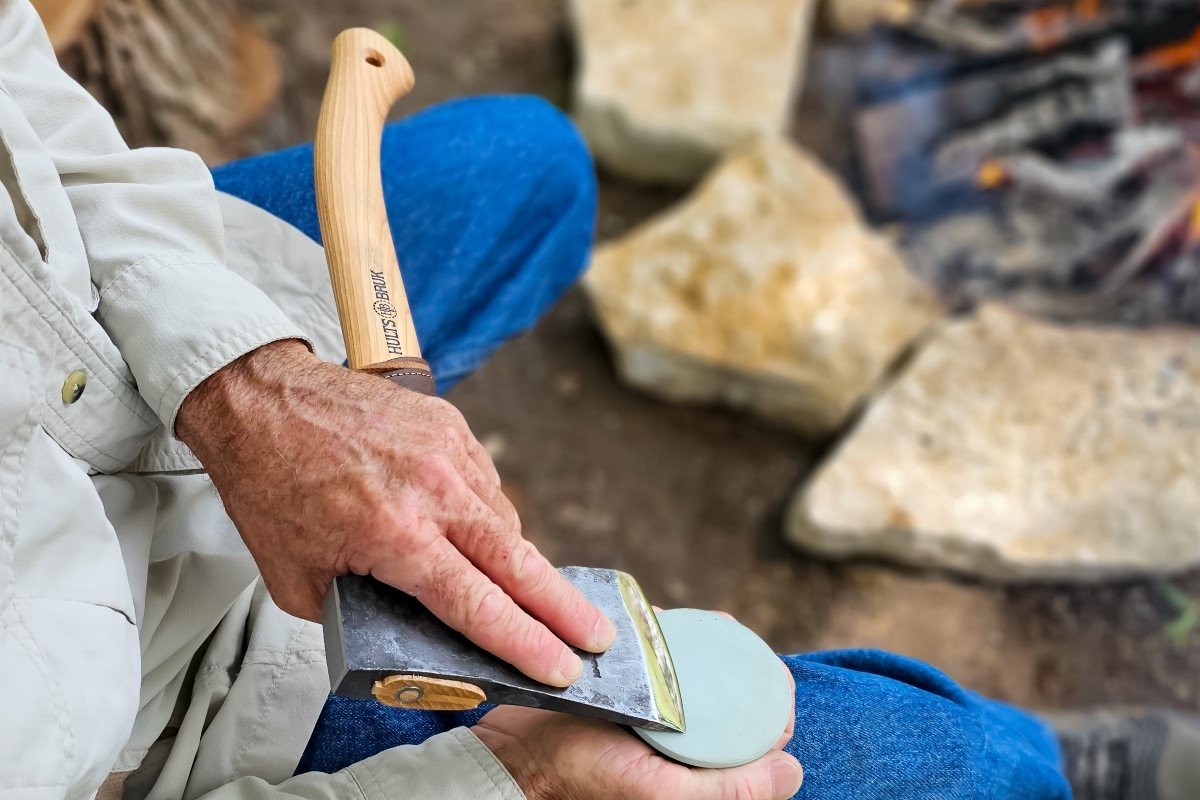
Your axe will stay in great shape for a long time with proper care and maintenance. It only takes a few minutes after each use to keep it in fine shape. Plus, it will benefit from oiling and sharpening once a year.
- Prevent rust by wiping it and oiling the head after each use.
- Store your axe in a cool, dry location and keep it in a sheath.
- Maintain wood handles with oiling annually.
- If the handle becomes rough, lightly sand and reoil it.
- Sharpen your axe once a year. If you use it often, sharpen it more often.
Final Thoughts
Safely using an axe depends on careful planning about where and when you use the tool. It’s essential to select the right axe based on the task. And it takes practice to know how to hold an axe and how to swing an axe with ease. Never attempt to swing an axe if you feel nervous, if it’s dark out, or if people or pets are within your swing zone.