We may earn revenue from the products available on this page and participate in affiliate programs. Learn More ›
Tropical plants won’t overwinter outdoors in much of the U.S., but I’ve found ways to keep my potted greenery healthy and beautiful indoors even as winter winds blow outside, and I’d like to share my tips with you so you can enjoy tropical beauty year-round, just as I do.
Before we get started, please note that you shouldn’t despair if your tropicals drop quite a few leaves and look pitiful for a while after being brought inside. I learned not to panic when that happens, as it is just their way of adjusting to lower light levels and lower humidity.
I choose tropical plants that bloom well indoors during winter.
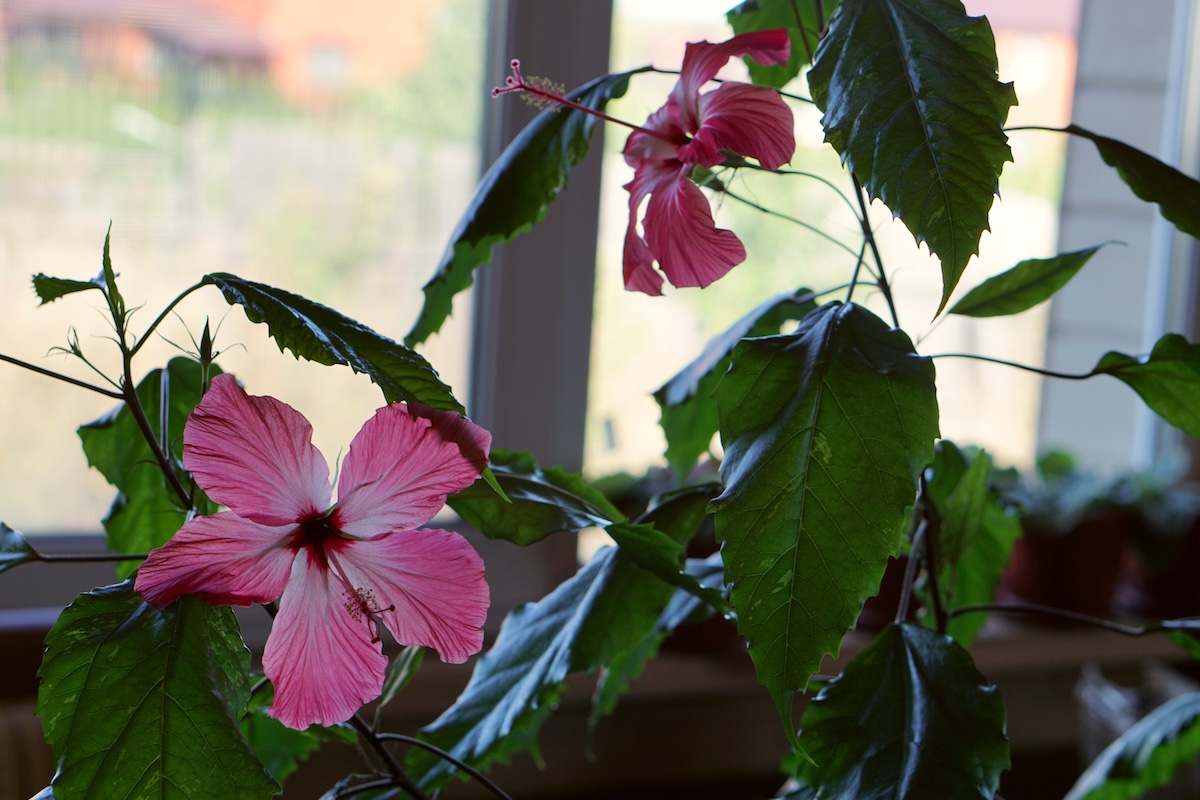
Although there are some plants I bring indoors to overwinter just to keep them alive until they can bloom outdoors the following summer, I also keep a few in my collection that I know will flower under lights in winter. These include tropical hibiscuses, mandevillas, small flowered allamandas such as nerifolia, thunbergias such as sky vine, and justicias such as the variegated shrimp plant.

I give them at least 12 hours of light daily.
I place my tallest tropical hibiscus in a large south-facing front window where it often continues to bloom off and on during winter. Most of my smaller flowering plants go under grow lights in the basement, timed to run for 12 hours per day since some of the plants require short days to bloom.
Although I began with fluorescent fixtures and still have a few of the T8 type, I am gradually transitioning to LED grow lights, which provide brighter light while using less energy. I use 4-foot fixtures, placed side by side to increase light intensity.
I provide a humid environment.
Because the temperature in my basement is consistently in the 60s (Fahrenheit) during winter, the humidity there is higher than in the rest of the house, which benefits tropical plants and encourages them to bloom. If you don’t have a humid indoor location, cluster several plants together so that the moisture evaporating from each plant’s soil will provide water vapor to its neighbors.
Although misting doesn’t raise the humidity around plants for long, it does seem to make them healthier—when I remember to do it! I recommend spring water for spritzing as hard tap water often leaves spots on the foliage.
I use water to eliminate pests as well as irrigate.
I’m careful not to overirrigate during winter when plants are most vulnerable to root rot, watering most only when the surface of their soil is dry.
I sometimes use a spray bottle, filled with lukewarm water and set on “stream” to shoot aphids from the tips of plants. Alternatively, I fill a sink or bucket with water and upend my plant—using my fingers to hold its soil in place, while I swish its foliage clean. As for scale insects, I usually just scrub them off with a damp paper towel.
I avoid feeding plants until the days begin to lengthen.
The overfertilization of plants tends to encourage lots of soft new growth at their tips, which attracts aphids and other pests. Therefore, since tropicals naturally don’t grow much during the shorter days of winter, I usually don’t fertilize them at all until spring.
Excess fertilizer when the plants can’t use it also may damage their roots and “burn” their leaf edges. And too much nitrogen, which promotes foliage growth rather than flower buds, actually may prevent them from blooming. That’s a problem, as you want all the flowers you can get indoors when there aren’t any outdoors!