We may earn revenue from the products available on this page and participate in affiliate programs. Learn More ›
When a winter storm dumps a thick white blanket of the white stuff on your property, a snow blower or snow thrower can be your best friend. But which one do you need? Many often use the two terms interchangeably to describe snow removing power tools, but snow blowers and snow throwers are actually two distinct types of machines. While they serve the same purpose, they differ in size, power, snow removal ability, and price. Understanding the difference between the two is key to choosing a snow thrower vs snow blower to handle your winter snow clearing duties. Here’s what you need to know about.
Are snow throwers and snow blowers the same machine?
Snow throwers and snow blowers clear snow in the same way: Both have a spinning auger that lifts the snow and launches it through a chute as you guide the tool along a driveway or walkway. But while snow throwers do this in a single step, or stage, a snow blower uses multiple stages to move the snow. There’s also a size difference: Snow throwers are smaller, more nimble machines that can handle moderate snowfall on smaller driveways, while snow blowers are larger and capable of clearing deeper snow from bigger driveways.
What is a snow thrower?
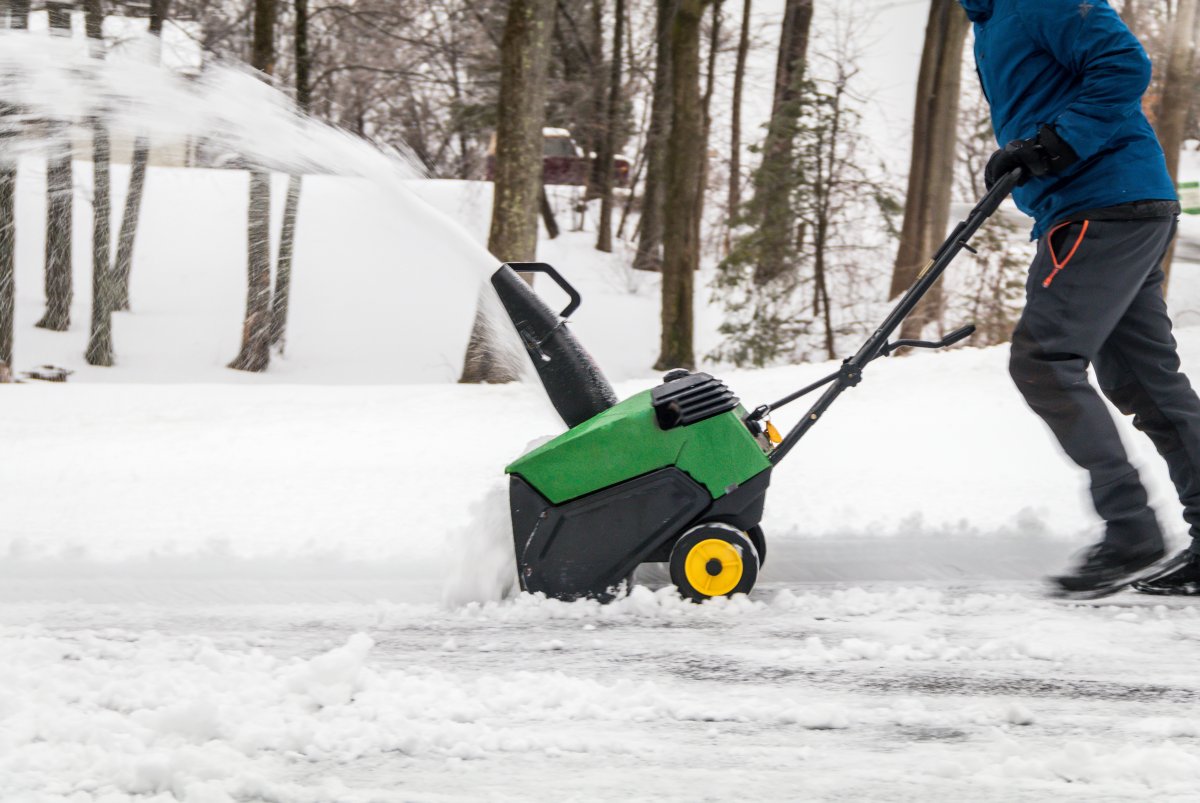
Snow throwers are ideal for removing small amounts of snow that are not extremely deep.They are single-stage machines that scoop up snow with an auger and launch snow out of a chute in a single action. Depending on the size of the snow thrower, they can clear a path that’s 18 to 24 inches wider and between 6 and 12 inches deep. Many can hurl it a distance of 15 to 20 feet, while some can send snow as far as 40 feet.
Best Budget Single-Stage Snow Blower

Greenworks 13-Amp 20" Corded Snow Thrower
This Greenworks snow thrower weighs just 32 pounds and, in our tests, was powerful enough to clear snow up to 12 inches deep. Read the review.
See ItWhat is a snow blower?
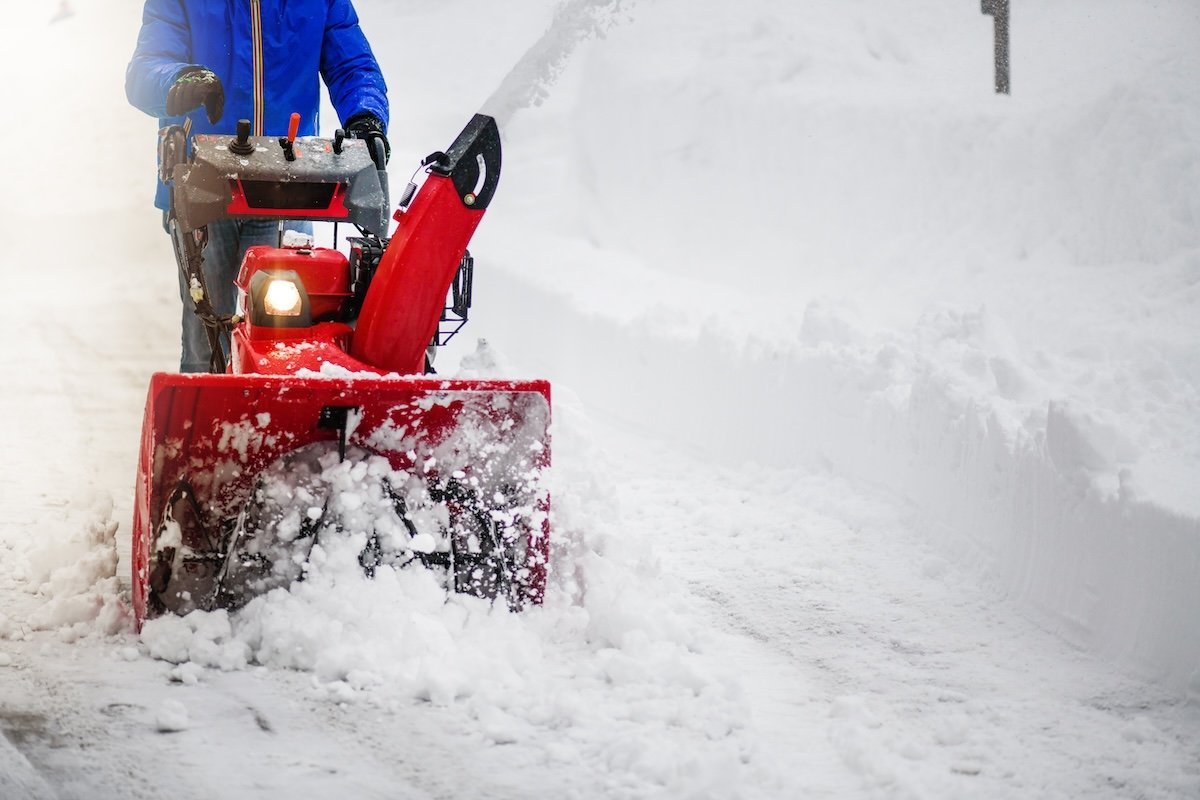
Snow blowers are more powerful than snow throwers, making them a good choice for those who need to clear larger driveways or live in areas with harsher winters that receive higher snowfall totals. Like snow throwers, snow blowers have a rotating auger that scoops up snow, but they use two or three stages to clear snow. But instead of launching snow, it sends it to a separate impeller which blows the snow out through a chute and launches it 25 to 40 feet away. Some can even send snow as far as 50 feet away.
A three-stage model is even more powerful. This type of snow blower has an accelerator that breaks up the snow, allowing it to cut through compacted icy snow and large piles of snow more quickly than a two-stage model. Snow blowers can clear a path of snow ranging from 24 to 32 inches wide and 1 to 2 feet deep. With their two stage design in optimal conditions, some are capable of launching snow up to 60 feet.
Best Cordless Snow Blower

Ryobi 40V 22″ Two-Stage Cordless Snow Blower
Ryobi’s two-stage snow blower is easy to maneuver in tight spaces, has a powerful auger, and even works on gravel driveways. Read the review.
See ItHow to Choose the Right Snow Removal Machine
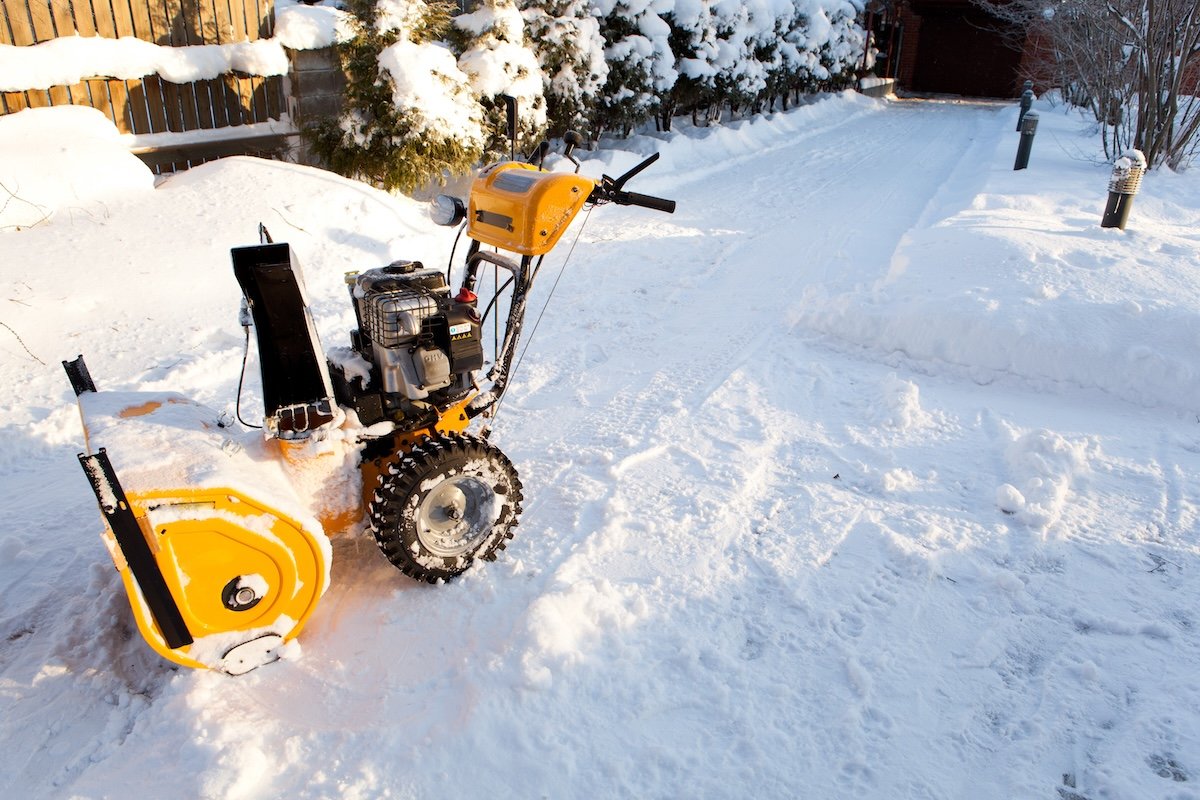
Choosing between a snow thrower and snow blower comes down to several factors, including snowfall totals, driveway type and size, ease of use, and price.
Snowfall in your area
The average snowfall totals of the winter storms passing through your area are a big factor in determining whether to go with a snow thrower or snow blower. If snowstorms routinely drop snowfall of more than a foot of snow that’s wetter and more compacted, you’ll need a snow blower’s power and capacity to clear it. If your snowstorms are typically under a foot and consist of fluffy to moderately heavy snow, you can take on winter with a snow blower.
Keep in mind that the depth a snow blower or snow thrower can handle can vary from model to model, so make sure to check the manufacturer’s ratings. Some lighter-duty snow throwers max out at 6 inches, while there are compact snow blowers that might only be able to handle up to a foot of snow.
Type of driveway
The type of driveway you’re clearing determines the type of snow removal machine you need. If you’re clearing a gravel driveway, don’t use a snow thrower. Since snow throwers have paddles that scrape across the ground, they can pick up and throw gravel, damage the auger, and send the gravel into your yard.
Snowblowers, in comparison, have skid shoes that prevent the auger housing from coming into contact with the ground, making them capable of clearing gravel driveways. But unlike snow throwers, which clear snow down to the pavement, snow blowers leave a thin layer of snow–about 1/8 of an inch–on smooth pavement.
Size of area to be cleared
The size of your driveway largely determines whether a single-stage snow thrower or multi-stage snow blower is the best choice. Snow throwers can cut a swath through snow that’s 18 to 24 inches wide, which makes them best suited for the typical two-car driveway. Snow blowers have wider clearing widths of up to 32 inches, so they can cover significantly more ground than a snow thrower with each pass. They are a better choice for larger driveways.
Throwing distance is also an important factor when deciding between a snow blower and snow thrower. Most snow throwers can launch snow a distance of 15 to 25 feet away, though there are some single stage models that can throw snow up to 45 feet. A snow blower’s multi-stage design allows them to launch snow further, typically up to 50 feet, which is useful when clearing wider driveways or large patios.
With their ability to remove a wider swath of snow with each pass and launch it further, snow blowers are best suited for handling long winding driveways or larger driveways that hold three or more vehicles. While snow throwers have a narrower clearing width, their small size makes them easier to turn and maneuver, allowing you to clear 4 to 8 inches of snow over a smaller one- to two-car driveways.
However, these are recommendations. You can certainly use a snow thrower to tackle a larger driveway. Just plan on spending more time out in the cold to get the job done. Likewise, you can use a larger snow blower on a small driveway, but it may end up taking you longer. These larger machines require more room to turn and are more difficult to maneuver around smaller driveways.
Ease of use
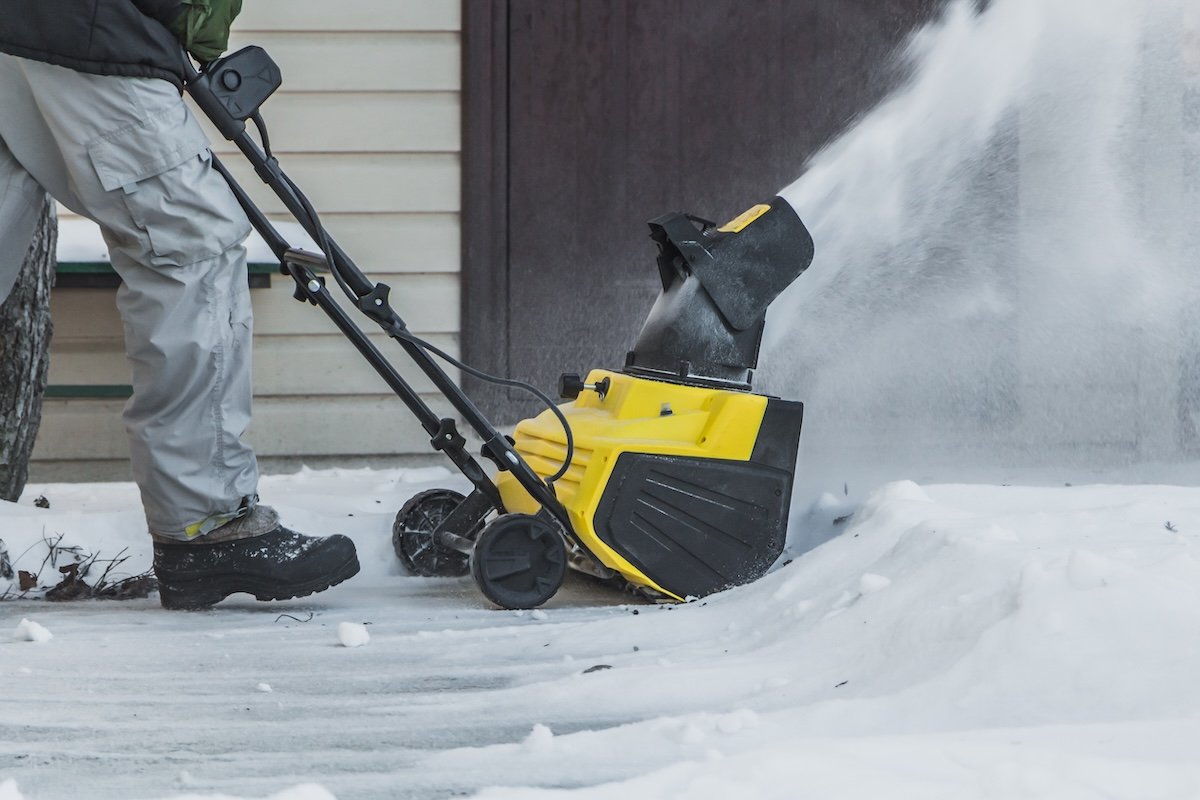
Snow throwers are smaller and lighter, which generally makes them easier to maneuver, especially in tight areas. The controls on a snow thrower are also relatively simple, so there’s less of a learning curve when operating them.
Snow blowers are much heavier but are usually self-propelled and have power steering, so there’s less physical effort to operate them than a snow thrower. However, they are very difficult to move when the engine is off, which makes it more difficult to get in and out of storage.
A snow blower usually has more controls on the handlebars than a snow thrower, so expect a longer learning curve when learning how to use a snow blower.
Power
Both snow throwers and snow blowers come in battery-powered and gas-powered versions. Cordless electric snow blowers are easier to maintain and start than gas models, operate with less vibration, and don’t produce exhaust. While gas-powered machines were once prevalent, today’s cordless electric models are comparable in clearing width, throwing distance, and snow capacity. That said, gas-powered machines still dominate when it comes to runtime. While it takes minutes to refill a gas tank, it can take hours to recharge a battery.
Price
Snow throwers generally cost less than snow blowers. The transmission, large engines, and self-propelled system on these machines adds to their expense. Single-stage snow throwers are simpler machines, so they cost less. Snow throwers generally cost $500 to $1,000, while snow blowers can range between $800 and $2,000, with battery-powered snow blowers typically costing a couple hundred dollars more.