We may earn revenue from the products available on this page and participate in affiliate programs. Learn More ›
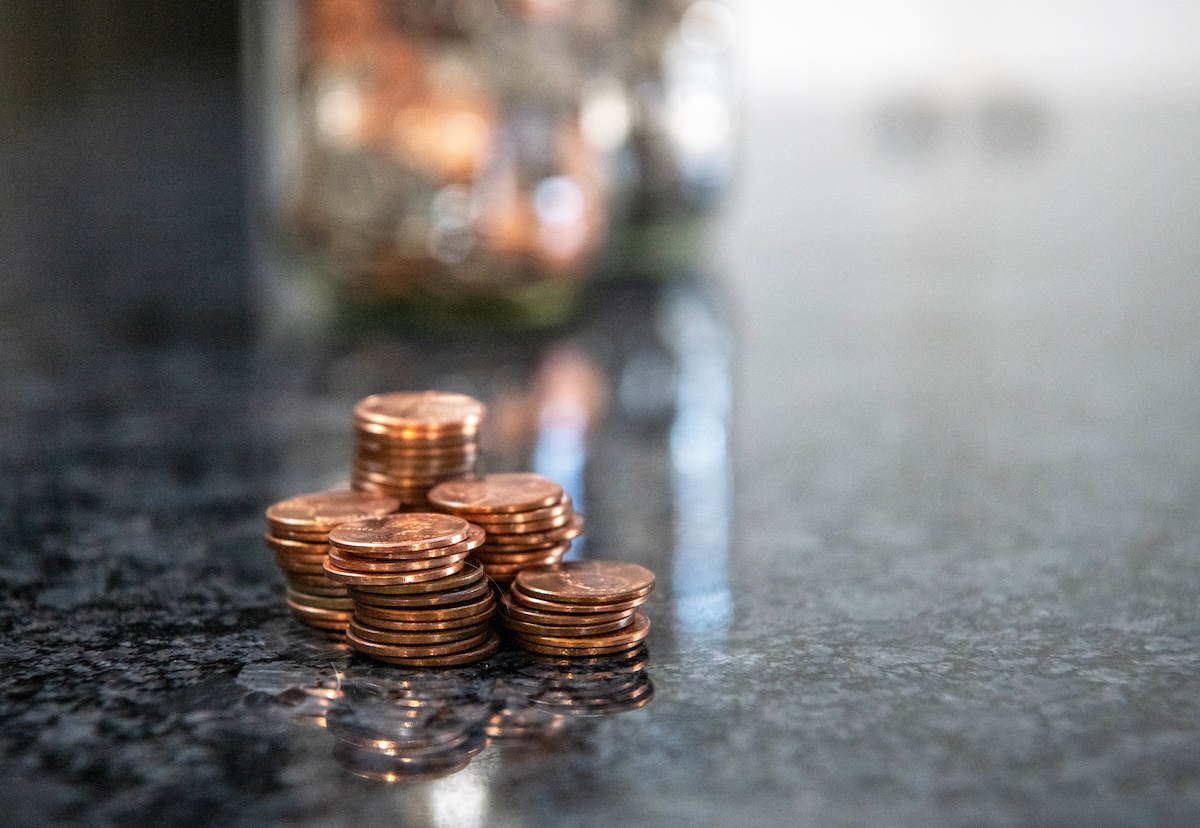
In December 2025, the U.S. Department of the Treasury officially announced the suspension of new penny production, citing rising manufacturing costs that surged to 3.69 cents per coin, in addition to a decline in cash transactions overall. While pennies are no longer being produced, the estimated 114 billion pennies still in circulation retain their status as legal tender. They also happen to make excellent, budget-friendly tools for everyday home projects. So, instead of letting your spare change collect dust in a jar, you can put all those extra pennies to work to solve common household problems. From balancing a wobbling ceiling fan or steadying an uneven table leg to keeping heavy window curtains hanging perfectly straight, the often-overlooked penny is surprisingly versatile. Here are seven uses for pennies you may not have ever considered.
1. Fix a wobbly table or chair.
If an unstable chair or table in your house is driving you crazy, simply reach for a penny to quickly resolve this nuisance. First, determine which leg is causing the issue. Once you know which one it is, simply slide a penny underneath it to create stability. If a single penny doesn’t do the trick, try adding another. You can even tape or glue together two or three pennies to increase the thickness and height of your homemade shim.
2. Balance a ceiling fan.
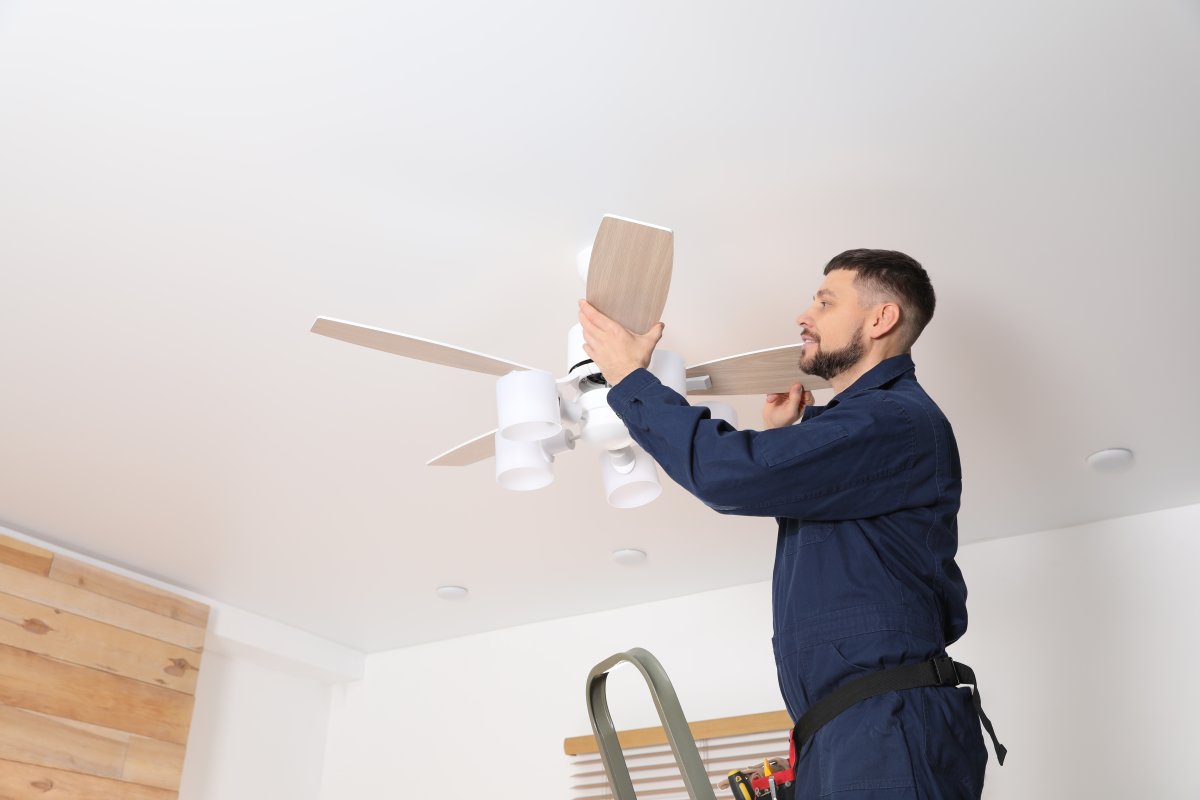
If you are using your ceiling fan a lot to stay cool and start to notice it making a racket as it spins around, it might be wobbling too much. A tiny penny may be just the fix. Attach a penny to the top of a ceiling fan blade—close to the center—using painter’s or masking tape. Run the fan to determine if you found the culprit; if not, try the penny on another blade until the noise disappears. You might also have to shift the penny a few inches away from the center to get it in just the right spot. Once you find the best placement, attach the penny permanently with superglue.
3. Preserve cut flowers.
If you’re looking to extend the life of freshly cut flowers from your garden or those you bring home from the supermarket or flower shop, drop a penny into the vase water. The copper in the penny acts as a fungicide, preventing growth of fungi and bacteria that can ruin your beautiful bouquet. Just keep in mind that pennies minted after 1982 are made of 97.5 percent zinc instead of copper, so they won’t do the trick. Instead, look for pennies dated 1982 or earlier to use in this clever way.
4. Minimize algae growth in your bird bath.
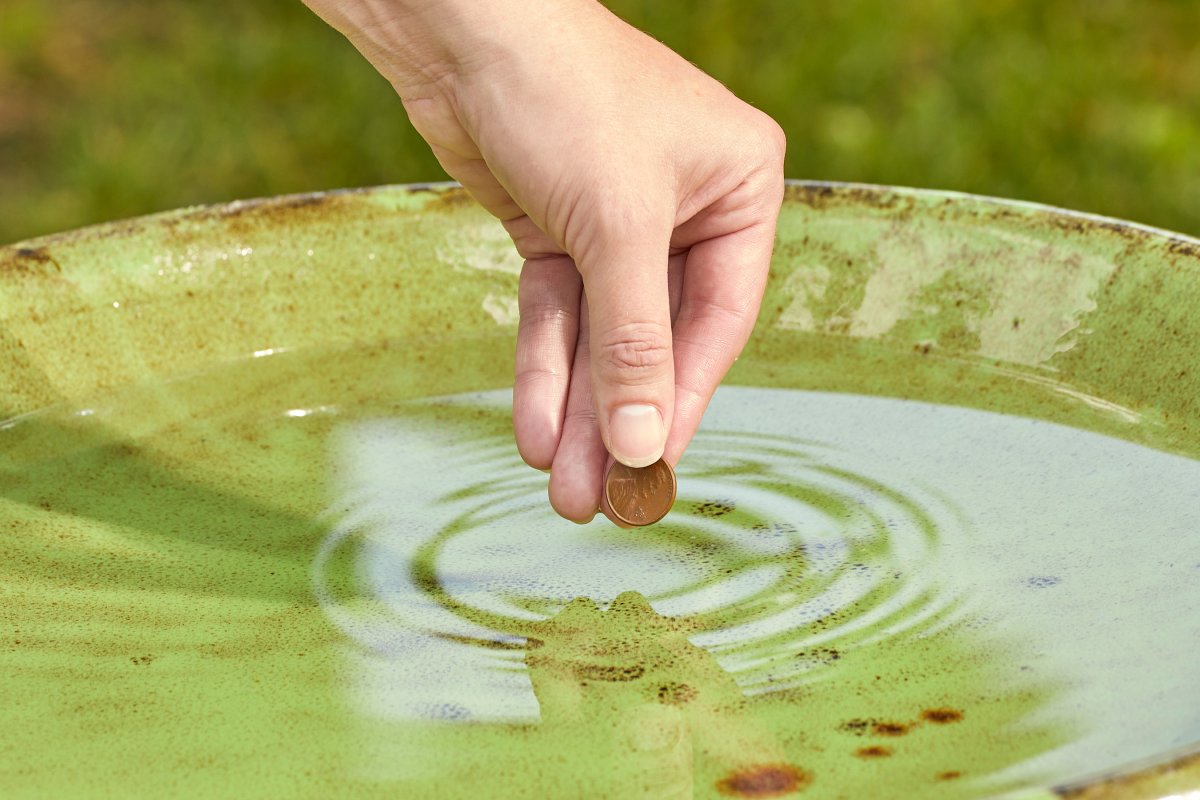
To attract birds to your yard, you’ll want to make sure your bird bath stays clean so they can enjoy safe water to drink and splash around in. If not, the dirty water can attract mosquitoes and pose a health risk to the visiting birds. Plus, dirt and algae that build up can stain the bird bath, creating an eyesore. In addition to adding a bubbler and sealing the bird bath with clear, nontoxic sealant, you can help maintain a pristine bath with a copper penny. Place a penny (here again, be sure it was minted prior to 1982) in the bottom of the basin to prevent algae from growing.
5. Measure tire treads.
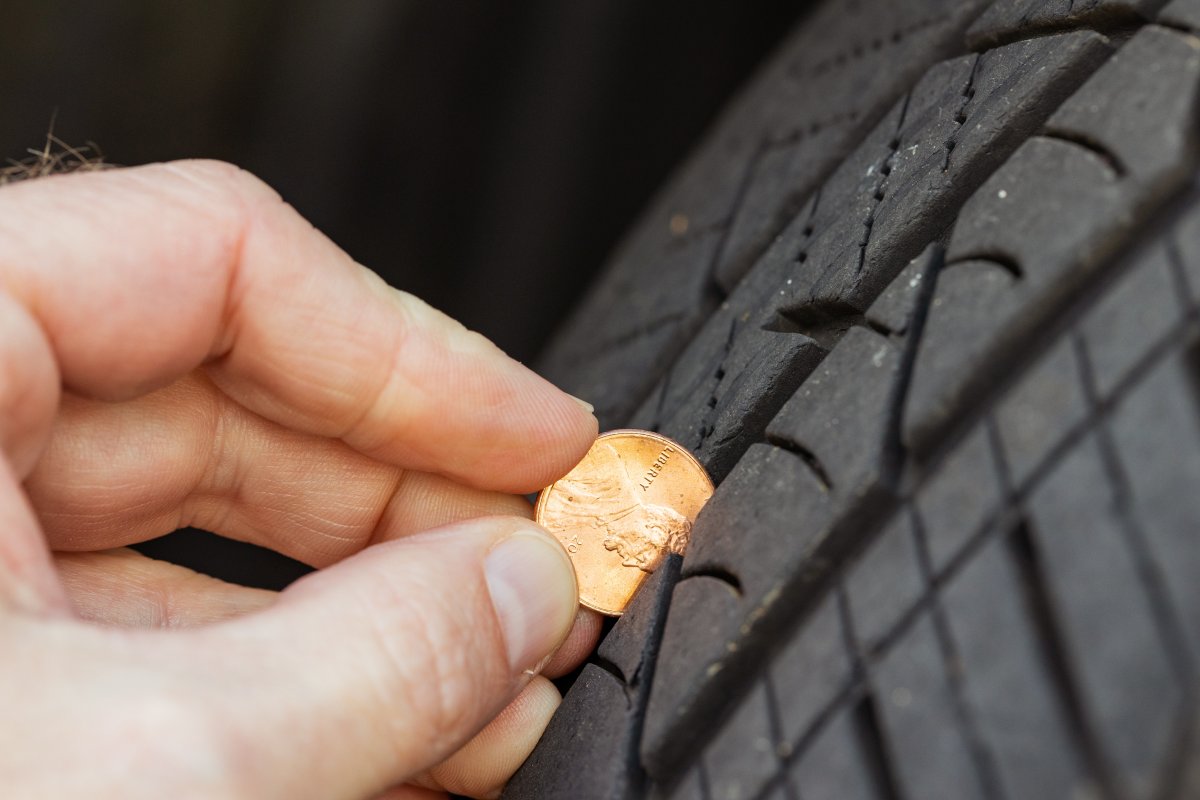
Determining whether it is time to invest in a new set of tires is as simple as performing a quick, budget-friendly DIY inspection using a penny. To gauge your remaining tread depth, insert the coin with President Lincoln’s head facing down, directly into one of the tire’s grooves. If his entire face and head remain fully visible, your traction has worn down to a dangerously low level, indicating that you’ll need to replace the tire right away. However, if the top of his head is partially hidden beneath the rubber, your tire still has more than 2/32 of an inch of tread left, meaning you can safely drive a few more miles before heading to the shop.
Shutterstock
6. Keep curtains straight.
If your curtains or draperies are swinging around and not hanging straight, create a homemade curtain weight from a few pennies. One approach is to open the stitching of the bottom of your drapes, slide in several pennies to add weight, and then close the material back up. Another way is to glue together a stack of pennies to a paperclip; then place the pennies in the open hem of a curtain, using the paperclip to keep the DIY weight in place.
7. Get rid of carpet indentations.
Rearranging furniture results in a fresh look for your home décor, but the process may leave behind undesirable dents on your carpet that catch your eye. Believe it or not, a penny can provide an easy solution. Just spray the carpet with some water and rub a clean penny gently in circles over the indentation. The penny provides a smooth edge to agitate and lift any flat fibers to their original height.