We may earn revenue from the products available on this page and participate in affiliate programs. Learn More ›
As extreme weather events become more frequent, more homeowners are turning to generators to keep their lights on, appliances running, and HVAC systems online when a power outage strikes. In the past few years, extreme weather has had a huge impact on the country’s power grids. A major winter storm in Texas in 2021 left some 4.5 million people without power for more than 2 weeks; later that year, Hurricane Ida caused a month-long outage for some in the Southeast.
More recently, 2024’s Hurricane Helene left nearly 6 million customers without power across 10 states. Having a generator can save the day when an extended outage strikes your neighborhood, but only if you operate and maintain it properly—and avoid these missteps.
Don’t use a low-quality extension cord.
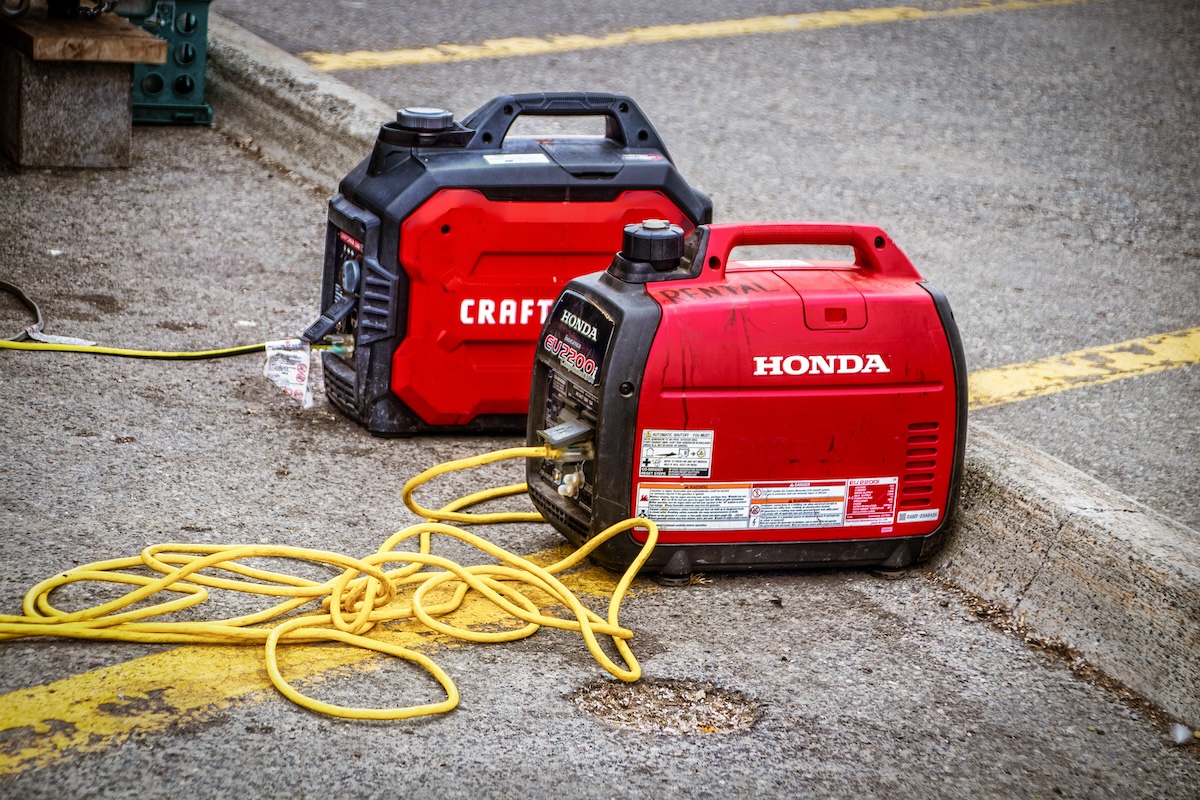
You can’t hook just any old extension cord up to your generator. Cords that are too thin, damaged, or lack the proper ratings can overheat and catch fire, damage the devices they’re powering, and even strain your generator. Here’s what you need to consider when choosing and using an extension cord for your generator:
- Gauge and length. Cords that are too thin or too long create resistance that can cause the cord to overheat, creating a fire hazard. Pay attention to both the length and thickness of the cord when hooking up your portable generator. A 12-gauge extension cord will work for runs of up to 25 feet. Go with a 10-gauge (the smaller the gauge, the thicker the cord) extension cord for runs of up to 50 feet, and a heavy-duty 8-gauge cord for extension cords up to 100 feet long.
- GFCI protection. Most modern generators are equipped with ground fault circuit interruptor (GFCI) protection that can help prevent electrical shock when using the generator in damp or wet places. If you’re using a generator that does not have GFCI-protected outlets, then you’ll need to use an extension cord with built-in GFCI protection.
- Damaged cords. Inspect the extension cord for cracked insulation, exposed wired, bent prongs, kinks, or melted plastic. If you spot any damage, throw out the extension cord, as a damaged cord is a fire hazard.
- Proper ratings. Only use an extension cord rated for outdoor use with a generator and only extension cords that are UL tested, which means they’ve passed the rigorous safety standards put out by UL Solutions.
- Amperage type. Only use extension cords that match the generator’s outlet amperage (15A, 20A, 30A, 50A). Different amperage outlets have different shaped prongs and will only fit into outlets that match the amperage type.
Don’t run the generator in an enclosed space.
Nearly 100 people die each year from carbon monoxide poisoning caused by running their generator either inside or too close to their home, says the U.S. Consumer Product Safety Commission (CPSC). Even running a generator in an open garage or on a covered porch is dangerous because the fumes can circulate into your house via windows, doors, and vents. The CPSC recommends setting up a portable generator at least 20 feet away from the house and positioning it so that the exhaust is directed away from any doors, windows, or air vents.
Don’t add fuel while running the generator.
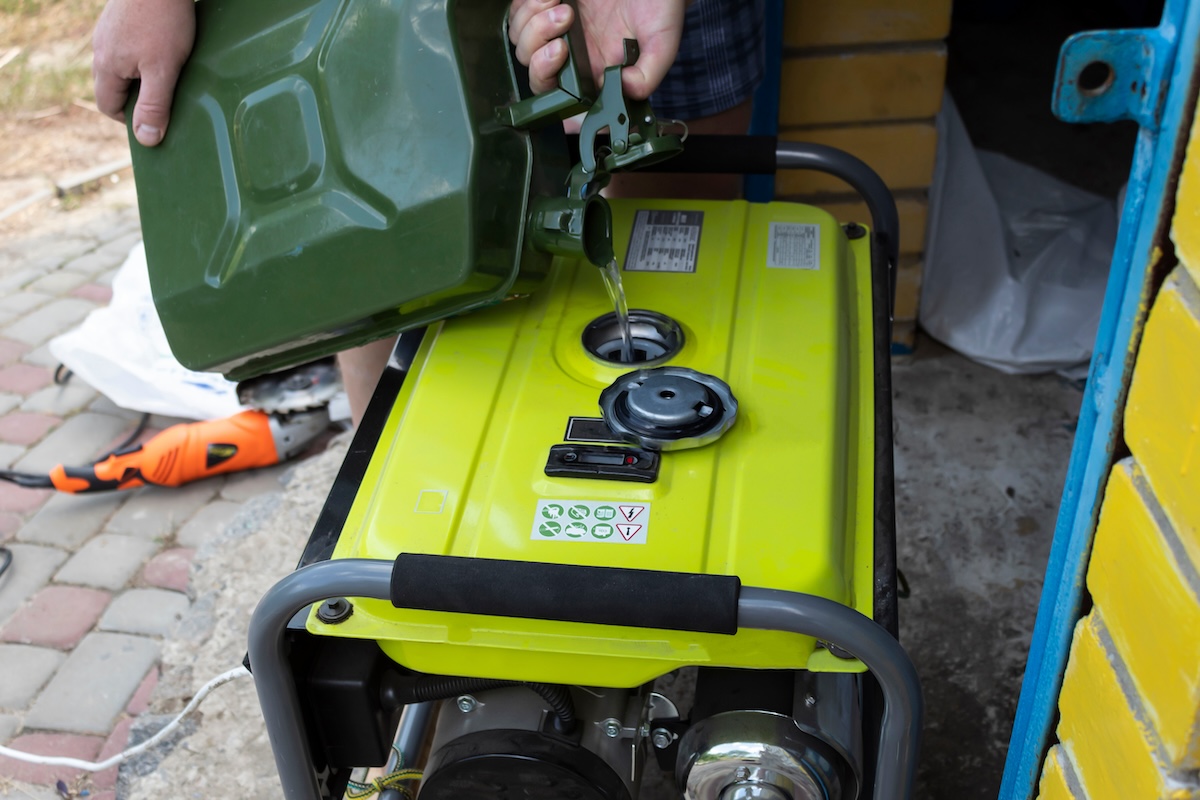
Let the generator cool down first. Adding gas while the generator’s motor is running, or even if it’s off but still hot, may cause a fire and explosion. Avoid even topping off the gas in a running generator when its tank becomes empty. Fires can start from just a small splash of fuel landing near the spark plug or on the hot exhaust. Always ensure the generator is turned off and has had a chance to cool down before fueling it up.
Don’t forget to add fuel stabilizer.
Generators are one of those appliances that can sit idle for months until it sees use. Over that time, the gas can go bad, gumming up the engine and making it difficult or even impossible to start when you do finally need it. Before storing your generator, fill it up per the manufacturer’s instructions, and then add a good-quality fuel stabilizer, which will keep the fuel from going stale for at least a year. Run the generator briefly to allow the stabilized fuel to circulate throughout the engine. By storing the generator with a full tank, you reduce the likelihood of condensation forming in it while it sits.
Don’t neglect the starter’s battery.
Electric-start generators use a 12-volt battery to power the starter. While these starters are far more convenient than using a pull starter, it only helps if the battery is fully charged. Leaving the battery attached to the generator can cause it to discharge slowly over a period of months. When the generator is not in use, disconnect the battery and store it in a cool, dry place, preferably connected to a battery maintainer.
Don’t buy a bigger generator than you actually need.
Many people buy the largest generator they can afford, thinking that more load is always better. But that’s not always the best choice. Larger generators are less efficient, as they’ll use more fuel than needed to meet a significantly smaller load. A large generator also runs less efficiently at low loads, causing buildup in the engine and a greater amount of wear and tear. Unless you really need it, save your money on that 20,000-watt generator and purchase a portable generator that generates 10 to 20 percent more than the power you need to run essentials.
Don’t forget to open the choke on your pull-start generator.
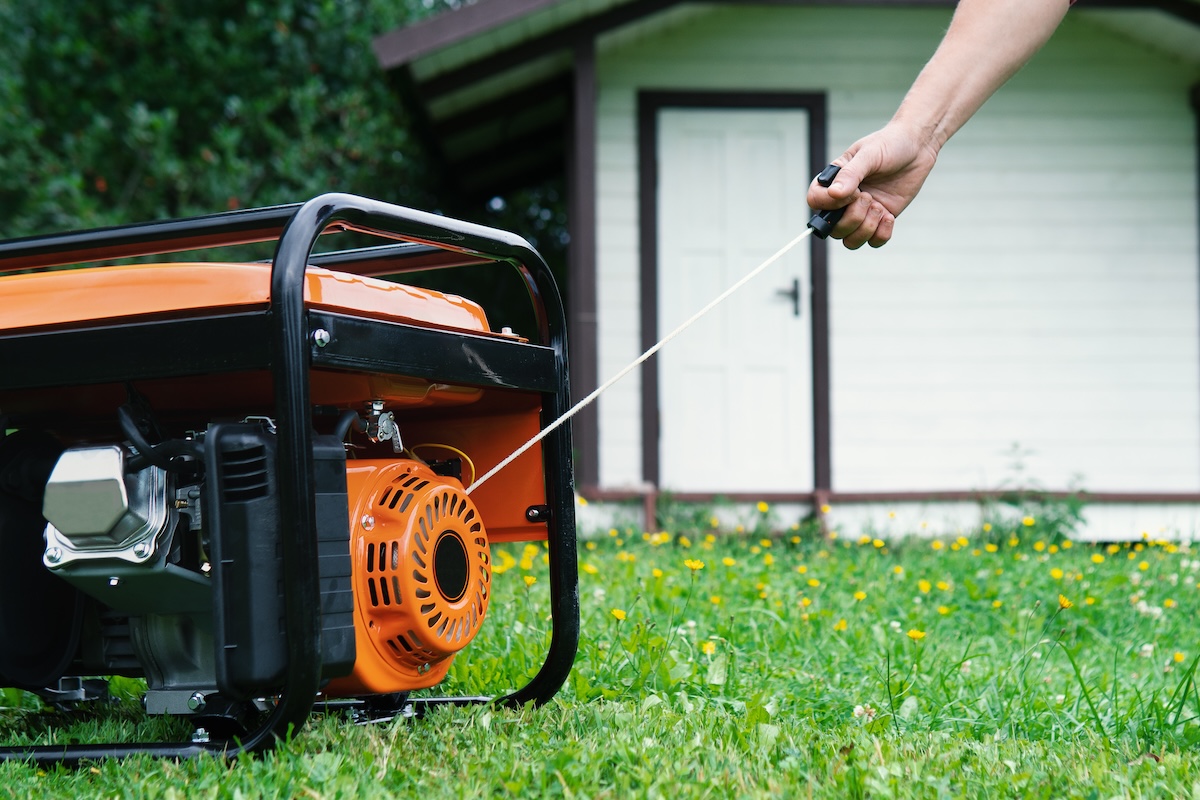
Not opening the choke makes the generator more difficult to start. The choke allows more gas and less air into the carburetor, which helps get a cold engine running. Set the choke to “full choke,” and then pull the starter cord until the generator’s engine starts. With the engine running, slowly close the choke.
Never use a “suicide cord.”
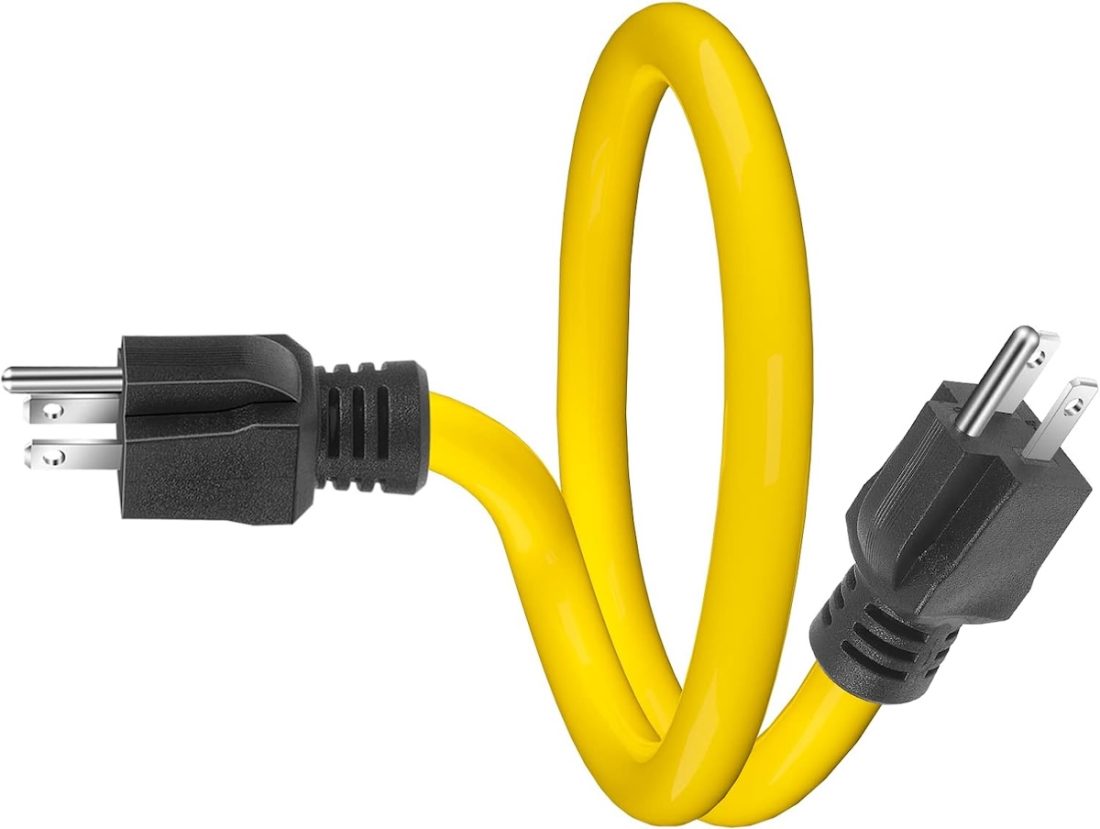
Also called a widowmaker cord, a suicide cord is an extension cord that has male plugs on both ends. Some homeowners attempt to use them to connect a portable generator to their home’s electrical system by plugging one end of the cord into the generator and the other into a wall outlet, in theory eliminating the need to run power cords to power the home. This practice is extremely dangerous. The U.S. Consumer Product Safety Commission (CPSC) warns that these cords are unsafe for a number of reasons. For starters, as soon as you plug the extension cord into a live outlet, the exposed prongs on the other end have electricity running through them. Touch the prongs and you can receive a life-threatening shock.
A male-to-male extension cord also causes electricity to backflow from your home into the power grid, potentially injuring or even killing utility workers working on nearby lines they believe are dead. And if the power kicks on while your generator is backfeeding power to the house, it can quickly overload the system. Since this practice bypasses the electrical panel, there are no circuit breakers to protect your home from an overload and a potential electrical fire. Such an overload will also likely burn out the generator. Instead of a suicide cord, use a transfer switch that’s been installed by a licensed electrician to connect your portable generator to your home’s electrical panel.
Don’t connect a generator to the service panel without a transfer switch.
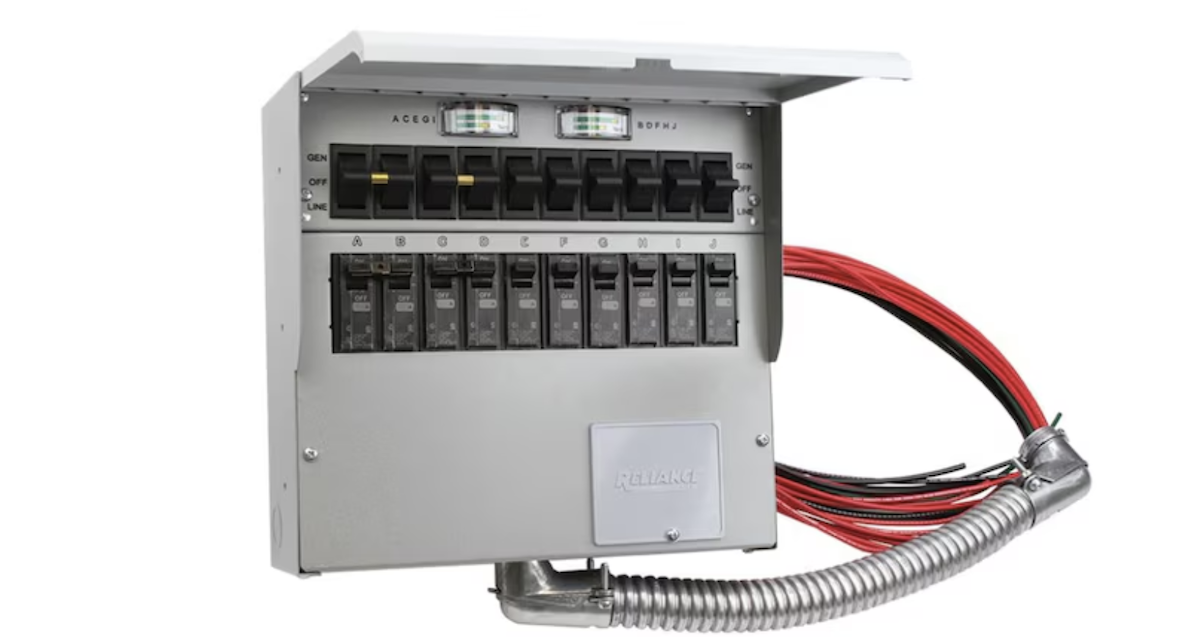
Connecting a generator directly to the service panel of a home without a transfer switch, an illegal practice referred to as backfeeding, can end up creating a very hazardous risk of electrical fire. When the power kicks on again, it can send power back toward the utility grid. As a result, backfeeding can put you in danger, and your neighbors and any utility workers down the line could potentially be seriously injured by the high voltage, too.
Instead, it’s best to have a licensed electrician install a manual transfer switch and an interlock switch, which prevents backfeeding, to any portable generator. The transfer switch changes the source of power for the home between the grid and the generator, while the interlock switch physically prevents the electrical panel’s main breaker from being switched on while the generator breaker is flipped on.
Don’t connect appliances until the generator warms up.
If you’re connecting your portable generator to a house transfer switch, connect the generator to the switch and then start the generator. Allow it to warm up for a few minutes, then flip the transfer switch to the “on” position.
When power is restored, shut down the portable generator by first switching the main breaker on the transfer switch to off. Shut down the generator then unplug it from the transfer switch inlet.
If you’re using a portable generator without a transfer switch, always start up the generator and allow it to warm up for about 5 minutes before plugging in devices or cords running to appliances. This warm-up period allows the generator voltage to stabilize. Once it’s warmed up, start adding devices one at a time, beginning with larger ones and working your way to smaller devices.
When it’s time to shut down the generator, unplug all cords and appliances and then shut off the generator’s main circuit breaker. Allow the engine to run for a few minutes under no load to cool the engine down, then shut it off. Finally, turn the fuel valve to the “off” position to prevent fuel from running into the carburetor and gumming it up.
Don’t completely discharge a battery-powered generator.
If you own a portable power station, don’t make the mistake of completely discharging it. Draining a portable power station’s battery to zero stresses the lithium cells, shortening their lifespan and potentially causing permanent damage. You should recharge your portable power station when it falls to between 20 percent and 30 percent capacity.
Don’t run a generator in the elements.
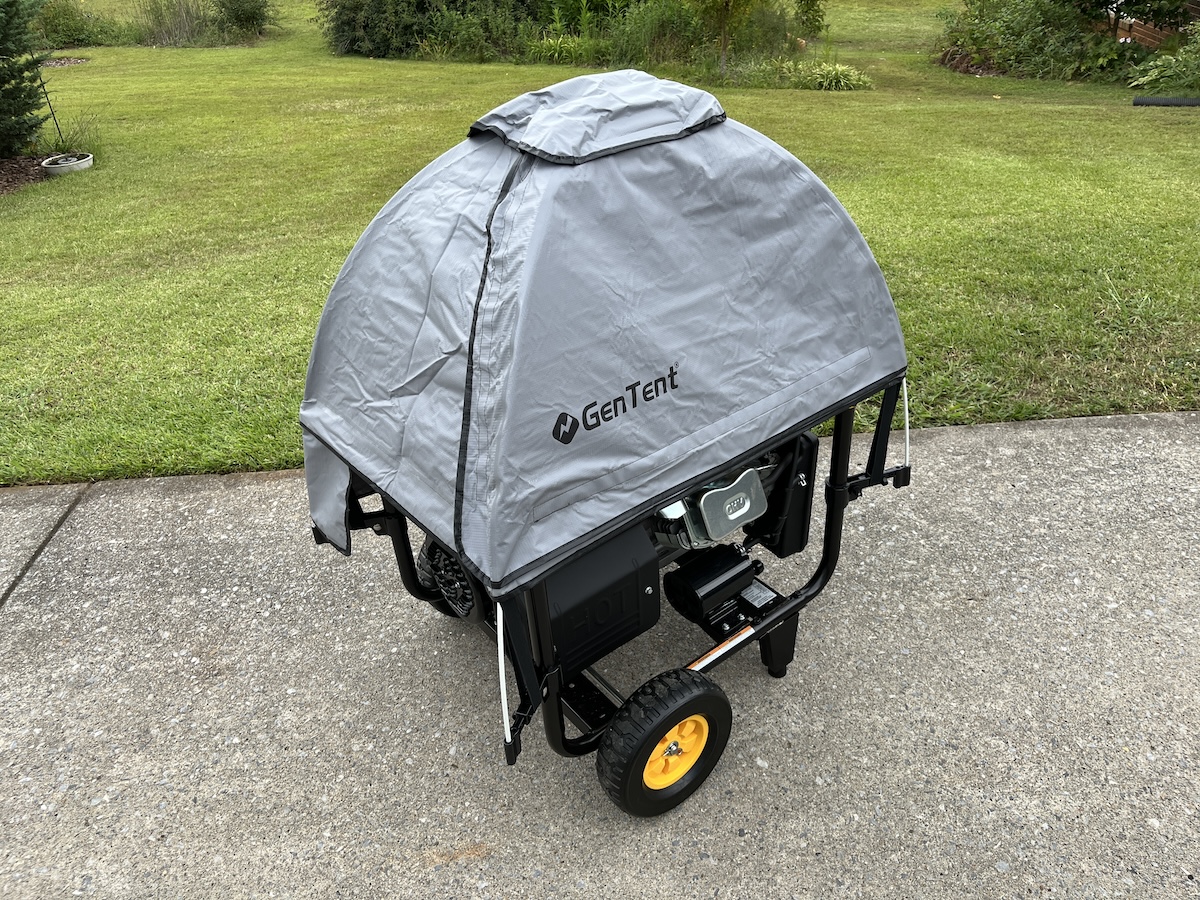
Never run a generator in wet weather without a proper cover to avoid damaging the inverter or getting electrocuted. The risks occur when water makes its way into outlets or electrical panels, resulting in the frame short circuiting. Generators should be placed on level ground in a dry, open area, or under a generator cover for safer operation in rain, snow, or sleet. The covers are designed to keep moisture off the generator but allow airflow around it.
Don’t neglect routine maintenance.
Regular and routine maintenance tasks come with generator ownership, as they’re pretty complex pieces of equipment. Over time, failing to follow the manufacturer’s recommendations or address small issues could mean problems. At best, there may be problems with starting the generator or having it seize up, and at worst, there could be total failure of the unit.
Part of regular maintenance includes checking and cleaning the oil and air filter, inspecting the batteries, and running the generator at least monthly. Generators need to be run more often in colder seasons.
Don’t hesitate to hire a generator technician if you need one.
Maintenance and repair of a home generator can sometimes require technical know-how. At some point in its lifetime, you’ll likely need a specific skill set and advanced knowledge to install, repair, or maintain the machine. That’s when hiring a qualified technician is helpful.
It’s smart to properly vet a technician’s expertise and experience by reading about them, checking to see whether they’re Electric Generating Systems Association-certified, asking them questions, and checking their references.
Don’t neglect to keep records.
It’s important to really understand how to use, service, and maintain a home generator, and know what the unit can do for a home. This includes the quantity of fuel it needs, how you will divide the power it creates, and when it runs. Knowing and keeping track of these details, along with regular maintenance, will help ensure a consistent amount of gas and generator capacity at all times and a well-functioning unit when you need it. You’ll also avoid making expensive errors.