We may earn revenue from the products available on this page and participate in affiliate programs. Learn More ›
Often ignored during regular cleaning, the sink overflow hole is typically located in the front of the sink to act as a safety drain and prevent accidental flooding if the faucet is left running with the stopper closed. This overflow hole also lets air into the drainpipe to help your sink drain faster. However, because it can be overlooked during cleaning, the sink overflow hole can hide soap, toothpaste, and mold causing foul smells and slow drains.
I am a plumber and a restoration expert with years of experience working on residential plumbing systems. In order to prevent clogging, slow draining sinks, and odor build-up, I recommend cleaning your sink overflow at least once every two to three months. This is a relatively simple and affordable task that only takes about 30 minutes. Find out how to clean a sink overflow hole by following the straightforward steps in this guide.
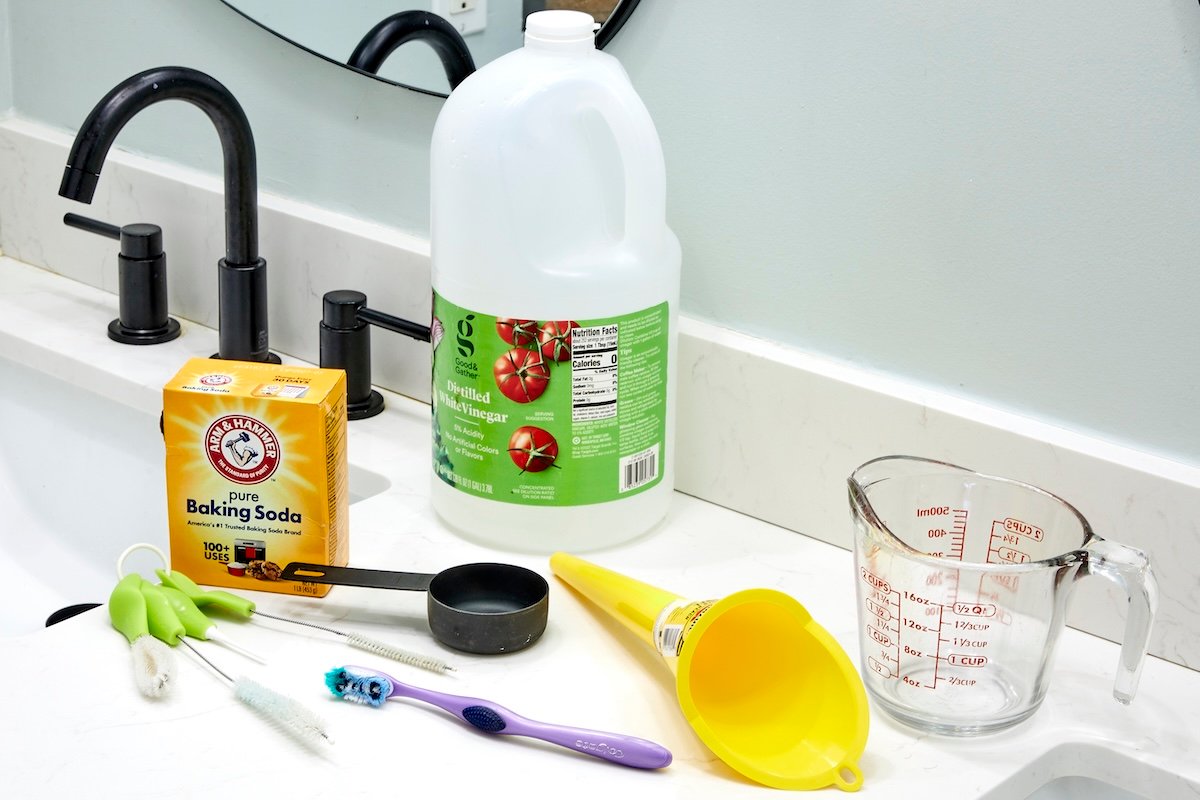
Tools & Materials
Bobvila.com may earn a commission from purchases made through these links.
The Best Way to Clean the Overflow Hole in a Sink
Cleaning the overflow hole in the sink is easy to do when you have the necessary supplies and cleaning tools. Once you have gathered the suggested tools and supplies from the list above, you’ll be ready to begin. Don’t forget, you should be cleaning this part of the sink at least once every two to three months.
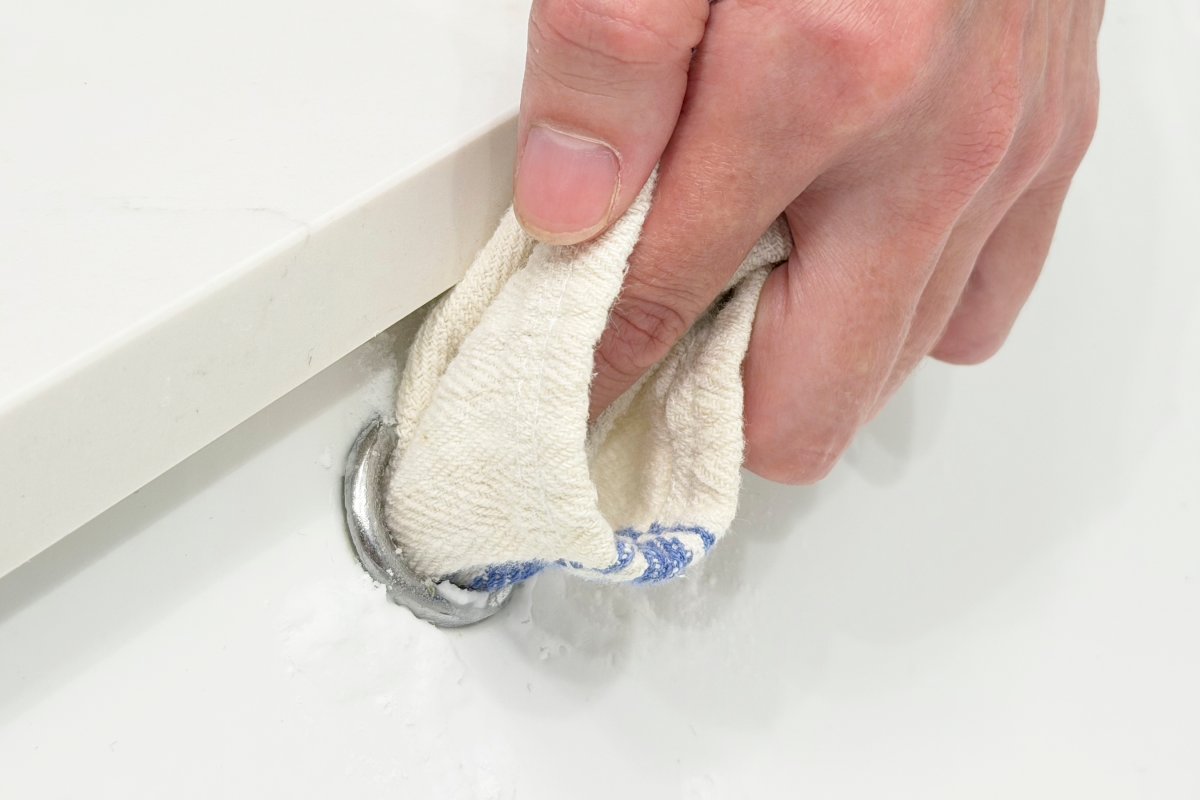
Step 1: Wipe down the outside surface of the overflow hole.
Wet your microfiber cloth with hot water and a bit of soap, then wipe the outside surface of the overflow hole to remove any dirt, grime, dried toothpaste, hair, or any other debris that may be clinging to the inside of the sink. After wiping the outside of the overflow hole clean, make sure to thoroughly rinse your microfiber cloth to wash away the collected debris.
Step 2: Add baking soda to the overflow hole.
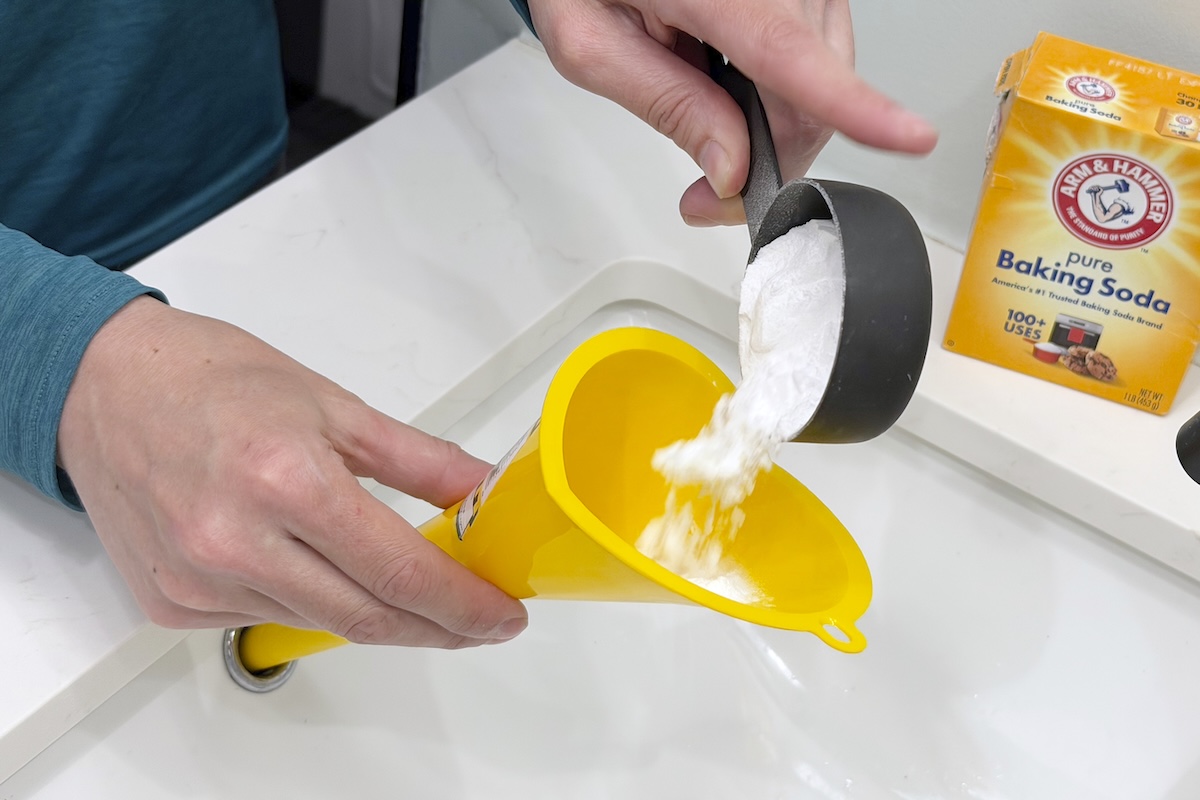
Getting rid of mold and mildew smells is simple when you have baking soda. Place your funnel into the overflow hole, then pour in about one cup of baking soda. Shake the funnel a bit to help push the baking soda deeper into the overflow pipe. Take your time to avoid spilling the baking soda onto the counter or into the sink.
Step 3: Pour vinegar into the overflow hole.
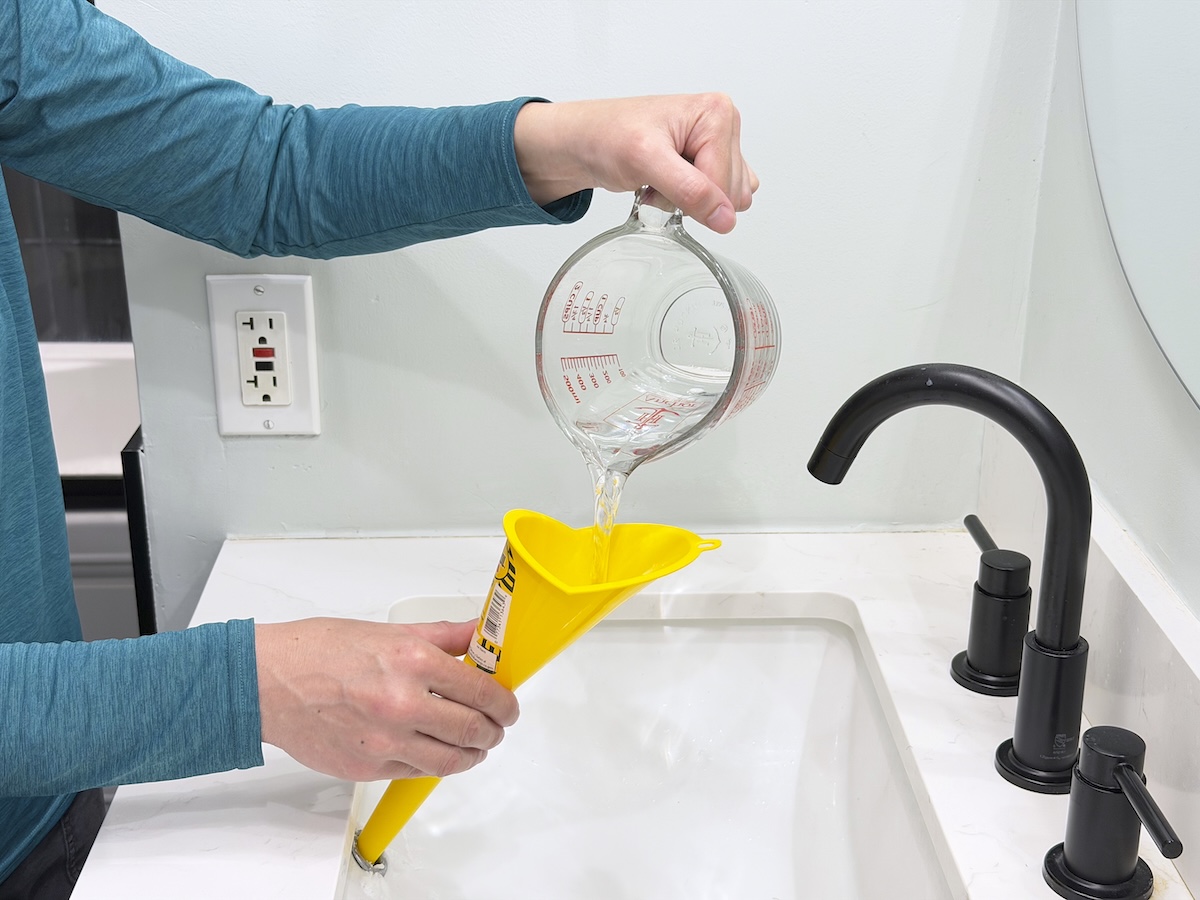
When mixed together, baking soda and vinegar can be one of the best bathroom cleaners for hard-to-reach areas due to the way in which this combination foams up. Use your funnel to slowly pour 1 cup of distilled white vinegar into the overflow hole. As the baking soda and vinegar combine, they will fizz and foam, breaking down gunk and bacteria. Let the fizzy mixture work in the drain for about 10 to 15 minutes before proceeding to the next step.
Step 4: Scrub the overflow hole to remove stuck-on debris.
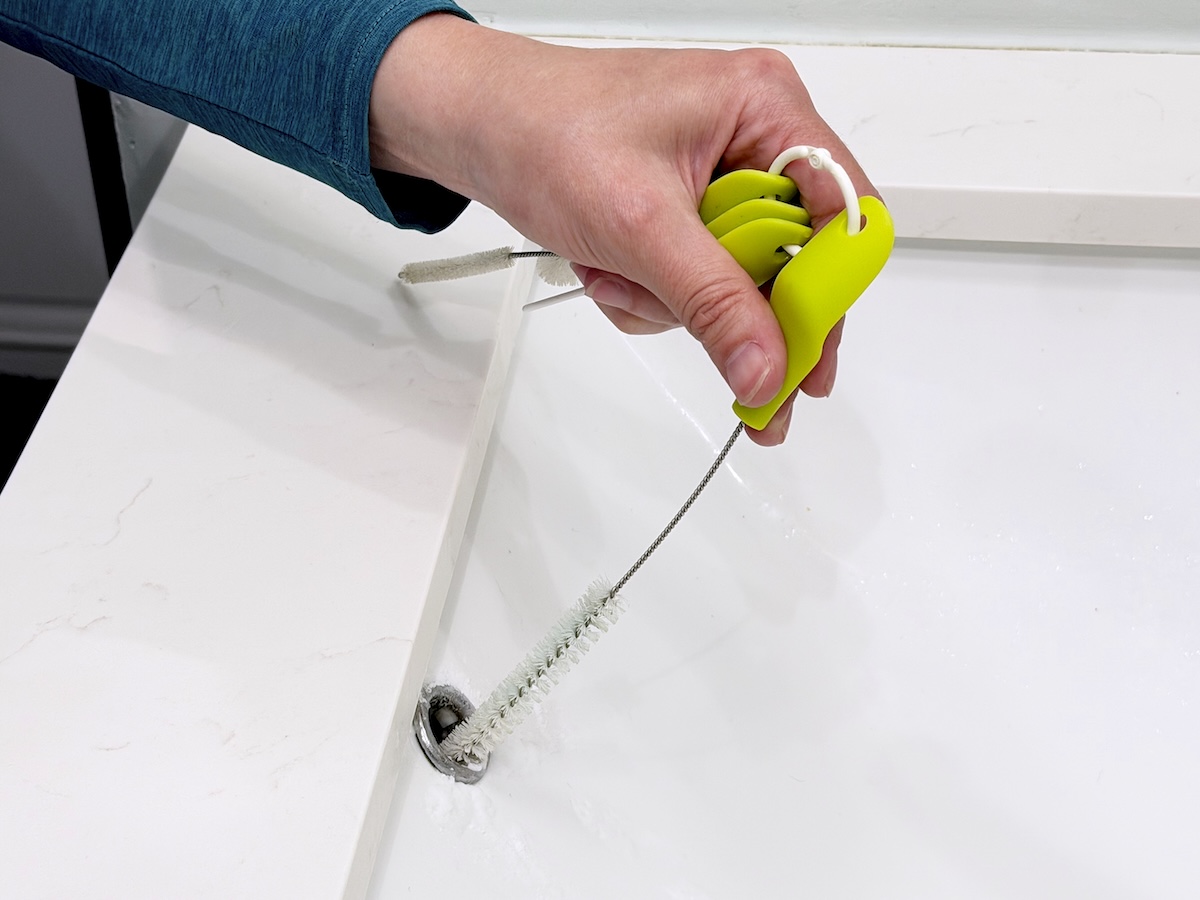
Hair, toothpaste, soap, and other substances can build up inside the overflow pipe, causing full or partial clogs, which reduces the amount of air that can enter the drain. When this happens, you will notice that your sink will be slow to drain. To prevent this issue, insert an old toothbrush or a pipe cleaner brush into the overflow hole to scrub away any stuck-on debris.
Work carefully and diligently to remove all hair, toothpaste, soap, mold, mildew, and other contaminants, making sure to regularly rinse your toothbrush or pipe cleaner brush so you can tell when the overflow hole is clean.
Step 5: Flush the overflow hole with hot water.
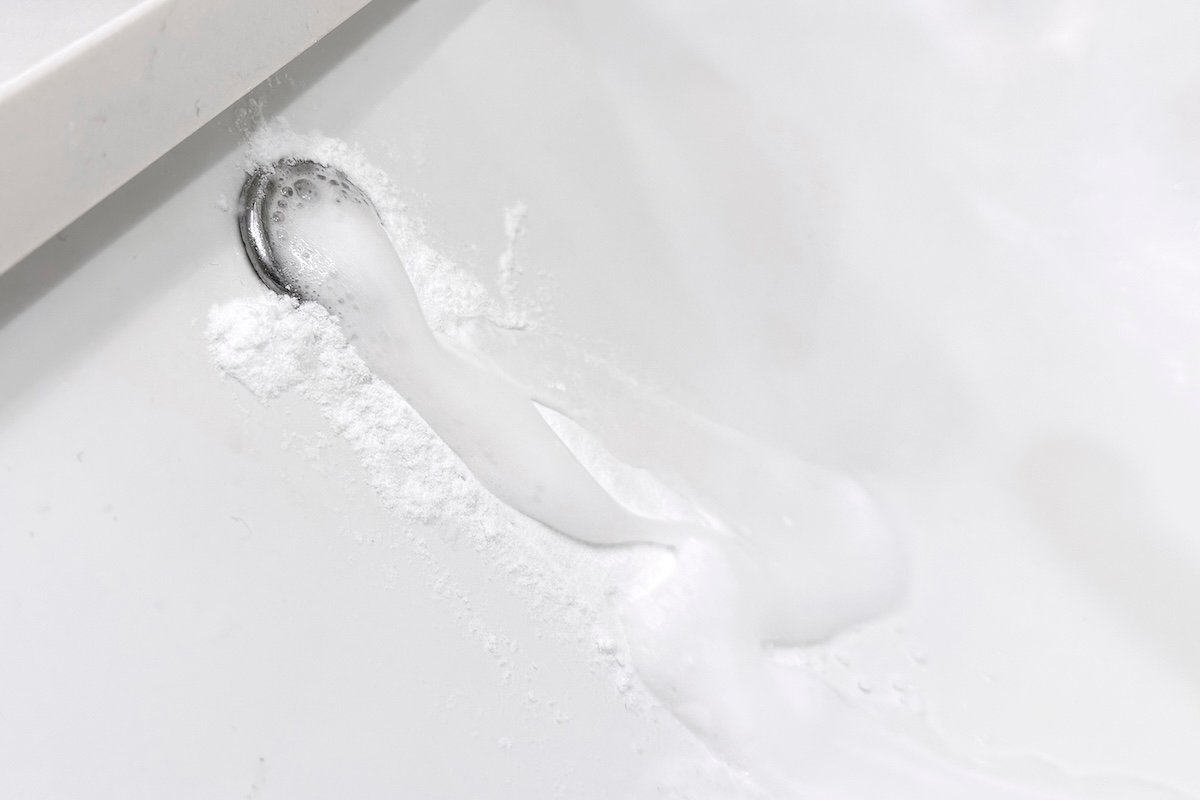
When you are finished scrubbing the overflow hole, gather hot water in a bucket, a kettle, or a similar container, then pour the hot water down through the funnel to thoroughly flush the overflow hole, forcing any loose gunk and debris down the drain. After flushing the inside, rinse the outside of the overflow hole to wash away any leftover foam from the vinegar and baking soda mixture.
If you notice that there is still a persistent odor emanating from your overflow hole, repeat this cleaning process using an enzyme drain cleaner. Mix the enzyme cleaner with warm water and pour it directly into the overflow hole to allow the friendly bacteria in the cleaner to eat any leftover organic debris, like hair.
Best Enzymatic Drain Cleaner
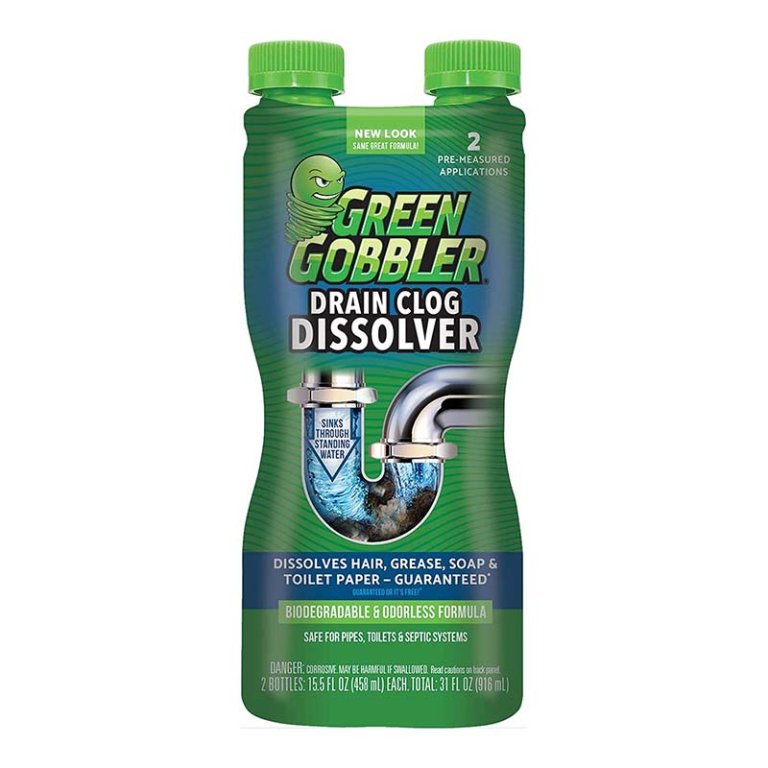
Green Gobbler Drain Clog Dissolver
Green Gobbler’s drain clog dissolver is a biodegradable, two-chamber cleaner that works on hair, soap scum, and more. Read the review.
See ItFinal Thoughts
Knowing how to clean an overflow hole in the sink will help you prevent clogs, a slow draining sink, and powerful odors caused by mold, mildew, and organic debris. While you don’t need to clean the overflow hole as frequently as the actual sink, it is still important to clean it once every few months, depending on how much or how little you actually use the sink. Contaminants like toothpaste, soap, hair, mold, and mildew can become trapped in the overflow hole, but with baking soda, vinegar, and a simple toothbrush or pipe cleaner brush you can clean the overflow hole in 30 minutes or less, so don’t skip this necessary sink maintenance task.