We may earn revenue from the products available on this page and participate in affiliate programs. Learn More ›
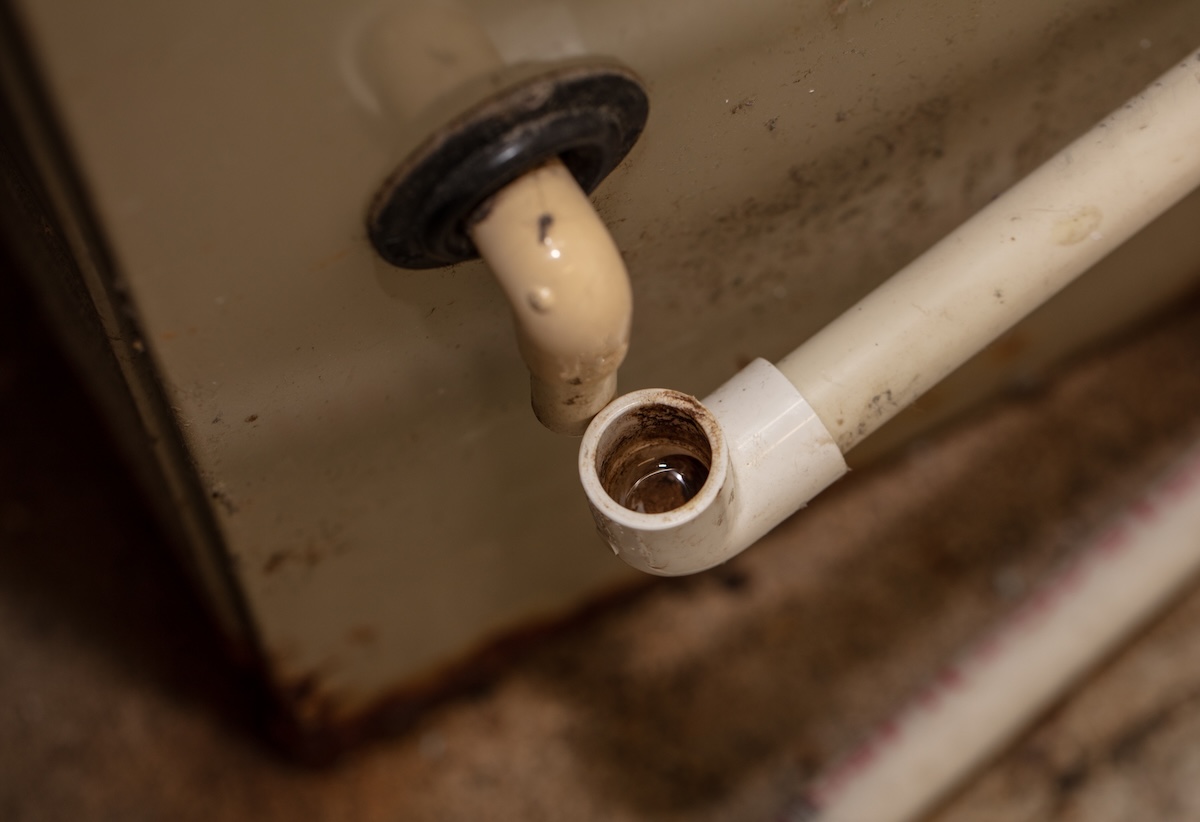
Your air conditioning system has a condensate drain line that is intended to capture and redirect water that the air conditioner has pulled from the air. When the AC cools, it removes humidity from the air, which turns to liquid that must flow through the drain line to a drain. If the drain line is clogged, loose, or otherwise not working properly, then it can cause this collected water to build up and overflow, leading to water damage.
Depending on where your AC condensate line is located, the resulting overflow could cause water damage to the ceilings, walls, and floors of the home. However, water damage isn’t the only risk. A clogged AC drain line can also reduce the overall cooling efficiency of the system, increase the risk of mold and mildew growth, or trigger the safety system to shut down the AC.
To avoid these issues, it’s necessary to know how often to pour bleach in an AC drain line to keep it free of mold, algae, bacteria, and other contaminants that may otherwise build up and create a clog. Use this guide to learn how to clean an AC drain line and why bleach is a go-to product for keeping your drain line clog-free.
How to Unclog an AC Drain Line
You can help your HVAC system last longer and operate efficiently by staying on top of regular maintenance tasks, like cleaning the AC drain line, but if you haven’t cleaned it in a while and discover that it is clogged, Patrick Gambel, Owner of General Heating & Air Conditioning, provides these simple steps to unclog your AC drain line:
- Locate the drain line. Look for a ¾-inch white or clear PVC pipe attached to the indoor air handler, which is typically in the basement, attic, or crawlspace, depending on where your AC unit is installed.
- Turn off the AC system. You want to do this so water doesn’t continue to get backed up in the drain and cause more damage.
- Remove debris. You can use a wet/dry vacuum to help pull out the clog from the outside drain opening. Connect the wet/dry vac attachment to the drain line with duct tape, then vacuum the line for a few minutes to remove the clog.
- Flush the line. After the clog is removed, you’ll want to flush the line with water to clean out any leftover buildup in the drain.
Using Bleach to Clean Your AC’s Drain
As long as your AC drain line is not clogged, then Gambel says “you can use bleach to clean an AC drain line to help kill mold, mildew, and algae that’s built up inside the drain line and causes clogs in the drain.” However, using bleach alone may cause damage to the metal components of your AC system, like the AC coils, so this method should only be used for your drain line. It’s best to dilute the bleach with a mixture of one part bleach to 10 parts water.
With your bleach and water solution, you can pour about a cup into the drain line and let it sit for a few minutes. After enough time has passed, flush the drain line with water to rinse out any loosened debris, mold, or other buildup and get rid of excess bleach. You can also use this simple process with distilled white vinegar or boiling water to help keep your HVAC system running efficiently.
How Often to Pour Bleach in Your AC’s Drain
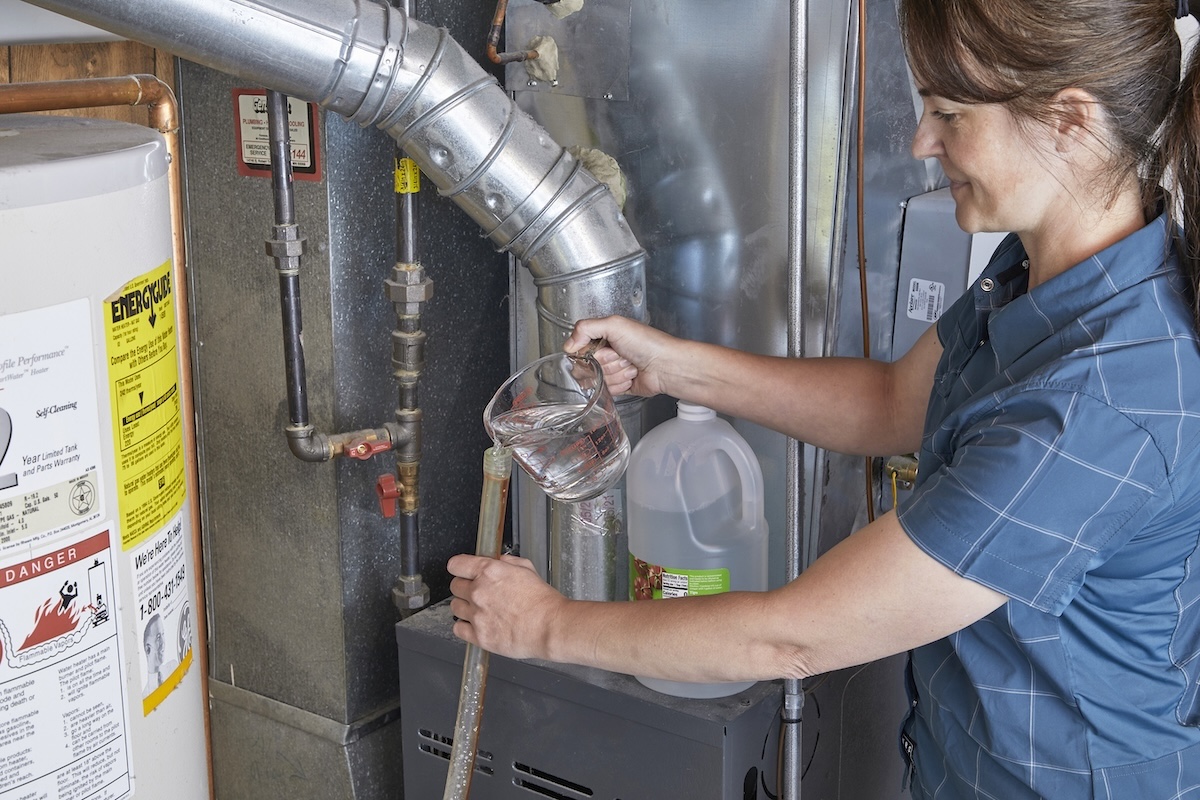
Due to the corrosive nature of bleach you don’t want to be pouring it into the drain line every day. Gambel notes that “you should use bleach in your drain line about once every few months. How often you use it though, really just depends on your system and how much mold, mildew, or algae has built up.”
Regularly inspecting your drain line is the surest way to avoid any damage that could be caused by a clog. This will also help you identify when you should be pouring bleach into the AC drain line to clean out any signs of buildup. However, if you’ve been dealing with frequent clogs, it’s probably best to reach out to an HVAC technician so they can see if there’s a more serious issue at hand.
How to Prevent AC Drain Clogs
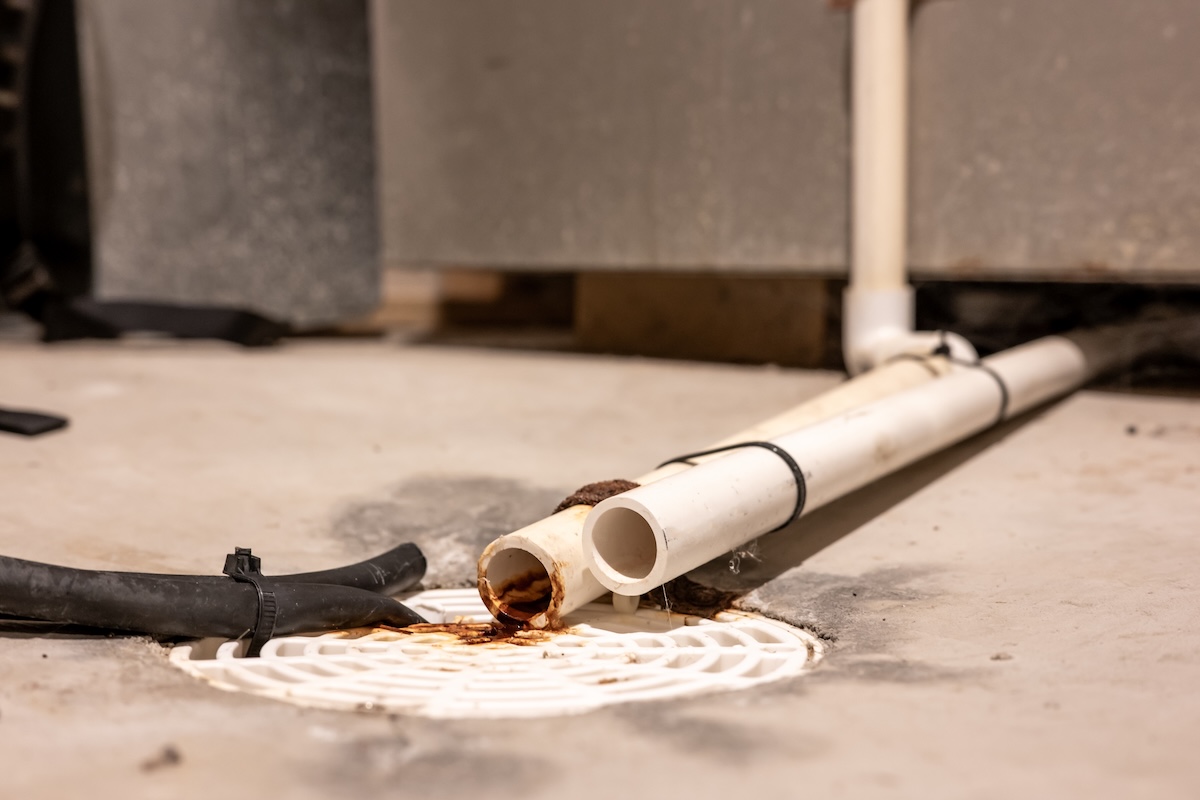
Drain line clogs may not be a big issue on their own, but they can cause flooding, efficiency problems, and could even trigger the safety system to shut down the AC, so it’s best to avoid them entirely if possible. “One of the best ways to prevent AC drain line clogs is to schedule yearly maintenance for your system. Regular, yearly maintenance appointments with your local HVAC technicians can help prevent small problems from getting even bigger,” Gambel suggests. You can also try these simple preventive steps to keep your AC drain line free of clogs:
- Flush the drain line with bleach, vinegar, or boiling water once every few months.
- Regularly replace your HVAC and AC air filters about once every one to three months to reduce the amount of debris in the system.
- Use AC pan tablets in your condensate drain pan to prevent mold and bacteria from growing in the pan and passing into the drain line.
- Ensure the end of your drain line outdoors is free of dirt, grass, and leaves.
- Clean debris from around the outdoor condenser unit to maintain consistent airflow.
FAQ
Q. What happens if your AC drain is clogged?
When your AC drain line clogs, moisture will back up inside your system. While this will usually trigger a safety sensor that shuts down the AC to prevent indoor flooding, if the sensor fails, the water overflows, which can cause costly damage to your ceilings, walls, and floors.
Q. Is it safe to pour bleach in your AC drain?
Yes, in moderation. A common use for bleach is to kill algae, mold, and other contaminants that may have built up in your AC drain line. However, bleach is highly corrosive and may cause damage to any metal components if you are not careful with how you use it and diligent about rinsing after use. In this case, you may want to use distilled white vinegar or even simple boiling water to clean your AC drain line.
Q. Can you clean an AC drain with vinegar?
Learning how to clean an AC drain line with vinegar is almost as effective as using bleach, and it is generally less corrosive so there is less risk to the metal components of your system. You can follow the same basic steps to clean your AC drain line with vinegar or you could also use boiling water to kill mold and bacteria.