We may earn revenue from the products available on this page and participate in affiliate programs. Learn More ›
If you are struggling to keep clutter under control in your home, you’ll want to purchase several types of storage bins to organize items. They help create designated spots for belongings that would otherwise pile up on counters, floors, and shelves. By keeping similar items together in clearly defined bins, you’ll be able to see exactly what you have at a glance.
But deciding which bins to choose can quickly become overwhelming. With so many sizes, shapes, colors, and materials available, you could easily end up with bins that don’t fit your shelves, clash with your décor, or sit empty because you never actually needed them. Fortunately, a little planning can go a long way toward achieving an organized home with the right storage bins; two professional organizers give expert insights about what to consider before purchasing bins for storage in your home.
1. Determine where you will locate the bins.
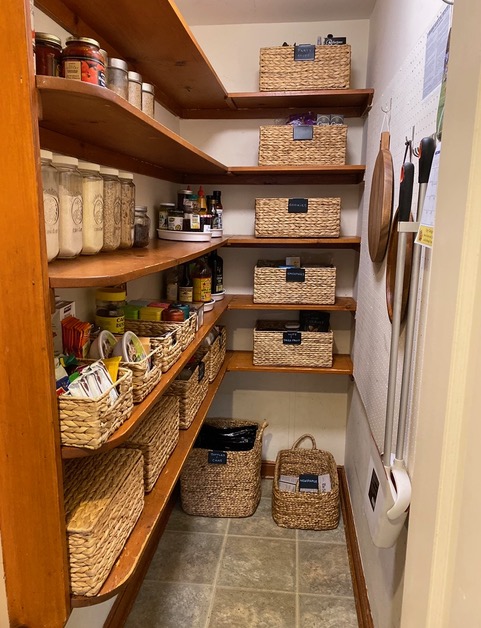
The first step is to consider where the bins will be located, says Lori Bailey, professional organizer and founder and owner of Miss Organized in the New York/New Jersey area. “A bin that you’re going to use in a garage or attic is not going to be the same kind of bin that you purchase for your basement or pantry,” explains Bailey.
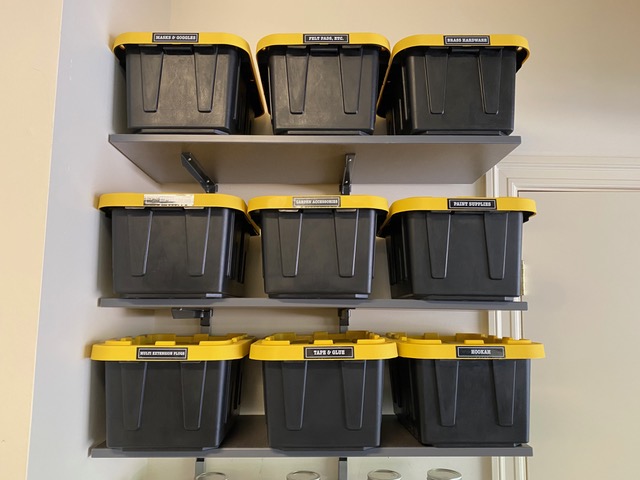
Once you figure out where you’ll store the bin, you can properly assess the type, size, and material that would be the best fit. Bailey prefers big black bins with a yellow lid for storing in a garage because it’s cool and dark in there, and that look seems the most garage-like. Yet baskets are more appropriate for a pantry.
The bins’ planned location also will guide the size and capacity you choose. Bins need to match the shelving, racks, carts, room corners, etc. where they will sit to ensure they fit properly. Measure the width, depth, and height of the area first before making any organizer purchases.
2. Identify what items will go in the bins.
Before buying storage containers, get clear on their purpose. What exactly will you be storing? Items that you use on a daily basis, such as hair products in the bathroom, should be easily accessible, so avoid bins with lids, says Bailey.
You might want clear plastic bins so you can see what’s inside, says Cherie Hiland, owner and lead organizer at As Neat As a Button, LLC in the Chicago, Illinois, area. “I never recommend using cardboard boxes for anything that’s going to be stored for a long period of time, no matter whether it’s inside or outside, because cardboard will break down over time,” explains Hiland. “It’s also not very sturdy; you can’t see what’s inside; and if it’s in a basement or a garage, critters can get in,” says Hiland. She says that plastic bins for storage are much more durable.
However, plastic bins aren’t the best option for inside a pantry. “I would rather not use a clear bin because then you have to keep it organized and neat to make it look pretty,” explains Bailey. “I would rather use a basket or something woven that you don’t really see into.”
Expert Pick
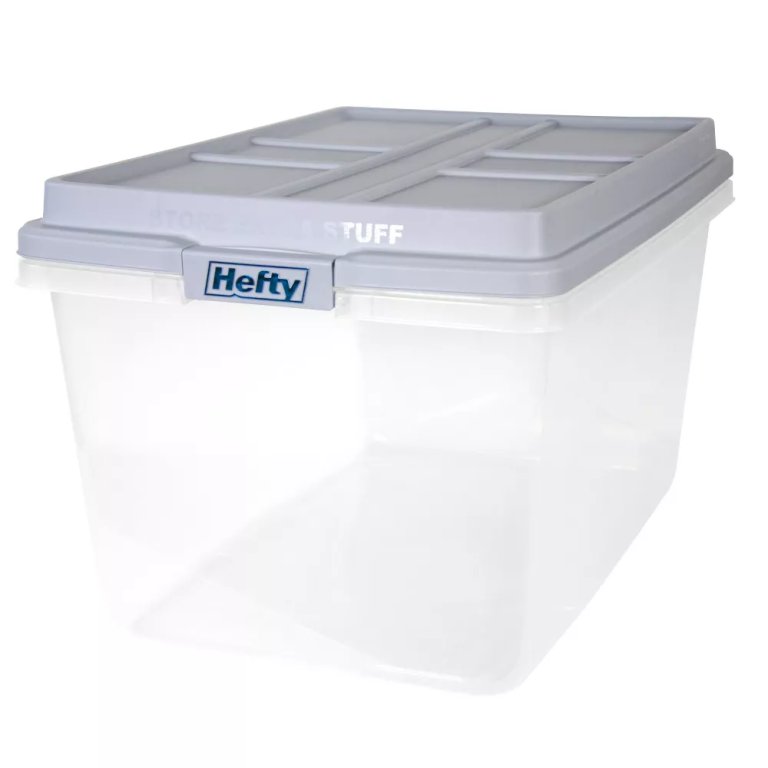
Hefty 72-qt. Hi-Rise Storage Bin with Stackable Lid
Buy Now3. Assess the quality of the lid.
While it’s difficult to do when purchasing bins online, it’s important to understand how the container’s lid works. Hiland cautions that if there’s any way to test the latches on the lids, do so before taking anything home. “Some lids are very difficult to unlatch and to make sure that they’re properly latched, so if you have the ability to check that out in advance, I recommend doing that,” says Hiland. Some lids just snap on, which might make them easy to open, but those are the least effective at keeping out dust and moisture that could ruin your belongings.
Hiland prefers a line that Hefty makes with an extra 2 inches at the top of the lid. “I love using those because then you can fill the bin all the way up and still close it without having gaps,” says Hiland. “There’s been so many times when we fill the bin up, and then we have to take a few things out because it’s not closing all the way with the lid.”
If you’re storing items outside or in a garage, Hiland suggests looking for weatherproof storage bins such as the Weathertight Totes by The Container Store. “They have a little insulated strip that goes all around the lid, so that when you close it, it has an airtight seal,” explains Hiland. “This is the best way to keep out dirt, bugs, mice, and moisture. Plus, they’re super durable.”
Expert Pick
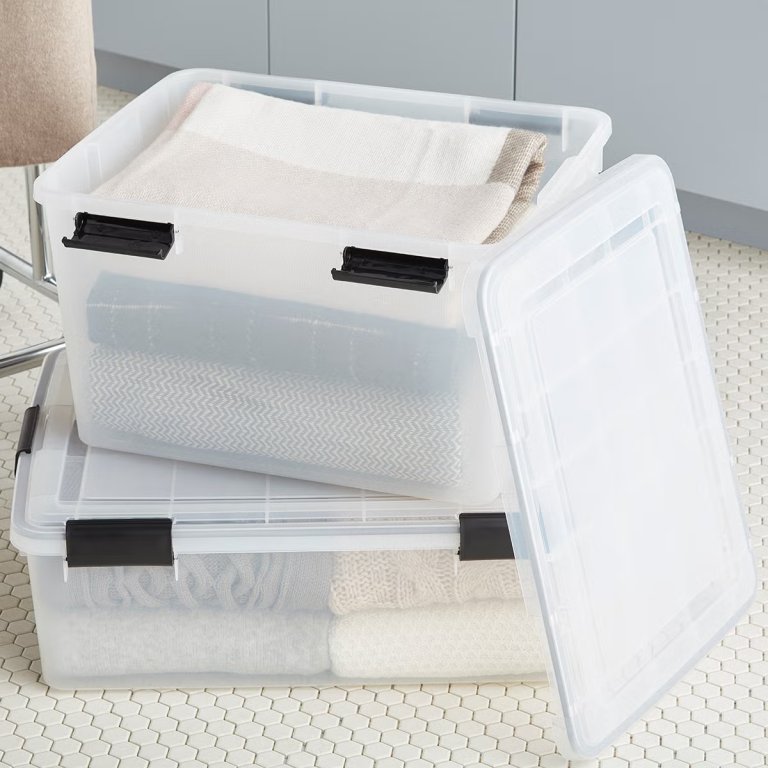
The Container Storage 19-qt. Clear Weathertight Tote
Buy Now4. Decide how often you will need to access the bins.
Another aspect to think about when organizing items is how often you expect to access the bins or move the contents of the bins from room to room, since weight can become a concern. For clothing that you plan to use often, you probably want to pick stackable clear plastic bins that aren’t too heavy, since they provide excellent protection along with a view of what’s inside. If you are storing items in your attic and need to bring them down occasionally, make sure the bins aren’t too large and heavy, says Bailey. There are also storage bins available with wheels, which can be helpful for holding heavier items.
5. Pay attention to the consistency and coordination of bins and labels.
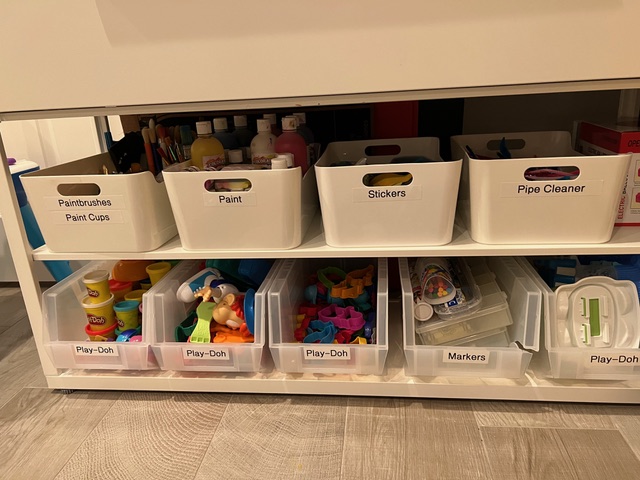
Finally, both Bailey and Hiland stress the importance of coordinating storage bins throughout a space. “The way to make things look the most organized is to use the same bins,” says Hiland. “If you can’t do that, or if you need some different sizes, then you can sometimes find bins in the same line so they have the same lid or the same features so they look visually similar.”
Consistent labeling is also key. “Having similar labels will also help with aesthetics and making it look like it’s all part of a thought-out system,” advises Hiland. Bailey uses a label maker to create same-size labels with a matching font. “As long as it’s consistent, I think it works. Each bin should be labeled in the exact same spot,” explains Bailey. You can find bins with built-in label slots, cardholder compatibility, or smooth surfaces primed for adhesive labels.