We may earn revenue from the products available on this page and participate in affiliate programs. Learn More ›
Table of Contents
Peanuts are more than a nutritious, dietary staple: They’re an important cover crop that can help your vegetable garden flourish, and the humble peanut’s journey from foodstuff to soil booster is a fascinating one. In honor of Black History Month, we celebrate the former slave turned scientist who pioneered sustainable growing practices using the crop. Here’s how you, too, can use peanuts to get your garden into peak condition.
Why are cover crops important?
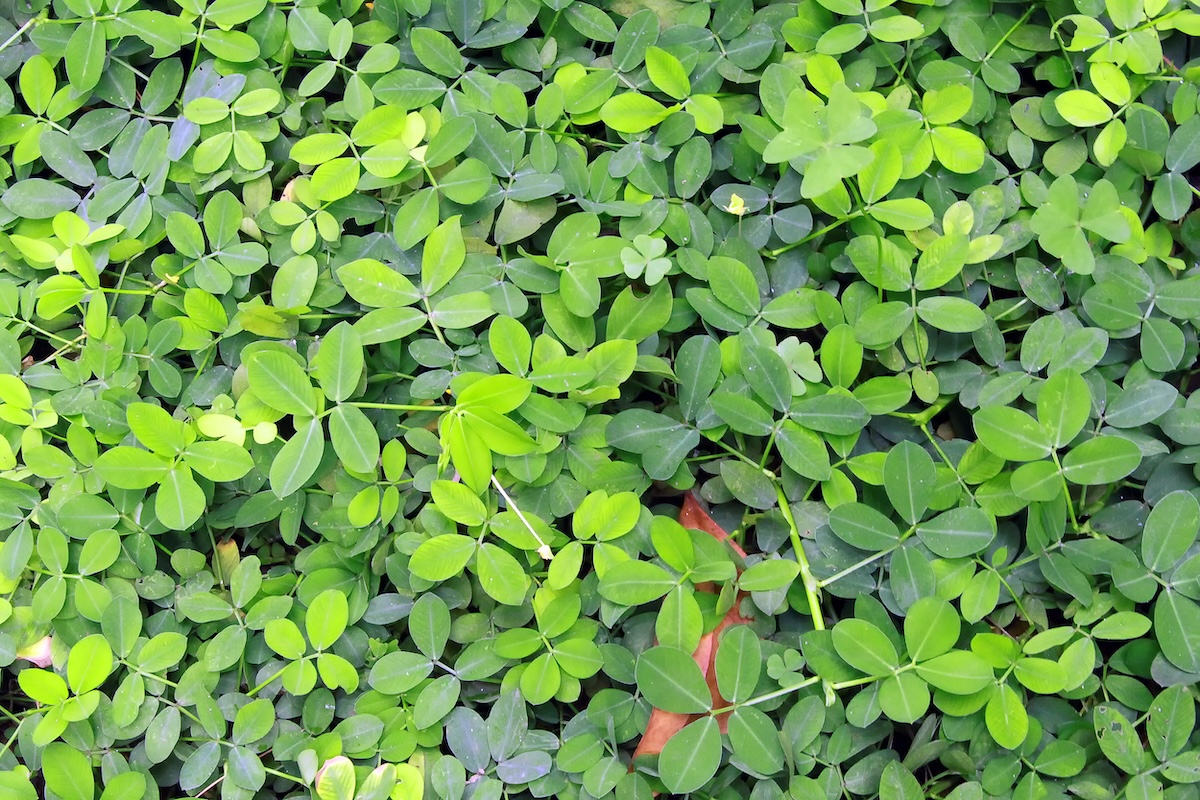
Cover crops, also known as green manures, are alternatives to animal manure and other traditional fertilizers. Cover crops control weeds, prevent erosion, and reduce the spread of soil-borne disease. When it’s time to plant a regular garden crop, the green manure is turned into the soil to add nutrients and improve its condition. Though there are a number of cover crops that farmers and gardeners use to improve soil, George Washington Carver, a former slave who became a brilliant agricultural scientist, popularized using peanuts for this purpose.
George Washington Carver, Peanut Pioneer

Carver, who was born in Missouri just before slavery was abolished (circa 1884), used his expertise in botany to develop sustainable farming techniques with the intention of helping poor Black farmers in the South, post-emancipation. Carver saw these farmers struggle to grow crops in soil that was depleted of nutrients. Black farmers living in a Jim Crow-era South were forced into debt and kept from owning land. With commercial fertilizers financially out of reach for these farmers, Carver sought to find and share alternative, accessible ways to improve soil health. He believed that planting cover crops could help destitute farmers boost their soil’s nutrient content without having to shell out the little money they had on expensive fertilizers.
Carver found that peanuts were an ideal cover cropping choice for Southern climes, thanks to their affinity for warm, humid weather. The botanist’s work in the field of agriculture remains important today. His altruistic approach to farming science shows how much we can learn as growers and stewards of the earth when we freely share our knowledge. He also taught us that peanuts have hundreds of uses, including in the garden.
How Peanuts Boost Soil Health
Though peanut butter takes its place among other nut butters in the supermarket aisle, the peanut is actually a legume. Carver understood that what makes the peanut plant so well suited to cover cropping duties is its nutrient-boosting powers. Instead of gobbling up nitrogen like other plants, legume roots return this vital nutrient to the soil.
As peanut plants decompose, the dead and decaying matter also releases nitrogen, leaving behind plenty of food for the next hungry crop. Cover crops, including peanuts, also improve the condition of the soil. The soil becomes fluffier, better at retaining moisture and letting root systems breathe.
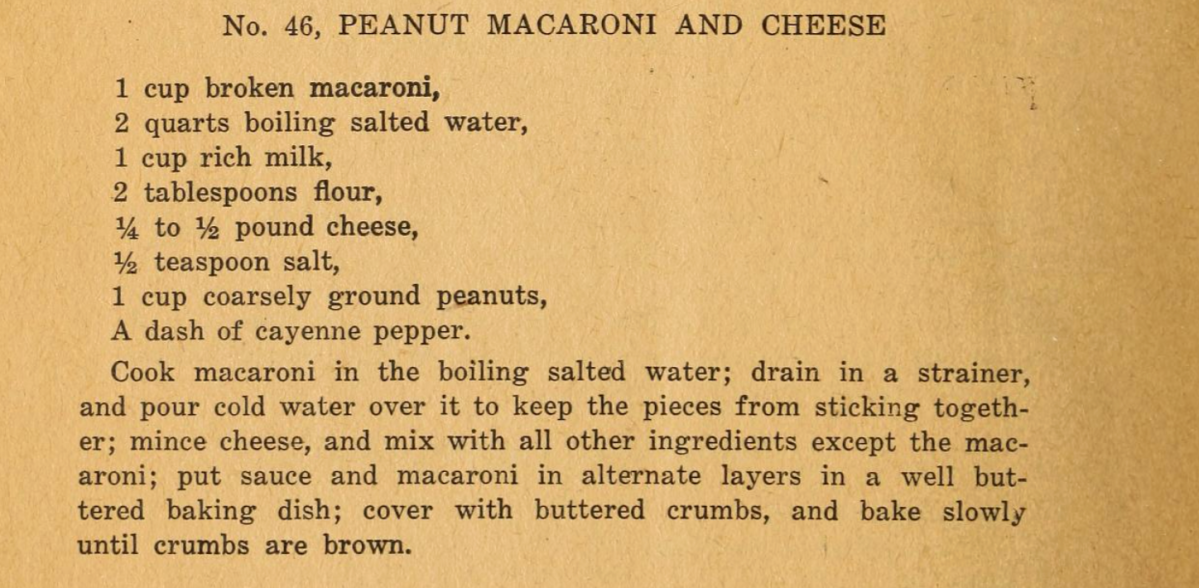
Peanuts, 105 Ways
“I do not know of any one vegetable that has such a wide range of food possibilities,” Carver said of the peanut and boy, he meant it. In his 1917 publication, How to Grow the Peanut: and 105 Ways of Preparing it for Human Consumption, Carver provides over 100 peanut-centric recipes, some more conventional than others.
Planting Peanuts: The Basics
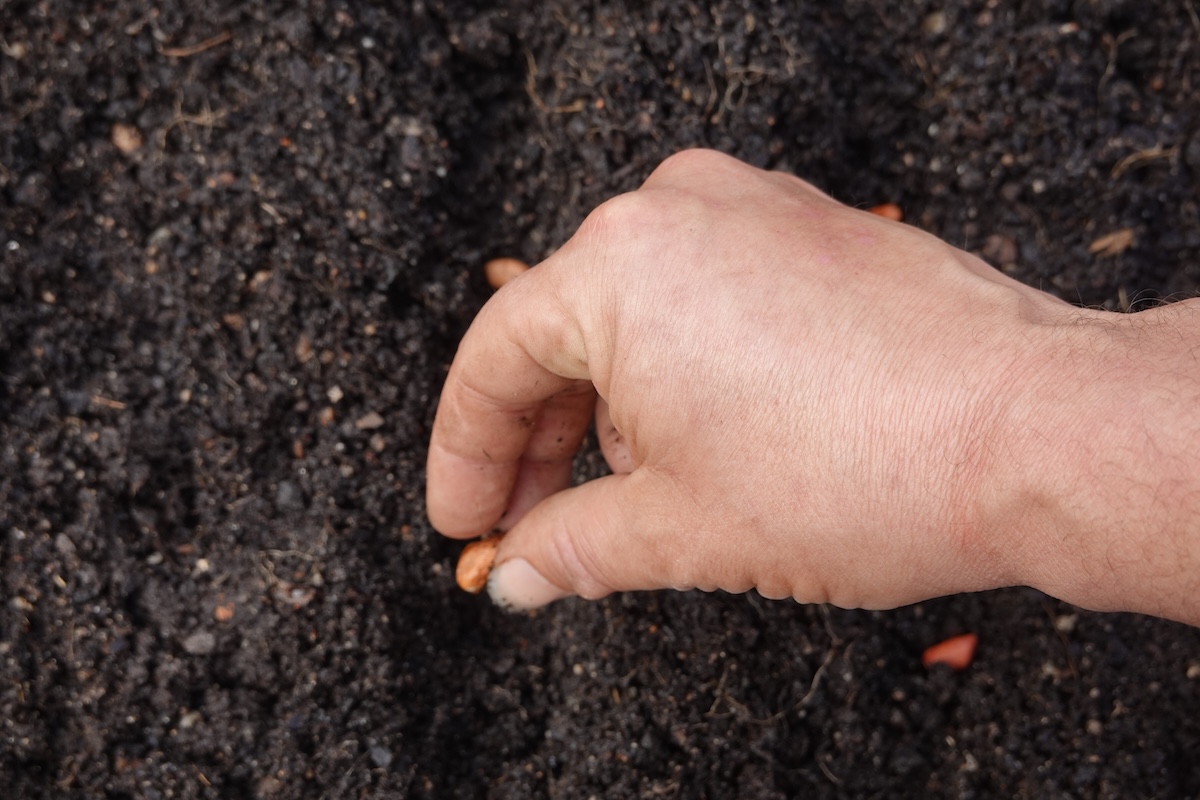
Peanuts thrive in sunny, hot, and humid weather, but the plants can also tolerate partial shade. Well-drained soil is ideal for growing peanuts because peanut roots don’t like to be waterlogged. Be sure to plant this cover crop in the spring. Peanuts require up to 160 days to mature, depending on the variety. The bed in which you plant them will be out of commission for most of the growing season. Use crop rotation practices, another sustainable gardening technique favored by Carver, to plant peanuts in a different bed each year; doing so will help maintain soil health throughout your garden.
Growing tips
• Inoculating peanut seeds with a bacteria called Rhizobium helps improve their nitrogen-fixing capacity. You can buy it in powdered form and sprinkle it on moistened seeds before planting.
• Plant treated peanut seeds in rows 12 to 24 inches apart. Hilling (mounding the dirt) the base of the plants helps improve root spread underground.
• Much like potatoes, peanuts are harvested once the foliage yellows, by pulling the plant root system up from the ground. Till the remaining plant matter back into the soil to further boost nitrogen levels.