We may earn revenue from the products available on this page and participate in affiliate programs. Learn More ›
Keeping your lawn green and mowed and your flower beds lush and tidy can take up a big part of your summer weekend, but it doesn’t have to. You can have a neat, colorful backyard with places to play or relax—and that even satisfies your HOA—without eating up your free time with maintenance. There’s a big difference between letting your backyard take care of itself and simple neglect from having too little time (or desire) to maintain the yard.
Between smart landscaping decisions and new, smarter tools, a low-maintenance yard is more attainable than ever. You can set up your backyard to minimize maintenance tasks with a little upfront planning, like selecting the right spot for grass, finding easy-care plants, and stifling weeds. Add a little technology to help with maintenance, and you can spend more time relaxing in your backyard than stressing over its health or appearance.
Reduce mowing tasks with automation.
Heading outside after a day of work to mow a too-tall lawn gets old, especially if you have to mow at least once a week to keep your grass healthy. In the heat of summer, it’s even harder to find a time cool and comfortable enough for the physical task. Instead, you can sit in the shade and watch your robotic lawn mower propel itself around the lawn much like a robot vacuum cleaner. The mower will run on your programmed grass height and schedule and return to a dock between uses.
Once you find the best robotic lawn mower for your backyard’s size and set it up, the robot is remarkably self-sufficient for an electric mower—and even more so than a gas model. It’ll head to the charger when its battery runs low and pick up where it left off, if that interrupts a larger job. You’ll only need to hose off the undercarriage occasionally, change the blades once or twice a year, and replace the batteries every few years. There’s no need to change oil or add gas. Since they can run often and typically mow in a random pattern, robotic mowers can also produce healthier grass with no wheel ruts.

Tool Tip
Supported by Airseekers
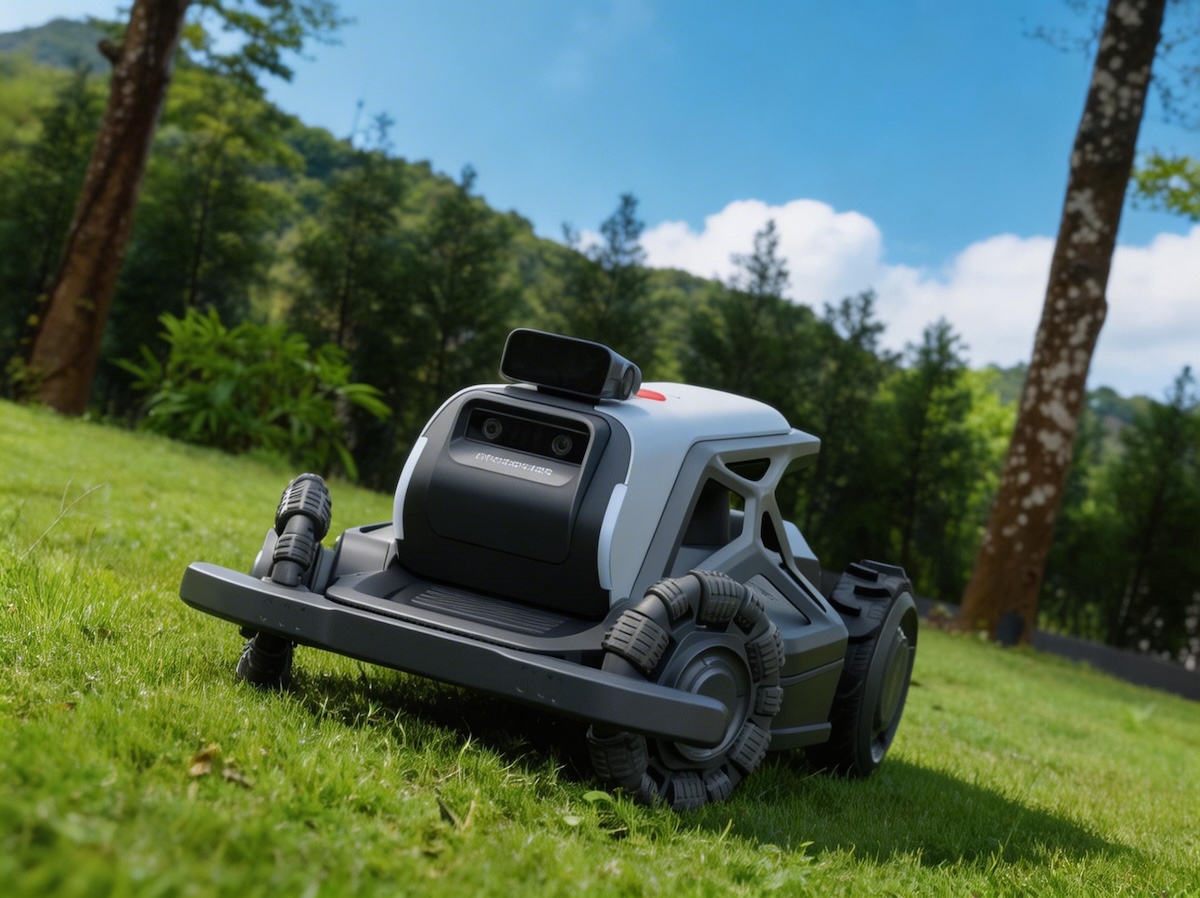 Take back your weekends and achieve thicker, greener grass through shorter, more frequent cuts with the help of an advanced robot lawn mower. The Airseekers Tron SE Series mower uses FlowCut technology to lift and repeatedly chop clippings into fine mulch that boosts soil structure and nutrients. Its SUV-inspired design can easily handle uneven terrain and strenuous mowing while you sit back and relax. Plus, the powerful battery system ensures minimal downtime, maintaining up to 0.44 acre (1,800 square meters) on a single charge.
Skip high-maintenance grass in some areas of the yard.
It’s nice to have some grass in the backyard for kids and pets—but the more grass you grow, the more work it can be to water, mow, and weed. Backyard conditions can change as a landscape matures. For example, a large-canopy tree can cast too much shade on grass planted near it, inhibiting growth. Other problem areas for grass are slopes, damp and mossy areas, or high-traffic spots in the yard.
A simple solution is to remove areas of problem grass and replace the turf with plants that can handle the conditions and are better at self-care. “Xeriscape projects can easily be incorporated into any yard spaces,” says Jamey Zurcher, lead designer and project manager at Enviroscapes Landscape Solutions in Denver, Colorado. You don’t need to choose to give up a whole front lawn or replace the entire backyard with xeriscaping, either. Zurcher says it is especially effective at treating problem areas. For example, spots with full shade “can easily be turned into rock gardens with boulders or shaded seating areas to take advantage of their cooler microclimates.”
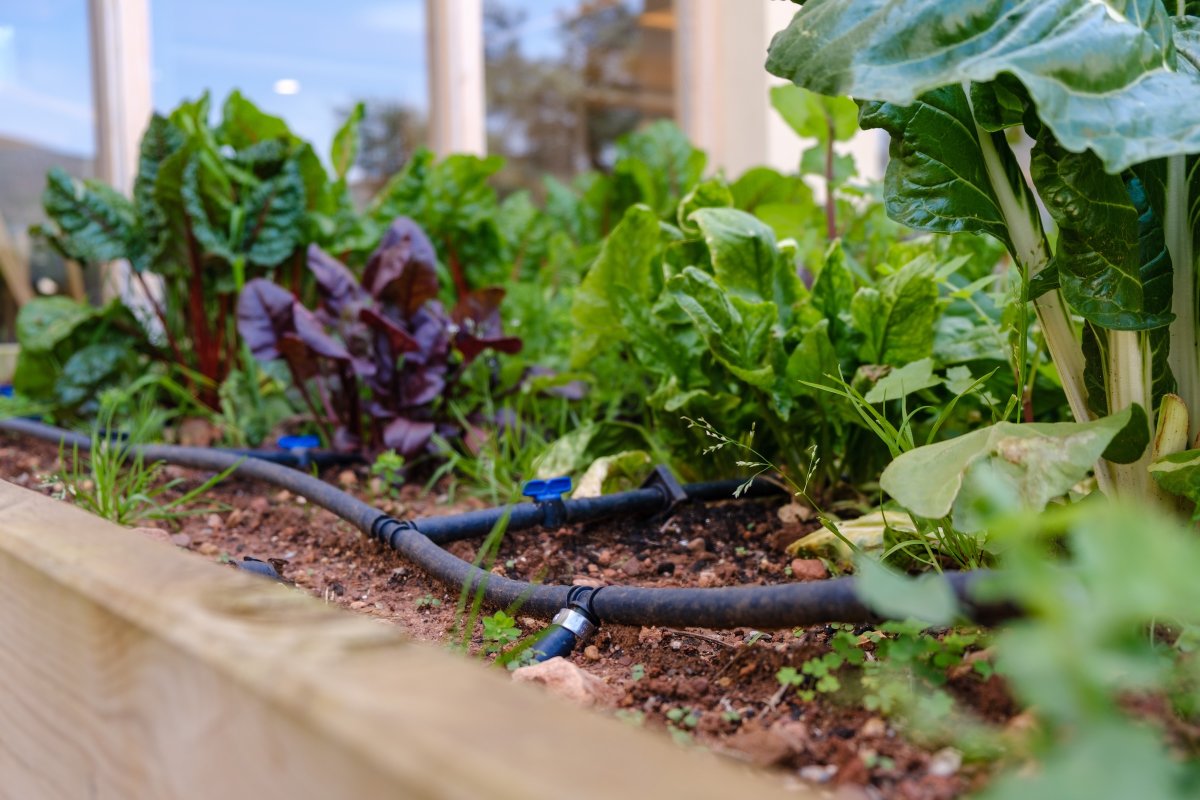
Water deeply and automatically.
With drip irrigation, you can deliver water deeply, which should reduce how often you have to water and lower overall water usage. Drip irrigation “targets the root area of plants, ensuring direct water to the base of the plant at a slower rate,” Zurcher says. The deeper the water, the less evaporation occurs, which means less frequent watering. “A deep root waterer is a great tool for deeply watering trees at the root level during summer and especially in dry winter months,” adds Zurcher. Just push the long hollow tube into the ground a foot or more deep and attach a garden hose or drip line.
Installing a drip system can save time and water and improve the health of plants, which can make your life easier.
Even inexpensive irrigation controls have features to schedule watering with drip or sprinkler heads, so you don’t even have to push a button once programmed. Newer smart controllers can adapt watering schedules to weather and other conditions, and most have apps, so you can make changes remotely. It’s even possible to add a hose timer so lawn sprinklers run automatically (and can skip watering when rain is forecast).
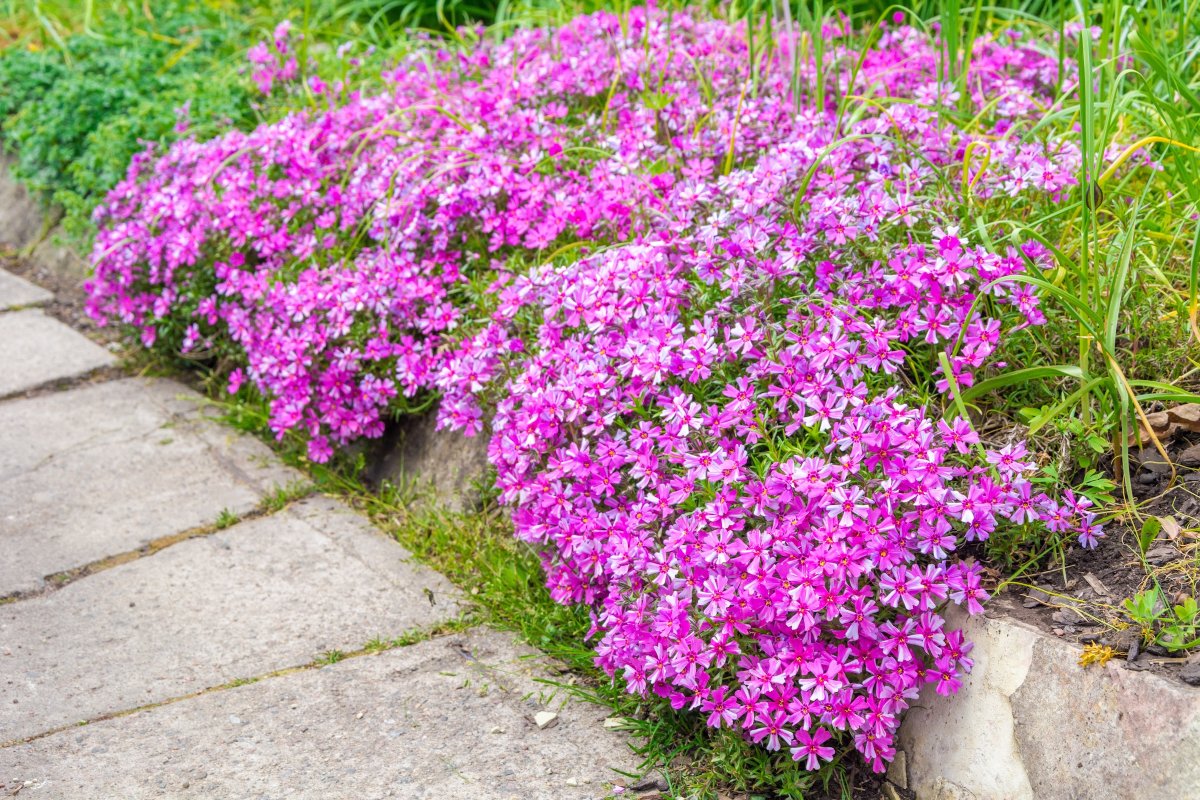
Outcompete the weeds.
Although Zurcher says that deep mulching of beds in your backyard can control weed growth, you can also select plants that outcompete weeds. “Vigorous ground covers like vinca, creeping Jenny, sedum, and junipers can cover areas to reduce bare spots where weeds can take root,” she says. Work with nature by opting for ground covers adapted to your growing zone and the sun exposure where you’ll plant them—better still, native to your region—to cover bare spots on slopes or where grass has struggled.
Bugleweed, periwinkle, and ginger are common options to cover the ground in shade or under trees. Plants like creeping phlox or creeping thyme suppress weeds, produce flowers, and are low-maintenance ground covers.
| Ground Cover | How It Spreads | Sunlight Needs | USDA Growing Zone |
|---|---|---|---|
| Bugleweed (Ajuga) | Quickly, above-ground runners | Partial to deep shade | 3 to 9 |
| Periwinkle (Vinca minor) | Rapid, runners root in place | Dappled sunlight to full sun | 4 to 9 |
| Ginger (Zingiber officinale) | Fleshy roots (rhizomes) | Partial shade | 9 to 12 |
| Creeping phlox (Phlox subulata) | Thins in middles, spreads away from center | Dappled sunlight to full sun | 5 to 8 |
| Creeping thyme (Thymus serpyllum) | Horizontal stems form new roots | Full sun | 5 to 8 |
| Hardy ice plant (Delosperma cooperi) | Stems spread and take root, also by seed | Full sun | 5 to 9 |
| Dwarf plumbago (Ceratostigma plumbaginoides) | Fast spread through root system | Partial shade to full sun | 5 to 9 |
| Turkish speedwell (Veronica liwanensis) | Slowly in mat form as stems root at nodes | Full sun | 4 to 8 |
If you prefer mulch and landscape fabric, Zurcher cautions that you should install “a commercial-grade polyspun fabric,” and that even these barriers break down over time, after which “they do not keep weeds from rooting on top of the fabric.”
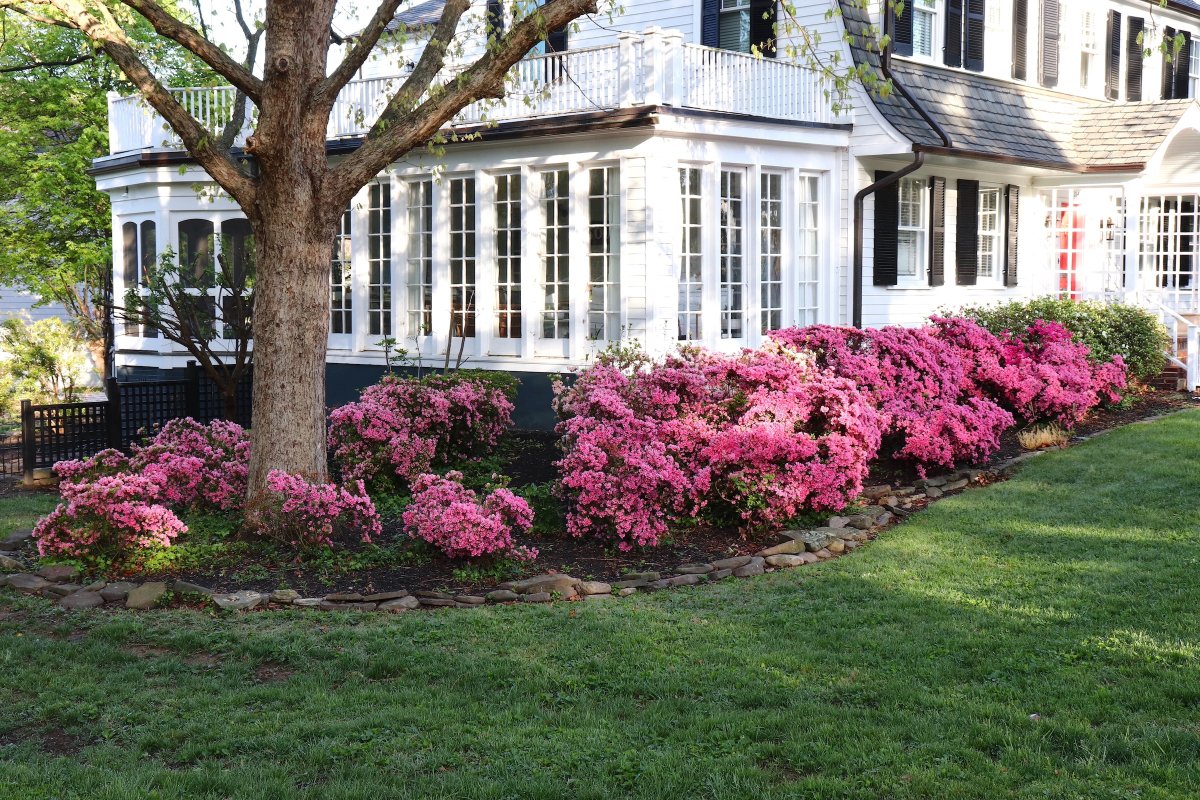
Select plants that need little to no pruning.
In addition to low-maintenance ground covers, many shrubs and flowering plants require little to no pruning and basically take care of themselves. Evergreen trees and shrubs usually require no pruning and provide year-round color. Arborvitae, yew, and blue holly are evergreen options in many climates. Barberries can grow for years without a need to prune, as can weigelas.
If you select a plant that needs a light pruning each spring, you will save more time by taking care of the task each year; pruning is more difficult once a plant grows to a large and irregular shape. So take a few minutes to prune lightly, and you’re done. When purchasing flowers for easy care, be sure to check whether the plant requires deadheading—removal of blooms as they fade—or if they are self-cleaning types. Though deadheading can be a rewarding garden task, it can also take lots of time. Some beautiful self-cleaning flowers are black-eyed Susans, coneflowers, lantanas, and salvias.
| Plant Name | Sunlight Needs | USDA Growing Zones |
|---|---|---|
| Arborvitae (Thuja occidentalis) | Full sun | 3 to 9 |
| Yew (Taxus) | Partial shade to full sun | 4 to 8 |
| Holly (Ilex) | Partial shade to full sun | 5 to 9 |
| Barberry (Berberis) | Partial shade to full sun | 4 to 8 |
| Oregon grape holly (Mahonia repens) | Partial shade to full sun | 5 to 8 |
| Spotted laurel (Aucuba japonica) | Shade to partial shade | 7 to 9 |
| Evergreen azalea (Rhododendron spp.) | Dappled sunlight to partial shade | 5 to 9 |
Create a rain garden.
If you want to keep watering to a minimum and still grow a few lush plants, consider creating a rain garden. “Rain gardens are beneficial in areas where rainwater can be directed and collected for plant use,” says Zurcher. She says to place rain gardens where downspouts end, but at least 8 feet away from your home’s foundation. By directing water to this collection area, you also lessen the potential for water damage to the foundation.
The best spot to build a rain garden is in a natural drainage path, where you see your yard slope or puddle after rainfall. Choose plants that can handle some drought and occasional flooding. You’ll have the most success and least amount of work down the road if you choose native plants that typically grow along rivers or creek beds where you live. Examples are deep-rooted grasses like deer grass (Muhlenbergia rigens) or native fescues (Festuca); tall flowering plants like cardinalflower (Lobelia cardinalis); and butterfly host plants like swamp milkweed (Asclepias incarnata).