We may earn revenue from the products available on this page and participate in affiliate programs. Learn More ›
Carpenter bee traps are a practical way to protect your home from the damage these burrowing insects cause. While carpenter bees are relatively peaceful and play an important role in pollination, they’re are known to make nests inside wooden structures, including homes, which can lead to water damage, rot, and even collapse. Traps for carpenter bees offer effective pest control by luring these woodworking bees away from your home. However, given the mixed online reviews for these products and the serious issues these pests can cause, choosing the right carpenter bee catcher is essential. To aid you in getting rid of carpenter bees, we contacted a pest control expert for advice, researched dozens of popular products, and put five of them through real-world testing.
After using the products for 5 weeks, the Best Bee Brothers Carpenter Bee Turbo Trap 2.0 took our top spot for its effective performance, attractive design, and easy installation. Whether you opt for this bee collector or another carpenter bee attractant, we’re confident each option is among the best carpenter bee traps on the market.
- BEST OVERALL: Best Bee Brothers Carpenter Bee Turbo Trap 2.0
↓ Jump to Review - BEST BANG FOR THE BUCK: Rescue! VisiLure TrapStik
↓ Jump to Review - BEST PINE TRAP: Original B Brothers Carpenter Bee Trap
↓ Jump to Review - BEST CEDAR TRAP: Hawthorn Innovations Cedar Carpenter Bee Trap
↓ Jump to Review - BEST HOLE PLUG: BB Pro Carpenter Bee Blocker Kit
↓ Jump to Review
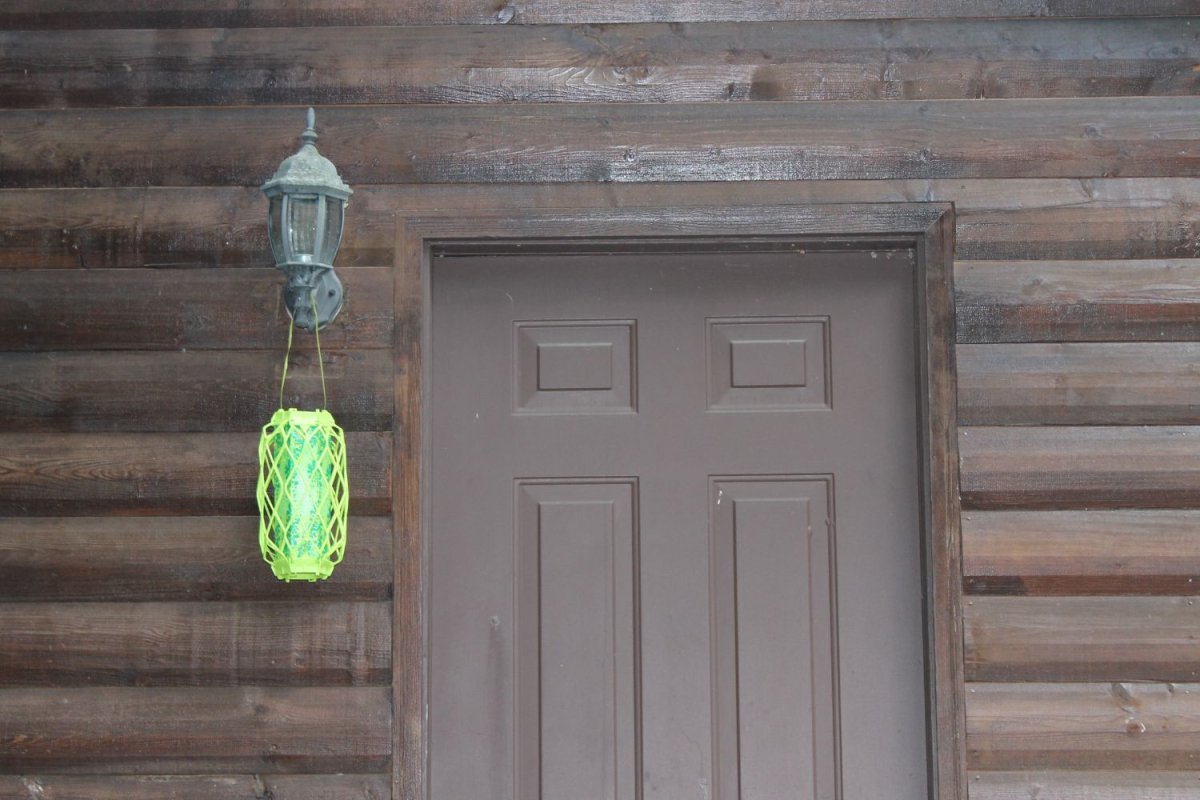
Carpenter Bee Traps Comparison
| Product | Type | Weather resistance | Reusable | Our Rating |
| Best Bee Brothers Carpenter Bee Turbo Trap 2.0 | Bee collector | Suitable spring through fall | Yes | 4.8/5 |
| Rescue! Carpenter Bee TrapStik | Sticky trap | Suitable spring through fall | No | 4.4/5 |
| Original B Brothers Carpenter Bee Trap | Bee collector | Suitable spring through fall | Yes | 4.5/5 |
| Hawthorn Innovations Cedar Carpenter Bee Trap | Bee collector | Suitable spring through fall | Yes | 4.5/5 |
| BB Pro Carpenter Bee Blocker Kit | Hole plug | All-weather resistant | No | 4.6/5 |
Our Top Picks
If you need to know how to get rid of carpenter bees, we recommend you start by reviewing this lineup of top carpenter bee repellent options. Each product acts as an effective carpenter bee treatment to help protect your home—without the use of chemical insecticides.
Best Overall
Best Bee Brothers Carpenter Bee Turbo Trap 2.0
Buy at Amazon Buy at Walmart Buy at Best Bee BrothersWhat We Like
- Can be mounted or hung
- Pull-string release door for easy emptying
- Lightweight, attractive design
What We Don’t Like
- Only protects a 15-foot radius
Product Specs
- Type: Bee collector
- Weather resistance: Suitable spring through fall
- Reusable: Yes
Our Ratings
| Ease of Use | 5/5 | Durability | 4.5/5 | Value | 4.8/5 |
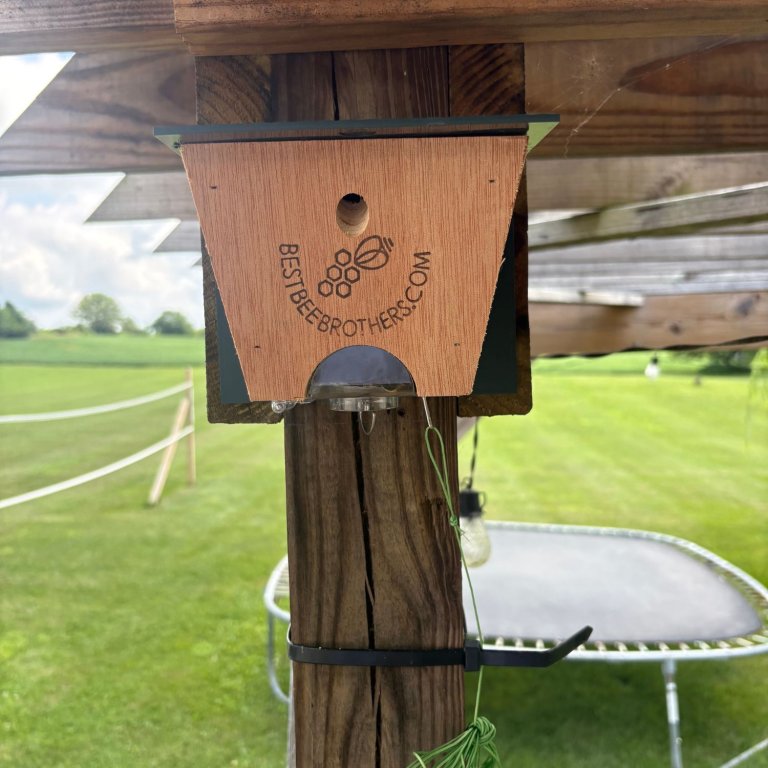
The Best Bee Brothers Turbo Trap 2.0 is an upgraded option with a greater capacity for getting rid of bees that have reached infestation levels. It uses a four-chamber funnel system and a secure “Bee Vault” that rely on bees’ sense of sound and smell to lure and retain them. The manufacturer recommends one trap per 15-foot radius.
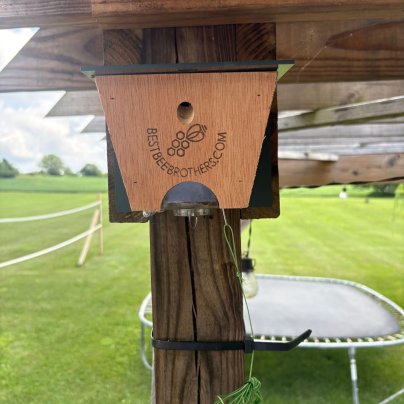
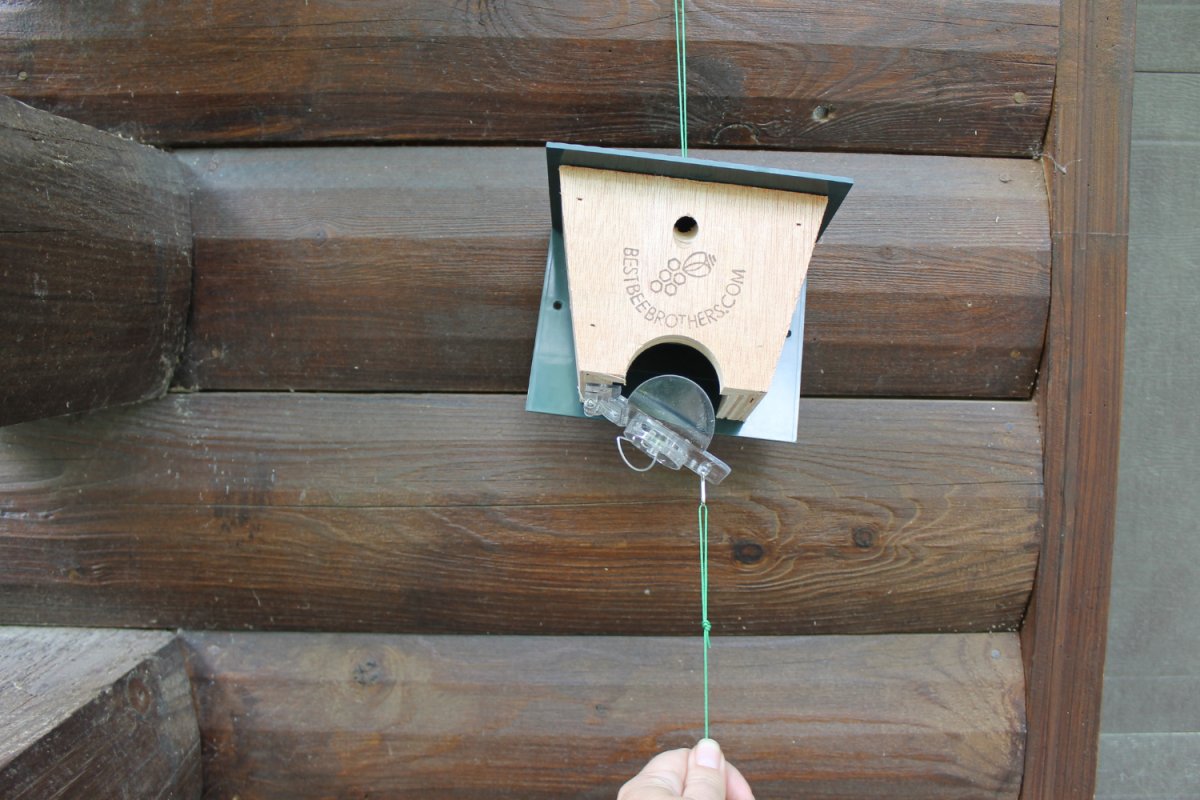
This option has a few nice features those who don’t like bugs will appreciate, including a spring-loaded release door that attaches to a 9-foot string for no-touch disposal as well as a large viewing window for monitoring catches and fill level. It’s made from wood and durable plastic, and unlike many catchers, it has three entry holes instead of just one.
The Turbo Trap 2.0 comes with an attached string for hanging on a hook or screw, and it also features holes on either side of the plastic casing, allowing for easy mounting. Since we tested a two-pack, we tried both installation methods—mounting one trap on a wooden deck post and hanging the other on a log cabin-style garage. Out of the traps we tested, this was the first to successfully capture a bee. Part of its power lies in bees using their pheromones to attract other bees, which can make it helpful to use a tube of the brand’s Bee-licious bee bait to kick off the collection process. However, this isn’t necessary; we successfully used the traps without any carpenter bee bait.
What our tester says: “This carpenter bee trap is attractive and easy to set up, but best of all, it’s effective. It took a while to capture the first bee, but soon after, the trap’s bee vault started filling up.”—Katie Barton, Product Reviews tester and writer
Get the Best Bee Brothers carpenter bee trap (various pack sizes) at Amazon, Walmart, or Best Bee Brothers.
Best Bang For The Buck
Photo: Katie Barton for BobVila.com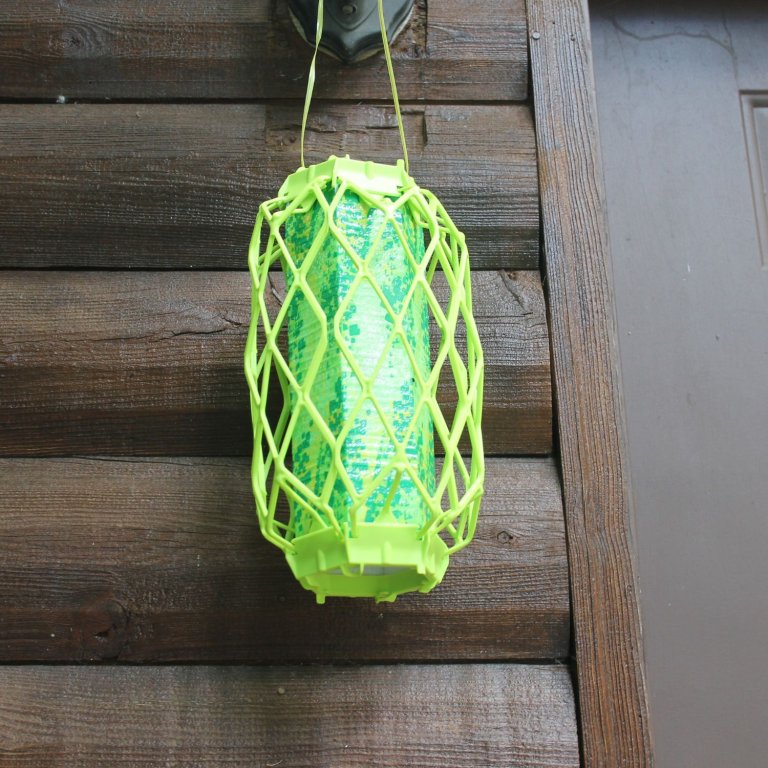
What We Like
- Ready to install right out of the box
- Requires no emptying or cleaning—simply throw away
- Effective against most flying insects
What We Don’t Like
- May fall apart in wind and heavy rain
- Mildly difficult assembly due to stickiness of trap
Product Specs
- Type: Sticky trap
- Weather resistance: Suitable spring through fall
- Reusable: No
Our Ratings
| Ease of Use | 4.3/5 | Durability | 4/5 | Value | 4.7/5 |
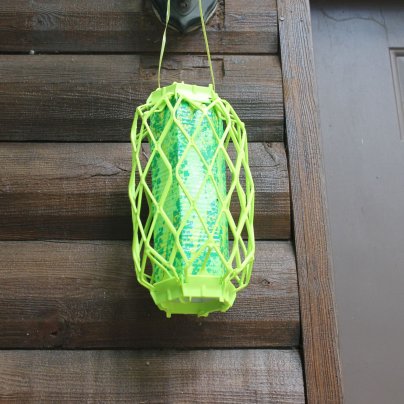
This carpenter bee sticky trap uses a bright, attractively colored design to lure carpenter bees, hornets, wasps, and yellow jackets, offering a chemical-free way of killing carpenter bees to manage infestations. Once insects land on the powerful adhesive, they’re unable to fly away—and the pheromones they release attract even more pests. The TrapStik comes with a rope for easy hanging, either vertically or horizontally, and is surrounded by a built-in guard so birds and small animals don’t get stuck.
While not technically difficult, assembling this product was a little harder than we expected. It comes without the guards, so the trap sticks a little to its packaging, requiring some finessing to remove it and get the glue guards in place. While the glue isn’t strong enough to stick to human skin, it’s still a good idea to install this hanging carpenter bee trap out of reach of children and pets. The trap is intended to be weather-resistant, but the manufacturer recommends sheltering it from the rain to prolong its effectiveness, so we placed it under the eave of our garage roof. Once in place, we were pleased with its design and ability to trap a number of unwanted flying insects.
And although it doesn’t use any attractant chemicals or poisons, its effectiveness relies partly on the pheromones from previously trapped insects, meaning you’ll need to catch at least one carpenter bee to get the process going. Keep in mind that carpenter bee activity typically peaks from early March through June.
Get the Rescue! TrapStik carpenter bee trap (various pack sizes) at Amazon, Walmart, or Target.
Best Pine Trap
Photo: Katie Barton for BobVila.com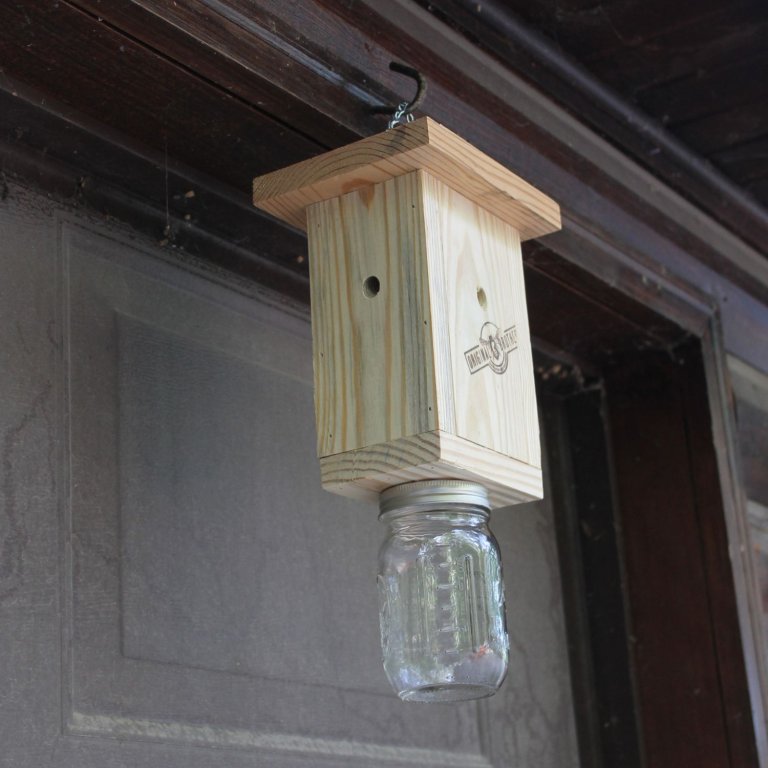
What We Like
- Attracts by mimicking a natural nest
- Durable wood and glass construction
- Easy to install; safe around kids and pets
What We Don’t Like
- May have to experiment with placement
- Glass can break if wind knocks it into something
Product Specs
- Type: Bee collector
- Weather resistance: Suitable spring through fall
- Reusable: Yes
Our Ratings
| Ease of Use | 4.5/5 | Durability | 5/5 | Value | 4.3/5 |
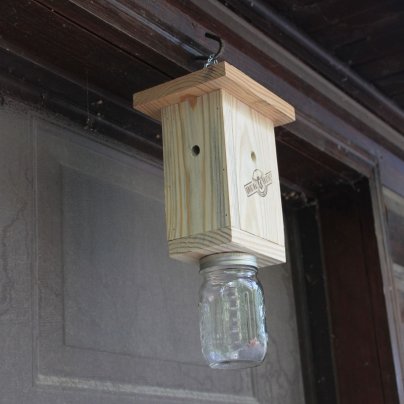
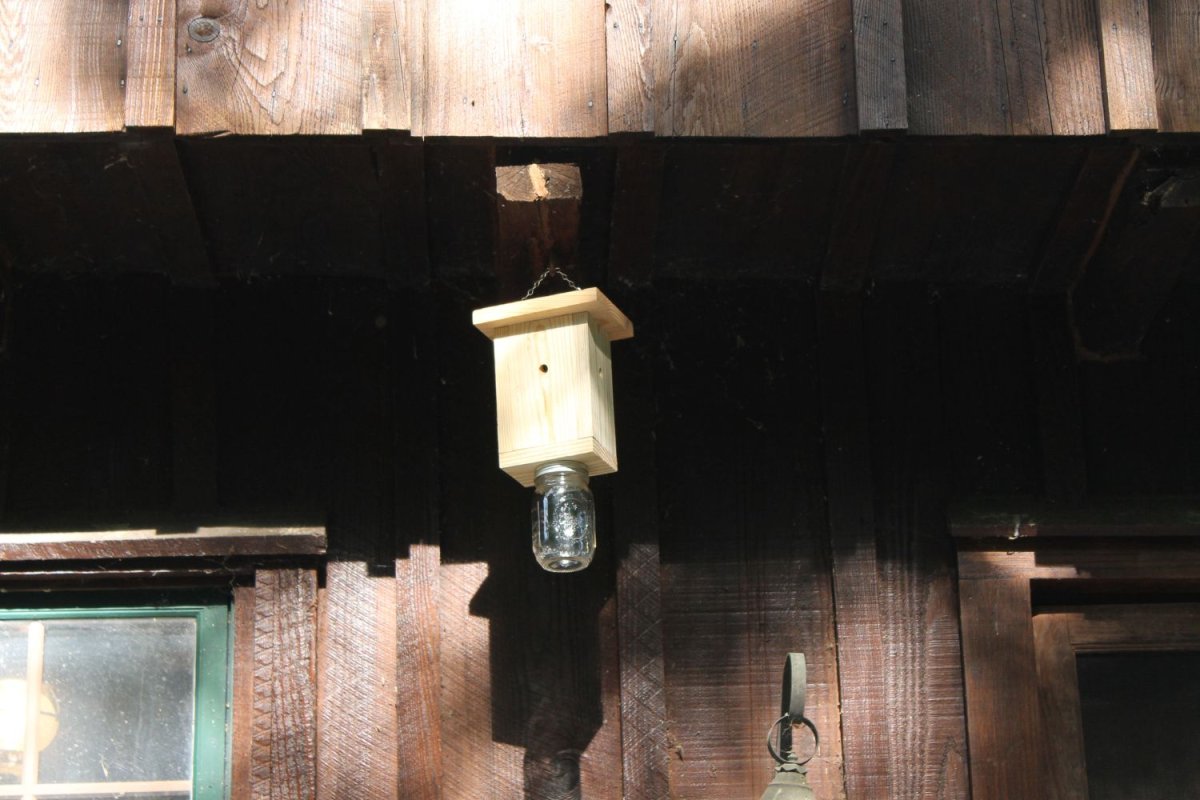
The Original B Brothers carpenter bee trap is a simple solution for eliminating infestations. Its natural pine design mimics a carpenter bee nest, luring these insects into the nest through an angled hole. Once inside, bees seek out the light at the bottom, where they become trapped in the attached mason jar. The mason jar is removable, allowing it to be dumped once the trap becomes full. Made by actual brothers, Brian and Bradley Blazer, this trap is non-toxic and reusable.
At first glance, we noticed that this bee trap was quite large in comparison to the others we tested. It comes with everything needed for installation, including two screw hooks and a hanging chain, with predrilled holes on top of the trap for the screw hooks. The chain slides on and off, allowing it to be hung from regular hooks or eye hooks installed in a home, garage, or other wooden surface.
You may need to experiment with placement initially. The included instructions recommend hanging the trap near existing bee activity or, to prevent new infestations, on the sunny side of buildings, in corners and peaks. Once you catch a bee, it will release pheromones that attract others. The B Brothers recommend one trap for every 15-foot radius of coverage.
Get the Original B Brothers carpenter bee trap at Amazon or Original B Brothers.
Best Cedar Trap
Hawthorn Innovations Cedar Carpenter Bee Trap
Buy at AmazonWhat We Like
- Made from natural cedar wood
- Rustic, hand-crafted appearance
- Eye hook comes preinstalled for easy hanging
What We Don’t Like
- Wood is rough to the touch in spots
- Pricey for a small trap
- Glass jar may break if dropped
Product Specs
- Type: Bee collector
- Weather resistance: Suitable spring through fall
- Reusable: Yes
Our Ratings
| Ease of Use | 4.8/5 | Durability | 4.5/5 | Value | 4.3/5 |
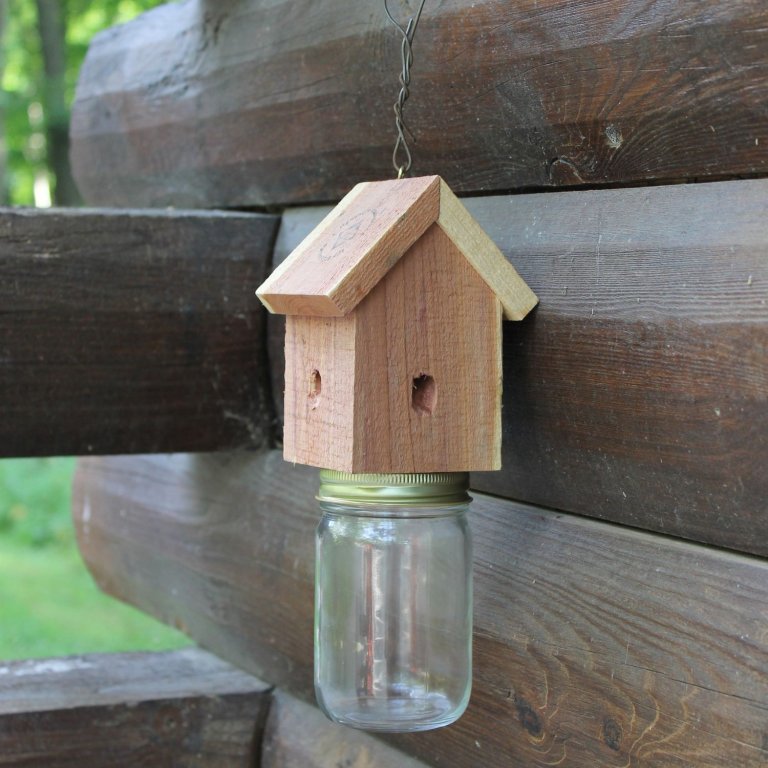
Those who care about the visual appeal of their carpenter bee trap just as much as its ability to reduce the wood-boring bee population might like this option from Hawthorn Innovations. It’s an Amish-made product, hand-crafted from cedar wood. Since these pests are drawn to cedar wood, no special attractant for carpenter bees is needed. The trap has a rustic appearance, with the wooden portion resembling a birdhouse, and a small glass jar sits at the bottom that screws on and off for easy dumping and cleaning.
We liked that this bee trap already had an eye hook at the peak, allowing us to run string or wire to hang it. We placed it on our log garage, which has become riddled with carpenter bee damage throughout the years. Though some might not like that this trap is on the smaller side, we thought its compact design made placement easy. It could easily hang off a screw and fit just about anywhere we needed it.
While we appreciate that the trap uses naturally weather-resistant cedar, it’s pretty rough to the touch in some spots, so we’d advise hanging it out of children’s reach to avoid splinters (and potential glass jar breakage).
Get the Hawthorn Innovations carpenter bee trap at Amazon.
Best Hole Plug
BB Pro Carpenter Bee Blocker Kit
Buy at AmazonWhat We Like
- Permanently seals carpenter bee holes
- Made of rust- and stain-resistant stainless steel
- Easy to install; offered as pack of 30
What We Don’t Like
- May not suit holes enlarged by woodpeckers
Product Specs
- Type: Hole plug
- Weather resistance: All-weather resistant
- Reusable: No
Our Ratings
| Ease of Use | 4.8/5 | Durability | 4.5/5 | Value | 4.5/5 |
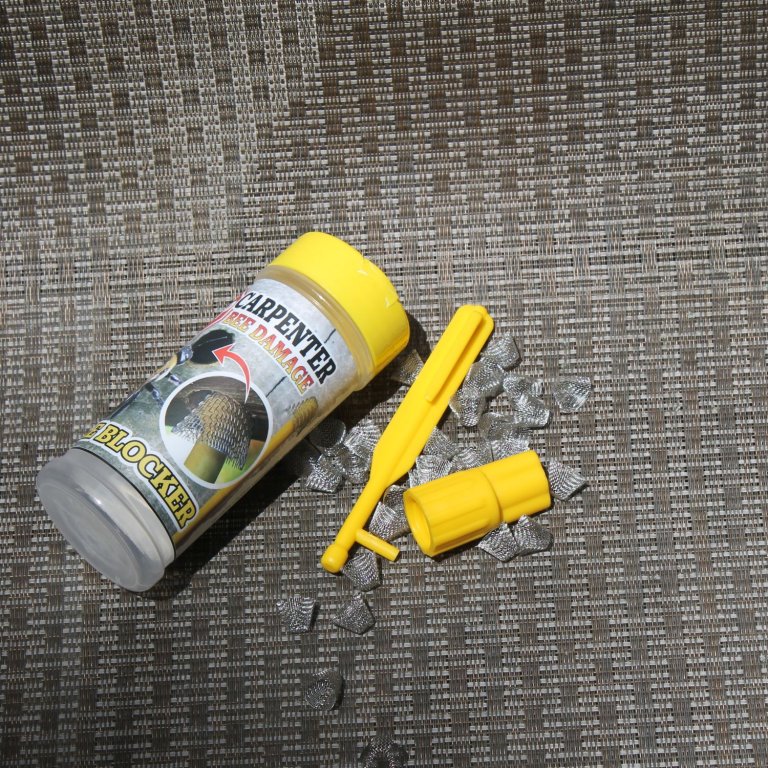
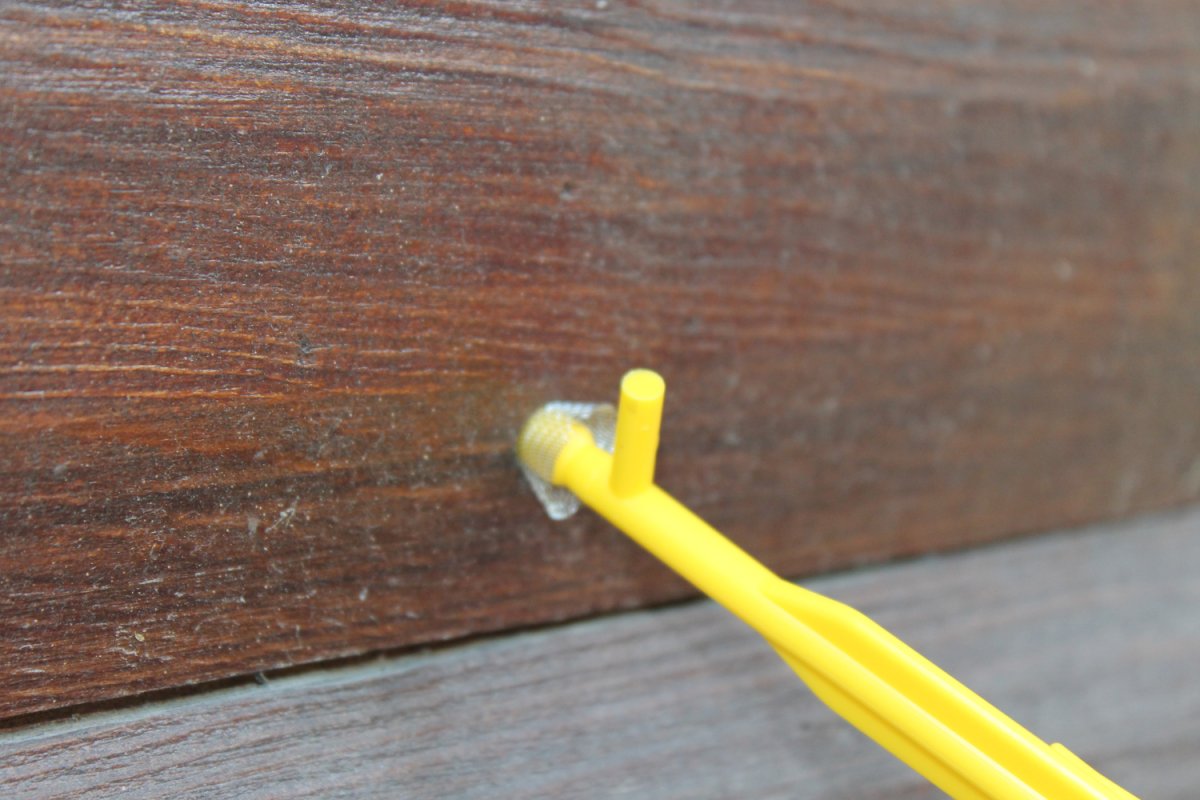
Before hanging a carpenter bee trap, it’s helpful to plug any existing holes so the bees are more likely to enter the trap instead of their previous burrows. The BB Pro Carpenter Bee Blocker Kit contains everything you need to do this, including 30 stainless steel mesh plugs and a specialized plastic tool for easy insertion. The plugs are stain- and rust-resistant so you don’t have to worry about them discoloring your wood surfaces.
Before setting our traps, we used this carpenter bee deterrent plug kit to seal previous holes. The stainless steel is quite malleable, which made it easy for us to push the plugs in. Our log-sided garage has more extensive damage in spots where woodpeckers have enlarged the carpenter bee holes. Unfortunately, these plugs were too small to seal the large cavities, but they worked perfectly for holes created by bees alone.
These mesh blockers can be used anywhere carpenter bees have created damage, including wood fences, decks, sheds, garages, and homes. Since wood-boring bees are likely to return to the same holes year after year, plugging them is a key strategy for treating carpenter bees. The best time to repair or plug holes is generally late summer (once new adult bees have emerged and left the nests) or early spring, before carpenter bee activity begins.
What our tester says: “This kit is so easy to use. It only took me a few minutes to plug the several carpenter bee holes that were plaguing my wood-sided garage.”—Katie Barton, Product Reviews tester and writer
Get the BB Pro carpenter bee traps at Amazon.
Or, DIY Your Own Carpenter Bee Trap
Folks looking to avoid toxic chemicals or interested in a more hands-on approach to dealing with a carpenter bee problem may wish to build their own wood-boring bee trap. Our guide detailing how to make a carpenter bee trap is suitable for beginners. It should only take about 30 minutes to complete the carpenter bee trap plans. Since materials will likely run you $20 or less, this DIY project is a very low-cost wildlife removal option.
Jump to Our Top Picks
How We Tested the Best Carpenter Bee Traps
| Products tested | 5 |
| Time spent testing | 5 weeks |
| Tests performed | 4 |
| Price range | $10 to $50 |
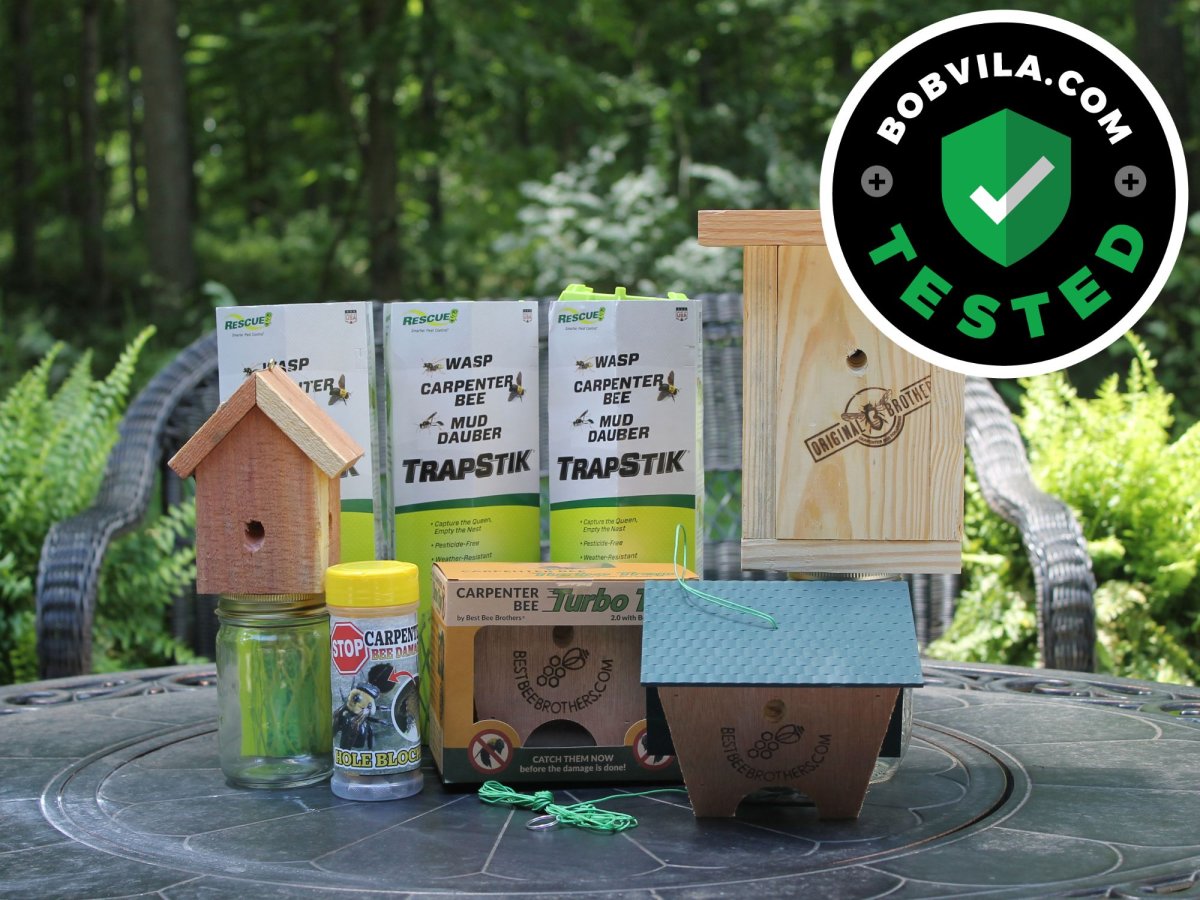
We looked at the wide range of carpenter bee solutions available on the market and did our research to curate a list of top picks for the best bee trap products across a range of categories. Based on our efforts, we found several sticky traps, collector traps, and hole blockers to meet users’ preferences. We then chose five highly rated options and put them through 5 weeks of real-world testing.
We tested these products on a log home, log garage, and wooden deck where carpenter bees (and their holes) were abundant. We evaluated each product on its ease of use, effectiveness, durability, and value. All results were recorded in a rubric survey, and at the end of testing, we compared them to determine our winner. The other products on this list were awarded based on the area in which they excelled.
You may notice our list doesn’t include any spray for carpenter bees. This is because most carpenter bee spray products use toxic chemicals that don’t meet sustainability guidelines we tried to uphold on this guide. However, if this is the route you’d like to take and you understand the downsides, our guide on the best wasp sprays includes some products that will work.
Our Testing Scores
| Product | Ease of Use | Durability | Value |
| Best Bee Brothers Carpenter Bee Turbo Trap 2.0 | 5/5 | 4.5/5 | 4.8/5 |
| Rescue! Carpenter Bee TrapStik | 4.3/5 | 4/5 | 4.7/5 |
| Original B Brothers Carpenter Bee Trap | 4.5/5 | 5/5 | 4.3/5 |
| Hawthorn Innovations Cedar Carpenter Bee Trap | 4.8/5 | 4.5/5 | 4.3/5 |
| BB Pro Carpenter Bee Blocker Kit | 4.8/5 | 4.5/5 | 4.5/5 |
What to Consider When Choosing a Carpenter Bee Trap
There are a few things to think about when shopping for wood carpenter bee traps. Before deciding on the best trap to keep your home safe from burrowing bees, it’s important to determine the type of trap to use. There are also other critical factors to consider, like weather resistance, ease of use, and versatility.
Bee Collector vs. Sticky Traps
Carpenter bee traps fall into two categories based on the way they trap insects and how they look.
- Bee collector carpenter bee traps are made of either plastic or wood, with the former designed to resemble a birdhouse and the latter designed to mimic flowers that attract bees. These traps feature holes or tunnels that carpenter bees enter before they are funneled through a series of winding tunnels that lead to collection receptacles. The bees become stuck there and die, releasing pheromones that draw in more carpenter bees. Collector traps are reusable, so you won’t need to invest in new traps every year.
- Sticky traps use attractants, baits, lures, fluorescent colors, and multidimensional patterns to draw carpenter bees, wasps, yellow jackets, and other flying insects to an adhesive strip, where they become stuck and die, releasing pheromones that attract more insects. This makes them a great option if you’re wondering how to get rid of wasps and carpenter bees simultaneously. Sticky traps are not reusable, so you’ll need to replace them when they’re full or when the adhesive becomes ineffective due to accumulated dirt, dust, or debris.
Weather Resistance
Any pest control solution used outside the home needs some type of weather resistance to prevent it from becoming completely ineffective after the first rain. Since most bee collector traps are made of wood, glass, or plastic, they are well-suited to outdoor environments. They also often have sloped roofs that help prevent water from getting in.
Sticky traps may be more susceptible to the elements since the adhesive can freeze or be weakened by rain. Even if they don’t get wet, their adhesive can lose its power if dirt and dust blow onto them. Still, most sticky traps are designed to last at least a couple of weeks, if not a couple of months.
Ease of Use
Choosing a simple strategy to protect your home from invading carpenter bees is important, especially since time is of the essence to prevent cosmetic or structural damage. Fortunately, these traps are relatively easy to use for getting rid of bees. Simply hang the trap in a location frequented by carpenter bees, such as the top corner of the house or inside a wooden shed, and dump the container once it’s full of dead bees.
Sticky traps are about as easy to use as bee collectors, but it’s a good idea to place them out of reach of curious kids and pets. They may also require a bit more attention than wooden traps, as you’ll need to replace them every few weeks or months, depending on the product. Also, if the sticky trap is very successful, the adhesive will fill up quickly and require replacement sooner.
Both bee collectors and sticky traps can be baited with a bee, hornet, and wasp attractant. Common attractants use the active ingredient heptyl butyrate to lure bees to the trap with a fruity odor, which can also attract wasps, hornets, and yellow jackets, taking care of more than one pest with a single trap.
Versatility
Bee collector traps are a great option for drawing in carpenter bees, and their natural design makes them safe for homes with kids and pets. Plus, they will not negatively impact local insects or wildlife. However, they generally don’t attract as many types of insects as sticky traps, so they may not help if you also have hornets, wasps, or yellow jackets.
Sticky traps are more versatile for eradicating a variety of pests. The adhesive is completely indiscriminate about what it catches, and the bright colors and multidimensional shapes draw in a broad range of flying insects. The drawback is that they can catch unintended wildlife, like bumblebees vs carpenter bees and even butterflies, honey bees, and small birds, so it’s important to look for a product with a protective design and place it away from flowering plants.
FAQs
If you have questions about carpenter bee prevention or traps for bees, the following answers to some of the most commonly asked questions could help.
Carpenter bee traps should be put out at the beginning of spring and left out all summer. Since dead carpenter bees release pheromones that draw live ones into the trap, it’s a good idea to keep them up even if you aren’t still seeing bees.
The best place to put a carpenter bee trap is high on any corner of the home so that the bees have full access to the trap and it’s easy for them to see the entrance.
Attractants and carpenter bee bait for traps are good options for drawing carpenter bees in. Heptyl butyrate is the chemical primarily responsible for attracting carpenter bees, wasps, hornets, and yellowjackets, which is why the Rescue! W-H-Y carpenter bee trap is a solid attractant option.
Yes, buying a carpenter bee trap is absolutely worth it. If you have an infestation, it can cause not only cosmetic but also structural damage to your home. In addition to repairing and treating affected areas, carpenter bee traps are an inexpensive and effective way to help eliminate the problem.
“Yes, carpenter bee traps should be emptied periodically to maintain effectiveness and prevent odors or decay from attracting unwanted pests,” says Dr. Tracy Ellis, an Entomologist at FarmSense.
Yes, a homemade carpenter bee trap should work. However, Dr. Ellis points out carpenter bees are considered beneficial for pollination. She says, “The long-term solution should be to restore and treat wooden structures to deter carpenter bees rather than relying on traps.”
Yes, you can help prevent a carpenter bee infestation by treating wooden structures (carpenter bees are drawn to untreated and unpainted wood) and keeping them in good condition. Dr. Ellis recommends that you “Apply protective finishes, paints, or varnishes regularly to exposed wood surfaces to deter carpenter bees.” She also suggests removing dead and decaying trees and logs from your property as they can act as nesting sites.
Meet the Tester
Katie Barton is a home improvement writer and editor who lives in a log cabin. She’s no stranger to carpenter bees and looked for effective, durable traps.
Additional research provided by Timothy Dale.